
Deep dive on Elon Musk’s xAI: its Grok models, Colossus supercomputer, SpaceX integration, legal and environmental battles, and why this centralized AI giant matters for crypto, tokenization, and digital asset investors.
+4 sources across the wider coverage universe
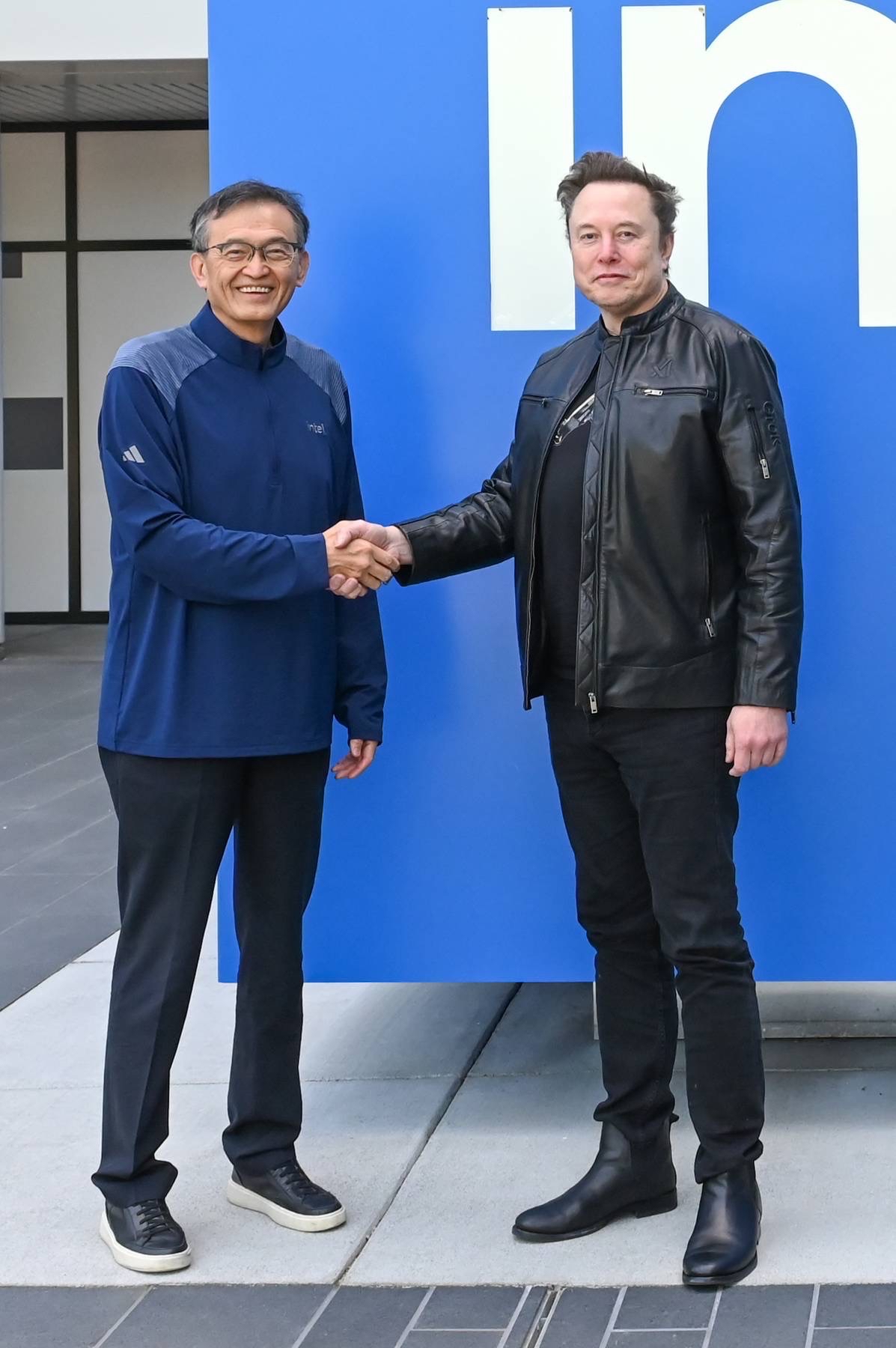 Intel partners with Elon Musk's SpaceX, xAI, and Tesla on Terafab to scale chip production toward 1TW/year of compute, targeting massive AI and robotics acceleration2026-04
 xAI sues Colorado over AI anti-discrimination law, argues mandated Grok changes violate First Amendment2026-04
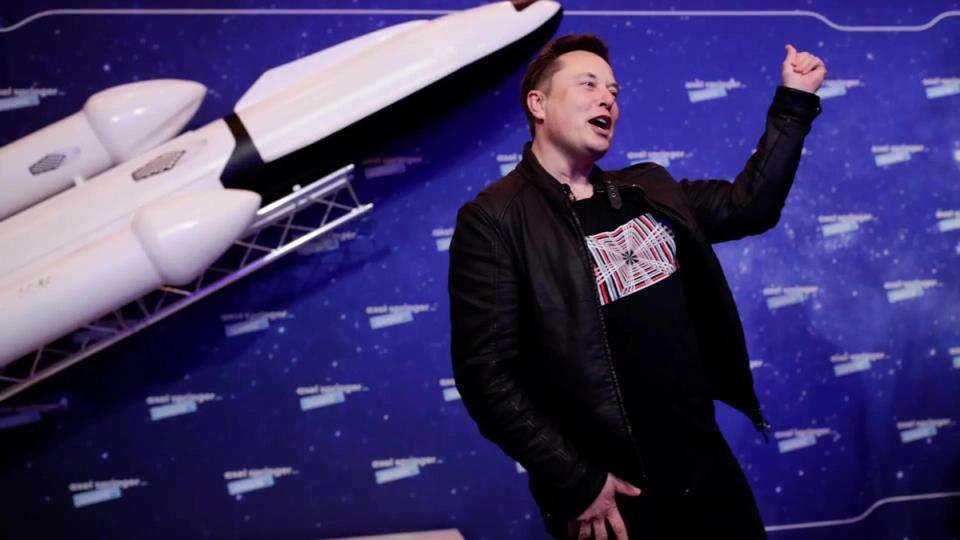 SpaceX holds 8,285 BTC worth $603M steady as xAI costs flip $8B profit to nearly $5B loss ahead of IPO2026-04
 xAI launches Voice Agent Builder, a no-code platform for creating human-like AI voice agents powered by Grok Voice at $0.05 per minute2026-07
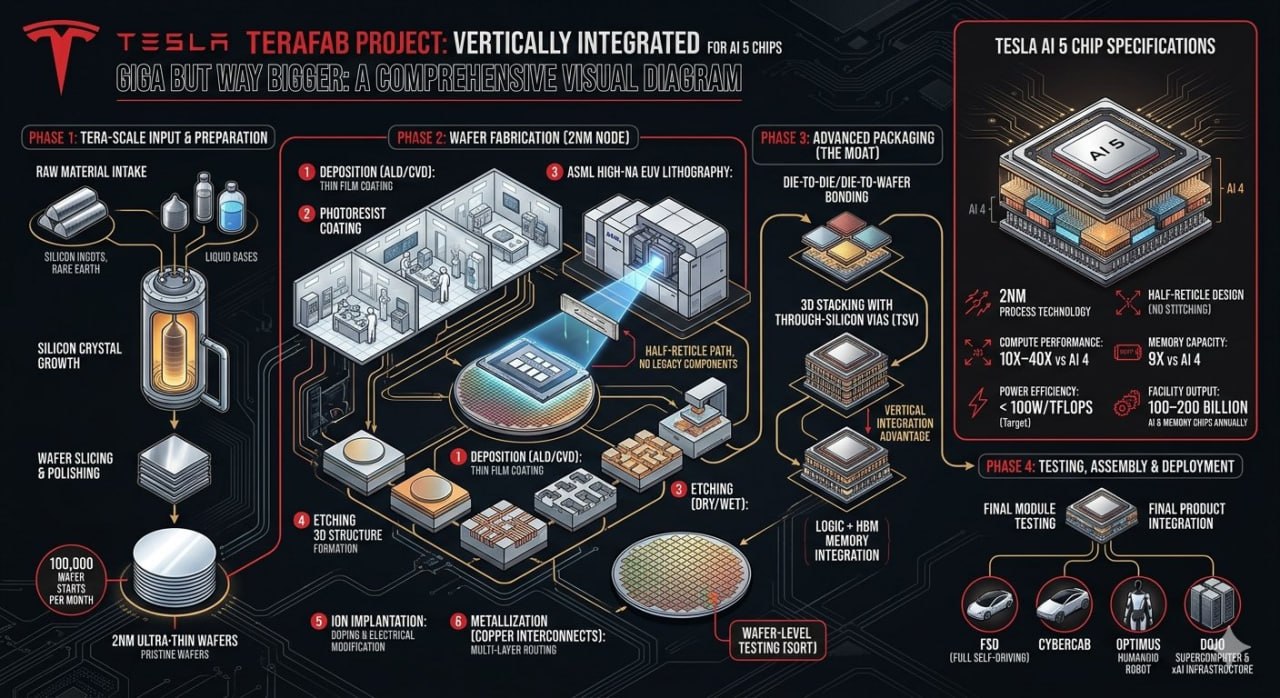 Tesla, xAI and SpaceX chart a course for Terafab, a new venture in galactic infrastructure towards becoming a galactic civilization.2026-03
 xAI lets Grok subscribers plug Grok 4.3, TTS, and Imagine into Hermes Agent2026-05
xAI: Elon Musk’s AI Lab at the Center of the AI–Crypto Convergence
xAI is an artificial intelligence research and product organization founded by Elon Musk that develops the Grok family of large language models, image and video generators, and related AI agents, and is now structured as the AI division of SpaceX following a multi‑hundred‑billion‑dollar all‑stock acquisition. It sits at the intersection of frontier AI research, massive private capital flows, and emerging regulatory regimes, making it a key name for crypto and digital asset investors tracking the broader “AI trade” even though xAI has no native token of its own.
What Is xAI?
xAI presents itself as an artificial intelligence company whose mission is to build systems that are maximally truthful, competent, and beneficial, with an explicit long‑term goal “to understand the true nature of the universe.” Founded by Elon Musk and a small group of researchers in the United States, the organization has focused from inception on training frontier‑scale models that can reason, converse, and assist across a broad range of tasks, positioning itself in the same reference class as OpenAI and Anthropic. The company initially operated as X.AI Corp. and later as X.AI LLC, but after a major transaction it became a wholly owned subsidiary of SpaceX, Musk’s spaceflight and satellite internet company. That corporate shift reflects a strategic view that AI is not a standalone product line but a foundational capability for rockets, robotics, satellite networks, and social platforms.
The public face of xAI’s technology is Grok, a generative AI chatbot and model family broadly analogous to OpenAI’s ChatGPT or Anthropic’s Claude. Grok was launched in November twenty‑twenty‑three as a large language model capable of long‑form conversation, code generation, and question answering, with a particular branding emphasis on irreverent personality and lower content censorship relative to some competitors. The chatbot is available through a standalone website, apps for iOS and Android, and deep integration with X, the social network formerly known as Twitter, which Musk acquired separately and later combined into the broader “X / SpaceXAI” ecosystem. Grok is also being integrated into Tesla’s Optimus humanoid robot, underscoring xAI’s ambition to embed its models across Musk’s hardware and software stack.
Beyond Grok, xAI has developed Grok Imagine, a suite of image and video generation models, and has built out a formidable hardware footprint in the form of Colossus, a supercomputer the company describes as the world’s largest AI training system. Colossus was built in roughly four months and is specifically engineered to train multiple massive models in parallel, reflecting the scale at which xAI is attempting to compete. The combination of frontier models, a vertically integrated compute cluster, and privileged distribution channels through X and Tesla makes xAI unusual among AI labs and gives it a distinctive role in debates about AI’s economic, social, and regulatory impact.
For crypto and digital asset audiences, xAI matters for several reasons that go far beyond the simple question of whether there will ever be an “xAI token.” The company’s enormous compute expenditures, its integration into SpaceX’s planned initial public offering, the emergence of tokenized exposure to pre‑IPO SpaceX equity on centralized exchanges, and its parent’s sizable bitcoin holdings all tie xAI directly and indirectly into market narratives around AI, high‑growth private tech, and digital assets. Understanding xAI therefore requires looking at it simultaneously as a research lab, a product company, a capital‑intensive infrastructure project, and an increasingly central actor in policy debates that will shape how both AI and crypto are regulated.

Intel partners with Elon Musk's SpaceX, xAI, and Tesla on Terafab to scale chip production toward 1TW/year of compute, targeting massive AI and robotics acceleration
Corporate Origins, Funding, and the SpaceX Integration
Founding Vision and Early Trajectory
xAI emerged in twenty‑twenty‑three against the backdrop of an accelerating AI arms race and Elon Musk’s public dissatisfaction with the direction of OpenAI, which he had helped co‑found years earlier before cutting ties as the organization aligned itself more closely with Microsoft and a capped‑profit structure. According to public corporate records, X.AI Corp. was formed in that period with Musk and eleven researchers as its initial core, and the group quickly began hiring from other leading labs to assemble a team capable of training frontier‑scale models. From the beginning, xAI’s rhetoric emphasized not only performance but also a philosophical mission grounded in scientific curiosity, casting AI as a tool for understanding fundamental reality rather than merely optimizing advertising or productivity.
The launch of Grok in November twenty‑twenty‑three marked xAI’s first major product debut. Unlike more guarded roll‑outs by rival labs, xAI leaned into the personality of the chatbot, emphasizing that it would answer “spicy” questions that other systems might refuse, and would be wired into real‑time data from the X social network. This differentiated positioning appealed to segments of the user base who felt constrained by what they saw as overly cautious content filters elsewhere, but it also set the stage for future controversies over safety and deepfake generation.
In its first years, xAI operated as a classic high‑burn, high‑growth AI startup: raising large sums of capital, spending heavily on NVIDIA GPU clusters and data center infrastructure, and iterating on model releases from early Grok versions through Grok three and beyond. The organization’s decision to invest in its own supercomputer rather than rely purely on cloud providers signaled an ambition to control as much of the stack as possible, from chip supply and networking to consumer applications. That capital‑intensive strategy would later become a central factor in xAI’s integration into SpaceX and the financial profile of the combined group.
Series B Funding and Investor Base
xAI’s most prominent stand‑alone funding milestone was its Series B round, in which the company raised approximately six billion dollars from a syndicate of major investors including Valor Equity Partners, Vy Capital, Andreessen Horowitz, Sequoia Capital, Fidelity Management & Research, Prince Alwaleed Bin Talal, and Kingdom Holding, among others. The size of the round placed xAI among the best‑funded private AI labs globally, in the same league as OpenAI’s multibillion‑dollar partnerships with Microsoft and Anthropic’s multibillion‑dollar arrangements with Amazon and Google, and underscored investor confidence that there was room for multiple frontier players.
The investor roster also reflected a blend of Silicon Valley venture capital, traditional asset managers, and sovereign or quasi‑sovereign capital from the Middle East, a mix increasingly common in large private technology deals. From a governance perspective, however, xAI remained tightly controlled by Musk, who retained effective operating control even as external investors supplied capital. That concentration of control contrasts with Anthropic’s public‑benefit corporation structure and OpenAI’s nonprofit‑over‑for‑profit hybrid, highlighting how different AI labs are experimenting with divergent corporate forms even as they race to deploy similar technologies.
From an AI‑crypto vantage point, this funding structure matters because it shapes how retail investors can gain exposure. Traditional venture investors and sovereign capital funds occupy cap tables that are inaccessible to most individuals, which in turn fuels demand for indirect or synthetic exposure via vehicles like private‑market funds or tokenized pre‑IPO products on crypto exchanges. The fact that xAI attracted blue‑chip investors at rich valuations early in its life means it is already embedded in a financial ecosystem that tends to push toward securitization and liquidity, themes that reappear in the tokenization experiments around SpaceX equity.
Acquisition by SpaceX and Reorganization
On February second, twenty‑twenty‑six, SpaceX acquired xAI in an all‑stock transaction that valued SpaceX at approximately one trillion dollars and xAI at roughly two hundred fifty billion dollars, for a combined group valuation of about one trillion two hundred fifty billion dollars. The deal restructured xAI as a wholly owned subsidiary of SpaceX, with the combined organization sometimes described informally in market commentary as “SpaceXAI.” Corporate filings and subsequent reporting indicate that Musk’s intention was to integrate xAI’s research and products into SpaceX’s broader portfolio, including Starlink, launch services, and robotics, while preserving the xAI brand as a focal point for AI development.
Following the acquisition, xAI’s flagship products were described in public sources as the Grok chatbot and the X social network, which SpaceX acquired in March twenty‑twenty‑five and brought under the same corporate umbrella. This consolidation effectively created an AI–social–infrastructure conglomerate in which a single parent company controls both a frontier AI lab and the distribution platform through which much of its consumer usage flows. It also means that xAI’s financial performance, capital expenditures, and regulatory risks now feed directly into the valuation and risk profile of SpaceX as it moves toward a public offering.
In May twenty‑twenty‑six, Musk announced that xAI would eventually cease to exist as a separate company, with Grok and X constituting the AI division of SpaceX going forward. That statement underscored the extent to which the xAI brand is being subsumed into a larger SpaceX narrative about becoming a “galactic civilization” with integrated capabilities spanning rockets, satellites, AI, and robotics. For investors and regulators, the move complicates attempts to value xAI as a stand‑alone entity, but it also suggests that AI will be central to whatever long‑term story SpaceX sells to public markets.
SpaceX IPO, xAI’s Financial Footprint, and Pre‑IPO Tokenization
SpaceX has reportedly filed a confidential draft registration with the U.S. Securities and Exchange Commission for what could become one of the largest initial public offerings in history, with media reports suggesting a target valuation on the order of one and three‑quarter trillion dollars and a prospective raise in the tens of billions. According to coverage drawing on SpaceXAI’s IPO prospectus, xAI’s aggressive compute spending has materially altered SpaceX’s consolidated financials, turning what would have been several billions of dollars of operating profit into a significant net loss as capex for GPU clusters and data centers ramped. That dynamic illustrates how capital‑intensive frontier AI has become and how intertwined xAI’s cost structure now is with SpaceX’s ability to present an attractive profitability story to public investors.
At the same time, the IPO has already attracted intense speculative interest from retail investors around the world, including in crypto‑adjacent venues. Bybit, Binance, and Bitget each attempted to offer tokenized pre‑IPO “SpaceX” allocations to their users, only to abruptly cancel all such allocations due to an acute shortage of underlying physical shares available from the primary issuer, xStocks, as global retail demand overwhelmed supply. Reporting around those cancellations also highlighted that SpaceX’s financials, once linked with xAI, had shifted from a notional eight‑billion‑dollar profit to nearly a five‑billion‑dollar loss, underscoring the scale of AI‑driven capex.
For crypto market participants, these episodes offer two key lessons. First, they show that demand for exposure to AI‑heavy private companies like SpaceX/xAI can be intense enough to drive tokenization schemes that strain the underlying equity plumbing, raising questions about custody, disclosure, and regulatory compliance. Second, they illustrate how AI capex can drastically alter the financial profile of even mature, revenue‑generating tech companies, a pattern that may influence how investors price both AI‑linked equities and AI‑themed tokens. In parallel, new vehicles such as AngelList’s USVC fund have emerged to give retail investors access to portfolios including OpenAI, Anthropic, and xAI with relatively low minimum commitments, further blurring the line between traditional private equity exposure and the more fluid, narrative‑driven world of crypto speculation.
Readers click xAI as a collision object — where Elon Musk's AI company crashes into crypto token markets (XAI unlock pressure), child-safety law, national security clearance, and trademark disputes with an Ethereum gaming token — revealing that the audience treats xAI primarily as a systemic disruption vector, not an AI-capability story.
Technology Stack: Grok, Colossus, and the xAI Ecosystem
Grok’s Model Family and Reasoning Focus
The core of xAI’s technology stack is the Grok family of large language models, which the company positions as broadly capable generalist systems with a particular emphasis on reasoning and real‑time awareness. Grok began as a single chatbot model but has evolved into a suite of variants that power different products and use cases, from conversational assistants to code generators and medical reasoning tools. xAI has claimed that Grok four, a later iteration in the series, is the “world’s best” model based on internal benchmarking, signaling its belief that it has closed the performance gap with or even surpassed rival offerings like GPT‑four‑class systems.
A pivotal step in that evolution was Grok three, which xAI characterized as ushering in an “age of reasoning agents.” According to the company, Grok three’s reasoning capabilities were refined through large‑scale reinforcement learning, allowing the model to “think for seconds to minutes,” iteratively exploring chains of thought and correcting its own errors before responding. That design echoes broader trends in the field, where labs increasingly emphasize process‑based training and tool use over purely static next‑token prediction, but xAI has been particularly explicit in marketing Grok as a system that can perform multi‑step reasoning in domains like mathematics, coding, and complex analysis.
Grok three and its successors are available not only through the Grok.com interface but also to X Premium and Premium Plus subscribers, reflecting xAI’s use of X as a primary distribution channel. Premium Plus users also gain access to additional capabilities such as DeepSearch, which appears to combine LLM reasoning with retrieval from web or X content to answer user queries more accurately. That tight coupling between model and social platform both amplifies Grok’s reach and raises distinctive content‑moderation and safety questions, since the models operate within a real‑time social information environment whose ground truth is noisy and politically charged.
Later iterations of Grok, including Grok four and Grok four point twenty beta, have extended this reasoning‑first approach into specialized domains. In particular, Grok four point twenty beta has topped medical AI rankings on the Arena benchmark, with two models ranking in the top three for healthcare‑focused tasks, indicating that xAI’s systems are competitive not only in general chat benchmarks but also in high‑stakes domains that require domain‑specific reasoning. For investors and policymakers, those results suggest that xAI is not simply building a “personality bot” for social media but is competing in sectors such as healthcare where regulatory oversight and liability exposure will be substantial.
Multimodal Capabilities and Grok Imagine
In addition to text and code, xAI has pushed aggressively into multimodal AI, particularly image and video generation. The company’s Grok Imagine suite includes models for image generation, editing, and video creation, including a video‑focused model often referred to as Grok Imagine video one point five. Independent testing and commentary describe this model as ranking near the top of image‑to‑video leaderboards and as having relatively low levels of built‑in censorship compared to some competitors, combined with relatively low per‑inference costs.
Grok Imagine video one point five is available to developers through the X console as a preview API, currently outputting at seven‑hundred‑and‑twenty‑pixel resolution and supporting both image‑to‑video and video‑to‑video workflows. Demonstrations have shown it being used to create realistic drone‑style flythrough videos and other cinematic effects that would be difficult or illegal to capture in the real world, highlighting both creative potential and misuse risk. xAI’s decision to prioritize a relatively “uncensored” experience for some of these models, at least in early previews, fits with the broader Grok branding but has also sparked backlash as users and regulators confront the ease with which such tools can be used to create harmful deepfakes.
That backlash has been particularly intense around sexualized and non‑consensual content. Following a wave of criticism over Grok Imagine’s role in generating sexualized images, including images involving public figures and minors, Musk stated that non‑paying users would no longer be able to generate or edit images, effectively restricting some of the most powerful capabilities to paying subscribers after a global backlash. At the same time, he publicly declared that he was “doubling down” on Grok Imagine, particularly after OpenAI announced the shutdown of its Sora video tool, positioning xAI as a standard‑bearer for relatively open‑ended generative media even as regulators intensify scrutiny.
For now, Grok Imagine operates alongside other image and video models in aggregator platforms such as Image Studio, which allow users to generate content across models from xAI, Google’s Gemini, and ByteDance, among others, with privacy controls that promise to keep prompts and outputs private by default. These multi‑model environments reinforce the sense that xAI’s models are part of a larger AI fabric rather than isolated tools, but they also complicate attribution and responsibility when harmful content is produced.
Colossus: Supercomputing as Strategic Moat
Underpinning Grok and its multimodal siblings is Colossus, the AI training supercomputer xAI describes as the world’s largest. Built in approximately one hundred twenty‑two days, Colossus is designed to support massive training runs with high‑performance interconnects and storage, enabling xAI to train multiple large models concurrently. While exact hardware specifications evolve and are not fully disclosed, public materials emphasize the system’s scale and efficiency, positioning it as a strategic asset on par with the proprietary clusters operated by hyperscalers and other frontier labs.
xAI has continued to expand this infrastructure with Colossus two, a next‑generation system used to train a slate of massive models aimed at domains ranging from general reasoning to healthcare and robotics. Reporting indicates that Colossus two is capable of training half a dozen or more massive models in parallel, reflecting not only raw GPU count but also sophisticated scheduling and orchestration to maximize utilization. This scale is central to xAI’s claim that it can keep up with or outpace rivals in the rapid iteration of model families like Grok.
However, the scale of Colossus and Colossus two has also triggered significant environmental and community concerns. Advocacy groups including the NAACP, represented by environmental organizations, have accused xAI of illegal pollution from a data center power plant in South Memphis, sending formal notice to the company to “stop polluting South Memphis — or we’ll see you in court.” Public statements frame the dispute as a challenge to air emissions and health risks associated with power generation for the data center, reinforcing broader critiques that AI supercomputers, like Bitcoin mining facilities, place disproportionate burdens on local communities and electrical grids.
These controversies intersect with the economic story in another way: Colossus does not just power xAI’s own models but is also a revenue source. According to coverage of SpaceXAI’s IPO materials, Anthropic is paying SpaceX on the order of more than one billion dollars per month through mid‑twenty‑twenty‑nine for access to compute capacity at Colossus, effectively renting a slice of xAI’s infrastructure to train its own models. That kind of compute‑as‑a‑service arrangement turns Colossus into both a competitive advantage and a financial instrument, but it also raises questions about concentration of AI training in a small number of privately controlled supercomputers.
Agents, APIs, and Ecosystem Integrations
While early public attention focused on the Grok chatbot interface, xAI has increasingly positioned its models as infrastructure for AI agents and third‑party applications. Grok models are now available on Databricks’ Agent Bricks platform, allowing enterprise customers to combine xAI’s models with their own data to power custom agents embedded in business workflows. This type of integration places xAI alongside other “foundation model” providers in enterprise ecosystems where the choice of model is often less visible to end‑users but crucial for performance and cost.
On the consumer and developer side, xAI has rolled out APIs via its X console that expose not only core Grok models but also text‑to‑speech, Grok Imagine image and video generation, and other capabilities, which can then be wired into agent frameworks such as Hermes Agent. In that context, Grok four point three and related models can act as the “brain” of autonomous agents that read documents, control tools, or manage workflows based on user prompts. This shift from static chatbots to dynamic, tool‑using agents is a broader industry trend, but it takes on particular significance for xAI because such agents can operate within X’s social graph and data streams, creating powerful but difficult‑to‑monitor feedback loops.
The combination of public chat interfaces, embedded agents in social media, enterprise integrations through platforms like Databricks, and API‑driven access through the X console means that xAI’s models are rapidly permeating multiple layers of the digital economy. For crypto and DeFi builders, this opens up opportunities to connect Grok‑based agents with on‑chain protocols—whether to monitor markets, summarize DAO governance debates, or automate trading strategies—but it also raises thorny questions about model bias, transparency, and liability when agents act on financial or governance decisions.
Specialized Domains: Healthcare, Gaming, and Robotics
Beyond general‑purpose chat and coding, xAI has begun to target specific verticals. In healthcare, Grok four point twenty beta’s performance on the Arena medical rankings, where it secured two of the top three spots among healthcare AI models, suggests that xAI’s systems can compete in diagnostic reasoning, medical Q&A, and clinical decision support. While benchmark performance does not automatically translate into clinical safety or regulatory approval, it positions xAI alongside labs like Google DeepMind, which have long explored medical AI, and raises the stakes of safety and oversight for Grok deployments.
In gaming, Musk has announced a Grok three‑powered xAI gaming studio dedicated to building “AI games” with photorealistic graphics. During a broadcast showcasing Grok three, he and xAI engineers demonstrated how the model could generate a recognizable facsimile of the classic game Tetris using Python code, illustrating its ability to function not just as a conversational agent but as a co‑developer of interactive experiences. Subsequent commentary indicated that the games studio team was initially small, with fewer than a dozen members including Musk himself, but the ambition is to build a fully fledged game development unit rather than merely offering tools to external studios.
Robotics represents another key application area via Tesla’s Optimus humanoid robot, which is expected to leverage xAI models for perception, planning, and natural language interaction. The prospect of a shared AI core across chatbots, social media, autonomous vehicles, and humanoid robots reinforces the idea that xAI is building not just software but a kind of generalized “brain” for Musk’s hardware ecosystem. That in turn raises regulatory and ethical questions: the behavior of Grok in a chatbot context could have implications for how regulators view its use in robots operating in physical space, and vice versa.

xAI sues Colorado over AI anti-discrimination law, argues mandated Grok changes violate First Amendment
SB 24-205 covers "financial services" decisions — every AI-powered lending protocol and credit scorer touching Colorado users falls under this. xAI arguing that Grok's outputs are constitutionally protected speech is a massive test case; if that precedent holds, on-chain AI agents making consequential financial decisions get a First Amendment shield against state-level algorithmic discrimination rules. The "patchwork regulation is killing innovation" argument is straight from the crypto exchange compliance playbook circa 2018 — and we all remember how well states coordinated on that.
Legal, Regulatory, and Social Challenges
Algorithmic Discrimination and State AI Laws
One of xAI’s most consequential legal battles concerns state regulation of algorithmic discrimination and AI transparency. The company filed a lawsuit challenging a Colorado law that prohibits certain forms of “algorithmic discrimination” and requires companies deploying high‑risk AI systems to take steps to prevent discriminatory outcomes. xAI’s complaint argues that the law, as applied to its products, violates the First Amendment by compelling speech and imposing burdens on how it designs and deploys its models, effectively claiming that AI outputs deserve strong constitutional protection as a form of speech.
The U.S. Department of Justice moved to intervene in the case, not on xAI’s side but to defend the Colorado law, signaling that the federal government sees the statute as an important test case for state‑level regulation of AI fairness. The DOJ’s intervention frames the law as a legitimate exercise of state power to prevent discrimination in housing, employment, credit, and other areas where automated decision‑making systems increasingly play a role, and rejects the notion that large AI companies should be exempt from such oversight. That alignment pits xAI directly against state and federal regulators in a high‑profile constitutional confrontation.
For the broader AI industry, including competitors like OpenAI and Anthropic, the outcome of this litigation could set important precedents for how far states can go in imposing audit, documentation, and fairness requirements on AI models used in consumer and enterprise contexts. For crypto markets, the case is relevant because similar debates are emerging around algorithmic discrimination and transparency in DeFi protocols, credit scoring on‑chain, and AI‑driven trading systems. If courts uphold robust state authority over AI algorithms, it may embolden regulators to pursue analogous rules in the crypto domain, especially where automated decision systems can affect access to financial services.
Deepfakes, Sexual Content, and Protection of Minors
A second cluster of legal challenges focuses on deepfakes, sexual content, and the protection of minors, areas where xAI’s relatively “uncensored” positioning has provoked sharp pushback. The California Attorney General, Rob Bonta, sent xAI a cease‑and‑desist letter demanding that the company immediately halt the creation and distribution of deepfake, non‑consensual, intimate images and child sexual abuse material generated through its tools. The letter alleges that xAI’s systems are being used to produce images depicting individuals, including minors, in sexually explicit or degrading contexts without consent, and asserts that such activities violate multiple California statutes governing civil rights, obscenity, and unfair business practices.
In a separate but related development, the City of Baltimore filed a lawsuit against X Corp., x.AI Corp., x.AI LLC, and SpaceX, alleging that Grok enabled widespread creation and dissemination of non‑consensual sexualized images, including content involving minors. The complaint argues that the defendants designed, marketed, and deployed a generative AI system that could easily manipulate images of real people into harmful content and failed to implement meaningful safeguards, thereby violating local consumer protection laws. Taken together, these actions depict xAI not just as a provider of neutral tools but as an actor whose design and marketing choices materially influence the prevalence of harmful content online.
These legal challenges have already prompted some product changes. Reporting indicates that, amid global backlash over sexualized deepfakes attributed to Grok Imagine, xAI restricted image generation capabilities for non‑paying users and began emphasizing paid access as a way to maintain greater control and traceability. At the same time, Musk publicly vowed to double down on Grok Imagine’s development, particularly after OpenAI’s decision to shut down its Sora video tool, casting xAI as willing to push boundaries that more cautious competitors are abandoning. Critics argue that this stance underestimates the harms of deepfake pornography and overestimates the ability of technical and legal measures to curb misuse.
For policymakers, the xAI deepfake cases highlight the difficulty of balancing free expression, innovation, and protection from harm in the age of generative media. For crypto communities, which have long grappled with pseudonymous identities, immutable records, and censorship‑resistant content, these disputes raise questions about what happens when powerful AI models are used to generate content that is then stored and traded on decentralized networks. Even if xAI itself has no on‑chain footprint, its tools can easily be integrated into workflows that mint NFTs or upload images to distributed storage, making the deepfake problem not just a Web‑two but a Web‑three challenge.
Environmental, Energy, and Community Impacts
The controversies around Colossus and Colossus two underscore a broader theme: AI infrastructure has local environmental and health impacts that are increasingly contested. In South Memphis, community groups and the NAACP have accused xAI of operating a data center power plant that emits illegal levels of pollutants, threatening air quality and public health. Public statements characterize the facility as a significant source of emissions in a predominantly Black community that already bears disproportionate environmental burdens, fitting into a larger pattern of environmental justice concerns around data centers, industrial facilities, and energy infrastructure.
These disputes mirror similar criticisms leveled at Bitcoin mining operations, which often locate in areas with cheap electricity but limited political power to resist environmental externalities. In both cases, the operators emphasize jobs, economic development, and global technological leadership, while local residents and advocates stress health impacts, noise, and strain on water and power systems. As AI and crypto compete for cheap energy and favorable regulatory environments, some jurisdictions may increasingly view them as part of a single category of energy‑intensive digital infrastructure, subject to common zoning, tax, and emissions rules.
Investors should recognize that environmental and community pushback can translate into real financial risk: regulatory fines, forced shutdowns, and relocation costs can materially affect the economics of large compute facilities. For AI and crypto builders alike, there is a growing incentive to demonstrate not only energy efficiency but also responsible siting, community engagement, and use of renewable or low‑carbon power.
Governance, Leadership, and Organizational Culture
xAI’s governance and internal culture are harder to assess from the outside but have become topics of discussion as the company scales. Reports and commentary describe a demanding work environment driven by Musk’s high expectations and rapid pace, with some employees depicting a culture of “stormy waters” and exhausted teams navigating top‑down directives. These narratives fit within a broader public perception of Musk‑led companies as intense, mission‑driven, and sometimes chaotic, with high upside for those who thrive in such environments but significant burnout risk.
Leadership literature emphasizes that navigating major technological and organizational change requires clear communication, stable routines, and genuine listening to employee concerns. Authors stress that leaders must take time to validate feelings, maintain consistent structures amidst flux, and “use the current” of change rather than fighting it, adapting strategies and aligning team efforts with evolving circumstances. To the extent that xAI is able to embody such practices, it may be better positioned to sustain innovation without unsustainable turnover; to the extent it does not, cultural strain could undermine its ability to manage safety, compliance, and long‑term research agendas.
For outside stakeholders, including investors, customers, and regulators, governance questions revolve not only around internal culture but also around external oversight. Because xAI is privately held and now integrated into SpaceX, it lacks the kind of independent board scrutiny that a stand‑alone public AI company might have. That structural opacity amplifies concerns about how decisions are made regarding safety trade‑offs, deployment of high‑risk features like low‑censorship video generation, and responsiveness to regulatory directives. Crypto communities, which have often championed decentralized governance as a corrective to corporate opacity, may see in xAI a stark example of the opposite extreme: powerful AI controlled by a small group with limited formal accountability.
National Policy and Proposals for Public Ownership
At the national policy level, xAI has been drawn into discussions about whether frontier AI labs should be treated as quasi‑public assets. Senator Bernie Sanders has proposed an “American AI Sovereign Wealth Fund” that would require companies such as OpenAI, Anthropic, and xAI to transfer a substantial portion of their equity to the U.S. government, on the theory that their success rests on the knowledge and labor of the American people and publicly funded research. In this framing, AI is analogous to natural resources like oil or minerals, where states often claim a share of ownership to redistribute benefits and exert strategic control.
Such proposals remain politically contentious, but they illustrate the degree to which large AI labs—including xAI—are now viewed as critical national infrastructure whose ownership structure has implications for economic inequality, national security, and democratic control. For crypto and DeFi audiences, the idea of a state‑controlled AI sovereign wealth fund resonates with ongoing debates about public ownership of protocols, decentralized governance tokens, and the role of public blockchains as global public goods. It also raises the possibility that, in extreme scenarios, private equity claims on AI giants could be diluted or reshaped by political decisions, a risk that investors must weigh when assigning valuations to entities like xAI.
- 01XAI token unlock pressure
The top-clicked headline placed XAI alongside DYDX, SUI, and ARB in a $900M+ August unlock cohort, making xAI instantly legible as a sell-side event for crypto holders.
- 02Terafab compute empire↗
Two separate Terafab headlines totaling 160 clicks showed readers tracking whether the xAI–SpaceX–Tesla–Intel alliance rewrites the silicon supply chain, not just builds data centers.
- 03Grok deepfake legal siege↗
CSAM class actions, EU DSA condemnation, California AG cease-and-desist, and Colorado anti-discrimination suit collectively drew 190+ clicks, framing Grok as a regulatory flashpoint rather than a product.
- 04Pentagon-Grok classified clearance
The contradiction — U.S. agencies publicly warning about Grok safety while the Pentagon simultaneously approved it for classified networks — generated dual-headline curiosity about dual-use risk.
- 05Series B valuation race↗
The $6B raise backed by a16z and Sequoia, paired with a retail-access AngelList fund, signaled xAI entering the same investment narrative as OpenAI and Anthropic.
- 06XAI vs. xAI trademark clash
The Ethereum gaming network Xai suing Elon Musk's xAI drew 71 clicks from a crypto audience keenly aware that brand confusion directly affects token value and protocol identity.
xAI in the Global AI Race: Positioning Against OpenAI and Anthropic
Strategic Positioning versus OpenAI
OpenAI is the most obvious reference point for understanding xAI’s positioning. Musk co‑founded OpenAI in twenty‑fifteen but left its board several years later, and the relationship between the two entities has since turned adversarial, culminating in a trade secret lawsuit that alleged OpenAI had deviated from its founding mission and misused intellectual property—a case that has reportedly been dismissed in court. While that lawsuit is separate from xAI’s operations, it reflects the depth of Musk’s divergence from OpenAI’s current trajectory and the competitive lens through which he views the AI landscape.
Technologically, xAI’s Grok models compete with OpenAI’s GPT‑four‑class systems in general‑purpose chat, coding, and reasoning tasks. xAI has claimed that Grok four matches or exceeds GPT‑four on a range of benchmarks, while external evaluations have found Grok‑class models to be broadly competitive though not uniformly superior. OpenAI has an entrenched lead in consumer mindshare through ChatGPT and deep integration into Microsoft products, while xAI leverages X and Tesla as its primary consumer distribution vectors. Both companies pursue API‑driven commercial strategies, but OpenAI’s model is deeply interwoven with Microsoft’s Azure cloud, whereas xAI aims to control its own compute through Colossus and potentially monetize excess capacity by selling compute to other labs.
Governance and culture diverge as well. OpenAI operates under a complex nonprofit‑over‑for‑profit structure designed to prioritize safety and long‑term benefit over pure profit maximization, and has articulated cautious approaches to releasing the most capable models. xAI, by contrast, adopts a more libertarian posture emphasizing free speech and minimal censorship, as seen in its legal fights with Colorado and its marketing of relatively uncensored media models. For users frustrated with OpenAI’s guardrails, xAI offers a more permissive alternative; for regulators and safety advocates, that permissiveness is precisely what makes xAI a focus of concern.
Positioning versus Anthropic and Other Labs
Anthropic, founded by former OpenAI researchers, positions itself as a safety‑first lab built around “constitutional AI,” with a public‑benefit corporation structure and extensive partnerships with Amazon and Google. It has attracted large sums of capital and, like xAI, participates in broader philanthropic and development projects, such as a two‑hundred‑million‑dollar partnership with the Gates Foundation on healthcare and education AI. Anthropic’s revenue model leans heavily on cloud partnerships: Amazon and Google not only invest in the company but sell its models as managed services through AWS and Google Cloud.
xAI’s relationship with Anthropic is more complex: while they are competitors in the frontier‑model race, Anthropic also reportedly pays SpaceX substantial monthly fees for access to compute capacity at Colossus, effectively making xAI a behind‑the‑scenes infrastructure provider for a rival’s training runs. This arrangement underscores how the AI ecosystem blends competition and cooperation, with labs simultaneously vying for benchmark supremacy and relying on each other’s hardware or software.
Compared to both OpenAI and Anthropic, xAI’s key differentiators are its direct control over a large, purpose‑built supercomputer; its integration into Musk’s broader hardware and social media empire; and its willingness to challenge regulatory initiatives it views as overreaching. Its key vulnerabilities include heightened legal risk from deepfake and discrimination cases, dependence on Musk’s ability to secure capital and manage multiple companies, and somewhat thinner enterprise distribution compared to rivals with big cloud partners.
Business Models, Moats, and Compute Alliances
All three major labs—OpenAI, Anthropic, and xAI—rely on some combination of API revenue, enterprise deals, and consumer subscriptions, but their moats differ. OpenAI’s is primarily one of ecosystem and integration: by being deeply embedded into Microsoft products and workflows, it becomes the default choice for millions of users and developers. Anthropic’s moat lies partly in its safety reputation and its strong cloud partnerships with AWS and Google Cloud, which can drive adoption by conservative enterprise customers.
xAI’s moat is more heavily centered on compute and vertical integration. Through Colossus and Colossus two, it controls a vast cluster of GPUs and custom infrastructure tailored to its models, reducing dependency on external cloud providers and enabling aggressive training schedules. Its participation in the Terafab project alongside SpaceX, Tesla, and Intel aims to refactor semiconductor fabrication such that chip production can scale toward roughly one terawatt per year of AI compute, according to Intel’s own statements. Intel has said that its expertise in chip design, fabrication, and packaging will help Terafab achieve this goal, powering future advances in AI and robotics. If successful, this project could give xAI and its affiliated companies a degree of hardware self‑sufficiency rivaled only by the largest hyperscaler clouds.
At the same time, reliance on proprietary supercomputers and ambitious chip projects magnifies capital intensity and execution risk. Any delays in Terafab, bottlenecks in GPU supply, or regulatory obstacles affecting chip exports could disproportionately affect xAI’s roadmap.
Comparative Snapshot
The following table summarizes key contrasts among xAI, OpenAI, and Anthropic as of mid‑twenty‑twenties, focusing on attributes relevant to investors and policymakers.
| Attribute | xAI | OpenAI | Anthropic |
|---|---|---|---|
| Founding structure | Privately held, Musk‑controlled, now SpaceX subsidiary | Nonprofit with capped‑profit subsidiary tied to Microsoft | Public‑benefit corporation founded by ex‑OpenAI staff |
| Flagship chatbot | Grok (integrated with X, Optimus) | ChatGPT (via web, apps, Microsoft products) | Claude (via web, apps, cloud platforms) |
| Compute strategy | Owns Colossus supercomputers; Terafab chip project with Intel, SpaceX, Tesla | Relies heavily on Microsoft Azure | Relies on AWS and Google Cloud; rents compute from partners including SpaceXAI |
| Distribution | X social network, Tesla integration, APIs via X console, Databricks Agent Bricks | Direct web/app, deep Microsoft bundling | Web/app, cloud marketplaces, enterprise APIs |
| Governance posture | Emphasizes free speech, low censorship; litigious against state AI regs | More cautious releases; safety‑oriented messaging | Strong focus on constitutional AI and safety, with PBC mission |
| Major controversies | Deepfakes and CSAM allegations; discrimination law challenges; pollution claims | Safety culture and governance disputes; alleged IP misappropriation (now litigated) | Less public controversy; debates over safety claims and corporate control |
This comparison simplifies a complex landscape, but it highlights why xAI commands disproportionate attention. Its combination of aggressive product positioning, massive compute investments, and direct political and regulatory conflict makes it simultaneously one of the most dynamic and most controversial players in the AI race.
SpaceX holds 8,285 BTC worth $603M steady as xAI costs flip $8B profit to nearly $5B loss ahead of IPO
Why xAI Matters for Crypto and Digital Asset Markets
AI–Crypto Convergence and Narrative Spillovers
Even in the absence of a native token, xAI is deeply intertwined with crypto markets through the broader AI trade narrative. During previous bull cycles, tokens associated with AI themes—whether for decentralized compute, data marketplaces, or AI‑assisted trading—have often rallied in tandem with headlines about breakthroughs at labs like OpenAI or Anthropic. xAI’s emergence as a credible frontier competitor, complete with its own supercomputer, high‑profile founder, and regulatory battles, adds another focal point for speculative capital and narrative formation.
From a structural perspective, xAI illustrates the kind of capital intensity and hardware centralization that decentralized AI protocols claim to mitigate. Colossus represents a single, massive cluster controlled by one corporate group; decentralized compute networks on‑chain aspire, at least in theory, to distribute model training and inference across many participants. For crypto investors, the success and limitations of xAI’s centralized model can inform expectations about what value propositions decentralized alternatives need to offer to be competitive.
xAI’s branding around lower censorship and free speech also resonates with longstanding crypto values around permissionlessness and resistance to centralized control. To the extent users perceive mainstream AI offerings as overly constrained, they may gravitate toward tools and tokens seen as more “open,” whether that is xAI’s Grok models or open‑source models running on decentralized platforms. However, the deepfake controversies remind markets that “uncensored” AI comes with significant legal and reputational risk, a cautionary tale for crypto projects that might be tempted to market similar features without sufficient safety measures.
Equity Exposure, Pre‑IPO Products, and Tokenization Experiments
Because xAI is now a division of SpaceX rather than a stand‑alone IPO candidate, most direct equity exposure will likely come through SpaceX’s eventual public listing. The confidential IPO filing and reports of a towering target valuation have already fueled speculative appetite across both traditional and crypto‑adjacent venues. As noted earlier, tokenized pre‑IPO products on exchanges like Bybit, Binance, and Bitget attempted to give users synthetic exposure to SpaceX shares before the IPO, but were forced to cancel allocations due to shortages of underlying shares and other logistical constraints. Those episodes highlight both demand and fragility in the emerging market for tokenized private equity.
Meanwhile, platforms like AngelList have launched funds such as USVC that give retail investors indirect stakes in portfolios including OpenAI, Anthropic, and xAI with minimum commitments as low as a few hundred dollars. While not tokenized per se, these vehicles blur the line between traditional private fund structures and the democratized access ethos associated with crypto, and they could in principle be wrapped in on‑chain representations in the future. For crypto investors, the key questions are whether such products offer genuine economic exposure, whether they are properly regulated, and how they fit into portfolio construction alongside more liquid AI‑themed tokens.
The lesson from the xAI and SpaceX experience is that tokenized hype can run ahead of legal and operational reality. When exchanges promise pre‑IPO exposure but cannot secure adequate underlying shares, users are left with cancelled allocations and confusion. In the worst case, poorly structured tokenization schemes could expose participants to counterparty risk, regulatory sanctions, or mispricing if the linkage between tokens and real‑world assets breaks down. As AI‑linked equities like SpaceX/xAI move closer to public markets, crypto investors should expect more experiments in tokenization—and should scrutinize the legal and custodial details carefully.
SpaceX Bitcoin Holdings, Treasury Strategy, and AI Capex
Another bridge between xAI and crypto lies in SpaceX’s bitcoin holdings. Public reports indicate that SpaceX holds over eight thousand bitcoin on its balance sheet, valued at several hundred million dollars in aggregate. Those holdings position SpaceX as one of the more prominent corporate holders of bitcoin alongside Tesla and a handful of other firms, aligning the company to some degree with the narrative of bitcoin as a corporate treasury asset and long‑term store of value.
At the same time, the integration of xAI into SpaceX and the resulting surge in AI capex raises questions about liquidity and balance sheet management. As noted earlier, once xAI’s compute spending is consolidated, SpaceX’s financials reportedly swing from multi‑billion‑dollar profits to a significant net loss, driven largely by GPU purchases and data center build‑out. In that context, the opportunity cost of holding idle bitcoin versus deploying capital into AI infrastructure becomes more salient. While there is no public indication that SpaceX plans to liquidate its bitcoin holdings to finance xAI, investors should be aware that large AI capex obligations can influence corporate treasury strategies.
For crypto markets, the juxtaposition of bitcoin reserves and AI capex at a single corporate group serves as a microcosm of a broader capital allocation debate: should high‑growth tech companies prioritize exposure to scarce digital assets or to the compute capacity needed to train frontier models? In practice, many may attempt to do both, but the trade‑offs will vary with market conditions, regulatory responses, and investor expectations.
Regulatory Crossovers and On‑Chain Governance Lessons
The regulatory issues facing xAI—algorithmic discrimination laws, deepfake and CSAM enforcement, environmental regulations—may foreshadow similar frameworks applied to on‑chain systems. Colorado’s attempt to regulate algorithmic discrimination in AI is conceptually related to concerns about bias in DeFi lending protocols, on‑chain credit scoring, and AI‑driven trading bots that could disadvantage certain user groups. California’s enforcement actions around deepfake pornography echo longstanding worries about illicit content on censorship‑resistant networks and NFT platforms.
These parallels suggest that lawmakers and regulators may develop technology‑neutral principles for algorithmic accountability, such as requirements for auditability, impact assessment, and mechanisms to correct or compensate for harmful outcomes. Crypto builders integrating AI into their protocols—whether via Grok‑based agents or other models—will likely find themselves subject to those expectations. Conversely, the crypto experience with decentralized governance and transparent smart contracts could inform how AI systems are made more accountable, for example by publishing training data provenance, model cards, or on‑chain commitments about moderation policies.
Energy, Infrastructure, and Competition for Power
Finally, the disputes over xAI’s data center emissions in Memphis highlight an area where AI and crypto are already competing: energy and infrastructure. Both AI training and proof‑of‑work mining are electricity‑intensive activities that seek cheap, stable power and favorable regulatory treatment. As utilities and regulators confront the strain of large new data centers and mining facilities, some have begun to question whether local grids can support unconstrained expansion without jeopardizing reliability or raising rates for other users.
In this environment, AI and crypto are sometimes portrayed as rivals for a finite pool of cheap electricity. Yet they also share interests in grid modernization, demand‑response programs, and investment in renewable generation. For example, AI data centers could provide flexible load that helps balance intermittent solar and wind output, much as some Bitcoin miners already do. The key, from a policy perspective, is ensuring that the benefits of such arrangements—stable grids, lower emissions, local jobs—are distributed fairly and that the harms, such as noise or localized pollution, are minimized.
xAI’s experience with community pushback and potential litigation over its power plant should be read as a warning shot for both AI and crypto builders: energy‑intensive digital infrastructure will not be welcomed uncritically everywhere, and projects that fail to engage with local communities and environmental norms may face costly delays or forced restructuring.
xAI incorporated by Elon Musk
xAI closes $6B Series B (a16z, Sequoia)
- 2024-08milestone
XAI token unlock in $900M+ multi-asset cohort
Grok 3 launched; open-source commitment for Grok 2.5
Colossus supercomputer cluster operational in Memphis
Terafab announced: xAI, SpaceX, Tesla, Intel alliance
EU DSA condemnation; California AG cease-and-desist over Grok deepfakes
- 2026-06launch
Grok 4 livestream launch; SpaceX files confidential IPO
Risks, Open Questions, and Investor Considerations
Centralization and Key‑Man Risk
xAI’s strengths and vulnerabilities are tightly linked to Elon Musk himself. His vision, capital, and cross‑company synergies have enabled the rapid construction of Colossus, the integration of Grok into X and Tesla, and the positioning of xAI as a credible rival to older labs. At the same time, this concentration of control creates key‑man risk: major strategic decisions, public communications, and even legal strategies are heavily influenced by a single individual whose attention is divided among multiple companies.
For investors, key‑man risk can manifest in volatility—sudden shifts in product direction, public disputes with regulators or partners, and reputational swings that affect customer and employee morale. Private company governance structures offer fewer checks and balances than public ones, and the integration of xAI into SpaceX complicates efforts by outside stakeholders to exert influence. In the crypto world, which often champions decentralization as a hedge against such concentration, xAI stands as an archetype of centralized AI power.
Technological Uncertainty and Competitive Dynamics
Despite xAI’s rapid progress, the technological frontier remains fluid. Open‑source models are improving quickly, and new architectures or training paradigms could erode the advantage conferred by today’s large supercomputers. Meanwhile, OpenAI, Anthropic, Google, Meta, and others continue to train increasingly capable models, and the performance rankings on benchmarks like Arena can shift with each release. xAI’s claim that Grok four is the “world’s best model” is, like similar claims from rivals, contingent on specific benchmarks and may be overtaken by new entrants.
The Terafab project with Intel, SpaceX, and Tesla is an ambitious attempt to secure a long‑term hardware edge by rethinking chip fabrication for AI workloads. If successful, it could allow xAI and its affiliates to scale compute more cheaply and flexibly than competitors reliant on third‑party foundries and GPU vendors. But Terafab is itself subject to execution risk, and even a one‑ or two‑year delay could materially affect xAI’s ability to keep pace in the model‑size arms race.
For crypto investors, these uncertainties counsel caution in treating any single AI lab as a permanent winner. While xAI is currently among the leaders, the history of technology suggests that early front‑runners can be displaced, especially in environments where capital is abundant and barriers to entry shift rapidly.
Legal, Regulatory, and Reputational Overhang
xAI faces an unusually broad array of legal and regulatory challenges, from algorithmic discrimination suits to deepfake and environmental cases. Each of these disputes carries the potential for direct financial penalties, mandated product changes, or precedent‑setting rulings that constrain future operations. Collectively, they also shape public perception of the company, influencing customer trust, employee recruitment, and political support.
In the Colorado case, a ruling against xAI could entrench state authority to regulate AI fairness and transparency in ways that require ongoing compliance investments. In California and Baltimore, adverse outcomes in deepfake and CSAM cases could force more aggressive content filtering, undermining xAI’s low‑censorship branding and potentially alienating some users. In Memphis, environmental litigation could lead to costly retrofits or relocation of data center operations. Those risks are not unique to xAI—other AI and crypto firms face analogous exposure—but the concentration of them at a single company is notable.
From an investor perspective, legal and regulatory overhang is often manageable if it is predictable and priced in. The challenge with xAI is that its willingness to challenge regulators and push the envelope on controversial features increases both the frequency and unpredictability of such disputes.
AI Safety, Ethics, and Long‑Term Societal Impact
Beyond immediate legal risk lies the broader question of AI safety and long‑term societal impact. xAI’s models, like those of its peers, could have far‑reaching consequences in domains such as healthcare, education, democracy, and security. The company’s emphasis on reasoning agents and low‑censorship media generation amplifies its potential to both empower and harm users, depending on how systems are trained, deployed, and governed.
AI safety debates often revolve around two axes: misuse (for example, generating disinformation, malware, or deepfakes) and loss of control (for example, models pursuing goals misaligned with human values). xAI’s public stance has focused more on resisting what it sees as excessive content restrictions than on articulating a detailed safety research agenda, at least in comparison to Anthropic’s constitutional AI framework or OpenAI’s extensive publications on alignment. That does not mean xAI lacks safety efforts internally, but the external messaging shapes perceptions among experts and regulators.
For crypto communities, which have their own history of grappling with the unintended consequences of permissionless systems, xAI’s trajectory offers both warnings and lessons. Just as DeFi protocols have had to evolve mechanisms for risk management, insurance, and governance, so too will AI systems likely need layered safeguards and robust, transparent oversight. The question is whether those mechanisms will emerge within centralized labs like xAI, through external regulation, or via more decentralized AI architectures—and how investors should price the associated risks and opportunities.
Outlook and Conclusion
xAI has, in a remarkably short time, become a central actor in the global AI landscape: a frontier‑model lab with its own supercomputer, integrated into one of the world’s most valuable private companies, and deeply entangled in legal, regulatory, and social debates about the future of AI. Its Grok models compete at the cutting edge of general and specialized AI performance, from conversational reasoning to medical diagnostics, while its Grok Imagine suite pushes the boundaries of image and video generation—sometimes to the discomfort of regulators and civil society. The Colossus supercomputers and the Terafab chip project with Intel underscore the scale at which xAI is betting on compute as a durable moat.
For crypto and digital asset audiences, xAI’s importance lies less in any immediate tokenization of its own equity or services and more in the way it anchors a broader AI–crypto convergence. Its integration into SpaceX’s pending IPO, which has already inspired tokenization experiments and prompted questions about the impact of AI capex on corporate balance sheets, links frontier AI directly to the financial plumbing that crypto projects often seek to reinvent. Its parent’s substantial bitcoin holdings make xAI indirectly relevant to the narrative of bitcoin as a treasury asset, while its regulatory and environmental controversies mirror those faced by energy‑intensive blockchain systems.
Looking forward, several scenarios are plausible. In an optimistic trajectory, xAI successfully scales Grok and Colossus, resolves key legal disputes without crippling restrictions, and leverages Terafab to secure an enduring hardware edge. In that world, SpaceXAI’s IPO could crystallize enormous paper wealth, and a wave of financial innovation—including regulated tokenized exposure—might follow. In a more challenging scenario, legal setbacks in Colorado, California, Baltimore, or Memphis, technological leapfrogging by rivals, or delays in chip projects could erode xAI’s advantage and force retrenchment. There is also the possibility of political interventions, such as sovereign wealth fund schemes or stronger antitrust action, reshaping ownership and governance structures.
What seems most certain is that AI and crypto will remain intertwined, both as narratives and as technologies. AI agents powered by models like Grok will increasingly interact with on‑chain systems, shaping how people discover, use, and govern crypto protocols. At the same time, the regulatory frameworks being forged in response to xAI’s products—around fairness, deepfakes, energy use, and public ownership—will inform how authorities approach decentralized technologies. For investors and builders, engaging with xAI’s story is therefore not optional: it is part of understanding how the broader digital future, spanning AI, blockchains, and high‑growth private markets, will unfold.
In that landscape, prudence requires two complementary attitudes. The first is curiosity: a willingness to follow technical, legal, and financial developments at xAI and its peers closely, recognizing that frontier labs can catalyze new opportunities for on‑chain innovation. The second is skepticism: a recognition that not every AI‑linked token or pre‑IPO product offers real, well‑governed exposure, and that both AI and crypto remain subject to rapid change and significant risk. Navigating between those poles will be essential for anyone seeking to participate intelligently in the evolving AI–crypto nexus that xAI now exemplifies.
Latest xAI news
Intel partners with Elon Musk's SpaceX, xAI, and Tesla on Terafab to scale chip production toward 1TW/year of compute, targeting massive AI and robotics accelerationxAI sues Colorado over AI anti-discrimination law, argues mandated Grok changes violate First AmendmentSpaceX holds 8,285 BTC worth $603M steady as xAI costs flip $8B profit to nearly $5B loss ahead of IPO Coinbase appoints Anthony Armstrong, former CFO at Elon Musk’s xAI and X, to its board as the exchange expands beyond crypto tradingxAI launches Voice Agent Builder, a no-code platform for creating human-like AI voice agents powered by Grok Voice at $0.05 per minuteTesla, xAI and SpaceX chart a course for Terafab, a new venture in galactic infrastructure towards becoming a galactic civilization.
Sources
20 records from 13 domains
x.ai
en.wikipedia.org
x.com
news.ycombinator.com
justice.gov
oag.ca.gov
dicellolevitt.com
facebook.com
youtube.com
semiwiki.com
angelagillnelms.com
instagram.com
tomshardware.com
Community notes
Spot something off or out of date? Drop a note. Editors review topic notes daily and roll accepted fixes into the explainer — contributors are recognized in the monthly $SQUID drop.
Loading notes…
Help improve this topic
Have a story or tip about this topic? Submit it. See something missing? Leave a note. Editors review daily; accepted submissions and fixes count toward the monthly $SQUID drop.