
Elon Musk's corporate empire — SpaceX (with $1.45B BTC), Tesla, xAI, and X — makes him the single most market-moving individual in crypto, from Dogecoin swings to bitcoin balance sheet decisions and U.S. regulatory climate.
+10 sources across the wider coverage universe
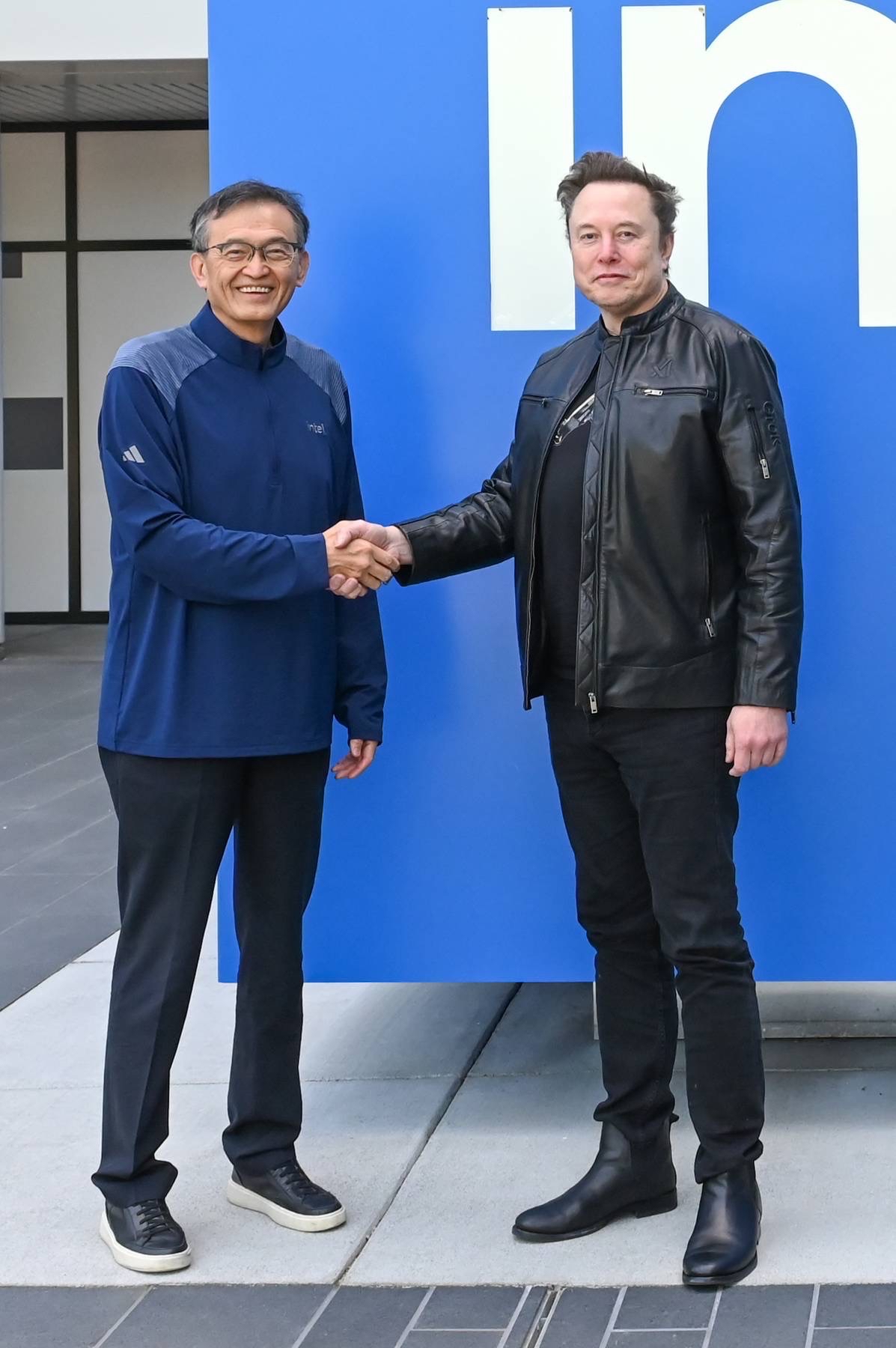 Intel partners with Elon Musk's SpaceX, xAI, and Tesla on Terafab to scale chip production toward 1TW/year of compute, targeting massive AI and robotics acceleration2026-04
 Mizuho research analysts report Elon Musk’s X Money could disrupt global payments and challenge PayPal, but planned crypto integration faces regulatory hurdles under proposed US legislation2026-04
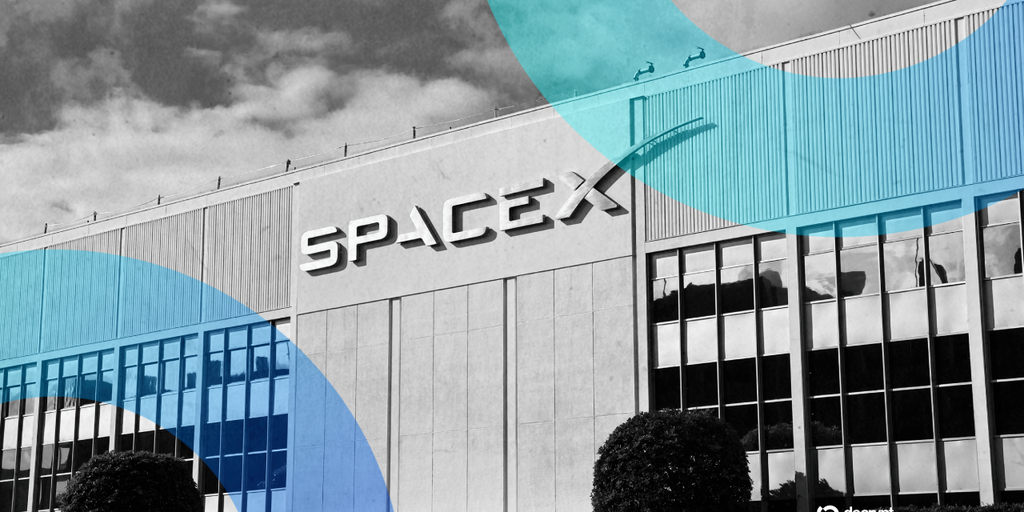 SpaceX warns investors orbital AI data centers may not be commercially viable, despite Elon Musk’s push for space-based computing in IPO filing2026-04
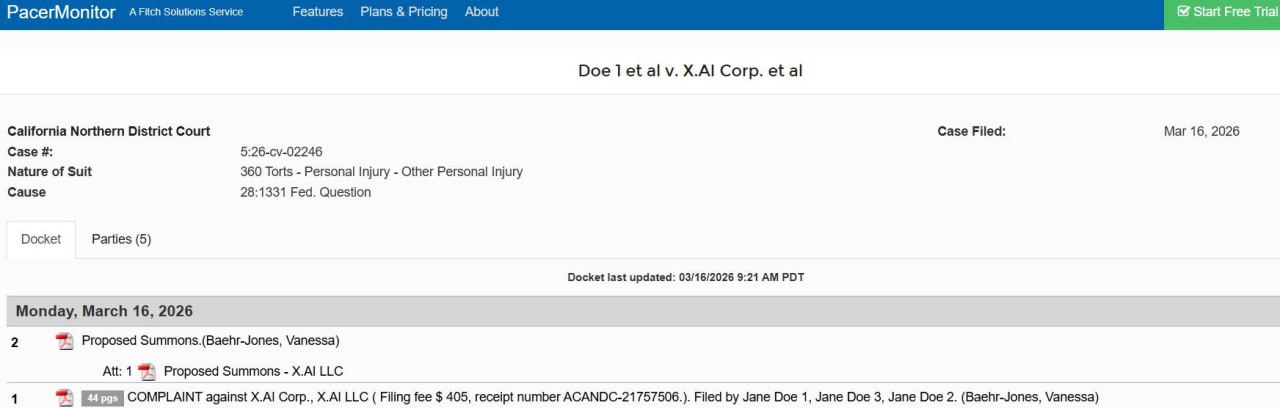 Minors sue xAI in California over alleged Grok deepfake images. The class action alleges Elon Musk's AI company knowingly produced and profited from child sexual abuse material.2026-03
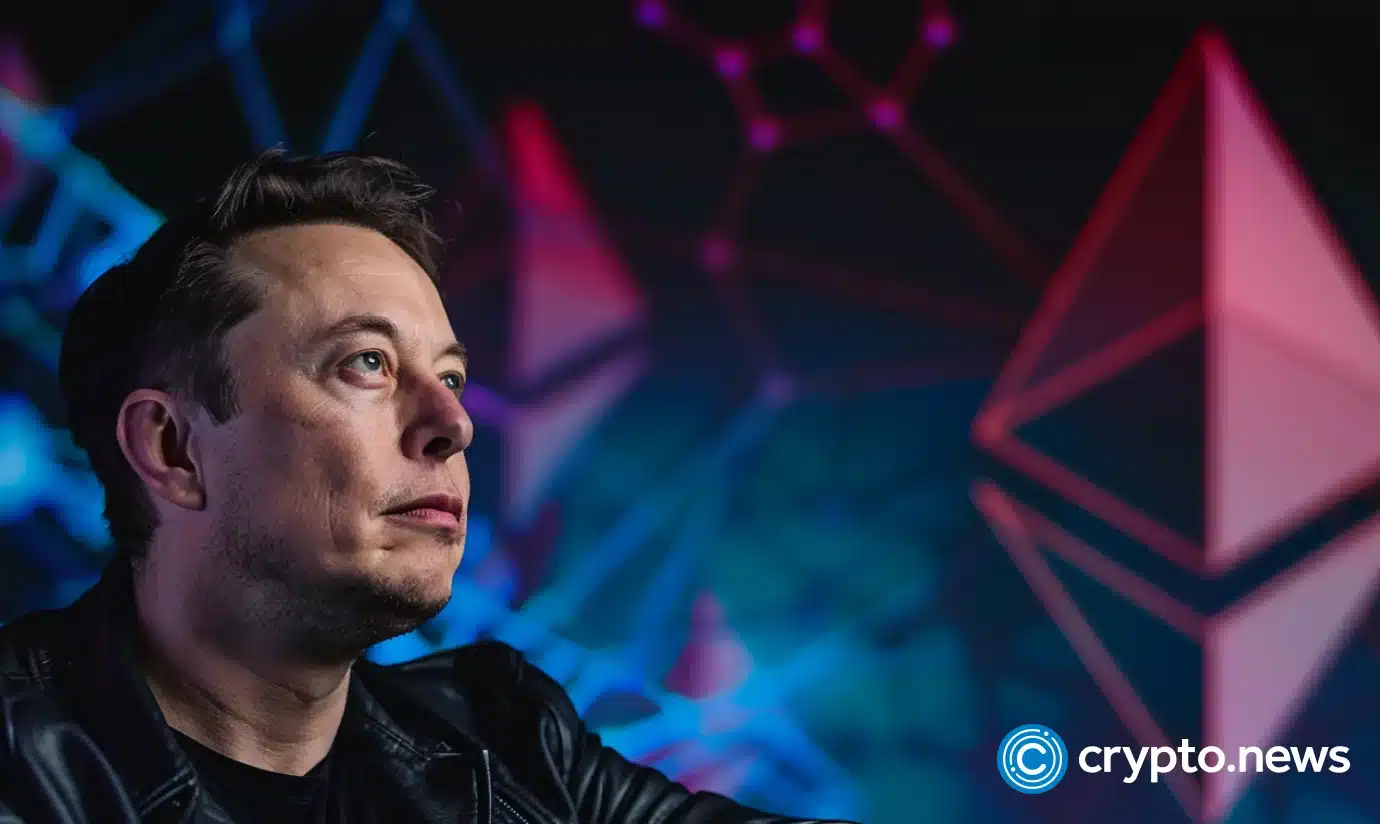 OpenAI faces IPO risk as Elon Musk lawsuit challenges for-profit pivot, threatens $40B funding and governance model in landmark AI case2026-04
 Elon Musk proposes universal high income via federal payments to offset AI-driven job losses, arguing robotics-led abundance will prevent inflation despite money supply growth2026-04
Elon Musk is a South African-born entrepreneur and the CEO of Tesla, SpaceX, and xAI, whose public statements, corporate decisions, and political positioning have made him one of the most consequential individual actors in both cryptocurrency markets and the broader technology economy.
Who Elon Musk Is — and Why Crypto Audiences Should Care
Most people reading a crypto publication already know the basics: Musk founded or co-founded PayPal, Tesla, SpaceX, Neuralink, and The Boring Company, and in 2022 acquired Twitter, rebranding it as X. What matters for a crypto audience is the compound effect of those ventures taken together. Musk now controls or heavily influences a payments platform (X), a publicly traded automaker with a significant bitcoin position (Tesla), a private aerospace company that itself holds over $1.45 billion in bitcoin and recently completed one of the largest IPOs in market history (SpaceX), and an AI laboratory (xAI) competing directly with OpenAI and Google DeepMind. His public musings on Dogecoin have historically triggered double-digit percentage price swings in minutes. No other individual combines this degree of market-moving communication power with direct exposure across so many asset classes simultaneously.

Intel partners with Elon Musk's SpaceX, xAI, and Tesla on Terafab to scale chip production toward 1TW/year of compute, targeting massive AI and robotics acceleration
The SpaceX IPO: A $1.75 Trillion Event With Crypto Ripples
SpaceX's IPO — pricing at $135 per share on the Nasdaq in June 2025 and valuing the company at roughly $1.75 trillion — was the largest public listing in years by most measures. Ark Invest alone purchased over $500 million in SpaceX shares on the debut, with Cathie Wood framing the position as complementary to the firm's long-term crypto holdings. Binance, OKX, and several other crypto-native exchanges moved quickly to launch pre-IPO perpetual futures contracts tied to SpaceX's valuation, allowing retail traders to bet on the company's share price without holding actual equity — a structural pattern that increasingly blurs the line between equity markets and crypto derivatives.
The bitcoin connection is not incidental. SpaceX's IPO filing disclosed the company holds approximately $1.45 billion in bitcoin on its balance sheet, making it one of the largest corporate bitcoin holders globally alongside MicroStrategy and Tesla. Some analysts noted that a successful IPO could create selling pressure on bitcoin if SpaceX or early investors rotated proceeds into more liquid assets, or conversely that broader institutional attention on Musk's empire could draw fresh capital into digital assets. The SpaceX-bitcoin relationship is worth watching: any future financial disclosures, restructuring events, or a hypothetical Tesla-SpaceX merger scenario would directly alter how much bitcoin Musk's corporate ecosystem controls.
SpaceX also disclosed in its IPO filing that its proposed orbital AI data centers — a concept Musk has championed publicly — may not be commercially viable in the near term, tempering some of the more speculative narratives that had circulated ahead of the listing.
Readers click Musk-crypto stories not for protocol mechanics but for directional signals — a stray hint, a pardon tweet, a platform pivot — that instantly move memecoin prices or reshape regulatory posture, making Musk the most consequential single macro variable in crypto that isn't a central bank.
xAI, OpenAI, and the AI Rivalry That Shapes the Sector
Musk co-founded OpenAI in 2015, departed its board in 2018, and has since become one of its most prominent critics. He founded xAI in 2023 as a direct competitor, releasing the Grok large language model family. In 2024 and 2025, Musk pursued legal action against OpenAI, alleging trade secret misappropriation as OpenAI restructured from a nonprofit to a for-profit entity. A federal judge dismissed that lawsuit in mid-2025, and Sam Altman's legal team described Musk's allegations as "unsubstantiated." The litigation has not slowed OpenAI's fundraising — the company has targeted a $40 billion funding round — though Musk's lawsuit did briefly add governance uncertainty to OpenAI's own IPO timeline.
For crypto readers, the AI arms race matters for two reasons. First, AI infrastructure spending is reshaping capital allocation across technology sectors, and companies like xAI are competing for the same GPU supply chains and data center capacity that underpin many blockchain computing arguments. Second, Musk's acquisition of Cursor — an AI coding assistant — by SpaceX for approximately $60 billion signals that the consolidation of AI tooling into large conglomerates is accelerating, with implications for open-source AI projects that have historically overlapped with the decentralization ethos of the crypto community.
Mizuho research analysts report Elon Musk’s X Money could disrupt global payments and challenge PayPal, but planned crypto integration faces regulatory hurdles under proposed US legislation
Dogecoin: The Irony Bet That Moved Markets
Dogecoin was created in December 2013 by Billy Markus and Jackson Palmer as a parody of cryptocurrency speculation, using the Shiba Inu meme as its mascot. Musk's sustained public affection for the coin — beginning in earnest around 2019 — transformed what was a minor memecoin into a top-ten cryptocurrency by market capitalization at its 2021 peak. He has described his preference for Dogecoin in explicitly ironic terms: at an Ark Invest event in July 2021, he explained that "the most entertaining outcome is the most likely," suggesting a meme-origin coin becoming a leading global currency was precisely the kind of absurdist result he found plausible.
Musk's influence on Dogecoin pricing remains structural rather than ephemeral. A single tweet, reference in an earnings call, or X platform integration announcement can move the asset by 20–40% within hours. That price sensitivity is a function of Dogecoin's relatively thin order books at top-of-book levels and the outsized share of its retail holder base that actively monitors Musk's social media output. When Musk integrated Dogecoin payments into Tesla's merchandise store in 2022, the asset rallied sharply. The pattern has repeated enough times that quantitative traders now maintain dedicated monitoring systems for Musk-related social signals.
DOGE, Trump, and Political Capital
From late 2024 through mid-2025, Musk served as an informal head of the Department of Government Efficiency (DOGE) — a federal advisory body established under President Trump's second administration. The department, stylized to echo the Dogecoin ticker, became a vehicle for advocating significant federal workforce reductions and regulatory rollbacks. Musk accompanied Trump on high-profile diplomatic engagements including a trip to China alongside Nvidia's Jensen Huang, JPMorgan's Jamie Dimon (represented through Larry Fink of BlackRock), and Apple's Tim Cook — an indication of his standing as a de facto envoy for the U.S. technology sector.
For crypto markets, the DOGE period was consequential in two ways. Regulatory posture toward crypto shifted measurably under the Trump administration, with the SEC reducing the pace of enforcement actions against digital asset firms and several Biden-era rulemakings stalled or reversed. Musk's proximity to that policy environment, combined with his public comments on financial deregulation, positioned him as an indirect influence on the regulatory climate crypto companies operate in. His eventual departure from DOGE in mid-2025 amid public friction with some administration officials reduced but did not eliminate his policy leverage.
Coinbase appoints Anthony Armstrong, former CFO at Elon Musk’s xAI and X, to its board as the exchange expands beyond crypto trading

X Money and the Payments Layer
Mizuho Research published analysis in 2025 concluding that X Money — Musk's payments initiative embedded within the X platform — could materially disrupt global payments infrastructure and apply competitive pressure to PayPal. X Money allows users to send fiat currency peer-to-peer via the platform, with plans for crypto integration that remain subject to U.S. regulatory conditions.
The regulatory friction is not trivial. Proposed U.S. legislation governing stablecoin issuance and crypto payments would impose compliance requirements that complicate Musk's stated ambition to make X a "global financial platform." The competitive threat to PayPal is real — X has a large existing user base and significant network effects — but the timeline for meaningful crypto integration is dependent on legislative outcomes that were still unresolved as of mid-2025. Analysts at Mizuho noted that X Money's success in payments could create a new on-ramp pathway for crypto adoption if regulatory hurdles are cleared, but also a new off-ramp risk if X becomes a dominant payments rail that draws users away from crypto-native wallets.
- 01Musk signal triggers memecoins
The VINE memecoin launch from a single Musk app-revival hint — 234 clicks, the top story — crystallizes how his offhand remarks function as permissionless token launchpads.
- 02X platform as crypto rail
X Money + Visa, crypto transfers via handles, and XChat's Bitcoin-level security framing show readers tracking whether X becomes a genuine payment and self-custody layer.
- 03Dogecoin manipulation exposure
A $258 billion lawsuit and a Musk lawyer chairing a $200M DOGE treasury company kept readers watching whether DOGE is an asset or a controlled narrative.
- 04Musk-Trump political nexus
Tax-bill threats tied to Musk companies, the Ross Ulbricht pardon signal, and DOGE monitoring federal workers show readers connecting political proximity to crypto-regulatory outcomes.
- 05xAI funding and legal blowback
A $6B Series B, a Pentagon Grok clearance, a Grok deepfake lawsuit, and a trademark suit from Xai gaming network ran in parallel, drawing readers watching whether xAI becomes a regulated AI-finance nexus.
- 06SEC and regulatory capture risk
Senator Warren's Tesla board letter and the SEC-overhaul-risks headline show readers monitoring whether Musk's political power is reshaping the very agencies meant to police crypto markets.
AI, Labor, and the Universal Income Argument
Musk has argued publicly that AI and robotics will render conventional human labor optional within 20 years or less. At several public forums in 2024–2025, he proposed that governments should respond to AI-driven unemployment by issuing universal high income payments — essentially federally funded income support that he argues would not be inflationary because AI-driven productivity gains would expand real supply faster than money supply growth. This is a heterodox macroeconomic argument that mainstream economists have contested, but it has circulated widely in crypto communities where monetary policy debates and universal basic income proposals already have an engaged audience.
Tesla's Optimus humanoid robot program is the corporate manifestation of this thesis. Musk has projected Optimus unit production scaling to hundreds of thousands by 2026, though Tesla has historically adjusted production timelines significantly. The intersection of robotics, AI labor displacement, and monetary policy arguments is one of the more direct points of contact between Musk's long-term vision and the economic philosophy underlying many cryptocurrency projects.
Corporate Bitcoin Exposure and Market Influence
Tesla disclosed its initial $1.5 billion bitcoin purchase in February 2021 and sold approximately 75% of that holding in 2022, citing liquidity needs. It has retained the remainder. Combined with SpaceX's confirmed $1.45 billion bitcoin holding, Musk's corporate ecosystem represents one of the largest non-custodial aggregate bitcoin positions in existence. A hypothetical Tesla-SpaceX merger — which has circulated as a speculative scenario in financial media — would consolidate those holdings under a single publicly traded entity, creating a bitcoin exposure that would rival or exceed MicroStrategy's position.
The market impact of Musk's aggregate positions means that ordinary corporate decisions — share buybacks, debt issuance, restructuring — carry secondary implications for bitcoin liquidity and price that would not apply to equivalently sized non-Musk entities. This is a structural feature of the current market, not a transient one.
- 2022-10milestone
Musk completes $44B Twitter acquisition, rebrands to X
- 2024-01milestone
First human receives Neuralink brain-chip implant
- 2024-05launch
xAI raises $6B Series B led by a16z and Sequoia
- 2024-06regulatory
Dogecoin price-manipulation lawsuit ($258B) proceeds in court
- 2025-01governance
Trump pardons Ross Ulbricht; Musk signals support
- 2025-01launch
X + Visa X Money Account announced for instant payments
- 2025-03launch
VINE memecoin launches after Musk hints at app revival
- 2025-05milestone
Musk lawyer Alex Spiro tapped to chair $200M Dogecoin treasury company
Outlook
Musk's influence on crypto markets is likely to remain outsized through at least the medium term for structural reasons that predate any individual news cycle. SpaceX's status as a publicly traded company with disclosed bitcoin holdings brings new institutional scrutiny to its balance sheet decisions. xAI's trajectory will continue to shape the competitive landscape for AI infrastructure spending. X Money's regulatory progress — or stall — will determine whether the platform becomes a meaningful on-ramp for crypto adoption or remains a fiat payments tool. And Dogecoin's price will continue to track, at some nonzero correlation, whatever Musk says next on X.
The deeper question for the crypto industry is whether Musk's presence is net-positive or net-negative for its maturation. His market-moving communication style is precisely the kind of single-point-of-failure concentration risk that decentralization advocates argue crypto should eliminate. At the same time, his companies' balance sheet bitcoin holdings, his payments platform ambitions, and his regulatory proximity to the Trump administration have all materially shaped the environment in which the industry currently operates.
Latest Elon Musk news
Intel partners with Elon Musk's SpaceX, xAI, and Tesla on Terafab to scale chip production toward 1TW/year of compute, targeting massive AI and robotics accelerationMizuho research analysts report Elon Musk’s X Money could disrupt global payments and challenge PayPal, but planned crypto integration faces regulatory hurdles under proposed US legislationCoinbase appoints Anthony Armstrong, former CFO at Elon Musk’s xAI and X, to its board as the exchange expands beyond crypto tradingSpaceX warns investors orbital AI data centers may not be commercially viable, despite Elon Musk’s push for space-based computing in IPO filingMinors sue xAI in California over alleged Grok deepfake images. The class action alleges Elon Musk's AI company knowingly produced and profited from child sexual abuse material.OpenAI faces IPO risk as Elon Musk lawsuit challenges for-profit pivot, threatens $40B funding and governance model in landmark AI caseCommunity notes
Spot something off or out of date? Drop a note. Editors review topic notes daily and roll accepted fixes into the explainer — contributors are recognized in the monthly $SQUID drop.
Loading notes…
Help improve this topic
Have a story or tip about this topic? Submit it. See something missing? Leave a note. Editors review daily; accepted submissions and fixes count toward the monthly $SQUID drop.