
CoW DAO governs CoW Protocol, an Ethereum-based DEX using batch auctions and solver competition to protect traders from MEV. Covers tokenomics, governance, the DNS hijacking incident, and institutional adoption.
+2 sources across the wider coverage universe
 CoW Swap frontend compromised as Blockaid flags site malicious, DAO urges users to stop trading2026-04
 CoWSwap regains full control of original domain2026-04
 Ethereum Foundation to convert 5,000 ETH into stablecoins via CoW DAO TWAP for R&D and grants2026-04
 New security audit released for CoWSwap’s CoW-Euler integration, enabling atomic leverage on Euler2026-05
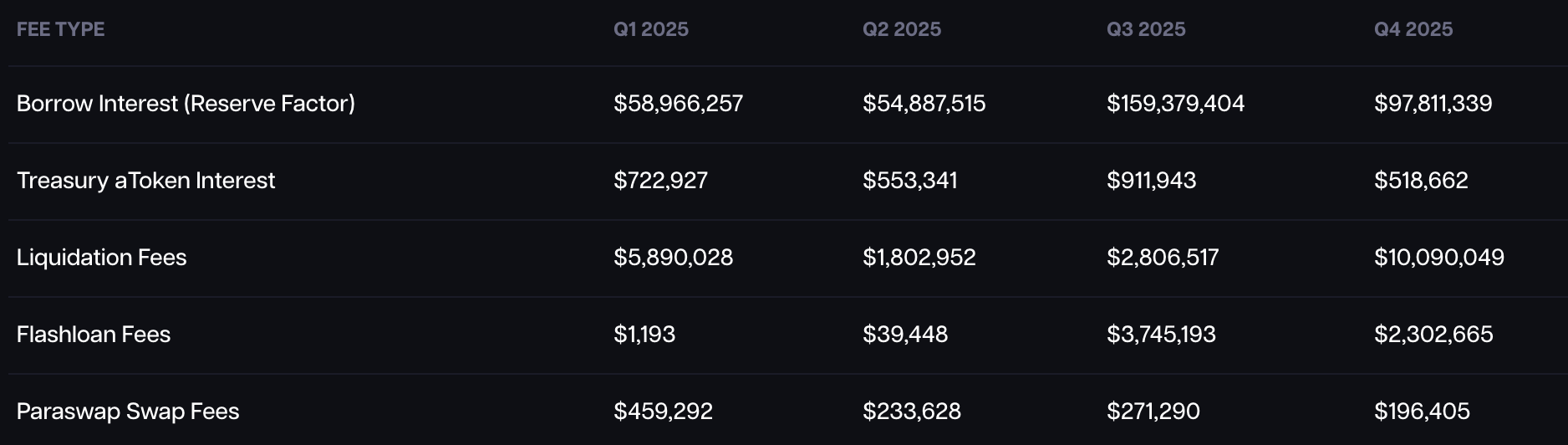 Aave Chan Initiative Accuses Aave Labs of Diverting DAO Revenues and Privatizing Protocol Economics, Demands Clarity on CowSwap Integration, Vault Fees, Horizon Deals, and V4 Liquidation Engine Incentives.2025-12
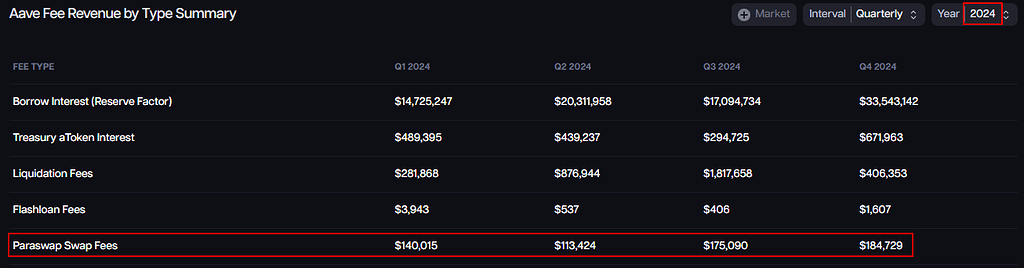 Tensions erupt around Aave governance, including a spat in the Lobsters channel between Avara CEO Stani Kulechov and Aave Chan Initiative founder Marc Zeller, following reports of revenues from CoW swaps (15-25 bps) not going to the Aave DAO2025-12
A decentralized autonomous organization governing one of Ethereum's most technically distinctive trading protocols, CoW DAO combines batch-auction settlement, MEV protection, and community governance to offer an alternative architecture to conventional automated market makers.
What Is CoW Protocol?
Most decentralized exchanges execute trades one at a time against on-chain liquidity pools. CoW Protocol takes a different approach: users submit signed "intents to trade" rather than direct on-chain transactions, and a network of professional competitors called solvers compete in periodic batch auctions to find the optimal settlement path for all pending orders simultaneously.
The acronym stands for Coincidence of Wants—a term from classical economics describing a situation where two parties each hold exactly what the other needs. When a solver detects that one user wants to sell ETH for USDC while another wants to sell USDC for ETH, it can settle both orders against each other directly, bypassing liquidity pools entirely and returning the full spread to traders. When no direct match exists, solvers route through any combination of on-chain AMMs, private market makers, or other liquidity sources to find the best available price for the batch.
The protocol was incubated within Gnosis DAO, launched in 2021, and spun out as an independent organization—CoW DAO—with its own governance token, $COW, and treasury.

CoW Swap frontend compromised as Blockaid flags site malicious, DAO urges users to stop trading
CoW Swap's frontend has been hit by a security attack, with Blockaid's detection system flagging the site as malicious. CoW DAO confirmed the issue and is urging all users to stop using CoW Swap immediately while they investigate. No details yet on the attack vector or whether any user funds were drained — the warning came fast enough that the damage scope is still unclear.
The Batch Auction Mechanism
Within each batch, every trade for the same token pair clears at a single uniform price. This is a deliberate departure from the order-book and AMM models where execution order determines outcome, and where automated bots routinely front-run or sandwich retail orders.
The flow works as follows:
1. Order submission: A user signs an intent specifying the tokens, minimum acceptable price, and deadline. The signed message goes to the CoW Protocol orderbook—an off-chain database—and no gas is spent unless the order is settled. 2. Batch formation: The protocol's "Autopilot" smart contract periodically opens a new batch and posts the pending orders. 3. Solver competition: Registered solvers—entities that have staked COW tokens and passed an allowlisting process—ingest the batch and submit proposed settlement solutions within a time window. Each proposal specifies exact execution paths and prices. 4. Auction settlement: The Autopilot selects the solver whose solution maximizes surplus returned to users. That solver's proposed settlement is executed on-chain; the solver earns a reward from the protocol. 5. Uniform clearing: All trades in the winning settlement clear at a single price per pair, so no trader suffers because their order happened to be processed last.
Because orders are matched off-chain before any on-chain transaction is broadcast, MEV bots have no readable mempool transaction to front-run. The protocol's own documentation describes this design as "inverting the extraction paradigm"—rather than bots extracting value from traders, solvers compete to deliver value to them.
Readers click CoW DAO stories not as traders hunting swap rates but as infrastructure watchers tracking whether CoW's batch-auction model becomes the invisible settlement layer inside every major wallet and protocol — the Safe{Wallet} integration drew five times more clicks than any competitive, tokenomics, or security angle combined.
MEV: The Problem CoW Protocol Was Built to Solve
Maximal Extractable Value (MEV) refers to profit that validators or bots can capture by reordering, inserting, or censoring transactions within a block. On Ethereum, sandwiching a large DEX trade—placing a buy order just before it and a sell order just after—is a trivially executable MEV strategy that costs retail traders millions of dollars per year in hidden slippage.
CoW Protocol's batch model structurally eliminates the most common MEV vectors:
- Front-running is impossible because no on-chain transaction exists for bots to observe until after the batch is settled.
- Sandwich attacks fail because all trades in a batch clear at the same price; there is no ordering within the batch to exploit.
- Slippage exploitation is reduced because solvers are economically rewarded for returning surplus to users, not for extracting it.
This protection has made CoW Protocol the preferred execution venue for large institutional DeFi transactions. In one widely-cited case, the Ethereum Foundation announced it would convert 5,000 ETH into stablecoins using CoW Protocol's Time-Weighted Average Price (TWAP) feature to fund R&D, grants, and donations—a meaningful institutional endorsement of the protocol's ability to execute large swaps without adverse price impact.
CoW DAO: Governance and the COW Token
CoW DAO is the governance layer that controls protocol parameters, treasury allocation, solver allowlisting, and product direction. The DAO operates on a forum-first model: proposals are debated openly on the CoW DAO forum before being submitted as CoW Improvement Proposals (CIPs) for on-chain voting.
The COW token has a fixed total supply of 1 billion tokens and serves two primary functions:
- Governance: COW holders vote on CIPs that shape protocol direction, fee structures, solver incentives, and treasury spending.
- Fee discounts: COW grants trading fee reductions on CoW Swap, the flagship consumer interface built on CoW Protocol.
The initial supply was allocated across CoW DAO treasury (≈44%), team (15%), private investors (≈10%), public sale (≈5%), ecosystem grants, solver rewards, and airdrops to early users and GNO holders. A maximum inflation rate of 3% per annum is capped in the token contract, and any new issuance requires a governance vote no more frequently than once every 365 days. As of 2026, the initial vesting schedules have fully expired, with roughly 56% of total supply in circulation.
CIP-38, a significant governance proposal, mandated converting protocol fees into COW to offset solver emissions, targeting net-zero dilution. The DAO's treasury committee has reported that emissions have remained net negative against fee buybacks—meaning the protocol has been buying back more COW than it emits to solvers.

CoWSwap regains full control of original domain
Value Distribution: An Active Governance Question
As of mid-2026, one of the most consequential open debates in CoW DAO concerns how—and whether—to distribute protocol value directly to COW holders. The Core Team published a view on the forum outlining their proposed path for a Value Distribution Mechanism, building on a formal Request for Proposals (RFP) process and months of community feedback. The discussion touches on the tension between funding protocol development (which requires treasury capital) and rewarding token holders whose governance participation and staking underpin solver security.
This is a live governance process, not a settled outcome, and the final mechanism will require a successful CIP vote.
- 01Safe Wallet native integration
Embedding CoW Swap directly into Safe{Wallet} signals CoW graduating from optional aggregator to default smart-account infrastructure, which readers recognized as a distribution moat more durable than market-share statistics.
- 02Fee switch revenue capture
Whether CoW could monetize $33B+ in cumulative volume without distorting solver competition is a live DAO-sustainability question that drew readers tracking the gap between protocol usage and token value accrual.
- 03CoW AMM LVR resistance design
The FM-AMM and CoW AMM work targeting loss-versus-rebalancing attracted readers who see LVR as the last major unsolved MEV problem for on-chain liquidity providers.
- 04Aave revenue diversion dispute
Accusations that CoW swap fees generated inside Aave were not flowing to the Aave DAO lit up governance-watchers tracking how cross-protocol integrations create silent revenue-routing conflicts.
- 05Encrypted order MEV protection
The FairyCoW encrypted-order collaboration with Fairblock and Anagram told readers that frontrunning protection on CoW's order flow was moving from research promise to live product.
- 06L2 expansion and market share race
The Arbitrum deployment and the 26% DEX aggregator share story together framed CoW shifting from Ethereum-native niche to a credible multi-chain 1inch challenger.
CoW Swap: The Consumer-Facing Interface
CoW Swap is the primary user interface built on CoW Protocol. It functions as a meta-aggregator: rather than routing exclusively through one AMM, solvers sourcing liquidity for CoW Swap batches search every available venue—Uniswap, Curve, Balancer, and private inventory—and return the best executable price.
Recent additions expand its reach:
- Affiliate program (CIP-84): Passed by DAO vote, the program rewards affiliates in USDC for bringing new wallets that generate trading volume, with payouts calculated and distributed on-chain weekly. No application is required to participate.
- Bitget Wallet integration: CoW Swap joined Bitget Wallet's liquidity network as a solver, extending MEV-protected execution to more than 90 million wallet users.
- CoW-Euler integration: A new security-audited integration enables atomic leveraged positions using Euler's lending infrastructure, settled through CoW Protocol's batch auction system. The integration received a dedicated external security audit before launch.
The Aave $50M Incident: A Stress Test
Not every large trade through CoW Protocol has gone smoothly. A notable incident involved a $50 million swap executed by Aave DAO that resulted in significant adverse execution—the actual output fell dramatically short of what a market-rate swap should have yielded. Both Aave and CoW Swap published post-mortems examining the failure.
The incident highlighted the importance of order parameters: solver competition produces good outcomes when orders are configured with appropriate price limits and deadlines, but large orders submitted with insufficient slippage constraints or into thin liquidity conditions can still settle at poor prices if no solver can beat the limit. CoW Swap's post-mortem pointed toward enhanced safeguards and discussed a fee refund of approximately $600,000. The episode underscored that MEV protection and best execution are related but distinct properties—CoW Protocol prevents adversarial extraction, but it cannot manufacture liquidity that does not exist.
Ethereum Foundation to convert 5,000 ETH into stablecoins via CoW DAO TWAP for R&D and grants
Security: The DNS Hijacking Incident
In a significant security incident, CoW Swap's frontend was compromised via a DNS hijacking attack. Attackers redirected the canonical domain to a malicious site, with the on-chain security firm Blockaid flagging the site as dangerous before the team could respond. The DAO urged users to immediately stop trading; the protocol's on-chain contracts were not affected, but users interacting with the compromised frontend were at risk of approving malicious transactions.
The DAO subsequently regained control of the domain, and approximately $1.2 million was reported lost during the window of compromise. The incident is a reminder that even protocols with robust on-chain security architectures remain vulnerable at the Web2 infrastructure layer—DNS records, frontend hosting, and domain registrar security are attack surfaces that on-chain audits do not cover.
- 2022-02launch
COW token launch and CoW DAO formally constituted
- 2023-10milestone
FM-AMM research collaboration with Robin Fritsch (ETH Zurich) announced
- 2024-03milestone
CoW Protocol and Balancer announce joint CoW AMM development
- 2024-05milestone
Ethereum Foundation executes 5,000 ETH to stablecoin TWAP via CoW DAO
- 2024-08launch
CoW AMM exits beta and goes live on Balancer UI
- 2024-10governance
Fee switch activated to capture revenue on cumulative $33B trading volume
- 2024-11milestone
Safe{Wallet} launches native swaps powered by CoW Swap
- 2025-06governance
Core team requests 13.8M USDC and 100M COW for 2026 operations budget
CoW Protocol Beyond Ethereum
While CoW Protocol launched on Ethereum mainnet and remains most liquid there, the protocol has expanded to additional EVM-compatible networks including Gnosis Chain, Arbitrum, and Base Chain. Solver competition on each chain operates independently, with liquidity depth and active solvers varying considerably by network. Base Chain adoption has grown alongside broader DeFi activity on that network.
Ecosystem Position and Competitive Landscape
CoW Protocol occupies a specific niche in the DEX landscape: it is neither a traditional AMM nor a simple aggregator. Its closest conceptual relatives are other intent-based or RFQ-based systems—UniswapX, 1inch Fusion, and Paraswap Delta all share the "solvers compete off-chain" architecture to varying degrees. The batch auction model with uniform clearing prices remains CoW Protocol's most distinctive feature and is not replicated elsewhere at the same level of sophistication.
The solver network's reliance on staked COW creates a soft alignment between governance participation and technical operation of the protocol—solvers must hold and stake COW to participate, giving them skin in the game alongside governance voters.
Outlook
CoW DAO enters the second half of 2026 at an inflection point. The value distribution debate will likely determine how the protocol's fee revenue is channeled going forward—either into treasury reserves for development and grants, into direct COW holder rewards, or some combination. The outcome will shape token holder incentives significantly.
The DNS hijacking incident has prompted renewed attention to frontend security across the DeFi space, and CoW DAO's response—rapid domain recovery and transparent communication—will influence its reputational trajectory. On the product side, the Euler leverage integration and expanding institutional use cases like the Ethereum Foundation's TWAP conversion suggest that solver-based execution is finding genuine product-market fit beyond retail trading. Whether CoW Protocol can translate that technical credibility into durable protocol revenue and a coherent value distribution story for COW holders is the defining question ahead.
Latest CoW DAO news
CoW Swap frontend compromised as Blockaid flags site malicious, DAO urges users to stop tradingCoWSwap regains full control of original domainEthereum Foundation to convert 5,000 ETH into stablecoins via CoW DAO TWAP for R&D and grantsNew security audit released for CoWSwap’s CoW-Euler integration, enabling atomic leverage on EulerAave Chan Initiative Accuses Aave Labs of Diverting DAO Revenues and Privatizing Protocol Economics, Demands Clarity on CowSwap Integration, Vault Fees, Horizon Deals, and V4 Liquidation Engine Incentives.Tensions erupt around Aave governance, including a spat in the Lobsters channel between Avara CEO Stani Kulechov and Aave Chan Initiative founder Marc Zeller, following reports of revenues from CoW swaps (15-25 bps) not going to the Aave DAOCommunity notes
Spot something off or out of date? Drop a note. Editors review topic notes daily and roll accepted fixes into the explainer — contributors are recognized in the monthly $SQUID drop.
Loading notes…
Help improve this topic
Have a story or tip about this topic? Submit it. See something missing? Leave a note. Editors review daily; accepted submissions and fixes count toward the monthly $SQUID drop.