
An evergreen explainer on automated market makers (AMMs): how liquidity pools and pricing formulas replace order books, key designs from Uniswap to Curve, impermanent loss, fees and burns, exploits, and where AMMs are heading.
+51 sources across the wider coverage universe
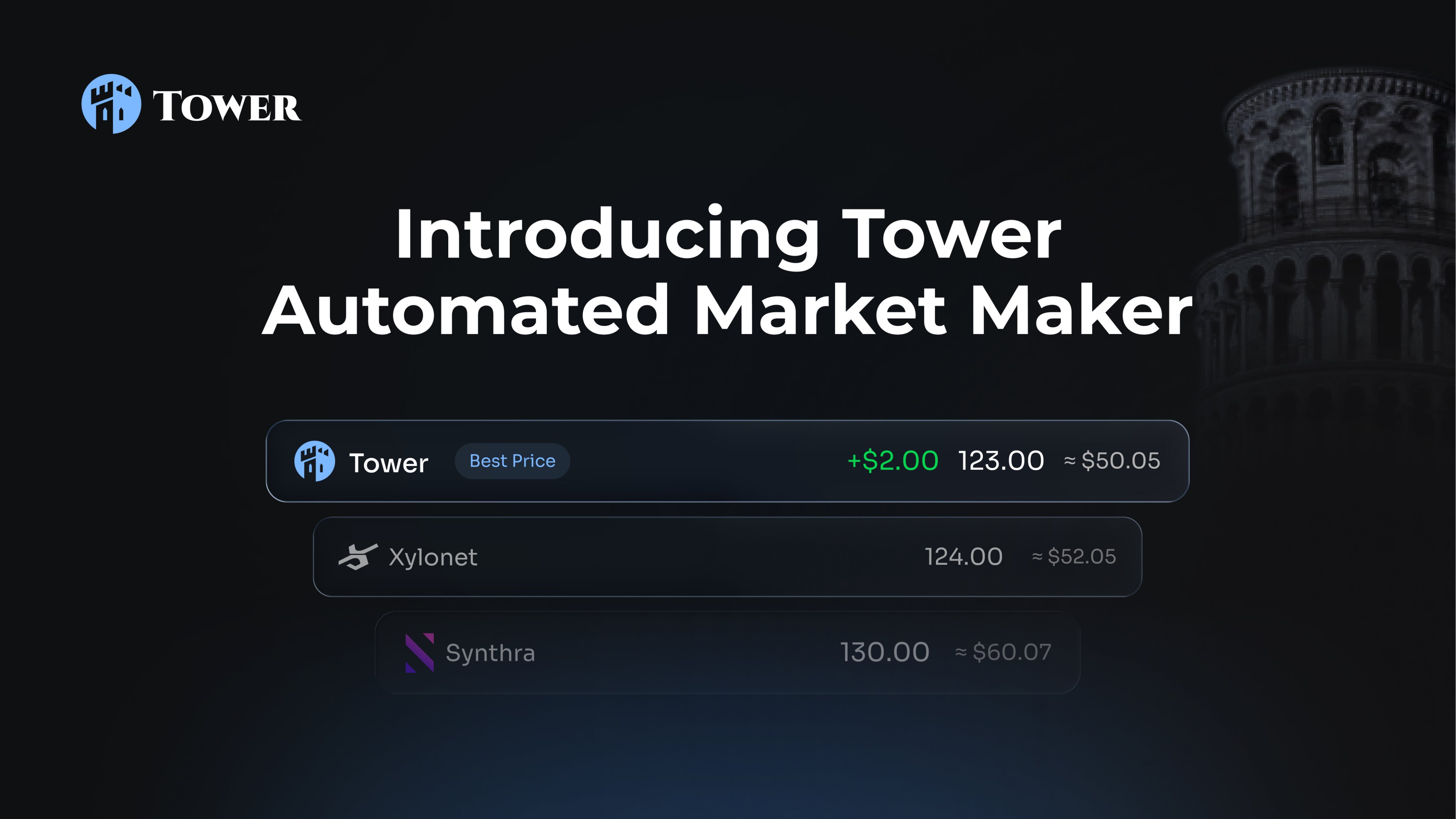 Tower Exchange launches Tower AMM on ARC, boosting onchain liquidity, improving trade execution and laying the groundwork for public liquidity pools2026-07
 Creator launches after 8 months of development, unveiling all-in-one Solana platform with launchpad, trading terminal, AMM, wallet, and social layer ahead of token trading debut2026-04
 Curve's latest AMM sailed through audits, but Firepan's AI spotted a critical vulnerability before any treasure was lost.2026-06
 XRPL AMM draft highlights flash-loan resistance after $600M in recent DeFi exploits2026-05
 Raydium reveals plan to reimburse users after an exploit drained roughly $1.34M from five inactive liquidity pools tied to its retired AMM V3 program, which has been phased out since 20212026-06
 Loopring to wind down DEX and AMM services as project exits DeFi business and plans asset distribution2026-06
Automated market makers (AMMs) are smart-contract protocols that let traders swap tokens against a pooled reserve of assets, using a mathematical formula rather than a traditional order book to set prices. They are the pricing engine beneath most decentralized exchanges (DEXs) and one of the foundational primitives of decentralized finance (DeFi).
How an AMM Works
In a conventional exchange, buyers and sellers post orders, and a matching engine pairs them. An AMM replaces that intermediary with a liquidity pool: a smart contract holding reserves of two or more tokens. Anyone can trade against the pool, and the price is determined algorithmically by the ratio of assets it holds.
The canonical design is the constant product market maker, introduced at scale by Uniswap in 2018. It enforces the invariant x y = k, where x and y are the reserves of two tokens and k is a constant. When a trader removes some of token X, they must add enough of token Y to keep k unchanged. Because the curve is a hyperbola, large trades move the price more than small ones — this is slippage*, and it grows with trade size relative to pool depth.
Three roles interact with every AMM:
- Traders swap one asset for another and pay a fee (commonly 0.01%–1%).
- Liquidity providers (LPs) deposit pairs of tokens into the pool and earn a pro-rata share of trading fees. In return they receive LP tokens representing their stake.
- Arbitrageurs trade against the pool whenever its price drifts from the broader market, pulling the AMM's quoted price back toward the global reference price. This arbitrage is what keeps an isolated pool honest, but it also transfers value away from LPs.

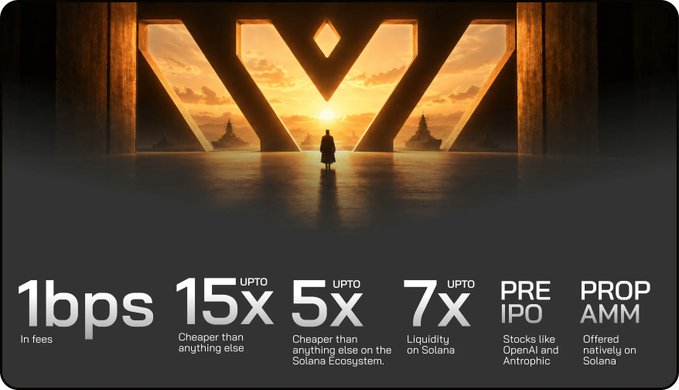
Imperial unveils Armada, a Solana perps AMM with 1 bp execution fees and off-chain hedging
Liquidity and Why It Matters
Liquidity is the depth of capital sitting in a pool. Deeper pools quote tighter prices and absorb larger trades with less slippage, which is why protocols compete aggressively to attract LP deposits — often through token incentives. Market depth, not the headline asset, is frequently the real source of stability; as one recent commentary framed it, "the real safe haven was never the asset — it was the market depth."
The trade-off for LPs is impermanent loss (IL): when the relative price of the two pooled assets changes, an LP ends up with less value than if they had simply held the tokens. The "loss" becomes permanent only if the LP withdraws while prices are divergent. IL is the central economic cost of providing liquidity, and much of AMM research since 2020 has aimed to reduce it.
That research is still contentious. At a recent Stable Summit, Curve founder Michael Egorov reframed impermanent loss not as an unavoidable side effect but as a structural flaw of the square-root price scaling used by constant-product curves — arguing the math itself, not market volatility, is the root cause. The framing matters because it implies different curve designs, not just better incentives, are the path forward.
Readers click AMM content not for swap mechanics but for structural critiques of the xy=k model's silent taxation of liquidity providers — LVR, MEV extraction, and impermanent loss are converging as the central narrative driving engagement, with new oracle-free and intent-aligned designs positioned as the answer.
Major AMM Designs
AMMs have diversified well beyond the original x * y = k model.
Constant-product (Uniswap-style). General-purpose, works for any token pair, but spreads liquidity evenly across all prices — capital-inefficient for assets that trade in a narrow band.
StableSwap (Curve). Curve, launched in 2020, pioneered an invariant blending constant-sum and constant-product behavior. Near a 1:1 ratio the curve is almost flat, giving very low slippage for assets expected to hold the same value — stablecoins like USDC, or pairs of staked-ETH derivatives. This made Curve the default venue for large stablecoin swaps and a backbone of DeFi's stablecoin plumbing.
Concentrated liquidity (Uniswap v3). Released in 2021, this lets LPs allocate capital to specific price ranges rather than the entire curve, dramatically improving capital efficiency for active managers — at the cost of more complex position management and amplified impermanent loss if price exits the chosen range.
Hooks and programmable pools (Uniswap v4). Uniswap v4 introduces hooks — custom contracts that run at defined points in a pool's lifecycle, enabling features like dynamic fees, on-chain limit orders, and custom oracles. The design is being extended further by third parties: Space and Time has added cryptographically verified SQL queries to v4 hooks, allowing AMM logic to reference historical on-chain data with a proof of correctness.
Batch-auction and surplus-capturing AMMs (CoW DAO). CoW Protocol, built by CoW DAO, settles trades in batches via off-chain solvers competing to maximize trader surplus, and its CoW AMM variant is designed to blunt loss-versus-rebalancing (LVR) — the value arbitrageurs extract from passive LPs. It represents a school of thought that the order-flow auction, not just the bonding curve, is where LP returns are won or lost.
Hybrid order-book/AMM and "proprietary" AMMs. Newer entrants blur categories. SynFutures' Oyster AMM merges an order book with an AMM curve for capital efficiency, while a wave of proprietary AMMs (PropAMMs) — including AI-driven designs such as Magma 2.0 on Sui — actively manage pool parameters to maximize "liquidity efficiency" rather than raw scale. Analysts at Blocmates have catalogued the advantages and design trade-offs of PropAMMs as DeFi experiments with models meant to compete with TradFi market structure; independent reviews of Magma 2.0 have flagged potential denial-of-service and reward-gaming risks alongside its efficiency claims, a reminder that added complexity expands the attack surface.
Fees, Tokens, and the Deflation Angle
AMM trading fees do more than pay LPs. Many DEXs route a portion of fees into token burns — permanently removing tokens from supply to create deflationary pressure. PancakeSwap publishes weekly CAKE burn statistics broken out by source, with its AMM v2 and v3 pools typically accounting for the majority of product burns; recent weeks have shown net negative CAKE issuance (more burned than minted) driven primarily by AMM volume. These figures illustrate how AMM activity feeds directly into a protocol's monetary policy, though burn totals swing week to week with trading volume and should be read as volatile rather than a steady trend.
- 01LVR and MEV LP protection
Multiple high-click headlines center on CoW AMM, HOT, and FM-AMM designs that eliminate loss-vs-rebalancing for LPs — readers are drawn to the framing that the dominant AMM model structurally disadvantages the people providing the liquidity.
- 02Oracle-free lending inside AMMs
Frax's BAMM attracted significant attention by rewriting lending primitives — borrowing excess LP liquidity without price oracles is a genuinely novel mechanism that drew readers seeking the underlying math and implications.
- 03New AMM protocol launches
PumpSwap hitting Solana's #2 volume slot within days, Balancer's brand refresh, and Sushi's Aptos integration all drove clicks on the angle of competitive displacement in AMM market share.
- 04Impermanent loss as structural flaw
Egorov's Stable Summit reframing — IL is not a side effect but a design consequence of sqrt-price scaling — and the Astrovault CEO's Uniswap sustainability warning resonated with readers ready to question foundational assumptions.
- 05AMM exploit and overflow attacks
The Cetus $200M drain via a liquidity calculation overflow drew readers because it exposed how a single arithmetic edge case in LP position math can be weaponized to empty pools with minimal capital.
- 06AMM price anomalies and market efficiency
The $SQUID auction arbitrage — where AMM price implied a 1000x market cap discrepancy — pulled readers who wanted to understand whether the result exposed AMM mispricing or rational expectations failure.
Security and Exploits
Because AMMs custody pooled capital in immutable contracts, they are persistent targets. Common failure modes include flawed input validation, price-manipulation via flash loans, and reward-accounting bugs.
Recent incidents underline the pattern. Raydium's legacy AMM V3 program — a contract phased out since 2021 — was exploited for roughly $1.34 million through an LP-mint validation flaw affecting five inactive pools; Raydium subsequently published a reimbursement plan. The episode is a case study in deprecated-but-live risk: code that is no longer maintained can still hold funds and remain reachable on-chain.
Design choices also matter at the protocol level. A draft AMM amendment for the XRP Ledger has emphasized flash-loan resistance as a first-class property, framed explicitly against a backdrop of roughly $600 million in recent DeFi exploits — an argument that closing the chain's biggest DeFi gap requires building manipulation resistance into the AMM from the start rather than patching it later.
Auditing alone is not a guarantee. One of Curve's newer AMMs reportedly passed formal audits before an AI-assisted review surfaced a critical vulnerability that human auditors had missed — a sign that AMM security is shifting toward layered review, combining audits, formal methods, and automated analysis. For anyone interacting with an AMM, the practical takeaways are durable: prefer pools with significant liquidity and track record, understand that audits reduce but do not eliminate risk, and treat novel or unaudited curve designs as experimental.
AMMs and the Broader Market
AMMs increasingly sit at the boundary between crypto-native trading and traditional finance. As tokenization advances — Superstate, for example, has tokenized a Nasdaq-listed equity on Solana, with on-chain AMM trading raised as a logical next step — AMMs become a candidate venue for trading real-world assets on public ledgers. A recent joint report on "Internet Capital Markets" from Tiger Research and Orca maps how issuance, trading, and settlement are migrating onto single public ledgers, with on-chain AMM infrastructure positioned as the trading layer that lets issuers reach investors directly.
That convergence raises the stakes for the unresolved questions — impermanent loss, LVR, MEV, and capital efficiency — because institutional liquidity is less tolerant of value leakage than crypto-native LPs have been. It also explains the current proliferation of designs: constant-product simplicity, StableSwap precision, concentrated liquidity, hooks, batch auctions, and proprietary AI-managed curves are all competing claims about how to provide deep, efficient, manipulation-resistant markets without an order book.
- 2020-08launch
Curve Finance launches as stablecoin-focused AMM
- 2021-05launch
Uniswap v3 introduces concentrated liquidity
- 2024-09launch
Frax BAMM goes live, enabling oracle-free LP borrowing
- 2024-11milestone
CoW AMM exits beta, deploys on Balancer UI
- 2025-03launch
PumpSwap launches and reaches Solana #2 AMM by volume within days
- 2025-05exploit
Cetus AMM exploited for ~$200M via liquidity overflow bug on Sui
- 2025-06milestone
Uniswap Labs acquires Guidestar to advance AMM routing research
Key Terms
- Liquidity pool: a smart contract holding token reserves that traders swap against.
- Slippage: the price impact of a trade, larger for bigger trades in shallower pools.
- Impermanent loss: the opportunity cost an LP bears when pooled asset prices diverge.
- LVR (loss-versus-rebalancing): value passive LPs lose to arbitrageurs as prices move.
- Concentrated liquidity: allocating LP capital to a chosen price range for efficiency.
- Hooks: programmable contracts that extend an AMM pool's behavior (Uniswap v4).
Outlook
The AMM is no longer a single design but a fast-evolving family. Near-term momentum is around capital efficiency and LP protection — concentrated liquidity, programmable hooks, surplus-capturing batch auctions, and proprietary AI-managed pools — alongside renewed scrutiny of whether impermanent loss is intrinsic or fixable through better curves. Security and the long tail of deprecated-but-live contracts remain the sector's most reliable source of losses, while tokenization of real-world assets could pull AMMs toward institutional use and tighter standards. Expect consolidation around designs that demonstrably reduce value leakage, and continued experimentation everywhere else.
Latest AMM news
Community notes
Spot something off or out of date? Drop a note. Editors review topic notes daily and roll accepted fixes into the explainer — contributors are recognized in the monthly $SQUID drop.
Loading notes…
Help improve this topic
Have a story or tip about this topic? Submit it. See something missing? Leave a note. Editors review daily; accepted submissions and fixes count toward the monthly $SQUID drop.