
Comprehensive explainer on “Echo” in crypto, covering Echo Protocol’s BTCFi design and Monad exploit, Coinbase’s Echo capital-formation platform, Echo’s enterprise settlement network, and how “echo” frames reflexive onchain markets.
+11 sources across the wider coverage universe
 Crypto Super PACs pour $8M into Ohio Senate race as 2026 midterms echo 2024 spending blitz2026-04
 Echo Protocol faces suspected Monad exploit after 1K eBTC mint lets attacker max-borrow WBTC on Curvance2026-05
 MegaETH-based DEX GTE secures $10M funding, including $2.5M from Cobie’s Echo platform.2025-01
 Coinbase to create an Echo group2025-03
 Bitcoin treasury firms raising debt/equity just to buy BTC look less like genius and more like a Ponzi echo. With cultish hype and echoes of pre-2008 CDO mania, a crypto winter could turn this “innovation” into real pain for investors.2025-08
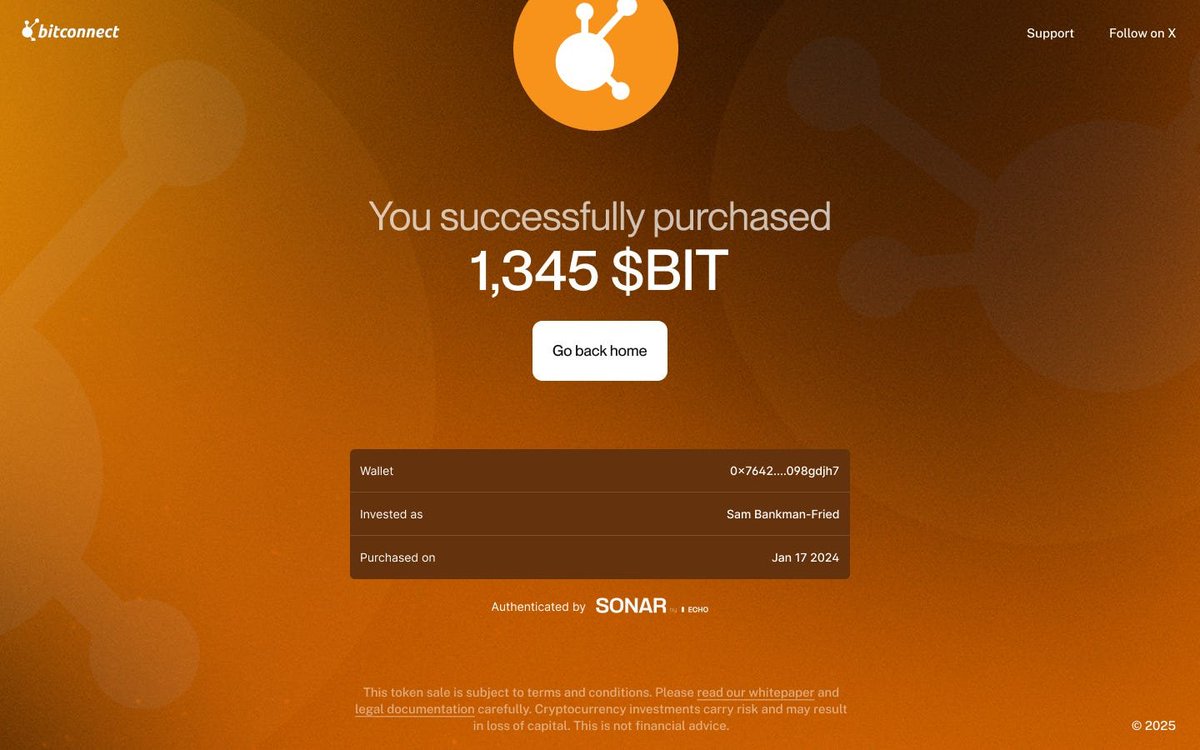 Today, we are announcing Sonar – a new product by Echo that lets anyone host a public token sale.2025-05
Echo in Crypto: Protocols, Platforms, and the Power of Onchain “Echoes”
In digital assets, “Echo” is both a brand and a metaphor: it names several distinct crypto projects – including a Bitcoin DeFi protocol, an onchain capital-formation platform now owned by Coinbase, and an enterprise settlement network – while also describing the way narratives, leverage, and market structures reverberate across blockchains and traditional finance. This explainer disentangles those overlapping meanings, traces how Echo-branded projects fit into Bitcoin, Monad, and onchain markets, and examines what the recent Echo Protocol exploit reveals about the risks of admin keys, cross‑chain wrapped BTC, and reflexive crypto ecosystems.
The Many Meanings of “Echo” in Crypto
Within crypto discourse, “echo” appears in at least three concrete product contexts and a broader narrative sense, which together can be confusing for investors who encounter the term in headlines, token tickers, and Discord chats. On the product side, Echo Protocol is a BTCFi platform that started on Aptos and later deployed its wrapped Bitcoin infrastructure to Monad, where its eBTC contract was recently exploited. Separately, Echo (echo.xyz) is an onchain capital-raising platform for early‑stage startups and tokens, founded by the pseudonymous investor Cobie and acquired by Coinbase in a deal valued at roughly 375 million dollars. A third project, accessible at echo.im, positions itself as a “global settlement layer for enterprise finance,” aiming to replace SWIFT transfers with instant stablecoin-based payments and multi‑currency treasury tools. These ventures share a name but serve very different segments of the crypto economy.
At the same time, journalists, analysts, and market commentators increasingly use “echo” metaphorically to describe the way financial innovations echo earlier cycles or traditional structures. In tokenization, for example, some see onchain funds and real‑world‑asset products as echoing the 20 trillion dollar exchange-traded fund boom, with blockchain and AI infrastructure replaying the rise of ETF wrappers in a new technological key. This framing highlights how crypto does not emerge in a vacuum but often repeats and amplifies patterns first explored in legacy finance, from structured products to passive indexation. Similar language appears in coverage of Bitcoin treasury strategies, where debt-funded BTC accumulation is sometimes described as a “Ponzi echo” of pre‑2008 collateralized debt obligations, warning that yield‑chasing can rhyme with past crises when leverage piles up on volatile assets.
Outside strictly financial structures, the echo metaphor is also used to track political and cultural reverberations around crypto. Reporting on U.S. elections has noted that crypto‑aligned super PAC spending in recent Senate races echoes the tactics of 2024 in both messaging and scale, suggesting that digitally native industries are learning to project sustained lobbying power across cycles. In social trading, features like Robinhood’s social feeds are framed as risking an echo of meme-stock mania, where gamified interfaces and rapid-fire narratives amplify herding dynamics rather than fostering sober capital allocation. Even industry conferences, such as high-profile gatherings in Miami, are sometimes criticized as “echo chambers,” where insiders may hear mostly flattering reflections of their own theses instead of confronting external skepticism. Taken together, these usages show that “echo” has become a shorthand for reflexivity and repetition in markets, politics, and community culture.
For a crypto news audience, understanding “echo” therefore requires more than memorizing a single token or protocol. It involves recognizing branding collisions in a crowded naming space, distinguishing among ecosystems that happen to share a label, and appreciating how narratives themselves can echo past booms and busts. This is especially important now that Echo Protocol’s exploit on Monad and Coinbase’s acquisition of Echo’s capital-formation platform have both pushed the word into headlines, each attached to very different stories about risk, regulation, and the trajectory of onchain markets. The sections that follow map the terrain: first by detailing Echo Protocol and its BTCFi design, then by dissecting the Monad exploit, followed by a deep dive into Echo’s role in onchain fundraising under Coinbase, and finally by situating enterprise settlement and market “echo chambers” in the broader onchain landscape.

Crypto Super PACs pour $8M into Ohio Senate race as 2026 midterms echo 2024 spending blitz
Echo Protocol as BTCFi Infrastructure
Echo Protocol sits at the intersection of Bitcoin and smart-contract ecosystems, part of a wave of BTCFi platforms that aim to make BTC “productive” in decentralized finance without forcing users to abandon Bitcoin’s monetary exposure. On Aptos, a high‑throughput Move-based layer‑1, Echo grew rapidly into a major hub for Bitcoin liquidity, with peak total value locked of approximately 878 million dollars in May 2025 according to protocol documentation and ecosystem analytics. That growth was driven chiefly by aBTC, a liquid staking‑style representation of Bitcoin that allows users to bridge BTC or Bitcoin layer‑2 assets into Aptos and then deploy them across DeFi strategies while maintaining one‑to‑one backing.
Technically, aBTC functions as a tokenized claim on Bitcoin held in Echo’s custody or in interoperable wrappers, with onchain logic on Aptos ensuring that minting and burning track deposits and withdrawals. Users connect an Aptos wallet, such as Backpack with Aptos support enabled, fund it with APT for gas, and then use Echo’s “Aptos Vault” to deposit supported BTC or BTC‑layer assets in exchange for newly minted aBTC at a one‑to‑one rate. Once minted, aBTC can be supplied to Echo Lending markets, deployed into Echo Strategy vaults, or integrated into third‑party Aptos DeFi protocols for yield, trading, and leveraged BTC exposure. In this sense, Echo Protocol operates as a Bitcoin liquidity aggregation and yield infrastructure layer for the MoveVM ecosystem, abstracting away fragmented BTC sources and presenting a unified interface for capital deployment.
The broader BTCFi trend that Echo participates in reflects a shift in how markets treat Bitcoin. Rather than viewing BTC solely as a passive “digital gold” asset, BTCFi platforms attempt to import it into the kind of composable finance previously dominated by Ethereum and EVM-based chains. Projects like Pendle, BounceBit, and others experiment with yield tokenization, modular restaking, and structured products on top of Bitcoin-linked collateral, while Echo focuses on bridging and credit markets anchored in aBTC and related representations. This aligns with a more general onchain thesis that the largest, most liquid asset in crypto – Bitcoin – should not remain underutilized in cold storage when it can instead serve as base collateral for lending, derivatives, and cross‑chain liquidity networks.
Echo’s architectural premise is that a specialized infrastructure layer can safely unify BTC liquidity for both holders and protocols. By aggregating fragmented BTC across native Bitcoin, layer‑2 solutions, and wrapped forms, Echo aims to offer a single entrance to yield and credit opportunities while providing downstream protocols with a reliable, composable BTC primitive. For Aptos, whose MoveVM design emphasizes safety and formal verification, this kind of BTC gateway helps bootstrap DeFi depth by importing value from the dominant crypto asset rather than relying solely on new token issuances. For users, the promise is that they can earn yield and participate in onchain strategies without giving up Bitcoin’s asymmetric upside or trusting a patchwork of ad hoc bridges.
As Echo grew beyond Aptos, it extended this model to other chains, including Monad, an EVM-compatible blockchain marketed as “the most performant” with claims of up to 10,000 transactions per second, 0.4‑second block times, and roughly 0.8‑second finality. On Monad, Echo introduced eBTC, another wrapped Bitcoin token designed to behave as fully backed collateral within that ecosystem’s lending and trading venues. In principle, every eBTC minted on Monad should correspond to an underlying Bitcoin or Bitcoin‑layer asset locked elsewhere in Echo’s architecture, sustaining the same one‑to‑one backing assumption as aBTC while enabling BTC‑denominated activity in Monad DeFi. That design, however, relied critically on robust administrator controls and role management in the eBTC token contract – an area that became the focal point of one of 2026’s most-discussed BTCFi exploits.
Readers clicked heavily on Echo as onchain fundraising infrastructure — Coinbase acquisition, Cobie's VC backing, Sonar token sales — while the $76M Echo Protocol exploit on Monad generated zero organic clicks, revealing that the platform's role in replacing traditional capital formation is the story readers care about, not the hack.
Monad, eBTC, and the Echo Protocol Exploit
Echo’s expansion to Monad brought its BTC liquidity model into a young but ambitious EVM-compatible chain whose selling points were ultra‑low latency and high throughput. Monad’s team publicly promotes performance metrics of roughly 10,000 transactions per second, short block times, and rapid economic finality, positioning the network as a next‑generation base layer capable of hosting complex DeFi protocols and order‑flow–intensive applications. For a BTCFi protocol like Echo, deploying on Monad promised access to new users and a chance to become the default Bitcoin wrapper in a fresh ecosystem, similar to its role on Aptos but now within a Solidity‑based environment familiar to Ethereum developers.
The eBTC token on Monad was engineered as a wrapped Bitcoin representation intended to be fully backed by BTC or BTC‑linked assets elsewhere in Echo’s custody and infrastructure. In a normal flow, users would bridge BTC into Echo’s system, receive eBTC on Monad, and then use that eBTC as collateral in lending protocols, as trading pairs on decentralized exchanges, or as building blocks for structured products and vaults. The contract used standard role-based access control patterns common in Solidity, with designated admin and minter roles managing supply expansions in sync with underlying deposits. In theory, this model could work across many EVM chains, provided the role architecture was airtight and admin keys were properly safeguarded.
On May 18–19, 2026, that trust model broke down when an attacker obtained control over the DEFAULT_ADMIN_ROLE on the eBTC token contract deployed on Monad's mainnet, at a contract address identified in onchain analysis. With admin privileges in hand, the attacker granted the same wallet the MINTER_ROLE, giving it the ability to call the mint function without the usual backing checks or protocol‑governed rate limits. After securing minter status, the attacker minted 1,000 eBTC directly to their own address in a single transaction, effectively creating approximately 76 to 77 million dollars’ worth of unbacked wrapped Bitcoin at prevailing BTC market prices. The attack did not exploit a bug in Monad’s consensus or virtual machine; rather, it targeted Echo’s contract-level role management, meaning any EVM chain hosting the same code would likely have behaved similarly.
Having conjured a large supply of synthetic eBTC, the attacker then attempted to turn this “paper” value into “real” assets by using it as collateral in Monad’s DeFi stack. The primary venue targeted was Curvance, a lending market that supported eBTC as collateral against which users could borrow assets such as WBTC. Onchain investigators reconstructed the sequence: the attacker deposited around 45 of the newly minted eBTC – roughly 3.5 million dollars’ worth at the time – into Curvance, receiving its collateral receipt token in return. They then borrowed approximately 11.29 WBTC across several transactions, roughly equal to 867,000 dollars based on contemporaneous prices. Once in possession of WBTC, the attacker bridged it off Monad, most likely via LayerZero according to community researchers, though the exact bridge transaction was still being analyzed in early reports.
After exiting Monad, the attacker converted WBTC into ETH on Ethereum mainnet and then funneled roughly 384 ETH, corresponding to around 816,000 to 822,000 dollars depending on the price snapshot used, into Tornado Cash for mixing. This laundering step aimed to obscure the trail of funds, complicating efforts by Echo, Monad, and external security firms to trace and potentially recover the stolen value. Notably, the attacker left approximately 955 of the 1,000 minted eBTC sitting idle in their Monad wallet, plus a residual small position of Curvance’s collateral receipt token. Those stranded tokens, representing more than 99 percent of the bogus supply by face value, highlight a crucial feature of the incident: Monad’s fledgling DeFi markets simply lacked the depth to absorb or realize most of the inflationary eBTC shock.
This gap between nominal and realized losses became central to how the exploit was evaluated. By headline numbers, the attacker created around 76.6 to 77 million dollars in unbacked eBTC, but because downstream liquidity on Monad was limited, only about 816,000 to 870,000 dollars of actual value was successfully extracted and laundered through Tornado Cash. Early community posts framed the episode as a 77 million dollar exploit, but more detailed incident reports from Echo and independent analysts clarified that the final economic damage was closer to the high six figures rather than the tens of millions implied by the minted supply. The situation underscored an important nuance: in DeFi, the size of an exploit is not just a function of how many tokens are created or stolen but also of how much liquidity actually exists to convert those tokens into other assets before defenses kick in.
For Curvance, the immediate consequence was a pocket of bad debt in its eBTC/WBTC market. The protocol ended up holding eBTC collateral whose legitimacy and backing were in dispute, against an outstanding borrower position of about 11.29 WBTC that had been bridged off and converted to ETH. The exact allocation of losses – whether borne by Curvance’s reserves, its LPs, or potentially by Echo if a remediation plan were offered – depended on subsequent governance and negotiations. For Echo Protocol’s users on Monad, the situation was more fraught. While wallets still showed balances of eBTC for many holders, the integrity of the token’s backing and its usability across bridges and lending venues became unclear once the exploit was discovered. Echo responded by pausing cross‑chain functionality for Monad deployments, freezing certain eBTC‑collateralized positions on Curvance, and advising users not to treat eBTC on Monad as fully solvent until reconciliation reports were published.
Crucially, Echo regained control of the compromised admin role within hours of the attack and moved to neutralize the remaining unbacked supply. The team burned the 955 eBTC still held in the attacker’s wallet on Monad, effectively removing most of the paper inflation that had been created by the unauthorized mint. This burn did not recover the WBTC that had already been bridged out and laundered, but it prevented further abuse of the inflated supply and simplified accounting for a post‑incident reconciliation of eBTC’s backing. Echo also implemented a contract upgrade that introduced stricter controls around role changes and minting, including tighter access patterns and rate‑limiting mechanisms, although full technical details were still being finalized in public post‑mortems at the time of early coverage. The team reported working with security firms to track post‑mixer flows, though historically funds that pass through mixers like Tornado Cash have proven difficult to claw back.
From a security‑architecture standpoint, the exploit reinforced longstanding warnings about admin key risk and unchecked mint capabilities in token contracts, particularly when those tokens are promises of offchain or cross‑chain backing. By allowing the administrator role on eBTC’s contract to mint without robust, onchain verification of underlying Bitcoin deposits, and by not insulating that admin role behind multi‑sig governance, timelocks, or hardware-security module setups, the protocol left a single point of catastrophic failure. The fact that the actual economic losses were constrained by Monad’s limited DeFi depth should not obscure that, in a more mature ecosystem with deeper lending pools and DEX liquidity, the same vulnerability could have resulted in far larger realized damage. For BTCFi protocols that aspire to act as systemically important bridges of Bitcoin into DeFi, the Echo incident becomes a textbook example of why administrator functions must be treated with the same rigor as central banks treat the printing press.
Echo Protocol faces suspected Monad exploit after 1K eBTC mint lets attacker max-borrow WBTC on Curvance
BTCFi Risk, Reflexivity, and Market “Echoes”
The Echo exploit on Monad did more than affect a single protocol; it catalyzed debate about the risk profile of BTCFi and the reflexive dynamics of DeFi markets built on wrapped assets. When a wrapped Bitcoin token like eBTC or aBTC is assumed to be fully backed, downstream protocols treat it as hard collateral – plugging it into lending markets, leverage strategies, and restaking schemes that often rely on liquid secondary and tertiary markets. If that backing is violated through a contract bug, admin key compromise, or mismanagement of reserves, the damage can cascade through a network of interlinked positions. In Echo’s case, Monad’s small size limited those spillovers, confining the worst of the impact to Curvance’s eBTC market and a relatively small set of users. But the structure of BTCFi suggests that similar issues on a more entrenched wrapper could echo across several major chains and protocols.
This reflexivity is not unique to Bitcoin representations; the history of DeFi is replete with episodes where assumptions about collateral soundness reverberated through multiple layers of leverage. Yet BTCFi adds a distinctive twist because Bitcoin’s cultural and monetary status often leads participants to assume a higher baseline of safety. When users see “BTC” in a token name, they may unconsciously transfer some of Bitcoin’s perceived robustness to the wrapped representation, even though the wrapper’s security actually depends on entirely different elements: bridge contracts, custody arrangements, and governance structures. The fact that Echo Protocol branded its assets explicitly as Bitcoin‑linked, and that it achieved a TVL of nearly 878 million dollars on Aptos, meant that many users were comfortable treating its tokens as nearly fungible with native BTC – right up until the Monad exploit highlighted how much hinges on offchain operations and contract design.
In this context, it is instructive to connect the technical specifics of the Echo exploit with the more metaphorical uses of “echo” in macro and market commentary. When analysts warn that current tokenization efforts risk echoing the 20 trillion dollar ETF boom, they often mean that financial engineers may be tempted to recreate complex, opaque structures onchain, layering leverage and synthetic exposures in ways that can magnify shocks. Likewise, when critics describe some Bitcoin treasury strategies as a “Ponzi echo” of pre‑crisis structured products, they point to a dynamic where debt-funded asset accumulation looks sustainable until market conditions turn, at which point feedback loops amplify losses. BTCFi architectures that rely on trust in wrapped collateral can display similar patterns: for long periods, everything works, and yields flow; then a single exploit or governance failure can reveal that many positions were more fragile than they appeared.
The use of “echo” as a metaphor for feedback loops also applies to the community and information environments around BTCFi. Social media, Discord servers, and onchain analytics dashboards can create a sense of collective certainty about a protocol’s safety or a wrapper’s backing, especially when influential figures endorse them or when metrics like TVL and yields are widely circulated. This can form an “echo chamber” in which skepticism is downplayed, contrary evidence is underweighted, and critical security reviews are deferred because the prevailing narrative is that the system is already battle‑tested. The Monad exploit disrupted such echoes by showing that even a protocol with significant traction on one chain can harbor critical vulnerabilities when ported to another environment, particularly if the governance and admin-key practices do not evolve with the protocol’s systemic importance.
In practical terms, the Echo exploit pushes BTCFi builders and users to adopt more conservative assumptions. For builders, it suggests that admin functions touching supply and backing should be treated as if they were central infrastructure for an entire cross‑chain financial system, protected by multi‑sig committees, hardware security, and onchain checks that make unilateral mints impossible, even for administrators. For users and integrating protocols, it underscores the value of examining not just audits but also the operational security and upgrade policies around wrapped BTC contracts. Questions such as who can mint, under what conditions, with what timelocks, and how backing is verified become as important as APYs and liquidity depth. In the long run, BTCFi that internalizes these lessons may build sturdier bridges, while projects that rely on opaque admin powers risk repeating – or “echoing” – the mistakes illuminated by Echo Protocol’s experience on Monad.
Echo, Coinbase, and the Onchain Capital-Formation Stack
While Echo Protocol grapples with BTCFi security questions, a separate project named Echo, accessible at echo.xyz, has been reshaping how early‑stage fundraising happens onchain. Founded by Cobie, a prominent crypto investor and commentator, this Echo was built as an onchain platform for raising capital and issuing ownership directly to communities, enabling “lead” investors to curate deals and share access with groups of backers who can follow on the same terms. Investments occur entirely onchain using USDC, with Echo’s infrastructure rolling many small contributors into a single entity that then invests in the target startup or token project. This structure aims to democratize access to private rounds, subject to KYC requirements, while maintaining a clean cap table for founders.
The mechanism is designed to fit the realities of both crypto-native and hybrid startups. A lead investor can create a group on Echo, share due diligence and thesis materials with members, and then open specific deals where members opt in deal by deal, committing capital in USDC. Echo’s smart contracts and legal wrappers then bundle these commitments into a single vehicle that appears on the company’s cap table as a unified investor, simplifying governance and communication compared to thousands of small direct holders. By handling KYC and compliance on the platform side, Echo promises to let “anyone, anywhere” within permitted jurisdictions participate in early‑stage investing, subject to regulatory constraints, while keeping the process fully onchain. Over time, this model creates a blueprint for community‑aligned capital formation that is natively interoperable with token issuance, secondary trading, and other onchain primitives.
A striking demonstration of Echo’s potential came with the fundraise for MegaETH, a high‑performance Ethereum layer‑2 project. After previously raising 20 million dollars in seed funding from institutional backers including Dragonfly Capital and individuals such as Vitalik Buterin, MegaETH conducted an additional round via Echo that raised about 9.2 to 10 million dollars in a matter of seconds. Approximately 3,200 investors participated, with an average contribution just over 3,100 dollars per person, evidencing both the breadth and the relatively modest ticket sizes that Echo’s model enables. This episode not only set a record for the Echo platform but also illustrated the kind of rapid, globally accessible capital formation that onchain rails can facilitate when demand for a project is high and the technical infrastructure can scale to surges in activity.
In 2026, Coinbase announced that it had acquired Echo in a deal valued at roughly 375 million dollars, framing the move as a step toward owning the full lifecycle of capital formation onchain. In Coinbase’s strategic narrative, Echo gives the exchange “the first mile” by providing regulated, onchain fundraising accessible to a wide pool of investors, which can then feed directly into Coinbase’s existing stack of token issuance, trading venues, custody services, compliance systems, and distribution channels. Popular analyses described the result as a “closed loop” in which Coinbase controls how value is created, issued, traded, and held, positioning the company less as an integrator with traditional finance and more as a potential replacement for key functions of legacy capital markets. When tokens are seen as substitutes for securities and other financial instruments, an integrated onchain stack of this sort takes on systemic significance.
Echo’s roadmap under Coinbase includes Sonar, a product designed to let projects host public token sales in a compliant, onchain manner, leveraging reusable decentralized identity primitives (such as a Sonar eID) for KYC and access control. This extends Echo beyond private rounds into the territory of token launches and broader community distributions, further tightening the link between early‑stage equity or token exposure and secondary market liquidity. In a world where tokenization efforts are increasingly seen as echoing the ETF boom – offering packaged exposures to baskets of assets, indexes, or strategies onchain – a platform like Echo inside Coinbase’s ecosystem could serve as the origination layer for many of those products. Over time, the combination of fundraising, issuance, trading, and custody under a single corporate roof raises questions not only about efficiency but also about concentration of power and potential conflicts of interest.
The regulatory and investor‑protection dimensions of this development are complex. On the one hand, Echo has been marketed as “fully compliant,” emphasizing that KYC, jurisdictional restrictions, and legal structuring are built into its processes from the outset. For regulators, having a large, publicly listed entity like Coinbase overseeing both an onchain fundraising platform and major trading venues could simplify oversight and enforcement. On the other hand, the same vertical integration that makes capital formation efficient could also create incentives to privilege Coinbase-listed assets, integrating fundraising outcomes tightly with market-making, listing decisions, and custody offerings. This could, in the worst case, lead to situations where the same entity influences which projects get funded, how their tokens are distributed, where they trade, and how they are held, echoing concerns about too‑big‑to‑fail institutions in legacy finance.
From an investor perspective, platforms like Echo blur the line between traditional venture exposure and liquid token speculation. Even when deals are presented with detailed disclosures, there is a risk that social dynamics and FOMO create echoes of meme-stock and ICO-era behavior, especially if interface design emphasizes leaderboards, social proof, or rapid-fire sign‑ups. The recent rollout of social trading features in other contexts, such as Robinhood’s social beta, has drawn criticism for potentially gamifying high‑risk investments in ways that echo previous episodes of retail overexuberance. Onchain capital formation can avoid repeating those patterns if it pairs accessibility with sober risk communication, thoughtful UX, and guardrails around leverage – but whether that balance is achieved will depend on both platform design and broader cultural norms in crypto investing.

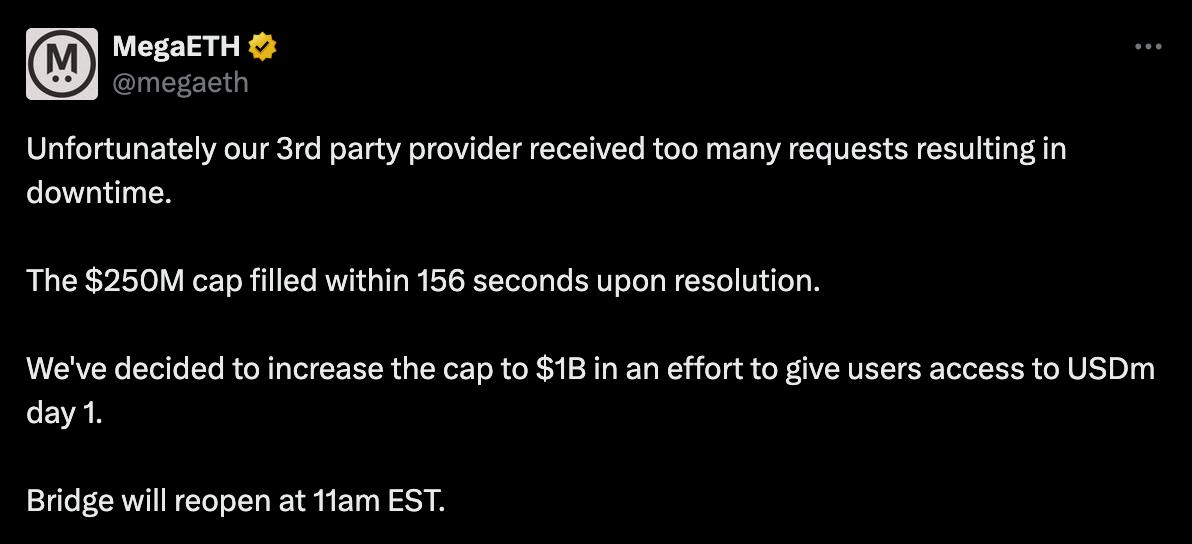
megaETH to raise cap to $1B after botted predeposit campaign
Echo as Global Settlement Layer for Enterprise Finance
Beyond BTCFi and early‑stage capital formation, “Echo” also denotes an enterprise-focused settlement network aimed at replacing traditional cross‑border payment rails. The project, surfaced at echo.im, brands itself as “the global settlement layer for enterprise finance,” pitching an infrastructure that leverages stablecoins and a multi‑currency treasury engine to deliver faster, cheaper international transfers than systems like SWIFT. In this design, companies can pay partners, suppliers, and affiliates using tokenized currencies onchain, while managing cash positions across multiple fiat denominations through a unified treasury dashboard. Echo’s value proposition hinges on marrying the programmability and speed of blockchains with the compliance and reporting requirements of large businesses.
The core concept aligns with a broader shift in how enterprises think about onchain settlement. For decades, cross‑border transfers have relied on a patchwork of correspondent banking relationships, batch processing, and reconciliation steps that can take days and incur significant fees. Stablecoins, particularly those fully backed by fiat reserves, offer a way to represent dollars, euros, or other currencies onchain, enabling near‑instant settlement across jurisdictions. Echo’s enterprise settlement layer aims to abstract away the complexity of interacting with specific blockchains by providing APIs and dashboards that make stablecoin rails usable for non‑crypto‑native finance teams. In theory, this allows companies to benefit from onchain speed and transparency while integrating those flows into existing ERP systems and accounting processes.
This kind of enterprise settlement infrastructure also intersects with the burgeoning real‑world asset (RWA) tokenization market. As tokenized treasury bills, money‑market funds, and other fixed‑income instruments proliferate, having a unified settlement layer that can handle both operating payments and investment movements becomes increasingly valuable. Analysts have drawn parallels between the current RWA wave and earlier episodes in financial history, such as the oil shocks of the 1970s, in which sudden changes in commodity prices and monetary regimes forced rapid adaptation in international payment systems. Contemporary concerns that RWA markets might echo past crises often focus on liquidity mismatches, opaque structures, and over‑reliance on short‑term funding. A settlement network like Echo’s does not inherently solve those issues but can provide more granular visibility into flows and exposures if appropriately designed.
From a regulatory standpoint, enterprise settlement layers must navigate a landscape that includes payments licensing, anti‑money‑laundering requirements, and, in some jurisdictions, e‑money or bank‑like oversight. Echo’s framing emphasizes that it is a settlement layer rather than an issuing bank, with stablecoins themselves often provided by separate regulated entities, but the boundaries between infrastructure and financial intermediation can blur when treasury tools begin to embed yield‑bearing instruments and complex routing logic. For enterprises, the appeal of such solutions will depend not only on transaction‑cost savings but also on assurances about compliance, uptime, and the legal status of tokens used in settlement.
In the broader narrative of “echoes” between old and new finance, projects like Echo’s settlement network can be seen as replaying the adoption of electronic funds transfer and real‑time gross settlement (RTGS) systems in earlier decades, but with blockchains providing a more open, programmable base layer. The lesson from history is that changes in settlement infrastructure can have far‑reaching implications for liquidity management, credit risk, and even monetary policy. As onchain settlement infrastructures mature, the market will need to scrutinize not only their technological merits but also their governance structures, interoperability with central-bank and commercial-bank systems, and resilience under stress scenarios that may echo past financial crises.
- 01Cobie Echo VC backing↗
Echo's $2.5M anchor in the $10M GTE/MegaETH round positioned it as the crypto-native venture infrastructure behind the hottest L1 ecosystem, making every deal a signal about who controls startup funding rails.
- 02Coinbase Echo acquisition↗
Coinbase buying Echo frames onchain capital formation as a completed stack — fundraising, issuance, custody, and compliance on one rail — and readers saw it as the clearest sign yet that crypto is replacing, not integrating with, Wall Street.
- 03Sonar public token sales↗
Echo's Sonar product letting anyone host a public token sale meant the platform graduated from invite-only VC allocations to retail-accessible fundraising, raising both the opportunity and the regulatory surface area.
- 04MegaETH botted predeposit↗
MegaETH raising its cap to $1B after a botted predeposit campaign drew readers into questions about manufactured demand in crypto fundraises that Echo had already underwritten.
- 05Echo Protocol Monad exploit↗
An admin key leak enabling 1,000 eBTC to be minted out of thin air and used as collateral to drain WBTC on Curvance was a textbook centralization failure on an otherwise hyped BTCFi stack.
- 06BTC treasury Ponzi echoes
Readers engaged with the argument that debt-funded BTC accumulation by treasury firms mirrors pre-2008 CDO leverage, using 'echo' as a macro warning frame about the cycle repeating.
Echo in Markets: Tickers, Listings, and Echo Chambers
The proliferation of “Echo” as a brand name inevitably spills over into token tickers and exchange listings, sometimes generating confusion among traders. On centralized exchanges, it is common for a token named after a protocol or platform to adopt its base name as a ticker symbol, leading to situations where multiple unrelated projects compete for the same or similar ticker designations. Exchanges periodically review and adjust listings based on liquidity, compliance, and strategic considerations. For example, Binance has announced delistings of various tokens in its spot markets when they no longer meet internal criteria, and its experimental Binance Alpha environment has likewise removed certain lesser‑traded tokens, including those bearing names like ECHO, as part of periodic clean‑ups. Such moves do not necessarily reflect on the underlying viability of every project sharing a name but do influence where and how retail traders encounter “Echo” in their interfaces.
These listing and delisting cycles highlight the importance of contract‑level and project‑level due diligence rather than relying on ticker familiarity. A user seeing “ECHO” on an exchange or in a DeFi interface might incorrectly assume it is linked to Echo Protocol’s BTCFi operations, Coinbase’s Echo capital‑formation platform, or the enterprise settlement layer, when in fact it could be a completely unrelated token with minimal traction. This confusion can be exploited by opportunistic token issuers who adopt recognizable buzzwords or brand names in hopes of piggybacking on existing narratives. Over time, mature markets develop better metadata standards – including clear project descriptions, verified contract addresses, and on‑platform educational content – to help users distinguish among similarly named assets. Until then, the onus is on traders to click through, read documentation, and verify that the “Echo” they are buying is the one they intend.
Beyond ticker mechanics, the notion of echo chambers looms large in how markets process information. Platforms like Binance’s community spaces and other social forums aggregate sentiment around trending protocols, including Echo Protocol during and after its Monad exploit. In the immediate aftermath of the incident, posts and threads debated whether the exploit represented a failure of Monad itself or only of Echo’s contract design, with more informed analyses emphasizing that Monad’s base chain functioned correctly and that the vulnerability lay in Echo’s admin-key architecture. This illustrates how, even in echo-chamber environments, accurate technical information can spread if credible sources intervene early; but it also shows how initial headlines can create lasting impressions that may or may not align with the underlying facts.
The risk of echo chambers is particularly salient when considering how narratives about safety, yield, and opportunity propagate. During bull markets, success stories about rapid raises on platforms like Echo (echo.xyz), lucrative BTCFi yields, or enterprise adoption of onchain settlement can bounce around social channels with little critical scrutiny. At the same time, warnings about admin-key risks, governance centralization, or regulatory uncertainty may find less traction if they do not fit the prevailing optimism. Conversely, during downturns, negative stories – such as exploits or delistings – can be amplified while progress in areas like security hardening or compliance improvements is ignored. A sophisticated crypto audience needs to be aware of these tendencies and seek information that challenges rather than merely echoes existing views.
Social‑trading experiments, including those launched by retail brokerages outside the strictly crypto-native sphere, demonstrate how interface design can cement echo-chamber dynamics. Leaderboards, influencer portfolios, and real‑time feed of “what others are buying” can reinforce herding behavior, especially among less experienced traders. When similar paradigms are imported into onchain investing platforms, there is a danger that capital formation becomes driven more by social momentum than by fundamental evaluation, echoing the meme-stock episodes that left many latecomers with losses. The challenge for Echo-branded platforms and the broader industry is to harness the benefits of community coordination and open access without surrendering to the most destabilizing aspects of social reflexivity.
Navigating “Echo” as a Crypto User
For practitioners and investors, the multiplicity of “Echo” projects and the metaphorical use of the term across macro, political, and cultural commentary create both opportunities and cognitive load. Successfully navigating this terrain starts with disambiguation: knowing which Echo you are dealing with in a given context. When reading about BTCFi exploits, Echo Protocol refers to the Bitcoin liquidity aggregation and yield infrastructure on Aptos and Monad, whose aBTC and eBTC tokens connect BTC to MoveVM and EVM DeFi. When reading about Coinbase’s strategy or participating in onchain private rounds, Echo denotes the early‑stage investing platform at echo.xyz, whose deals are bundled into onchain entities and denominated in USDC. When discussing B2B cross‑border payments, Echo may mean the enterprise settlement layer at echo.im, which integrates stablecoin rails into corporate treasury workflows. Distinguishing these contexts reduces the risk of attributing one project’s risks or achievements to another.
Once disambiguation is in place, users can apply nuanced risk assessments. In BTCFi, the key questions revolve around backing, admin controls, and integration footprint. Prospective aBTC or eBTC users should seek clarity on how Bitcoin deposits are held or wrapped, who controls minting and burning, what onchain checks exist to prevent unauthorized supply changes, and how widely the token is used as collateral in other protocols. The Echo Protocol exploit on Monad shows that even when realized losses are relatively low because of constrained liquidity, the potential systemic impact of a compromised wrapped BTC can be large, especially as DeFi ecosystems grow deeper. Over time, BTCFi users may favor wrappers and protocols that minimize admin-key dependence, use transparent multi‑sig governance, and provide real‑time attestations of backing.
In onchain capital formation via Echo under Coinbase, the risk calculus looks different. Here, issues such as deal selection, valuation, liquidity horizons, and regulatory rights take precedence. Participants must recognize that private‑round exposure, even when tokenized, can be long‑dated and illiquid compared to spot trading. The fact that investments are onchain and accessible via a familiar interface does not change the fundamental risk profile of early‑stage startups, which is high by nature. The MegaETH raise’s speed and scale demonstrate that demand for hot deals can be intense, but also that many participants may be allocating relatively small tickets in a context where due diligence is challenging. Echo’s integration into Coinbase’s stack may offer additional assurances around compliance and eventual liquidity events, yet it does not eliminate the underlying business risk of the ventures being funded.
For enterprise users considering Echo’s settlement layer, the questions shift again to operational resilience, compliance coverage, and integration complexity. Corporates must evaluate whether onchain settlement via stablecoins delivers sufficiently improved speed and cost to justify changes to existing workflows, and whether the jurisdictions they operate in have clear regulatory guidance on using tokenized money for commercial payments. They must also ensure that treasury staff have the tools and training to manage stablecoin exposure, FX risk, and reconciliation between onchain and offchain records. In parallel, they should understand how Echo’s infrastructure connects to banks, auditors, and tax authorities, since settlement innovation that creates friction in reporting or compliance can generate hidden costs.
Across all these contexts, a common thread is the need to resist narrative echo chambers. When hearing that tokenization will echo the ETF boom, that BTCFi will unlock “productive” Bitcoin, or that onchain capital formation will replace traditional IPOs and venture capital, practitioners should ask under what conditions these analogies hold and where they break down. In some cases, echoes can be constructive, pointing to tested structures that can be improved with blockchain technology. In others, they can be warning signs that the industry is replaying the most fragile aspects of prior financial innovations without sufficiently learning from past crises. By carefully distinguishing literal Echo‑branded projects from metaphorical echoes of history, a crypto audience can appreciate the promise of onchain systems while remaining vigilant to their recurring vulnerabilities.
Echo.xyz launches as invite-only deal platform by Cobie
Echo backs GTE DEX $10M round on MegaETH alongside Cobie
Echo launches Sonar for public token sales
Echo Protocol admin key compromised; ~1,000 eBTC minted on Monad, ~$816K WBTC drained via Curvance
Echo Protocol regains admin key, burns attacker's remaining 955 eBTC
Binance Alpha removes $ECHO token alongside 19 others
Coinbase acquires Echo, framing onchain capital formation as full-lifecycle infrastructure
Outlook
Over the next several years, the many meanings of “Echo” in crypto are likely to deepen rather than converge. Echo Protocol’s BTCFi infrastructure will continue to be a bellwether for how safely Bitcoin can be woven into non‑Bitcoin smart-contract ecosystems, with the Monad exploit serving as a lasting reference point for best practices around admin keys, backing verification, and cross‑chain minting. Coinbase’s integration of the Echo capital-formation platform will test whether a vertically integrated stack can deliver more efficient, inclusive onchain markets without concentrating too much power or recreating problematic aspects of traditional finance under a new technological brand. Enterprise settlement layers like Echo’s will have to prove they can scale beyond pilots, navigating regulatory scrutiny while demonstrating real improvements over incumbent rails.
At the narrative level, “echo” will remain a potent metaphor for the recursive nature of financial innovation. Tokenization is likely to echo the ETF boom in both its explosive growth and the debates it sparks over investor protection, market structure, and regulatory perimeter. BTC‑denominated leverage and BTCFi architectures may echo earlier episodes of over‑confidence in collateral that proved brittle under stress. Social‑trading‑driven capital formation could echo meme-stock excesses if guardrails are weak, but it might also generate more resilient, community‑aligned ownership structures when designed thoughtfully. For a crypto news audience, the task is not to accept or reject these echoes wholesale but to examine each carefully, distinguishing signal from noise.
In the end, understanding “Echo” in crypto is less about memorizing a single definition and more about appreciating a family of projects and narratives that all revolve around how value, information, and power reverberate through onchain systems. By mapping the terrain of Echo Protocol, Coinbase’s Echo, Echo’s enterprise settlement, and the broader echo metaphors of markets and politics, this explainer aims to equip readers to engage with future headlines more critically. The name will keep appearing, attached to exploits, acquisitions, token raises, and settlement announcements; the challenge is to hear not just the loudest reverberations but also the subtler lessons they carry about building safer, fairer, and more robust onchain finance.
Latest echo news
Crypto Super PACs pour $8M into Ohio Senate race as 2026 midterms echo 2024 spending blitzEcho Protocol faces suspected Monad exploit after 1K eBTC mint lets attacker max-borrow WBTC on CurvancemegaETH to raise cap to $1B after botted predeposit campaign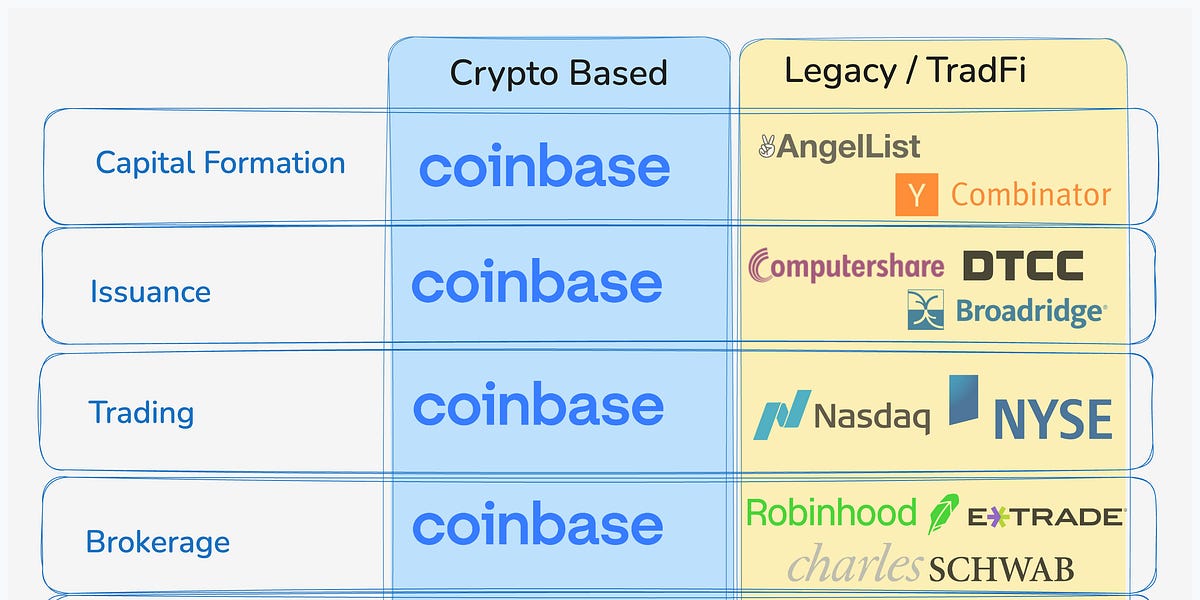 Coinbase’s acquisition of Echo marks a turning point — the full lifecycle of capitalism is now onchain, as Coinbase unifies fundraising, issuance, trading, custody, and compliance across its rails, effectively replacing, not integrating with, traditional finance.Bitcoin treasury firms raising debt/equity just to buy BTC look less like genius and more like a Ponzi echo. With cultish hype and echoes of pre-2008 CDO mania, a crypto winter could turn this “innovation” into real pain for investors.Today, we are announcing Sonar – a new product by Echo that lets anyone host a public token sale.
Sources
17 records from 16 domains
phemex.com
learn.backpack.exchange
thecurrencyanalytics.com
monad.xyz
collider.vc
echo.xyz
oakresearch.io
binance.com
echo.im
bingx.com
tradingview.com
coinbase.com
panewslab.com
chicagofed.org
defiprime.com
instagram.com
Community notes
Spot something off or out of date? Drop a note. Editors review topic notes daily and roll accepted fixes into the explainer — contributors are recognized in the monthly $SQUID drop.
Loading notes…
Help improve this topic
Have a story or tip about this topic? Submit it. See something missing? Leave a note. Editors review daily; accepted submissions and fixes count toward the monthly $SQUID drop.