
FX—the global currency market—is moving onchain as stablecoins top $322B, oracles like Chainlink and Pyth publish OTC rates, and chains like Circle's Arc build native FX settlement. Here's how crypto and foreign exchange are converging.
+20 sources across the wider coverage universe
 Wintermute Ventures highlights shift toward vaults, on-chain FX, and privacy DeFi as builders focus on real products over tokens, with VCs backing traction-driven startups post-EthCC2026-04
 Mento launches onchain FX on Polygon with USDm/EURm pool, Capa liquidity and EURØP backing2026-07
 Shanghai court jails five for $29.4M illegal cross-border forex scheme using crypto2026-07
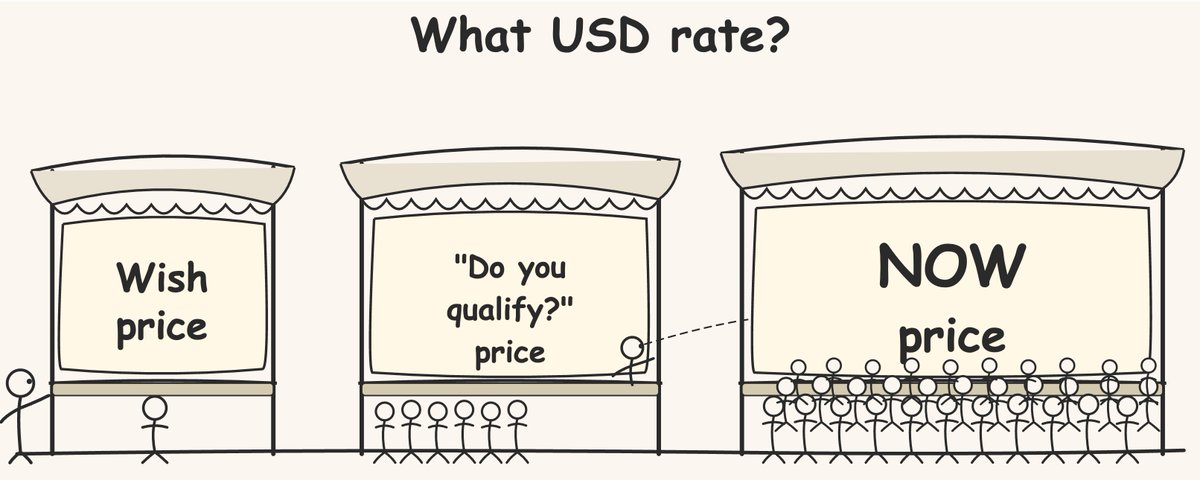 Binance P2P suspension in Ethiopia exposes Africa’s deeper FX crisis as stablecoin markets become the real-time price discovery layer for USD liquidity2026-05
 Catena Labs cofounder says AI agents will eventually need their own banking stack, handling payments, lending, credit, FX conversion and treasury management autonomously2026-06
 Pyth launches data marketplace as Fidelity, Tradeweb, Euronext, OTC Markets, SGX FX and EDI publish data onchain2026-04
Foreign exchange (FX) is the global market for trading one national currency against another, and it is rapidly acquiring a parallel life onchain as stablecoins, oracles, and purpose-built blockchains move currency conversion onto public ledgers. This page explains how traditional FX works, why crypto is now entangled with it, and what to watch as the two systems converge.
What FX means
A foreign exchange transaction swaps one currency for another at an agreed rate—the exchange rate. The market spans spot trades (immediate settlement), forwards and FX swaps (settlement at a future date), and options. It is the largest and most liquid market in the world: the Bank for International Settlements measured average daily turnover at $7.5 trillion in April 2022, rising to roughly $9.6 trillion per day by its April 2025 survey (BIS, BIS 2025). The US dollar sits on one side of nearly 90% of all trades, and FX swaps account for roughly half of activity.
Two structural features matter for understanding the crypto angle. First, FX is overwhelmingly an over-the-counter (OTC) market: most trading happens bilaterally between banks and dealers rather than on a central exchange, so pricing data is fragmented and often proprietary. Second, settlement is slow and intermediated—cross-border payments can take days and pass through multiple correspondent banks, each taking a spread. Those frictions are precisely what onchain systems aim to compress.

Wintermute Ventures highlights shift toward vaults, on-chain FX, and privacy DeFi as builders focus on real products over tokens, with VCs backing traction-driven startups post-EthCC

Wintermute backing ERC-4626 vaults and on-chain FX is pure market-maker self-interest dressed as a thesis — composable vault standards mean standardized liquidity they can route through, and even 0.1% of daily FX volume ($7.5T) going on-chain is enormous for their book. Privacy DeFi is the odd one out though. Apollo buying 9% of Morpho, Kraken routing CEX deposits into lending vaults — institutional money wants compliance, not opacity. Curious how you pitch privacy rails to the same LPs demanding KYC'd vault access.
Why crypto and FX now overlap
The bridge between the two worlds is the stablecoin: a token designed to hold a fixed value against a reference currency, most often the US dollar. When a stablecoin like Tether's USDT or Circle's USDC is used to move value across borders, it implicitly performs an FX-adjacent function—holding dollar exposure, settling instantly, and bypassing the correspondent banking chain.
The scale is no longer marginal. The total stablecoin market reached a record of roughly $322 billion in 2026, a figure larger than the foreign exchange reserves of 95 individual nations, including the United Kingdom, Canada, and the United Arab Emirates (CoinDesk, Crypto Briefing). USDT holds around 59% of that market and USDC roughly 24%. When an instrument pegged to the dollar grows larger than most sovereign reserve stockpiles, it begins to function as private monetary plumbing for the global dollar system.
That power cuts both ways. In markets with capital controls or scarce hard currency, stablecoins are increasingly the real-time price discovery layer for local-to-dollar exchange rates. Reporting on Binance's P2P suspension in Ethiopia described stablecoin markets stepping in as the effective pricing mechanism for USD liquidity amid an FX crisis, and similar dynamics appear wherever official rates diverge from street rates. The Bank for International Settlements has warned that these same flows can circumvent capital controls and accelerate currency depreciation in emerging markets (CoinDesk).
Readers aren't clicking FX stories for trading mechanics — they're clicking to track which institutions and protocols are positioning to own the conversion layer between fiat rails and on-chain settlement, because whoever controls that chokepoint captures the margin on a $7.5T daily market.
Capital controls and regulatory arbitrage
Because stablecoins move dollar value without touching the banking rails regulators monitor, they have become a tool for sidestepping currency restrictions. Coverage from our newsroom documented Chinese investors using USDT to bypass a $50,000 annual FX conversion cap in order to buy tokenized pre-IPO exposure to companies like SpaceX and OpenAI—an example of stablecoins enabling both cross-border FX and access to otherwise-gated markets.
Regulators are responding. Brazil's central bank moved to ban crypto use in regulated cross-border electronic FX payment rails, forcing providers back onto conventional FX transactions and tightening oversight of stablecoin flows. The tension is structural: stablecoins make currency movement frictionless, while FX regulation depends on friction—reporting thresholds, licensed intermediaries, and choke points. Expect continued back-and-forth as jurisdictions decide whether to absorb stablecoin FX into existing frameworks or wall it off.
It is also worth noting the skeptical case. Some analysts argue stablecoins do not resolve FX problems so much as relocate them, introducing new exposures around depegging, fraud, and sanctions compliance rather than eliminating exchange-rate risk. A token is only as stable as its reserves and redemption guarantees, and a depeg is, functionally, a sudden adverse FX move.

Bybit launches USDT-settled FX perpetual contracts for EUR/USD, GBP/USD, USD/JPY

Onchain FX infrastructure
For currency markets to live natively onchain, three ingredients are needed: reliable price data, deep liquidity, and venues to trade. All three are being built out.
Price data (oracles). OTC FX rates have historically been locked inside dealer systems. That is changing. SGX FX—the foreign-exchange arm of the Singapore Exchange—adopted Chainlink's DataLink service to publish its premium OTC FX market data onchain, beginning with spot and one-month forward rates across G10, Asian, and emerging-market currency pairs, and making that data available to more than 2,600 applications across over 75 blockchains (Finance Magnates, FX News Group). Separately, Pyth Network launched a Terminal exposing 3,000-plus live feeds spanning crypto, equities, FX, and commodities, and is powering synthetic-asset platforms building forex suites. Trustworthy, low-latency FX feeds are the precondition for any onchain currency market.
Liquidity and venues. Stablecoin-to-stablecoin swaps are the onchain equivalent of a currency pair, and decentralized exchanges optimized for like-priced assets are the natural home for them. Curve, designed specifically for low-slippage swaps between similarly valued tokens, has become a focal point: Frax's FX initiative made frxUSD a default stablecoin pair against major non-US stablecoins in Curve pools, with dedicated market making—an explicit attempt to build onchain currency pairs rather than just dollar-to-dollar swaps. Polygon has hosted parallel launches of onchain FX markets and international stablecoin DEX pools.
Stablecoin-native chains. The most ambitious infrastructure bet is purpose-built settlement layers. Circle introduced Arc, a Layer-1 blockchain designed for stablecoin finance, alongside StableFX, an institutional FX engine that lets participants settle stablecoin currency pairs around the clock using an all-to-all model that removes the need for bilateral counterparty agreements (Circle). Circle raised $222 million toward Arc at roughly a $3 billion valuation ahead of a planned 2026 mainnet launch (CNBC). DEXs such as Aerodrome are positioning to provide the FX liquidity layer on Arc. The thesis is that if dollars already live as tokens, the currency market for converting them should be a native blockchain function, not an external bolt-on.
- 01TradFi-crypto FX partnerships
Deutsche Bank, JPMorgan, and Kraken each announced partnerships that directly bridge institutional FX infrastructure with crypto settlement, signaling that legacy FX desks are choosing integration over competition.
- 02Stablecoin cross-border rails
Payroll providers, remittance corridors, and cross-border payment firms adopting stablecoins to eliminate ACH risk and cut FX friction drew sustained reader interest as a concrete, near-term use case with measurable cost savings.
- 03On-chain FX venue buildout
A wave of new venues — Hibachi, Mento, 0xMarkets, Codex FX, Superset — each pitching a different wedge into the $7.5T market created a competitive narrative readers tracked as a horse race.
- 04Legacy FX liquidity illusion
Top traders warning that the $7.5T market is structurally fragile due to over-reliance on tech and fragmentation hit a nerve, framing on-chain alternatives as a systemic hedge rather than just a cheaper option.
- 05Curve FXSwap AMM design
Curve's FXSwap and YieldBasis attracted disproportionate engagement as readers tracked whether a purpose-built AMM curve for FX could outperform Uniswap on market depth for stable pairs.
- 06Emerging market cost compression
Etherfuse's 90% reduction in dollar-to-peso conversion costs made the abstract case for on-chain FX concrete, pulling in readers focused on real-world adoption in LatAm corridors.
FX as a tradeable product in crypto
Beyond settlement, FX is appearing as a speculative and hedging product inside crypto venues. BitMEX launched FX perpetual swaps offering up to 100x leverage with crypto collateral, letting traders take leveraged currency positions without touching a bank. New deployments are extending this to non-dollar pairs—KRW-denominated perpetuals and onchain FX markets launched on high-throughput chains like Solana, signaling demand for currency exposure beyond the dollar.
Institutional payment networks are converging from the other direction. Circle's Payments Network has been onboarding partners—such as UQPAY—to coordinate multi-market payouts, FX execution, and cross-border flows, while traditional players like Corpay have partnered with JP Morgan and BVNK to route FX through blockchain. Payroll startups such as Noah wire stablecoin salaries through Solana and Jupiter, pitching 5–10% FX savings for cross-border freelancers. The common thread: FX execution is being unbundled from legacy banking and re-bundled with programmable payments.
Iran eases currency controls, allowing traders to repatriate overseas earnings in crypto and fund imports directly outside the official FX system

Risks and open questions
The onchain FX story carries real caveats. Oracle dependence concentrates risk—if a single data provider's feed is manipulated or halts, every market consuming it inherits the failure. Stablecoin depegs translate directly into disorderly FX moves for anyone holding the token as a currency proxy. Leverage products like 100x FX perpetuals amplify both gains and liquidation cascades. And the regulatory perimeter is unsettled: a system that makes capital controls porous invites exactly the kind of restriction Brazil imposed, which could fragment liquidity along jurisdictional lines.
There is also a measurement gap. Onchain FX volumes remain tiny next to the multi-trillion-dollar daily turnover of traditional FX, so claims that "the future of FX is onchain" describe a trajectory, not a present-day reality. The infrastructure—oracles, stablecoin pairs, settlement chains—is being assembled faster than the institutional liquidity needed to make it the primary venue.
- 2025-01launch
Curve FXSwap AMM design debuts
- 2025-06launch
Taoshi launches 0xMarkets on Base with 500x FX leverage
- 2026-01launch
Mento deploys FX markets on Monad L1
- 2026-03milestone
Stable Summit 2026 Cannes — stablecoins, FX, and RWA convergence
- 2026-04milestone
Deutsche Bank partners Keyrock for institutional FX across EMEA/APAC/LATAM
- 2026-05launch
Hyperliquid HIP-3 enables permissionless FX and equity markets on-chain
- 2026-06launch
Hibachi launches stablecoin FX venue targeting $9.5T daily forex market
Outlook
The direction of travel is clear even if the timeline is not. Stablecoins have already become a meaningful layer of the global dollar system, institutional FX data is moving onchain through oracle networks, and dedicated chains and engines are being built to make currency conversion a native blockchain operation. The likely near-term outcome is hybrid: traditional FX desks and central banks retain control of the largest flows, while onchain rails capture cross-border payments, emerging-market price discovery, and 24/7 stablecoin settlement at the margins—growing steadily as data quality, liquidity, and regulatory clarity improve. Watch oracle adoption, stablecoin-pair depth on venues like Curve, and the rollout of stablecoin-native chains as the leading indicators of how far and how fast onchain FX matures.
Latest FX news
Wintermute Ventures highlights shift toward vaults, on-chain FX, and privacy DeFi as builders focus on real products over tokens, with VCs backing traction-driven startups post-EthCCBybit launches USDT-settled FX perpetual contracts for EUR/USD, GBP/USD, USD/JPYIran eases currency controls, allowing traders to repatriate overseas earnings in crypto and fund imports directly outside the official FX system Ripple's RLUSD joins Spark's stablecoin FX layer on Uniswap V4
 edgeX to launch 24/7 FX perpetuals on Arc mainnet as Day 1 partner with 150+ markets
 Stablecoins can speed up settlement, but remittances remain expensive because money collection, FX conversion, licensing and local payouts still depend on fragmented financial systems
Community notes
Spot something off or out of date? Drop a note. Editors review topic notes daily and roll accepted fixes into the explainer — contributors are recognized in the monthly $SQUID drop.
Loading notes…
Help improve this topic
Have a story or tip about this topic? Submit it. See something missing? Leave a note. Editors review daily; accepted submissions and fixes count toward the monthly $SQUID drop.