
In‑depth explainer on Polkadot’s Layer‑0 architecture, DOT tokenomics, governance, staking reforms, bridge risks like the Hyperbridge exploit, and growing ETF and regulatory footprint, tailored for crypto investors and DeFi‑savvy readers.
+9 sources across the wider coverage universe
 Polkadot Products Devnet launch is live now.2026-07
 Polkadot OpenGov votes on 10,000 DOT validator self-stake before fast unstaking for nominators2026-05
 Polkadot workers endured ‘Hunger Games’ retreat after getting news of mass layoffs, employees say2023-10
- Polkadot to abandon Parachain auctions 2023-07
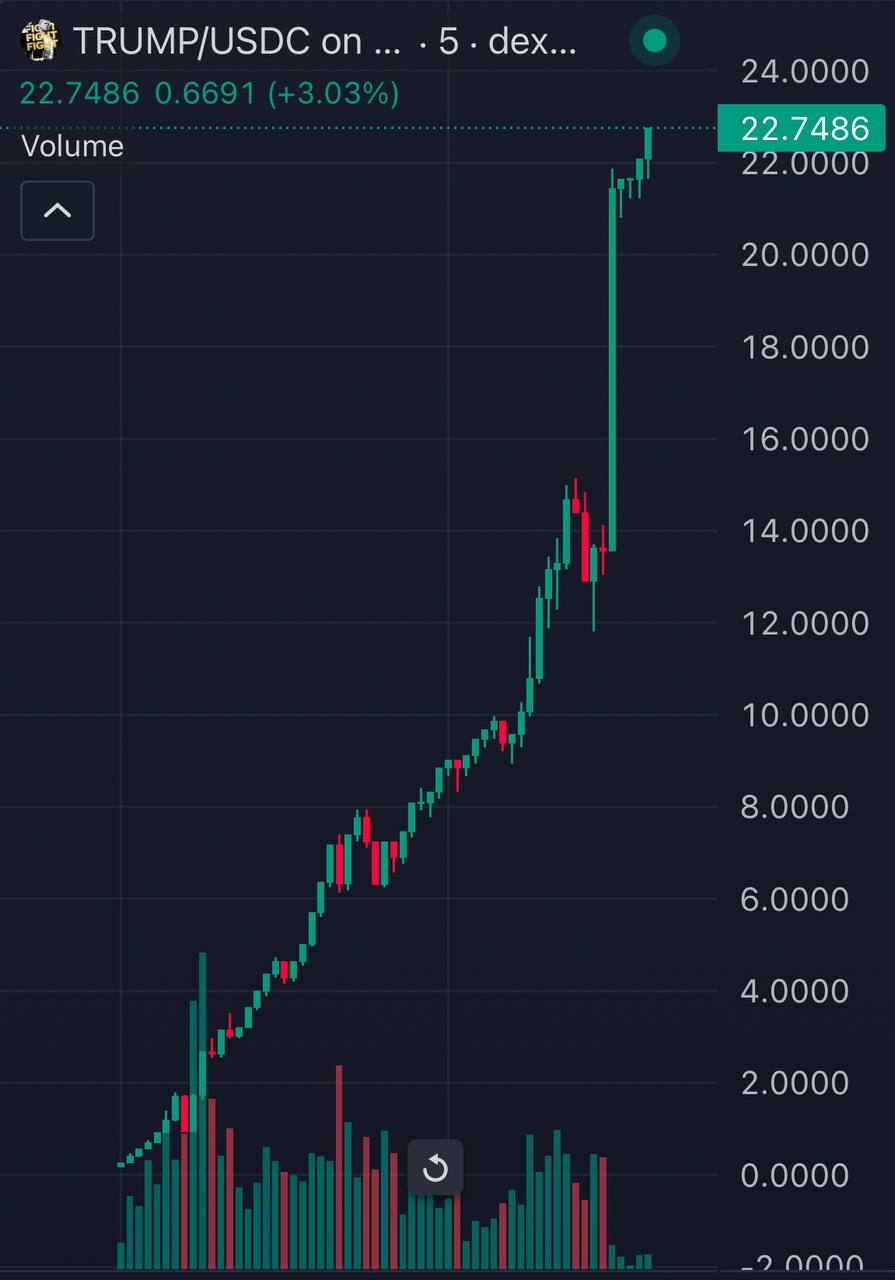 Trump's memecoin peaks at $15bn $22.7bn FDV 🫣
That's higher than Ethena, Uniswap, Polkadot, Filecoin, Aptos, Optimism, Bittensor, and Arbitrum.2025-01
Trump's memecoin peaks at $15bn $22.7bn FDV 🫣
That's higher than Ethena, Uniswap, Polkadot, Filecoin, Aptos, Optimism, Bittensor, and Arbitrum.2025-01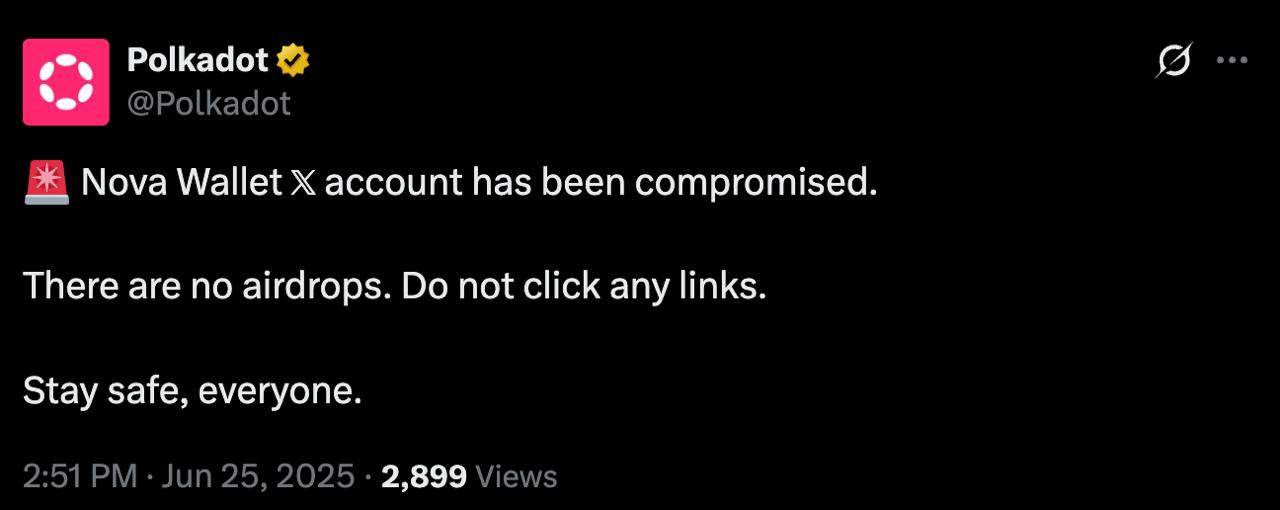 The Nova Wallet 𝕏 account has been compromised, do not click on any links and ignore any claims of airdrops.2025-06
Polkadot: A Deep Dive into the Multi‑Chain Network
A heterogeneous multi‑chain network, Polkadot is a Layer‑0 blockchain protocol that connects many specialized blockchains (parachains) into a single interoperable system with shared security, on‑chain governance, and a native asset called DOT. Polkadot aims to serve as foundational infrastructure for Web3 by enabling different blockchains to exchange data and assets securely while remaining sovereign and application‑specific.
What is Polkadot?
At its core, Polkadot is designed to solve two of the most persistent limitations of earlier blockchains such as Bitcoin and early Ethereum: isolated execution environments and limited scalability. Traditional Layer‑1 chains operate as siloed networks, each with its own state, security model, and developer tooling; this fragmentation makes it difficult to compose applications across chains or to scale transaction throughput by simply adding more chains. Polkadot approaches the problem by introducing a Layer‑0 relay chain that provides shared security and consensus, while allowing many Layer‑1 blockchains, called parachains, to plug into this base layer and interact with one another. This architecture is explicitly designed to overcome what Polkadot’s creators describe as “blockchain silos” and to enable a more unified Web3 ecosystem.
Rather than hosting smart contracts and complex application logic directly on the relay chain, Polkadot separates concerns: the relay chain focuses on security, consensus, and cross‑chain messaging, while parachains can specialize in particular use cases such as DeFi, identity, NFTs, or real‑world assets. This separation mirrors the way the internet’s TCP/IP layer provides reliable data transport while higher‑level protocols handle specific applications. Because parachains are sovereign blockchains with their own execution environments, they can adopt virtual machines, fee markets, and governance models optimized for their communities, yet still benefit from Polkadot’s shared security and interoperability guarantees. In this sense, Polkadot is less a single blockchain and more a programmable meta‑protocol that coordinates many chains at once.
DOT, Polkadot’s native token, underpins this design by playing multiple roles: it is used for governance, staking, transaction fees, and, historically, for bonding parachains into the network. Through Polkadot’s Nominated Proof‑of‑Stake (NPoS) consensus model, DOT holders can either run validators or nominate trusted validators, thereby participating directly in securing the relay chain. DOT also serves as the governance token for Polkadot’s OpenGov system, where token holders can propose and vote on protocol upgrades, economic changes, and major network reforms, many of which have significantly reshaped Polkadot’s economic and operational model in recent years.

Polkadot Products Devnet launch is live now.
Origins and Design Philosophy
From Ethereum to Polkadot
Polkadot’s origins are closely tied to Ethereum’s early history and the broader search for a more scalable, modular blockchain architecture. Dr. Gavin Wood, a co‑founder of Ethereum and its former CTO, authored the original Ethereum Yellow Paper and was instrumental in defining the Ethereum Virtual Machine and early protocol design. As the Ethereum ecosystem grew, Wood and others recognized that a single, general‑purpose chain might struggle to scale without sacrificing decentralization or forcing all applications into the same virtual machine and fee market. These concerns helped inspire the vision of a heterogeneous multi‑chain system where many specialized blockchains could interoperate under a shared security umbrella.
After departing from his operational role at Ethereum, Wood proposed Polkadot as a next‑generation framework that could support multiple blockchains with varying features, all secured by a common relay chain. The Polkadot white paper framed this as an evolution from “single‑chain” to “multi‑chain” architectures, emphasizing extensibility, upgradability, and interoperability as core design goals. Web3 Foundation, the non‑profit set up to support the development of decentralized web technologies, backed Polkadot’s research and initial launch, while Parity Technologies, co‑founded by Wood, led much of the client and protocol implementation work. This close connection to Ethereum’s history explains why Polkadot is often discussed alongside Ethereum in debates about scaling, modularity, and the future of smart contract platforms.
Polkadot’s design also reflects lessons from Ethereum’s governance and upgrade processes. While Ethereum uses off‑chain social consensus and client coordination for major upgrades, Polkadot embeds its governance directly on chain, allowing token holders to approve or reject protocol changes in a transparent, rules‑based way. The idea is to make upgrades and even deep changes to the protocol logic routine rather than contentious, enabling Polkadot to evolve quickly without hard forks that split the community. This commitment to on‑chain governance has led to a series of substantial reforms—covering staking, economics, and the allocation of blockspace—that illustrate Polkadot’s focus on agility and community‑driven decision making.
A Layer‑0 for Web3
Polkadot positions itself not merely as another Layer‑1 but as a Layer‑0 protocol that orchestrates many Layer‑1 chains. In networking terms, a Layer‑0 can be thought of as a base consensus and messaging layer, akin to the physical and data link layers of the internet stack, upon which higher‑level protocols are built. Polkadot’s relay chain plays this Layer‑0 role by providing block production, finality, validator coordination, and cross‑chain messaging, while leaving application‑specific logic to the parachains. This separation is intended to allow innovation at the parachain level without jeopardizing the security or stability of the base layer, and to make it easier for new chains to join the ecosystem without bootstrapping their own validator set from scratch.
By conceptualizing itself as a Layer‑0, Polkadot also embraces a multi‑VM, multi‑paradigm approach. Parachains can be built with different virtual machines—such as EVM‑compatible environments or WASM‑based runtimes—and can adopt diverse transaction models, fee structures, and governance systems. This heterogeneity contrasts with monolithic Layer‑1s, where all applications must conform to a single VM and gas market. In the Polkadot view, this flexibility is crucial for Web3 because it allows application developers to choose the best technical trade‑offs for their use cases while still gaining instant access to a shared asset and data network via cross‑chain messaging.
Polkadot’s design therefore embodies a modular philosophy that resonates with broader trends in blockchain architecture, including Ethereum’s own shift toward a modular “rollup‑centric” roadmap. While Ethereum seeks to scale through Layer‑2 rollups that anchor to a common settlement layer, Polkadot scales by adding more parachains that share a common security and messaging layer. Both approaches aim to avoid compromising decentralization while increasing throughput, but they differ in how execution environments are structured and how shared security is provided. For developers and investors, understanding Polkadot as a Layer‑0 framework helps clarify why its governance, tokenomics, and ecosystem dynamics look different from those of monolithic chains or single‑VM smart contract platforms.
Polkadot readers click on organizational collapse and structural pivots — not exploits: the Hunger Games layoff story drew 3x more clicks than the entire Hyperbridge bridge hack coverage combined, revealing that the primary reader anxiety is whether the Web3 Foundation itself is viable, not whether the relay chain is secure.
Core Architecture: Relay Chain, Parachains, and XCM
Relay Chain: The Security and Coordination Layer
The Polkadot relay chain is the minimal, security‑focused backbone of the network. It does not host user‑facing smart contracts or complex application logic; rather, it is responsible for coordinating validators, finalizing blocks, and facilitating cross‑chain communication. The relay chain maintains global state related to staking, governance, and the registration of parachains, and it ensures that only valid parachain blocks produced by approved collators become part of the canonical history. This narrow functional scope is intentional: by limiting what happens on the relay chain, Polkadot aims to keep its base layer lean, auditable, and easier to upgrade through on‑chain governance.
Validator selection and block production on the relay chain are managed through Polkadot’s Nominated Proof‑of‑Stake consensus model, which determines which validators are active in each era and how much stake backs them. The relay chain aggregates votes from validators on candidate parachain blocks and uses its finality gadget to agree on which blocks are irrevocably finalized. It is thus the locus of shared security: if the relay chain’s validator set acts honestly, then malicious behavior on individual parachains—such as producing invalid state transitions—can be detected and punished through slashing on the relay chain. This gives smaller parachains access to security that would otherwise require them to recruit and incentivize their own independent validator communities.
Because the relay chain has finite capacity for processing parachain blocks and cross‑chain messages, Polkadot treats blockspace itself as a scarce resource that must be allocated carefully. Historically, this was done through parachain slot auctions, where projects bonded DOT for the right to occupy one of a limited number of slots. More recently, Polkadot has begun transitioning to a more flexible “coretime” model in which execution cores on the relay chain can be leased more dynamically, allowing both long‑term and short‑term use of blockspace. Regardless of the mechanism, the relay chain remains the central arbiter of which parachains can submit blocks and how often, reinforcing its role as a coordination layer as well as a security provider.
Parachains and the Move Toward Coretime
Parachains are the application‑specific Layer‑1 blockchains that connect to the relay chain and benefit from its shared security. Each parachain maintains its own state, transaction logic, and governance, but submits candidate blocks to the relay chain for validation and finality. Collators—specialized full nodes on each parachain—collect transactions, produce candidate blocks, and relay them to the validator set, which then checks them and includes them in the relay chain if valid. This architecture allows parachains to specialize: some may focus on DeFi and EVM compatibility, like Moonbeam, while others emphasize decentralized identity, NFTs, or real‑world asset tokenization. Because parachains can interoperate via Polkadot’s Cross‑Consensus Messaging format, they can compose services across chains in ways that mimic cross‑domain microservices in traditional software architectures.
Initially, access to parachain connectivity was governed by slot auctions. Projects bid DOT for multi‑year leases, often raising contributions from their communities via crowdloans, where supporters locked DOT to back a parachain’s auction bid. This mechanism helped bootstrap early parachains but also tied up significant amounts of DOT for long periods and created barriers for smaller or experimental projects that could not justify long‑term leases. As Polkadot matured, community members and core developers began questioning whether a more flexible model was needed, especially for use cases that required bursty or short‑term access to blockspace rather than continuous occupancy.
The network’s response has been a gradual shift toward a coretime‑based model for blockspace allocation. Under this approach, the relay chain’s execution capacity is abstracted into “cores” whose time can be purchased or leased under various arrangements, potentially including fixed‑term leases, on‑demand purchases, or secondary markets. Instead of locking DOT for long parachain leases, projects may be able to acquire coretime in smaller increments or share cores among multiple applications. This evolution is already influencing ecosystem decisions: for example, in the Polkadot orbit, teams such as Heima have proposed burning portions of their ecosystem tokens originally reserved for parachain auctions, reflecting the reduced importance of long‑term auction campaigns in a coretime world. The overarching goal is to make Polkadot’s blockspace more flexible, capital‑efficient, and accessible, while still preserving predictability for applications that require stable throughput.
Cross‑Consensus Messaging (XCM)
Interoperability is a central promise of Polkadot, and the protocol’s primary tool for realizing it is XCM, the Cross‑Consensus Messaging format. XCM is not a blockchain in itself but a language and set of conventions for sending structured messages between different consensus systems, including parachains, the relay chain, and even external networks bridged into the ecosystem. Rather than focusing on “token transfers” alone, XCM is designed to support arbitrary instructions, such as remote asset transfers, cross‑chain governance actions, or calls to execute specific functions on another chain. In this sense, XCM provides a generalized, programmable interoperability layer that is more expressive than simple lock‑and‑mint token bridges.
XCM messages are routed over the relay chain, which ensures ordered delivery and enforces certain safety guarantees, such as preventing messages from being replayed or misrouted. Each participating chain must implement an XCM interpreter capable of understanding and executing the messages it receives. For example, a DeFi parachain might receive an XCM message instructing it to lock a user’s collateral when a loan is opened on another parachain, or a governance parachain might receive a message asking it to ratify a decision made on the relay chain. Because XCM is designed to be cross‑consensus, it can in principle be extended to interact with external systems like Ethereum, provided appropriate bridges and interpreters are in place.
The flexibility of XCM is particularly important in a multi‑chain network where assets and logic can move freely. It reduces the need for ad hoc, chain‑specific bridges and creates a standardized way for parachains to communicate, much like standardized APIs in traditional software ecosystems. At the same time, XCM’s power introduces complexity: misconfigured XCM channels or poorly designed message handlers can lead to unexpected behaviors, especially in cross‑chain DeFi scenarios. Polkadot’s developer community has responded with extensive documentation, tooling, and audits aimed at helping teams implement XCM safely and predictably. For users, the key takeaway is that interoperability on Polkadot is not an afterthought but a core feature, implemented at the protocol level rather than through exclusively third‑party bridges.
Consensus and Security: Nominated Proof‑of‑Stake in Practice
Nominated Proof‑of‑Stake and Validator Selection
Polkadot’s security model is anchored in its Nominated Proof‑of‑Stake (NPoS) consensus, which is designed to maximize the amount of economic stake backing honest validators while maintaining decentralization. In NPoS, DOT holders can either register as validators, running full nodes and participating in block production and finality, or act as nominators, delegating their stake to validators they consider trustworthy. The protocol then uses an election algorithm to select a subset of validators and assign nominators’ stake to them in a way that balances the total stake across the active set. This approach aims to resist concentration of power by ensuring that many validators receive substantial backing rather than a few capturing most of the stake.
Validator elections occur in eras, which are discrete time periods during which a fixed set of validators is active. At the end of each era, rewards are distributed to validators and their nominators, and misbehavior such as double‑signing or producing invalid blocks can lead to slashing of both validators’ self‑stake and nominators’ backing stake. This creates strong economic incentives for both validators and nominators to behave correctly and for nominators to choose validators carefully based on performance, reliability, and security practices. The staking system therefore not only secures the network but also shapes its decentralization profile and economic incentives.
To lower the barrier to participation for smaller holders, Polkadot has introduced nomination pools, which allow users with relatively small DOT balances to collectively nominate validators and share in staking rewards. In a nomination pool, many participants combine their stake, and the pool operator handles the nomination of validators and reward distribution according to protocol rules. This makes it possible for users who would not meet the minimum individual nomination thresholds to still contribute to network security and earn yield. It also helps diffuse stake across more validators by channeling fragmented holdings into effective backing. Together, individual nominators and pools make NPoS more inclusive while preserving its core design objective of maximizing security through widely distributed stake.
BABE and GRANDPA: Block Production and Finality
Polkadot separates block production from finality through a hybrid consensus composed of BABE and GRANDPA. BABE (Blind Assignment for Blockchain Extension) is responsible for proposing new blocks on the relay chain. It operates similarly to a probabilistic slot‑based protocol, where validators are randomly assigned to produce blocks in particular slots based on a verifiable random function. This randomness helps prevent predictable block producer assignments that could be exploited by adversaries, while ensuring a steady flow of new blocks. BABE prioritizes liveness and throughput, allowing the chain to progress even under partial network synchrony.
GRANDPA (GHOST‑based Recursive ANcestor Deriving Prefix Agreement) serves as the finality gadget that determines which blocks are irreversibly part of the chain. Rather than finalizing one block at a time, GRANDPA allows validators to vote on chains of blocks, potentially finalizing large stretches of the chain at once when network conditions permit. This design offers high finality throughput and resilience: even after temporary network partitions or forks, GRANDPA can converge on the longest, most justified chain and finalize it efficiently. Finality in Polkadot is important not just for user confidence but also for cross‑chain operations; parachain blocks rely on relay chain finality to be considered irrevocable, which in turn affects the correctness of cross‑parachain XCM messages.
The combination of BABE and GRANDPA is intended to capture the strengths of both probabilistic and deterministic consensus approaches. BABE ensures continuous block production, while GRANDPA provides strong safety and fast finality for blocks that have received sufficient validator votes. This separation also makes upgrades more modular: improvements to the finality gadget or block production mechanism can be made via on‑chain governance without fundamentally altering the rest of the protocol. For users and developers, the result is a system that can confirm transactions quickly while offering robust economic and cryptographic guarantees against chain reorganization, especially after GRANDPA finality has been reached.
Staking Mechanics, Nomination Pools, and Fast Unstake
In addition to the core NPoS logic, Polkadot’s staking system includes several features aimed at balancing security, liquidity, and user experience. Staked DOT is subject to an unbonding period, during which tokens cannot be transferred or used elsewhere; this period helps deter “hit‑and‑run” attacks by making it costly for would‑be attackers to exit immediately after misbehavior. However, users who mistakenly stake or no longer wish to participate in staking may find long unbonding periods burdensome. To address this, Polkadot has introduced a fast‑unstake mechanism, as discussed in governance forums, which allows certain stakers to exit more quickly under specific conditions—typically when their stake is no longer actively backing any validator and therefore does not contribute to security. This feature aims to reduce friction for users who are unintentionally locked in while preserving the protective function of unbonding where it matters most.
Nomination pools further refine the staking experience by abstracting away some of the complexity of validator selection and era‑by‑era dynamics. Pool operators can actively manage nominations, replacing underperforming validators or rebalancing delegations as network conditions change, while pool members benefit from aggregated rewards and reduced operational overhead. At the same time, pools introduce governance and trust considerations: although they operate under protocol rules, the choice of pool and its internal policies can affect members’ risk and returns. The existence of both individual nomination and pools offers a spectrum of options, from highly hands‑on to nearly passive participation in Polkadot’s security.
Staking parameters, including minimum nomination thresholds, inflation targets, and reward curves, are not static. They can be adjusted via Polkadot’s on‑chain governance, allowing the community to respond to evolving conditions such as changes in DOT’s market capitalization, user demand for staking, and the economic needs of the network. This flexibility has been visible in recent years as the community has pursued major reforms to the staking system and token economics, including new minimum requirements for validators and a significant overhaul of issuance and treasury flows.
Recent Staking Reforms and Validator Requirements
Polkadot’s community has increasingly focused on tightening validator requirements to enhance security and align incentives. Through OpenGov, token holders considered and supported measures such as Referendum 1890, which proposed requiring validators on Polkadot to lock a minimum of 10,000 DOT of their own funds as self‑stake. The rationale is that validators with substantial skin in the game are less likely to engage in risky behavior and more likely to maintain robust operational practices, as any slashing event would directly impact their own capital. This stands in contrast to configurations where validators rely primarily on delegated stake from nominators, which may dilute personal responsibility for security.
In public communications, Polkadot has highlighted a “structural upgrade” to staking that pairs the self‑stake requirement with a minimum validator commission rate of 10 percent. A mandatory minimum commission helps ensure that validators receive a predictable share of staking rewards, allowing them to fund infrastructure, security audits, and operational staffing. Without such a floor, competition might push commissions too low, leading to a “race to the bottom” that undercuts validator sustainability and potentially degrades network security over time. By combining higher self‑stake requirements with guaranteed minimum commissions, Polkadot aims to cultivate a professional, well‑capitalized validator set.
These staking reforms have implications for nominators and smaller DOT holders as well. Stricter validator requirements may reduce the number of validators able to operate profitably, encouraging consolidation into operators that can meet the higher capital and operational thresholds. Nomination pools and fast‑unstake features can mitigate some of these effects by simplifying participation and improving liquidity for small holders. Nonetheless, the overall direction reflects a prioritization of robust security and economic sustainability over a maximally large but potentially undercapitalized validator set. For a network that aspires to secure many billions of dollars’ worth of assets across parachains and bridges, this emphasis on validator quality is a critical part of its long‑term risk management strategy.

Polkadot OpenGov votes on 10,000 DOT validator self-stake before fast unstaking for nominators
The DOT Token: Utility, Tokenomics, and Economic Reform
DOT as the Native Asset
DOT is the native token of the Polkadot network, analogous to BTC on Bitcoin or ETH on the Ethereum blockchain. It plays multiple core roles. First, DOT is used for staking in the NPoS system, where it backs validators and nominators and underpins the security of the relay chain and, by extension, connected parachains. Second, DOT is central to governance: holders can propose and vote on referenda in the OpenGov system, influencing upgrades, parameter changes, and treasury allocations. Third, DOT is used to pay transaction fees on the relay chain and, in many parachain ecosystems, serves as a reserve or collateral asset that underwrites cross‑chain functionality.
From a technical standpoint, DOT uses the Planck as its base unit and has 10 decimal places. Balances are stored as an unsigned 128‑bit integer type \(u128\), which provides ample range for representing large holdings even as Polkadot’s ecosystem grows. While most users interact with DOT in whole‑token or simple decimal terms on exchanges and wallets, the underlying precision allows smart contracts and protocol components to handle fine‑grained accounting, such as staking rewards, fee rebates, or micro‑payments. This basic token configuration supports the broad set of economic functions that DOT must perform across staking, governance, and ecosystem coordination.
For many investors, DOT serves both as a “utility token”—necessary for interacting with the Polkadot network—and as a speculative asset whose value may reflect expectations about network usage, ecosystem growth, and the success of Polkadot’s multi‑chain vision. DOT’s design deliberately entangles its utility and governance roles: since voting power in OpenGov is tied to token holdings, those who hold DOT for speculative or hedging purposes also acquire influence over protocol evolution. This can be seen as either a feature, aligning investors with network health, or a risk, if concentrated holdings enable a small group to shape policy in ways that benefit their interests over broader ecosystem needs. Polkadot’s economic reforms and governance experiments should therefore be understood not just as technical adjustments, but as interventions in this delicate interplay between token utility, investment dynamics, and protocol control.
From Infinite Inflation to a Capped Supply
Polkadot launched with an inflationary monetary policy designed to provide a stable security budget for validators and nominators while funding a treasury for ecosystem development. Under the original model, DOT had no hard supply cap, and annual issuance was calibrated based on the proportion of DOT staked, with a target that balanced staking rewards and circulating supply. This approach mirrored many other proof‑of‑stake systems that rely on continuous token issuance to compensate validators, but it also meant that DOT holders faced ongoing dilution if they did not stake or otherwise benefit from inflationary flows.
In 2025 and 2026, the Polkadot community undertook one of the most significant economic overhauls since the network’s launch. Through on‑chain governance, token holders approved proposals including Wish for Change #1710, which established a hard supply cap of 2.1 billion DOT, and a Phase 1 Dynamic Allocation Pool (DAP) proposal that introduced a new mechanism for allocating protocol revenue. Together, these changes marked a transition from an infinite‑inflation model to a disinflationary framework, structurally limiting future supply growth and altering how newly issued tokens and on‑chain revenues are distributed.
Under the new model, annual DOT issuance has been reduced sharply. Starting in March 2026, annual issuance dropped from around 120 million DOT to approximately 55 million DOT, a reduction of about 53.6 percent. This decrease is intended to limit dilution for DOT holders while still providing enough issuance to sustain network security and incentivize validators. By embedding the 2.1 billion supply cap directly in the protocol, Polkadot codifies a hard ceiling on total DOT that contrasts with its previous open‑ended policy. In theory, this can improve DOT’s appeal to long‑term holders and institutions such as ETF issuers that prefer more predictable supply trajectories.
These reforms have complex implications. On one hand, a capped and more slowly growing supply may make DOT more attractive as a store of value within the Polkadot ecosystem, particularly for holders who do not or cannot stake large amounts. On the other, lower issuance reduces the steady stream of newly minted DOT that previously funded staking rewards and the treasury. This necessitates alternative sources of protocol revenue, such as fees, slashing penalties, and parachain or coretime payments, to maintain validator incentives and ecosystem funding levels. How effectively Polkadot can replace inflationary issuance with these other sources will be a key determinant of its long‑term security economics.
Dynamic Allocation Pool, Treasury, and Slashing Flows
The Dynamic Allocation Pool (DAP) is a central component of Polkadot’s new economic framework. It acts as an on‑chain mechanism for collecting and redistributing protocol revenues, including items such as transaction fees, slashing penalties, and potentially other income streams, in a more flexible and transparent way. Previously, certain portions of on‑chain revenue were automatically burned, and the flows from slashing and other events were less dynamically managed. With DAP, the protocol can channel these revenues into different pools or uses according to governance decisions and predefined rules.
One of the explicit changes accompanying DAP’s introduction was the cessation of automatic treasury burns and the redirection of slashing proceeds away from implicit sinks toward the DAP. This means that when validators or nominators are slashed for misbehavior, the forfeited DOT is not simply removed from circulation but instead becomes part of a resource that can be redeployed to support network goals, such as funding public goods, incentivizing new parachains, or reinforcing security initiatives. In effect, DAP turns previously destructive events into potential opportunities for reinvestment, subject to governance oversight.
The interplay between DAP, the treasury, and the new issuance schedule is still evolving. With lower inflation, both staking rewards and treasury inflows face downward pressure unless offset by higher transaction volumes, greater coretime purchases, or other revenue sources. As Polkadot matures, the expectation is that the network will rely less on inflation and more on organic fee‑based revenues and targeted economic flows orchestrated by DAP and the treasury. Governance will play a decisive role in determining how aggressively to deploy these funds, what kinds of initiatives to prioritize, and how to balance immediate ecosystem growth with long‑term sustainability. For DOT holders, monitoring DAP policies and treasury spending becomes increasingly important as these decisions directly affect the token’s economic profile.
Implications for Investors, Stakers, and ETFs
For investors and stakers, Polkadot’s economic transition alters both the risk and reward calculus associated with holding DOT. On the reward side, reduced issuance and refined staking incentives may support higher real yields for engaged stakers, especially if protocol revenues grow and are allocated efficiently through DAP. On the risk side, lower inflation means that non‑staked DOT experiences less dilution, potentially making passive holding more defensible, but it also reduces the margin for error in maintaining adequate security budgets if transaction and coretime revenues lag expectations. These dynamics are of particular interest to institutional products that hold DOT on behalf of clients, such as exchange‑traded funds.
The 21Shares Polkadot ETF, for example, provides a regulated vehicle for investors to gain exposure to DOT without directly managing keys or staking operations. According to a prospectus supplement, the trust entered into a staking services agreement with Figment Inc., under which some of the DOT held by the ETF may be staked to earn protocol rewards. This arrangement illustrates how staking economics and governance decisions feed directly into institutional products: changes in staking yields, lockup periods, slashing risks, or validator requirements can affect the ETF’s risk profile and net performance. It also underscores the importance of transparent, predictable protocol rules that can satisfy due diligence and regulatory scrutiny.
Regulators such as the U.S. Securities and Exchange Commission (SEC) scrutinize crypto ETFs not only for market manipulation risks but also for underlying technical and operational risks, including staking. When an ETF stakes tokens like DOT, questions arise about custodian responsibilities, potential classification of staking rewards, and how slashing events would be handled. Polkadot’s move toward a capped supply and more structured economic model can be seen as supportive of institutional adoption, but it also places a premium on robust security practices and clear governance processes that regulators and ETF sponsors can understand. In this context, events such as bridge exploits or validator misbehavior are not merely technical incidents but factors that may influence regulatory attitudes and the viability of DOT‑based financial products.
- 01Web3 Foundation mass layoffs
The 'Hunger Games' retreat framing turned an HR story into a governance-legitimacy story — readers wanted to know if the organization funding Polkadot's development was imploding.
- 02Parachain auction model abandoned↗
Polkadot's parachain slot auction was its flagship differentiator; abandoning it signaled a fundamental admission that the model failed to attract sustained demand.
- 03Nova Wallet account compromise
A wallet Twitter account hack is a low-severity event, but readers clicked because social-engineering attacks on official ecosystem accounts erode trust in the entire product surface.
- 04OpenGov validator self-stake mandate↗
The 10,000 DOT self-stake referendum directly affects validator economics and the fast-unstaking unlock — readers with staking exposure tracked it as a portfolio-relevant governance outcome.
- 0521Shares TDOT spot ETF launch↗
A US-listed spot Polkadot ETF is a regulatory legitimacy signal; readers clicked to gauge whether institutional on-ramps would translate to price support for DOT.
- 06DOT supply cap tokenomics overhaul↗
Capping DOT at 2.1B and cutting issuance 53.6% addresses the long-standing inflation critique; readers engaged as a 'is it too late to matter' valuation check.
Governance and OpenGov
From Council‑Based Governance to OpenGov
Polkadot’s governance has evolved significantly since launch, culminating in the introduction of OpenGov, a governance system that shifts decision‑making power more directly to token holders and eliminates centralized bodies such as a council or technical committee. Under earlier models, there was a greater reliance on specialized on‑chain collectives to propose and approve changes, which raised questions about centralization and accountability. OpenGov was designed to address these concerns by enabling a more decentralized, transparent, and scalable governance process, where many different kinds of proposals can be considered in parallel through multiple decision tracks.
In OpenGov, DOT holders can submit proposals for a wide range of actions, including runtime upgrades, parameter changes, treasury spending, and system configurations. These proposals are assigned to specific tracks that impose different requirements and safeguards based on their potential impact: for example, a routine parameter tweak might follow a faster track with lower approval thresholds, while a major runtime upgrade or economic reform might require longer deliberation and higher turnout or support. This structure allows governance to handle both frequent, low‑risk changes and infrequent, high‑impact decisions without overloading a single process or relying on off‑chain politics.
Voting in OpenGov uses conviction voting, where token holders can lock their DOT for varying periods to amplify their voting power, signaling stronger conviction in their choices. Longer lockup periods yield higher voting weight, but they also increase opportunity costs and exposure to market volatility. This mechanism is intended to distinguish between casual preferences and deeply held views, while discouraging short‑term speculation from dominating decisions. The combination of direct token holder voting, multiple tracks, and conviction‑weighted participation gives OpenGov a distinctive flavor among on‑chain governance systems, blending pure token voting with time‑based commitment signals.
Major On‑Chain Reforms Through Governance
OpenGov has already been used to implement some of Polkadot’s most consequential reforms. The introduction of the 2.1 billion DOT supply cap and the Dynamic Allocation Pool, for instance, emerged from governance proposals such as Wish for Change #1710 and related DAP referenda. These decisions fundamentally altered Polkadot’s monetary policy and revenue allocation, demonstrating that token holders are willing to engage with complex economic issues and accept trade‑offs between inflation, security budgets, and long‑term token scarcity. The process also showcased OpenGov’s ability to coordinate large‑scale changes without contentious hard forks.
Similarly, the staking reforms that introduced higher validator self‑stake requirements and a minimum 10 percent validator commission emerged through governance channels. Referendum 1890, for example, proposed obliging validators to lock at least 10,000 DOT of their own stake, unlocking subsequent staking upgrades once approved. The deliberations around this proposal highlighted tensions between maximizing validator inclusivity and prioritizing economically committed operators, as well as concerns about how changes would affect smaller nominators and pools. Ultimately, the passage of such reforms reflects a community consensus that robust security and professionalization of validators are worth potential reductions in the number of active operators.
Governance has also been used to introduce user experience improvements such as fast‑unstake, which required changes to staking logic and interfaces. This feature allows certain users who are no longer actively backing validators to exit their staked positions more quickly, addressing complaints about inflexible unbonding periods. The fact that such relatively granular features are decided on chain illustrates Polkadot’s commitment to treating governance as an integral part of protocol evolution rather than a mechanism reserved only for rare emergencies. Over time, this can foster a culture in which protocol changes—both large and small—are viewed as iterative, evidence‑driven experiments rather than political crises.
Governance Beyond the Relay Chain: Parachains and Ecosystem Tokens
While Polkadot’s relay chain governance is implemented through OpenGov and centered on DOT, many parachains and ecosystem projects run their own on‑chain governance systems with distinct tokens and rules. These local governance processes often interact with, but are not subordinate to, the relay chain’s decisions. For example, a parachain might use its own token to govern protocol parameters, dApp configurations, or treasury allocations, while relying on Polkadot governance only for issues related to coretime leasing or cross‑chain standards. This layered governance structure mirrors Polkadot’s architectural modularity: just as parachains can adopt diverse execution environments, they can also experiment with different governance models.
Recent debates in ecosystem projects highlight how these governance layers intersect with Polkadot’s evolving economic and architectural landscape. Teams such as Heima have considered proposals to burn substantial portions of their native tokens originally earmarked for Polkadot parachain auctions, including both locked and untouched allocations. This reflects the fact that as Polkadot moves from long‑term parachain auctions to a coretime‑driven model, war chests accumulated for auction campaigns may no longer serve their original purpose. Burning such tokens can reduce circulating or fully diluted supply, potentially benefiting existing holders, but it also raises questions about future funding strategies and how projects should adapt their tokenomics as Polkadot’s base‑layer policies change.
These examples underscore that governance in the Polkadot ecosystem is multi‑jurisdictional: DOT holders influence relay chain economics and security, while parachain token holders steer the direction of individual networks. Cross‑chain interactions complicate matters further, as decisions on one chain—such as slashing policies, fee structures, or XCM channel configurations—can affect users and protocols on others. For participants in the Polkadot ecosystem, understanding governance therefore requires attention not just to DOT‑level OpenGov but also to the governance processes of key parachains and the interdependencies created by shared security and interoperability.
From Parachain Auctions to Coretime
The Parachain Auction Era
In Polkadot’s early years, access to the relay chain’s shared security and blockspace was governed primarily by parachain slot auctions. Projects competed for a limited number of slots by locking DOT for fixed lease periods, typically up to 96 weeks, with the highest bidders winning the right to connect their chains as full parachains. Many teams relied on crowdloans, where community members contributed DOT that was locked for the duration of the lease in exchange for project tokens or other rewards upon successful auction bids. This mechanism helped bootstrap a diverse set of parachains and created strong alignment between projects and their communities, as supporters literally locked capital to secure their preferred chains’ place on Polkadot.
However, the auction model had drawbacks. Long‑term DOT lockups through crowdloans tied up substantial liquidity, potentially limiting users’ ability to reposition during market volatility or to participate in other on‑chain opportunities such as staking. The need to win auctions also favored well‑funded projects and those able to mount large marketing campaigns, potentially disadvantaging smaller or experimental teams. Additionally, projects that only needed intermittent or short‑term access to Polkadot’s blockspace—such as those running periodic batch jobs or seasonal campaigns—faced a mismatch between their needs and the long lease durations available via auctions. As the ecosystem matured, these frictions became more apparent.
From a network‑wide perspective, slot auctions also imposed coarse granularity on resource allocation. Once a project secured a slot, it had an exclusive claim on a portion of the relay chain’s execution capacity for the duration of its lease, regardless of whether it used that capacity efficiently. Idle or underutilized parachains represented an opportunity cost, as their reserved slot could not easily be repurposed for other applications without waiting for lease expiration or complex governance interventions. These design limitations motivated research into more dynamic and fine‑grained approaches to blockspace provisioning, ultimately leading to the concept of coretime.
Coretime: Toward Flexible Blockspace Markets
Coretime reframes Polkadot’s blockspace as a more fungible, time‑partitioned resource rather than a binary slot allocation. Under a coretime model, the relay chain’s execution capacity is divided into “cores” whose time can be purchased or leased in different configurations, potentially including continuous leases, short‑term rentals, or pay‑as‑you‑go models. Instead of locking DOT for a single, static parachain slot, projects may acquire coretime tailored to their expected usage patterns, increasing capital efficiency and opening the door for new types of applications.
This shift has several potential advantages. Projects that need steady, high throughput can still secure long‑term coretime arrangements akin to traditional parachain leases, while more experimental or bursty workloads can purchase coretime in smaller increments or use secondary markets to acquire capacity as needed. Multiple applications might share a core, using scheduling and queuing mechanisms to multiplex their workloads. This can lead to better utilization of the relay chain’s resources and reduce the prevalence of idle or underused slots that characterized parts of the auction era.
Coretime also interacts with Polkadot’s economic reforms. As the network reduces inflation and relies more on protocol revenues to fund security and development, selling coretime becomes an important source of income. The design of coretime markets—such as auction mechanisms, pricing models, and potential financialization via derivatives—will therefore influence both resource allocation and the network’s fiscal health. Governance will need to calibrate these markets carefully to avoid price volatility that could destabilize projects while still reflecting supply‑demand dynamics and encouraging efficient use of blockspace.
For users and investors, the move from parachain auctions to coretime marks a conceptual shift from a relatively static topology—where a fixed set of parachains occupy slots for long periods—to a more fluid environment where the composition of active chains and applications can change more rapidly. This may increase innovation and lower barriers to entry, but it also adds complexity in tracking which chains are live, how they obtain blockspace, and what economic guarantees back their operations. As coretime markets mature, liquidity, pricing transparency, and tooling will be key to making this flexibility accessible rather than overwhelming.
Impact on Tokenomics and Ecosystem Strategies
The transition from auctions to coretime has prompted many projects in the Polkadot ecosystem to reconsider their token strategies. Tokens originally allocated for crowdloan incentives or auction war chests may no longer be needed in the same form when long‑term slot campaigns are replaced by more granular coretime purchases. In response, some teams have debated or enacted token burns or reallocations. Proposals like Heima’s plan to burn a significant portion of their ecosystem allocation—including both locked and untouched tokens reserved for parachain auctions—illustrate how deeply Polkadot’s architectural evolution can affect individual project tokenomics.
Burning unused allocations can reduce fully diluted supply, potentially improving price dynamics for existing holders, but it also reduces the reserves available for future incentives, grants, or liquidity programs. Projects must therefore balance immediate signaling benefits against long‑term flexibility. The fact that such decisions are often made through on‑chain governance adds transparency but also introduces token holder politics: different stakeholders may have diverging preferences about how aggressively to burn versus redeploy surplus tokens. In a coretime world, where ongoing operational costs may be more continuous but less front‑loaded than auction bids, these governance debates become central to a project’s sustainability.
For Polkadot as a whole, the coretime transition reinforces its identity as a programmable resource allocation platform rather than a static registry of parachains. The ecosystem’s ability to adapt to this new paradigm—through updated project strategies, new financial primitives for coretime, and tooling that abstracts complexity for users—will be a key factor in its competitiveness against alternative multi‑chain or modular architectures, including Ethereum’s rollup ecosystem and platforms like Cosmos that emphasize sovereign chains with opt‑in shared security.

The Nova Wallet 𝕏 account has been compromised, do not click on any links and ignore any claims of airdrops.
Bridges, Ethereum, and the Hyperbridge Exploit
Why Polkadot Still Needs Bridges
Even with XCM enabling rich interoperability within the Polkadot ecosystem, bridges remain crucial for connecting Polkadot to external networks, particularly Ethereum. Ethereum hosts a vast share of DeFi liquidity, NFT activity, and institutional infrastructure, such as ETH‑denominated derivatives and stablecoin issuance. For Polkadot users and projects, access to Ethereum’s assets and applications is strategically important, whether to attract liquidity, enable cross‑ecosystem yield strategies, or support use cases that span both Polkadot and Ethereum. Conversely, Ethereum users may wish to gain exposure to Polkadot‑native assets like DOT or parachain tokens without leaving their familiar EVM environments.
Most current bridges between distinct base layers, including Polkadot and Ethereum, rely on lock‑and‑mint or burn‑and‑release architectures. In these setups, tokens are locked in a smart contract on the source chain, and a wrapped representation is minted on the destination chain; when the user wants to exit, the wrapped tokens are burned and the original tokens are unlocked. This mechanism enables assets like DOT to appear on Ethereum as ERC‑20 tokens, where they can be traded in decentralized exchanges and integrated into DeFi protocols. However, it also introduces additional trust and security assumptions: users must trust that the bridge’s contracts, validators, or relayers behave correctly and that no vulnerabilities allow unauthorized minting or draining of locked funds.
Because bridging is typically implemented by third‑party teams rather than Polkadot’s core protocol, different bridges may offer different security models and trade‑offs. Some rely on multi‑signature schemes, others on light client verification, and still others on external validator sets or oracles. Each design presents a distinct attack surface, and as the industry has learned repeatedly, bridge vulnerabilities can have outsized consequences due to the large amounts of value often pooled in bridge contracts. This context is essential to understanding events like the Hyperbridge exploit, which significantly impacted DOT’s representation on Ethereum but left Polkadot’s core network and native DOT supply intact.
How Token Bridges Typically Work—and Fail
Crypto bridges that create wrapped tokens usually follow a pattern that looks deceptively simple. A user sends native assets—such as DOT—to a bridge contract or module on the source chain. The bridge verifies and records this deposit, then mints an equivalent amount of a wrapped token—such as an ERC‑20 representing DOT—on the destination chain. When the user wants to redeem, the process reverses: the wrapped token is burned on the destination chain, and the source chain contract releases the locked native tokens. In a well‑designed bridge, minting and burning events are tightly tied to corresponding lock and release events, and strong checks prevent unauthorized minting or unlocking.
Failures often occur when this linkage is broken or can be spoofed. If an attacker can forge messages that convince the destination chain’s bridge contract that a valid lock occurred when it did not, the contract may mint wrapped tokens “out of thin air.” Conversely, if an attacker can convince the source chain’s contract that a valid burn occurred, they may be able to unlock native assets without actually burning the corresponding wrapped tokens. In both cases, the bridge’s internal accounting is compromised, and the integrity of wrapped tokens or locked collateral is destroyed. Importantly, such exploits do not necessarily affect the native consensus or supply of the underlying chains; they primarily compromise the bridge’s representation and the counterparties who hold or accept those representations.
To mitigate these risks, bridges may incorporate measures such as external audits, formal verification, defense‑in‑depth architectures, or designs that reduce the need for wrapped tokens altogether. Projects like THORChain, for instance, attempt to avoid wrapped representations by directly controlling native assets on multiple chains through a protocol‑controlled vault, enabling swaps across chains without minting synthetic tokens. However, even such designs introduce their own security and complexity challenges. The recurring theme across the industry is that bridges remain among the most fragile and frequently exploited components of the multi‑chain landscape.
The Hyperbridge DOT‑on‑Ethereum Exploit
The Hyperbridge exploit involving DOT on Ethereum is a textbook example of bridge risk rather than base‑layer protocol failure. In this incident, a vulnerability in Hyperbridge’s Ethereum gateway contract—specifically the component that handled DOT’s representation on Ethereum—allowed an attacker to forge messages and manipulate administrator privileges on the DOT token contract. Exploit analysis indicates that the attacker was able to mint an enormous quantity of bridged DOT tokens on Ethereum—on the order of one billion tokens—without any corresponding deposits of native DOT on Polkadot.
After minting the unauthorized tokens, the attacker proceeded to sell them into available liquidity pools on Ethereum, effectively dumping “fake” DOT in exchange for ETH and other assets. Despite the staggering nominal quantity of tokens minted, the attacker was ultimately able to extract a relatively modest amount of value—initial estimates put the take at around 237,000 USD worth of ETH, with subsequent analysis revising losses to approximately 2.5 million USD as more liquidity sources and price slippage were accounted for. This discrepancy reflects the fact that liquidity for the specific bridged DOT representation used by Hyperbridge was limited; once pools were drained and prices collapsed, additional minted tokens had little real value.
Critically, the exploit did not impact Polkadot’s relay chain, its parachains, or the native DOT token. Hyperbridge’s Ethereum gateway was a separate bridge path, and the vulnerability was confined to the Ethereum‑side contracts and their handling of DOT’s representation. Polkadot communications and independent analyses emphasized that native DOT held on the relay chain or parachains remained secure, as did DOT bridged through other, unaffected protocols. As one summary put it, the exploit only affected “DOT on Ethereum that is bridged through Hyperbridge and does not affect DOT in the Polkadot ecosystem, or DOT bridged through other bridges,” drawing a clear line between bridge‑level risk and base‑layer security.
The incident nonetheless had broader implications. For users, it underscored the importance of understanding which bridge was used to move assets across chains, as different bridge routes can carry very different risk profiles. For developers and bridge teams, it highlighted the need for rigorous audits, clear upgrade paths, and conservative privilege management, especially in gateway contracts that can mint or burn large amounts of wrapped tokens. And for regulators and institutional products such as ETFs that may hold DOT on behalf of clients, it reinforced that cross‑chain exposure introduces operational risks that must be carefully evaluated and disclosed, particularly when wrapped tokens are involved.
Lessons for a Multi‑Chain Future
The Hyperbridge exploit feeds into a wider conversation about how multi‑chain ecosystems should be structured and secured. Within Polkadot, the incident has amplified arguments for relying more heavily on XCM‑based interoperability within the ecosystem and on bridges that minimize trusted third‑party assumptions or wrapped token minting where possible. At the same time, the economic realities of DeFi—where liquidity and composability on Ethereum remain invaluable—mean that DOT and other Polkadot assets are likely to continue appearing on Ethereum through various bridge designs.
For users, the practical takeaway is that “DOT on Ethereum” is not a single asset but a category that includes multiple representations, each tied to a specific bridge or protocol. Some representations may be more battle‑tested or transparent than others, and due diligence should extend to the bridge’s security track record, upgradeability, and governance. In the wake of the Hyperbridge incident, industry commentators have questioned how many bridge exploits it will take before the sector more broadly acknowledges that wrapping assets through third parties is a fundamental vulnerability, not an exception. In response, some teams are exploring models that either reduce reliance on wrapped tokens or incorporate stronger cryptographic verification, such as light client bridges or zero‑knowledge proofs.
For Polkadot’s core narrative, the key point is that the exploit did not undermine the security of the relay chain or the validity of the DOT supply on Polkadot itself. However, reputationally, any exploit involving a major asset like DOT—especially when headlines highlight “1 billion tokens minted” or “bridge hack losses 10x worse than first reported”—can create confusion and erode trust among less technical observers. This places a premium on clear communication from both Polkadot and bridge operators, explaining what happened, who is affected, and how native assets and other bridge paths were insulated from the event. It also reinforces the value of governance processes that can respond to such incidents by, for example, discouraging risky integrations or incentivizing more secure bridging solutions.
Parachain slot auctions launch on mainnet
OpenGov governance system replaces council model
Coretime lease model replaces parachain auctions
Tokenomics overhaul: DOT capped at 2.1B, issuance cut 53.6%
Hyperbridge exploit mints ~1B bridged DOT; losses revised to $2.5M
21Shares launches first US spot Polkadot ETF (TDOT) on Nasdaq
- 2026-06regulatory
SEC and CFTC classify DOT as digital commodity, not security
- 2026-06milestone
Web3 Foundation mass layoffs revealed via 'Hunger Games' retreat
Ecosystem, Wallets, and User Experience
Parachain Ecosystem: DeFi, Identity, NFTs, and Beyond
Polkadot’s value proposition depends heavily on the richness and diversity of its parachain ecosystem. Among the prominent projects is Moonbeam, an EVM‑compatible parachain that positions itself as a smart contract and liquidity hub connecting Polkadot to Ethereum and other EVM‑based communities. By providing a familiar Ethereum‑like environment—complete with Solidity support and ERC‑20‑style tokens—Moonbeam lowers the barrier for Ethereum developers and users to tap into Polkadot’s interoperability and shared security. It also plays a key role in routing liquidity between Polkadot and external networks, though that role naturally exposes it to competitive pressures from other multichain hubs and to the general risks of cross‑chain DeFi.
Another flagship parachain is KILT, which focuses on decentralized identity and verifiable credentials. KILT enables users and organizations to issue, hold, and verify credentials in a way that preserves privacy while allowing selective disclosure. This can support use cases such as KYC‑compliant DeFi participation, data‑minimized access control, or reputation systems that span multiple chains. By anchoring identity primitives on Polkadot, KILT contributes to a vision of Web3 where user control over data and identity is as integral as financial composability.
Unique Network exemplifies Polkadot’s push into NFTs and digital assets beyond standard ERC‑721 and ERC‑1155 templates. It offers advanced NFT infrastructure and tooling, including features like nested NFTs, custom metadata, and flexible ownership models. Built as a parachain, Unique Network can interoperate with other chains in the ecosystem via XCM, opening possibilities for NFTs that interact with DeFi protocols, identity systems, or gaming platforms across multiple parachains. Together with other DeFi, gaming, and real‑world asset projects, these parachains demonstrate how Polkadot’s architecture is being used to explore differentiated application verticals while maintaining connectivity to the broader crypto economy.
Wallets, Smart Wallets, and Account Management
User experience remains a critical challenge for any multi‑chain ecosystem, and Polkadot is no exception. Managing accounts, interacting with multiple parachains, and signing complex XCM‑enabled transactions can be daunting for everyday users. In response, wallet providers in the Polkadot ecosystem have steadily improved tooling, including the recent release of an updated full‑spectrum desktop wallet that aims to simplify account management and transaction signing. Enhancements such as clearer transaction visibility with features like “Signing Path,” smarter filtering, and workflow improvements for proxies, multisigs, and templates are designed to help users understand exactly what they are signing and how it will affect their balances and permissions across chains.
On the infrastructure side, developers and ecosystem members have discussed the concept of “smart wallets” or account abstraction models that can bring features such as social recovery, spending limits, and programmable authorization policies to Polkadot accounts. In forum discussions, community members have explored how smart wallet infrastructure could be integrated with Polkadot’s existing account and proxy systems, enabling more user‑friendly security patterns without sacrificing the protocol’s flexibility. For example, a smart wallet could allow a user to delegate limited signing authority to a mobile device while retaining higher‑risk permissions under a hardware‑secured key, or it could implement session keys tailored to specific dApps or parachains.
Polkadot’s support for proxies and multisignature accounts already offers a foundation for such advanced account structures. Proxies allow users to delegate discrete capabilities—such as staking operations or governance voting—to other accounts, while multisig arrangements require multiple parties or devices to approve sensitive actions. These tools are particularly important for organizations, validators, and high‑net‑worth users who need robust operational security. As wallet interfaces improve and smart wallet concepts mature, the gap between these powerful capabilities and everyday usability may narrow, making it easier for mainstream users to navigate a complex multi‑chain environment with confidence.
Best Practices in a Multi‑Chain Wallet World
For users engaging with Polkadot and its bridges to networks like Ethereum, wallet hygiene and risk awareness are paramount. Because DOT and parachain tokens can exist in multiple forms—native on Polkadot, wrapped on Ethereum, or represented via other bridges—it is essential to track which asset is being held and which infrastructure underlies it. A DOT token in a Polkadot‑native wallet that interacts directly with the relay chain or parachains carries different risks than a DOT‑branded ERC‑20 residing in an Ethereum wallet, even if both appear similar at first glance.
Official or well‑audited wallets that clearly display chain context and signing details can help mitigate mistakes such as sending native DOT to an address intended for bridged tokens, or inadvertently approving risky contract interactions. Features like transaction previews, explicit warnings about proxy or multisig changes, and human‑readable explanations of XCM calls can all contribute to safer usage. As Polkadot’s ecosystem grows, wallet providers that can abstract away complexity without hiding crucial risk information will play a decisive role in user adoption.
From a security perspective, users should consider segregating assets by risk profile—for example, keeping long‑term holdings in Polkadot‑native wallets secured by hardware devices, while limiting the amount of DOT or parachain tokens exposed to bridge contracts or experimental DeFi protocols on Ethereum or other chains. The Hyperbridge exploit serves as a reminder that losses on one representation of an asset may not be recoverable even if the underlying network remains secure. Careful selection of bridges, awareness of their security models, and diversification across protocols can reduce the impact of any single failure, though they cannot eliminate systemic risks inherent in today’s multi‑chain landscape.
Market Access, ETFs, and Regulation
DOT Markets, Liquidity, and Exchange Infrastructure
DOT is widely listed on centralized exchanges (CEXs) and traded on decentralized platforms (DEXs) across multiple ecosystems, including Polkadot‑native DEXs and Ethereum‑based venues that host wrapped representations of DOT. This multi‑venue liquidity enables a range of trading strategies, from simple spot trades to derivatives and cross‑chain arbitrage. However, it also means that disruptions in one venue or representation—such as a bridge exploit or exchange maintenance—can affect user access to DOT even if the underlying Polkadot network is functioning normally.
Exchanges sometimes suspend DOT deposits and withdrawals in response to network upgrades, congestion, or security incidents in connected infrastructure. For instance, following bridge exploits or during periods of “stormy seas” in market structure, venues may temporarily halt DOT transfers as a precaution while they assess risks and adjust their integration settings. For users, such suspensions can be frustrating, especially during volatile price moves, but they may also prevent more severe issues, such as deposits routed through compromised bridges or incorrect handling of new token formats after protocol upgrades. Understanding whether a suspension is due to Polkadot itself, a parachain, or an external bridge can clarify the nature and duration of the disruption.
Over the medium term, the interplay between Polkadot’s core upgrades—such as its economic reforms and coretime rollout—and exchange infrastructure will influence how smoothly DOT markets operate. For example, changes in staking mechanics or unbonding periods might affect how exchanges manage their own staking strategies, which in turn can shape the supply of DOT available for lending, margin trading, or ETF creation baskets. Robust communication between Polkadot’s governance bodies, client teams, and major exchanges is essential to minimizing user disruption and ensuring that market infrastructure keeps pace with protocol evolution.
ETFs, ETPs, and Institutional Access to DOT
As Polkadot has matured, institutional products have begun to emerge that offer regulated exposure to DOT. The 21Shares Polkadot ETF is a notable example: structured as a trust, it holds DOT on behalf of investors and issues shares that track the value of the underlying tokens. According to a prospectus supplement, the trust entered into a staking services agreement with Figment Inc., allowing it to stake a portion of its DOT holdings to earn protocol rewards. This design mirrors similar arrangements used by other proof‑of‑stake‑focused funds, where staking yield can partially offset management fees or enhance returns for shareholders.
Integrating staking into an ETF structure raises both opportunities and challenges. On the positive side, it aligns the ETF with the network’s security model, as staked DOT contributes to validator backing, while also providing a potential income stream. On the challenging side, it introduces exposure to slashing risk, operational errors, and governance changes that may affect staking parameters. The ETF must manage validator relationships, monitor protocol updates, and ensure that staking activities comply with regulatory and disclosure requirements. Any severe incident—such as a slashing event affecting the ETF’s stake or a bridge exploit that confuses custodial balances—could trigger regulatory scrutiny and impact investor confidence.
Regulators like the SEC have taken a cautious stance toward crypto ETFs, assessing not only market manipulation and custody risks but also the intricacies of underlying protocols. While Bitcoin and Ethereum ETFs have received substantial attention, DOT‑based products are part of a broader wave of “altcoin” exposure vehicles that test regulators’ comfort with more complex and less universally adopted networks. The fact that 21Shares has updated its SEC filings for its Polkadot ETF, including details about staking arrangements, shows that both issuers and regulators are actively grappling with how to integrate proof‑of‑stake economics into the ETF framework. The outcomes of these efforts will shape how easily traditional investors can access DOT and, indirectly, how Polkadot’s governance and economics are influenced by institutional capital.
Regulatory Landscape and Compliance Considerations
Beyond ETFs, Polkadot and DOT sit within an evolving regulatory landscape that varies by jurisdiction. In the United States, the SEC has pursued enforcement actions and guidance that affect token issuances, staking services, and the classification of digital assets as securities or commodities. While DOT’s status has been the subject of debate, and the Web3 Foundation has publicly argued that DOT should be considered a software or commodity rather than a security, regulatory interpretations can change over time and may differ across agencies. For now, market participants must navigate this ambiguity, particularly when offering staking‑as‑a‑service or DOT‑denominated financial products to U.S. clients.
In Europe and other regions, regulatory frameworks such as the EU’s MiCA (Markets in Crypto‑Assets) regime and national securities laws shape how DOT can be listed, marketed, and integrated into investment products. Products like 21Shares’ Polkadot ETPs on European exchanges operate under these regimes, which may be more accommodating to crypto ETPs than the U.S. environment but still impose rigorous disclosure and risk management requirements. As more jurisdictions formalize rules around crypto custody, staking, and token classifications, Polkadot ecosystem participants—exchanges, custodians, ETF providers, and protocols—will need to align their practices accordingly.
For Polkadot as a technical and economic system, regulatory developments create both constraints and opportunities. On‑chain governance can adapt parameters—such as staking lockups, treasury policies, or bridge integrations—to address regulatory or institutional concerns, but it cannot fully insulate the network from off‑chain legal risks. Conversely, regulatory clarity that recognizes the distinct nature of Layer‑0 protocols and shared security systems may encourage more institutional engagement, including larger ETFs, structured products, and corporate use cases that leverage Polkadot’s multi‑chain architecture. The interplay between protocol evolution, governance decisions, and regulatory responses will be a defining feature of Polkadot’s path toward mainstream adoption.
Outlook
Polkadot occupies a distinctive niche in the crypto landscape as a Layer‑0 framework that coordinates many specialized blockchains under a shared security and interoperability model. Its architectural choices—separating the relay chain’s security and governance functions from application‑specific parachains, and enabling cross‑chain messaging through XCM—position it to serve as infrastructure for a multi‑chain Web3, rather than as a single monolithic smart contract platform. The network’s ability to evolve via on‑chain governance, as demonstrated by the transition from an inflationary token model to a capped, disinflationary one and the shift from parachain auctions to coretime, further underscores its adaptability.
At the same time, Polkadot faces meaningful challenges. Bridge exploits like the Hyperbridge incident highlight the fragility of cross‑chain infrastructure and the reputational risks that arise when wrapped representations of key assets are compromised, even if the base layer remains secure. Competition from Ethereum’s rollup ecosystem, alternative shared security frameworks, and other multi‑chain or modular networks means that Polkadot must continue to refine its developer experience, wallet tooling, and economic incentives to attract and retain projects. The success of parachains such as Moonbeam, KILT, and Unique Network will be important indicators of whether Polkadot’s architectural advantages translate into durable, user‑facing applications.
For investors and institutional participants, Polkadot’s new economic model, staking reforms, and emerging ETF products like the 21Shares Polkadot ETF represent both opportunities and new risk vectors. A capped supply and more structured revenue allocation can enhance DOT’s appeal as a long‑term holding, but they also heighten the importance of sustainable protocol revenues and resilient security practices. Regulatory developments, particularly in major markets where the SEC and other agencies are shaping the legal contours of crypto ETFs, staking services, and token classifications, will influence how deeply DOT can penetrate traditional portfolios and how much governance power is wielded by institutional holders.
Over the coming years, Polkadot’s trajectory will likely hinge on three intertwined factors. First is technical execution: the successful rollout of coretime, continued hardening of NPoS and XCM, and improvements in wallet and developer tooling. Second is ecosystem vitality: the extent to which parachains can differentiate themselves, achieve product‑market fit, and leverage Polkadot’s interoperability to build applications that would be difficult or impossible on siloed chains. Third is risk management and narrative: how effectively Polkadot and its partners can prevent, respond to, and communicate about incidents like bridge exploits, regulatory actions, or major governance controversies. If Polkadot can maintain its pace of thoughtful evolution while avoiding critical missteps in these domains, it stands to remain a significant and influential player in the broader multi‑chain future of crypto.
Latest Polkadot news
Polkadot Products Devnet launch is live now.Polkadot OpenGov votes on 10,000 DOT validator self-stake before fast unstaking for nominatorsThe Nova Wallet 𝕏 account has been compromised, do not click on any links and ignore any claims of airdrops.Trump's memecoin peaks at $15bn $22.7bn FDV 🫣
That's higher than Ethena, Uniswap, Polkadot, Filecoin, Aptos, Optimism, Bittensor, and Arbitrum.Polkadot workers endured ‘Hunger Games’ retreat after getting news of mass layoffs, employees sayPolkadot to abandon Parachain auctions Sources
20 records from 14 domains
docs.polkadot.com
wiki.polkadot.com
bifrost.io
x.com
forum.polkadot.network
facebook.com
cointracker.io
penligent.ai
cryptorank.io
etherworld.co
bitcoinfoundation.org
cdn.21shares.com
gavwood.com
coinbureau.com
Community notes
Spot something off or out of date? Drop a note. Editors review topic notes daily and roll accepted fixes into the explainer — contributors are recognized in the monthly $SQUID drop.
Loading notes…
Help improve this topic
Have a story or tip about this topic? Submit it. See something missing? Leave a note. Editors review daily; accepted submissions and fixes count toward the monthly $SQUID drop.