
Deep dive into Pudgy Penguins, covering its NFT origins, PENGU token, retail toys, trading cards, gaming, Visa Pengu Card, Telegram tools, legal risks and market dynamics for crypto investors and Web3-watchers.
+6 sources across the wider coverage universe
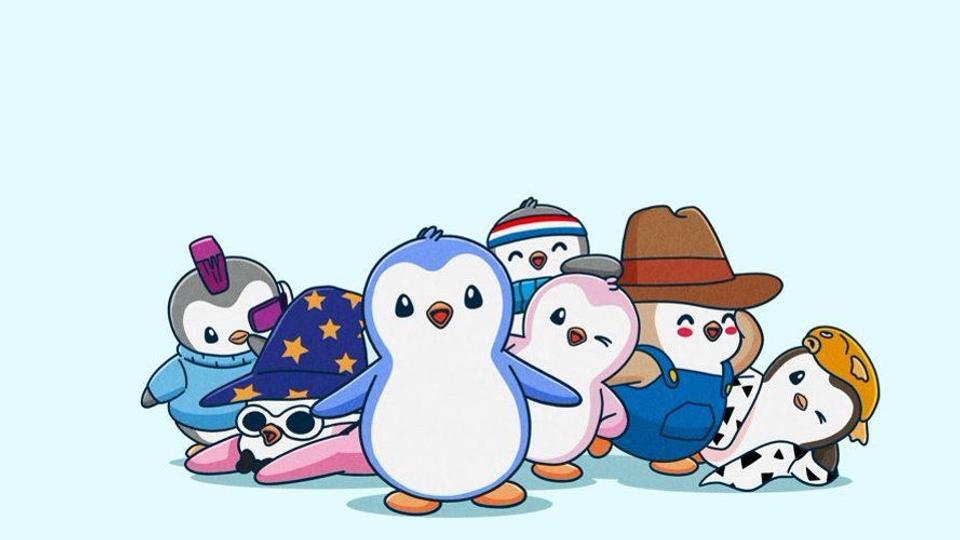 Pudgy Penguins and BAYC surge with double-digit gains, masking a broader NFT market decline as trading volumes drop and user participation hits multi-year lows2026-04
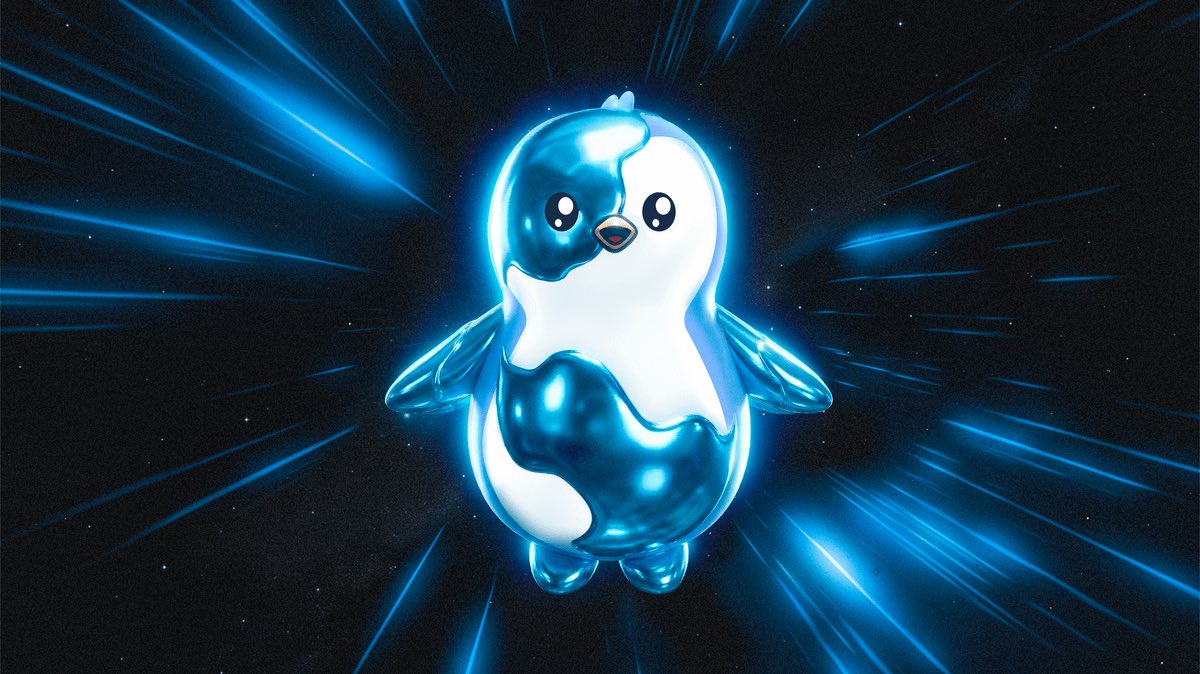 PenguBot launches as AI-powered Telegram trading bot with built-in self-custodial wallets, enabling users to trade, set orders, and track positions via AI commands2026-04
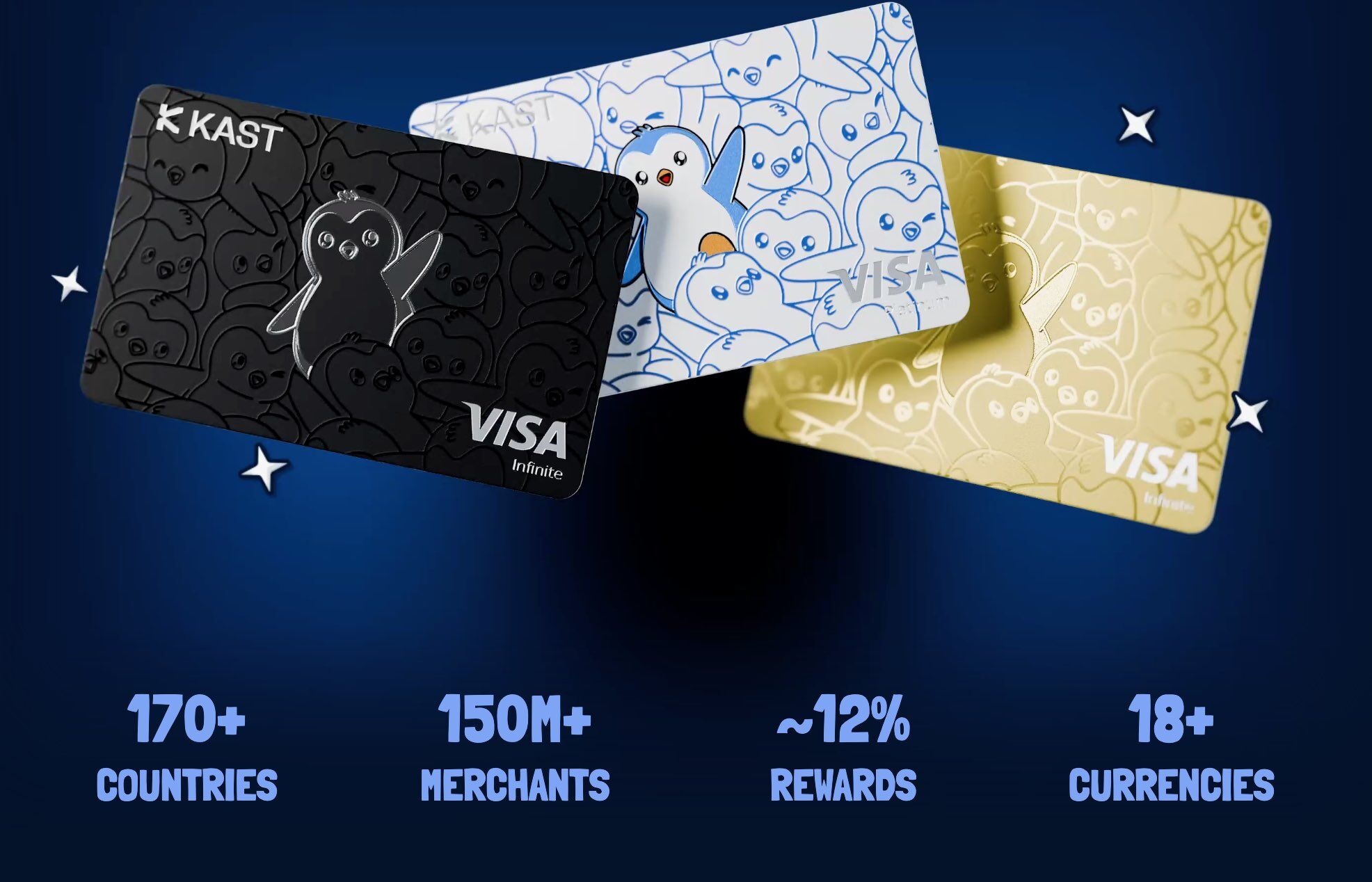 Pudgy Penguins launches Pengu Card on Visa with KAST, enabling payments across 170+ countries and 150M+ merchants worldwide2026-03
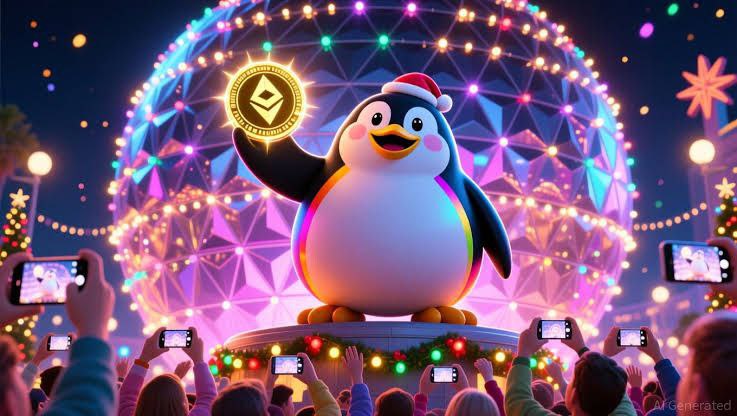 Pudgy Penguins successfully wrapped the Las Vegas Sphere with its cartoon characters by positioning the activation around physical products—merch, toys, and animations—rather than crypto, allowing it to bypass the venue’s strict crypto advertising rules that previously blocked Dogwifhat’s $700K community-led attempt.2025-12
 Pudgy Penguins raises $9m for IP brand expansion2023-05
- Pudgy Penguins funding came from four different rug pulls 2023-10
Pudgy Penguins: From NFT Collection To Global Crypto Brand
Pudgy Penguins is a blue-chip NFT collection turned multi-platform consumer brand built around cute penguin characters, now spanning collectibles, gaming, payments, and the PENGU crypto token across Ethereum and Solana. What began as a set of 8,888 Ethereum NFTs in 2021 has evolved into one of the most visible Web3-native IP franchises, with toys in major retailers, sports and gaming collaborations, a Visa-powered payment card, and a fast-growing token ecosystem that now sits squarely at the intersection of crypto, culture, and mainstream commerce. Under new leadership, Pudgy Penguins has leveraged viral content and physical products to attract millions of fans and billions of social media impressions, even as the broader NFT market has cooled. Alongside that brand push, the launch of the PENGU token and ancillary products like PenguBot and the Pengu Card have financialized the franchise, drawing in both committed community members and opportunistic speculators. This explainer unpacks how Pudgy Penguins works, how the ecosystem fits together, and what crypto-savvy readers should keep in mind when engaging with the project across NFTs, tokens, and payments.
Origins: An NFT Collection That Outlived The Hype Cycle
Pudgy Penguins began in mid-2021 as a collection of 8,888 algorithmically generated profile-picture NFTs minted on the Ethereum blockchain during the peak of the early NFT boom. Each tokenized penguin features a combination of traits such as backgrounds, outfits, and accessories, creating a familiar rarity-based hierarchy similar to other generative collections of the time. The project was part of a wave of avatar-style NFTs that sought to turn on-chain images into social identity markers across Twitter, Discord, and emerging metaverse platforms. In those early months, Pudgy Penguins positioned itself as a feel-good, meme-ready brand emphasizing wholesomeness and community “vibes” rather than the edgier aesthetic or speculative rhetoric of some contemporaries. This soft, accessible branding made the collection legible not only to crypto-native traders but also to a broader online audience intrigued by NFTs as cultural artifacts rather than purely financial instruments.
Like many early NFT projects, Pudgy Penguins quickly experienced growing pains as initial hype met the realities of building durable IP in a volatile, largely unregulated market. The collection’s first phase under its original founding team saw both rapid appreciation and community frustration, as expectations for roadmap execution and utility outpaced delivery. Although those controversies are not the focus of this explainer, they set the stage for a significant transition: the sale of the project’s intellectual property in 2022 to entrepreneur Luca Netz. Netz, who had prior experience in internet businesses and e-commerce, acquired the Pudgy Penguins IP for around \$2.5 million in mid-2022 and stepped in as CEO, committing to rebuild trust and reposition the brand for longevity beyond short-term NFT speculation. That change in control proved to be one of the defining moments for Pudgy Penguins, marking a shift from a typical NFT “roadmap” mindset to a more traditional IP and consumer brand strategy.
Under the new leadership, Pudgy Penguins increasingly emphasized the penguin characters as a standalone brand that could exist with or without ongoing NFT trading mania. The company leaned into story-driven and emotionally resonant marketing that framed the penguins as symbols of resilience, positivity, and community, themes that resonated with both existing holders and newcomers encountering the characters through social media clips. Where many NFT teams remained tightly confined to crypto-related announcements and Discord updates, Pudgy Penguins began experimenting early with short-form video content geared toward mainstream platforms like Instagram and TikTok. That shift helped decouple the brand’s visibility from purely crypto market cycles, setting the scene for its expansion into physical merchandise and large-scale collaborations in subsequent years.
At the same time, the underlying NFTs retained their role as the project’s original digital artifacts and de facto membership badges. Floor prices—the minimum listing price for any NFT in the collection—became an ongoing barometer of perceived blue-chip status, and over time Pudgy Penguins would join the small cohort of collections, alongside projects like Bored Ape Yacht Club, whose valuations and cultural footprint endured beyond the initial bull market. As the project matured, the NFTs increasingly represented scarce access to the core brand and its upside, while new layers such as the PENGU token and various physical and digital products were designed to broaden participation. For crypto observers, this created a dual structure: high-value, limited-supply NFTs at the core, surrounded by more accessible touchpoints aimed at millions of potential fans and customers across the world.

Pudgy Penguins and BAYC surge with double-digit gains, masking a broader NFT market decline as trading volumes drop and user participation hits multi-year lows

$175M April NFT volume with 50% wash trading per CryptoSlam puts organic flow at sub-$90M monthly across the entire market — and aggregate trader P&L is still negative. Prices doubling while active users halve is the same illiquidity squeeze that capped every NFT "recovery" since 2022. PP floor above 5 ETH has actual demand structure (Pudgy Toys retail revenue, licensable IP); BAYC +81% in 30 days off depressed lows is mean reversion, not new buyers.
From On-Chain Collection To Cross-Platform Franchise
The strategic arc of Pudgy Penguins after the IP sale centered on transforming a static NFT collection into a living media and consumer franchise. This meant finding ways to make the penguin characters recognizable and desirable even to people who had never connected a wallet or purchased a digital collectible. By 2024, the brand reported accumulating more than 100 billion social media views across platforms, a figure that signals not only broad reach but sustained engagement with short-form content starring the penguin characters. This style of content, typically focused on wholesome themes, simple humor, or motivational micro-stories, helped embed the brand within algorithmic feeds where users consume entertainment rather than crypto news. The goal was to ensure that when those viewers later encountered Pudgy Penguins products in a store or in a game, the characters would feel familiar rather than obscure Web3 artifacts.
Physical merchandise quickly became the most visible manifestation of that strategy. Pudgy Penguins rolled out “Pudgy Toys,” a line of physical penguin figures and plushies, as a bridge between NFT lore and mainstream retail shelves. After initial launches, the brand secured distribution in major U.S. retailers, with Walmart as a key early partner followed by Target, which added Pudgy Toys and licensed “Lil Pudgys” products to collectibles aisles nationwide. The Target rollout featured a curated selection of clip-on plush toys produced by PMI Kids’ World, signaling that Pudgy Penguins had met the quality and reliability thresholds expected by big-box buyers. For an NFT-born project, placement alongside established toy and collectibles IP is a meaningful badge of legitimacy. It demonstrates that the penguin characters can compete for shelf space and consumer attention without requiring buyers to understand anything about blockchains.
Apparel provided another avenue for brand expression, though one that would later entangle Pudgy Penguins in a high-stakes trademark dispute. As its plush toys and figures made inroads into stores, the project also licensed and produced clothing that used Pudgy imagery and penguin-themed marks. Retailers such as Walmart carried Pudgy-branded apparel, extending the characters into everyday fashion contexts rather than limiting them to collector-oriented products. This push into clothing tapped into the logic of lifestyle branding: if fans are willing to wear the penguins, the project’s cultural footprint and organic marketing both expand. However, it also brought the brand into closer proximity with legacy apparel IP that had long used penguin motifs, setting up conflicts that would later be formalized in court. The apparel segment thus illustrates both the opportunity and the legal risk that comes with NFT-native brands entering crowded consumer categories.
Beyond retail shelves, Pudgy Penguins sought high-impact, attention-grabbing campaigns that could position the brand alongside mainstream entertainment and advertising powerhouses. One notable example was its multi-day animated holiday advertisement on the Las Vegas Sphere, beginning on December 24, 2025, which showcased Pudgy Penguins on one of the world’s most visible digital canvases. Running a dedicated Sphere campaign is costly and logistically complex, signaling that the brand was willing to invest heavily in top-of-funnel awareness beyond the crypto ecosystem. Coupled with collaborations with major sports properties—such as an announced official partnership with the National Hockey League for the 2026 Discover NHL Winter Classic, including special fan events and limited-edition merchandise—the brand has repeatedly opted for mass-audience venues rather than Web3-only channels. These moves underscore a core thesis: Pudgy Penguins aims to be recognized first as a character franchise, with the NFT and token infrastructure functioning as an underlying ownership and community layer.
Sports and gaming tie-ins have become key pillars of that thesis. In addition to the NHL Winter Classic collaboration, the brand has pursued joint initiatives with global football clubs and embedded its characters into established online games, using crossovers to access fan bases that may have limited prior exposure to crypto. While the specifics of each collaboration vary, the general pattern involves co-branded merchandise, in-game events, or digital collectibles that integrate Pudgy Penguins into existing fandoms. This approach reflects an understanding that NFT brands must compete not only with other blockchain projects but with the broader universe of entertainment IP, from anime mascots to gaming franchises. By aligning with institutions that already command passionate communities, Pudgy Penguins seeks to accelerate its journey from niche NFT brand to widely recognized pop-culture property.
Readers aren't clicking Pudgy Penguins for NFT art — they're tracking whether a brand built on rug-pull capital and penguin cartoon IP can sustain mainstream legitimacy across Walmart shelves, Visa rails, and SEC filings simultaneously.
The PENGU Token: Crypto Rail For A Character Brand
Although Pudgy Penguins launched in 2021 as a pure NFT collection, its fungible token, PENGU, did not arrive until December 2024, several years into the project’s evolution. PENGU is designed as the native token of the Pudgy ecosystem, deployed on both Ethereum and Solana, two of the most widely used smart-contract platforms. In contrast to the unique, non-fungible penguin NFTs, PENGU tokens are interchangeable units that can be traded on centralized and decentralized exchanges, used as a medium of exchange within partner products, and potentially integrated into loyalty or governance mechanisms over time. By introducing a token after the brand and NFT collection were already established, Pudgy Penguins inverted the pattern of projects that launch a token first and only later attempt to build culturally resonant IP. In theory, this sequencing allows the token to piggyback on existing brand equity and community loyalty, though it also raises questions about whether financialization can destabilize that base.
According to exchange disclosures and project communications, PENGU’s total supply is structured into various allocations for the community, team, investors, and ecosystem growth, with approximately 25.9% reportedly set aside for community distribution. The circulating supply, meaning tokens that have been released and are in public hands, reached around 62.5 billion at the time of one detailed market analysis. That very large supply, typical of memecoin-style tokens, allows for low unit prices per token while still supporting a substantial fully diluted valuation. The token launched simultaneously on Ethereum and Solana, reflecting both the brand’s origin in Ethereum NFTs and the growing importance of Solana as a venue for high-throughput, retail-oriented crypto trading. Cross-chain architecture introduces technical complexity in terms of bridges, liquidity pools, and arbitrage dynamics, but it also expands the potential user base to communities that favor one chain over the other.
Market-wise, PENGU has already experienced pronounced volatility, a hallmark of newly launched, narrative-driven tokens. At one point in late May 2026, the token ranked second on CoinGecko’s trending list, with a reported market capitalization of roughly \$526 million and a 24-hour trading volume of about \$108 million, far above its typical daily activity. During that period, coverage noted that PENGU traded around \$0.0084 per token, well below its December 2024 launch highs but still high enough to cement it as a mid-cap memetic asset in the broader crypto market. On major exchanges such as Coinbase and Kraken, snapshots around mid-2026 show PENGU trading in the low cent range, with pricing data varying by venue and time window. These discrepancies underscore how quickly conditions can change in thinly regulated, global markets where liquidity fragments and price discovery is continuous. For traders, they also highlight the importance of treating any quoted price as a momentary snapshot rather than a stable reference.
The token’s presence on major centralized exchanges has been a significant catalyst for liquidity and mainstream access. Coinbase lists PENGU and makes it available to U.S. customers via its centralized exchange interface, where users can fund accounts through bank transfers, debit cards, wires, or, in some cases, PayPal, subject to jurisdictional constraints and compliance requirements. Other platforms, including Kraken and Bullish, similarly list PENGU and may offer features such as recurring purchases or margin trading, again depending on local regulations and the user’s account tier. These listings do not constitute endorsements but serve as distribution channels that can dramatically increase a token’s visibility and tradability. Once a token reaches this level of market integration, its price movements are often influenced as much by broader crypto risk-on sentiment, algorithmic trading, and social media narratives as by any fundamentals related to the underlying project.
Forecasting tools and “price prediction” pages, including those hosted by exchanges themselves, illustrate another dimension of PENGU’s financialization. For instance, one prediction model projects a future PENGU price of approximately \$0.01 in 2026, 2027, 2030, and 2040, based on a simplistic assumption of steady 5% annual growth from a given starting price. Such models are not research-driven forecasts but rather simple mathematical extrapolations that ignore the complex realities of token supply, demand, market sentiment, regulatory shifts, and project execution. Their existence nonetheless shapes retail expectations, especially when presented alongside real-time order books and performance charts. For an asset like PENGU, whose narrative blend includes adorable characters, mainstream brand deals, and memetic social media content, the temptation to treat upside projections as plausible scenarios rather than arbitrary curves can be strong. Experienced crypto participants should treat these tools as educational examples of compounding, not as investment guidance.
A recurring theme in coverage of PENGU is the tension between brand-driven demand and speculative froth. Commentators have noted that political memes, viral marketing campaigns, and high-profile sponsorships have fueled surges of interest in the token, culminating in its trending appearances and large short-term trading volumes. Yet even bullish analyses concede that the core open question is whether this attention can translate into durable, organic demand for PENGU as a utility or governance asset within the Pudgy ecosystem, rather than as a purely memetic trading vehicle. Some potential vectors for such demand include the use of PENGU in loyalty and rewards programs, preferential access to products or events, integration into the Pengu Card rewards structure, or future governance of brand-adjacent initiatives. However, as of the most recent reporting, the token’s role remains largely centered on alignment, community signaling, and speculative trading, with formalized on-chain rights such as revenue shares or legal claims on IP notably absent.
For long-term observers, PENGU therefore functions as a case study in how far a token tied to a strong consumer brand can go without explicit financial rights. The Pudgy team explicitly frames PENGU as a tool for “alignment” that allows fans to share in the brand’s growth narrative in a looser sense, rather than as a regulated share of cash flows or equity. In practice, this means that token holders are exposed to brand-execution risk, regulatory uncertainty, and market volatility, but do not enjoy the protections or entitlements associated with shareholders. Whether this model proves sustainable will depend on a mix of storytelling, perceived cultural relevance, and the project’s ability to layer in non-security-like forms of utility that make holding and using PENGU attractive even outside speculative cycles. For now, the token remains deeply intertwined with the penguin characters’ rise—or fall—as enduring icons of Web3 culture.
Consumer Products, Trading Cards, And The Physical-Digital Bridge
One of the most distinctive aspects of Pudgy Penguins relative to other NFT-born projects is the extent of its physical product strategy. Pudgy Toys, the initial toy line featuring penguin figures and plushies, is more than a merchandising add-on; it is a central on-ramp for consumers who may never own an NFT or token but can still participate in the brand’s world. The Target rollout, adding Pudgy Toys and licensed Lil Pudgys products to collectibles aisles nationwide, signaled that the brand was gaining traction with mainstream buyers and retailers alike. These toys are designed to be emotionally appealing on their own, with soft textures and expressive character designs that require no blockchain literacy to appreciate. The fact that they sit alongside action figures and collectibles from long-established entertainment franchises positions Pudgy Penguins as a peer rather than a curiosity.
Licensing partners such as PMI Kids’ World, which produces clip-on plushies for the Target line, bring manufacturing and distribution expertise that most NFT-native teams lack. Their involvement reduces operational risk and ensures that product quality meets consumer expectations, which is critical in categories like toys where safety standards and durability can make or break retailer relationships. For Pudgy Penguins, outsourced manufacturing also underscores the shift from on-chain engineering to traditional supply-chain management as a core competence for brand growth. While the crypto community tends to focus on smart contracts and token design, physical product success depends on forecasting, logistics, packaging, and shelf placement, all of which are largely invisible to token charts but vital to the IP’s long-term health. The brand’s ability to execute in this domain suggests a degree of operational maturity that contrasts with the image of NFT projects as purely digital experiments.
Trading cards and tabletop games represent the next layer of physical-digital bridge-building. Following the success of initial toy drops, Pudgy Penguins has moved into collaboration with established game publishers to create card-based and party-game experiences featuring its characters. Partnerships with companies like PlayMonster Games, known for viral real-world games, are meant to bring “Pengu” to life at game nights and social gatherings, further embedding the penguins into everyday leisure. Meanwhile, integration into the Vibes trading card game, including a “Birb & Pengu” set adding 195 new cards and a new card type, connects Pudgy Penguins to a broader ecosystem of NFT-inspired card IP and cross-community fandom. These hybrid products often incorporate digital claim codes or online tie-ins, inviting collectors to engage with both physical cards and on-chain representations of the same characters, although specific implementations vary by product line and partner.
The cumulative effect of toys, trading cards, and games is to multiply entry points into the Pudgy universe. A child might encounter the penguins first through a plushie in a store; a teenager might first see them in a Vibes TCG pack; a sports fan might first notice them on NHL Winter Classic merchandise. Each of these touchpoints is designed to be self-contained yet interoperable with the larger narrative, inviting deeper exploration. From a crypto perspective, this proliferation of physical manifestations does not automatically confer value on NFTs or tokens, but it does broaden the potential base of future participants. If even a fraction of toy collectors or sports fans later become curious about claiming digital counterparts or engaging with PENGU, the brand will have effectively transformed mainstream consumer traffic into on-chain adoption.
At the same time, the physical-digital strategy introduces operational risks and strategic tensions. Building and managing retail relationships requires capital, staff, and focus that could otherwise be directed toward core Web3 engineering. Inventory risk, manufacturing delays, and shifts in retailer buying patterns can materially affect revenue and brand momentum. Moreover, the licensing structures that govern toys and cards typically route revenue through corporate entities, not directly to NFT or token holders. This means that even if physical products succeed commercially, the link between that success and the on-chain assets’ value is mediated by corporate decisions about reinvestment, marketing, and token incentives. For investors viewing PENGU or the NFTs as pure claims on merchandising growth, this disconnect is an important caveat.

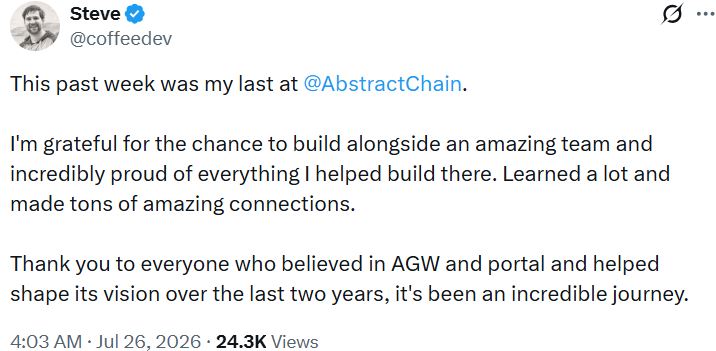
Developer Steve announced departure from Abstract Chain, the Ethereum Layer-2 from Igloo Inc. creators of Pudgy Penguins.
Gaming Experiments And The Shutdown Of Pudgy Party
Gaming has long been seen as a natural extension for NFT IP, given the overlap between gaming communities and early Web3 adopters. Pudgy Penguins followed this logic by exploring ways to embed its characters into interactive experiences, ranging from collaborations with established online games to launching its own titles. The most ambitious of these was Pudgy Party, a mobile battle royale game that sought to translate the penguin aesthetic into a fast-paced, free-to-play environment. Launched in August 2025, Pudgy Party quickly found an audience, reflecting the power of combining an established NFT brand with an accessible mobile game format. Players could engage with Pudgy characters even without owning NFTs or tokens, and the title gave the brand a foothold in a highly competitive but massive global market for mobile entertainment.
Despite initial traction, Pudgy Party’s lifespan turned out to be short. Less than a year after launch, the game was shut down as the team announced a pivot away from maintaining the live title. Reporting on the shutdown framed it as a strategic decision rather than a simple failure of adoption, with the Pudgy team concluding that their resources would be better directed toward other initiatives with more direct ties to the core brand and ecosystem. Nonetheless, for players and observers, the closure underscored the difficulty of sustaining live-service games, especially those built around IP rather than gameplay innovation alone. Mobile battle royales are expensive to maintain, requiring constant content updates, player support, and anti-cheat systems, and even high-engagement titles can struggle to monetize adequately in an overcrowded app marketplace.
The Pudgy Party episode is instructive for evaluating NFT-linked gaming plays more broadly. It highlights that even a “hit” game from a popular NFT brand can be transient if the underlying unit economics and strategic fit are not compelling. For NFT holders who saw Pudgy Party as a major pillar of utility or cultural relevance, its shutdown may have raised concerns about the durability of other promised initiatives. For the brand, the decision to wind down the game also reflects a willingness to experiment aggressively and then cut losses—a trait that can be positive from a capital allocation standpoint but unsettling for users expecting lifetime support for each product. In the context of Web3, where projects often tout “forever” access or immutable ownership, the reality that centralized game servers can be turned off at any time is a sobering reminder of where blockchains begin and end.
At the same time, Pudgy Penguins has approached gaming not solely through its own titles but via collaborations and cameos in existing games. For example, the brand has been featured in seasonal updates and events within legacy online games, such as winter content drops that integrate Pudgy-themed cosmetics or challenges as part of broader expansion packs. These limited-time collaborations allow the brand to piggyback on the technical infrastructure and player bases of mature games, reducing development risk while still offering novel experiences to fans. They also reinforce the brand’s presence within gaming culture without requiring the heavy investment and ongoing maintenance of fully proprietary titles. For Pudgy, the combination of short-lived proprietary experiments like Pudgy Party and longer-lived collabs offers a diversified approach to interactive media—but also underscores that not every experiment will stick.
For crypto participants considering the ecosystem, the key takeaway is that gaming initiatives should be viewed as optional upside rather than core guarantees of value. NFTs may grant cosmetic benefits or access in specific games, and tokens may be used for in-game economies, but those features are contingent on game operators continuing to support integrations. If a game shuts down or modifies its business model, on-chain assets tied to that experience can lose much of their practical meaning even if they remain technically in users’ wallets. Pudgy Penguins’ willingness to sunset Pudgy Party, and the mixed outcomes of gaming tie-ins across the NFT space, thus point to a cautious stance: gaming can amplify IP and create memorable experiences, but it is an inherently high-risk, hit-driven domain.
- 01rug-pull funding origins
The revelation that the $9M brand-expansion raise traced back to four rug pulls reframed Pudgy Penguins' legitimacy story as a second-order scandal, pulling in readers already interested in the funding news
- 02BAYC floor price flippening
Pudgy Penguins overtaking Bored Ape Yacht Club as the top blue-chip NFT collection marked a symbolic power shift in the PFP market that readers treated as a bellwether for NFT hierarchy
- 03ETF inclusion speculation
Being named alongside XRP, Litecoin, and Solana in a queue of 72 ETF filings signaled to readers that PENGU was crossing from NFT niche into regulated financial product territory
- 04$PENGU token launch mechanics
Readers engaged heavily with the token announcement because it represented a liquidity event for NFT holders and introduced a fungible asset layer on top of the NFT collection
- 05mainstream retail and venue expansion↗
Walmart placement, Las Vegas Sphere branding, and Visa card integration read as proof-of-concept that NFT IP could convert into durable consumer product revenue outside crypto
- 06trademark infringement legal risk↗
Multiple low-click headlines about PEI Licensing's lawsuit signal an emerging legal overhang that could threaten the apparel and physical-goods revenue the brand has built
Payments, Pengu Card, Visa Rails, And Trading Bots
While toys and games extend Pudgy Penguins into entertainment and collectibles, payments-related products bring the brand into the realm of everyday finance. The flagship here is the Pengu Card, a payment card launched in partnership with fintech platform KAST and operating on the Visa network. The card is marketed as a way for fans to “spend like a penguin,” effectively turning PENGU and other supported assets into a funding source for global transactions. According to KAST’s disclosures, the Pengu Card is available in more than 170 countries and is accepted at over 150 million merchants and ATMs worldwide, leveraging Visa’s existing infrastructure for point-of-sale and cash access. Users can fund the card with fiat currencies such as USD and EUR as well as stablecoins like USDC and USDT, alongside other supported cryptocurrencies, with KAST handling conversion and settlement on the back end.
Functionally, the Pengu Card behaves much like other crypto-linked debit or prepaid cards. Users deposit assets into a custodial account managed by the issuer or its partners, and when a transaction occurs, those assets are sold or otherwise converted to local currency, which is then routed through Visa’s network to the merchant. From the merchant’s perspective, the payment looks and settles like any other card transaction; the crypto abstraction occurs entirely upstream. In Pudgy’s case, the card is wrapped in penguin-themed branding and positioned as a lifestyle accessory that ties financial behavior back to the community’s identity. Promotions and marketing materials highlight potential rewards, with some coverage noting the possibility of earning up to double-digit percentage rewards depending on spending patterns and program tiers, although the precise structure is subject to change based on issuer policies and market conditions.
For users, the advantages of such a card include the ability to spend crypto holdings without manually cashing out through exchanges, as well as the psychological appeal of aligning payment tools with personal fandom. However, these cards also centralize several layers of risk. Because assets are typically held in custodial wallets controlled by the card issuer or its partners, users sacrifice the self-custody that many view as a core feature of crypto. They are also subject to compliance reviews, freeze risks, and fee structures that may be less transparent than those on on-chain decentralized exchanges. Furthermore, the marketing of high rewards can obscure the underlying economics, which often depend on interchange fees, FX spreads, and promotional budgets that may be adjusted or withdrawn over time. For a brand like Pudgy Penguins, the card’s success will hinge not only on fan enthusiasm but on the robustness and regulatory resilience of the financial partners behind the scenes.
Complementing the payment card is PenguBot, an AI-powered trading assistant integrated with Telegram that offers self-custodial wallet functionality and supports trading via conversational commands. The bot aims to make DeFi and token trading more accessible by allowing users to buy, sell, set orders, and track positions simply by chatting, with AI interpreting intents and routing orders through appropriate on-chain venues. In theory, this lowers the barrier to entry for users who find DeFi interfaces intimidating or cumbersome. The self-custodial aspect means that, at least in principle, users retain control over their private keys, with the bot acting as an interface rather than a custodian. Combined with Pudgy-themed stickers, channels, and community bots, PenguBot helps make Telegram a central hub for the brand’s more crypto-native audience, complementing the mainstream-facing presence on Instagram and retail shelves.
However, trading bots also raise serious security and UX concerns. Any system that automates transaction construction and signing on behalf of users must be designed with rigorous safeguards to prevent unauthorized transfers, malicious contract approvals, or exploitable permissions. The combination of conversational AI and financial execution adds further complexity: users may not fully understand which actions trigger on-chain transactions or what risks they incur when following AI-suggested strategies. In a landscape where phishing bots and fake trading assistants already proliferate, branding and official channels help, but cannot eliminate, the risk of confusion or impersonation. For users engaging with PenguBot or similar tools, best practices include starting with small amounts, carefully reviewing transaction prompts, and ensuring that they are interacting with verified official bots rather than clones.
Pudgy Penguins has also ventured into identity-adjacent experiments through collaborations like the MetaMask x Pudgy Penguins soulbound token (SBT) series. SBTs are non-transferable tokens intended to represent durable aspects of identity, such as memberships or achievements, on-chain. In the Pudgy context, such tokens can commemorate participation in key community events or milestones, creating a verifiable history of engagement. Yet SBTs also introduce privacy and security trade-offs: tying persistent identity markers to wallet addresses can make it easier for external parties to deanonymize users or map their on-chain behavior over time. As critics of SBT experiments point out, granting permanent, publicly visible badges to wallets that also hold significant assets may increase their attractiveness as targets for phishing or exploits. For brands like Pudgy, the challenge is to design commemorative tokens that preserve user safety while still enriching the sense of shared history.
Finally, Pudgy Penguins’ brush with ETF advertising illustrates how crypto-native brands can intersect with traditional finance not only through underlying asset listings but through marketing collaborations. In some campaigns, Pudgy imagery has been used in promotional materials for crypto-related exchange-traded products, leveraging the brand’s visual appeal to draw attention to otherwise abstract financial instruments. Importantly, this does not mean that PENGU itself is included in the baskets of regulated ETFs or that owning PENGU provides direct exposure to those funds. Instead, the penguin characters function as mascots or visual hooks in advertising. For viewers not steeped in the distinctions between on-chain tokens and regulated securities, there is a risk of conflating brand presence with financial inclusion. This underscores the need for careful disclosure and education when NFT IP is deployed in contexts adjacent to heavily regulated financial products.
Legal And Regulatory Landscape: Trademark, IP, And Compliance
As Pudgy Penguins has expanded from NFTs into toys, apparel, and payments, it has moved into territories where decades-old intellectual property regimes and financial regulations apply. The most visible legal challenge to date is a trademark dispute with PEI Licensing, the parent company of the long-running “Original Penguin” apparel brand. PEI Licensing filed a lawsuit alleging that Pudgy Penguins’ apparel and related marks mislead and deceive consumers by creating confusion with its established penguin-themed clothing line. According to the complaint, PEI has used penguin marks in commerce since 1956 and holds trademarks around terms like “Penguin” and “Original Penguin” in the apparel category. The suit asserts that Pudgy Penguins’ use of penguin imagery and similar branding on clothing dilutes or infringes upon these marks, especially as both brands now operate in overlapping retail channels.
The complaint further alleges that PEI Licensing sent a cease-and-desist letter to Pudgy Penguins in October 2023, which was not acted upon to the complainant’s satisfaction, precipitating the move to federal court. From a legal perspective, the core issues revolve around likelihood of confusion and the strength of PEI’s existing marks within the relevant consumer segments. Courts assessing trademark disputes typically evaluate factors such as the similarity of the marks, the proximity of the goods in the marketplace, evidence of actual confusion, and the defendant’s intent. In this case, both parties center their brands around penguin imagery in the context of apparel, which strengthens the plaintiff’s argument that consumers might reasonably think products are related or licensed. On the other hand, Pudgy Penguins can argue that its use is sufficiently stylized and anchored in a distinct digital-native context, and that consumers of its merch are unlikely to confuse it with a legacy menswear line.
For the broader NFT ecosystem, the case is significant because it tests how far Web3-native brands can push into traditional categories that already contain animal or character mascots. Unlike entirely invented brand names, animal motifs have long been used by many companies, so the boundaries between permissible use and infringement can be fuzzy. If courts take a restrictive view, NFT brands may need to be more cautious about extending on-chain mascots into physical products in categories where powerful incumbents already operate. They may also be forced to differentiate their marks more explicitly through naming, stylization, or limiting the overlap of product lines. Conversely, a favorable outcome for Pudgy could embolden other projects to expand aggressively into established categories, arguing that new digital-first brands can coexist with legacy IP so long as overall presentation and consumer context differ.
Beyond trademarks, Pudgy Penguins navigates the increasingly complex regulatory environment around crypto tokens and payments. While PENGU is described as a community and alignment token rather than as a share in profits or equity, regulators in various jurisdictions have signaled that they may treat certain tokens as securities if they meet criteria related to fundraising, expectation of profit, and reliance on managerial efforts. That scrutiny has not been limited to DeFi protocols; NFT-adjacent tokens and governance coins have also come under review in enforcement actions and guidance documents. For PENGU, the degree of regulatory risk will depend on factors such as how the token was initially distributed, marketing language used during launch, and whether ongoing promotions implicitly promise financial returns tied to the efforts of the Pudgy team. While no specific enforcement action has been reported against PENGU to date, investors should assume that the regulatory interpretation of such assets may evolve.
The Pengu Card and PenguBot products add further layers of compliance complexity. Payment cards that allow spending of crypto balances must operate within anti-money-laundering (AML) and know-your-customer (KYC) frameworks, often requiring users to undergo identity verification and sometimes imposing geographic restrictions. Card issuers and program managers are subject to oversight by financial regulators and card networks, who may require periodic reviews of risk controls and transaction patterns. Any association with high-volatility tokens or memecoins may draw additional scrutiny, especially if card programs appear to encourage speculative behavior. Similarly, self-custodial trading bots that facilitate access to decentralized exchanges can intersect with regulatory discussions around unregistered broker-dealer activity, financial advice, and user protection. While the current regulatory environment for such tools remains fluid, brands that put their names on them must balance innovation with a robust understanding of compliance obligations.
Intellectual property management is also central to how Pudgy Penguins structures relationships with NFT holders. Many prominent collections grant holders certain commercial rights to use their NFT images in derivative works, such as merchandise, media, or branding. Pudgy Penguins has emphasized licensing frameworks that encourage creativity and entrepreneurial projects built around individual penguins, while maintaining centralized control over the core brand and trademarks. This hybrid approach tries to harness grassroots innovation without fragmenting the brand identity or violating third-party IP rights. However, it also means that some holders may overstep their rights, intentionally or otherwise, by creating products that collide with existing trademarks or regulatory requirements. The more successful the brand becomes, the more incentive there is for third parties—whether holders or impostors—to test the boundaries, which in turn increases the importance of clear documentation and enforcement strategies.
PenguBot launches as AI-powered Telegram trading bot with built-in self-custodial wallets, enabling users to trade, set orders, and track positions via AI commands
Market Context, Floor Prices, And Investor Considerations
Pudgy Penguins’ trajectory cannot be evaluated in isolation from the broader NFT and crypto markets. Since the explosive boom of 2021, overall NFT trading volumes and user participation have declined sharply, with aggregate monthly sales dropping to around \$175 million in certain recent periods, a far cry from peak levels. Within this downturn, however, a small cadre of so-called blue-chip collections has maintained or even increased its valuations, creating a bifurcated landscape between a handful of durable brands and a long tail of illiquid assets. Data from late April 2026, for instance, showed Pudgy Penguins’ floor price rising more than 20% in a single week to above 5 ETH, even as overall NFT market activity remained subdued. Over longer horizons, the collection even reached an all-time high floor above \$100,000 per NFT, placing it among the most expensive profile-picture collections in absolute terms.
These dynamics mirror those seen in other speculative markets, where capital consolidates in perceived quality assets during downturns. Pudgy Penguins’ ability to grow floor prices and maintain secondary-market activity while much of the NFT ecosystem languishes suggests that its brand-building efforts and off-chain expansions resonate with collectors and investors. The comparison with Bored Ape Yacht Club, which has also seen double-digit gains in floor price over similar periods, underscores that a few marquee IPs now dominate both mindshare and market share in the NFT space. For holders, this concentration can be rewarding, but it also raises the stakes: the failure of a top project would reverberate more widely than the collapse of a smaller collection, and the path dependency of market perception means that missteps can rapidly erode the “blue-chip” aura.
For PENGU, the interplay with the NFT collection adds another layer of complexity. Token rallies sometimes coincide with rising NFT floor prices, as traders extrapolate that brand momentum will benefit both classes of assets. However, their economic structures and risk profiles differ markedly. NFTs are inherently illiquid and idiosyncratic; each token represents a unique trait combination and must find a buyer who values that specific item. Tokens like PENGU, by contrast, are fungible and trade in large, interchangeable blocks. This makes it easier for speculators to rapidly enter and exit positions, and to use leverage or derivatives where available. It also means that token markets can detach from fundamental brand trajectories for extended periods, driven instead by memetic cycles, influential traders, or reflexive social media campaigns.
A key question for sophisticated market participants is how, if at all, physical product success and IP deals feed back into on-chain asset valuations. In traditional media and entertainment, licensing deals and merchandise sales eventually show up in revenue and profit figures, which equity markets can incorporate into valuations via discounted cash flow models or multiples. In the Pudgy ecosystem, that translation is far less direct. Corporate entities behind the brand earn revenue from toy sales, apparel, game licensing, and advertising campaigns, but they have no formal obligation to route a share of that revenue to PENGU holders or NFT owners. The relationship is more associative: if the brand becomes more popular and financially secure, collectors may feel more confident that their NFTs will remain culturally relevant, and speculators may be more willing to assign rich valuations to PENGU on the assumption that the team will continue investing in growth.
This structural opacity highlights the importance of treating investments in PENGU and Pudgy NFTs as distinct from owning equity in the underlying company. Token and NFT holders effectively participate in a reputational and cultural asset whose economic upside is mediated by the discretion of private management and the strategies of licensors and partners. While the Pudgy team may choose to use part of its resources to support token liquidity, provide community rewards, or fund ecosystem grants, those acts are voluntary and mutable. If priorities shift or legal constraints tighten, the flow of benefits to on-chain assets could diminish even as the brand thrives commercially. For market participants, this suggests focusing less on simplistic narratives like “toys in Walmart automatically pump the token” and more on specific, enforceable mechanisms that connect corporate success to on-chain asset utility.
Risk management is therefore central to any engagement with Pudgy Penguins as an investment thesis. On the NFT side, risks include illiquidity, market cycles, and the potential for changing cultural tastes to render penguin avatars less desirable over time. On the token side, risks encompass volatility, exchange security, smart contract vulnerabilities, regulatory actions, and the possibility that PENGU remains primarily a speculative vehicle with limited durable utility. On the payments side, Pengu Card users face counterparty and custodial risk, as well as the usual challenges of navigating fees and cross-border regulation. And on the legal side, unresolved trademark disputes and evolving rules around NFTs, tokens, and digital advertising could impose constraints on brand activities. Taken together, these factors argue for a cautious and diversified approach, especially for retail participants drawn in by cute graphics and viral videos rather than a clear understanding of the risk landscape.
- 2021-07launch
Pudgy Penguins NFT collection mints out
- 2022-04governance
Luca Netz acquires collection from founding team
$9M raise for IP brand expansion
PEI Licensing sends cease-and-desist over penguin trademark
$PENGU fungible token launches; Las Vegas Sphere holiday campaign
- 2025-01regulatory
Pudgy Penguins listed among 72 pending crypto ETF filings at SEC
Pengu Card launches on Visa via KAST, covering 170+ countries
PEI Licensing files formal trademark infringement lawsuit
Ways To Engage With The Pudgy Ecosystem
For crypto-savvy readers, Pudgy Penguins offers multiple avenues of engagement, each with distinct expectations and risk profiles. At the most direct level, acquiring a Pudgy Penguins NFT or a Lil Pudgys spin-off NFT provides exposure to the original on-chain collectibles that underpin the brand’s cultural identity. Ownership of these tokens typically grants membership in the core community, access to holder-only channels and events, and eligibility for airdrops or allowlists related to new products and collaborations. Because the supply of the main collection is fixed at 8,888 NFTs, any increase in demand must be absorbed through price rather than new issuance, contributing to the collection’s scarcity dynamics. However, as discussed earlier, this scarcity is a double-edged sword: it supports high valuations but also means that entry prices may be prohibitive for many, and liquidity can be thin outside of major marketplaces and popular traits.
For those interested primarily in fungible exposure, PENGU tokens can be purchased and traded on major centralized exchanges such as Coinbase, Kraken, and Bullish, as well as on decentralized exchanges on Ethereum and Solana. On centralized platforms, the purchase process generally involves creating an account, completing KYC procedures, funding the account via accepted payment methods, and submitting a buy order, either at market or with a specified limit price. Some exchanges offer features like recurring purchases, allowing users to dollar-cost average into positions over time, though such tools do not mitigate the underlying volatility of the asset. On decentralized platforms, users must manage their own wallets, safeguard private keys, and interact directly with smart contracts, assuming full responsibility for transaction parameters and security. In all cases, participants should be prepared for large price swings and the possibility of losing a substantial portion of their investment.
Beyond direct asset ownership, consumers can engage with the brand through its physical products and events without taking on on-chain financial risk. Purchasing Pudgy Toys or trading cards at retailers like Target, or collecting licensed apparel from partner stores, allows fans to support and enjoy the IP with fixed, upfront costs and no exposure to crypto-market dynamics. Attending collaborations such as the NHL Winter Classic fan experiences or joining community gatherings hosted during major crypto conferences—like the Founders Table VIP dinners in New York during ETHConf and NYC Tech Week—offers opportunities to connect with other enthusiasts and industry leaders in person. These engagement modes may still indirectly affect the brand’s on-chain ecosystem by bolstering cultural relevance, but they do not require managing wallets, understanding gas fees, or monitoring token prices.
More advanced users may choose to explore products at the intersection of Pudgy branding and financial infrastructure, such as the Pengu Card and PenguBot. Using the Pengu Card involves onboarding through KAST, completing compliance checks, funding the card with supported assets, and then using it for in-person and online purchases where Visa is accepted. This can be appealing for individuals who hold significant balances in stablecoins or PENGU and wish to spend against them without first withdrawing to a bank account. However, it also places trust in centralized intermediaries and may introduce tax reporting complexities, as spending crypto is often treated as a taxable event in jurisdictions that consider it property. PenguBot, meanwhile, caters to active traders comfortable with self-custody and DeFi execution, offering a conversational interface for complex operations. It is best suited to users who understand smart-contract risk and have clear operational security practices in place.
Finally, there is a growing layer of purely cultural or social engagement centered on Pudgy Penguins’ presence in online spaces like Telegram, X, and Instagram. Collectible sticker packs, branded bots, newsletters, and social campaigns offer ways to participate in the community without committing capital. The brand’s collaborations with wallet providers and identity experiments, such as SBTs, also create opportunities for users to earn commemorative digital artifacts for contributions or participation. While these items may carry minimal market value, they can be meaningful within the community as status symbols or proofs of involvement. For observers trying to gauge the health of the Pudgy ecosystem, tracking activity and sentiment across these channels can provide valuable context beyond price charts and trading volumes.
Outlook
Pudgy Penguins sits at an unusual crossroads of Web3 and mainstream culture. It is one of the few NFT-born brands that has successfully translated on-chain buzz into sustained off-chain visibility, with toys in big-box retailers, high-profile sports partnerships, and even a holiday ad campaign on the Las Vegas Sphere. The launch of the PENGU token, Pengu Card, PenguBot, and a flurry of game and trading-card collaborations show a willingness to experiment across nearly every frontier where crypto, IP, and consumer behavior intersect. At the same time, recent developments—from the shutdown of the Pudgy Party mobile game to the ongoing trademark lawsuit with a legacy apparel brand—underscore that this ambition carries both operational and legal risks.
Over the medium term, Pudgy Penguins’ trajectory will likely hinge on three intertwined factors. The first is its ability to maintain and grow its cultural relevance beyond the crypto bubble, converting viral content and retail presence into enduring affection for the penguin characters. The second is its success in articulating and delivering meaningful, non-speculative utility for PENGU and related on-chain assets, so that token demand does not depend solely on hype cycles and memetic trading. The third is its navigation of regulatory and IP landscapes, from securities law implications for tokens to trademarks in crowded consumer categories and compliance requirements for payment products. If the project can manage these challenges, it may solidify its place as a canonical example of how NFT IP can mature into a durable transmedia franchise. If not, it will still offer a rich case study in the promises and pitfalls of building a global brand from a handful of penguin JPEGs on Ethereum.
Latest Pudgy Penguins news
Pudgy Penguins and BAYC surge with double-digit gains, masking a broader NFT market decline as trading volumes drop and user participation hits multi-year lowsDeveloper Steve announced departure from Abstract Chain, the Ethereum Layer-2 from Igloo Inc. creators of Pudgy Penguins.PenguBot launches as AI-powered Telegram trading bot with built-in self-custodial wallets, enabling users to trade, set orders, and track positions via AI commandsPudgy Penguins launches Pengu Card on Visa with KAST, enabling payments across 170+ countries and 150M+ merchants worldwidePudgy Penguins successfully wrapped the Las Vegas Sphere with its cartoon characters by positioning the activation around physical products—merch, toys, and animations—rather than crypto, allowing it to bypass the venue’s strict crypto advertising rules that previously blocked Dogwifhat’s $700K community-led attempt. Pudgy Penguins partners with NASCAR to bring Pengu closer to race fans worldwide
Sources
19 records from 15 domains
yellow.com
kraken.com
coinbase.com
bullish.com
cryptorank.io
youtube.com
anbmedia.com
kast.xyz
x.com
investing.com
instagram.com
games.gg
roic.ai
kucoin.com
bankless.com
Community notes
Spot something off or out of date? Drop a note. Editors review topic notes daily and roll accepted fixes into the explainer — contributors are recognized in the monthly $SQUID drop.
Loading notes…
Help improve this topic
Have a story or tip about this topic? Submit it. See something missing? Leave a note. Editors review daily; accepted submissions and fixes count toward the monthly $SQUID drop.