
Comprehensive explainer on NFTs for crypto readers, covering how non-fungible tokens work, Ethereum and Bitcoin standards, minting and markets, DeFi integration, 2021–22 boom and crash, regulation, security risks, and long-term use cases beyond speculation.
+23 sources across the wider coverage universe
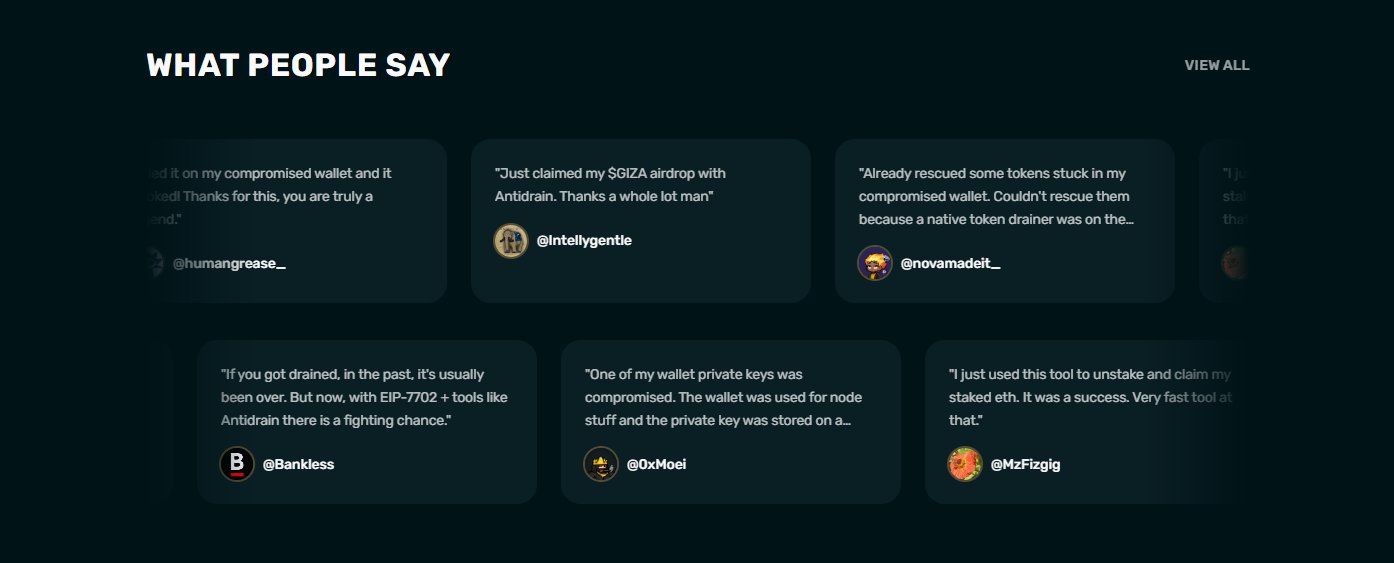 Solo developer launches 5 working products from seed recovery tool to batch bridging and NFT rescue, highlighting speed of execution and low barrier to building in crypto today2026-04
 NFT bull and American DJ Steve Aoki liquidates major crypto positions after failed Dominion X project and 88% drop in Bored Ape value, signaling continued weakness in NFT markets2026-04
 Blocmates breaks down Fake World Assets ($FWA), reveals how it blends NFTs, DeFi and gacha mechanics into a yield game, but its long-term survival may hinge on incentives ending and token sell pressure2026-07
 Kontor Protocol launches permanent file storage on Bitcoin for NFTs; Horizon Market first to integrate.2026-04
 Forma shuts down its chain over unsustainable operations, moving NFTs to Ethereum2026-07
 Yuga Labs settles BAYC trademark lawsuit with Ryder Ripps, ending four-year copycat NFT fight2026-04
Non-Fungible Tokens (NFTs): An Evergreen Guide for Crypto Markets
Non-fungible tokens, or NFTs, are unique digital tokens recorded on a blockchain that are designed to prove ownership and provenance of a specific asset—typically a piece of media, a collectible, or some form of access right. Unlike cryptocurrencies such as bitcoin or ether, which are interchangeable on a one-to-one basis, each NFT is distinguishable from every other token, making it suitable for representing scarce digital items, verifiable membership passes, or claims on off-chain assets in crypto-native markets.
What Exactly Is an NFT?
At the most basic level, an NFT is a cryptographic token that lives on a blockchain and embeds a unique identifier, making it impossible to interchange directly with other tokens on a one-to-one basis. The term “non-fungible” distinguishes these tokens from fungible ones: one ether can be exchanged for any other ether with no loss of value, whereas one NFT is not presumed to be equivalent to another, even if they come from the same collection. This difference underpins the entire NFT design space, because it allows blockchains to model discrete objects such as artworks, game items, tickets, or credentials rather than just balances of currency units. In practice, an NFT is a record in a smart contract that maps a token ID to an owner address and, usually, to associated metadata that describes what the token represents. The token can be transferred, traded, or locked in other contracts, but its unique ID and ownership history remain traceable on-chain, providing a cryptographic provenance trail.
Because NFTs are implemented as smart contracts, their behavior is defined by code deployed to the blockchain, most commonly on general-purpose networks like Ethereum. On Ethereum, the most widely used specification is ERC‑721, a standard that defines a common interface for NFTs so that wallets, marketplaces, and other applications know how to read balances, transfer tokens, and approve third parties to move them. The ERC‑721 standard specifies that each token is identified by a unique uint256 ID and that the contract implements functions such as ownerOf, transferFrom, and safeTransferFrom to manage token ownership and safe movement between addresses. This composable standardization has been crucial in allowing NFT collections to plug into a shared ecosystem of wallets and marketplaces without custom integrations for every project. More recent standards such as ERC‑1155 extend this logic to support multiple token types, including both fungible and non-fungible tokens, in one contract, further enriching the design space.
An important nuance is that the NFT itself is not usually the artwork, song, or in-game object in a literal sense, but rather a token that points to or encodes information about that asset. In many implementations, an NFT stores a URI that references metadata hosted off-chain—often in decentralized storage networks like IPFS or Arweave—containing attributes such as the name, description, and media file link. Some NFT systems, particularly on Bitcoin using Ordinals, push more of this data directly on-chain, inscribing media into the witness data of a transaction so that the content is literally embedded in the blockchain. In both models, the value proposition lies in the combination of unique token IDs, cryptographic signatures, and an immutable ledger that records who owns what, when ownership changed hands, and under which contract rules.
The idea of digital collectibles is not new, but NFTs formalize and standardize it in a way that is natively compatible with the broader crypto economy. On Ethereum and other smart contract blockchains, NFTs can be bought and sold using native cryptocurrencies like ether, bundled into baskets, used as collateral in lending protocols, fractionalized into fungible shards, or even plugged into decentralized governance. This composability means that NFTs are less a standalone product and more a building block that can be integrated with decentralized finance (DeFi), gaming, social platforms, and creative tooling. The result is that “NFT” now functions as an umbrella term that covers fine art, profile-picture (PFP) collections, gaming assets, domain names, music royalties, membership passes, and more, all unified by the same underlying technical pattern of non-fungible tokenization.
For a crypto news audience, the practical takeaway is that NFTs are best understood as a token standard plus a set of social and economic conventions around scarcity, authenticity, and ownership. The token standard guarantees technical interoperability, while the surrounding ecosystem—marketplaces, wallets, communities, and regulatory frameworks—determines how those tokens are used and valued. As markets have cycled from euphoric speculation to painful drawdowns and into a more sober building phase, the meaning of “NFT” has continued to evolve, but the core notion of verifiable digital ownership on a public blockchain remains the anchor.

Whitehat rescue recovers 23,155 NFTs after Payment Processor exploit; 660 WETH lost
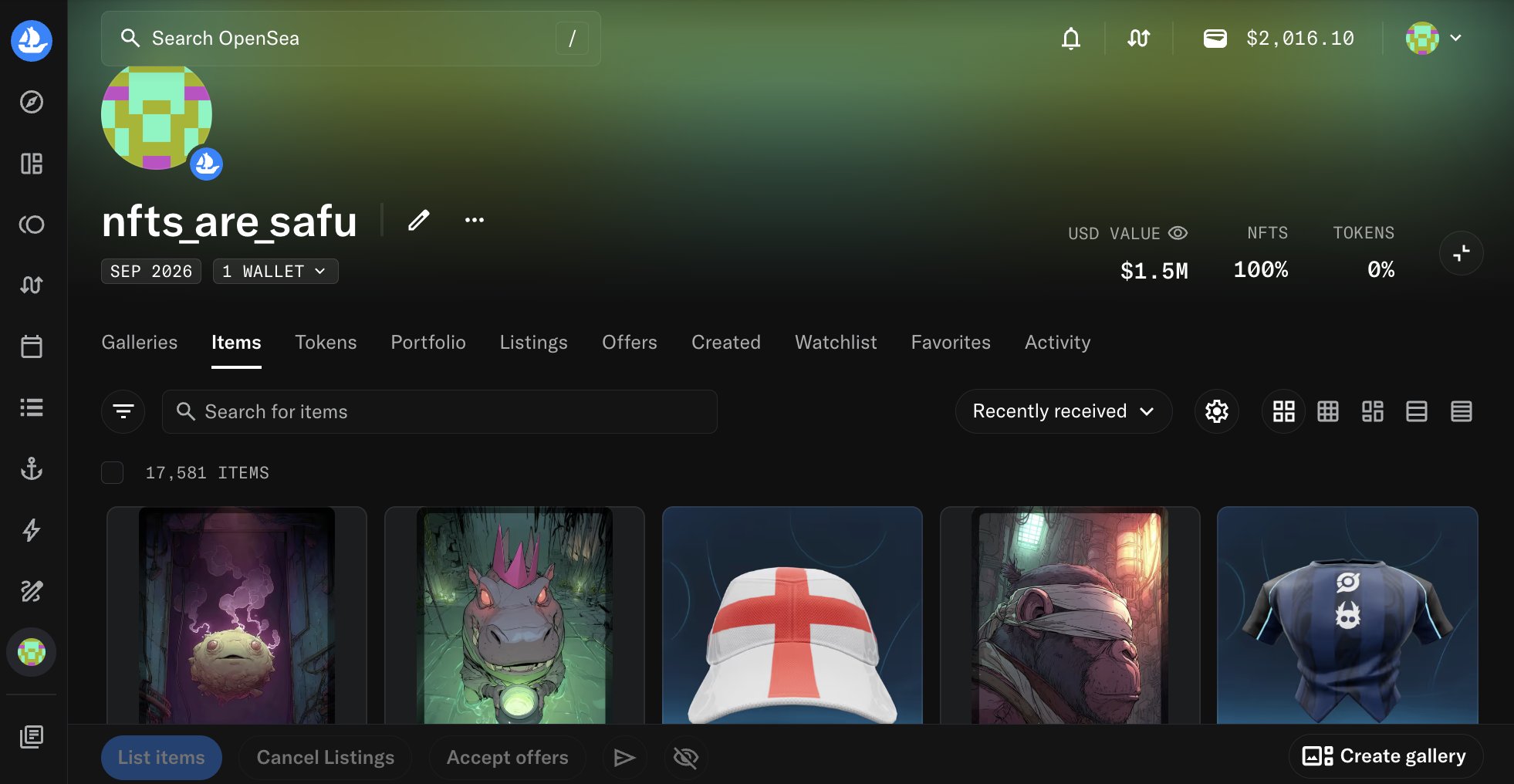
How NFTs Work on Blockchains
Fungible vs. Non-Fungible Value
To understand NFTs mechanistically, it is useful to contrast fungible and non-fungible representations on-chain. Fungible tokens such as ERC‑20 tokens model balances: each address holds some quantity of a token, and all units are interchangeable. Non-fungible tokens invert this by modeling discrete objects rather than balances: each token is a unique entry in a mapping from token ID to owner address. This distinction mirrors the difference between holding 10 ether and holding one particular digital painting; the former is a quantity of homogeneous units, the latter is an individual asset with identity. In everyday terms, fungible assets are like dollars in your bank account, while non-fungible assets are like deeds to specific houses or serial-numbered collectibles. On-chain, these concepts are implemented through different data structures and standards, but they coexist within the same general infrastructure and can interact via smart contracts.
The ERC‑721 standard on Ethereum crystallized the non-fungible approach by specifying a minimal interface for tokens that represent unique assets. ERC‑721 contracts maintain an internal mapping from token IDs to owners and expose functions for querying balances, ownership, and approvals. This standard also introduced events such as Transfer and Approval so that external applications can track token movements and permission changes in real time. Because ERC‑721 was adopted widely, wallets like MetaMask and marketplaces like OpenSea could implement generic support for NFTs without needing project-specific logic, a key step in bootstrapping liquidity and discoverability. ERC‑721’s choice to represent each token as an individual entry, however, has scalability and gas-cost implications when collections need to manage large numbers of tokens or perform batch operations.
ERC‑1155, the “multi-token” standard, emerged partly in response to these scalability challenges and gaming requirements. Instead of deploying separate contracts for fungible items, non-fungible collectibles, and semi-fungible objects like event tickets, ERC‑1155 allows a single contract to define multiple token types, each identified by an ID that can correspond either to a fungible or non-fungible asset. This design enables batch transfers and more efficient state updates, especially in gaming scenarios where users often move multiple items at once. ERC‑1155 corrects what its authors saw as “obvious implementation errors” in earlier standards and combines the functionality of ERC‑20 and ERC‑721 into a single, more flexible framework. For developers, this means they can represent in-game currencies, unique weapons, and limited-edition cosmetic items in one contract, simplifying deployment and saving gas.
The concept of non-fungibility is not confined to Ethereum. On Bitcoin, the Ordinals protocol effectively layers a non-fungible indexing scheme on top of Bitcoin’s base fungible units, the satoshis. Ordinals assign each satoshi a unique number based on the order in which it was mined and later transferred, using an ordering system dubbed “ordinal theory.” Users can then “inscribe” data—images, text, or other files—into the witness portion of a Taproot-enabled Bitcoin transaction, associating that content with a particular satoshi. The result is a form of Bitcoin-native NFT, where each inscribed satoshi carries embedded metadata and can be tracked separately within the otherwise fungible pool of bitcoin. Unlike earlier Bitcoin NFT-like schemes that relied on separate protocols or sidechains, Ordinals operate fully on the main Bitcoin network without requiring changes to the consensus rules, demonstrating that non-fungibility is a general pattern that can be implemented wherever there is a programmable ledger.
The broader point is that NFTs exist where there is a need to model distinct digital objects with persistent identity and provenance. Whether this is done via ERC‑721, ERC‑1155, Ordinals, or some other standard, the common threads are uniqueness, traceability, and programmability. NFTs therefore are less about a specific technology stack and more about a category of token behavior—non-fungible representation—that can be instantiated across chains and standards.
Smart Contracts, Metadata, and Ownership
Under the hood, an NFT smart contract maintains state that maps token IDs to owners and stores additional data about the collection and its tokens. When an NFT is created, a function commonly called mint is invoked, which assigns a new token ID to a recipient address and emits a Transfer event from the zero address to that owner. This mint can be triggered by a project team during an initial drop, by users interacting with a minting interface, or programmatically by other contracts. The minting transaction records the creation of the token on-chain, and from that point forward the token can be transferred, approved for transfer by others, or burned according to the contract’s logic. The blockchain thus serves as both the registry of ownership and the execution environment for rules about how ownership can change.
Most NFTs are paired with metadata that describes the asset’s properties, such as a name, description, image URL, traits, and other attributes. The ERC‑721 standard specifies a tokenURI function that, given a token ID, returns a URI pointing to metadata that the client can retrieve and parse. That metadata is typically a JSON file containing keys like name, description, and image, where image may point to a JPG, PNG, GIF, or even a 3D model or video file. Best practice has trended toward storing this content in decentralized storage systems such as IPFS or Arweave to avoid a single point of failure and to better align with the ethos of censorship resistance. However, many collections, especially during the early boom period, stored media or metadata on centralized servers, creating a mismatch between the claimed permanence of NFTs and the actual resilience of the underlying data.
Bitcoin Ordinals take a different approach by embedding metadata directly into the witness field of a transaction, effectively storing it on-chain rather than linking out to external infrastructure. In the Ordinals model, the “inscription” is the data attached to a specific satoshi and forms the content of the NFT. Because Bitcoin’s base protocol does not include a dedicated metadata field for NFTs, Ordinals rely on conventions and indexers to interpret these inscriptions and associate them with particular satoshis. The trade-off is that content is guaranteed to persist as long as the Bitcoin blockchain does, but at the cost of larger transaction sizes and increased pressure on block space. Ethereum-based NFTs that store content on-chain face similar trade-offs, which is why many projects choose hybrid approaches where only critical identifying data is kept on-chain and bulk media is stored elsewhere.
Ownership of an NFT is represented by a public address on the blockchain, controlled by a private key or by a smart contract that itself may be governed by multiple participants. When a user holds an NFT in their self-custodial wallet, they control the private keys that can authorize transfers or interactions, giving them direct control over the asset. However, many users also hold NFTs on centralized platforms such as exchanges, which maintain custody on their behalf and show balances in an internal database. Binance’s decision to discontinue NFT support on its centralized exchange and move NFT management to its self-custodial Binance Wallet illustrates the custody and platform risk involved. In that case, users were given a deadline to withdraw their NFTs to Binance Wallet or another compatible wallet, after which remaining tokens would become inaccessible via the exchange interface. This shift underscores the importance of understanding where NFTs are held and which entity ultimately controls the keys.
The transfer of NFT ownership is executed by invoking a transfer function on the contract, usually safeTransferFrom, which checks that the caller is authorized and that the recipient can handle NFTs if it is a contract address. The transaction updates the on-chain mapping, emits a Transfer event, and, where applicable, triggers hooks or royalty logic. Marketplaces like OpenSea, Blur, or Magic Eden typically operate by having users approve marketplace contracts to move NFTs on their behalf, enabling gas-efficient listing and trading workflows. This approval pattern is powerful but risky: if a marketplace contract is compromised, misconfigured, or malicious, it can drain all NFTs that users have approved. For this reason, best practice in the community has increasingly emphasized revoking unnecessary approvals and using wallets with limited exposure for active trading.
Ethereum, ERC‑721, and ERC‑1155
Ethereum’s general-purpose smart contract platform has been central to the rise of NFTs because it combines programmable logic with a large ecosystem of wallets, developer tools, and DeFi protocols. The ERC‑721 standard, first proposed in early 2018 by William Entriken, Dieter Shirley, Jacob Evans, and Nastassia Sachs, introduced a widely accepted API for non-fungible tokens, enabling contracts to represent unique assets with different values even when they are created by the same smart contract. ERC‑721 defines required functions for balance and ownership queries, safe transfers, and approvals, alongside optional metadata and enumeration extensions. These extensions allow contracts to expose collection-wide information such as a name and symbol, as well as to enumerate all token IDs owned by an address or existing in the contract. Although enumeration can be expensive in gas terms, it proved valuable for marketplaces and wallets that needed to display full inventories.
ERC‑1155, introduced later, sought to generalize token management by allowing multiple token types—fungible, non-fungible, and semi-fungible—to coexist within a single contract. Rather than mapping a single token ID to an owner address, ERC‑1155 uses a mapping from token ID and address pairs to balances, capturing the possibility that a given account may hold multiple units of a token type. For non-fungible items under ERC‑1155, the convention is to treat each token ID as representing a unique asset with a maximum supply of one, while fungible tokens can have larger supplies. The standard adds batch transfer functions and event formats that can update multiple token balances in one transaction, saving gas and improving performance for high-volume use cases like gaming or large collection mints. In doing so, ERC‑1155 effectively subsumes many use cases that previously required separate ERC‑20 and ERC‑721 contracts, reducing contract proliferation and simplifying integrations.
From a market perspective, ERC‑721 has remained the dominant standard for high-profile PFP collections and fine art, while ERC‑1155 has seen more adoption in games, loyalty programs, and other scenarios where heterogeneous item types are common. For example, large gaming ecosystems often use ERC‑1155 to manage weapon skins, consumables, and resource tokens in a unified contract, taking advantage of batch transfers to minimize gas costs when players trade multiple items. Conversely, flagship collections such as CryptoPunks, Bored Ape Yacht Club, and many generative art series have stuck with ERC‑721, partly because it is deeply supported in existing marketplaces and because the one-token-per-ID model aligns intuitively with the concept of unique avatars or artworks.
The relationship between these standards and Ethereum’s broader DeFi stack is crucial. Because NFTs conform to known interfaces, they can be integrated into lending protocols, fractionalization platforms, and derivatives markets. Projects like NFTfi, for instance, allow holders to use ERC‑721 NFTs as collateral for loans in assets such as wETH, DAI, or USDC, placing the NFTs into escrow contracts until the loan is repaid. At the same time, experiments are underway around NFT-based perpetual futures, with OpenSea teasing a perpetuals product powered by the Hyperliquid protocol, signaling a push toward more advanced trading instruments for NFT price exposure. These developments highlight how standardized NFT interfaces on Ethereum enable financialization layers that mirror, and sometimes amplify, patterns seen in fungible token markets.
Bitcoin Ordinals and Non-Ethereum NFTs
While Ethereum has dominated early NFT development, Bitcoin has seen its own surge of NFT-like activity through the Ordinals and inscriptions ecosystem. Ordinals assign each individual satoshi—a one hundred millionth of a bitcoin—a unique ordinal number based on the order it was mined and subsequently included in transactions. Using this numbering scheme, developers can then associate arbitrary data with specific satoshis by embedding that data in the witness portion of a transaction, effectively “inscribing” the content into the blockchain. Each such inscribed satoshi becomes a de facto NFT: a non-fungible, distinguishable unit whose content and provenance can be tracked via the Ordinals indexing rules. Because this is done without changing Bitcoin’s base protocol and remains fully compatible with existing nodes, Ordinals are considered Bitcoin-native NFTs, as opposed to prior approaches that relied on sidechains or overlay networks.
The technical architecture of Ordinals differs significantly from Ethereum’s ERC‑721 and ERC‑1155 models. There is no dedicated token contract or metadata standard baked into the Bitcoin protocol; instead, the NFT-like behavior emerges from conventions about how to interpret specific transaction patterns and how to map inscriptions to satoshis using ordinal theory. Metadata is not stored as JSON served from URIs but is embedded directly in the transaction, with clients parsing and rendering it according to agreed-upon formats. Ownership is tracked by following the flow of the inscribed satoshi as it moves through UTXOs, with the first-in, first-out ordering ensuring that inscriptions remain attached to specific units despite being mixed in transactions. This design has implications for wallet UX, transaction fees, and block space, but it also brings a new dimension of expressiveness to Bitcoin, inspiring significant debate within that community about the appropriate uses of the base layer.
Other chains, including Solana, Polygon, Tezos, and various Ethereum-compatible networks, have also developed rich NFT ecosystems, each with its own standards and tooling. Many of these networks offer lower transaction fees and higher throughput than Ethereum mainnet, making them attractive for high-volume gaming and collectibles use cases where users may balk at paying high gas costs. Cross-chain bridges, marketplaces, and wallets have responded by supporting NFTs across multiple chains, though this introduces additional security and UX challenges. As a result, NFT infrastructure is increasingly multi-chain and multi-standard, with Ethereum-based ERC‑721 and ERC‑1155, Bitcoin Ordinals, and other chain-specific standards coexisting and competing for developer and user attention.
Readers click NFT stories not for the technology but for the financial reckoning — the biggest pulls are chain-competition (Bitcoin dethroning Ethereum), blue-chip collapse (BAYC -90%), and criminal accountability ($22M fraud prosecution), revealing an audience more interested in who lost and who got caught than in what NFTs do.
Launching, Minting, and Trading NFTs
Minting and Launch Mechanics
Minting is the process of creating new NFTs by recording them on a blockchain via a transaction that executes the relevant smart contract logic. In a typical Ethereum-based mint, a user connects a wallet such as MetaMask to a minting interface, selects the number of tokens they wish to mint (often limited per address), and sends a transaction to the collection’s smart contract calling its mint function. The transaction includes the necessary gas fee to incentivize validators to include it in a block, and may also include a mint price denominated in the chain’s native currency, such as ether. Once the transaction is confirmed, the contract assigns new token IDs to the user’s address, updates internal mappings, and emits events that enable marketplaces and wallets to detect and display the newly minted tokens. Minting thus bridges the gap between off-chain creative work—images, audio, game assets—and on-chain tokenization that allows those works to circulate in crypto markets.
Minting costs are influenced by several factors, including the blockchain’s base transaction fees, the complexity of the contract’s logic, and any marketplace or platform fees imposed on the mint. On networks like Ethereum, gas fees fluctuate dynamically based on network congestion: when demand for block space spikes, users must pay higher gas prices to ensure timely transaction inclusion. Complex minting contracts that perform multiple operations, such as randomization, whitelist verification, or on-chain metadata generation, consume more gas, further raising costs. In some models, the project team bears the cost of deploying the contract itself, which can be substantial, while minters pay only per-token mint fees and gas; in others, the minting logic is embedded in shared infrastructure, reducing per-project deployment costs. Platform-level minting tools and launchpads have emerged to abstract away much of this complexity, allowing creators to mint NFTs without directly writing smart contracts, though they trade off some flexibility in doing so.
Beyond the technical mint, NFT launches are social events that require careful design to manage demand, fairness, and long-term alignment. During the 2021–22 bull market, many projects opted for public mints with fixed prices, leading to congested networks and gas wars as users raced to mint scarce supply, sometimes paying more in gas than the mint price itself. Alternative mechanisms such as allowlists (whitelists), raffles, and Dutch auctions attempted to distribute access more evenly and reduce wasteful bidding for block space, with varying degrees of success. Project teams also experimented with free mints, where the only cost was gas, shifting revenue generation to secondary market royalties and ecosystem development. Each of these launch designs has implications for who participates, how quickly markets form, and how sustainable the project’s economics are, and they have become a recurring topic in NFT market analysis and commentary.
Marketplaces and Liquidity
Once minted, NFTs typically find liquidity through dedicated marketplaces that aggregate listings, bids, and sales across collections. OpenSea emerged early as a dominant general-purpose marketplace on Ethereum and other chains, offering a simple interface for listing ERC‑721 and ERC‑1155 tokens and a broad set of integrations with wallets and analytics tools. Competing platforms such as Blur, LooksRare, X2Y2, and Magic Eden have carved out niches by focusing on professional traders, offering token incentives, or specializing in particular ecosystems like Solana gaming. These marketplaces typically monetize via a percentage fee on each transaction, either paid by the buyer, the seller, or both. Marketplaces have also become key policy gatekeepers: their stance on creator royalties, wash trading, and security disclosures influences the broader culture and economics of NFT trading.
To illustrate the landscape, it is useful to compare major marketplaces along a few dimensions such as main supported chains, user focus, and fee structures, as summarized in the following simplified table based on public reporting and industry tracking.
| Marketplace | Primary Chains (historically) | Typical Focus | Notable Features or Developments |
|---|---|---|---|
| OpenSea | Ethereum, Polygon, others | General retail and prosumers | Early dominant marketplace; exploring advanced features such as NFT-linked perpetuals via integration with protocols like Hyperliquid. |
| Blur | Ethereum | Professional traders | Aggregator and marketplace; emphasizes low fees, bidding pools, and token incentives for active traders. |
| Magic Eden | Solana, Ethereum, others | Gaming and collectibles | Strong presence in Solana ecosystem; supports multi-chain collections and gaming integrations. |
| Binance NFT / Binance Wallet | BNB Chain, Ethereum, others | Exchange-linked and now wallet-based users | Shifting NFT support from centralized exchange order books to self-custodial Binance Wallet, requiring users to withdraw by specific deadlines. |
This table is illustrative rather than exhaustive, but it highlights the diversity of NFT trading venues and the trend toward integrating NFTs more deeply into broader Web3 wallets and services. Binance’s decision to end NFT support on its centralized exchange and relocate NFT management to Binance Wallet demonstrates how platforms are reevaluating the place of NFTs in their product stacks, often encouraging or requiring users to move toward self-custody and on-chain interaction. At the same time, cross-platform aggregators that pool listings from multiple marketplaces have become central to price discovery, allowing traders to route orders to the best available venue and monitor liquidity across the ecosystem.
Liquidity in NFT markets is more fragmented and thin than in fungible token markets, because each NFT is unique, and order books are effectively segmented by collection and sometimes by individual trait. Floor prices—the lowest listing price for tokens in a collection—serve as a crude indicator of market sentiment, but they obscure significant variation across traits and rarity tiers. In addition, NFTs trade less continuously than liquid tokens, with many items remaining listed or untraded for extended periods, creating wider bid–ask spreads and higher slippage for large orders. These structural features have motivated innovations such as collection-wide bids, NFT AMMs that treat NFTs and fungible tokens as liquidity pools, and partial-ownership mechanisms, all aimed at improving capital efficiency and market depth.
Fees, Royalties, and Revenue Models
Economic design in NFT ecosystems revolves around how value is shared among creators, marketplaces, and collectors. In the canonical model, creators receive revenue from primary sales during the initial mint, while secondary market trading generates royalties paid to the creator each time the NFT changes hands. These royalties are usually specified in the metadata or contract and enforced by marketplaces rather than by the blockchain itself, since most NFT standards do not natively enforce royalty payments. Marketplaces originally honored creator-set royalties by automatically deducting a percentage from each sale and routing it to a creator address, but competitive pressures and the rise of zero-fee trading led some platforms to make royalties optional or to ignore them entirely, sparking intense debate about sustainable creator monetization.
Transaction costs also include gas fees charged by the underlying blockchain for processing transfers and listings. On Ethereum, gas costs for NFT trading depend on network congestion and the complexity of the transaction, which may include contract calls for marketplace logic, royalty routing, and approval updates. Gas fees can significantly impact user behavior: high fees discourage low-priced or small-volume trading and can render certain price points uneconomical, while lower-fee environments on alternative chains can attract activity in gaming and micro-collectibles. Some marketplaces and layer-2 networks have experimented with gas subsidies, bulk listing tools, or off-chain orderbooks with on-chain settlement to mitigate these frictions.
Beyond primary sales and royalties, NFTs support a range of revenue models for creators and platforms. Music NFT platforms, for example, have positioned themselves as alternatives to traditional streaming and label structures by enabling artists to retain a much larger share of revenue, with some platforms advertising that independent artists keep up to 95% of the income from their NFT sales. This model aligns with the narrative of NFTs as tools for creator empowerment and direct fan relationships, although actual adoption and sustainability vary by project. In gaming, revenue comes not only from initial sales of playable assets or cosmetic items but also from secondary trading fees and, in some cases, in-game token economies that intersect with DeFi. Projects that treat NFTs as membership passes or community keys may derive revenue from ongoing subscriptions, event access, or brand partnerships tied to token ownership.
DeFi and the Financialization of NFTs
As NFTs became significant stores of value during the bull market, it was natural for DeFi protocols to integrate them as collateral and build financial products around them. Platforms like NFTfi enable NFT holders to use their tokens as collateral to borrow cryptocurrencies such as wrapped ether, DAI, or USDC from lenders, with the NFT locked in an escrow smart contract for the loan’s duration. Borrowers receive the loan proceeds directly in their wallets and must repay principal plus interest before the due date to reclaim their NFT; if they default, ownership of the NFT passes to the lender. NFTfi emphasizes features such as no auto-liquidations and zero borrower fees, distinguishing its peer-to-peer model from automated liquidation engines commonly used in fungible-token DeFi lending. This type of protocol transforms illiquid NFT holdings into usable capital but also introduces counterparty and valuation risks, since lenders must assess the market value and liquidity of specific NFTs.
The next frontier involves derivative products and perpetual futures tied to NFT price indices or specific collections. OpenSea’s exploration of perpetual contracts powered by the Hyperliquid protocol, combined with plans for a SEA token tied to platform revenue buybacks, illustrates a push to offer sophisticated trading instruments around NFT markets. Perpetual futures would allow traders to take long or short positions on NFT price movements without owning the underlying tokens, potentially improving price discovery but also inviting leverage and speculative excess similar to what is seen in crypto derivatives markets for fungible tokens. Index products that track baskets of NFTs, floor prices, or sector-specific collections (such as gaming or art) are also in development, aiming to diversify exposure and reduce idiosyncratic risk.
Financialization extends to tools that fractionalize NFTs into fungible tokens representing proportional ownership stakes. While not covered in the specific search results, this general phenomenon is widely observed in the market and interacts with the standards and infrastructures discussed above. Fractionalization can make high-value NFTs more accessible to a broader set of investors but raises regulatory questions about whether such arrangements resemble investment contracts. It also complicates governance and utility, as some NFT use cases—such as exclusive event access—are difficult to share among multiple token holders.
Overall, the integration of NFTs into DeFi demonstrates both the composability of token standards and the market’s appetite for extracting financial value from previously illiquid digital artifacts. It also makes NFT markets more systemically connected to broader crypto cycles, as price swings in fungible assets can trigger forced selling of NFTs, and vice versa, through collateralized positions and correlated sentiment.
NFT Markets: Boom, Bust, and Maturation
Market Growth and Projections
During the initial NFT boom, market participants witnessed dramatic growth in sales volumes, average prices, and media attention. Analysts tracking the sector have projected substantial long-term expansion, with one market research firm estimating that the NFT market size could grow from around USD 42 billion in 2026 to approximately USD 1.213 trillion by 2040, implying a compound annual growth rate of about 27.26% over that period. Such projections are inherently uncertain, but they reflect expectations that NFTs will move beyond speculative collectibles into broader applications in gaming, entertainment, ticketing, identity, and real-world asset tokenization. For a crypto-aware audience, these numbers serve less as precise forecasts and more as an indication of how seriously traditional market research is starting to treat the NFT category.
The trajectory leading to these projections includes an explosive bull phase driven by high-profile sales and celebrity involvement. Collections like CryptoPunks and Bored Ape Yacht Club became cultural touchstones, with individual tokens selling for millions of dollars’ worth of ether and being adopted as social media avatars by musicians, athletes, and influencers. High-profile auctions at traditional art houses and coverage in mainstream financial media further amplified the narrative that NFTs were a transformational new asset class bridging digital culture and crypto finance. Meanwhile, trading volumes on platforms such as OpenSea, Axie Infinity’s marketplace, and others surged, with billions of dollars changing hands in a matter of months, often funded by speculative crypto wealth from the broader bull market.
The 2021–22 Bubble and 2022 Crash
The NFT expansion in 2021 and early 2022 exhibited many hallmarks of a speculative bubble. Prices for newly launched collections often skyrocketed within days of mint as traders rushed to flip tokens on secondary markets, and social media channels were flooded with marketing campaigns hyping “blue chip” projects and “next big thing” mints. Wash trading and incentive schemes on some marketplaces inflated reported volumes, while the opacity of pricing for unique, thinly traded assets made it difficult for newcomers to assess fair value. The broader crypto market rally provided the liquidity and risk appetite to sustain this environment for a time, but as macroeconomic conditions tightened and crypto prices fell across the board, NFT markets experienced a sharp correction.
By mid-2022, NFT sales volumes had declined dramatically from their peak. One analysis noted that June 2022 saw NFT sales fall to roughly USD 1 billion, the lowest monthly figure in a year and marking what many observers described as a “bear market” in NFTs, characterized by at least a 20% decline from recent highs. Floor prices for many collections collapsed, with illiquidity amplifying the pain for holders who could not find buyers at any price that reflected earlier valuations. Projects that had raised significant capital through mints or token drops faced pressure to deliver sustainable value beyond price appreciation, while others quietly faded or abandoned roadmaps, confirming skeptics’ warnings about short-lived cash grabs. Market participants and thought leaders, including figures like Gary Vaynerchuk in the broader Web3 discourse, pointed to an “enormous amount of greed” that had pervaded NFT culture during the run-up, emphasizing that many assets had been bid far beyond any reasonable expectation of long-term value.
From an editorial perspective, this crash underscored two realities. First, NFTs are deeply intertwined with general crypto market cycles; when liquidity dries up and risk-off sentiment prevails, highly speculative, non-yielding assets like profile-picture NFTs are among the first to be repriced downward. Second, the crash forced a clearer distinction between NFTs as a technology and NFTs as speculative instruments. The underlying standards, infrastructure, and use cases did not disappear when prices fell; instead, builders continued to experiment with new models in gaming, DeFi, and creator economies, while the froth in purely speculative projects mostly subsided.
Post-Crash Landscape and Consolidation
In the aftermath of the crash, NFT markets entered a period of consolidation and maturation. Trading volumes remained below peak levels, but the composition of activity shifted toward projects and platforms with more robust value propositions, such as established art platforms, gaming ecosystems with active player bases, and collections that had developed meaningful intellectual property and community engagement. The narrative emphasis also moved away from quick flips toward discussions of long-term utility, interoperability, and integration with broader Web3 applications. Many teams revisited their economic assumptions, moving from high-priced primary sales toward free mints, lower entry points, or subscription-like models that aligned better with delivering ongoing services or experiences.
This period also saw the emergence of more nuanced cultural and regional NFT scenes. Fine artists in markets like South Korea, Japan, and Europe began leveraging NFTs to explore themes of identity, relationships, and everyday life, often collaborating with galleries and platforms that offered curated drops and collector engagement beyond price charts. Gaming projects like Heroes of Mavia cultivated dedicated communities focused on gameplay and IP potential rather than purely on token prices, demonstrating that NFTs could function as part of holistic entertainment ecosystems. At the same time, experiments in community access and governance—such as NFT-gated chat platforms, DAO-like structures, and tokenized fan clubs—continued to iterate on what “ownership” means beyond speculative resale value.
From an infrastructure standpoint, consolidation also played out among marketplaces and tooling providers. Platforms with weak product–market fit or unsustainable incentive models either pivoted or lost market share, while the remaining players invested in analytics, security enhancements, creator tools, and multi-chain support. The growing availability of NFT creation tools—highlighted by directories of top-rated NFT tooling on platforms like Product Hunt—lowered the barriers for brands and creators to design and deploy collections tailored to use cases such as consumer rewards, creator commerce, and launch infrastructure. This expanded the NFT surface area beyond early adopters to more traditional businesses exploring loyalty programs, membership passes, and digital merch.
Case Studies: Gaming, IP, and Failure Modes
Within this evolving landscape, specific case studies illustrate both the potential and the fragility of NFT-based projects. On the upside, brands like Pudgy Penguins and others have attempted to expand NFT collections into broader entertainment IP, including toys, media content, and games. The launch of Pudgy Party, a Fall Guys-style mobile battle royale game tied to the Pudgy Penguins universe, exemplified efforts to connect NFTs to interactive experiences and mainstream audiences. However, the subsequent shutdown of Pudgy Party less than a year after launch also highlights the execution risks and product–market fit challenges facing NFT-linked games, even when backed by popular collections. Game development is capital-intensive and competitive, and simply attaching NFT ownership to gameplay does not guarantee retention or commercial success.
Security incidents similarly reveal both vulnerabilities and community responses. The exploit discovered in the Flooring Protocol—a platform used by traders to gain liquidity against NFT holdings—put high-value NFTs at risk, but the subsequent white-hat rescue operation coordinated by Yuga Labs’ GrailsOTC desk managed to pull 68 blue-chip NFTs, including Bored Apes and CryptoPunks, out of vulnerable pools. These NFTs, valued at more than USD 500,000 at the time, were moved into Yuga’s custody to protect them while the exploit was addressed. This episode underscores the complex counterparty and smart contract risks involved when NFTs are deposited into third-party protocols, as well as the role that major IP holders can play in crisis management when their flagship collections are implicated.
The divergence between success stories and failures suggests that NFTs function most sustainably when they are integrated into coherent products and communities rather than existing as stand-alone speculative instruments. Projects that treat NFTs purely as fundraising mechanisms without delivering ongoing value, clear IP frameworks, or credible execution are more likely to falter in down markets. Conversely, those that embed NFTs into games, communities, or creative ecosystems with intrinsic appeal have a better chance of building durable engagement, even if token prices remain volatile.
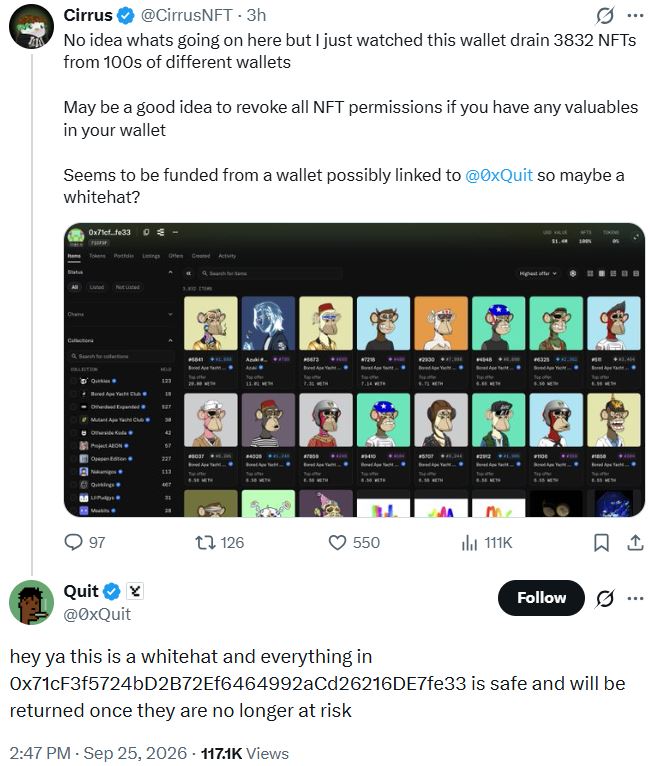
Wallet drains 3,832 NFTs via Magic Eden contract; Yuga Labs VP suggests white-hat rescue
Technology, Security, and Infrastructure Risks
Smart Contract Vulnerabilities and Protocol Risk
NFTs inherit the security properties and vulnerabilities of the smart contracts and protocols that manage them. Bugs in NFT contracts can lead to mis-mints, frozen assets, or outright loss of tokens, while vulnerabilities in associated protocols—such as lending platforms, liquidity pools, or marketplaces—can expose deposited NFTs to theft or exploitation. The Flooring Protocol incident, in which an exploit threatened NFT assets held in protocol pools, demonstrates how risks can extend beyond the core NFT contract to any protocol that takes custody of tokens. In that case, researchers identified an exploit, and a coordinated white-hat response by Yuga Labs successfully evacuated dozens of blue-chip NFTs into safe custody, but not all such incidents end as cleanly. For participants, the lesson is that depositing NFTs into yield-generating or liquidity-providing contracts introduces an additional layer of smart contract risk that must be factored into any risk–reward assessment.
Smart contract security for NFTs is complicated by the fact that many collections rely on custom logic for minting, trait assignment, reveal mechanisms, and royalty handling. While standards like ERC‑721 and ERC‑1155 provide baseline interfaces, they do not dictate how randomness is implemented, how supply caps are enforced, or how administrative privileges are configured. Poorly designed randomness can lead to predictable rarity distributions, enabling unfair mint sniping, while overly powerful admin keys can be abused to alter metadata, freeze transfers, or mint additional tokens beyond the advertised supply. Audits and code reviews help, but the rapid pace of launches during peak NFT mania meant that many contracts went live with minimal scrutiny. As markets mature, there is growing pressure for projects to adopt best practices such as immutable contracts where appropriate, multi-signature control for administrative functions, and public audits.
Custody, Wallets, and Platform Dependence
Custody is a central concern for NFTs because, unlike fungible tokens that can often be recovered through forks or compensatory mechanisms, unique NFTs may be irreplaceable. Holding NFTs on centralized platforms such as exchanges exposes users to platform risk; if the platform changes its strategy, suffers a security breach, or faces regulatory constraints, users’ access to their NFTs may be compromised. Binance’s announcement that it would shut down NFT support on its centralized exchange and migrate services to Binance Wallet, giving users until a specified deadline to withdraw their NFTs, exemplifies this dynamic. Users who failed to act risked losing convenient access to their tokens or encountering more complex retrieval processes, underscoring the importance of monitoring custodial platform policies closely.
Self-custodial wallets mitigate platform risk but require users to manage private keys securely and to understand how to interact safely with smart contracts. Approving NFTs for use in marketplaces or DeFi protocols, signing blind signatures, or interacting with unfamiliar DApps can open paths for malicious contracts to transfer or lock NFTs without clear consent. Attacks exploiting phishing sites, fake mints, or malicious signatures have become commonplace, preying on users’ eagerness to participate in new drops or claim rewards. Hardware wallets, transaction simulation tools, and permission managers that track and revoke approvals have emerged as important mitigation tools, but they add complexity to the user experience.
Platform and protocol dependencies also arise in the context of metadata and content hosting. If metadata points to centralized servers that go offline or change content, the visual representation or even identifying information of an NFT can be altered or lost. While decentralized storage networks provide more resilience, they introduce their own maintenance requirements and cost structures. For collectors and projects alike, decisions about where and how to host NFT content have long-term implications for the integrity and longevity of the assets.
Market Manipulation and Wash Trading
The relative opacity and fragmentation of NFT markets have made them fertile ground for wash trading and manipulation. In wash trading, the same party acts as both buyer and seller in a transaction to inflate trading volume, create artificial price floors, or generate token rewards on incentive-driven marketplaces. Because each NFT is unique and many are thinly traded, it is easier to obscure the true economic identity of traders and to manufacture a veneer of activity around specific collections. Some marketplaces that offered token rewards based on volume inadvertently encouraged wash trading, leading to exaggerated metrics that did not reflect genuine organic demand. Analytics platforms and regulators have taken interest in these patterns, and some marketplaces have responded by tightening reward criteria or implementing monitoring and penalties for suspicious activity.
Market manipulation can also take subtler forms, such as coordinated bidding to drive up floor prices before unloading inventory on latecomers, or misinformation campaigns that exaggerate project roadmaps and partnerships. These dynamics are not unique to NFTs, but the combination of social media virality, intangible value propositions, and lack of standardized disclosures makes them particularly potent in this domain. For seasoned crypto participants, skepticism and due diligence are essential; for newcomers, there is a steep learning curve in distinguishing genuine cultural momentum or utility from orchestrated hype.
Intellectual Property, Authenticity, and “Right-Click Save”
One of the most persistent debates about NFTs centers on the relationship between the token and the underlying intellectual property. Owning an NFT does not automatically confer copyright or commercial rights to the associated media; it merely signals ownership of the token and, at most, the usage rights explicitly granted by the project’s license. Some collections grant broad commercial rights to holders, enabling them to create derivative works or monetize their NFTs, while others retain all IP with the issuer. The lack of standardization in licensing terms has led to confusion and, occasionally, disputes about what NFT ownership actually entails. Over time, efforts like Creative Commons-based licensing, standardized NFT licenses, and clearer terms-of-service disclosures have sought to remedy this, but the landscape remains complex.
Critics often point to the ease of copying digital images—“right-click save”—as evidence that NFTs offer no real ownership. Proponents counter that the value lies not in controlling access to the pixels but in owning a scarce, verifiable claim recognized by a broader community and marketplace. This claim can relate to provenance (being the original, authenticated token associated with a work), to social signaling (using a prestigious NFT as an avatar), or to functional utility (unlocking gated experiences, content, or rights). Technically, anyone can copy the media associated with an NFT, but they cannot counterfeit the on-chain ownership record without consensus from the network, which is what ultimately anchors value.
Authenticity is further complicated by copycat collections and counterfeit NFTs that mimic established brands or artworks without authorization. Marketplaces have had to develop processes for verifying official collections, responding to takedown requests, and filtering out obvious scams. Despite these efforts, the open nature of blockchain means that anyone can mint an NFT pointing to any image, legitimate or not, and it is up to marketplaces, users, and courts to decide how to respond. This tension between openness and protection is likely to persist, especially as more traditional brands and IP holders enter the space.
- 01Bitcoin-Ethereum NFT rivalry↗
Bitcoin overtaking Ethereum in monthly NFT sales upended a core assumption of the space, making readers reconsider which chain owns the category.
- 02Blue-chip NFT price collapse↗
BAYC falling more than 90% from its all-time high — and hitting lows not seen since 2021 — turned the flagship collection into a real-time crash chart readers tracked like a market index.
- 03NFT fraud prosecution
The largest NFT fraud case ever prosecuted ($22M, two California men) plus the Evolved Apes UK charges signaled that criminal accountability had arrived, pulling in readers watching for consequences.
- 04SEC enforcement and regulatory ambiguity↗
The SEC's Stoner Cats and Flyfish Club actions — and commissioners' public dissents — created a running legal saga readers followed to understand whether their NFTs could be called securities.
- 05NFT as yield-bearing instrument↗
Projects like The Llamas streaming treasury yields and YieldNest's Pioneer NFT with a permanent boost showed readers a pivot from collectibles to DeFi-native financial instruments.
- 06Institutional and mainstream adoption
MoMA acquiring tokenized art, FIFA minting World Cup final ticket NFTs on Polygon, and PayPal integrating NFT marketplaces gave readers evidence of legitimization even as speculative prices collapsed.
Regulation, Law, and Taxation
Securities Law and Enforcement Actions
Regulators around the world are still determining how existing legal frameworks apply to NFTs. In the United States, the Securities and Exchange Commission has signaled that certain NFT offerings may be treated as unregistered securities offerings when they exhibit characteristics similar to investment contracts. The SEC’s enforcement action against Impact Theory, LLC—a Los Angeles-based media and entertainment company—provides a notable example. The agency charged Impact Theory with conducting an unregistered offering of crypto asset securities in the form of NFTs, alleging that the company encouraged investors to view the NFTs as an investment in the business and to expect profits from its efforts. The case ended in a settlement in which Impact Theory agreed to pay penalties and to undertake remedial actions, highlighting how promotional language and economic expectations around NFTs can trigger securities law scrutiny.
This enforcement action has been widely interpreted as a warning to NFT projects that explicitly market tokens as profit-generating investments tied to the efforts of a central team. While not all NFTs will fall under securities classifications—especially those that function as digital collectibles with no profit-sharing promises—the line can blur when projects sell tokens with aggressive financial marketing, incorporate revenue-sharing mechanisms, or bundle NFTs with equity-like rights. For founders and creators, careful legal analysis and conservative messaging are increasingly important, particularly in jurisdictions where securities laws are broad and enforcement is active.
Anti-Money Laundering, KYC, and Market Oversight
Given the pseudonymous nature of blockchain addresses and the high-value transfers involved, regulators have also raised concerns about NFTs being used for money laundering or sanctions evasion. Unlike traditional art markets, where galleries and auction houses are under increasing anti-money laundering (AML) and know-your-customer (KYC) obligations, NFT marketplaces initially operated with minimal identity verification. Over time, major platforms and exchanges have moved toward implementing KYC procedures, especially where fiat on-ramps or off-ramps are involved, aligning NFT trading with broader virtual asset regulatory frameworks.
Centralized exchanges like Binance and Coinbase have applied their existing compliance systems to NFT marketplaces linked to their platforms, while specialized NFT platforms have begun to introduce KYC tiers or restrictions for high-value transactions. Binance’s shift of NFT services from its exchange to its self-custodial wallet underscores the evolving regulatory and business considerations, as splitting custodial exchange activity from on-chain wallet functionality may help clarify responsibilities and risk boundaries. At the same time, fully decentralized protocols and peer-to-peer marketplaces remain challenging for regulators to police directly, raising questions about how AML rules will be applied in practice in a world of non-custodial NFT trading.
Tax Treatment and Reporting
Tax treatment of NFTs varies by jurisdiction but generally follows existing principles for property and capital gains. In many countries, selling an NFT for more than its purchase price triggers a taxable capital gain, while creating and selling NFTs as a business may generate ordinary income subject to income tax and, in some cases, sales tax or value-added tax. For collectors, each sale, trade, or even some transfers may be taxable events, particularly when NFTs are swapped for other tokens or used in DeFi transactions that are recognized as disposals. Because NFTs are unique and pricing is less standardized than for fungible tokens, determining fair market value for tax reporting can be especially challenging.
Creators who mint and sell NFTs must also consider tax obligations on royalties and primary sale revenue, as well as the treatment of any associated fungible tokens or governance mechanisms. Jurisdictions differ on whether certain digital items are treated as collectibles, which may carry higher long-term capital gains rates, or as general property. The lack of specific NFT-focused guidance in many tax codes means that participants should seek professional advice and maintain detailed records of acquisition costs, sale prices, and associated fees. As regulatory interest in NFTs grows, more explicit tax guidance is likely, but for now, NFTs sit at the intersection of existing rules for digital assets, art, and collectibles.
Use Cases Beyond Speculation
Digital Art and Collectibles
Digital art was the first major breakout use case for NFTs, leveraging the ability to create verifiable scarcity and provenance for inherently copyable digital works. Artists previously reliant on commissions, commercial work, or limited print runs could now issue on-chain editions of their works, reaching global audiences without intermediaries and receiving royalties on secondary sales via marketplace-enforced mechanisms. This model attracted both established digital artists and newcomers, fostering a vibrant ecosystem of curated platforms, open marketplaces, and artist collectives. The cultural discourse around NFTs has often centered on questions of artistic legitimacy, inclusivity, and the impact of speculative markets on creative practice.
Collectibles, especially profile-picture (PFP) collections, extended the digital-art paradigm into social identity. Collections like CryptoPunks and Bored Apes functioned as status symbols, membership badges, and cultural references, with holders using their NFTs as avatars on social platforms and in emerging Web3 communities. Traits and rarity layers introduced a gamified dimension to collecting, encouraging users to seek out rare attributes and to ascribe meaning to visual differences. Over time, these collections evolved into broader IP franchises, spawning merchandise, events, and media projects that blurred the lines between crypto-native art and mainstream entertainment.
Regional scenes and thematic collections have also gained prominence, with artists exploring local narratives, personal histories, and social issues through NFT formats. In markets like South Korea, for example, NFT drops by contemporary artists have tackled themes such as the balance between self-love and relationships, or the coexistence of different households in urban life, using blockchain as both a distribution channel and a conceptual frame. These efforts demonstrate that NFTs can support nuanced, culturally specific artistic projects, not just globalized pop aesthetics.
Gaming, Metaverse Assets, and Virtual Economies
Gaming is often cited as one of the most promising application areas for NFTs, because games already rely on digital items, skins, and virtual currencies. NFTs offer a way to make such items truly transferable and ownable outside the confines of a single game’s servers, enabling secondary markets, cross-game interoperability, and novel monetization models. Early examples like Axie Infinity showed how NFT-based game economies could, at least for a time, generate substantial on-chain activity and real-world income for players in certain regions. Axie’s marketplace tools, community-built analytics dashboards, and breeding mechanics illustrated the depth of engagement possible when players can trade and experiment with game assets as crypto-native property.
However, the challenges are equally significant. Maintaining sustainable in-game economies that do not devolve into Ponzi-like structures is difficult, particularly when financial incentives overshadow gameplay. Projects like Heroes of Mavia have tried to strike a balance by emphasizing core gameplay and long-term IP development while integrating NFTs as collectible heroes or land plots that confer in-game benefits and potential off-chain brand value. The shutdown of Pudgy Party’s mobile game, despite being attached to a well-known NFT brand, underscores that NFTs do not guarantee traction in the highly competitive gaming market. Game design, user acquisition, and platform partnerships remain decisive factors, and NFT integration must enhance rather than burden the player experience.
Metaverse platforms and virtual worlds extend gaming concepts into more open-ended environments where users can own virtual land, wearables, and other items as NFTs. These assets can be used across experiences, rented out, or developed into revenue-generating virtual businesses. The long-term viability of such virtual economies depends on user engagement, infrastructure performance, and integration with off-chain services, but NFTs provide a common ledger for ownership and transfer that can, in principle, bridge disparate metaverse implementations.
Music, Membership, and Community Access
Beyond visual art and gaming, NFTs have opened new avenues for musicians, writers, and community builders to engage with their audiences. Music NFTs enable artists to tokenize tracks, albums, or exclusive content, offering collectors not just a file but a scarce, programmable asset that can include perks such as access to private listening parties, early releases, or revenue participation. Platforms focusing on music NFTs have highlighted how their models allow independent artists to retain the vast majority of sale proceeds, sometimes up to around 95% of revenue, in contrast to traditional label and streaming splits. This direct-to-fan approach aligns with broader trends in the creator economy, where control over distribution and monetization is shifting toward individual creators.
NFTs also function as membership passes and community keys. Projects have used NFTs to gate access to chat communities, events, educational content, or governance processes, effectively turning tokens into programmable tickets or credentials. Platforms that help creators build “towns” or communities with NFT-gated access illustrate how ownership can be tied to participation rights, rewards, and status within digital spaces. In these models, NFTs may be soulbound (non-transferable) or freely tradable, depending on whether membership is meant to be personal or marketable. Community dynamics, moderation, and inclusivity become as important as token economics in determining long-term success.
Campaigns that reward early supporters or active participants with NFTs—whether as badges, keys, or lootboxes—are another common pattern. For example, projects launching new products on platforms like Product Hunt have used NFTs as proofs of support, offering different tiers of rewards based on users’ engagement and timing. These tokens may later unlock additional benefits, airdrops, or recognition, creating a gamified layer on top of traditional community-building efforts. As always, the line between genuine community rewards and speculative farming can be thin, so design choices matter.
Real-World Assets, Identity, and Enterprise Use
While most current NFT activity remains in digital-native domains, there is growing interest in using NFTs to represent claims on real-world assets (RWAs) such as real estate, luxury goods, tickets, or even carbon credits. In these cases, the NFT acts as a digital certificate that can be transferred and verified on-chain, with legal agreements or custodial arrangements linking the token to a specific physical asset. This promises more liquid, transparent markets for traditionally illiquid assets, but also raises complex questions about enforcement, jurisdiction, and the interplay between on-chain and off-chain records.
Identity and credentialing are another emerging use case. NFTs can represent degrees, professional certifications, or reputational badges, issued by verified institutions and held in users’ wallets. Some models favor non-transferable or “soulbound” NFTs to prevent the sale of credentials, while others allow controlled transfer under defined conditions. In enterprise contexts, NFTs can streamline access control, software licensing, and B2B workflows by providing a shared, programmable representation of rights and permissions.
These non-speculative use cases highlight the broader potential of NFTs as a general-purpose primitive for representing ownership, access, and identity, beyond the volatility of collector markets. However, realizing this potential will require robust legal frameworks, privacy-preserving designs, and user-friendly interfaces that abstract away blockchain complexities for mainstream audiences.
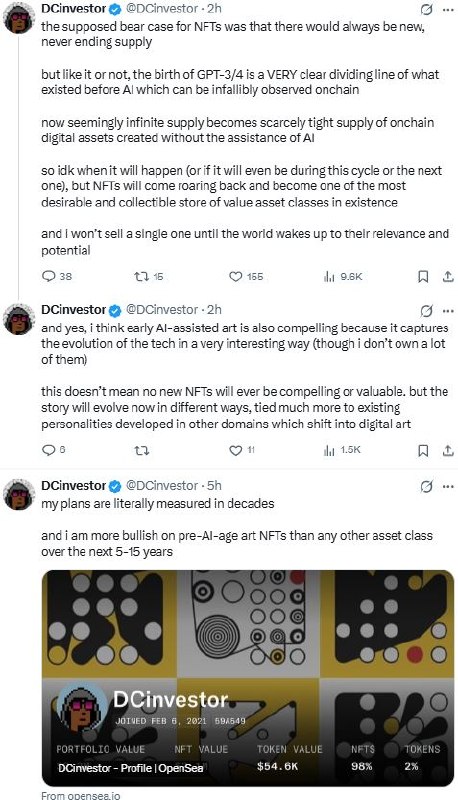
DCinvestor says pre-AI art NFTs will outperform other assets over the next 5-15 years
Designing, Launching, and Evaluating NFT Projects
Project Design: Utility, IP, and Governance
From a builder’s standpoint, designing an NFT project involves aligning technical architecture, economic incentives, and cultural positioning. Decisions about supply, pricing, royalties, and rarity structures must be balanced against expectations about long-term utility and community engagement. If NFTs are meant to confer ongoing benefits—such as game access, content rights, or governance power—then sustainable revenue streams and clear commitment to development are essential. Conversely, purely aesthetic or collectible projects may focus more on art direction, curation, and provenance.
Intellectual property strategy is another key dimension. Projects need to determine whether NFT holders receive commercial rights, non-commercial rights, or merely display rights to associated media. Some collections have embraced open licensing, allowing anyone to remix or build upon the IP, while others maintain tighter controls to protect brand coherence. These choices affect how ecosystems around the NFTs evolve, who can build derivative products, and how value accruing from broader IP exploitation is shared.
Governance structures, ranging from centralized teams to DAO-like tokenholder assemblies, influence both execution speed and accountability. In some projects, NFT holders participate directly in governance votes on treasury spending, roadmap decisions, or feature prioritization, while in others governance remains informal and social. The appropriate model depends on the project’s goals, regulatory posture, and community expectations, but transparency about decision-making processes is universally important for trust.
Launch Strategy and Market Fit
Launching an NFT collection is as much about timing, messaging, and community building as it is about code deployment. Pre-launch phases often involve cultivating a community through social media, Discord, or other channels, sharing teasers of the art or product, and setting expectations about mint details. Overpromising or ambiguous roadmaps can create problems later, particularly if regulatory scrutiny or market downturns expose discrepancies between rhetoric and reality. Conservative, clear communication about what buyers can expect—and what is explicitly not promised—reduces legal and reputational risk.
Choosing between fixed-price mints, auctions, free mints, or other pricing mechanisms requires understanding the target audience and desired distribution. High initial prices may maximize upfront revenue but limit accessibility and create pressure for immediate secondary market appreciation. Free or low-cost mints, by contrast, can broaden participation but rely more heavily on secondary royalties or ancillary revenue streams. Mechanisms like Dutch auctions, where prices decline over time until supply is exhausted, attempt to discover market-clearing prices in a transparent way, though they can be complex for users unfamiliar with the format.
Launch infrastructure has become more sophisticated, with dedicated platforms offering minting tools, anti-bot protections, and analytics. Product directories showcasing top NFT creation tools highlight how launch infrastructure now supports use cases ranging from consumer rewards to creator commerce and enterprise applications. For smaller teams and individual creators, leveraging such tools can reduce technical overhead and allow them to focus on content and community. Larger projects may still opt for custom contracts and bespoke minting sites to maintain full control and differentiate their experience.
Evaluating NFT Projects as a Participant
For collectors, traders, or community members, evaluating NFT projects involves assessing multiple dimensions beyond headline art or hype. Technical due diligence includes checking whether contracts are audited, whether metadata is mutable or immutable, and how administrative permissions are structured. On-chain explorers and NFT analytics tools can reveal distribution patterns, whale concentrations, and historical trading activity, all of which inform risk assessments.
Economic analysis focuses on supply, demand, and utility. High supply collections without clear utility or strong community often struggle to maintain value, while limited supply does not guarantee desirability absent compelling content or use cases. Royalties and marketplace fees affect both creator incentives and trading frictions; understanding how these are enforced and whether marketplaces honor them is crucial. Integration with broader ecosystems—such as being listed on major marketplaces, supported by key wallets, or used in prominent DeFi or gaming protocols—can also signal maturity and staying power.
Finally, qualitative factors like team credibility, communication transparency, and community culture play a large role. Anonymous or pseudonymous teams are common in crypto, but they increase the importance of verifiable track records and open-source contributions. Communities that tolerate scams, harassment, or purely speculative discourse may be less resilient in downturns than those centered on shared interests, creative collaboration, or product feedback. Given the high volatility and risk in NFT markets, participants should approach projects with a blend of curiosity and caution, recognizing that most NFTs are better understood as speculative collectibles or access passes than as guaranteed investments.
NFT market peak gives way to crypto winter; blue-chip floors collapse 80-90%
SEC charges Stoner Cats creators for unregistered NFT securities offering
NFT Trader contract breach drains BAYC and MAYC NFTs; white-hat bounty recovery follows
Bitcoin surpasses Ethereum in monthly NFT sales volume, driven by Ordinals activity
BAYC floor price hits lowest point since 2021, down more than 90% from all-time high
- 2024-09regulatory
US charges Gabriel Hay and Gavin Mayo in largest NFT fraud prosecution ever, alleging $22M investor losses
- 2024-12milestone
Magic Eden reports 2024 as its best year, crediting multi-chain strategy amid broader NFT slump
ERC-721 and ERC-1155 NFT standards underpin new hardware (EthOS dGEN1) and social protocol (Lens) integrations
Conclusion
Non-fungible tokens represent a significant evolution in how digital assets are modeled, traded, and experienced within crypto markets. By enabling unique, traceable, and programmable representations of digital and real-world items on public blockchains, NFTs extend the utility of distributed ledgers beyond fungible currencies into domains such as art, gaming, identity, and community governance. Standards like ERC‑721 and ERC‑1155 on Ethereum, alongside Bitcoin’s Ordinals and chain-specific implementations elsewhere, provide the technical foundation for this shift, while marketplaces, wallets, and DeFi protocols supply the liquidity and composability that make NFTs economically meaningful.
The history of NFTs to date has already included a dramatic speculative boom, a sharp correction, and an ongoing period of consolidation and experimentation. These cycles have exposed vulnerabilities—from smart contract exploits and custody risks to market manipulation and regulatory gaps—but they have also catalyzed innovation in tooling, creator monetization, and cross-chain infrastructure. High-profile incidents such as the SEC’s enforcement against Impact Theory, Binance’s restructuring of NFT services, and white-hat rescues of vulnerable NFTs in DeFi protocols have underscored the need for legal clarity, robust security practices, and responsible platform governance. At the same time, grassroots and institutional experimentation across art, music, gaming, and enterprise use cases suggests that NFTs are more than a passing fad, even if many individual projects will not endure.
For a crypto news audience, the key is to distinguish between NFTs as a technology and NFTs as speculative instruments. The former—non-fungible token standards, on-chain provenance, programmable ownership—is likely to remain part of the digital infrastructure landscape, evolving in tandem with blockchains, wallets, and identity systems. The latter—rapidly flipping PFPs, yielding rooms full of overnight millionaires and subsequent bag holders—is a function of market psychology, liquidity cycles, and regulatory arbitrage. Understanding where a given project sits on this spectrum is essential for informed participation.
As NFTs continue to intersect with DeFi, gaming, and mainstream consumer applications, they will also become more entangled with legal frameworks, tax regimes, and platform policies. The path forward will involve negotiation between openness and compliance, between creator autonomy and investor protection, and between the desire for experimentation and the necessity of safeguards. In this evolving environment, critical analysis, long-term thinking, and an appreciation for both technical details and human behavior will be invaluable.
Outlook
Looking ahead, NFTs are likely to become less visible as a buzzword and more embedded as a background primitive in digital products. Users may interact with NFT-backed tickets, loyalty passes, or game items without necessarily thinking about token standards or marketplaces, as wallets and interfaces abstract away blockchain complexity. At the same time, specialized communities of collectors, gamers, and builders will continue to push the envelope on what NFT ownership can mean, from programmable privacy in DeFi applications to cross-chain identity and governance.
Regulatory clarity and industry best practices will play a decisive role in shaping this trajectory. Enforcement actions like the SEC’s case against Impact Theory, operational changes such as Binance’s migration of NFT services to self-custodial wallets, and security responses to protocol exploits will collectively define the boundaries of acceptable behavior and risk management in NFT markets. If these boundaries can be navigated constructively, NFTs have the potential to underpin a more open, interoperable, and user-centric digital economy—one where ownership is verifiable, programmable, and portable across platforms and borders, even if price charts no longer dominate the narrative.
Latest NFT news
Sources
19 records from 16 domains
investopedia.com
nftnow.com
rootsanalysis.com
blocksurvey.io
sec.gov
thedefiant.io
binance.com
instagram.com
bitcoinfoundation.org
ethereum.org
block3finance.com
chain.link
nftfi.com
myartbroker.com
youtube.com
producthunt.com
Community notes
Spot something off or out of date? Drop a note. Editors review topic notes daily and roll accepted fixes into the explainer — contributors are recognized in the monthly $SQUID drop.
Loading notes…
Help improve this topic
Have a story or tip about this topic? Submit it. See something missing? Leave a note. Editors review daily; accepted submissions and fixes count toward the monthly $SQUID drop.