
Explainer on how “raises” is used in crypto news—from funding rounds and rate hikes to risk warnings—illustrating its impact on Bitcoin, stablecoins like USDC, DeFi, AI tools and institutional tokenization.
+32 sources across the wider coverage universe
 Pharos Network raises $44M Series A backed by Sumitomo, Chainlink, and Flow Traders to build financial-grade infrastructure bridging TradFi and DeFi globally2026-04
 Mintlify raises $45M Series B led by Andreessen Horowitz (a16z) and Salesforce Ventures to scale AI knowledge infrastructure2026-04
 Brix raises $5.5M to bring institutional-grade emerging market yield onchain via MegaETH, backed by Circle Ventures and ConsenSys2026-04
 Paxos Labs raises $12M from Blockchain Capital and Uniswap, launches Amplify embedded finance stack2026-04
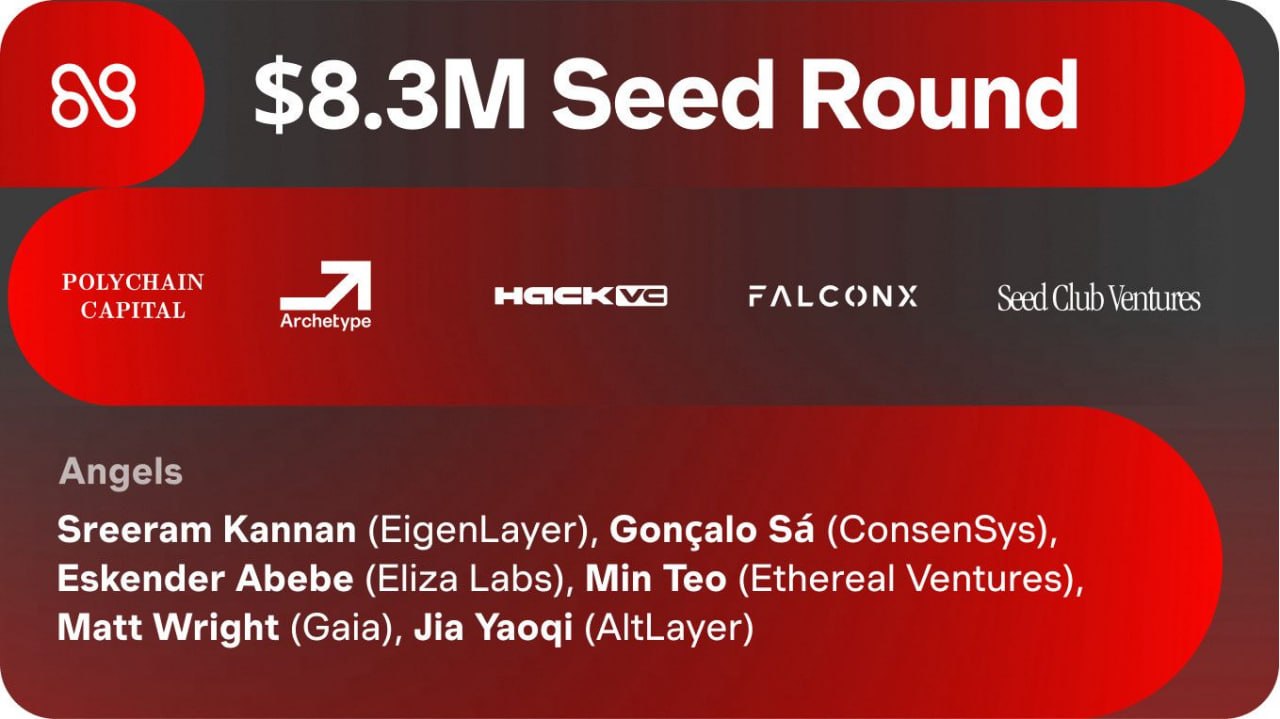 Nava raises $8.3M from Polychain and Archetype to build on-chain guardrails for AI agents2026-04
 AlphaNet raises $10M seed led by Joffre Capital for AI-powered quant strategy marketplace2026-04
Understanding “Raises” in Crypto: Funding, Rates, and Red Flags
In crypto and markets coverage, the verb “raises” has become a compact signal for change, used to describe everything from startups securing fresh capital, to central banks hiking interest rates, to new technologies triggering fresh questions and risks. Across Bitcoin, stablecoins, DeFi and AI-adjacent projects, learning to read “raises” headlines is a critical media‑literacy skill for anyone trying to navigate digital-asset markets.
What “raises” Really Means in Crypto News
The word “raises” might sound trivial, but in crypto reporting it performs a surprising amount of work. At its simplest, it captures the idea of something going up: a company raises money, a central bank raises rates, or a development raises concerns. The same verb thus connects capital formation, macroeconomic shifts and the evolving risk landscape around crypto, AI and digital markets. For readers skimming feeds and alerts, those nuances can easily blur, especially when headlines compress complex stories into a handful of words.
In the context of venture capital and startup finance, “raises” almost always refers to a company securing investment in a funding round. When a headline reports that a stablecoin infrastructure firm “raises 32 million dollars,” it is describing a negotiated exchange of equity or token rights for capital from investors who believe the company will grow and generate future value. In a rate‑setting context, by contrast, “raises” usually refers to a central bank’s decision to increase a benchmark interest rate, with downstream effects on bond markets, currencies and risk assets like Bitcoin. In yet another genre of headline, “raises” often acts as a warning flag: a crypto boom “raises red flags,” a privacy feature “raises new risk tradeoffs,” or a deepfake tool “raises misuse concerns.” Each usage operates differently, though they often intersect in practice.
Crypto is unusually sensitive to all three categories. On the funding side, the sector depends heavily on venture capital, private rounds, token launches and public offerings to finance infrastructure, exchanges, wallets, protocols and AI‑adjacent tooling. Databases dedicated to crypto fundraising track thousands of such “raises,” from tiny pre‑seeds to late‑stage rounds, as a way to map where capital is flowing and which themes, such as stablecoins or tokenization, are in favor. On the macro side, Bitcoin, stablecoins like USDC, and DeFi yields are all influenced by the path of interest rates and inflation expectations, which makes every rate “raise” by the Federal Reserve, the European Central Bank or the Bank of Japan relevant for digital-asset markets.
The risk-oriented usage is equally central. Crypto’s open, permissionless design has long been associated with both innovation and fragility. A boom in tokenized assets or a new privacy protocol can expand the design space for institutional DeFi while simultaneously raising questions about market structure, compliance and systemic risk. The same is true as AI and crypto converge: tools that promise more efficient verification of human behavior or content provenance can raise new ethical and security concerns, even as they attract venture capital. Understanding which kind of “raise” a headline refers to, and how it connects to these broader themes, is essential for interpreting what the story really implies for markets, Bitcoin, stablecoins and regulation.

infiniFi raises $3M+ seed led by Electric Capital, total funding tops $6M ahead of Q4 2026 TGE

Capital Raises: How Crypto Startups and Protocols Fund Themselves
Funding rounds and venture capital in a digital‑asset context
In crypto, the most common usage of “raises” still refers to capital formation: a company “raises” money by selling equity, token rights or other claims on future value to investors. In traditional startup finance, these rounds are often labeled by stage—seed, Series A, Series B, and so on—each reflecting an increase in valuation and traction. Crypto companies broadly follow this model, but with additional wrinkles introduced by tokens, stablecoins and global regulatory variation. Research from Galaxy Digital, for example, shows that in early 2026 venture investors deployed about four billion dollars into private crypto and blockchain companies across roughly three hundred fifty-five deals, illustrating how heavily the industry still relies on venture “raises” to build infrastructure and applications.
The case of Trace Finance illustrates what a typical Series A raise looks like in crypto‑adjacent fintech. Trace, a Brazilian paytech focused on cross‑border payments and stablecoin settlement, closed a thirty-two million dollar Series A round led by CoinFund, with participation from Coinbase Ventures, Haun Ventures, Jump Crypto, Valor Capital, Paxos and others. The company, which bills itself as a regulated financial infrastructure provider, connects local bank rails in markets such as Brazil with stablecoin settlement layers like USDC, aiming to simplify corporate treasuries’ use of digital dollars for international payments. According to coverage of the round, Trace planned to use the funding to expand its regulated footprint across Brazil, the United States, the Asia‑Pacific region and other priority jurisdictions, positioning itself as a bridge between traditional banking and stablecoin rails.
Capital raises like this sit at the intersection of several themes. They are bets on the continued maturation of stablecoins as a medium for cross‑border settlement, particularly in emerging markets where dollar‑linked tokens can offer speed and predictability relative to local currency volatility. They also reflect investor confidence that regulatory frameworks around stablecoins and crypto‑adjacent payment services will continue to evolve in a direction that allows compliant, licensed actors to scale. For market participants, such raises can be read as barometers of where sophisticated capital sees the most durable opportunity, especially when led by established crypto VCs.
Another instructive example is Range, which raised 8.3 million dollars in a Series A round to build a platform for companies operating across stablecoin and fiat rails. Range’s focus is on unifying treasury, risk management and compliance for firms that maintain balances in both traditional bank accounts and stablecoins, providing tools to monitor exposures and meet regulatory requirements. Reporting on the round emphasized that Range aims to help corporates handle the operational and regulatory complexity that arises when they use assets like USDC or other stablecoins alongside fiat, especially as stablecoin usage grows for B2B payments and on‑chain settlement. The fact that traditional fintech funds participated in the round signals that crypto‑native and conventional investors increasingly view stablecoins as an integral part of the corporate treasury and payments stack.
Equity versus token raises, and the role of regulation
Not all capital raises in crypto follow the equity‑round template. From the 2017 ICO boom through later experiments with SAFTs, launchpads and initial DEX offerings, token launches themselves have often functioned as quasi‑equity events, with investors buying future access to a protocol’s tokens in expectation of price appreciation. That approach has attracted sustained regulatory scrutiny, particularly in the United States, where regulators have argued that many token sales constituted unregistered securities offerings. Leading venture firms have responded with publicly articulated frameworks for how to conduct token launches more responsibly. a16z crypto, for instance, has argued that projects should avoid publicly selling tokens in the United States for fundraising purposes, instead focusing on decentralization, fair distribution and clear utility to minimize securities‑law risk.
These regulatory constraints shape how “raises” are structured in practice. Many contemporary crypto companies now pursue a hybrid path: raising traditional equity rounds while reserving the option for a token launch once the protocol is live and sufficiently decentralized. Equity raises like those of Trace Finance and Range are thus not just about capital; they are strategic decisions to build regulated infrastructure and governance models that can coexist with, or eventually complement, token‑based networks. This is especially visible in structures like Digital Asset’s Canton Network, which is explicitly pitched as “on‑chain infrastructure for capital markets” but organized around permissioned nodes and law‑firm-grade legal wrappers rather than open tokens.
Digital Asset’s own funding trajectory highlights how large these raises can become when institutional capital is involved. The company announced a 355 million dollar funding round led by a16z crypto, with participation from global banks and market infrastructure providers, to accelerate the Canton Network’s development as a hub for tokenized assets, applications and regulated workflows. The capital is meant to support the next phase of growth as more institutions bring assets and services onto Canton, which is designed to support privacy, compliance and interoperability in a way that aligns with existing capital‑markets regulation. For institutional investors, such a raise signals that regulated tokenization platforms are moving from experiment to implementation, even as questions remain about how they will coexist with public blockchains.
One useful way to frame these different types of capital raises in crypto is to compare their structure and implications. The following table sketches a simplified view.
| Type of raise | Instrument | Typical investors | Example | What it signals |
|---|---|---|---|---|
| Equity Series A (infrastructure) | Preferred shares | Crypto VCs, fintech funds, strategics | Trace Finance $32M Series A for stablecoin settlement | Bet on regulated stablecoin rails and cross‑border payments |
| Equity Series A (treasury/ops) | Preferred shares | Fintech VCs | Range $8.3M Series A for stablecoin/fiat treasury platform | Demand for corporate tooling across USDC, fiat and bank rails |
| Large growth round (institutional infra) | Equity and strategic stakes | Global banks, infra firms, crypto VCs | Digital Asset $355M round to expand Canton Network | Acceleration of tokenized capital‑markets infrastructure |
| Seed/early for DeFi structuring | Equity, possible tokens | Crypto VCs | TVL Capital $5M seed for on‑chain structured products | Development of new on‑chain risk and yield products |
| Pre‑Series A in AI/crypto tooling | Equity, potential token later | Crypto VCs, strategic Web3 investors | EarnOS $6M pre‑Series A for anti‑AI slop and human‑traffic verification | Growing focus on AI risk mitigation and on‑chain reputation |
This comparison makes clear that the same verb, “raises,” hides meaningful variation in the underlying contract, investor base and strategic direction. For readers, understanding whether a raise is equity or token‑based, who is leading the round, and which market segment the company targets helps interpret what the event may imply for Bitcoin, stablecoins and the broader crypto market cycle.
Case studies: stablecoin rails, AI verification and structured products
The EarnOS pre‑Series A round shows how capital raises increasingly sit at the intersection of AI and crypto risk. EarnOS, a startup that emerged from beta with an app designed to help brands verify human internet traffic, raised six million dollars in a pre‑Series A round led by 1kx, with participation from Coinbase Ventures, Circle Ventures and Social Graph Ventures. The company’s product is meant to reduce marketing spend wasted on bots and reward “authentic digital behavior,” a problem that has become more acute as generative AI tools flood social and content platforms with synthetic activity. By backing EarnOS, crypto‑native investors such as 1kx and corporate venture arms like Coinbase Ventures and Circle Ventures are effectively betting that the boundary between AI and crypto—particularly in areas like identity, reputation and traffic verification—will become a critical infrastructure layer for digital markets.
What is striking here is that the same word, “raises,” applies both to the capital event and to the concerns motivating the product. The growth of AI‑generated “slop” across the internet raises questions about the reliability of engagement metrics and the economics of digital advertising. EarnOS responds to that raised concern by raising capital for a verification and rewards platform that could, in principle, leverage blockchain or stablecoins for payouts and attestations. For stablecoin issuers like Circle, whose USDC token is increasingly used for micropayments and creator monetization, tools that can help distinguish human from bot activity may also be strategically valuable, further linking capital raises to the evolution of the stablecoin ecosystem.
Another example of thematically significant capital raising is TVL Capital, which announced a five million dollar funding round led by Framework Ventures to develop structured products on‑chain as so‑called Chain‑Traded Products (CTPs). These aim to bring instruments reminiscent of structured notes and options strategies into a programmable on‑chain format, creating new ways for investors to express views on Bitcoin, Ethereum or other crypto assets while embedding risk controls and payoff profiles in smart contracts. The fact that established DeFi investors are backing such efforts suggests that part of the next wave of on‑chain innovation will involve repackaging traditional financial engineering into transparent, composable crypto products. Yet again, the capital raise and the products’ risk properties are intertwined: on‑chain structured products can raise yield opportunities, but they also raise complexity and counterparty questions that investors must understand.
These cases underscore that “raises” is never just about the nominal amount disclosed. Each round reflects investor sentiment about particular themes—stablecoin rails, institutional tokenization, DeFi structuring, AI‑driven verification—and can influence how other founders, funds and even regulators by extension perceive those themes’ legitimacy and urgency. When such rounds cluster around a particular narrative, they contribute to the boom‑and‑bust dynamics familiar in crypto, where a surge in funding for a sector can raise expectations that prove difficult to sustain once macro conditions or regulatory stances shift.
Readers click fundraising headlines not for the dollar amounts but for what the deal structure exposes — LBP mechanics that cut out VCs, down-round valuations that puncture prior hype cycles, and named backers like Binance Labs or Peter Thiel whose bets function as ecosystem credibility stamps that readers use to track where insider conviction is flowing.
Rate Raises and Macro: Why Central Bank Moves Matter for Crypto
From policy rates to Bitcoin and stablecoins
When headlines report that a central bank “raises rates,” they are referring to deliberate changes in benchmark interest rates that ripple through global markets, affecting everything from mortgage costs to the relative appeal of holding Bitcoin. Though crypto often describes itself as decoupled from traditional finance, in practice major coins and tokens trade within a macro environment dominated by central bank policy. Rate hikes—often reported with the verb “raises”—can shift investor appetite for risk, alter the cost of leverage on exchanges, and influence the opportunity cost of holding non‑yielding assets like Bitcoin.
Consider the Bank of Japan’s decision to raise its policy rate by twenty‑five basis points to around one percent, a move that marked a meaningful shift after years of ultra‑loose monetary policy in that economy. Coverage of the decision emphasized how higher oil prices and a weaker yen could feed through to consumer prices, prompting the Bank to tighten financial conditions. For global investors, such a raise is not just a domestic story; it interacts with carry trades, currency hedging and relative yields across markets. Even if Bitcoin is not directly linked to yen interest rates, changes in the global risk‑free curve can influence the marginal allocation between bonds, equities and risk assets such as crypto, particularly among macro hedge funds and cross‑asset traders.
In the stablecoin sector, rate raises have a more mechanical effect. Many leading stablecoins are backed by reserves heavily weighted toward short‑term government securities and cash equivalents, such as U.S. Treasury bills. When central banks like the Federal Reserve raise rates, the yields on these instruments increase, generating more interest income for stablecoin issuers who hold the underlying assets. That additional income can, in turn, strengthen the issuer’s balance sheet or fund ecosystem investments, but it can also raise regulatory scrutiny about how that cash flow is distributed and disclosed. For stablecoins like USDC, whose issuer Circle has publicly emphasized transparency and compliance, the interaction between reserve yield and product strategy has become a central theme in sector analysis.
Higher policy rates also affect DeFi through the lens of opportunity cost. When risk‑free yields are near zero, users may be more willing to deposit capital into DeFi protocols for yields of five to ten percent, despite smart‑contract and market risks. When government bonds offer comparable returns with less perceived risk, DeFi’s relative attractiveness can decline, prompting projects to raise yield incentives or redesign tokenomics to retain liquidity providers. This dynamic has been visible across multiple cycles: easy monetary conditions often precede booming crypto markets and abundant capital raises, while tightening phases tend to coincide with reduced venture funding, lower DeFi activity and more cautious investor behavior.
DeFi lending rates and the downstream impact of hikes
A key nuance is that rate raises by central banks do not mechanically translate into higher DeFi yields, but they do shift the environment in which those yields compete. DeFi lending protocols like Aave or Compound set interest rates algorithmically based on the supply and demand for assets such as USDC, DAI or wrapped Bitcoin. If broader market conditions tighten and traders reduce leverage, on‑chain borrowing demand can fall, lowering DeFi lending rates even as off‑chain rates rise. Conversely, if traders seek leverage to speculate on Bitcoin’s volatility around major macro decisions, on‑chain borrowing could spike, temporarily raising DeFi yields. The interplay is complex, but it is mediated by perceptions of risk and return that central bank decisions heavily influence.
Rate raises also shape the economics of collateral. Many institutional experiments with tokenization involve bringing traditional assets, like government bonds or money‑market fund shares, on‑chain as collateral for other trades. Canton Network’s vision, for instance, involves synchronizing tokenized assets and workflows in a way that lets institutions post high‑quality collateral while preserving privacy and regulatory compliance. When central banks raise rates, the value and yield profile of that collateral change, affecting how it can be rehypothecated, valued in margin calls and used to support on‑chain derivatives or lending. For institutional DeFi to function safely, systems need to account for these dynamics, which means developers and risk managers must follow rate “raises” as closely as any bond trader.
Market psychology and rate‑linked headlines
Beyond the mechanics, rate raises shape narrative and sentiment. Crypto markets are unusually narrative‑driven, with Bitcoin often framed as “digital gold” and a hedge against monetary debasement. In periods of aggressive rate hikes, this narrative can be tested: if Bitcoin fails to act as an inflation hedge in the short term, some investors may reassess its role, even if the long‑term thesis remains anchored in concerns about fiat currency debasement. Headlines that combine “raises rates” with “raises concerns” about growth, recession or financial‑system stress can thus have a compounded effect on crypto sentiment, particularly when traders watch correlations between Bitcoin, technology stocks and bond yields.
For stablecoins, the narrative is somewhat different but equally rate‑sensitive. As central banks raise rates, holding cash becomes more attractive. For dollar‑denominated stablecoins like USDC, this can be a mixed blessing. On one hand, higher underlying yields make reserve‑backed stablecoins more profitable for issuers, potentially strengthening their ability to support ecosystems—from USDC integrations in cross‑border payment platforms like Trace Finance to DeFi applications that rely on stable liquidity. On the other hand, regulators may become more focused on the systemic implications of large stablecoin issuers effectively operating money‑market‑fund‑like vehicles with global reach, collecting interest on reserves while users treat tokens as cash equivalents. Rate raises thus indirectly raise the urgency of establishing clear regulatory frameworks for stablecoins’ role in the financial system.
NG.CASH raises $15M led by Blockchain Capital to expand credit access in Brazil
Raises as Red Flags: Risks, Concerns and Tradeoffs
When booms “raise red flags” in tokenization and stablecoins
Not every “raise” in crypto news is positive. Often, the verb is attached to warnings: a tokenization boom raises red flags, a new mechanism raises systemic risk, or an ecosystem fund raises questions about long‑term alignment. The recent surge of activity around tokenizing real‑world assets on Solana offers a vivid example. Reports have highlighted how the combination of fast, low‑cost blockspace and institutional interest has driven a boom in tokenized securities and funds on Solana, including experiments with bringing traditional equities and credit products on‑chain. At the same time, analysts and credit‑rating agencies have flagged concerns about market structure, operational risks and the concentration of liquidity on a single high‑throughput chain.
Moody’s Ratings, for instance, has expanded its Token Integration Engine to support Solana, making it the first public, permissionless blockchain capable of having Moody’s analytics integrated directly for tokenized instruments. This move reflects institutional recognition of Solana as a viable platform for tokenized finance, but it also raises questions about how traditional risk metrics map onto blockchain dynamics. CryptoRobotics’ analysis of Solana’s “tokenization dilemma” underscores this tension: while tokenization promises efficiency and new collateral types, it can also raise concerns about the robustness of underlying smart contracts, the handling of chain halts or congestion, and the off‑chain legal link between tokens and real assets. When news outlets say the tokenization boom “raises red flags,” they are pointing to these unresolved risk vectors.
Stablecoins themselves can raise similar questions when their growth outpaces regulatory clarity or operational resilience. As infrastructure providers like Trace Finance raise capital to scale stablecoin‑based cross‑border payments, the systemic footprint of assets such as USDC and other dollar‑linked tokens grows, particularly in emerging markets where they can substitute for local currency in both retail and corporate contexts. This expansion raises concerns about monetary sovereignty, contagion if a major stablecoin were to suffer a loss of confidence, and the adequacy of reserve disclosures and governance. Reports on treasury‑management platforms like Range emphasize that corporate users need better tools to manage risk and compliance when operating across stablecoins and fiat rails, illustrating how market demand itself is a response to raised concerns.
The challenge for investors and policymakers is to distinguish between legitimate red flags and reflexive skepticism. Not every tokenization initiative or stablecoin expansion is systemically dangerous; in many cases, the technologies can enhance transparency and efficiency compared to opaque legacy systems. However, the pace and scale of experimentation in crypto mean that when a particular trend starts to dominate headlines, it is prudent to ask what risks it raises beyond the immediate upside.
Privacy raises new tradeoffs for institutional DeFi
Another area where “raises” often appears in a critical context is privacy. For individual users, privacy on public blockchains has long been a double‑edged sword: pseudonymity can protect sensitive information, but it can also enable illicit behavior and complicate compliance. For institutions, the tradeoffs are even more delicate. Without sufficient privacy, large institutional trades or collateral positions broadcast on‑chain can reveal strategies and positions, undermining competitive advantage. With too much privacy, regulators and counterparties may worry that they cannot adequately monitor risk, conduct audits or enforce sanctions.
The Canton Network’s “Collateral confidential” analysis captures this dilemma, arguing that privacy in collateral delivery can drive competitive advantage but must be implemented in a way that preserves regulatory oversight. Canton’s architecture combines interoperability with fine‑grained privacy controls, allowing parties to transact and settle assets without revealing all details to the entire network, while still enabling regulators or auditors to access necessary information. This design reflects a broader view that privacy is not a binary but a spectrum, and that institutional DeFi will only scale if it can raise privacy protections without raising insurmountable regulatory concerns.
Headlines that say “privacy raises new risk tradeoffs for institutional DeFi adoption” are therefore pointing to a real engineering and governance challenge rather than issue‑spotting for its own sake. Introducing advanced privacy techniques, such as zero‑knowledge proofs or secure enclaves, into settlement systems can reduce information leakage but also raises questions about verification, key management and resilience under attack. If privacy mechanisms fail, they may expose sensitive data; if they are too rigid, they may impede legitimate monitoring. For institutional players evaluating on‑chain infrastructure, these raised concerns are often as important as yield opportunities or capital efficiency.
AI tools and deepfakes: raising misuse and integrity concerns
The convergence of AI and crypto has introduced a new category of “raises concerns” headlines, focused on synthetic media, deepfakes and the integrity of online discourse. Free AI tools that generate ultra‑realistic images, audio or video raise obvious misuse risks: they can be deployed in fraud schemes, political misinformation campaigns or market manipulation, including in crypto contexts where fake endorsements or fabricated “news” can move thinly traded tokens. Reports of deepfake election ads and misinformation campaigns underscore how rapidly these tools are being weaponized, raising transparency and governance concerns around both AI platforms and the social media and messaging channels that distribute their output.
Crypto enters this picture in several ways. On the risk side, scammers can use deepfake voices or faces to impersonate founders, exchange executives or public officials in attempts to extract funds or credentials from unsuspecting users. On the mitigation side, blockchain‑based solutions are being explored to certify content provenance, embed cryptographic signatures into media files, or create economic incentives for verifying and reporting synthetic content. Startups like EarnOS, which raised six million dollars to help brands verify human traffic and reward authentic digital behavior, sit in this mitigation space, positioning themselves as tools that can help distinguish organic engagement from bot‑ and AI‑generated noise. Their capital raises reflect investor belief that verification, reputation and integrity infrastructure will become essential components of the digital economy.
However, these tools themselves raise important questions. Systems that score or gate “authentic” behavior can introduce new forms of surveillance or bias if not carefully designed. If crypto or stablecoin rewards are tied to identity verification, for instance, there is a risk of excluding users who lack conventional documentation or who prefer to remain pseudonymous for legitimate reasons. As AI and crypto interlock, headlines about tools that “raise deepfake concerns” or “raise ethical alarms” are reminders that technical fixes to one class of problems can raise new classes of risk. For a crypto news audience, this is not a peripheral issue: as tokenized economies and AI‑mediated interfaces expand, the integrity of data and identity will be central to trust in on‑chain systems.
Political and Regulatory Raises: Power, Oversight and Influence
Political fundraising and the rise of crypto‑aligned actors
Not all raises are purely financial in the corporate sense; political capital raising is increasingly part of the crypto story. One widely covered example is the 22‑year‑old son of U.S. Senator Kirsten Gillibrand, who reportedly raised thirty million dollars for a trading startup focused on crypto derivatives. The planned exchange aims to offer a type of derivative popular in digital asset markets while seeking dual oversight from the Commodity Futures Trading Commission (CFTC) and the Securities and Exchange Commission (SEC), according to reporting based on investor presentations. This combination of a politically connected founder, substantial early funding and a focus on heavily scrutinized derivatives products naturally raises questions about regulatory treatment, conflicts of interest and the future of crypto market structure in the United States.
For a crypto news audience, political fundraising is relevant not simply because of personalities but because it signals how deeply intertwined crypto has become with Washington. Lawmakers and regulators who once regarded Bitcoin as a fringe experiment now face well‑funded industry actors, lobbying organizations and political action committees advocating for specific policy outcomes. Campaigns “raise” money from crypto executives and investors, while lawmakers “raise” issues around investor protection, financial stability and illicit finance in hearings and bills. The Gillibrand example is emblematic of how these domains overlap: a senator involved in bipartisan crypto legislation has a family member raising substantial funds for a derivatives platform, raising legitimate questions about how regulators will ensure even‑handed oversight.
Regulatory scrutiny and raised requirements
At the same time, regulators themselves are raising the bar for compliance. Stablecoins, tokenization platforms and DeFi protocols now find themselves under closer scrutiny from securities, commodities and banking regulators across jurisdictions. Moody’s decision to expand its Token Integration Engine to include Solana underscores this trend: by integrating on‑chain data about tokenized assets into its analytics, Moody’s is effectively preparing to evaluate credit and risk on public blockchains with the same rigor it applies to traditional instruments. This raises both opportunities and challenges for protocols that may one day be rated or assessed in similar frameworks, with implications for institutional participation and cost of capital.
The Canton Network’s design also responds to raised regulatory expectations. By embedding privacy, identity and programmability into a network tailored for regulated capital markets, Canton aims to allow institutions to adopt on‑chain settlement without compromising on compliance requirements. Digital Asset’s 355 million dollar funding round will support this push, signaling that both investors and participating institutions expect regulatory standards in tokenized finance to rise, not fall. For crypto‑native projects that aspire to interface with institutional capital—whether in tokenized treasuries, repo markets or derivatives—these raised expectations mean that compliance, governance and operational resilience must be designed in from the outset rather than retrofitted.
In practice, this evolution manifests as higher reporting standards, more stringent know‑your‑customer rules, enhanced risk controls and potential licensing requirements for certain activities. Headlines noting that a particular ecosystem fund or growth strategy “raises concerns” about regulatory arbitrage or unregistered products are reflections of this environment. Ventures like the GoPlus Growth Fund, which attracted attention for its ecosystem model and long‑term on‑chain alignment bets, face scrutiny about how risk is shared between fund managers, builders and users, and whether these structures align with investor‑protection norms in different jurisdictions. The word “raises,” when attached to such stories, signals that regulators and analysts see questions that have not yet been fully addressed.
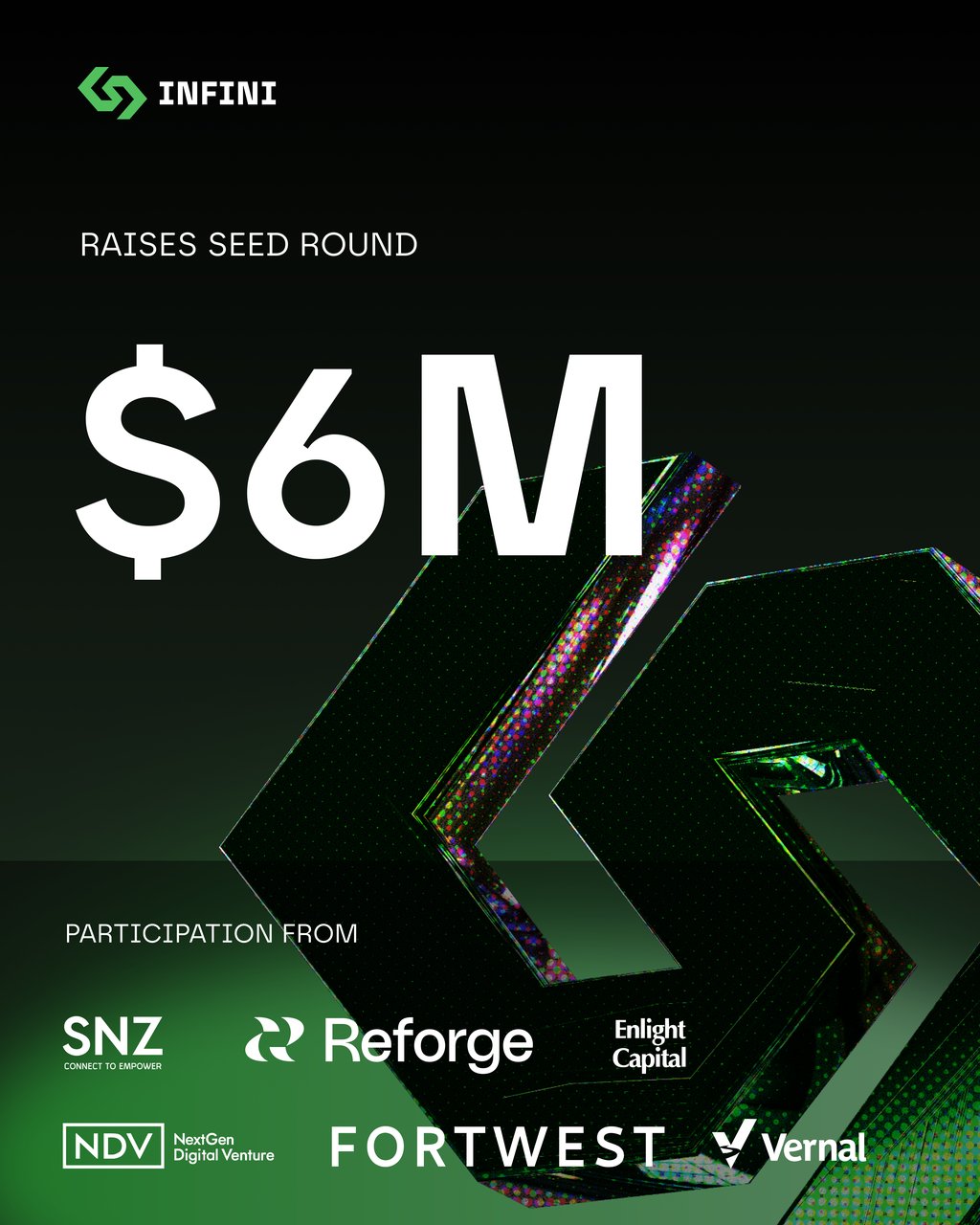
Infini raises $6M seed round to expand global payments and stablecoin infrastructure
How to Read a “Raises” Headline: A Practical Guide
Distinguishing capital raises from risk and rate raises
For a crypto investor or builder, developing a systematic way to interpret “raises” headlines can help filter noise from signal. The first step is to determine which category the raise belongs to: capital, rates, or risks. A headline such as “Range raises 8.3 million dollars Series A to unify stablecoin and fiat treasury” is clearly about corporate fundraising, indicating that a specific company has secured venture capital and revealing something about where investors see opportunity. By contrast, “Bank of Japan raises policy rate by 25 basis points” is a macro story, suggesting a shift in the cost of capital and an environment that can influence risk appetite across markets. When a headline reads “Solana tokenization boom raises red flags,” it is pointing to risk concerns rather than new financing or explicit policy moves.
Once the category is clear, the next step is to extract the key parameters. In capital raises, critical details include the round size, lead investors, valuation changes, the company’s vertical (for example, stablecoin infrastructure, AI verification, structured products) and whether the instrument is equity, tokens or a hybrid. Trace Finance’s 32 million dollar Series A, led by CoinFund and joined by Coinbase Ventures, Jump Crypto and others, signals growing conviction around regulated stablecoin rails connecting banks and digital tokens, especially in emerging markets. Range’s smaller but focused raise, led by fintech funds, indicates an appetite for tools that help corporates manage multi‑rail treasuries. Digital Asset’s much larger 355 million dollar round, led by a16z crypto and institutions, highlights the scale of capital now backing institutional tokenization.
In rate raises, it is important to consider both magnitude and context. A 25 basis‑point hike in a low‑rate environment can be more significant than a similar move when rates are already high. How central banks frame their decisions—whether they emphasize inflation risks, growth concerns or financial‑stability considerations—also matters for how Bitcoin, stablecoins and DeFi markets respond. A rate raise that markets perceive as the start of a tightening cycle may trigger risk‑off behavior in crypto, while one that is seen as the end of a cycle might fuel renewed interest in risk assets.
Risk‑raising headlines require closer reading and, often, skepticism. When coverage says a new AI tool “raises deepfake concerns” or an on‑chain referral race “raises fairness questions,” the underlying issue is usually about incentives and unintended consequences. A tokenization boom might raise red flags because of liquidity concentration or smart‑contract risk on a given chain. A growth fund’s ecosystem structure might raise questions over long‑term risk sharing. Readers should look for specifics: What exactly are the risks? Who is voicing them? Are they hypothetical or based on observed behavior? Are there mitigation strategies in place, such as Moody’s analytics integration or Canton’s privacy and oversight mechanisms?
Connecting raises to Bitcoin, stablecoins and market structure
Another useful habit is to map each raise headline to its potential impact on core crypto assets and market infrastructure. Capital raises in stablecoin or tokenization infrastructure, such as Trace Finance, Range or Digital Asset, can have second‑order implications for Bitcoin and other crypto assets by improving fiat on‑ramps, deepening liquidity in tokenized cash instruments, or enabling new collateral types for on‑chain trading. Over time, robust infrastructure can make it easier for institutions to allocate to Bitcoin or use stablecoins like USDC for treasury and settlement functions, potentially expanding demand and liquidity.
By contrast, rate raises by central banks may exert near‑term downward pressure on Bitcoin if they trigger risk‑off rotations, yet they can also reinforce long‑term narratives about the fragility of fiat regimes and the appeal of hard‑capped digital assets. Stablecoins operate at this intersection: they embody fiat currency in tokenized form, often backed by government securities whose yields are directly influenced by rate raises. Crypto participants who hold USDC or other stablecoins as a dollar proxy are implicitly exposed to the monetary policy underlying those assets, even as they benefit from on‑chain programmability.
Risk‑raising headlines often point to structural issues that could affect market resilience. Concerns over Solana’s tokenization boom, for instance, may prompt some institutions to diversify across chains or seek permissioned environments like Canton for certain activities. Privacy‑related tradeoffs could influence whether large asset managers are willing to use public DeFi protocols or prefer controlled networks with explicit governance and auditing arrangements. Deepfake and AI‑slop concerns may drive demand for crypto‑enabled verification tools, affecting which identity and reputation protocols gain traction. In each case, tracking how specific raises and raised concerns translate into adoption patterns can inform a more nuanced view of the evolving market structure.
- 01alternative raise mechanics
GammaSwap's LBP topping click charts and Convergence Finance's IBO show readers scrutinize the fundraising structure itself — who gets access, at what price, and whether VCs are being cut out.
- 02strategic investor as signal
Binance Labs backing Infrared and Peter Thiel plus Vitalik backing Polymarket drew heavy clicks because named institutional bettors function as ecosystem credibility stamps readers use to front-run deployment cycles.
- 03valuation compression down rounds
Blockchain.com raising at less than half its $14B peak attracted near-equal clicks to Alpaca's positive $150M round, revealing readers treat down-round math as a real-time market stress gauge.
- 04VC mega-fund formation↗
Paradigm's $850M, Polychain's $200M, and Robot Ventures' $75M funds each drew clicks because fund sizing signals where GP conviction is concentrating ahead of the next capital deployment wave.
- 05launch red flags and rug signals
The LIBRE thread — FixedFloat funding, day-zero domain registration, block-0 snipe — shows readers treat suspicious raise origins as forensic early-warning data, not just spectacle.
- 06L1 and ecosystem capital races
Monad's $225M and Berachain's $100M in a single week, alongside Taproot Wizards on Bitcoin, drew clicks from readers tracking which base-layer bets are capturing institutional conviction.
Raises Across Key Themes: Stablecoins, Bitcoin, AI and Markets
Stablecoin and USDC ecosystems
Stablecoins sit at the crossroads of many raise narratives. As digital representations of fiat currencies, they are deeply influenced by rate raises and regulatory “raises” in compliance expectations, while also serving as a primary object of venture‑backed innovation. Trace Finance’s 32 million dollar Series A, aimed at expanding regulated stablecoin settlement infrastructure across Brazil, the United States, the Asia‑Pacific region and other emerging markets, is emblematic of how seriously investors now take stablecoin rails as an infrastructure theme. Range’s 8.3 million dollar round to unify treasury, risk and compliance across stablecoin and fiat rails demonstrates that corporates are demanding better tools to manage multi‑asset treasuries as USDC and similar tokens move from speculative trading into operational use cases.
Corporate venture arms from major stablecoin and exchange operators are also active. EarnOS’s pre‑Series A, which included Circle Ventures and Coinbase Ventures, reflects a belief that verifying human traffic and rewarding authentic digital behavior may become critical for platforms reliant on stablecoins and crypto micropayments. These investments suggest that stablecoin ecosystems are not only about issuing and redeeming tokens, but also about building surrounding infrastructure for identity, reputation, compliance and risk management. As such, each raise in this space can be read as a signal about how the USDC‑centric stack, and competing stablecoins, will evolve.
Bitcoin and broader crypto market cycles
Bitcoin’s relationship to “raises” is somewhat more indirect but no less important. Historically, large capital raises in crypto—whether for exchanges, DeFi protocols or infrastructure firms—have clustered around bull markets when Bitcoin’s price is rising and venture capital is abundant. Galaxy’s analysis of crypto venture funding indicates that capital deployed fell by about half compared with earlier boom periods, even as deal counts remained substantial, suggesting that the market has become more selective about which themes and teams it backs. When Bitcoin rallies, rising valuations often enable companies to raise larger rounds at higher valuations, sometimes at a pace that raises questions about sustainability. When Bitcoin corrects, funding can dry up quickly, exposing projects that relied on continual capital inflows.
At the same time, some raises aim explicitly to insulate crypto infrastructure from market volatility. TVL Capital’s seed round to build on‑chain structured products, for instance, can be seen as part of a broader effort to create more sophisticated risk‑management tools for crypto exposure. Canton Network’s funding round is aimed at institutionalizing tokenized finance in ways that might be less directly tethered to Bitcoin’s price cycles, focusing instead on capital‑markets efficiency. As the industry matures, it is conceivable that the correlation between Bitcoin bull markets and the volume of raises in infrastructure or AI‑adjacent tooling will weaken, though this remains to be seen.
AI convergence and the future of raises
AI is reshaping both what gets funded and what risks are raised. SpaceX’s 75 billion dollar IPO, though not a crypto raise, attracted intense attention in part because investors see the company’s satellite and space‑based infrastructure as critical enablers for AI, edge computing and global connectivity. This underscores how AI‑adjacent narratives can drive extraordinary capital formation when investors believe a technology sits at the foundation of future digital systems. In crypto, the intersection with AI is more nascent but rapidly evolving: tools to detect AI‑generated content, verify human users, and anchor data integrity are drawing venture capital as part of a broader attempt to secure the informational substrate on which markets operate.
These developments raise complex questions about power, surveillance and autonomy. AI tools deployed for fraud detection, compliance or content moderation can reduce some categories of risk while raising others, especially if controlled by a small number of large platforms. Crypto’s promise of decentralization and user sovereignty offers a counterpoint, but on‑chain systems themselves can collect rich behavioral data. When AI and blockchain analytics are combined, the potential for sophisticated surveillance rises alongside opportunities for more precise risk management. For investors and builders, raises in the AI‑crypto convergence space are thus both opportunities and caution flags, signaling where the frontier lies and where governance innovations will be required.
Media, Language and Responsibility: Why “Raises” Is Everywhere
The ubiquity of “raises” in crypto headlines is not accidental. As a verb, it is flexible and compact, making it ideal for conveying change under tight character constraints. It can describe growth (a startup raises money), policy actions (a central bank raises rates), ethical alarms (a deepfake tool raises concerns) or analytical thresholds (a poll raises doubts). For editors and writers, this flexibility is attractive; for readers, it can be confusing, especially when many different kinds of raises appear side‑by‑side in an endless scroll of alerts.
From a media‑literacy perspective, it is worth recognizing that headline language can subtly frame stories in more or less dramatic terms. A report stating that a tokenization trend “raises red flags” cues a different emotional response than one saying it “prompts debate” or “invites scrutiny,” even if the underlying facts are similar. Responsible crypto journalism tries to calibrate such language to the magnitude and evidence for the risks described. In the case of Solana tokenization and Moody’s on‑chain analytics, for instance, there are specific, articulable concerns about market structure and legal linkages that justify cautious language. Similarly, privacy tradeoffs in institutional DeFi are not hypothetical; they are grounded in real constraints faced by institutions and regulators, as projects like Canton explicitly acknowledge.
Large capital raises present another challenge. When a company like Digital Asset raises 355 million dollars to build tokenized capital‑markets infrastructure, or SpaceX raises 75 billion dollars in a record IPO, it is tempting to focus on the headline numbers and adopt a celebratory tone. Yet such events also raise questions about concentration of power, the influence of a handful of venture firms or sovereign wealth funds, and the potential crowding out of smaller, more experimental projects. For crypto, which has long valued decentralization and permissionless innovation, the growing dominance of large, well‑capitalized players introduces strategic questions about how much of the ecosystem will be shaped by institutional priorities versus grassroots experimentation.
In this context, the verb “raises” can be a useful tool for signaling that something more than raw excitement is warranted. A funding round can raise hopes and capital, but it should also raise questions about governance, incentives and risk. A new privacy feature can raise the level of protection for users while raising demands on regulators to adapt their oversight tools. A central bank rate hike can raise yields on stablecoin reserves while raising the stakes for macro‑sensitive crypto strategies. As long as readers approach such headlines with a critical eye, the word itself can serve as an invitation to dig deeper rather than a conclusion.
- 2022-10milestone
Paradigm closes $850M third crypto VC fund
- 2022-10milestone
Flashbots raises $60M Series B at $1B valuation
- 2024-04milestone
Monad raises $225M and Berachain raises $100M in same week
- 2024-05milestone
Polymarket raises $45M from Founders Fund, Vitalik Buterin, and others
Trace Finance raises $32M to bridge stablecoin and banking settlement rails
Range raises $83M Series A for unified treasury and stablecoin compliance
Digital Asset raises $355M for Canton Network capital markets expansion
Outlook
Looking ahead, the density of “raises” headlines in crypto is unlikely to diminish. Venture capital will continue to fund new infrastructure for stablecoins, tokenization, Bitcoin‑linked products and AI‑adjacent tooling, generating a steady stream of capital raises that signal where the industry’s frontier lies. Central banks will keep adjusting policy rates in response to inflation, growth and financial‑stability conditions, with each raise or cut reverberating across crypto markets as traders recalibrate the relative appeal of Bitcoin and stablecoins against risk‑free yields. At the same time, new technologies in DeFi, privacy and AI will raise fresh questions about risk, ethics and governance.
For a crypto news audience, the key will be not to chase every headline, but to build a framework for interpreting them. When a company raises money, asking who the investors are, what the product does, how it fits into the broader market structure and how it interacts with themes like stablecoins, USDC, AI or institutional adoption will often be more informative than the raw dollar amount. When a rate hike raises concerns about recession or financial stress, understanding how similar moves have affected Bitcoin and DeFi in the past can provide context. When a development raises red flags, looking for concrete risk factors and mitigation strategies—rather than reacting to the headline alone—can help distinguish substantive warnings from generalized anxiety.
Ultimately, “raises” is a verb of change, and crypto remains a domain defined by rapid change. Capital raises finance new experiments; rate raises reshape the environment in which those experiments play out; and raised concerns highlight where design, regulation and governance need to catch up. For investors, builders and policymakers navigating Bitcoin, stablecoins, AI convergence and tokenized markets, learning to read “raises” headlines with nuance is less about vocabulary and more about developing the judgment required to operate in an evolving, high‑stakes ecosystem.
Latest Raises news
infiniFi raises $3M+ seed led by Electric Capital, total funding tops $6M ahead of Q4 2026 TGENG.CASH raises $15M led by Blockchain Capital to expand credit access in BrazilInfini raises $6M seed round to expand global payments and stablecoin infrastructure Solcoa raises $75M to build 500-tonne rare earth metallization plant in Nevada
 Ando raises $20M from Accel, Index, and Emergence to build an AI-native team messaging platform
 Numeral raises $100M Series C led by Insight Partners to automate global tax compliance
Sources
20 records from 17 domains
tradingview.com
bitget.com
fintechfutures.com
carta.com
crypto-fundraising.info
a16zcrypto.com
galaxy.com
fintech.global
investing.com
blog.digitalasset.com
moodys.com
canton.network
x.com
cryptorobotics.ai
lbank.com
cleanroomtechnology.com
digitalasset.com
Community notes
Spot something off or out of date? Drop a note. Editors review topic notes daily and roll accepted fixes into the explainer — contributors are recognized in the monthly $SQUID drop.
Loading notes…
Help improve this topic
Have a story or tip about this topic? Submit it. See something missing? Leave a note. Editors review daily; accepted submissions and fixes count toward the monthly $SQUID drop.