
In-depth explainer on Ripple’s evolving role in crypto, covering the XRP Ledger, XRP, RLUSD stablecoin, cross-border payments, AI-agent integrations, SEC case, and policy strategy, plus how these pieces may shape future digital dollar and stablecoin markets.
+52 sources across the wider coverage universe
 Ripple partners with Kyobo Life Insurance for Korea's first tokenized government bond settlement2026-04
 Trident Digital Tech Holdings and Ripple Strategy Holding sign strategic cooperation agreement to co-build a stablecoin payment system for Africa market.2026-04
 Ripple proposes a new XRPL lending standard that would let institutions borrow against tokenized assets, bringing real-world credit markets onchain2026-06
 Ripple and Unloq test RLUSD in MAS BLOOM sandbox to automate settlements based on real-time trade conditions, pushing programmable finance forward2026-04
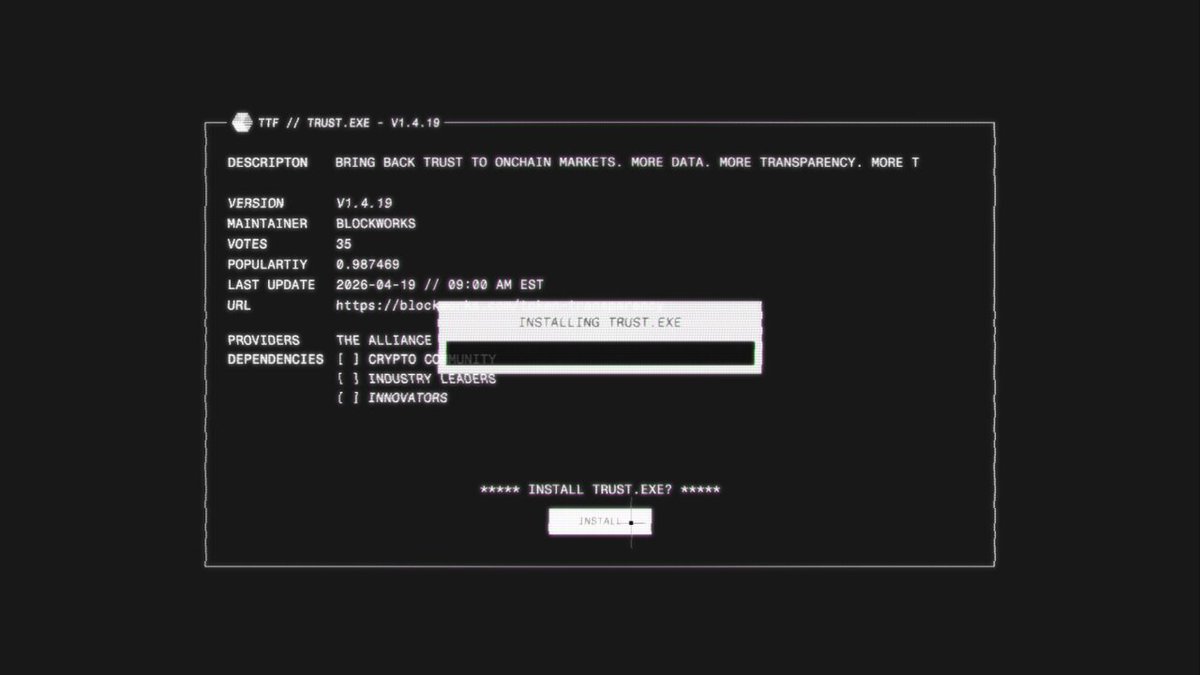 Blockworks launches the Transparency Alliance with Coinbase, Kraken, Ripple, and VanEck to standardize token disclosures ahead of looming US crypto regulation2026-05
 The Linux Foundation launches x402 governance with 40 members as Visa, Mastercard and Ripple back internet-native payments for autonomous AI agents2026-07
Ripple: Infrastructure, Stablecoins, and the Future of Crypto Payments
A San Francisco-based fintech building blockchain-based payment and liquidity infrastructure, Ripple sits at the intersection of crypto, banking, and regulation. Its products span the XRP Ledger, the XRP token, and a USD-backed stablecoin called Ripple USD (RLUSD), positioning the company as a potential backbone for cross-border settlement and emerging machine-to-machine payments rather than a simple “altcoin project.”
Untangling Ripple, XRP, XRPL, and RLUSD
Any serious explainer on this topic needs to start by untangling four often-confused concepts: the company Ripple, the XRP Ledger, the XRP token, and the RLUSD stablecoin. Ripple is a private technology firm that builds software and infrastructure for payments, liquidity management, and digital asset custody for banks, fintechs, and enterprises. The XRP Ledger (XRPL) is a separate, open, public blockchain originally developed by the project’s founders and maintained today by a global network of validators that anyone can join. XRP is the native asset of that ledger, used to pay transaction fees, provide on-ledger liquidity, and act as a bridge asset between currencies. RLUSD, meanwhile, is a USD-backed stablecoin created by Ripple and issued on XRPL and other networks to provide a crypto-native representation of the dollar for settlement and DeFi.
The XRP Ledger’s governance model is central to understanding Ripple’s role. XRPL is described by its developers as a decentralized, public blockchain; anyone can run a node, inspect the code, or propose changes. Ripple is a contributor to this network, but it emphasizes that its technical rights are the same as those of other contributors, which means it cannot unilaterally change the consensus rules or rewrite balances. XRP itself is a digital asset that can be sent peer-to-peer without needing a central intermediary, and the ledger uses a consensus protocol rather than proof-of-work to validate transactions quickly and with low fees. In practice, Ripple builds software that interacts with XRPL and with traditional banking rails, but the ledger can function independently of the company.
XRP’s economic design further highlights the separation between protocol and company. XRP is native to XRPL and was created at genesis with a fixed maximum supply of 100 billion units. The founders gifted 80 billion XRP to Ripple, which in turn locked 55 billion XRP into time-based escrows on XRPL to provide supply predictability and market confidence. These escrows release XRP over time according to on-ledger rules enforced by consensus, not by manual intervention from Ripple, and as of October 2024 around 38 billion XRP remained in escrow. This structure means that while Ripple holds a large inventory and clearly has influence, it cannot simply “print more XRP” or alter the total cap.
RLUSD occupies a different niche entirely. Ripple describes Ripple USD as an enterprise-grade, USD-backed stablecoin designed to maintain a constant value of one US dollar, natively issued on both the XRP Ledger and Ethereum. Reporting and analysis indicate that RLUSD is issued by Standard Custody & Trust Company, a New York Department of Financial Services–supervised trust company, and is explicitly positioned as institutional infrastructure rather than a retail-first token. Whereas XRP is volatile and functions as a cryptoasset that can be used as bridge collateral, RLUSD is designed to behave more like tokenized cash, making it attractive for settlement, treasury operations, and on-chain credit structures. Ripple has also begun to extend RLUSD to Ethereum Layer 2 networks like Optimism, Base, Ink, and Unichain using Wormhole’s Native Token Transfers (NTT) standard, indicating a deliberately multichain strategy.
One of the most persistent myths in the market is that XRP is a “Ripple share” or that Ripple “controls” XRPL in the way a company controls its internal database. In practice, XRP is explicitly described by XRP Ledger documentation as independent of Ripple, and the ledger is open-source, permissionless, and decentralized. Ripple’s equity, by contrast, is privately held stock in a company whose business includes but is not limited to services involving XRP and XRPL. Secondary markets have emerged that offer pre-IPO exposure to Ripple’s shares, emphasizing that some investors treat Ripple the company as a distinct bet from XRP the token, even if the two are obviously intertwined in practice.
A simple way to keep the relationships straight is to treat Ripple as a software and infrastructure vendor, XRPL as a public blockchain the company helped build and still uses heavily, XRP as that blockchain’s native asset and bridge currency, and RLUSD as the company’s institutional stablecoin product that rides on XRPL and other chains. Their respective roles can be summarized as follows:
| Name | Type | Who Controls It? | Primary Role in the Stack |
|---|---|---|---|
| Ripple | Private company | Shareholders, board, management | Builds payments, liquidity, and custody infrastructure |
| XRP | Native cryptoasset | No issuer; protocol-defined supply | Bridge asset, fee token, liquidity on XRPL |
| XRPL | Public blockchain | Decentralized validator network | Settlement layer and DEX for XRP and issued tokens |
| RLUSD | USD-backed stablecoin | Issuer (Standard Custody), governed by Ripple’s program | Tokenized dollar for settlement, DeFi, and institutional use |
This separation matters for regulation, investment theses, and technical architecture. Court rulings and regulatory actions have increasingly treated XRP, Ripple’s conduct, and Ripple’s enterprise products as distinct categories, even when they overlap in practice. For traders and developers, the upshot is that “Ripple” can refer to very different things depending on context, which often leads to confusion in both mainstream coverage and market chatter.

Ripple partners with Kyobo Life Insurance for Korea's first tokenized government bond settlement
From “Internet of Value” to Institutional Rails
Ripple’s public mission has long been framed as building an “internet of value,” a network where money moves as quickly and cheaply as information moves today. Founded in 2012, Ripple Labs (as it was initially known) focused early on building a distributed ledger that could support near-instant settlement between currencies, positioning XRP as a bridge asset that might one day reduce reliance on nostro–vostro accounts and legacy correspondent banking. This vision put Ripple squarely in competition with SWIFT and other incumbent cross-border infrastructure, while also aligning it with fintechs and remittance companies that needed cheaper, more programmable rails.
Over the years, Ripple built out what is now branded as Ripple Payments, a network and software stack that allows financial institutions and payment companies to route cross-border transactions using fiat, XRP, and now stablecoins. In a canonical example described in industry literature, a U.S. business paying a supplier in Thailand could have dollars converted into XRP, transmitted across XRPL in seconds, and then converted into Thai baht on the other side, abstracting away the complexities of multiple correspondent banks. Ripple’s proposition was that such flows could be faster, cheaper, and more transparent than legacy wires, especially in emerging-market corridors where FX spreads and settlement delays are severe.
The company’s strategic arc has evolved from pure “XRP-as-bridge” messaging to a broader focus on multi-asset liquidity and stablecoin-powered settlement. Ripple’s website now emphasizes that it is “the leading provider of stablecoin-powered cross-border payments and digital asset custody solutions,” signaling that RLUSD and other tokenized fiat instruments are no longer side projects but core to the product suite. This reflects a broader market reality: many institutions prefer a dollar-pegged token to a volatile asset like XRP for day-to-day settlement, even if they remain open to using XRP as a liquidity or collateral layer.
Ripple’s corporate positioning has also shifted in response to regulatory pressure, particularly the multi-year enforcement action brought by the U.S. Securities and Exchange Commission (SEC). During the period when XRP’s legal status was contested, Ripple leaned heavily into its role as an enterprise software vendor and CBDC partner, emphasizing use cases that did not depend on XRP trading in U.S. markets. After partial court victories and an eventual settlement that clarified aspects of XRP’s status and Ripple’s obligations, the firm appears to have redoubled its focus on XRPL, stablecoins, and cross-border liquidity as a coherent ecosystem rather than siloed products.
At the same time, the company has remained privately held, with equity valued in secondary markets at multi-billion-dollar levels as investors speculate about a potential IPO and the revenue growth opportunities in stablecoin issuance, transaction fees, and prime services. While XRP markets can be volatile and driven by speculative cycles, many institutional investors treat Ripple equity as a separate bet on recurring enterprise revenue and regulatory arbitrage, including the possibility that Ripple becomes a key issuer and infrastructure provider in a tokenized-dollar world. That bifurcation between token and equity is a recurring theme in how sophisticated market participants approach “crypto infrastructure” plays.
Today, Ripple presents itself less as a single-asset company and more as a stack: RLUSD and other tokenized instruments as the fiat layer, XRP and other XRPL-based assets as the liquidity and collateral layer, XRPL itself as the settlement and DEX layer, and services like Ripple Payments and Ripple Prime as the institutional interfaces that make the whole system usable and compliant. This multi-layer view helps explain the firm’s recent moves into AI payments, pan-African stablecoin rails, and multichain connectivity, all of which build on the core stack without being limited to a single token.
Readers click Ripple stories not as crypto speculation but as regulatory case law in real time — the SEC suit, the $125M fine, the settlement, and the stablecoin licensing race are all consumed as live dispatches from the courtroom where institutional crypto's U.S. legality is being decided.
The XRP Ledger: Design, XRP Economics, and Tokenization
The XRP Ledger is one of the longest-running public blockchains, designed from inception to serve as a high-throughput, low-fee settlement layer rather than a general-purpose smart contract platform. XRPL uses a consensus protocol sometimes described as a form of federated Byzantine agreement rather than proof-of-work or traditional proof-of-stake, allowing the network to confirm transactions in a few seconds with relatively low energy consumption. Validators maintain the ledger and apply transaction processing rules, and the network is open to anyone who wishes to run a node or propose validation. This design has made XRPL attractive for payments and foreign exchange-style operations but has historically limited its expressivity relative to fully programmable environments like Ethereum.
A distinctive feature of XRPL is its built-in decentralized exchange (DEX) and native support for issued tokens representing fiat currencies and other assets. From early in its life cycle, the ledger allowed users to create “IOUs” that represent claims on external assets—say, USD held in a bank account—and to trade these IOUs against each other and against XRP using order books maintained directly on-chain. This architecture means stablecoins and tokenized assets on XRPL are not an afterthought; they are integral to the ledger’s operation. As RLUSD, MXNB, and other modern tokens arrive, they plug into an existing infrastructure for on-ledger settlement and FX-like trading, rather than requiring bespoke smart contracts for each asset.
XRP, as the native token, plays several roles in this ecosystem. It is used to pay transaction fees, which are intentionally tiny but non-zero to prevent spam, and it can serve as a bridging currency between issued tokens in the DEX, especially when direct liquidity between two fiat currencies is thin. XRP also underpins some of Ripple’s cross-border payment flows, where it acts as an intermediary asset between two fiat currencies, allowing institutions to avoid holding large pre-funded balances in multiple jurisdictions. The total supply of XRP is fixed at 100 billion units, with no capacity to mint more at the protocol level, which makes XRP a non-inflationary asset in the narrow sense of supply schedule, even though its market price is obviously volatile.
The escrow system that Ripple uses to manage its large XRP holdings is a critical piece of market structure. After receiving 80 billion XRP from the founders, Ripple locked 55 billion of those tokens into a series of on-ledger escrows, each programmed to release a portion of XRP at regular intervals. These escrows are enforced by XRPL’s consensus rules, meaning they cannot be unilaterally altered by Ripple without a network-wide amendment. The company has framed this mechanism as a way to provide transparency and predictability about how much XRP might come onto the market over time, while retaining flexibility to use released XRP for institutional sales, incentive programs, or corporate treasury purposes. As of October 2024, roughly 38 billion XRP remained in escrow, illustrating how slowly this inventory is released and how long Ripple’s balance-sheet exposure to XRP will likely persist.
Beyond XRP, XRPL now hosts a growing variety of issued tokens, including stablecoins. One notable example is MXNB, a Mexican peso–backed stablecoin supported by Bitso, a leading Latin American digital financial services firm. Ripple and Bitso have expanded their partnership to make MXNB available on XRPL’s permissioned DEX infrastructure, enhancing enterprise-grade settlement capabilities in Latin America and creating new corridors where XRP and stablecoins can interoperate. In this model, the XRP Ledger functions as a multi-asset rail where different tokenized currencies—USD via RLUSD, MXN via MXNB, and others—can be exchanged and settled quickly, with XRP sometimes acting as an intermediary liquidity asset.
RLUSD itself takes advantage of XRPL’s tokenization features while also existing on other chains. Ripple’s documentation describes RLUSD as a USD-backed stablecoin designed to maintain a value of one US dollar, natively issued on XRPL and Ethereum. Analysis by market observers indicates that RLUSD is issued by Standard Custody, a NYDFS-supervised trust company, and targeted primarily at institutional users who need regulated, auditable tokenized dollars for settlement, collateral, and DeFi strategies. The token’s presence on XRPL allows for deep integration with Ripple Payments and the on-ledger DEX, while its presence on Ethereum and Layer 2s like Optimism and Base via Wormhole’s NTT standard allows RLUSD to participate in the broader DeFi ecosystem across 40-plus chains that support NTT transfers.
XRPL’s relative simplicity compared to full smart contract platforms is both a feature and a constraint. On the one hand, the ledger’s specialized transaction types, native DEX, and built-in tokenization primitives make it efficient and robust for high-volume payments and FX-style trading. On the other hand, more complex DeFi primitives—such as composable lending protocols, derivatives, and long-tail experimental dApps—have historically flourished on Ethereum and its rollups rather than on XRPL. Ripple’s RLUSD multichain strategy and the integration with cross-chain infrastructure like Wormhole suggest that the company is embracing this reality: XRPL can be the settlement and liquidity hub for certain use cases, while RLUSD participates in the broader multi-chain DeFi stack where more complex capital markets live.
For developers and institutions, the practical implication is that XRPL offers a specialized environment optimized for payments and tokenized assets, with XRP and RLUSD as first-class citizens. It is not trying to be all things to all people but rather to anchor a particular segment of the crypto-financial stack, one that intersects directly with banks, payment processors, and now AI agents. That specialization, combined with Ripple’s enterprise relationships, is what distinguishes the XRPL ecosystem from generic Layer 1 narratives.
Stablecoin Strategy: RLUSD, Regional Corridors, and a “Crypto Eurodollar” Thesis
Stablecoins have become the dominant form of on-chain money for many institutional and retail use cases, and Ripple’s RLUSD strategy needs to be understood against that backdrop. RLUSD is pitched as a USD-backed stablecoin built for institutional use, designed to hold a one-to-one peg with the U.S. dollar and initially issued on XRPL and Ethereum. Unlike USDT or some retail-focused stablecoins, RLUSD is framed as tightly integrated with regulated custody and compliance frameworks, with Standard Custody acting as the New York–regulated issuer and Ripple providing the surrounding infrastructure, distribution, and integration with payment partners. This design aims to make RLUSD credible in the eyes of banks, fintechs, and regulators who may be wary of less transparent stablecoin models.
Ripple’s stablecoin ambitions go beyond a single network. Through a collaboration with Wormhole, RLUSD is being extended to Ethereum Layer 2 networks including Optimism, Base, Ink, and Unichain using the NTT standard, which is already used by more than 100 assets across over 40 chains. The idea is that RLUSD can function as a native token on multiple chains while retaining a unified, regulated issuance model, enabling “regulated multichain stablecoin transfers” that maintain consistent compliance and collateralization standards. For institutional users, this solves a key pain point: they can deploy the same dollar token across different execution environments—XRPL for payments, Base or Optimism for DeFi and AI—weaving a single liquidity pool across heterogeneous chains.
Recent partnerships highlight how Ripple is using RLUSD to build regional payment and liquidity hubs. In Turkey, Ripple announced that RLUSD is now available to institutions through partnerships with BiLira, Bitexen, and Bitlo, tapping into a crypto market the company estimates at around $200 billion in size. This move positions RLUSD as an institutional settlement asset for Turkish financial institutions and crypto platforms, allowing them to hold and transfer a regulated dollar stablecoin in a country where demand for dollar exposure and crypto trading has been strong. By embedding RLUSD into local platforms rather than trying to displace them, Ripple leverages existing distribution while anchoring itself in the region’s financial plumbing.
In Africa, Ripple has taken a different but complementary route by making a strategic investment in Flutterwave, a major payments infrastructure company, as part of its Series E round, which valued Flutterwave in the low-single-digit billions. The partnership is centered on integrating RLUSD, the XRP Ledger, and Ripple Payments into Flutterwave’s infrastructure, turning cross-border corridors into what the companies describe as a stablecoin-native financial “superhighway.” RLUSD is embedded into Flutterwave’s payment rails and remittance product Send App as a primary settlement asset for high-volume channels, while XRPL is used for faster clearing and a unified API bridges Flutterwave’s domestic network with Ripple’s global payments network. In effect, RLUSD becomes the dollar layer underpinning African cross-border flows, with Ripple’s software and XRPL providing the rails and ledger.
In Latin America, the expanded partnership with Bitso showcases another dimension of the strategy. Bitso has brought the peso-backed MXNB stablecoin onto XRPL’s permissioned DEX infrastructure, enhancing enterprise-grade settlement across the region. When combined with RLUSD and XRP liquidity, this creates a fabric where USD, MXN, and other currencies can be tokenized and exchanged on a common ledger, with Ripple’s enterprise customers able to tap into these corridors programmatically. Here, RLUSD can function as a dollar anchor, MXNB as a regional currency token, and XRP as a bridge or collateral asset, depending on the liquidity configuration.
Observers have argued that these components add up to something larger than a simple payments business. A widely discussed analysis suggested that Ripple may be building a crypto-native analogue of the Eurodollar system, the offshore network of dollar-denominated deposits and loans that historically operated outside direct U.S. banking regulation. In this thesis, RLUSD serves as the tokenized dollar, XRP is the collateral and settlement inventory, the XRP Ledger is the ledger of record, and Ripple Prime and related services act as the institutional intermediation layer connecting banks, market makers, and corporates. Importantly, RLUSD is not bank deposit money and XRP is not a dollar liability, so Ripple is not recreating the Eurodollar market in a strict legal sense. Instead, the argument is that the company is assembling a functional equivalent: offshore digital-dollar liquidity that can move between institutions and across borders with fewer frictions than traditional banking.
This “crypto Eurodollar” framing has meaningful implications. If RLUSD, backed by regulated custody and integrated into regional payment hubs, becomes a preferred instrument for cross-border settlement, Ripple could find itself in a central position in the global dollar funding system, even if it never holds deposits like a bank. In that scenario, XRP’s role as collateral and liquidity inventory becomes more important, as institutions might use XRP to manage intraday liquidity, hedge FX exposures, or post margin in digital capital markets built around RLUSD. The XRP Ledger, in turn, would be one of several ledgers (alongside Ethereum and its rollups) where this tokenized dollar liquidity resides and circulates.
At the same time, Ripple must compete with entrenched stablecoin issuers such as Circle’s USDC and Tether’s USDT, which already dominate DeFi and many centralized exchange markets. In AI and DeFi ecosystems on networks like Base and Solana, USDC remains the default choice for many developers, and coverage of Ripple’s AI initiatives explicitly notes that the company is trying to pull some of this activity toward XRP and RLUSD. Ripple’s bet is that institutional-grade compliance, regional partnerships like Flutterwave and Turkish exchanges, and deep integration with enterprise payment flows will allow RLUSD to carve out a distinct niche, even if it never overtakes more retail-oriented stablecoins by market cap.

Trident Digital Tech Holdings and Ripple Strategy Holding sign strategic cooperation agreement to co-build a stablecoin payment system for Africa market.
Ripple in Cross-Border Payments and Enterprise Settlements
Ripple’s core commercial proposition remains centered on cross-border payments and enterprise settlements, where the company argues that a blend of blockchain-based assets and fiat connectivity can reduce costs and delays that plague traditional correspondent banking. Ripple Payments enables financial institutions, remittance providers, and corporates to send payments across borders with end-to-end visibility, often using a combination of on-chain and off-chain messaging. In corridors where local partners support XRP or RLUSD, the system can convert fiat into digital assets, route value through XRPL or other chains, and then convert back into local currency, all while providing compliance features such as travel-rule–friendly data sharing.
A common use case involves replacing the need for pre-funded nostro accounts across multiple countries. In the legacy model, a bank might hold idle balances in each jurisdiction where it expects to send payments, tying up capital and exposing itself to FX risk. Ripple’s model, especially in its earlier iteration branded as “On-Demand Liquidity” (ODL), uses XRP as a just-in-time bridge asset: the sending institution buys XRP in its home currency, sends XRP across XRPL, and the receiving side sells XRP for the local currency. This significantly reduces the need to park capital abroad, though it introduces crypto market liquidity and volatility considerations that must be managed through market makers and hedging strategies.
The rise of RLUSD adds a new tool to this toolkit. Instead of always using XRP as the bridge asset, institutions can hold RLUSD as a dollar-denominated settlement asset, especially in corridors where many participants already think in dollars. In the Flutterwave partnership, for example, RLUSD is explicitly embedded as a “primary settlement asset” for high-volume channels, with XRPL providing the clearing layer and a unified API connecting Flutterwave’s domestic network to Ripple’s global payments network. This allows African businesses and remittance users to benefit from stablecoin-powered settlement without needing to hold XRP outright, while still leveraging XRPL’s speed and composability.
Ripple’s regional strategies illustrate a pattern of working with local champions rather than trying to disintermediate them. In Turkey, RLUSD is made available to institutions through BiLira, Bitexen, and Bitlo, all of which already operate in the Turkish crypto and payments ecosystem. These partners can integrate RLUSD into their own products, allowing institutions to move between lira and tokenized dollars in ways that fit local regulation and market demand. In Latin America, Bitso’s role as a leading digital financial services company allows Ripple to tap into existing corridors where MXN, USD, and crypto already flow, while XRPL’s permissioned DEX infrastructure provides a controlled but decentralized environment for MXNB and other assets. These collaborations show Ripple acting more like a wholesale infrastructure provider than a consumer-facing app.
The strategy also extends up the stack to treasury and liquidity services. Ripple’s institutional offerings, sometimes grouped under the “Ripple Prime” brand, provide trading, custody, and liquidity solutions for institutions dealing with digital assets, including XRP and RLUSD. In this model, Ripple acts as something akin to a prime broker and market infrastructure provider in the digital asset space, providing access to liquidity pools, credit lines, and settlement systems linked to XRPL and other chains. Combined with Ripple Payments, this creates an integrated environment where a bank, fintech, or corporate can manage end-to-end flows: from sourcing liquidity in RLUSD or XRP, to executing cross-border payments, to settling obligations on-chain or via traditional rails.
Despite the compelling narrative, challenges remain. Ripple must navigate complex regulatory regimes in each jurisdiction, align its stablecoin issuance with evolving rules on reserve management and disclosures, and persuade risk-averse institutions to rely on blockchain-based assets in mission-critical payment flows. It also competes with card networks, SWIFT’s evolving gpi system, and other fintechs that are modernizing cross-border payments without touching crypto at all. The success of partnerships like those with Flutterwave, BiLira, Bitexen, Bitlo, and Bitso will depend not just on technology but on regulatory clarity, user experience, and the robustness of RLUSD’s peg and transparency.
For crypto market participants, the key takeaway is that Ripple’s payments business is not just a speculative driver for XRP’s price; it is a set of real-world corridors where XRP and RLUSD can accrue functional demand. The degree to which those corridors scale and remain economically attractive compared with alternatives will determine how meaningful that demand becomes in the token markets.
- 01SEC lawsuit as industry verdict↗
Every ruling, appeal, fine, and settlement in SEC v. Ripple drew outsized clicks because readers understood the outcome would set binding precedent for whether XRP — and by extension most altcoins — are securities under U.S. law.
- 02RLUSD stablecoin market entry↗
Ripple challenging USDT and USDC with a NYDFS-regulated dollar stablecoin, named exchange partners, and DeFi pool integration on Curve signaled a credible institutional competitor in the $200B stablecoin arena, pulling readers who track stablecoin market structure.
- 03Chris Larsen LastPass hack
The revelation that a Ripple co-founder lost $113M in XRP through a LastPass breach made the story simultaneously a personal security failure, a supply-shock event, and a cautionary tale for high-net-worth crypto holders.
- 04Banking charter and licensing race
Ripple pursuing OCC federal bank approval alongside Circle, BitGo, Fidelity, and Paxos framed the story as crypto's bid to become regulated financial infrastructure, not just a speculative asset class.
- 05XRP ETF and exchange relisting
Teucrium's 2x leveraged XXRP ETF launch and Coinbase's XRP relisting were momentum signals readers used to gauge institutional re-acceptance of XRP after years of delistings during the SEC case.
- 06Political alignment and industry coalitions
Ripple's participation in Trump's White House fundraising project and anti-scam tech coalitions revealed how the company is converting legal survival into Washington influence, a narrative readers in the regulatory-capture beat tracked closely.
Regulation, the SEC Case, and Policy Strategy
No discussion of Ripple is complete without addressing its long-running battle with U.S. regulators. In December 2020, the SEC filed an enforcement action alleging that Ripple’s sales of XRP constituted unregistered securities offerings, raising fundamental questions about whether XRP itself was a security and whether its distribution complied with U.S. securities laws. The case dragged on for years, during which time some U.S. exchanges delisted XRP and institutional activity in the United States slowed, even as international corridors continued to operate. The litigation became a bellwether for the broader crypto industry, watched closely for its implications for when a token might be deemed a security.
In July 2023, a federal judge issued a partial summary judgment that drew important distinctions between different types of XRP transactions. According to legal analysis, the court found that XRP itself is not inherently a security; rather, whether a given transaction in XRP constituted an investment contract depended on the circumstances. Institutional sales and certain structured offerings were deemed securities transactions, while programmatic sales on exchanges and secondary-market trading by retail users were not automatically considered securities offerings under the Howey test. This nuanced ruling was widely interpreted as a partial win for Ripple and for the industry, although it left room for further litigation over specific conduct.
The saga moved toward closure when the SEC and Ripple reached a settlement, under which the company agreed to certain remedies and the Commission arranged for more than $75 million held in escrow to be returned to Ripple. The settlement also involved vacating a previously issued injunction, signaling a de-escalation of the enforcement posture in this particular case. While the details of ongoing compliance obligations and future sales practices remain complex, the broad effect was to remove a major overhang on XRP’s status in U.S. markets and to provide a partial roadmap for distinguishing between token distributions that might or might not trigger securities law concerns.
Ripple has also stepped up its policy engagement beyond the courtroom. The company has expanded its presence in Washington, D.C., signaling a long-term commitment to participating in the legislative and regulatory process around digital assets. Public reports show Ripple sponsoring Clarity Act–themed foam fingers at the Congressional Baseball Game, a symbolic but pointed gesture of support for legislative efforts to bring clearer rules to crypto markets. At the same time, prominent industry figures like JPMorgan CEO Jamie Dimon have criticized crypto and clashed with firms such as Coinbase over proposals like the Clarity Act, arguing that some versions might be too lenient or leave room for abuse. Ripple’s CEO and executives have publicly warned that entrenched financial institutions’ opposition to such legislation can look like an attempt to protect incumbent profits rather than genuinely pursuing consumer protection, positioning Ripple as a more reformist voice alongside other crypto-native companies.
Stablecoin regulation is another critical frontier for Ripple. RLUSD’s structure—issued via a NYDFS-supervised trust company with a focus on institutions—appears designed to align with stricter regulatory expectations around reserve quality, disclosures, and risk management. As jurisdictions around the world craft specific stablecoin rules, from MiCA in Europe to various U.S. proposals, RLUSD’s compliance posture will be central to its ability to scale. The decision to work with a regulated trust company and to position RLUSD as an enterprise product rather than a retail wildcat token suggests that Ripple is betting that stricter regulation will ultimately work in its favor by raising the costs for less-regulated competitors.
At the same time, Ripple must navigate the risk that future regulation could constrain aspects of its business model. If stablecoins are treated like bank deposits in some jurisdictions, or if access to central bank settlement systems becomes a prerequisite for large-scale stablecoin issuance, Ripple and its partners might need to acquire banking licenses or align with banks in new ways. The company’s emphasis on being a technology and infrastructure provider, rather than a deposit-taking institution, may or may not remain tenable as the legal landscape evolves. How regulators classify RLUSD and similar tokens—payment instruments, e-money, securities, or something else—will shape the contours of Ripple’s business for years to come.
For the broader crypto community, the Ripple–SEC saga and the ongoing policy battles over stablecoins and token classification exemplify the transition from a largely unregulated, innovation-driven environment to a more mature, rules-based digital asset market. Ripple’s willingness to fight the SEC, settle on negotiated terms, and invest heavily in Washington engagement has made it both a cautionary tale and a potential blueprint for other firms that straddle the line between crypto-native innovation and traditional financial infrastructure.
Ripple, AI Agents, and the Machine Economy
One of the more forward-looking aspects of Ripple’s strategy is its push into AI-native and machine-to-machine payments. As AI agents and autonomous software increasingly interact with APIs, cloud compute, and digital services, there is a growing need for them to be able to pay for resources directly, without human intermediaries. Ripple has explicitly targeted this emerging market with the launch of the XRP Ledger AI Starter Kit, a set of tools designed to help developers build “agentic” payment applications on XRPL. This toolkit supports X402-powered payments using XRP and RLUSD, enabling AI agents to transact for APIs, computation, and other digital services autonomously.
Ripple’s AI Starter Kit is meant to make it straightforward for developers to integrate on-chain payments into AI workflows. Instead of a human entering credit card details or manually approving invoices, an AI agent or machine can be provisioned with a wallet holding XRP or RLUSD and programmatically pay for services as it consumes them. The use of RLUSD as a stable settlement asset helps avoid the complexities of FX and token volatility, while XRP can be used where its liquidity and speed provide advantages. By standardizing the way agents authenticate, authorize, and settle payments on XRPL, the kit aims to lower the barrier to entry for AI-native fintech applications.
Coverage of this initiative notes that Ripple is entering an environment where USDC has become the default stablecoin for many AI and DeFi developers, particularly on networks like Base and Solana. Ripple’s explicit ambition, according to such reporting, is to encourage AI agents to use XRP and RLUSD in place of USDC, leveraging XRPL’s features and RLUSD’s institutional credentials. This is partly why RLUSD’s multichain strategy is important: by deploying RLUSD on L2 networks like Base via Wormhole NTT, Ripple can meet AI and DeFi developers where they already are while still pulling some volume back to XRPL for settlement and liquidity management.
This AI-focused push intersects with broader developments in the machine economy. Mastercard, for instance, has announced a product called Agent Pay for Machines, designed to support secure, continuous payments by AI agents and IoT devices across cards, bank accounts, and digital assets. Ripple is among more than 30 partners in this initiative, alongside firms like Stripe, OKX, and others, which positions it at the table as traditional payments giants explore how to adapt their networks for autonomous transactions. The convergence of Mastercard’s card and account rails with Ripple’s stablecoin and XRPL infrastructure could give enterprises a spectrum of options—from conventional card-based billing to on-chain settlement with RLUSD or XRP—for machine-driven payments.
Cross-chain infrastructure and DeFi integrations are also part of this machine-economy strategy. By adopting Wormhole’s NTT standard, RLUSD can move natively across multiple chains, enabling AI agents operating on, say, Base to access the same RLUSD liquidity that institutions use on XRPL. DeFi protocols such as Squid have started adding RLUSD to their cross-chain swap offerings, further embedding the token into the multi-chain liquidity graph that underpins modern DeFi and cross-chain commerce. For AI agents that need to source or swap liquidity across networks, access to RLUSD in multiple environments can reduce friction and reliance on centralized exchanges.
For market participants, the AI and machine-economy angle adds another layer to Ripple’s thesis. XRP is no longer framed solely as a tool for human-driven cross-border payments; it is also being pitched as a native currency for agentic transactions, where its low fees and fast finality are attractive. RLUSD, in turn, becomes the stable settlement asset for machines, much as card networks and ACH are the settlement systems for human-driven subscription and invoice payments today. If AI agents and IoT devices indeed become major economic actors, the infrastructure that powers their payments could be a sizable and relatively sticky revenue stream.
However, this remains an early and speculative frontier. Many AI-powered applications still rely on traditional billing systems, and the regulatory framework for machine-initiated financial transactions is underdeveloped. Questions about identity, fraud, liability, and consumer protection will need to be resolved as AI and autonomous agents begin to transact at scale. Ripple’s bet is that being early, partnering with players like Mastercard, and providing developer tooling will put XRPL, XRP, and RLUSD in a strong position should the machine economy thesis play out.
Ripple and SettleMint partner to offer banks unified digital asset platform in Asia Pacific
Ripple in the Broader Crypto and Financial Ecosystem
Ripple occupies a somewhat unique position at the junction of crypto and traditional finance. On one side, it is clearly a crypto-native company: it helped launch a public blockchain (XRPL), holds a large inventory of a native token (XRP), issues or facilitates stablecoins like RLUSD and MXNB, and is building DeFi and AI integrations. On the other side, it works directly with banks, payment processors, card networks, and regulated custodians, positioning itself as an infrastructure provider rather than a consumer-facing exchange or trading platform. This dual identity gives Ripple both opportunities and constraints.
Relative to other crypto projects, Ripple’s emphasis on cross-border payments and institutional adoption has sometimes put it at odds with the more decentralized, permissionless ethos of parts of the crypto community. Yet its recent work on stablecoins, AI payments, and cross-chain DeFi integration shows that it is not purely a “bank blockchain” play. The use of open standards like Wormhole’s NTT and participation in multi-party initiatives such as Mastercard’s Agent Pay suggest that Ripple is comfortable playing in a heterogeneous ecosystem rather than attempting to lock users into a closed network. At the same time, the company continues to champion XRPL’s merits as a specialized public ledger for payments and asset issuance, emphasizing reliability and predictability over rapid experimentation.
Competition is intense. In the stablecoin arena, RLUSD goes up against USDC, USDT, and an array of newer regulated stablecoins issued by banks and fintechs. Circle has established USDC as a de facto standard in many DeFi and institutional contexts, often integrated directly into credit markets, derivatives platforms, and NFT marketplaces. Ripple’s differentiation lies in its integration with XRPL and enterprise payment rails, its institutional-first compliance posture, and its focus on specific corridors like Africa and Turkey. Whether this will be enough to carve out a durable share in a crowded stablecoin market remains an open question.
In cross-border payments, Ripple competes not only with other crypto firms but with SWIFT’s modernization efforts and fintechs that use advanced messaging, FX algorithms, and local payout networks without touching blockchain at all. It also faces potential competition from card networks that are extending their reach into cross-border B2B and remittance flows, sometimes in partnership with stablecoin issuers. Ripple’s collaboration with Mastercard on Agent Pay hints at a dynamic where these players compete in some domains while collaborating in others. Over time, a layered ecosystem may emerge in which traditional networks handle user-facing interactions and regulatory interfaces, while blockchain-based assets like RLUSD and XRP handle settlement and liquidity behind the scenes.
Ripple’s policy stance also shapes its position in the ecosystem. By openly supporting legislation like the Clarity Act and expanding its presence in Washington, D.C., the company aligns itself with industry calls for clearer rules of the road and a move away from regulation by enforcement. This contrasts with some large financial institutions, whose leaders have criticized crypto and, in some cases, opposed legislative reforms seen as favorable to the industry. Ripple’s willingness to engage in the political process—through lobbying, public commentary, and symbolism like sponsoring foam fingers at the Congressional Baseball Game—signals that it sees regulatory clarity as a competitive advantage rather than a pure threat.
For crypto-native users and builders, Ripple’s ecosystem offers both opportunities and trade-offs. XRPL provides a robust, low-fee environment for payments, tokenized assets, and emerging DeFi primitives, with XRP and RLUSD as core assets. The company’s institutional relationships can bring serious liquidity and real-world use cases, particularly in regions like Africa and Turkey where dollar demand and remittance flows are significant. At the same time, some may prefer more permissionless environments or worry about the influence that a single company with large token holdings can exert over the narrative and development of a public ledger. Balancing those perspectives is part of the ongoing debate about what “decentralization” should look like in systems that connect deeply with traditional finance.
SEC files suit against Ripple, Garlinghouse, Larsen over XRP
Judge Torres rules XRP programmatic retail sales are not securities
- 2024-01exploit
Chris Larsen's personal XRP wallets hacked for ~$113M via LastPass
Judge fines Ripple $125M and bars future securities violations
RLUSD receives NYDFS approval; Ripple names exchange launch partners
- 2025-02milestone
Teucrium 2x leveraged XRP ETF (XXRP) begins trading on NYSE
SEC announces settlement with Ripple, ending multi-year litigation
Ripple acquires prime broker Hidden Road for $1.25B
Market Access, Investment Exposure, and Risks
From an investment perspective, exposure to “Ripple” can mean exposure to XRP, RLUSD-related activity, or Ripple’s private equity, each with different risk–reward profiles. XRP is a freely traded cryptoasset whose price is determined by supply and demand on global exchanges, influenced by speculation, macro conditions, and perceptions of Ripple’s success in driving real-world usage. XRP’s fixed supply and escrow release schedule provide some transparency, but the token has historically been volatile, with sharp swings around regulatory news and market cycles. Some traders view XRP as a leveraged bet on Ripple’s ability to make XRPL and its payment corridors a core part of global infrastructure; others treat it as one asset among many in a diversified altcoin portfolio.
RLUSD, by design, is not meant to be a speculative instrument. As a USD-backed stablecoin, its value should remain near one U.S. dollar, with returns arising not from price appreciation but from yield opportunities in DeFi, institutional credit lines, or other arrangements built on top of it. For example, RLUSD deposited into lending protocols on Ethereum L2s could earn interest, or RLUSD held as working capital by payment companies could be used to manage cross-border FX and settlement more efficiently. However, like all stablecoins, RLUSD carries risks related to reserve management, operational robustness, regulatory treatment, and potential depegging scenarios. Ripple’s use of a regulated trust company as issuer and its institution-focused design aim to mitigate some of these risks, but they cannot eliminate them entirely.
Ripple’s private equity represents a third distinct exposure. Platforms that facilitate secondary trading of pre-IPO shares have increasingly offered Ripple stock, allowing qualified investors to speculate on the company’s future valuation and eventual public listing. This equity exposure is tied to Ripple’s revenue from software licensing, transaction fees, stablecoin issuance, and prime brokerage services, as well as any balance-sheet gains or losses related to its XRP holdings. Unlike XRP, the equity is not freely tradable and is subject to private market illiquidity, counterparty risk, and the uncertainties of corporate governance and strategic execution.
Across these exposures, several key risks stand out. Regulatory risk remains paramount: changes in how tokens, stablecoins, and custodial services are regulated could materially affect Ripple’s business model, RLUSD’s viability, and market access for XRP. Even after its settlement with the SEC, Ripple operates in a shifting legal landscape where new cases or rulemakings could impose fresh constraints or requirements. Counterparty and operational risks around stablecoin backing, custody, and cross-chain bridges also loom large, particularly as RLUSD is extended to multiple networks via infrastructure like Wormhole NTT. Technical or security failures in these bridges could impact RLUSD’s liquidity and market confidence.
Market-structure risk is another factor. The success of RLUSD and XRP depends heavily on liquidity, integration, and market-maker support. If alternative stablecoins and bridge assets dominate the corridors and DeFi platforms that matter most, RLUSD and XRP may struggle to achieve the scale needed to realize the “crypto Eurodollar” or global payments visions. Competition from bank-issued tokens, CBDCs, and other stablecoins could also compress margins and reduce Ripple’s bargaining power. Finally, execution risk in complex partnerships—such as those with Flutterwave, Bitso, Turkish exchanges, and Mastercard—can be significant; delays, regulatory pushback, or misaligned incentives could prevent these initiatives from delivering their full potential.
For sophisticated crypto-market participants, the key is to parse these different forms of exposure and risk carefully. XRP’s volatility and regulatory sensitivity make it a high-beta asset even by crypto standards. RLUSD is closer to infrastructure and carries more subtle, structural risks. Ripple’s equity is a bet on the company’s ability to convert its technological and regulatory positioning into recurring revenue and defensible moats. Any thesis about “Ripple” needs to specify which of these layers it refers to and how they interact.
Outlook
Ripple has evolved from a company best known for a single token into a more complex infrastructure provider spanning public blockchain rails, an institutional stablecoin, regional payment corridors, and emerging AI-native payment systems. Its trajectory illustrates the broader maturation of crypto from speculative assets toward embedded financial plumbing, even as token markets remain volatile and regulatory uncertainty persists. XRP now coexists with RLUSD and a growing ecosystem of issued tokens on XRPL, while Ripple’s partnerships in Africa, Turkey, Latin America, and with global payment networks show a clear strategic focus on real-world use cases and institutional adoption.
In the near to medium term, several milestones will shape Ripple’s role in the crypto and financial landscape. The continued rollout of RLUSD across Layer 2 networks and institutional corridors will test whether an enterprise-focused, regulated stablecoin can gain meaningful market share alongside USDC, USDT, and bank-issued tokens. The success of AI-related initiatives like the XRPL AI Starter Kit and Mastercard’s Agent Pay for Machines will help determine whether XRPL, XRP, and RLUSD become core components of the emerging machine economy, or remain niche options in a USDC-dominated space. Regulatory developments—ranging from stablecoin laws to broader digital asset legislation such as the Clarity Act—will further define the boundaries within which Ripple and its peers can operate.
Longer term, the “crypto Eurodollar” thesis posits that Ripple could become a central player in a new kind of offshore dollar liquidity system, with RLUSD as tokenized cash, XRP as collateral and settlement inventory, XRPL as a key ledger, and Ripple’s institutional services acting as the intermediation layer. Whether that vision materializes will depend on broader macro trends, including the appetite of global institutions for tokenized dollars, the evolution of CBDCs, and the willingness of regulators to accommodate non-bank infrastructure providers in critical payment and settlement roles. Even if this fully fledged system does not emerge, Ripple’s work on stablecoins and cross-border corridors is likely to influence how tokenized dollars are used and regulated globally.
For a crypto news audience, the bottom line is that Ripple is no longer just shorthand for XRP. It is a multi-layered ecosystem comprising a public ledger, a volatile native token, a regulated stablecoin, and a suite of institutional products that tie these components into real-world financial flows. Understanding Ripple today means paying attention not only to XRP’s price but also to RLUSD’s adoption, XRPL’s role in DeFi and AI payments, the company’s regulatory posture, and the evolving competitive landscape in cross-border payments and stablecoins. How these threads intertwine will determine whether Ripple becomes a foundational layer of the tokenized financial system or remains one influential player among many in a rapidly diversifying crypto economy.
Latest Ripple news
Ripple partners with Kyobo Life Insurance for Korea's first tokenized government bond settlementTrident Digital Tech Holdings and Ripple Strategy Holding sign strategic cooperation agreement to co-build a stablecoin payment system for Africa market.Ripple and SettleMint partner to offer banks unified digital asset platform in Asia Pacific Velocity raises $10M from Ripple, Circle and Visa, lifting Series A to $48M at $200M valuation
 Ripple's RLUSD joins Spark's stablecoin FX layer on Uniswap V4
 Ripple expands GSmart, bringing policy-governed AI agents to enterprise treasury for forecasting, liquidity, risk, reconciliation and reporting with human approval
Sources
18 records from 12 domains
ripple.com
xrpl.org
sec.gov
mastercard.com
financialplanningassociation.org
wormhole.com
flutterwave.com
thestreet.com
financefeeds.com
bitcoinfoundation.org
x.com
hklaw.com
Community notes
Spot something off or out of date? Drop a note. Editors review topic notes daily and roll accepted fixes into the explainer — contributors are recognized in the monthly $SQUID drop.
Loading notes…
Help improve this topic
Have a story or tip about this topic? Submit it. See something missing? Leave a note. Editors review daily; accepted submissions and fixes count toward the monthly $SQUID drop.