
Securitize is the leading regulated infrastructure provider for tokenized securities, serving BlackRock's BUIDL fund and $3.4B in RWA assets across Ethereum, Solana, and TRON while pursuing a NYSE public listing.
+14 sources across the wider coverage universe
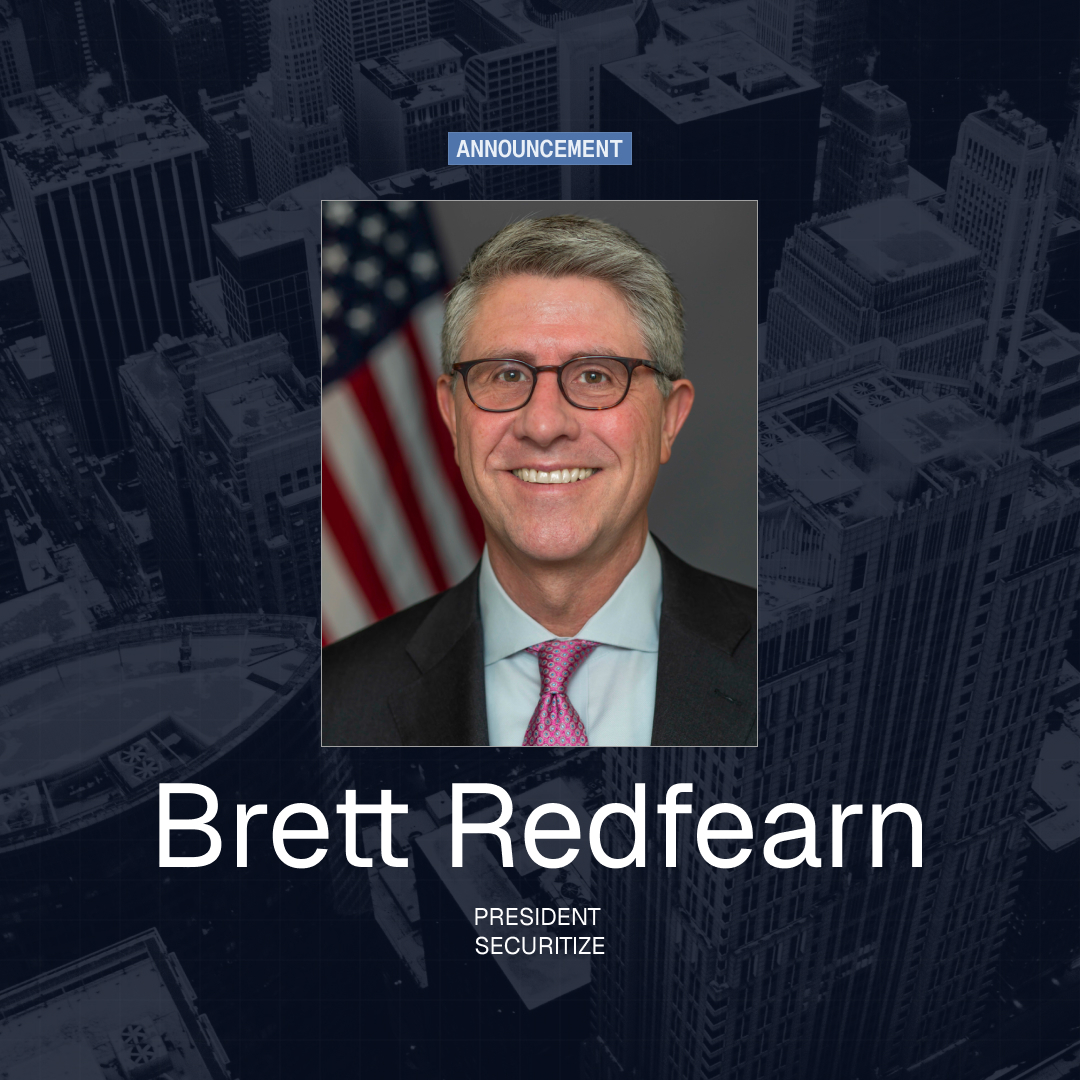 Securitize appoints former SEC and JPMorgan executive Brett Redfearn as president and board member, strengthening leadership as tokenization and digital asset markets expand2026-04
 Securitize integrates with TRON to expand tokenized real-world assets across one of the largest blockchain ecosystems, unlocking broader access to onchain securities and DeFi liquidity2026-04
 Benchmark says just 0.01% of NYSE’s $44T market could significantly scale Securitize, highlighting massive upside for tokenized assets as institutional adoption grows2026-04
 Securitize Capital secures SEC investment adviser registration after operating as exempt reporting adviser2026-07
 Securitize tokenizes Nasdaq-listed Currenc Group shares on Ethereum and Solana2026-04
 Upshift partners Securitize Fund Services to bring third-party reporting and audits to onchain vaults, marking first institutional-grade fund administration integration in DeFi2026-04
Securitize is a regulated financial technology firm that operates compliant infrastructure for issuing, managing, and trading tokenized securities—bringing traditional capital market instruments onchain under existing U.S. securities law.
The transition from paper-based and DTCC-settled securities to blockchain-native ownership records has been underway for years, but most early attempts stalled at the regulatory frontier. Securitize built its business specifically at that frontier. Founded in 2017, the Miami-headquartered company holds a broker-dealer registration, an SEC-registered transfer agent license, and operates an Alternative Trading System (ATS)—a combination that lets it touch almost every point in the issuance-to-trading lifecycle for digital securities.
What Securitize Actually Does
The core business sits at the intersection of fintech infrastructure and regulated financial services. Securitize provides issuers—asset managers, private equity funds, real estate sponsors—with the technical and compliance plumbing to turn traditional fund interests or equity shares into blockchain tokens that retain their legal status as securities.
That legal status matters. A tokenized security is not a synthetic derivative, a wrapper, or an IOU issued by a protocol. It is the security itself, represented as an onchain token with transfer restrictions enforced programmatically and investor eligibility verified at the wallet level through Securitize's permissioned infrastructure. The company acts as transfer agent, recording share ownership in real time on a distributed ledger rather than through a traditional registrar's database.
A key distinguishing feature is the regulatory stack Securitize has assembled: its broker-dealer enables it to facilitate secondary trading; its ATS license permits it to operate a regulated marketplace; and its SEC-registered transfer agent status means token minting, cap table updates, and distributions are all handled within a compliant framework. In early 2025, Securitize expanded this stack further with FINRA-approved atomic settlement capability and a partnership with Computershare—the world's largest transfer agent—for onchain securities issuance, pointing toward access to a universe of U.S. equity issuers.

ARK Venture Fund available on Ethereum via Securitize, with $500 minimum investment

The BlackRock BUIDL Moment
Securitize's profile among institutional investors changed materially in 2024 when BlackRock selected it as the transfer agent and placement agent for BUIDL—the BlackRock USD Institutional Digital Liquidity Fund. Launched on Ethereum, BUIDL quickly became the largest tokenized Treasury fund by assets under management, crossing $500 million within weeks of launch. The fund invests in cash, U.S. Treasury bills, and repurchase agreements, distributing yield daily to token holders' wallets.
BlackRock's decision to use Securitize rather than build its own transfer agent infrastructure was a significant endorsement. It validated Securitize's compliance architecture at the scale of the world's largest asset manager and gave the firm a marquee reference client that has since drawn other institutional mandates. BlackRock also made a strategic investment in Securitize, aligning incentives for the longer-term buildout of tokenized capital markets.
The BUIDL relationship also highlighted a structural truth about the tokenized real-world asset (RWA) market: institutional adoption requires a compliant transfer agent, and there are very few firms licensed to serve that role for blockchain-native instruments.
Readers are tracking Securitize not as a tokenization vendor but as the compliance infrastructure layer that makes BlackRock-grade RWAs composable with DeFi — the Converge chain, atomic settlement, and sBUIDL DeFi integration dominate clicks because they represent the plumbing, not the product.
Record Revenue and Growing AUM
By Q1 2025, Securitize reported record quarterly revenue and $3.4 billion in tokenized assets under management—a figure that reflects the breadth of mandates beyond BUIDL alone. The firm administers tokenized funds across private credit, CLOs, private equity, and government securities.
One notable product is STAC, Securitize's tokenized AAA-rated collateralized loan obligation (CLO) fund. CLOs bundle pools of corporate loans into tranches with varying risk profiles; the AAA tranche carries the highest credit quality. In 2025, Ethena Labs committed $250 million to STAC as the fund expanded to Solana, a move that simultaneously validated both the credit product and Securitize's multi-chain ambition. For Ethena—a protocol known for its synthetic dollar architecture—allocating into a regulated, yield-bearing onchain instrument represented a meaningful diversification of its reserve base and underscored how DeFi-native capital is increasingly flowing into compliant RWA wrappers.
Hamilton Lane's SCOPE fund, a tokenized credit product issued by Securitize, added cross-chain portability through Wormhole integration, allowing the same asset to move across networks rather than being siloed to a single chain. The framing—"one asset, connected wherever it's needed"—captures a design philosophy that is becoming central to institutional RWA infrastructure: issue once, distribute anywhere.
Multi-Chain Expansion: Solana, TRON, and Beyond
Early tokenized security deployments were largely Ethereum-centric, reflecting Ethereum's dominance in smart contract infrastructure and its relative familiarity to institutional technology teams. Securitize has since moved to treat chain selection as a distribution decision rather than a technical constraint.
The Solana expansion is the most strategically significant. Securitize partnered with Jump Trading Group and Jupiter—Solana's dominant DEX aggregator—to launch regulated onchain trading for tokenized equities on Solana. BlackRock-backed Securitize also announced plans for tokenized stock trading on the network. Solana's throughput characteristics and growing institutional presence make it a credible venue for settlement-grade activity; the Jupiter integration in particular plugs Securitize's permissioned instruments into a deep liquidity layer that serves both retail and institutional flow.
The TRON expansion is a different bet. Securitize launched a private credit fund on TRON, integrating with one of the largest blockchain ecosystems by active addresses—particularly outside North America and Europe. The rationale is access: TRON's user base skews toward markets where dollar-denominated yield products have strong demand, and the private credit fund gives those users a regulated, asset-backed yield vehicle. Whether the compliance infrastructure can scale across TRON's user base remains an open question, but the move reflects a view that RWA adoption will be global before it is uniform.
Securitize has also been named the first transfer agent eligible to mint blockchain-native securities on the NYSE's planned affiliated tokenized securities platform—a significant designation that positions it at the center of the exchange's blockchain capital markets buildout.

KB Securities partners with Optimism and Securitize to bring tokenized bonds to OP Mainnet
The NYSE Relationship and SPAC Listing
The most consequential near-term development for Securitize as a company—rather than as infrastructure—is its planned public listing. Securitize cleared a key SEC hurdle for a SPAC merger with Cantor Equity Partners II, paving the way for a NYSE listing under the ticker SECZ. The transaction gives Securitize access to public market capital while maintaining its regulatory standing.
The NYSE association is layered: Securitize is itself going public on the exchange while simultaneously building the infrastructure through which the NYSE intends to move its listed securities onchain. Intercontinental Exchange (ICE), the NYSE's parent, has been vocal about tokenization opportunities, and its executives have appeared alongside Securitize leadership at industry events discussing the transition to blockchain-native capital markets. A Benchmark analysis noted that just 0.01% of the NYSE's $44 trillion market cap flowing into tokenized instruments could materially scale Securitize's AUM, illustrating the asymmetry of the opportunity relative to the firm's current size.
The SPAC path carries its own regulatory complexity. SPAC mergers have faced heightened SEC scrutiny since 2022, and a firm that itself operates under SEC oversight completing a SPAC transaction adds an unusual layer of regulatory visibility. The SEC's approval of the merger's key disclosures is therefore a meaningful signal, not a routine clearance.
- 01Converge institutional DeFi chain
The Ethena co-launch of an EVM chain purpose-built for institutional DeFi settlement drew the most clicks, signaling readers see this as infrastructure that could own the regulated RWA execution layer.
- 02BlackRock BUIDL as DeFi collateral
Multiple high-click headlines trace BUIDL's expansion from a tokenized fund into active DeFi collateral — M0, sBUIDL on Euler, and 24/7 USDtb swaps — readers are watching whether TradFi's largest fund becomes money-market lego.
- 03Jump and institutional equity backing
Jump Crypto's strategic equity stake read as a validation signal from a sophisticated trading firm, not just a capital event, pulling in readers who weigh investor composition as a proxy for infrastructure legitimacy.
- 04NYSE-grade onchain public stock trading
The promise of full legal ownership and shareholder rights for real equities settled onchain — not synthetic exposure — attracted readers tracking whether RWA tokenization finally crosses from funds into equities.
- 05Regulatory stack: FINRA, SEC, SPAC listing
Atomic settlement approval, the SEC-cleared SPAC merger for a NYSE listing under SECZ, and the Brett Redfearn hire collectively signaled that Securitize is building toward being a regulated public market infrastructure company, not a crypto-native startup.
- 06MakerDAO and Sky RWA treasury allocation
MakerDAO's $1B real-world asset deployment anchored Securitize as the first port of call for on-chain protocol treasuries seeking yield, framing it as systemically important to stablecoin collateral composition.
Lending Markets and DeFi Integration
A newer dimension of Securitize's strategy is enabling tokenized assets to serve as collateral in lending markets. The firm has been building permissioned lending infrastructure that allows holders of its tokenized securities to borrow against positions without liquidating them—a function traditional securities lending performs via prime brokers, here replicated onchain with compliance controls intact.
The Upshift partnership is illustrative: Upshift integrated Securitize Fund Services to bring third-party reporting and audits to onchain vaults, marking what the parties described as the first institutional-grade fund administration integration in DeFi. The practical effect is that onchain vault operators can offer their depositors the same audit and reporting standards they would expect from a traditional fund administrator—lowering the due diligence barrier for institutional capital entering DeFi-adjacent products.
Sky (formerly MakerDAO) has also designated Securitize as eligible for its affiliated tokenized securities platform, allowing Securitize-issued instruments to interact with the Sky Agent Network's yield infrastructure. These integrations are cumulative: each one adds a new demand source for Securitize-issued tokens and strengthens the argument that permissioned RWAs can co-exist with—and provide yield to—open DeFi protocols.
Regulatory and Governance Context
The SEC's approach to tokenized securities has been cautious and slow, but Securitize has largely navigated that environment by working within existing frameworks rather than seeking new regulatory pathways. Its instruments are issued under Regulation D (private placements to accredited investors) or Regulation S (offshore), which limits retail access but provides a clear legal basis.
The Computershare partnership hints at a longer-term push toward broader access. Computershare services transfer agent functions for a significant portion of NYSE-listed equities; if the partnership enables those issuers to offer tokenized share classes, it could extend Securitize's footprint well beyond the private fund market into publicly traded securities—a much larger addressable market and a more complex regulatory terrain.
Securitize also appointed a former IMF representative to its board ahead of the planned public listing, a signal that the company is preparing for the governance expectations that come with being a publicly traded regulated entity.
- 2023-09milestone
BlackRock leads $47M Series B
- 2023-11governance
MakerDAO begins $1B tokenized treasury allocation via Securitize
- 2024-03launch
BlackRock BUIDL fund launches on Ethereum via Securitize
- 2024-09milestone
Jump Crypto takes strategic equity stake
- 2025-01launch
Securitize announces first fully onchain public stock trading for early 2026
- 2025-06launch
Ethena and Securitize launch Converge, Arbitrum chain on Celestia
- 2025-07regulatory
SEC clears SPAC merger with Cantor Equity Partners II for NYSE listing as SECZ
- 2025-09launch
sBUIDL listed on Euler via Avalanche — first DeFi integration for BUIDL
Outlook
Securitize occupies a position that is difficult to replicate quickly: regulated infrastructure at the intersection of traditional capital markets and blockchain settlement, with institutional reference clients including BlackRock and Hamilton Lane, and strategic alignment with the NYSE's own tokenization ambitions. The $3.4 billion in AUM is a starting point, not a ceiling—the pipeline of institutional mandates and the multi-chain expansion suggest continued growth in tokenized assets under administration.
The variables that matter most over the next two to three years are regulatory clarity on secondary trading of tokenized securities (particularly the scope of the SEC's ATS framework as applied to blockchain venues), the speed at which institutional allocators move from pilot to scaled deployment, and whether Securitize's permissioned architecture can interoperate smoothly enough with open DeFi infrastructure to capture yield-seeking capital from both sides of the institutional-native divide. The NYSE listing, if completed, adds a new accountability layer—and a new source of capital to fund the buildout.
Latest Securitize news
Community notes
Spot something off or out of date? Drop a note. Editors review topic notes daily and roll accepted fixes into the explainer — contributors are recognized in the monthly $SQUID drop.
Loading notes…
Help improve this topic
Have a story or tip about this topic? Submit it. See something missing? Leave a note. Editors review daily; accepted submissions and fixes count toward the monthly $SQUID drop.