
CZ‑backed YZi Labs is a multi‑stage family office investing across Web3, AI and biotech, blending BNB‑centric crypto bets with AI edtech, RWA and DeSci, anchored by global incubation, campus scouts and creator networks.
+4 sources across the wider coverage universe
 YZi Labs ends BNC consent fight after CEA adds three YZi-backed nominees to board2026-06
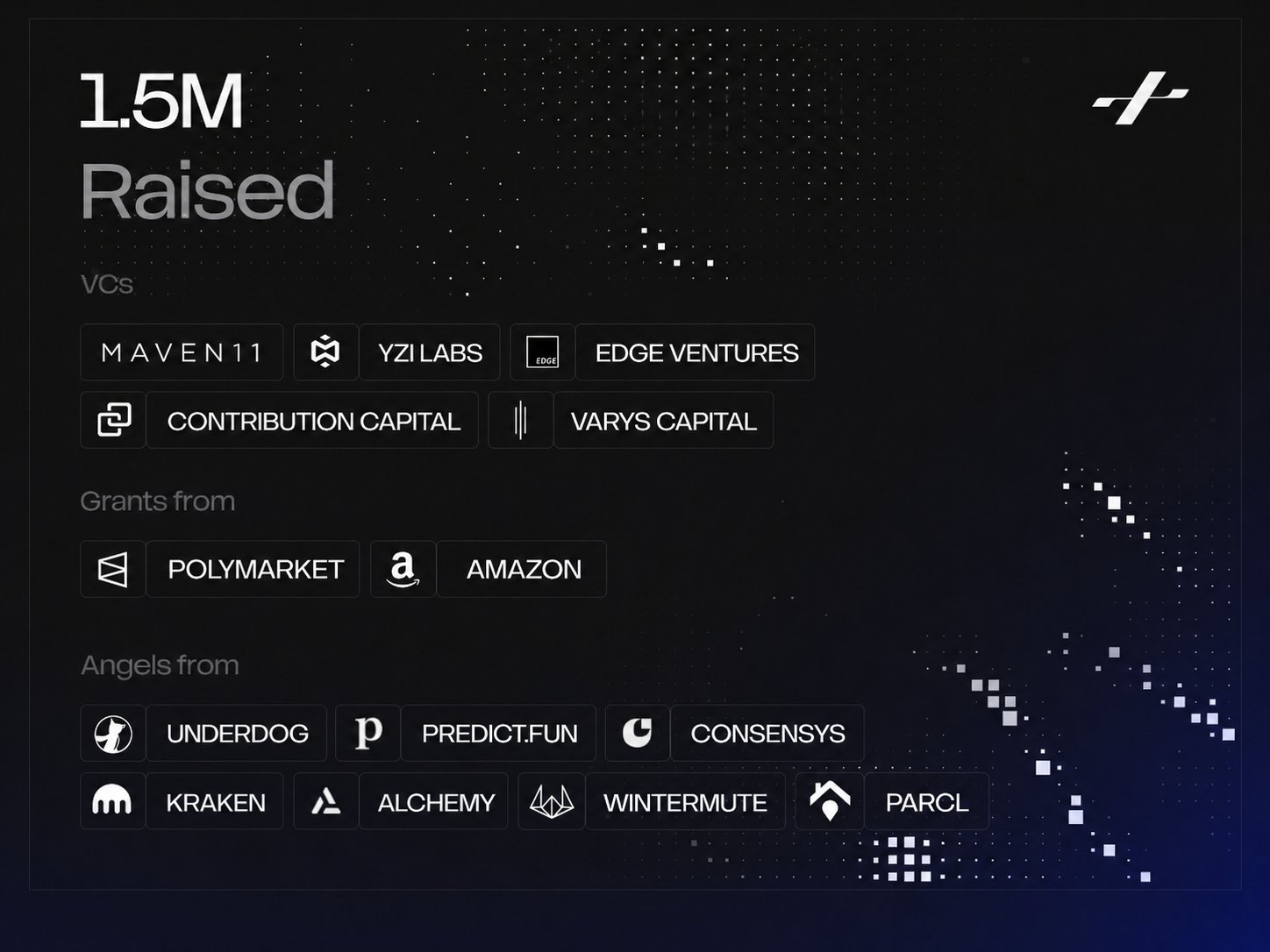 AI analytics platform Polysights raises $1.5M pre-seed funding to combat insider trading in prediction markets. The raise was backed by YZi Labs S3, Maven 11 Capital, and angels from Kraken and Consensys, plus grants from Polymarket and AWS.2026-06
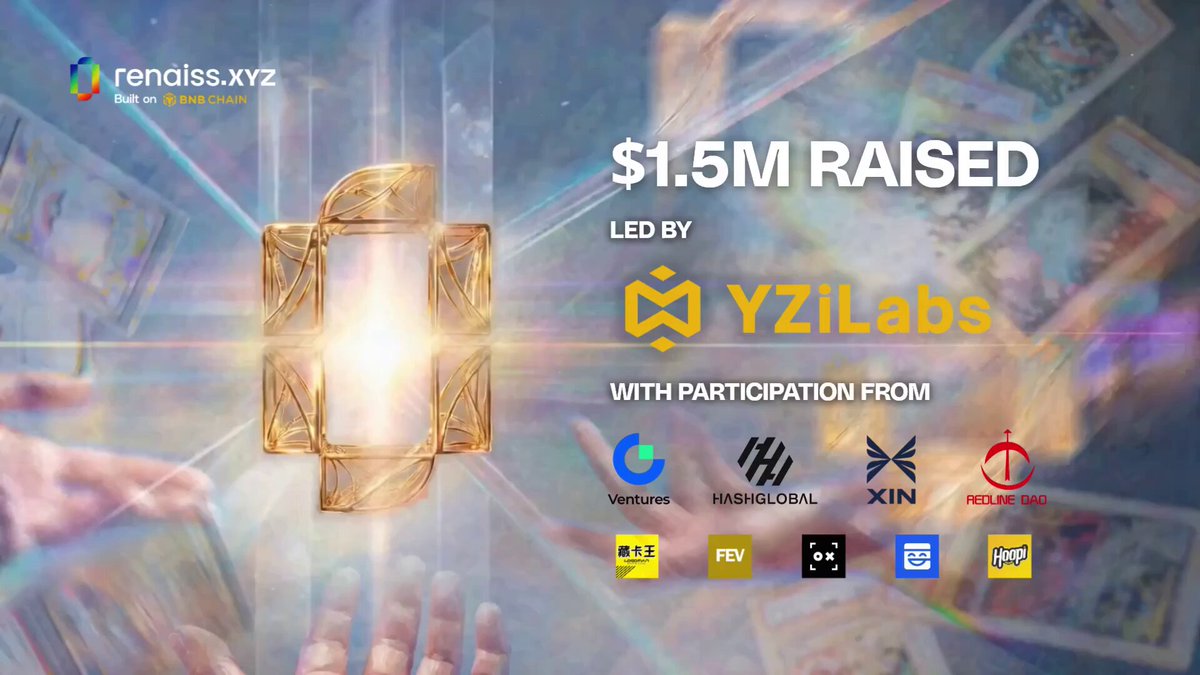 Renaiss secures $1.5M in first round led by YZi Labs to build trustless infrastructure for real-world collectibles.2026-06
 YZi Labs leads $52M round in RoboForce to scale Physical AI robots for industrial jobs, with NVIDIA backing and 11K+ robot demand already lined up2026-03
 CZ-backed YZi Labs doubles down on Predict.fun ahead of World Cup as Binance tests in-app prediction markets2026-04
 YZi Labs launches $1 million Atlas Scout Program for student investors at top universities2026-03
YZi Labs: CZ‑Backed Venture Platform At The Intersection Of Crypto, AI And Biotech
As a multi‑stage investment firm and family office backed by Binance co‑founder Changpeng “CZ” Zhao, YZi Labs deploys long‑term capital into ventures across Web3, artificial intelligence and biotech, with a particular emphasis on BNB‑centric infrastructure and frontier applications. Positioned as an evolution of the original Binance Labs incubation effort, the platform now combines a global venture portfolio, in‑person accelerators, campus scout funds and creator networks to cultivate what it calls a unified “frontier tech” stack spanning crypto, markets and AI.
Defining YZi Labs
YZi Labs presents itself as an all‑stage investment vehicle “fueling impact in Web3, AI, and biotech,” backing both tokenized networks and traditional equity startups that sit at the intersection of these domains. It operates structurally as a private family office, according to Preqin, with a mandate to invest proprietary capital across early and late stages rather than managing third‑party funds in a classic venture capital structure. That combination of broad sector scope and flexible capital base allows YZi to underwrite longer time horizons than many crypto‑native funds while still leaning into high‑volatility frontier segments such as DeFi, prediction markets and real‑world assets.
The firm’s public positioning emphasizes convergence more than narrow sector specialization. On its blog and social channels, YZi repeatedly stresses support for “frontier” builders working where blockchain, AI and biotech collide, from decentralized science to AI‑powered education tools and tokenized collectibles. Rather than treating these as isolated verticals, YZi argues that they form a unified innovation stack: blockchains provide settlement and ownership, AI agents provide intelligence and interface layers, and biotech or other hard sciences offer core use cases that require verifiable data and incentives. For a crypto‑native audience, this framing is important because it signals that YZi is not simply another exchange‑adjacent ecosystem fund, but a broader thesis‑driven platform betting on multi‑decade shifts in digital infrastructure and human‑machine collaboration.
At the ownership and governance level, YZi Labs is closely associated with CZ, who is repeatedly described in coverage and partner materials as the backer of the firm and the source of a substantial portion of its capital. This connection shapes market perceptions in several ways. On one hand, CZ’s reputation as a founder who built Binance into a dominant exchange gives YZi instant credibility among many crypto builders and investors. On the other, ongoing regulatory scrutiny around Binance and CZ inevitably raises questions about how regulators might view the new vehicle, and about potential conflicts when YZi’s portfolio intersects with BNB Chain or other Binance‑related infrastructure.
The firm attempts to address some of these concerns through institutional‑style infrastructure and a programmatic support model. Rather than operating purely as an investment committee, YZi runs structured incubation, scouting and creator programs that mirror the kind of platform services associated with top‑tier Silicon Valley funds. EASY Residency offers a ten‑week, in‑person incubation track; Atlas Scout empowers college students to source and back deals; and the Creator Program connects founders to storytellers and distribution across a portfolio reportedly numbering in the hundreds. For founders and token teams, understanding YZi Labs therefore means understanding not just a check‑writer, but a broader ecosystem of capital, mentorship, narrative amplification and network access.

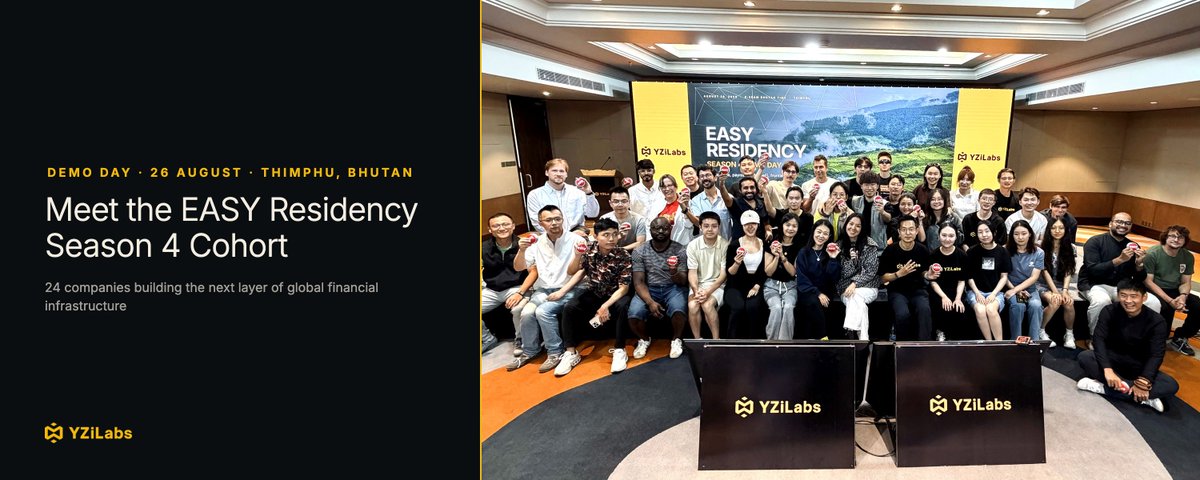
YZi Labs invests $500K in each of 24 fintech startups from Bhutan Demo Day cohort
Origins And Evolution: From Binance Labs To A Standalone Family Office
To understand YZi Labs’ role in today’s crypto and AI landscape, it is useful to trace its lineage back to Binance Labs, the venture and incubation arm of Binance Holdings that emerged during the 2017–2018 cycle. While YZi Labs is technically a separate entity and structured as a family office, its own materials make clear that it views itself as a direct evolution of the Binance Labs incubation program rather than a fresh start.
In announcing the EASY Residency program, YZi Labs explicitly described it as a “natural evolution of the Binance Labs Incubation Program we launched seven years ago,” underscoring continuity in both team and philosophy. The statement came from Ella Zhang, who previously led Binance Labs and now heads YZi Labs, signaling that much of the original incubation DNA migrated intact even as regulatory and strategic pressures encouraged a move away from a direct corporate VC model tied to a centralized exchange. This continuity matters because Binance Labs was known not just for writing early checks, but for running structured cohorts that helped define best practices for token design, market making and governance during the last major crypto boom.
As regulatory scrutiny of centralized exchanges intensified across multiple jurisdictions, it became increasingly challenging for in‑house venture arms to operate with full freedom across ecosystems and token models. The shift to YZi Labs as a family office provided several advantages. First, deploying proprietary capital allows the firm to invest in areas that might be strategically awkward for an exchange, such as competitors’ ecosystems, non‑custodial finance or politically sensitive prediction markets. Second, it untethers the incubation engine from the commercial priorities of a spot and derivatives venue, allowing for more patient, research‑driven bets in AI or biotech where tokenization is less immediate. And third, it reduces direct regulatory entanglement between investment activities and exchange operations, even though brand and personnel overlaps inevitably persist.
The evolution also reflects CZ’s own stated shift from operating a global trading platform to focusing on education, long‑term investment and advisory work with governments. Coverage of YZi’s activities frequently frames the venture platform alongside CZ’s separate efforts such as Giggle Academy, a gamified, free learning app, suggesting an overarching personal mission around access to education and technological empowerment. YZi’s first AI software investment in VideoTutor, an AI tutor that generates personalized teaching videos, FITS neatly within this broader narrative of educational infrastructure built on frontier technology.
Despite the structural changes, YZi Labs retains a pronounced affinity for the BNB Chain ecosystem and for use cases that could feed into or benefit from broader Binance‑adjacent infrastructure. Its $100 million commitment to Hash Global’s BNB‑focused fund, for example, represents a major anchor investment in a vehicle dedicated to expanding the BNB Chain ecosystem. Similarly, projects like Renaiss, a real‑world asset protocol for collectibles built on BNB Chain, not only receive capital but are also showcased as EASY Residency graduates, reinforcing the idea that YZi’s incubation and ecosystem building remain tightly coupled with BNB‑centric growth.
In sum, YZi Labs can be understood as the institutionalized, capital‑rich descendant of Binance’s original venture arm, reconfigured as a family office and branded platform in order to operate more flexibly across chains and sectors. It carries forward the incubation and ecosystem focus of Binance Labs, retains an obvious strategic interest in BNB, and overlays new emphasis on AI and biotech to fit both CZ’s evolving interests and broader market narratives about technological convergence.
Readers click YZi Labs stories not for portfolio returns but for institutional power dynamics: every top-clicked angle is about CZ using a rebranded Binance Labs to extend control over BNB governance, absorb outside capital, and colonize new verticals — confirming the firm reads to audiences as a post-conviction empire-building vehicle, not a conventional VC.
Investment Thesis: Convergence Of Web3, AI And Biotech
The core of YZi Labs’ thesis lies in its insistence that Web3, AI and biotech are no longer separable silos, but mutually reinforcing components of a single “frontier technology” stack. This view is articulated most clearly in the firm’s materials around EASY Residency Season 3 and the broader Convergence Summit series, where it describes supporting early‑stage founders “across Web3, AI, and biotech” as part of a unified search for transformative technologies.
In practice, this convergence thesis manifests in several ways. On the Web3 side, YZi backs infrastructure and applications that push blockchains closer to the core of real‑world economic and scientific activity, including trustless custody, tokenized collectibles and DeFi‑enabled prediction markets. On the AI side, it targets products where large language models and other machine learning systems serve not just as add‑ons, but as the primary interface and intelligence layer, such as AI tutors capable of turning any question into a tailored video lesson. On the biotech side, YZi is increasingly active in decentralized science, where blockchain‑based funding and data sharing meet AI‑driven research and drug discovery.
EASY Residency Season 3 exemplifies how these strands intertwine under a single program umbrella. The blog post “Eight Web3 Frontiers EASY Residency S3 is Hunting For” frames the cohort as focused on diverse but interconnected themes such as real‑world assets, crypto‑native social networks, AI‑enhanced crypto infrastructure and DeSci protocols. Rather than treating AI or biotech as tangential to Web3, the residency assumes that meaningful crypto applications in the next cycle will almost inevitably involve AI agents and data‑intensive scientific workflows. Founders are encouraged to think about how on‑chain primitives can provide verifiable, composable rails for AI‑driven applications, whether in education, finance or biomedical research.
Externally, this thesis dovetails with a broader macro narrative in the crypto industry that the next leg of adoption will come from the fusion of AI and blockchains. YZi’s own communications and the Convergence Summit’s program highlight themes such as AI as “the biggest catalyst across every innovation platform” and explore how orbital or specialized data centers might reshape computing demand in tandem with decentralized networks for verification and settlement. These conversations echo a growing belief that AI’s hunger for high‑quality, permissioned data and verifiable outputs pairs naturally with blockchains’ strengths in provenance and incentive design.
The convergence thesis also informs YZi’s risk appetite and time horizon. Investments in AI‑enabled crypto education or DeSci infrastructure are unlikely to generate quick token flips or near‑term protocol revenues. Instead, they represent long‑duration bets that AI agents, tokenized IP and scientific DAOs will eventually command significant value and reshape how markets allocate capital to research and learning. By structuring itself as a family office and signaling an all‑stage mandate, YZi positions itself as a patient partner for such experiments, even as it continues to back more immediately monetizable plays like prediction markets and BNB ecosystem funds.
For builders and token teams, the key takeaway from YZi’s thesis is that the firm is less interested in narrowly defined “crypto” products and more interested in systems where blockchain is one piece of a larger, computationally intensive puzzle. A DeFi protocol that simply recycles existing primitives may be less compelling than one that integrates AI‑driven risk management; an NFT marketplace might be more interesting if it underpins tokenized scientific data or lab equipment. In this sense, YZi both reflects and amplifies a broader shift in the market, where “crypto” is increasingly understood as financial and coordination infrastructure for a much wider array of AI‑assisted, data‑rich applications.
Core Crypto And BNB‑Centric Investments
While YZi Labs talks about AI and biotech, its roots and much of its activity remain firmly anchored in crypto‑native infrastructure and applications, particularly within the BNB ecosystem. A closer look at key deals in custody, prediction markets and real‑world assets illustrates how the firm approaches this segment of its thesis.
Custody And Institutional Infrastructure
One of YZi’s early headline crypto deals was its investment in BitGo, a long‑standing institutional custodian for digital assets. Reporting around the transaction notes that YZi joined a roster of prominent BitGo backers that includes Goldman Sachs, Galaxy Digital, Valor Equity Partners and others, signaling both the firm’s capital heft and its desire to participate in the foundational infrastructure layer of the crypto economy. Custody has become a critical bottleneck for institutional adoption, particularly as regulated entities seek secure ways to hold spot crypto, tokenized securities and collateral for on‑chain derivatives.
By backing a custodian like BitGo, YZi positions itself at the intersection of these flows. Such an investment aligns with CZ’s experience building centralized trading platforms and his understanding of the importance of secure key management, compliance and integrations with traditional finance. It also gives YZi insight into how large institutions are approaching crypto exposure, which in turn informs its thesis about which kinds of blockchain applications are likely to gain traction in a world of increasing regulatory clarity and enterprise adoption. Even for retail‑facing projects, the availability of robust custody solutions can influence listing decisions, liquidity and perceived legitimacy.
Alongside custody, YZi’s $100 million commitment to Hash Global’s BNB‑focused fund underscores its conviction that ecosystem‑level capital formation remains essential. The fund is designed to deploy into BNB Chain projects, effectively concentrating firepower on applications and infrastructure that strengthen Binance’s flagship smart‑contract network. For founders building on BNB Chain, the presence of a CZ‑backed anchor LP in a dedicated fund serves as both signal and resource, suggesting that successful projects may tap not only the fund but YZi’s broader platform and network. At the same time, it reinforces external perceptions that YZi, despite its cross‑chain ambitions, retains a structural bias toward BNB‑aligned growth.
Prediction Markets And On‑Chain Trading
Prediction markets have long been a kind of holy grail for crypto, promising more accurate information aggregation and risk hedging than traditional betting or derivatives platforms. YZi Labs’ follow‑on investment into Predict.fun, an on‑chain prediction market platform, reflects a renewed bet on this thesis at scale. According to Binance Square coverage, YZi — described there as a “$10 billion venture firm” — doubled down on Predict.fun alongside Susquehanna Crypto after the platform participated in the EASY Residency incubation program.
The metrics cited are striking: Predict.fun had reportedly processed over \(1.8\) billion USD in trading volume, matched more than 4 million orders and attracted over 130,000 users, highlighting substantial product‑market fit for on‑chain prediction markets when user experience and liquidity are handled competently. For YZi, such numbers validate the idea that properly designed prediction markets can serve not just as speculative arenas but as core components of a crypto‑native financial stack, enabling hedging on sports, macro events or protocol outcomes in a transparent, composable way.
The strategic logic goes beyond raw usage. Prediction markets touch on regulatory gray areas around gambling and financial products, testing the boundaries of what decentralized platforms can support. By backing a prediction market protocol emerging from its own incubator, YZi signals both conviction in the sector and a willingness to navigate these regulatory complexities. The fact that Binance has tested in‑app prediction features of its own further underscores how this area sits at the intersection of YZi’s venture bets and broader exchange‑driven experimentation with novel market structures, even if the entities are formally separate.
Real‑World Assets And Collectibles
A third pillar of YZi’s crypto investment activity is real‑world assets (RWA), especially in the context of collectibles and physical goods. Renaiss Protocol, which recently secured \(1.5\) million USD in its first funding round led by YZi Labs, is a good example. Built on BNB Chain, Renaiss describes itself as “RWA liquidity infrastructure for real‑world collectibles,” aiming to make physical assets verifiable, liquid and globally accessible on‑chain.
The funding round, which included participation from Gate Ventures, Hash Global and various angels, will support Renaiss in scaling its vault network, expanding into new collectible verticals, strengthening product and ecosystem integrations and improving capital efficiency. By focusing on vaults — secure facilities or processes that physically store items like luxury goods, trading cards or cultural artifacts while issuing corresponding on‑chain representations — Renaiss seeks to build a trustless infrastructure layer that bridges the physical and digital worlds.
YZi’s leadership of the round is not incidental. Renaiss is a graduate of YZi Labs’ EASY Residency program, illustrating how the firm’s incubator can serve as a pipeline for later venture financing. The project’s BNB Chain roots align with YZi’s ecosystem commitments, while its ambition to support DeFi integrations, a developer SDK and AI agent infrastructure matches the convergence thesis. In a future where AI agents may autonomously trade tokenized collectibles or manage portfolios of physical assets on behalf of users, the combination of secure vaulting, verifiable metadata and composable liquidity venues could be a key primitive.
For the broader crypto community, YZi’s emphasis on RWA collectibles is a signal that the RWA narrative in this cycle is not limited to tokenized treasuries or real estate. Collectibles — from sneakers to art to historical artifacts — represent a parallel asset class where provenance, liquidity and data‑rich metadata are critical, and where AI‑powered discovery and authentication tools can add substantial value. Investment from a CZ‑backed vehicle into this segment suggests that RWA experimentation on BNB Chain will span both institutional and consumer‑oriented categories.
De¹ receives investment from YZi Labs to develop financial world model for agentic finance on BNB Chain
AI, Education And Frontier Tech Bets
Beyond crypto‑native infrastructure, YZi Labs has begun to articulate its AI thesis through concrete investments, particularly in education technology and AI‑native platforms that dovetail with CZ’s focus on learning and access.
VideoTutor: AI Tutors And Scalable Accountability
YZi’s first AI software investment, as the firm itself emphasizes, was VideoTutor, an “AI Education Agent” founded by 20‑year‑old entrepreneur Kai Zhao in Silicon Valley. YZi led an \(11\) million USD seed round in VideoTutor, alongside investors such as Baidu Ventures, JinQiu Fund (affiliated with ByteDance), Amino Capital and others. The company’s product transforms a user’s question into a personalized, animated teaching video, using a pipeline that combines large language models with a Manim‑based rendering engine to deliver precise, resilient AI‑generated lessons.
The details are important because they illuminate how YZi thinks about AI products. Rather than simply generating static text answers, VideoTutor’s system constructs visual explanations tailored to K–12, standardized test prep and language learning use cases, aiming to replicate the clarity and pacing of a human tutor. The platform quickly reached over 20,000 users and generated more than 20,000 videos within its first 10 days after launch in May 2025, and it subsequently received over 1,000 API integration requests from educational institutions and learning platforms worldwide. These traction metrics suggest not only user appetite for AI tutoring, but also B2B demand for integration of such capabilities into existing education platforms.
YZi frames the VideoTutor investment as emblematic of its commitment to “meaningful innovation that solves structural human challenges,” in this case the global disparity in access to high‑quality one‑on‑one tutoring. The firm’s own commentary stresses that most edtech companies primarily scale content, whereas VideoTutor seeks to scale accountability and personalized guidance, aligning incentives so that students actually progress rather than simply consuming more videos. This focus on accountability, combined with AI‑driven personalization, resonates with CZ’s separate push for free, gamified education through initiatives like Giggle Academy, suggesting a broader philanthropic and commercial thesis around education as a core application layer for frontier technology.
Sign And AI‑Blockchain Infrastructure
Another publicly reported AI‑adjacent investment is Sign, backed by YZi Labs against the backdrop of ongoing regulatory investigations into Binance in France. Crypto.news coverage frames this as “CZ’s YZi Labs bets big on Sign, pushing forward with AI and blockchain,” emphasizing that unlike Binance Labs, which primarily nurtured blockchain startups, YZi is deliberately broadening its scope into artificial intelligence and biotechnology.
While specific product details about Sign are not provided in the search results, its characterization as an AI and blockchain project suggests that YZi views it as part of its convergence thesis: an example of AI‑enabled infrastructure or applications that can leverage blockchain’s transparency and incentive structures. More interesting for market observers is the timing. Investing in an AI‑blockchain platform while regulators scrutinize CZ’s prior exchange raises the question of whether frontier tech venture bets can serve as both diversification and reputation‑building tools. By associating itself with cutting‑edge, socially beneficial applications of AI and crypto, YZi may be seeking to shift narratives away from exchange controversies and toward innovation.
DeSci And Biotech
Although specific biotech portfolio names are less visible in the current search corpus, YZi Labs is explicitly described as investing in biotech and decentralized science (DeSci) alongside Web3 and AI. The blog post introducing EASY Residency Season 3 frames the program as supporting founders “across Web3, AI, and biotech,” while Crypto.news notes that YZi invested in 46 projects across sectors including decentralized finance, AI, gaming and DeSci over a particular period.
DeSci, in broad terms, refers to efforts to decentralize the funding, data sharing and IP management of scientific research using blockchain primitives such as DAOs, tokenized research outputs and on‑chain reputation systems. For a firm like YZi, which is already investing at the intersection of AI and education, DeSci represents a natural extension: AI systems are increasingly central to drug discovery and biomedical research, and blockchains offer a way to track contributions, allocate rewards and manage access to sensitive datasets. While details of specific biotech or DeSci bets are sparse, YZi’s public emphasis on these sectors suggests that future portfolio announcements are likely to feature protocols and platforms that bring scientific workflows on‑chain in ways that can be audited, recombined and monetized.
Convergence Summits And Thought Leadership
YZi Labs has not limited its AI and frontier tech engagement to check‑writing. The firm hosts “The Convergence” Summit at the Computer History Museum, an event that brings together founders, researchers and investors to explore “what happens when AI converges with frontier tech.” Social media posts around the summit emphasize that YZi is “putting our thesis on stage,” highlighting sectors where it is currently investing and featuring speakers from across AI, crypto and adjacent fields.
These summits serve several strategic purposes. They reinforce YZi’s branding around convergence and cross‑disciplinary innovation; they create deal flow opportunities as founders and researchers present cutting‑edge work; and they position YZi as a convening force in the emerging AI‑crypto‑biotech nexus. Commentary from the events often touches on macro themes such as regulatory clarity for stablecoins, enterprise adoption of crypto and AI as a catalyst across innovation platforms, framing YZi’s portfolio within a larger story about how technological and policy tides are shifting in tandem. For a crypto audience, these gatherings offer a window into how a CZ‑backed family office is thinking about the next decade of markets and infrastructure, beyond the immediate ups and downs of token prices.
- 01Portfolio fund conversion↗
The prospect of CZ opening a $10B book to outside LPs signals a structural shift from internal Binance capital to an externally-accountable fund, which readers treat as the highest-stakes YZi story.
- 02Predict.fun prediction markets↗
YZi's repeated bets on Predict.fun — lead investor, acquisition of Probable, $1.8B volume milestone — read as a deliberate attempt to own on-chain prediction infrastructure ahead of the 2026 World Cup.
- 03BNB governance capture↗
Headlines framing YZi as 'trying to take control of BNB Network' amid a widening NAV discount and falling BNB prices attracted readers sensing a conflict of interest between the treasury firm and the chain it depends on.
- 04Atlas Scout student program↗
The $1M student-managed fund generated both enthusiasm and skepticism clicks, with readers split between the program's novelty and concerns about routing untested scouts into volatile Web3 and AI deals.
- 05Physical AI deep-tech pivot↗
The $52M RoboForce round with NVIDIA co-investment signaled that YZi is diversifying beyond crypto into industrial robotics, prompting readers to reassess what kind of fund this actually is.
- 06CEA / BNC governance disputes
Allegations of undisclosed 10X ownership, SEC disclosure demands, and a $14M fraud probe tied to a campus roadshow gave readers a specific regulatory and corporate-governance scandal to follow.
Platform Strategy: Incubation, Scouts And Creator Networks
One of the distinctive aspects of YZi Labs, relative to many purely financial crypto funds, is its emphasis on structured programs for founders, students and creators. These programs transform the firm into a multi‑sided platform rather than a simple pool of capital.
EASY Residency: Global In‑Person Incubation
EASY Residency is YZi Labs’ flagship global incubation program, designed as a ten‑week in‑person track supporting early‑stage, long‑term founders across Web3, AI and biotech. The inaugural cohort was scheduled to kick off in New York City on June 9, 2025, running through August 10, 2025 and culminating in a Demo Day where founders showcase working products and early traction to a curated audience of venture capitalists. Subsequent sessions were slated for other major international cities including Singapore and Dubai, reflecting an ambition to build a genuinely global pipeline of frontier tech startups.
Applications for the first cohort were open globally, with YZi planning to welcome 10 to 20 exceptional teams, selected not just for technical talent but for what the firm describes as “bold visions, long‑term courage, and the hunger to create something that truly matters.” The program is explicitly positioned as a continuation and expansion of the Binance Labs Incubation Program launched seven years prior, emphasizing YZi’s belief in the value of structured, cohort‑based support for early founders.
Beyond the high‑level rhetoric, EASY Residency’s outputs provide concrete evidence of its impact. Predict.fun, the prediction market platform in which YZi later made a follow‑on investment, is cited as an EASY Residency alum, having gone through Season 2 before scaling to over \(1.8\) billion USD in trading volume. Renaiss, the RWA collectibles protocol, is another graduate, having built out its initial product and ecosystem integrations through the program before raising \(1.5\) million USD in seed funding led by YZi. The Season 3 cohort, highlighted on the YZi Labs blog, spans Web3 infrastructure, AI‑driven applications and biotech‑adjacent projects, illustrating the breadth of the convergence thesis in practice.
For founders, the residency offers not only capital but also access to mentors with deep crypto and AI experience, connections to downstream investors and exposure at events like The Convergence Summit and Demo Day at the Computer History Museum. The in‑person nature of the program is particularly notable in an industry that often defaults to remote, asynchronous collaboration, suggesting that YZi believes physical co‑location can accelerate trust‑building and creative cross‑pollination among frontier builders.
Atlas Scout Program: Student‑Managed Venture Capital
Complementing its founder‑centric residency, YZi Labs has launched the Atlas Scout Program, a student‑managed venture initiative that empowers top college students to act as scouts and micro‑investors in Web3, AI and biotech startups. The program allocates a 1 million USD pool to be deployed by a cohort of roughly 5 to 10 carefully selected students, who are tasked with sourcing deals, performing diligence and making investment recommendations under YZi’s guidance.
The Atlas Scout Program serves multiple strategic purposes. It extends YZi’s reach into university ecosystems, where many technically sophisticated but institutionally under‑networked founders first experiment with crypto and AI projects. It cultivates a pipeline of future investors and operators who are steeped in YZi’s convergence thesis and familiar with its portfolio. And it creates a kind of decentralized sensor network across campuses, potentially giving YZi early visibility into emerging trends and talent pools.
At the same time, the program has raised critical questions in some commentary, with skeptics framing it as a “student fund” that risks exposing inexperienced scouts to high‑volatility assets and complex governance issues. Concerns about scam risk, token‑driven hype and the optics of a CZ‑backed vehicle recruiting students amid ongoing regulatory probes into Binance have also surfaced in media discussions and campus events. These critiques highlight the delicate balance YZi must strike between empowering young talent and ensuring robust oversight, transparency and ethics in its campus outreach.
Creator Program: Distribution And Narrative As Advantages
Recognizing that distribution and storytelling are as important as code in today’s attention economy, YZi Labs has also launched a Creator Program, described as a curated network of creators across Web3, AI and frontier tech who are “plugged into the distribution layer” of the firm’s 300‑plus portfolio companies. Under this model, creators obtain early access to founders and products, allowing them to produce content, explainers and analyses before the broader market catches on. Founders, in turn, gain access to storytellers who can translate technical visions into narratives that resonate with users, investors and regulators.
For a crypto‑native audience, this program is particularly interesting because it formalizes something that has long existed informally: the symbiotic relationship between venture funds, portfolio companies and content creators on platforms like X and YouTube. By institutionalizing this relationship within a program, YZi effectively acknowledges that narrative, meme‑making and educational content are part of the value stack it offers alongside capital and mentorship. Creators become another node in the YZi platform, alongside founders and scouts, amplifying the firm’s thesis and potentially shaping market sentiment around its portfolio sectors such as prediction markets, RWA or AI education.
Convergence And Demo Days: Community As Infrastructure
Events like The Convergence Summit and EASY Residency Demo Days function as capstones for YZi’s platform strategy. Live coverage from these events highlights how YZi brings together portfolio founders, external researchers, traditional investors and policymakers for discussions and presentations on the intersection of AI, crypto and other frontier technologies. Demo Days at venues like the Computer History Museum — a symbolically rich location given its role in chronicling the history of computing — provide a stage where incubated companies can showcase their products to a concentrated audience of capital and partners.
These gatherings serve as a kind of social and informational infrastructure for YZi’s ecosystem. They help align expectations between founders and investors, disseminate the firm’s latest thinking on market conditions and regulatory shifts, and provide networking opportunities that can lead to follow‑on rounds, joint ventures or research collaborations. For observers outside the immediate YZi orbit, the speaker lineups and agenda topics at Convergence offer useful signals about which sub‑sectors — be it DeSci, AI agents, RWA or new base layers — the firm is most excited about at any given moment.
Relationship With CZ, Binance And Regulation
Any analysis of YZi Labs must grapple with its close association with CZ and the legacy of Binance. This relationship is both an asset and a liability, shaping perception, deal flow and regulatory risk in ways that differentiate YZi from independent crypto funds.
CZ As Backer And North Star
Multiple sources describe YZi Labs as “CZ‑backed,” emphasizing that it serves as an investment arm for the Binance co‑founder’s wealth and a vehicle for his continued engagement with crypto and frontier tech. CZ’s personal narrative — having built Binance into a global exchange and then shifting focus toward education, investment and policy advisory work — is often intertwined with YZi’s story. Quotes about his philosophy, such as the line in his book “If you can, you must,” are cited in the context of his ongoing efforts to back founders through YZi, expand access to free education via parallel initiatives and advise governments on blockchain adoption.
This association yields several concrete advantages for YZi. CZ’s brand recognition and perceived technical acumen attract builders who grew up in the Binance era of crypto and who still view the exchange as a central pillar of the ecosystem. His network opens doors with regulators, institutional investors and other founders. And his experience navigating multiple boom‑bust cycles informs YZi’s thesis about which parts of the crypto stack are most resilient across regimes, from stablecoins and RWA to custody and BNB Chain infrastructure.
At the same time, CZ’s prominence means that YZi cannot easily escape the gravitational pull of Binance’s regulatory and reputational challenges. Crypto.news points out that YZi’s investment in Sign came “as France escalates its Binance fraud probe,” framing the move as an example of CZ pushing forward with AI and blockchain despite legal headwinds. This juxtaposition underscores the reality that YZi’s activities will often be interpreted through the lens of ongoing investigations and enforcement actions involving Binance, even if the entities are legally distinct.
BNB Chain, Ecosystem Bets And Perceived Conflicts
YZi Labs’ deep involvement with BNB Chain — via its 100 million USD commitment to Hash Global’s BNB‑focused fund, investments in BNB Chain‑native projects like Renaiss and its broader historical links to Binance Labs — raises questions about ecosystem bias and potential conflicts of interest. For BNB Chain builders, this alignment is often seen as a feature: YZi and its allied funds can provide both capital and distribution within an ecosystem that benefits from deep liquidity, exchange support and a large retail user base.
However, for observers sensitive to decentralization and competition policy, the concentration of capital, infrastructure and exchange power around a single ecosystem can be concerning. When a CZ‑backed family office anchors BNB‑dedicated funds, incubates BNB‑native projects and maintains influence over the primary exchange listing pipeline, it becomes difficult to disentangle the motives and risk exposures of different entities. For example, if a BNB Chain RWA project backed by YZi later receives a major listing or promotional push on Binance, questions about preferential treatment and Chinese wall effectiveness will inevitably arise, even if proper controls are in place.
This is not unique to YZi; similar concerns have long been raised about other exchange‑affiliated venture arms and ecosystem funds. What makes YZi’s case particularly salient is the added layer of cross‑sector convergence. As the firm expands into AI and biotech, there is a risk that the BNB‑centric logic of its crypto bets could bleed into domains where tokenization is nascent and regulatory guidance is still evolving, potentially complicating relationships with healthcare regulators, educational institutions or scientific bodies.
Regulatory Climate And Talent Migration
The regulatory backdrop against which YZi operates is rapidly evolving. Coverage surrounding its activities often references U.S. policy shifts that have brought greater clarity to stablecoins, alongside growing enterprise adoption of crypto rails and the catalyzing role of AI. Simultaneously, European authorities continue to scrutinize Binance and related entities, exemplified by the French probe into alleged fraud, creating a fragmented landscape of risk and opportunity.
Within this context, YZi positions itself as both beneficiary and driver of talent migration into jurisdictions perceived as more friendly to crypto and AI innovation. Media narratives describe U.S. policy shifts as accelerating concentration of technical talent in these domains, with YZi actively backing top builders and students through its residency and scout programs. The firm’s global footprint — from New York to Singapore and Dubai — reflects a strategy of hedging regulatory risk by maintaining multiple hubs where founders can incorporate, build and test products without being overly exposed to the policy swings of any single country.
For founders and token teams, the key practical implication is that working with YZi may open doors in some jurisdictions but complicate relationships in others. Projects aiming for regulated financial licenses or sensitive healthcare approvals, for example, will need to think carefully about how a CZ‑backed venture partner is perceived by local authorities. Conversely, those targeting retail‑heavy, exchange‑driven growth in Asia or the Middle East may view YZi’s links to Binance and BNB Chain as valuable accelerants.

YZi Labs opens applications for EASY Residency Season 5, a 10-week Thailand accelerator for AI and crypto startups

YZi Labs In The Broader Crypto And AI Markets
Stepping back from individual deals and programs, YZi Labs occupies a distinctive position in the broader landscape of crypto and AI investment. Its actions send signals that can influence perceptions of specific sectors, chains and narratives.
Position Among Venture Players
With sources describing YZi as a “10 billion USD” venture firm and Preqin classifying it as a family office with an all‑stage mandate, the platform belongs to a small group of large, thesis‑driven pools of capital active in crypto and adjacent fields. Unlike traditional crypto funds that are constrained by LP mandates and fund cycles, YZi can take a more flexible approach to position sizing, time horizons and sector allocation. Its ability to lead sizeable seed rounds, like the 11 million USD investment in VideoTutor, and to anchor ecosystem funds, like the 100 million USD BNB‑focused vehicle, demonstrates this capital firepower.
Compared to independent Web3 funds, YZi’s strongest differentiators are its incubation heritage, its structured platform for scouts and creators, and its intimate connection to a major exchange founder. It competes with other large investors for access to top deals in DeFi, RWA and AI, often co‑investing with firms like Susquehanna Crypto, Gate Ventures and Baidu Ventures. At the same time, its status as a quasi‑single‑LP family office means that it can sometimes move faster or take risks that more diversified funds might avoid, such as controversial prediction markets or early‑stage DeSci platforms still searching for regulatory clarity.
Sector Signalling: BNB, RWA And Prediction Markets
YZi’s publicized investments also function as sector signals for the broader market. A follow‑on investment in Predict.fun, with accompanying messaging about “serious capital and long‑term conviction” in prediction markets, signals to other investors and builders that this once‑niche category is again in favor. The substantial trading volume and user metrics cited for Predict.fun provide a proof point that well‑designed on‑chain markets can attract mainstream‑scale usage, especially around major events like the World Cup.
Similarly, leading the Renaiss round and emphasizing its role in building “trustless infrastructure for real‑world collectibles” communicates that YZi sees RWA beyond institutional yield‑bearing instruments. By backing a collectibles‑focused protocol that integrates DeFi, SDKs and AI agent infrastructure, the firm is effectively endorsing a vision of NFTs and RWA as converging categories where physical and digital provenance, liquidity and algorithmic discovery all matter.
The 100 million USD commitment to a BNB‑centric fund, meanwhile, sends a strong vote of confidence in BNB Chain’s prospects at a time when competition among layer‑1 and layer‑2 ecosystems remains fierce. For developers choosing between building on Ethereum, Solana, BNB Chain or other networks, YZi’s support may tip the scales toward BNB, especially when combined with the promise of incubation, creator amplification and potential exchange synergies. As a result, YZi’s capital allocation decisions help shape not only which sectors, but which chains, attract the next wave of frontier builders.
Intersection With AI Markets
In AI markets, YZi is a relatively new but increasingly visible player. Its VideoTutor investment positions it within the AI education vertical, competing and collaborating with other funds backing AI tutors, copilots and learning platforms. The firm’s Convergence Summits and creator content around AI as the “biggest catalyst” across innovation platforms contribute to the narrative that serious crypto capital now views AI not as a separate domain, but as a central ingredient in most future Web3 applications.
This intersection has implications for both industries. For AI startups, linking up with a crypto‑native investor like YZi opens up new possibilities around tokenized incentives, decentralized data markets and on‑chain provenance for AI outputs. For Web3 protocols, partnering with AI‑heavy startups can add intelligence and personalization layers that improve user experience, risk management and capital efficiency. YZi, by straddling both worlds, becomes a conduit for cross‑pollination — and its deal choices can accelerate that process.
Binance Labs rebrands to YZi Labs
Predict.fun launches on BNB Chain
EASY Residency expanded to year-round rolling program with NY and SF Bay Area hubs
Atlas Scout $1M student investor program launched
YZi commits $100M to Hash Global BNB Holdings Fund
Predict.fun acquires Probable; cumulative volume reaches $1.8B
YZi leads $52M RoboForce round with NVIDIA backing
- 2026-06governance
BNC consent fight resolved; CEA adds three YZi-backed board nominees
Risks, Criticisms And Due Diligence Considerations
No evergreen explainer about a major crypto venture player would be complete without addressing the associated risks and criticisms. For market participants considering partnering with, taking capital from or co‑investing alongside YZi Labs, several dimensions warrant careful consideration.
First, like any venture platform, YZi operates in inherently high‑risk domains. Web3, AI and biotech are all characterized by long development cycles, regulatory uncertainty and extreme outcome dispersion, where a small fraction of bets drive the majority of returns. YZi’s willingness to back prediction markets, RWA collectibles and AI‑native education platforms reflects a taste for frontier risk that may or may not align with a given founder’s or LP’s profile. Early‑stage token projects, in particular, can expose participants to volatility, illiquidity and governance failure modes that differ from traditional equity investments.
Second, YZi’s close association with CZ and BNB Chain introduces unique counterparty and reputational risks. Regulatory actions against Binance or CZ, or adverse developments related to BNB, could spill over into market perceptions of YZi’s portfolio, even if there is no direct legal linkage. For projects that intend to pursue regulated paths — such as broker‑dealer licenses, stablecoin registrations or healthcare approvals — the optics of a CZ‑backed lead investor may require additional explanation to regulators and institutional partners. This does not necessarily argue against partnering with YZi, but it does mean that founders should proactively manage stakeholder communications and seek legal counsel on potential implications.
Third, programs like the Atlas Scout initiative and campus roadshows have drawn criticism related to student exposure to risk, governance and scam dynamics. When a well‑capitalized, exchange‑adjacent platform recruits students as scouts and evangelists, there is a possibility that enthusiasm outpaces understanding, leading to misaligned expectations or inadequate diligence on early‑stage projects. YZi’s materials emphasize empowerment and education, but external commentary has raised questions about whether institutional safeguards are sufficient to protect inexperienced participants from the darker sides of the crypto market, including fraudulent schemes and unsustainable tokenomics.
Fourth, YZi’s integration of creators into its platform raises questions about content independence and disclosure. While the Creator Program seeks to plug storytellers into the firm’s distribution layer, audiences may not always be aware of the financial or relational ties between creators and YZi’s portfolio. In an industry where influencer‑driven promotion has sometimes amplified low‑quality or fraudulent tokens, establishing clear disclosure standards and avoiding pay‑to‑shill dynamics is crucial to maintaining trust. Creators and founders participating in the program will need to navigate the line between genuine educational content and marketing, ideally erring on the side of transparency.
Finally, there is the simple fact that YZi, like any major venture platform, has power. Its decisions about whom to fund, whom to feature at Convergence and which ecosystems to prioritize can shape talent flows and narrative momentum. While this can accelerate innovation, it can also contribute to concentration of influence in a space that rhetorically values decentralization. Builders and investors should therefore view YZi as a significant, but not omniscient, node in the network: a source of capital and insight to be weighed alongside others, rather than a single arbiter of what is “true” or “inevitable” in crypto, AI or biotech.
Conclusion
YZi Labs occupies a unique and increasingly important position at the crossroads of crypto, AI and biotech. Emerging from the incubation legacy of Binance Labs and backed by CZ’s capital and experience, it has reconstituted itself as a family office and platform that blends multi‑stage venture investing with structured programs for founders, students and creators. Its thesis centers on convergence: the idea that Web3 infrastructure, AI agents and scientific innovation will together define the next decade of markets and technological progress.
In the crypto domain, YZi has deployed capital into core infrastructure like BitGo, high‑growth applications such as Predict.fun’s prediction markets and frontier RWA plays like Renaiss’s collectibles‑focused liquidity network. These bets signal long‑term conviction in custodial rails, market‑based information aggregation and tokenized physical assets, often with a BNB Chain bias reinforced by ecosystem‑level commitments like the 100 million USD BNB‑centric fund. In AI and frontier tech, investments in VideoTutor and Sign, along with growing engagement in DeSci, illustrate a desire to back products where AI is not just an add‑on but the core intelligence and interface layer, and where blockchain provides verifiable, incentive‑compatible infrastructure for data and value flows.
Beyond individual deals, YZi’s platform strategy — encompassing EASY Residency, Atlas Scouts, the Creator Program and Convergence Summits — establishes it as more than a passive investor. It actively shapes startup pipelines, campus engagement, narrative formation and cross‑disciplinary collaboration. This makes YZi a powerful amplifier of certain narratives (e.g., prediction markets, RWA, AI education) and ecosystems (notably BNB Chain), with all the attendant benefits and risks that concentration of influence entails.
For a crypto news audience, the key is to approach YZi Labs with both appreciation and critical distance. Its capital and programs will undoubtedly continue to catalyze important projects across Web3, AI and biotech, and its thesis about convergence resonates with broader technological trends. At the same time, its deep ties to CZ and BNB, involvement in high‑risk sectors and ambitious outreach to students and creators warrant careful scrutiny. Understanding YZi’s motivations, structures and portfolio moves is therefore essential for anyone seeking to interpret the next wave of headlines about BNB‑aligned ecosystems, AI‑enabled crypto applications or DeSci platforms — and to navigate the markets that will respond to them.
Outlook
Looking ahead, YZi Labs is poised to remain a central player in the evolving intersection of crypto, AI and biotech. The firm’s convergence thesis aligns with structural trends: increasing regulatory clarity around digital assets in key jurisdictions, growing enterprise adoption of blockchain rails, and the rapid diffusion of AI into every layer of the software stack. As more real‑world assets, scientific data and educational content move on‑chain and become amenable to AI‑driven analysis and interaction, YZi’s portfolio — from Renaiss and Predict.fun to VideoTutor and beyond — could sit at important junctions of liquidity, information and innovation.
However, the same factors that create opportunity also heighten complexity. Regulatory frameworks for AI, digital assets and biotech are still in flux and may evolve in ways that challenge current business models or token designs. Public and policymaker scrutiny of CZ‑linked ventures is likely to remain intense, especially as cases involving Binance progress. And competition among venture funds and ecosystems will only increase as more capital flows into frontier tech.
For builders and investors, YZi Labs will be an influential but not uncontested force. Its programs and checks can accelerate promising projects, particularly within the BNB ecosystem and in cross‑disciplinary spaces like AI education and DeSci. But success will still depend on fundamentals: product‑market fit, robust governance, regulatory adaptability and genuine user value. In that sense, YZi’s trajectory will ultimately mirror that of the broader markets it operates in — shaped by cycles of exuberance and recalibration, yet driven forward by the enduring search for better ways to coordinate, compute and create.
Latest YZi Labs news
YZi Labs invests $500K in each of 24 fintech startups from Bhutan Demo Day cohortDe¹ receives investment from YZi Labs to develop financial world model for agentic finance on BNB ChainYZi Labs opens applications for EASY Residency Season 5, a 10-week Thailand accelerator for AI and crypto startupsYZi Labs ends BNC consent fight after CEA adds three YZi-backed nominees to boardAI analytics platform Polysights raises $1.5M pre-seed funding to combat insider trading in prediction markets. The raise was backed by YZi Labs S3, Maven 11 Capital, and angels from Kraken and Consensys, plus grants from Polymarket and AWS.Renaiss secures $1.5M in first round led by YZi Labs to build trustless infrastructure for real-world collectibles.Sources
19 records from 9 domains
yzilabs.com
- yzilabs.com
- yzilabs.com· blog / yzi-labs-launches-easy-residency-a-10-week-in-person-global-incubation-pro…
- yzilabs.com· blog / yzi-labs-launches-atlas-scout-program-arming-college-students-to-back-web3…
- yzilabs.com· blog / yzi-labs-made-its-first-ai-investment-in-videotutor-an-ai-education-agent-…
- yzilabs.com· blog
- yzilabs.com· blog / eight-web3-frontiers-easy-residency-s3-is-hunting-for
- yzilabs.com· blog / meet-the-easy-residency-season-3-cohort
fr.tradingview.com
binance.com
x.com
blockster.com
markets.businessinsider.com
crypto.news
ainvest.com
preqin.com
Community notes
Spot something off or out of date? Drop a note. Editors review topic notes daily and roll accepted fixes into the explainer — contributors are recognized in the monthly $SQUID drop.
Loading notes…
Help improve this topic
Have a story or tip about this topic? Submit it. See something missing? Leave a note. Editors review daily; accepted submissions and fixes count toward the monthly $SQUID drop.