
Changpeng Zhao (CZ), founder of Binance and the world's most recognisable crypto exchange builder, pleaded guilty to AML violations in 2023, served four months in federal prison, and remains a prolific voice on crypto's future.
+19 sources across the wider coverage universe
 OKX founder Star Xu brands CZ a 'habitual liar' as memoir reignites decade-old contract forgery feud2026-04
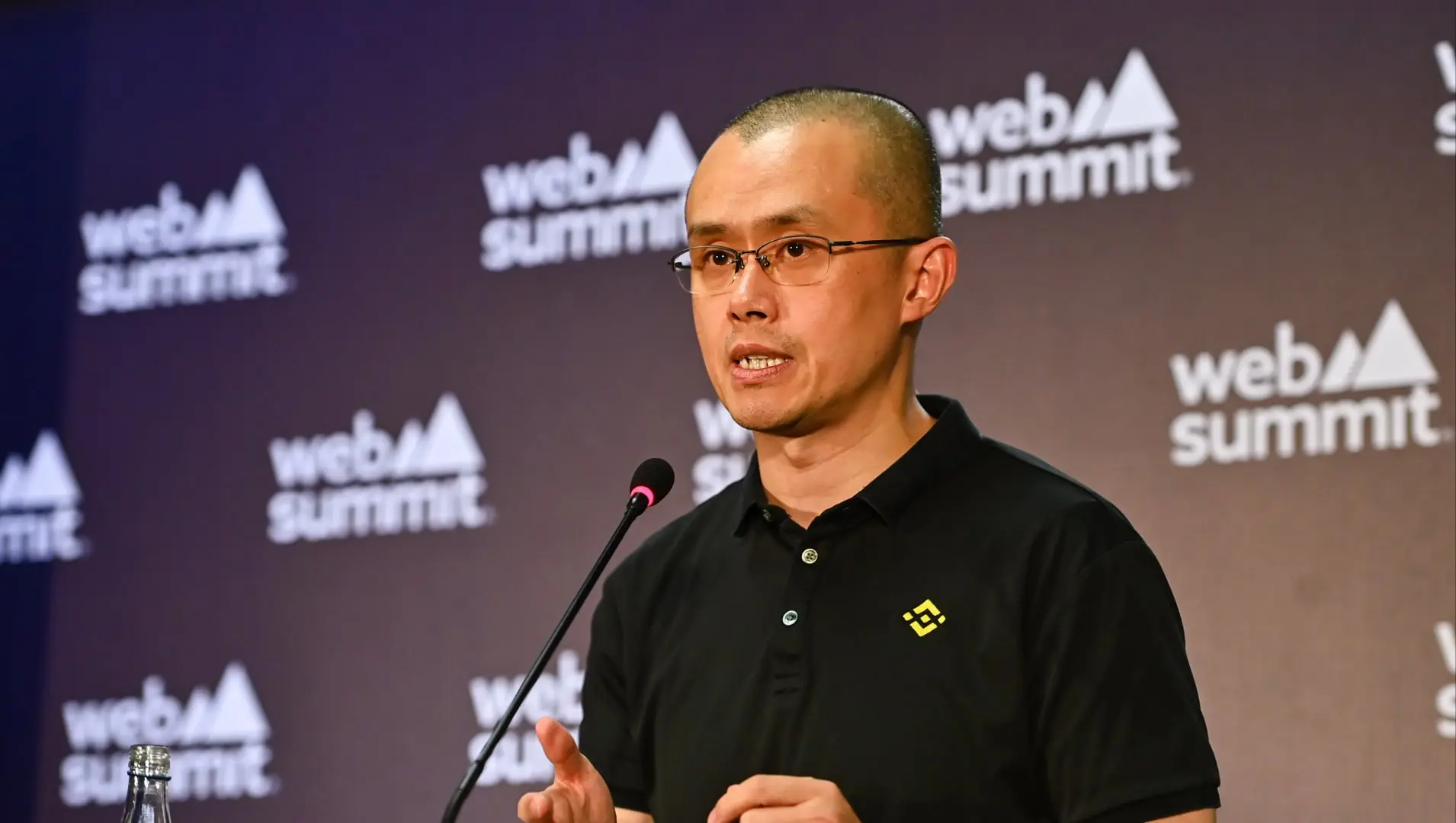 CZ accuses rival US exchanges of spending millions to block his Trump pardon, fearing Binance's US return2026-04
- OKX founder Star denies CZ autobiography claim he reported Huobi's Li Lin, implicates Justin Sun probe2026-04
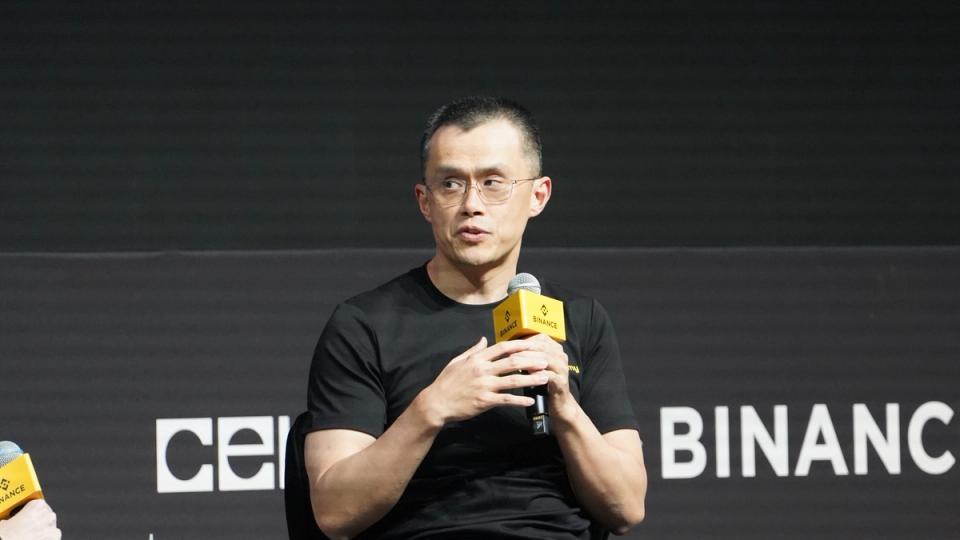 CZ's memoir reveals SBF asked for billions 'like a bologna sandwich' as FTX imploded2026-04
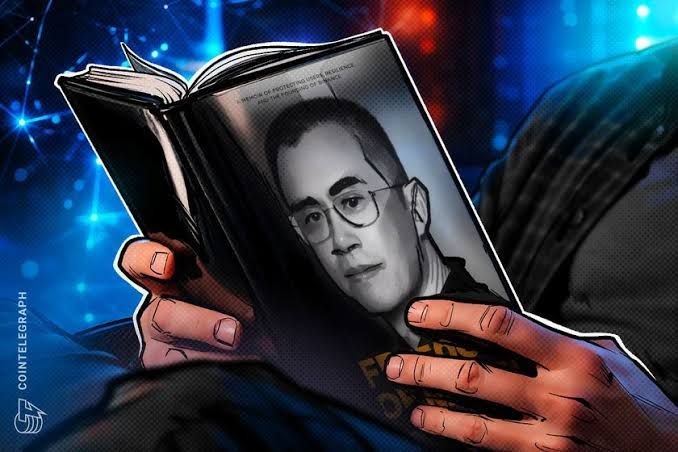 CZ drops 364-page memoir after Trump pardon, reveals offering Gensler a Binance adviser role in 20182026-04
 Binance founder CZ warns acquiring small crypto exchanges poses hidden security risks after BitMEX and BitMart shut down.2026-07
Changpeng Zhao, universally known as CZ, is the founder and former chief executive of Binance, the world's largest cryptocurrency exchange by trading volume—a figure whose trajectory from software engineer to convicted felon to prolific public commentator encapsulates much of crypto's turbulent first decade.
Who Is Changpeng Zhao?
Born in Jiangsu, China in 1977, Zhao emigrated to Canada as a teenager. He studied computer science at McGill University and spent years in traditional finance, building trading systems for the Tokyo Stock Exchange and later working at Bloomberg Tradebook. His introduction to Bitcoin came in 2013, reportedly after a poker game in which Bobby Lee and Ron Cao persuaded him the asset was worth taking seriously. Zhao sold his apartment to buy Bitcoin—a decision that would define his career.
Before founding Binance, he served as chief technology officer at OKCoin (now OKX), a rival exchange, giving him a direct view of how crypto platforms scaled in their early years.

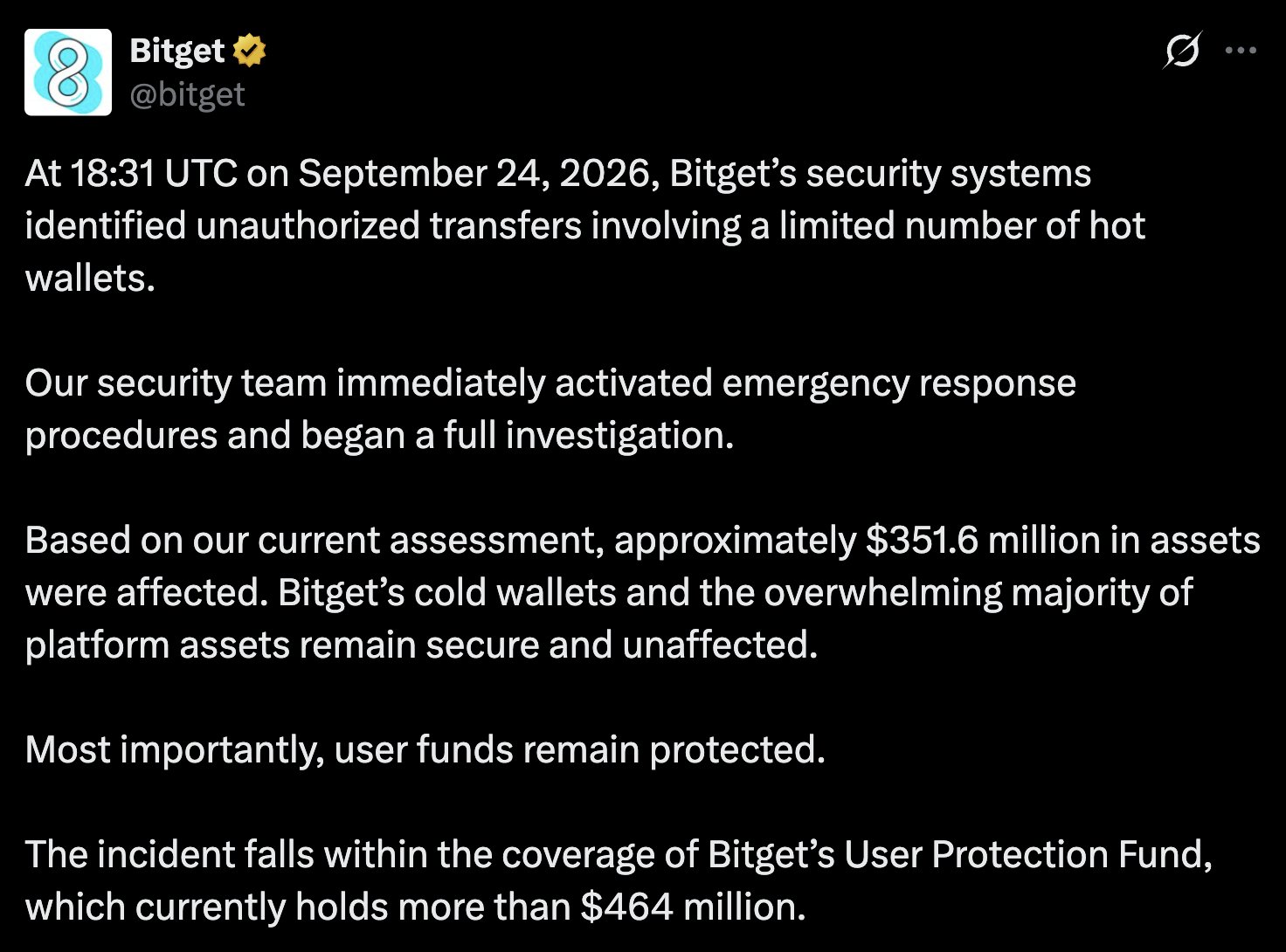
CZ pledges support, says Binance alongside BNB Chain and community will help Bitget after tough day
Building Binance
Zhao launched Binance in July 2017, during the initial coin offering frenzy. The exchange grew at a pace that caught virtually every observer off guard. Within six months it had become the world's busiest crypto trading platform by volume, a position it has held, with occasional interruptions, ever since.
Three factors drove that dominance, according to Zhao himself in a May 2026 interview with ARK Invest: prioritising user protection over company revenue, maintaining a relentless focus on product quality, and moving faster than regulators and competitors expected. The exchange's BNB token, launched as a fee-discount vehicle, became a top-ten asset by market capitalisation and the foundation of Binance Smart Chain (now BNB Chain), giving the ecosystem its own programmable-money layer.
At its peak, Binance processed hundreds of billions of dollars in daily volume and operated across dozens of jurisdictions, often in a regulatory grey zone that its founder openly acknowledged. "We grew so fast," Zhao told Crypto In America in May 2026. "Looking back, if I could do it again, I would have blocked U.S. users and set up geo-fencing from day one, and invested much earlier in KYC and compliance."
Readers clicked CZ's story not as a regulatory cautionary tale but as a personal accountability drama — the tension between whether the world's most powerful crypto executive would face real consequences drove every major click cluster, from sentencing delays to prison release dates to the irony that he grew wealthier while incarcerated.
Legal Reckoning: Guilty Plea and Federal Prison
The legal consequence of that growth came due in November 2023. Binance reached a $4.3 billion settlement with U.S. authorities—at the time the largest corporate penalty in the history of the Department of Justice's anti-money-laundering enforcement. Zhao personally pleaded guilty to a single count of failing to maintain an effective anti-money-laundering programme under the Bank Secrecy Act.
In April 2024, U.S. District Judge Richard Jones sentenced Zhao to four months in federal prison in Sheridan, Oregon—below the five-month recommendation from the DOJ but above the probation his defence requested. Zhao reported to custody in June 2024 and was released in late September 2024, having served his term. His mother flew from Canada to visit him while he was incarcerated, an episode he has since cited when discussing what the experience clarified about family and priorities.
Zhao has since characterised the prosecution as an example of what he calls the Biden administration's "hostile crypto" environment, claiming in public remarks that rivals spent millions of dollars lobbying to block any presidential pardon. Those claims remain contested and unverified.
Life After Release: Still Deeply in Crypto
Since his release, Zhao has maintained an unusually high public profile for someone who no longer runs the world's largest exchange. He has given dozens of interviews, contributed to a memoir titled Freedom of Money, and positioned himself as a voice on crypto's long-term direction.
In a detail that attracted significant attention in mid-2026, Zhao disclosed that he now lives almost entirely in crypto, using real-time card settlement for daily spending rather than holding conventional bank balances. He continues to allocate 70–80% of his capital to blockchain-related assets despite acknowledging sector risks—a posture consistent with the maximalist long-term view he has expressed publicly for years.
He remains a major holder of BNB and has made investments in several early-stage blockchain infrastructure projects, including Aster, a DeFi derivatives platform he has compared favourably to Hyperliquid. In a May 2026 Galaxy Brains podcast appearance, he praised Hyperliquid's product design as "actually awesome," while noting it occupies a niche—permissionless, high-performance on-chain derivatives—that Binance structurally cannot compete in, because of compliance constraints and business-model differences. His comments about what Aster must do to surpass Hyperliquid suggest he retains an operational interest in shaping that competitive landscape.
- 01Prison sentence outcome suspense
The gap between the 36-month DOJ ask and the 4-month sentence — and then reports he might stay longer — created a serialized drama readers kept returning to check.
- 02Wealth accumulation behind bars
The counterintuitive Forbes claim that CZ may have made billions in prison punctured the idea that his legal punishment was financially meaningful.
- 03Binance DOJ settlement & succession
The $4.3 billion fine and CZ's replacement by Richard Teng raised urgent questions about whether Binance could survive its founder's exit and remain the dominant exchange.
- 04CZ vs Hyperliquid centralization war
CZ using the JellyJelly exploit to attack Hyperliquid's decentralization claims — while defending Binance's own crisis response — turned a DeFi exploit into a proxy war about who controls crypto infrastructure.
- 05Class actions and legal liability cascade
New investor lawsuits and the FTX suit against Binance signaled that the DOJ settlement did not close CZ's legal exposure, sustaining reader appetite for what comes next.
- 06Post-prison identity and influence
CZ's memoir, Giggle Academy hack, meme coin commentary, and quantum remarks showed readers tracking whether he would re-emerge as a power player or a cautionary footnote.
Views on the Industry
CZ's post-prison commentary has covered a wide range of topics, and taken together it sketches a consistent worldview.
On market cycles. He has been explicit that he expects an incoming "super cycle" for crypto—a prolonged bull run driven by institutional adoption, sovereign wealth fund accumulation, and retail re-entry. He dismisses the possibility that crypto dies entirely, arguing that decentralised monetary infrastructure, once built, does not simply disappear.
On Bitcoin reserves. In archived remarks, Zhao predicted that Asian nations would build Bitcoin reserves quietly, consistent with cultural norms around not telegraphing strategic financial moves. He distinguishes this from the more public posture taken by some U.S. politicians, including signals from the Trump administration during its second term toward a more crypto-friendly regulatory environment—a shift Zhao has welcomed as evidence that his long-run bet is playing out.
On stablecoins and real-world assets. He has admitted to being wrong twice: he was sceptical of stablecoins and of tokenised real-world assets (RWA), and both sectors grew faster than he expected. Stablecoins in particular, he now regards as a foundational layer for global crypto adoption rather than a niche product.
On artificial intelligence. Zhao has spoken at length about AI's potential to reshape the global economy, but with significant caveats. He warns that most AI startups will collapse as competition intensifies and only a handful of well-capitalised players survive. His view is that AI and crypto intersect meaningfully—both involve trustless, decentralised infrastructure—but that the AI startup landscape in 2025–2026 resembles crypto's ICO era: lots of capital, most of it ultimately destroyed.
On crypto's normalisation. In an April 2026 interview with Scott Melker, Zhao expressed a hope he returns to repeatedly: that within five years, crypto will stop being discussed as a "special concept" the way the early internet was. People will simply use it without naming it, the way they use email without thinking about TCP/IP.
On security. More practically, Zhao has urged Binance users to lock accounts when travelling to high-risk areas, citing a wave of physical crypto kidnappings targeting known holders—a threat that has grown as public on-chain wallet balances became easier to look up.

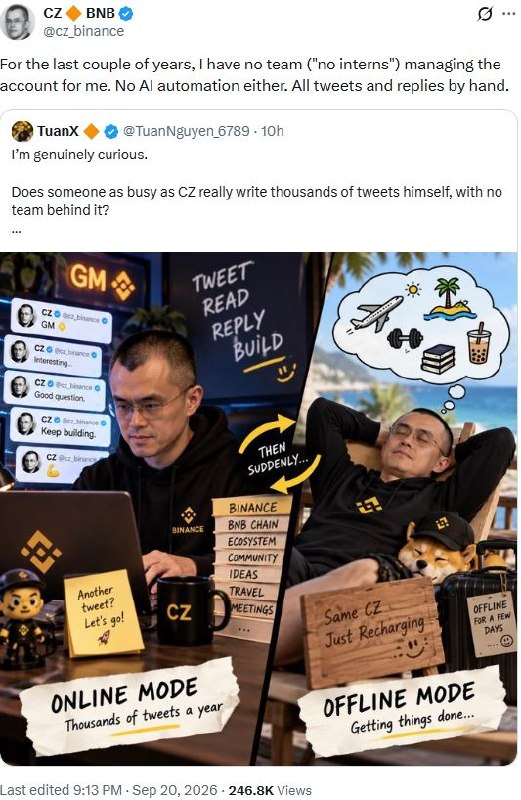
CZ says he writes every post himself, no team or AI, after user questions how a busy leader replies so directly
The FTX Connection
One of the more vivid chapters of Zhao's recent public appearances concerns Sam Bankman-Fried and FTX's November 2022 collapse. Zhao has described a pre-collapse phone call in which SBF casually requested a bailout, with the figure shifting between $2 billion and $6 billion mid-conversation—"as casually as ordering a sandwich," in Zhao's telling (Fox Business, April 2026).
Binance briefly announced it would acquire FTX to prevent a liquidity crisis, then withdrew within 24 hours after reviewing FTX's books. The episode was pivotal: FTX's collapse wiped out billions in customer funds, triggered criminal charges against SBF, and accelerated regulatory scrutiny of the entire industry—including, eventually, Binance itself. The sequence remains significant because it illustrates both how intertwined crypto's major players were and how quickly that interconnection can become catastrophic.
Separately, ARK Invest CEO Cathie Wood publicly clarified to CZ in May 2026 that Binance was not responsible for a flash crash on October 10th of an unspecified year (the remark appears to refer to a software glitch incident), wanting on record that the exchange had not triggered the market event.
Binance.US and the Road Back to America
The regulatory settlement required Binance to exit U.S. operations as part of the penalty structure. Binance.US, a separate entity designed for American customers, has operated with sharply limited functionality since the DOJ settlement and an SEC lawsuit imposed restrictions on dollar withdrawals and fiat on-ramps.
Zhao has floated a Binance.US revival publicly in 2026, framing it as a way to give U.S. traders access to global crypto liquidity they currently cannot reach. Whether that revived entity would include him in a leadership role is unclear—the settlement's monitorship provisions and his personal felony conviction create significant regulatory hurdles. He has suggested that changed political conditions, including what he perceives as a more crypto-friendly stance from the Trump administration, make revival more plausible now than it was during the Biden years.
- 2021-09milestone
Binance exits FTX investment; later disputed as funded by insolvent Alameda
- 2023-11regulatory
CZ pleads guilty; Binance pays $4.3B DOJ settlement; Richard Teng named CEO
- 2024-04regulatory
Judge sentences CZ to 4 months in federal prison despite DOJ's 36-month request
- 2024-06regulatory
CZ begins serving 4-month federal prison term
- 2024-09milestone
CZ released from US federal prison on September 29
- 2025-03exploit
JellyJelly exploit triggers Hyperliquid market shutdown; CZ attacks their decentralization claims
- 2025-04milestone
CZ memoir published; reveals SBF sought billions during FTX collapse
- 2025-05exploit
Giggle Academy X account hacked in phishing campaign targeting CZ's post-prison venture
Satoshi, Decentralisation, and Memoirs
Running beneath CZ's practical commentary is a recurring philosophical theme. He has argued that Satoshi Nakamoto's anonymity was not accidental but essential—that a named, known founder of Bitcoin would have given regulators and adversaries a human target that decentralisation is designed to eliminate. He uses this argument to underscore why he believes crypto's architecture is structurally more resilient than any individual actor within it, himself included.
His memoir, Freedom of Money, attempts to synthesise these themes: personal journey, exchange-building, legal reckoning, and a forward-looking case for decentralised finance. The New York Post described it as a compass for crypto's future, though the reception has been mixed among those who believe Zhao's compliance failures warrant more accountability than the book offers.
Outlook
CZ occupies a paradoxical position: simultaneously discredited by a federal conviction and influential enough that his views on DeFi architecture, AI, Bitcoin reserves, and exchange design are quoted extensively across crypto media. His conviction does not bar him from investing, advising, or speaking—and he has done all three at pace since his release.
The near-term questions are concrete. Will Binance.US revive in a form that returns meaningful U.S. market access? Will BNB Chain maintain relevance as Ethereum Layer 2 networks and newer settlement layers compete for DeFi liquidity? Will CZ's prediction of a crypto super cycle prove correct, or will macro tightening and regulatory fragmentation dampen adoption?
What is not in doubt is that Zhao remains a central, contested figure in crypto's ongoing story—one whose decisions, mistakes, and post-conviction commentary will continue to shape how the industry's first era is eventually judged.
Latest CZ news
Community notes
Spot something off or out of date? Drop a note. Editors review topic notes daily and roll accepted fixes into the explainer — contributors are recognized in the monthly $SQUID drop.
Loading notes…
Help improve this topic
Have a story or tip about this topic? Submit it. See something missing? Leave a note. Editors review daily; accepted submissions and fixes count toward the monthly $SQUID drop.