
In crypto, “freedom” spans money, privacy, and power—from Bitcoin and CZ’s Binance saga to Tor, Telegram, stablecoins, and AI data. This explainer unpacks narratives, risks, and architectures so readers can critically assess which projects truly expand autonomy.
- x.com9
- youtube.com3
- cointelegraph.com2
- odysee.com1
- theblockchainassociation.org1
- archive.md1
- blog.kraken.com1
+9 sources across the wider coverage universe
 The U.S. launches the Freedom Tech Excellence Program, embedding experts from the Bitcoin Policy Institute, Palantir and Anduril into digital freedom and AI initiatives2026-07
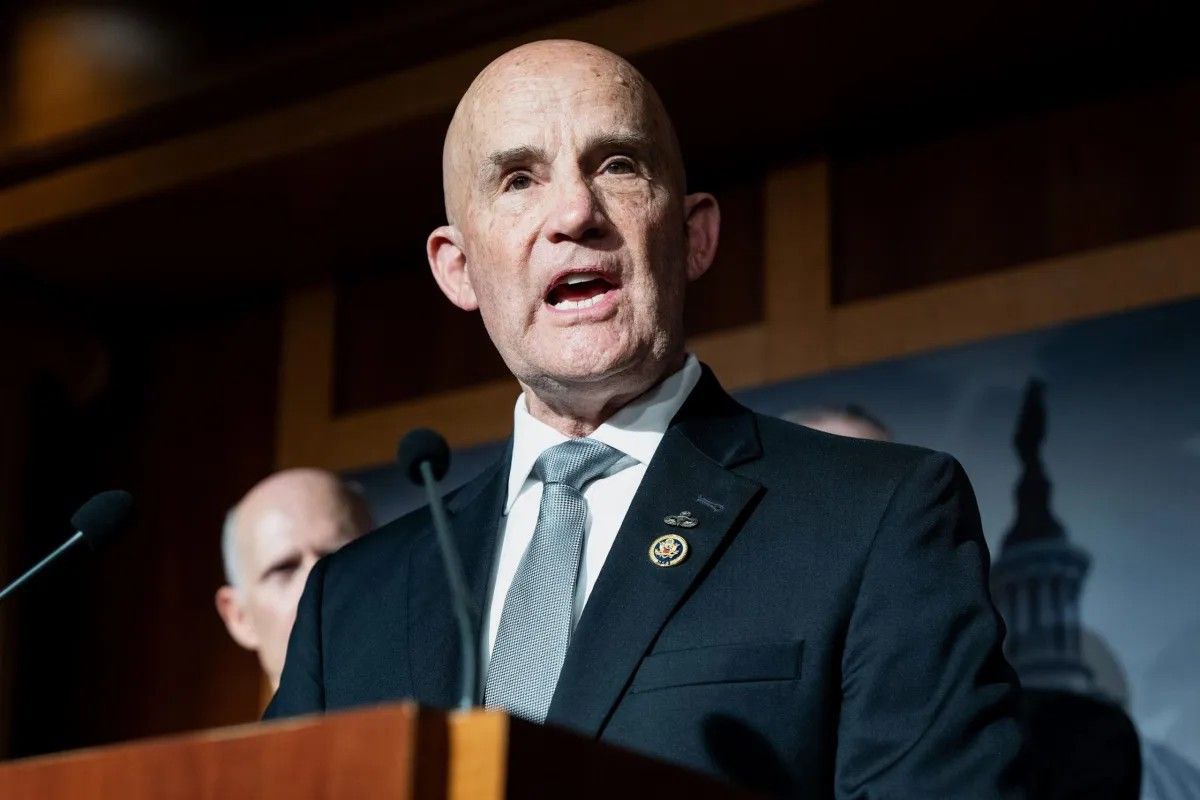 Rep. Keith Self pushes an NDAA amendment to ban a U.S. CBDC after GOP leaders omitted the promised language, sparking backlash from conservatives who argue a digital dollar threatens privacy and financial freedom.2025-12
 LBRY pens final words after losing fight against the SEC: "Thank you to everyone who fought with us for online freedom."2023-10
 Pavel Durov joins Lex Fridman for a 4+ hour conversation on Telegram, freedom, censorship, money, power, and human nature in Podcast #482.2025-10
 Crypto, once hailed as a tool for financial freedom, has devolved into a murky swamp of self-interest, far from its original vision of empowering small investors.2025-05
 Ross Ulbricht excited and grateful to President Donald Trump for giving him his freedom, life and future back2025-01
Freedom in Crypto: Money, Power, and Autonomy in the Digital Age
In crypto, “freedom” usually refers to a cluster of related ideas: the ability to move value without permission, speak and organize without censorship, and own data and digital tools without relying on a single company or government. Yet the same technologies that promise liberation also introduce new forms of risk, concentration, and surveillance, making “freedom” in this context less a settled reality than an ongoing struggle over who controls money, information, and infrastructure.
Defining Freedom in the Age of Crypto
The word freedom carries heavy philosophical, political, and emotional baggage, and the crypto industry taps into all of it. In political theory, analysts often distinguish between freedom from interference and freedom to pursue one’s goals. In markets, freedom shows up as the ability to transact, invest, and build businesses with minimal arbitrary restriction. In the digital sphere, freedom increasingly means control over one’s information, connections, and computational resources. Crypto intersects all three domains, which is why the term “freedom” appears so frequently in project names, marketing slogans, and policy debates.
Bitcoin’s origin story is typically framed as a reaction to perceived failures of the traditional financial system and fiat money, especially in the wake of the 2008 crisis. Its open, borderless design promised a type of monetary freedom that did not depend on banks, payment processors, or central banks as trusted gatekeepers. Advocates now describe Bitcoin as “freedom money” or “technology for freedom,” arguing that a permissionless, censorship-resistant asset can protect individuals from inflation, capital controls, and political repression, and even secure a freer future for their children and grandchildren. This narrative resonates especially in regions where banking access is weak and trust in institutions is low, even if the practical outcomes are uneven.
At the same time, governments and central banks are exploring central bank digital currencies (CBDCs) that represent a different vision of digital money. Rather than decentralizing control, CBDCs would give states a direct line from central bank balance sheets to citizens’ wallets, potentially reducing reliance on commercial banks while increasing the state’s capacity to monitor and steer financial activity. Supporters describe CBDCs as tools for inclusion and efficiency; critics see them as instruments of programmable control that could undermine financial privacy and autonomy. The conceptual gap between Bitcoin and CBDCs illustrates how “freedom” is not an inherent feature of digital money but a function of who designs and governs it.
Beyond money, freedom in crypto also encompasses informational and computational dimensions. Privacy-preserving tools such as Tor, encrypted messengers, and certain blockchain protocols are framed as essential infrastructure for internet freedom, supporting journalists, activists, and ordinary users in environments of censorship and surveillance. Newer projects like the 0G network extend this idea into the AI era, promising decentralized storage and compute systems where users can own their AI-generated “memories” rather than entrusting them to big-tech cloud platforms. These efforts highlight a broader shift from thinking about freedom only as a legal right to also seeing it as a property of technical architectures.
Crucially, the crypto version of freedom is deeply contested. Policy researchers warn that cryptocurrencies can exacerbate existing inequalities and pose particular risks to the very populations they claim to empower. Regulators argue that unregulated financial freedom often translates into rampant scams, fraud, and money laundering. Meanwhile, even explicitly “freedom-branded” tools can embed subtle forms of control, from opaque governance to hidden dependencies on centralized infrastructure. For a crypto news audience, the central challenge is not to accept or reject “freedom” claims wholesale, but to unpack how specific systems shift power, risk, and responsibility among users, institutions, and states.

The U.S. launches the Freedom Tech Excellence Program, embedding experts from the Bitcoin Policy Institute, Palantir and Anduril into digital freedom and AI initiatives
Monetary Freedom: Bitcoin, Exchanges, and Real-Time Money
Bitcoin as “freedom money”
Bitcoin’s design attempts to encode monetary freedom into protocol rules. It features a fixed supply schedule, open participation in mining and validation, and an uncensorable transaction ledger maintained by a globally distributed network. Advocates argue that these properties reduce reliance on central banks’ discretionary monetary policy and shield users from arbitrary confiscation or debasement of wealth. For populations who have experienced bank failures, hyperinflation, or asset seizures, that value proposition is more than ideological; it can be existential.
The idea of Bitcoin as “technology for freedom” has evolved into a cultural and political narrative in its own right. Conference organizers, such as those behind large European and U.S. Bitcoin events, frame gatherings as movements to build a freer financial future for children and grandchildren, positioning Bitcoin not just as an investment asset but as a civilizational hedge against authoritarian drift. Musicians and public figures like Afroman have embraced this rhetoric, rebranding themselves as “Bitcoin freedom fighters” after disputes with law enforcement and legal victories that they see as connected to broader struggles over civil liberties. Such symbolism reinforces the association between Bitcoin and personal autonomy, even for audiences that may not fully understand the technical mechanics.
Yet Bitcoin’s monetary freedom is conditional and incomplete. Users who hold BTC on centralized exchanges inherit the risk of platform failures, withdrawal freezes, and regulatory interventions, as seen repeatedly during exchange insolvencies and enforcement actions. Even on-chain, large holders and mining pools can accumulate influence over network governance and transaction ordering. Moreover, Bitcoin’s price volatility can turn the dream of financial liberation into a source of stress or ruin for users who allocate more than they can afford, particularly in low-income communities. Freedom in this context is inseparable from risk.
CBDCs and the contested future of digital cash
CBDCs represent a competing vision for digital money that foregrounds state authority. By issuing digital tokens or accounts directly from central banks to individuals and businesses, governments can bypass some roles of commercial banks and payment processors, potentially simplifying monetary transmission and expanding access. However, the same design choices that enable efficiency can make CBDCs powerful tools of surveillance and control. With granular data on every transaction and programmable conditions on spending, authorities could in principle implement targeted stimulus, impose negative interest rates, or restrict purchases in specific categories.
Analysts concerned with liberal democracy warn that CBDCs may allow governments to “reclaim power” from the private sector by centralizing control over digital money in state hands, raising questions about civil liberties and the potential for abuse. In authoritarian contexts, the risks are even starker: CBDCs could be used to enforce social-credit systems or financial blacklists that penalize dissent. This is why crypto advocates frequently contrast CBDCs with decentralized alternatives, arguing that only open, permissionless systems can credibly guarantee certain freedoms.
Nevertheless, CBDCs are not monolithic. Some proposals emphasize strong privacy protections, offline capability, and limited data retention, while others explicitly integrate identity and compliance tools. The debate is not simply “CBDC versus Bitcoin” but rather about a spectrum of design choices and governance models that determine how much power is concentrated or distributed. For a crypto audience, understanding CBDC design is critical, because these public systems will coexist and interact with private cryptocurrencies, stablecoins, and traditional money for decades.
Binance, CZ, and the “freedom of money” narrative
If Bitcoin established the template for permissionless monetary freedom, centralized exchanges like Binance created the on-ramps that brought hundreds of millions of users into the ecosystem. Binance’s founder, Changpeng Zhao (CZ), built the company into the world’s largest cryptocurrency exchange by trading volume within a year of its launch, emphasizing rapid listing of new assets, aggressive expansion into new jurisdictions, and low fees. He framed the company’s mission around “increasing the freedom of money,” arguing that more accessible and efficient global markets would unlock entrepreneurship and economic opportunity for ordinary people.
CZ’s memoir, Freedom of Money, and its audiobook adaptation describe this mission alongside the tumultuous regulatory journey that culminated in a record-breaking settlement with U.S. authorities. Binance agreed to pay approximately 4.3 billion dollars in penalties, while CZ personally paid a 150 million dollar fine and served a four-month prison sentence for compliance failures that included inadequate anti–money laundering controls. According to promotional materials, he wrote much of the book during his incarceration, reflecting on resilience, user protection, and the tension between rapid innovation and regulatory obligations.
The Binance story underscores an important nuance: freedom in crypto is heavily mediated by centralized infrastructures, from exchanges to custodians and stablecoin issuers. Users may feel freer because they can trade 24/7 from their phones, but they remain exposed to the operational choices, governance structures, and risk management of these platforms. The same company that accelerates access to Bitcoin or stablecoins can also become a chokepoint through which law enforcement or political authorities exert pressure. CZ’s prison chapter therefore reads not only as a personal fall from grace but as a case study in how “freedom of money” can collide with the realities of global financial regulation.
Stablecoins, USD1, and alternative payment rails
Stablecoins—crypto-assets pegged to fiat currencies such as the U.S. dollar—offer a different flavor of monetary freedom. They aim to combine the relative price stability of traditional money with the programmability and global reach of blockchains. For users in emerging markets, dollar-linked stablecoins can serve as a hedge against local currency volatility and as a tool for cross-border remittances that bypass slow, expensive banking channels. However, their ability to deliver freedom depends on who issues them and how they are governed.
Recent experiments at the intersection of stablecoins, politics, and entertainment illustrate this complexity. At the high-profile UFC Freedom 250 event, held at the White House and presented in part by Crypto.com, a new crypto-backed financial entity called World Liberty Financial sponsored a 250,000 dollar performance bonus pool for fighters. The bonuses were reportedly paid in USD1, a dollar-pegged stablecoin associated with the project and backed by political figures aligned with former President Donald Trump. For supporters, this arrangement symbolized financial innovation and patriotic branding around liberty; for critics, it spotlighted how quickly stablecoins can become vehicles for political patronage and ideological alignment.
The USD1 example shows that “freedom” in stablecoins can be selective. While users may enjoy fast, borderless transfers, they are still reliant on the issuer’s reserves, compliance stance, and governance. Issuers retain the technical ability to blacklist or freeze addresses, especially when pressured by regulators or courts. Thus, stablecoins sit between the Bitcoin model of decentralized monetary freedom and the CBDC model of centralized digital money, inheriting constraints from both.
Streaming payroll and everyday economic agency
Financial freedom is not only about asset holdings but also about the timing and granularity of cash flows. Projects like Zebec aim to transform how people are paid by enabling real-time, streaming payroll on blockchains such as Solana and Stellar. Instead of receiving a biweekly or monthly lump-sum paycheck, workers can be paid continuously, by the second, as they earn their wages. This design allows freelancers, employees, and contractors to access funds immediately, potentially reducing reliance on high-cost credit or overdrafts and smoothing consumption.
Zebec’s expansion to networks like Stellar and Dash, and its positioning as infrastructure for “global streaming payroll,” illustrate a broader push to unlock what it calls financial freedom through programmable payments. From an employer’s perspective, streaming payroll can improve cash management and reduce administrative friction. For workers who live paycheck to paycheck, having instant access to earnings can reduce vulnerability to unexpected expenses and predatory lending.
However, here too, freedom is conditional. Streaming payroll depends on the stability and security of the underlying blockchain, the liquidity of the token being used, and the regulatory treatment of crypto-denominated wages. Sudden token price drops or network interruptions could affect a worker’s effective income. Furthermore, tax authorities may struggle with continuous income flows, and workers may face complex reporting obligations. Real-time money can enhance agency, but it also demands new forms of financial literacy and systemic resilience.
To crystallize the contrasts among these monetary architectures, it is helpful to compare them along key dimensions such as control, privacy, and risk.
| Dimension | Bitcoin (BTC) | CBDC | USD-pegged Stablecoin (e.g., USD1) |
|---|---|---|---|
| Issuer / Controller | Decentralized protocol and miners/validators | Central bank | Private company or consortium |
| Supply Policy | Algorithmic, fixed cap | Policy-determined, adjustable | Determined by issuer reserves and redemptions |
| Censorship Resistance | High on-chain; low via custodial intermediaries | Low; transactions can be monitored or blocked | Medium; issuers can blacklist addresses |
| Privacy | Pseudonymous but transparent ledger | Varies; often low, high data visibility | Low to medium; issuer and chain visibility |
| Volatility vs Fiat | High | None (by definition) | Low (if well-managed) |
| Regulatory Integration | Uneven, often constrained | Embedded in state frameworks | Increasingly regulated as payments/instruments |
| Core Freedom Narrative | Escape from state and bank control | Efficient, inclusive public money | Programmable dollars with crypto rails |
This table highlights that “freedom” is not a binary property that money either has or lacks; rather, it emerges from trade-offs among decentralization, governance, privacy, and compliance. Each architecture liberates users from some constraints while imposing others.
Readers click 'freedom' stories not for ideological principle but for personal martyrdom: the highest-performing headlines all center on named individuals — Ulbricht, Durov, Ver, LBRY's founders, Pertsev — prosecuted or imprisoned by states, suggesting the audience experiences crypto freedom as a persecution narrative, not a financial-autonomy thesis.
Privacy, Surveillance, and the Infrastructure of Internet Freedom
Why privacy is a precondition for freedom
In the digital era, privacy is not merely a personal preference but a structural requirement for meaningful freedom. When every action, transaction, and communication is observable and recordable, the risk of chilling effects and self-censorship rises. Crypto technologies intersect deeply with this problem: public blockchains create transparent, append-only logs of activity, while associated tools like wallets and exchanges collect identity and behavioral data. The interplay between transparency and privacy is therefore central to any discussion of freedom.
For dissidents, journalists, and marginalized communities, privacy-preserving tools may be essential to their safety, not just their convenience. End-to-end encryption, onion routing, and anonymous communication channels can protect sources, shield organizing efforts, and circumvent censorship. This is where organizations like the Tor Project come in. Tor’s onion routing network allows users to browse the web by bouncing traffic through multiple volunteer relays, making it much harder for observers to link activity to IP addresses. Funding models for such infrastructure, including grants and community donations, reflect the importance of sustaining privacy tools as public goods rather than purely commercial products.
Crypto itself can both help and complicate this picture. On the one hand, pseudonymous wallets and censorship-resistant transaction mechanisms can allow users in restrictive regimes to receive donations, pay collaborators, or access services without going through controlled banking channels. On the other hand, blockchain analytics firms and regulators have developed sophisticated capabilities to trace flows across chains, deanonymize patterns, and associate addresses with real-world identities. As privacy and surveillance technologies co-evolve, “freedom” becomes a moving target shaped by the balance of these capabilities.
Tor, FundingCommons, and quadratic funding for internet freedom
A notable example of how the crypto community attempts to support privacy and anti-censorship infrastructure is the quadratic funding (QF) round organized by the Tor Project and FundingCommons for “internet freedom” projects. In this model, donations from individuals are matched from a larger pool in a way that amplifies broad-based support: many small contributions can outweigh a few large ones, which helps signal which projects the community values. The Tor and FundingCommons round directed funds toward ten organizations working on privacy, anti-censorship tools, and secure-journalism technologies, explicitly framing these efforts as pillars of internet freedom.
Quadratic funding illustrates how crypto ideals of decentralization and community governance can be applied not only to protocol development but also to resource allocation. By relying on on-chain or off-chain identity and donation data, QF schemes can algorithmically compute matching distributions, aiming for a more democratic funding process than top-down grants. The fact that such a mechanism was deployed to support Tor and adjacent projects underscores the tight coupling between cryptographic tools and broader civil liberties.
However, QF also introduces new complexity. It depends on robust identity systems to prevent Sybil attacks, requires careful design to avoid manipulation, and assumes participants understand the mechanism well enough to engage. Despite these challenges, experiments like the Tor-FundingCommons round demonstrate that crypto-native funding mechanisms can channel capital toward foundational public goods in the privacy and free-speech stack. This is one way in which the industry’s wealth can be redirected from speculative trading toward infrastructure that concretely enhances freedom for millions.
Telegram, encrypted messaging, and the limits of app-based privacy
Messaging platforms such as Telegram occupy a paradoxical place in the freedom landscape. Telegram is widely used by activists, crypto communities, and ordinary users who seek alternatives to mainstream platforms. The company’s founder, Pavel Durov, famously clashed with Russian authorities over demands to decrypt user data and censor content, prompting him to relocate Telegram’s operations abroad. This history has contributed to Telegram’s reputation as a defender of free speech and privacy, making it a favored channel for organizing and debate, including in crypto and DeFi circles.
Yet Telegram’s privacy model is more nuanced than many users assume. By default, chats are not end-to-end encrypted; only “secret chats” employ full end-to-end encryption where only the communicating devices hold the keys. Group chats and cloud backups involve servers that Telegram controls, and while the company emphasizes security, it technically has more access than truly end-to-end platforms. Furthermore, metadata such as who communicates with whom and when may be accessible to state actors under certain circumstances, depending on jurisdiction and legal pressure.
For crypto users, this means that the same channel used to coordinate trades, share private alpha, or discuss contentious governance votes may not be as private as imagined. Telegram’s example underscores a broader lesson: freedom-branded or politically resistant platforms can still embed design choices and legal constraints that limit privacy. Evaluating “freedom” therefore requires examining not only narratives and founder stories but also encryption defaults, data retention policies, and jurisdictional exposure.
Crypto, anonymity, and regulatory friction
Crypto’s relationship to anonymity is similarly complex. Early narratives emphasized anonymous digital cash, exemplified by Bitcoin’s pseudonymous addresses and the use of privacy coins or mixers. Over time, however, regulatory regimes have pushed exchanges and other on-ramps to implement know-your-customer (KYC) and anti–money laundering (AML) controls, effectively linking most mainstream crypto flows to real-world identities. Simultaneously, law enforcement and analytics firms have demonstrated that even non-KYC on-chain activity can often be deanonymized through pattern analysis, clustering, and off-chain data.
For users seeking freedom from oppressive regimes or predatory surveillance, this tension is acute. Tools like Tor, privacy-focused wallets, and anonymizing techniques can help, but they also attract heightened scrutiny from regulators who fear abuse for money laundering, terrorism financing, or sanctions evasion. Policy debates often pit civil liberties advocates, who argue that privacy is essential for democracy and personal safety, against regulators who frame broad surveillance as necessary for security and order.
The Brookings Institution, for example, has challenged simplistic narratives that cryptocurrencies automatically promote financial inclusion or freedom, noting that the same instruments can exacerbate inequalities and expose vulnerable populations to scams and predatory schemes. From this perspective, uncritical promotion of anonymity or deregulated finance may undermine the very communities that freedom rhetoric claims to champion. A more nuanced view recognizes that effective freedom requires both protective privacy and institutional safeguards against fraud and exploitation.
AI memory, decentralized storage, and data sovereignty
As artificial intelligence becomes woven into everyday tools, a new frontier of freedom emerges around data sovereignty. AI agents increasingly process, summarize, and “remember” users’ conversations, preferences, and media, storing this information on centralized servers controlled by large technology companies. Projects like 0G present themselves as a corrective, offering decentralized storage and compute infrastructure tailored for AI agents. According to public materials, 0G markets itself as a “blockchain for AI agents,” providing modular storage, compute, and data-availability layers, with each AI action verifiable on-chain.
One practical example involves a voice-memory application called Flashback, which reportedly migrated to 0G infrastructure to store over 3,300 voice memories at roughly 70 percent lower cost than its previous setup, while emphasizing that the stored data is “decentralized storage that users actually own.” This framing positions decentralized AI backends as a way to reclaim control over personal data and reduce dependence on centralized clouds, potentially enhancing both economic and informational freedom.
Yet this space, too, comes with trade-offs. Storing AI data on-chain or on decentralized networks raises questions about immutability, content moderation, and the right to be forgotten. Verifying AI actions on-chain can improve accountability but may also expose metadata that could be misused. Furthermore, decentralized infrastructure is not immune to governance capture, protocol failures, or co-option by powerful actors. The promise of freedom from “big tech control” is real but contingent on the integrity of the new intermediaries that replace them.
Rep. Keith Self pushes an NDAA amendment to ban a U.S. CBDC after GOP leaders omitted the promised language, sparking backlash from conservatives who argue a digital dollar threatens privacy and financial freedom.
Political Symbolism and Cultural Battles Over “Freedom”
Freedom as brand: from sports arenas to Freedom 250
In contemporary politics and marketing, “freedom” is as much a brand as a principle. Crypto has become entangled with this branding, appearing as a sponsor or theme in events that link patriotism, physical combat, and financial innovation. The UFC Freedom 250 mixed-martial-arts event, held at the White House and presented by Crypto.com alongside a truck brand, is a vivid example. By naming the event “Freedom 250” and pairing it with crypto sponsorship, organizers fused national symbolism, combat sports, and digital assets into a singular spectacle.
During the event, the U.S. Department of War (a rebranding of the Department of Defense in a fictionalized or satirical context used in some promotional materials) debuted a television ad titled “Peace Through Strength,” calling on “our greatest young Americans” to join the nation’s fight. This rhetoric, combined with crypto logos on banners and athlete gear, exemplifies how the language of freedom can be weaponized to recruit, sell, and signal allegiance. Crypto, in this setting, becomes less about protocol-level decentralization and more about associative marketing—appearing alongside narratives of courage, patriotism, and martial virtue.
For a critical observer, such events raise questions about whether crypto’s freedom rhetoric is being co-opted to normalize militarism or partisan agendas. While sponsorship deals provide visibility and may drive adoption, they also tether the industry’s image to specific political currents and corporate interests. The Freedom 250 episode shows that the semantics of “freedom” in crypto are not purely grassroots or anarchic; they are increasingly shaped by strategic partnerships that blur the lines between finance, entertainment, and state power.
World Liberty Financial, USD1, and political patronage
World Liberty Financial’s role as a presenting sponsor at Freedom 250, and its distribution of a 250,000 dollar Performance of the Night bonus pool in USD1 tokens, adds another layer to this politicized branding. The project has been described as Trump-aligned or Trump-backed, positioning itself as a crypto-era financial vehicle entwined with populist political movements. Paying athletes in a proprietary stablecoin at such a stage sends a clear signal: this is not just another fintech product but a symbol of a particular vision of American liberty and strength.
This mixing of political patronage, stablecoins, and sports entertainment illustrates how “freedom” can be instrumentalized as a partisan or ideological asset. For participants who share the underlying political values, this alignment may enhance the perceived legitimacy of both the token and the broader movement. For others, it raises concerns about capture and exclusion: what happens to users who do not support that political faction, or to opponents who might fear financial discrimination if such infrastructure gains traction?
The USD1 case echoes earlier episodes in financial history where banks and corporate sponsors aligned closely with political powers, using branding and patronage to entrench influence. Crypto’s novelty lies not in the existence of such alignments but in the speed and scale at which tokens can be issued, distributed, and traded around emotive narratives. Freedom in this environment is not purely about autonomy from the state; it also involves navigating corporate and political alliances that shape access, perception, and risk.
Afroman, Bitcoin, and protest culture
On a different cultural axis, artists and musicians have embraced crypto as a medium of protest and self-determination. The rapper Afroman, best known for his early-2000s hit “Because I Got High,” resurfaced in public discourse after winning a legal case against police who raided his home. He turned security footage from the raid into a music video and merchandise, sparking debates over privacy, accountability, and artistic freedom. Subsequently, he has been promoted in media coverage as “Bitcoin’s latest freedom fighter,” aligning his persona with the cryptocurrency’s narrative of resistance to unjust authority.
Afroman’s scheduled appearance as a featured speaker at the Bitcoin 2026 conference in Las Vegas underscores how crypto events increasingly blend entertainment, activism, and financial discourse. Reports from earlier Bitcoin conferences describe them as “time warps into the future of money and freedom,” drawing tens of thousands of attendees into neon-lit visions of an alternative economic system. In these spaces, freedom is aesthetic as much as ideological: tattoos, memes, and slogans sit alongside technical talks and investment pitches.
This protest culture dimension of crypto freedom is significant because it reveals how narratives spread beyond white papers and regulation. When artists, comedians, and influencers adopt the language of “freedom money,” they link crypto to broader struggles over policing, censorship, and social justice. Whether one agrees with their politics or not, they demonstrate that Bitcoin and related technologies have become symbols in cultural battles over who gets to define and perform freedom in the public sphere.
Project Freedom, war, and the geopolitics of sea lanes
The term “freedom” also features prominently in traditional geopolitics, often in ways that intersect indirectly with economic and digital issues. One striking example is “Project Freedom,” a U.S. military initiative announced as a mission to guide commercial shipping through the Strait of Hormuz, a strategic maritime chokepoint between the Persian Gulf and the Gulf of Oman. Shortly after launching the operation, former President Trump announced that he was pausing Project Freedom “for a short period of time” to allow peace talks with Iran to proceed, noting that Pakistan had played a mediating role.
While this episode does not directly involve crypto, it illustrates how state actors invoke freedom—here, freedom of navigation and commerce—as justification for military deployments. These deployments, in turn, safeguard or threaten global trade flows, including oil shipments and container traffic that underpin the global economy. Crypto assets trade on markets deeply influenced by such geopolitical dynamics, from sanctions regimes to shipping costs and regional instability. The interplay between military “freedom” operations and global financial systems underscores how digital-freedom narratives are embedded in a larger world of state power and security.
For crypto advocates who see decentralized money as an escape hatch from geopolitical entanglements, Project Freedom is a reminder that physical infrastructure and trade routes still matter. Blockchains may be global, but they depend on energy, hardware, and networks that are vulnerable to geopolitical shocks. Evaluating claims about crypto’s ability to “exit” state control requires grappling with these physical and institutional dependencies, not only with code and consensus mechanisms.
Freedom caucuses, populism, and crypto’s place in culture wars
Domestically, political factions have also adopted “freedom” as a banner. The U.S. House Freedom Caucus, a group of conservative lawmakers, has been praised in direct social-media posts by Trump and others as exemplars of principled resistance to establishment politics. Messages like “Going Freedom Caucus. Proud of you!!!” frame the caucus as a bulwark of liberty against perceived overreach by bureaucracies or rival parties. While this may seem distant from blockchains, it has implications for crypto, given that members of such caucuses often support deregulation, skepticism of central banking, and alternative financial systems.
Crypto projects and personalities sometimes align themselves with these movements, either explicitly or implicitly. This alignment can influence legislative priorities, such as opposition to CBDCs, support for “right to mine” laws, or advocacy for looser regulations on digital assets. However, partisan attachments also risk polarizing public perception of crypto, turning what might be a cross-partisan debate about innovation and rights into a culture-war battleground.
Viewed together, these episodes—from Freedom 250 to Project Freedom and the Freedom Caucus—demonstrate that “freedom” has become a floating signifier onto which multiple groups project their agendas. Crypto is both an object and a participant in these struggles, alternately portrayed as a liberating force, a tool for evasion, a speculative casino, or a strategic asset. For industry observers, the challenge is to disentangle rhetorical freedom from substantive shifts in power, governance, and user agency.
Risk, Responsibility, and the Dark Side of Freedom Narratives
Financial inclusion, inequality, and the Brookings critique
A central claim in many crypto campaigns is that digital assets promote financial inclusion by offering banking-like services to the unbanked and underbanked. This narrative is compelling: if anyone with a smartphone can access wallets, stablecoins, and lending protocols, then structural barriers such as geographic isolation or discriminatory banking practices might be reduced. However, policy researchers at institutions like the Brookings Institution caution that this story is often overstated and may obscure serious downsides.
Brookings analysts argue that cryptocurrencies can exacerbate unequal access to financial services, particularly for historically excluded groups. Barriers such as technical literacy, reliable internet access, and regulatory uncertainty can limit participation among the poor, even as wealthier and more educated users capture outsized gains from speculation and early adoption. Furthermore, the volatility and complexity of crypto products can expose vulnerable users to risks that traditional financial regulation seeks to mitigate. For example, uncollateralized lending, yield-farming schemes, or opaque “earn” products can lead to sudden losses with limited recourse.
The Brookings critique does not deny that crypto can offer real benefits in specific contexts—such as cross-border remittances, inflation hedging, or censorship circumvention—but it insists that these benefits are unevenly distributed and can come at high cost. The use of “freedom” rhetoric in marketing may obscure these realities, presenting participation as an unambiguous good rather than a complex trade-off. For an informed audience, acknowledging these critiques is essential to evaluating which projects actually advance freedom and which merely sell it.
Volatility, student debt, and the promise of “debt freedom”
Another powerful narrative in crypto culture is the promise of escaping debt, particularly student loans, through savvy investing or side hustles. Stories circulate of young investors who converted student debt burdens into crypto “wins,” using trading profits to pay off loans or secure early financial independence. Media platforms that focus on student debt and personal finance, such as The College Investor, have documented strategies for navigating education costs, investing, and side income, with some communities embracing crypto as one of many tools in their arsenal. The idea of “debt freedom” resonates strongly in an era of rising tuition and precarious employment.
Yet, for every success story, there are many untold tales of overleveraged bets gone wrong. Crypto’s extreme price swings mean that highly leveraged or concentrated positions can wipe out savings overnight. Retail investors who enter markets based on fear of missing out or sensational news may lack the risk controls and diversification strategies that more experienced traders employ. Moreover, the psychological pressure of tying one’s educational or housing security to speculative assets can be intense, undermining mental as well as financial wellbeing.
From a freedom perspective, the key issue is that liberation from debt via speculative success is not structurally guaranteed; it is probabilistic and often skewed in favor of those with capital, information, and emotional resilience. A more sustainable approach to financial freedom may combine careful long-term investing, diversified income sources, and systemic policy reforms, rather than leaning heavily on high-risk crypto wagers. Recognizing this nuance helps inoculate audiences against narratives that equate freedom with winning a digital lottery.
Scams, fake launches, and the weaponization of freedom rhetoric
The emotive power of “freedom” makes it a potent tool for scammers and opportunistic promoters. Tokens, NFTs, and new platforms regularly adopt names that evoke liberty, revolution, or resistance, regardless of whether their underlying mechanics support any meaningful autonomy for users. The launch of high-profile projects or cultural products, such as CZ’s Freedom of Money memoir, can also be exploited by bad actors who create fake giveaways, phishing sites, or counterfeit editions to capitalize on the buzz. Users attracted by the genuine narrative may fall victim to impostors who mimic branding and messaging.
The weaponization of freedom rhetoric is not unique to crypto, but the industry’s speed and opacity amplify the problem. Airdrops, presales, and yield programs can be spun as democratizing access, when in practice they funnel value to insiders or exploit regulatory gray areas. Social media campaigns, including AMAs (Ask Me Anything sessions) with prominent figures like CZ and influencers such as Scott Melker, can blur the line between open dialogue and promotional hype, especially when disclaimers are weak and conflicts of interest are undisclosed.
To navigate this environment, users must develop robust media literacy, including skepticism toward emotionally charged slogans and a habit of examining tokenomics, governance structures, and legal terms. Freedom, in an information-rich but trust-poor ecosystem, partly means the capacity to resist manipulation and protect oneself from deception.
CZ’s prison chapter and the governance paradox
CZ’s brief imprisonment after Binance’s settlement with U.S. authorities symbolizes a deeper governance paradox in crypto. On one hand, he championed decentralization and user empowerment, enabling millions to trade assets that traditional banks would not touch. On the other hand, Binance’s centralized control over listings, custody, and risk management created a single point of failure and a focus of regulatory concerns. The platform’s scale meant that its internal compliance choices had systemic implications for the entire ecosystem.
The settlement highlighted failures in anti–money laundering controls and sanctions compliance, areas where regulators insist that freedom to transact must be balanced by obligations to prevent illicit finance. For critics, the episode demonstrated that unrestrained pursuit of growth and market share can erode the very trust that sustainable freedom requires. For supporters, it showed that even ambitious founders must ultimately submit to legal frameworks, and that engaging with regulators is part of building durable infrastructure.
This governance paradox extends beyond Binance. Many protocols and platforms that market themselves as decentralized rely on core teams, foundation entities, or influential investors whose decisions shape outcomes. Token voting can be dominated by whales; validator sets can be concentrated; and open-source projects can depend on a small group of maintainers. Thus, freedom at the user interface can mask significant centralization in the underlying governance. The challenge for the industry is to evolve models that genuinely distribute power while maintaining accountability and resilience.
Games, pivots, and the limits of “freedom” in attention economies
The idea of freedom also permeates gaming and entertainment, where “play-to-earn” and asset-ownership narratives promise liberation from traditional business models. Gameplay Galaxy, a multi-game studio known for its successful Trial Xtreme series with over 300 million downloads, ventured into this space with titles such as Trial Xtreme Freedom. Early reports suggested that the game achieved millions of downloads, but questions arose about user retention and the sustainability of the pivot, echoing wider concerns about web3 gaming’s ability to maintain long-term engagement.
In these contexts, freedom is marketed as the ability for players to own in-game assets, trade them on open markets, and potentially earn income through gameplay. However, the reality often involves complex token economies, speculative bubbles in non-fungible tokens, and gameplay designs distorted by financial incentives. Players can become speculators, and enjoyment can be overshadowed by market anxiety. Furthermore, concentrated ownership of game tokens and governance rights can reproduce centralized control over game evolution.
This illustrates a broader limit to freedom in the attention economy. User time and focus are finite, and platforms compete fiercely to capture them, deploying psychological techniques and economic incentives. Crypto can give users more formal control over digital items but cannot eliminate the underlying struggle for attention. A realistic account of freedom in gaming and media must therefore acknowledge both the new ownership possibilities and the enduring pressures that shape user behavior.
Denmark has withdrawn its EU Chat Control proposal after backlash, halting plans to mandate message scanning on Telegram, Signal, and WhatsApp. Privacy advocates call it a “major win for digital freedom.”


major win, 'til they come back with it in a different wrappin' next year 😮💨
Technological Architectures of Freedom
Public blockchains as credibly neutral infrastructure
At the heart of many crypto freedom claims lies the concept of public blockchains as “credibly neutral” infrastructure—systems that treat participants fairly regardless of identity, ideology, or geography. In principle, anyone can broadcast a transaction, deploy a smart contract, or validate blocks, subject only to protocol rules and economic constraints such as fees. This openness contrasts with traditional financial infrastructures, where banks, payment processors, and card networks can decline services, impose arbitrary restrictions, or discriminate against certain categories of users.
Credible neutrality hinges on decentralization of control and transparency of rules. Proof-of-work and proof-of-stake consensus mechanisms attempt to align incentives so that participants secure the network by following the protocol, not by favoring specific users. When implemented well, this design can enable censorship-resistant payments and applications, providing a baseline of financial freedom that does not depend on the goodwill of any single entity. Bitcoin’s resilience to state-level attacks and its continued operation despite bans and restrictions in several jurisdictions exemplify this quality.
Yet credible neutrality is an ideal more than a fully achieved state. In practice, mining pools, large validators, or infrastructure providers (such as cloud hosts and API gateways) can exert disproportionate influence. Regulatory pressure on these actors can lead to de facto censorship of certain transactions, as seen in debates over compliance with sanctions and blacklist regimes. The design of fee markets and block-construction incentives can also favor sophisticated actors who can extract maximal value from ordering, potentially disadvantaging ordinary users. Thus, while public blockchains move the needle toward more open infrastructure, their neutrality must be continually defended through governance and technical evolution.
Layered ecosystems and interoperability
Freedom in crypto does not emerge from base layers alone; it is shaped by the structure of layered ecosystems and interoperability between chains. Users may hold assets on one blockchain, use bridges to move them to another, interact with applications on a third, and rely on centralized exchanges or custodians at the edges. Each layer introduces its own trust assumptions and potential chokepoints. For instance, a wallet’s closed-source code, a bridge’s multisig controls, or an exchange’s withdrawal policies can constrain user autonomy even if the underlying chain is robust.
Interoperability is often framed as a freedom-enhancing feature because it allows users to migrate between ecosystems, seek better fees or features, and avoid lock-in. Cross-chain bridges, interoperability hubs, and messaging protocols aim to make this movement seamless. However, they also concentrate risk, as exploits in bridges have led to some of the largest hacks in crypto history. A failure at this connective layer can undermine freedom by trapping or stealing assets.
A nuanced understanding of freedom must therefore account for the entire stack, from layer-1 chains to application-layer services. Evaluating a project’s freedom claims involves examining how dependent it is on external APIs, cloud providers, or privileged actors, and whether users can realistically exit to alternatives if they disagree with governance decisions or fee structures.
Smart contracts, DAOs, and programmable liberty
Smart contracts and decentralized autonomous organizations (DAOs) extend the idea of freedom from individual transactions to institutional design. Smart contracts are pieces of code that execute deterministically on blockchains, enforcing rules without relying on human intermediaries. DAOs use these contracts to coordinate collective decision-making, often through token-based voting or other mechanisms. In theory, this allows communities to govern shared resources, protocols, or treasuries in transparent and rule-based ways, reducing dependence on traditional corporate structures or state-chartered entities.
This programmable logic can enhance freedom by giving users explicit, inspectable rules for how funds are managed, how upgrades occur, and how disputes are resolved. When combined with pseudonymous participation, DAOs can empower geographically dispersed contributors to shape projects without risking personal exposure or needing to form legal entities in specific countries. Grants programs, protocol parameter changes, and even acquisitions can be executed by on-chain votes, as long as quorum and proposal thresholds are met.
However, programmable liberty is constrained by challenges such as voter apathy, plutocracy, and governance capture. Token-based voting can concentrate power in large holders, while low turnout can allow small factions to push through controversial changes. Smart-contract code is also subject to bugs and vulnerabilities, and once deployed, flawed logic can be difficult to rectify without contentious forks. The DAO landscape therefore illustrates that greater formal freedom to participate does not automatically translate into equitable influence or safe outcomes; institutional design and social norms remain critical.
Oracles, AI agents, and automated decision-making
As crypto systems interface with real-world data and AI-driven agents, new layers of automation enter the freedom equation. Oracles supply external information such as prices, weather, or event outcomes to smart contracts, enabling complex derivatives, insurance, and prediction markets. If these oracles are controlled by a small set of entities, they become potential points of manipulation or censorship; a corrupted oracle can trigger cascading liquidations or mispriced contracts. Thus, the freedom to build sophisticated financial instruments depends partly on the decentralization and integrity of oracle networks.
Similarly, AI agents that manage portfolios, execute strategies, or interact with DeFi protocols on behalf of users can both enhance and constrain freedom. On one hand, they can lower barriers to sophisticated financial behavior, automate tedious tasks, and help users navigate complex ecosystems. On the other, users may become dependent on opaque algorithms and models whose incentives and risk profiles they do not fully understand. Initiatives like 0G’s “blockchain for AI agents” highlight attempts to make AI actions more transparent and verifiable by recording them on-chain. If successful, such designs could give users greater control and auditability over autonomous systems that handle their assets and data.
Ultimately, the rise of AI integration raises questions about who controls the agents that control our money. Freedom in this context may require not only decentralization of infrastructure but also open, inspectable AI models and governance frameworks that allow users to influence or override automated decisions.
Limits of decentralization: centralization vectors and choke points
Despite the rhetoric of decentralization, crypto ecosystems exhibit multiple centralization vectors. Hardware manufacturing, mining pool operation, validator infrastructure, stablecoin reserves, exchange custody, and development roadmaps all tend to cluster in specific entities or regions. Cloud providers host a significant portion of blockchain nodes and APIs, exposing networks to outages or policy interventions by a few large corporations. Social-layer dynamics—such as trust in certain developers, influencers, or foundations—also concentrate soft power in ways that can shape protocol evolution and user behavior.
These chokepoints matter because they represent places where freedom can be curtailed without directly attacking the core protocol. For example, if major exchanges delist a token under regulatory pressure, users may find it difficult to access liquidity, even if the token’s chain remains operational. If a cloud provider suspends service to a set of nodes, network performance may degrade, affecting transaction finality and participation. If a stablecoin issuer is compelled to freeze funds, users can be cut off from key parts of DeFi infrastructure.
Recognizing these limits does not negate crypto’s contributions to freedom; rather, it introduces a realistic lens for assessing progress. The path forward involves reducing reliance on single points of failure, diversifying infrastructure, and designing governance mechanisms that resist capture. In this sense, freedom is less a static attribute and more an ongoing project of hardening systems against coercion and corruption.
- 01State prosecution of crypto figures↗
Stories of LBRY, Ross Ulbricht, Roger Ver, and Tornado Cash developers being charged or jailed gave readers a concrete villain and a martyrdom arc that abstract policy pieces cannot match.
- 02Privacy tools under regulatory siege↗
The Treasury mixer rule, EU Chat Control proposal, and congressional dealer-rule lawsuit framed ordinary crypto behavior — swaps, wallet-splitting, open-source publishing — as newly criminal, hitting readers' self-interest directly.
- 03Crypto's betrayal of its founding vision↗
The headline bluntly calling crypto a 'murky swamp of self-interest' resonated because it named a felt contradiction: a movement born from cypherpunk ideals now captured by insiders.
- 04Durov and Telegram as free-speech proxy↗
Pavel Durov's arrest and his Lex Fridman appearance collapsed crypto-freedom, censorship resistance, and messaging privacy into a single high-profile figure readers already trusted.
- 05Legislative fights over DeFi autonomy
The first Congressional DeFi hearing and state-level Bitcoin-rights bills (Virginia SB 339) gave readers a procedural map of where the regulatory battle lines actually sit.
- 06Self-custody and open-source rights
Brian Armstrong's SEC win on self-custodial wallets and Roman Storm's trial over open-source code framed developer and user property rights as the concrete legal frontier of crypto freedom.
Evaluating Freedom Claims: Frameworks for Investors and Users
A practical lens for “freedom tech” narratives
Given the proliferation of “freedom”-branded products—whether money, messaging, AI, or gaming—users and investors need criteria to evaluate which claims are substantive. While it is tempting to create a checklist, a more resilient approach is to cultivate a set of guiding questions. These questions might include: who controls issuance and governance; how easy it is to exit or migrate; what privacy assumptions the system makes; which regulators or jurisdictions exert influence; and how the system has behaved under stress in the past.
For example, a token marketed as “freedom money” that is fully custodial and can be frozen at will by its issuer offers a different kind of freedom than a self-custodied asset on a widely decentralized chain. A messaging app that relies on proprietary, closed-source cryptography offers a different kind of freedom than one built on widely audited open standards. Applying this lens consistently can help separate marketing from architecture.
Users should also pay attention to economic incentives. Freedom narratives can conceal rent-extraction schemes or misaligned tokenomics, where insiders benefit disproportionately at the expense of latecomers. Examining vesting schedules, liquidity distribution, and governance power concentrations provides insight into whose freedom is being prioritized.
Comparing centralized exchanges, DeFi, and self-custody
In practice, most crypto participants interact with a mix of centralized and decentralized services. Centralized exchanges like Binance offer convenience, deep liquidity, and fiat on-ramps but require users to trust custodial security and compliance. DeFi protocols offer composability and permissionless access but can be complex, risky, and subject to smart-contract exploits. Self-custody wallets grant users the highest degree of control over their assets but involve personal operational risk, from lost keys to phishing attacks.
Freedom in this context is multidimensional. Custodial users may enjoy freedom from the responsibility of managing keys but sacrifice freedom from platform risk. DeFi users may enjoy freedom to access a wide array of protocols without permission but risk contract failures and governance abuses. Self-custody maximizes autonomy but demands high levels of security hygiene and technical understanding. Different users will balance these trade-offs differently, depending on their risk tolerance, expertise, and jurisdiction.
Evaluating claims therefore involves not only analyzing individual platforms but also understanding how they fit into a user’s overall financial life. A prudent approach might combine self-custody for long-term holdings, regulated custodians for certain services, and carefully chosen DeFi protocols for specific use cases, all while maintaining contingency plans for exit and recovery.
Jurisdiction, law, and off-chain constraints
No discussion of freedom is complete without considering the role of jurisdiction and law. Even the most decentralized protocols operate in a world where states wield coercive power through legislation, regulation, and enforcement. Rules governing securities, commodities, money transmission, data protection, and consumer protection shape what projects can do and how users can interact with them. Cross-border differences create regulatory arbitrage opportunities but also uncertainty and fragmentation.
Crypto’s early narrative often emphasized the possibility of “opting out” of state systems, but over time, engagement with regulators has become unavoidable. Exchanges seek licenses, stablecoin issuers lobby for favorable legislation, and DeFi projects grapple with whether and how to integrate compliance layers. Meanwhile, law enforcement uses existing tools to target illicit activity, sometimes overreaching in ways that civil liberties advocates challenge.
For users, freedom consists partly in choosing jurisdictions that align with their values and risk tolerance, and partly in understanding how legal frameworks affect their assets and privacy. This is especially relevant for projects associated with specific political movements or leaders, such as Trump-aligned financial ventures, which may face heightened regulatory scrutiny or shift priorities with electoral cycles. Awareness of these off-chain constraints helps users interpret what on-chain freedom can and cannot guarantee.
Media literacy, conspiracy theories, and evidence standards
The rise of social media and alternative media channels has democratized information but also facilitated the spread of conspiracy theories and misinformation. In the crypto realm, this includes claims about the origins of Bitcoin, such as the hypothesis that intelligence agencies created it as a control mechanism or surveillance tool. In a widely discussed interview, for instance, Professor Jiang suggested that U.S. government investment in the internet as a surveillance apparatus and historical credibility crises might connect to digital money experiments, fueling speculation about hidden state roles in Bitcoin’s design. While such theories capture attention, they often lack robust evidence and can distract from concrete governance and policy issues.
A mature freedom-focused discourse requires robust evidence standards. Users should distinguish between documented facts, plausible hypotheses, and speculative narratives, especially when they inform major financial or ideological commitments. This includes scrutinizing sources, cross-checking claims, and being wary of content that leverages anger or fear without providing verifiable documentation. Media literacy thus becomes a core component of informational freedom: the ability not only to access information but to evaluate its reliability and bias.
Conspiracy frameworks can sometimes point to real concerns, such as pervasive surveillance or corporate impunity, but they can also foster fatalism and disengagement. A constructive approach focuses on verifiable levers for change, such as supporting privacy tools, advocating for better regulation, and building resilient infrastructure, rather than indulging in narratives that delegitimize all institutions indiscriminately.
Building resilient personal strategies
For individuals navigating the crypto landscape, freedom ultimately manifests in everyday decisions: how to store assets, which tools to use, what risks to accept, and which communities to join. A resilient personal strategy might prioritize diversified custody arrangements, careful selection of protocols and platforms, and continuous education about security practices and regulatory developments. It might also involve participating in governance processes, supporting public-goods funding for privacy and censorship-resistance projects, and cultivating networks of trusted peers for information and support.
Importantly, freedom is not simply a matter of individual optimization; it is also a collective endeavor. The sustainability of open systems depends on contributions from developers, researchers, activists, and donors who maintain and improve shared infrastructure. Initiatives like the Tor-FundingCommons quadratic funding round show how communities can coordinate resources to bolster foundational tools that benefit everyone. For users who care about freedom, aligning some portion of their time, attention, or capital with such efforts can magnify the impact of their private strategies.
Conclusion
The idea of freedom in crypto is both inspiring and contested. At its most compelling, it encompasses the ability to hold and transfer value without arbitrary interference, to communicate and organize without pervasive surveillance, and to own data and digital tools in ways that resist capture by states or corporations. Bitcoin’s emergence as a form of “freedom money,” privacy infrastructures like Tor, encrypted messaging platforms such as Telegram, and emerging AI-focused networks like 0G all contribute pieces to this mosaic. They demonstrate that technical architectures can shift the balance of power between individuals and institutions, creating new spaces for autonomy.
At the same time, the freedom narrative is frequently co-opted, exaggerated, or instrumentalized. Policy research from organizations like Brookings warns that crypto can exacerbate inequality and expose vulnerable populations to new risks, rather than straightforwardly promoting inclusion. High-profile episodes involving Binance, CZ’s imprisonment, and large enforcement actions highlight the tension between rapid innovation and regulatory obligations, showing that centralized actors can both enable and constrain user freedom. Politicized branding, such as the UFC Freedom 250 event and Trump-aligned financial initiatives, illustrates how “freedom” can serve as a banner for partisan agendas as much as for universal rights.
These contradictions do not render the pursuit of freedom meaningless, but they demand a more rigorous approach to evaluating claims. Freedom is not guaranteed by slogans or token names; it emerges from the interplay of protocol design, governance structures, regulatory environments, and user practices. It involves trade-offs among privacy, security, convenience, and responsibility. For participants in the crypto ecosystem, the path forward lies in cultivating critical literacy, supporting genuinely decentralizing technologies, and acknowledging the limits and dependencies that even the most open systems entail.
- 2023-12regulatory
LBRY shuts down after losing SEC lawsuit, publishes farewell letter
- 2024-04regulatory
Roger Ver arrested in Spain on U.S. federal tax-fraud charges
- 2024-05regulatory
Tornado Cash developer Alexey Pertsev convicted in Netherlands, sentenced to 5 years
Pavel Durov arrested in France over Telegram content-moderation allegations
- 2025-01regulatory
Ross Ulbricht pardoned by President Trump on first day of second term
- 2025-02regulatory
Alexey Pertsev released from prison on conditional terms pending appeal
- 2025-02governance
Denmark withdraws EU Chat Control proposal after civil-liberties backlash
- 2025-03regulatory
Blockchain Association files suit challenging SEC Dealer Rule threatening DeFi
Outlook
Looking ahead, the struggle over freedom in the digital age will intensify as CBDCs roll out, privacy regulations evolve, AI systems proliferate, and geopolitical tensions shape the internet’s physical and legal infrastructure. Bitcoin and other decentralized networks are likely to remain central reference points in debates over monetary sovereignty, especially as states explore more programmable forms of public money. Privacy-preserving tools and funding models like quadratic funding will play a key role in sustaining internet freedom, but they will face ongoing pressure from both authoritarian regimes and well-intentioned regulators concerned with security.
For the crypto industry, the challenge is to move beyond rhetorical invocations of freedom toward tangible designs and governance practices that withstand scrutiny. This means hardening infrastructure against centralization, improving user safety without sacrificing autonomy, and embracing transparent engagement with legal systems while resisting undue overreach. For users and investors, it means approaching freedom not as a static reward to be acquired but as a dynamic condition that must be continually evaluated, defended, and recalibrated in light of new technologies and power structures. If that work is taken seriously, crypto can contribute enduring tools to the broader human project of expanding genuine freedom—economic, informational, and political—rather than merely appropriating the term as a marketing slogan.
Latest Freedom news
The U.S. launches the Freedom Tech Excellence Program, embedding experts from the Bitcoin Policy Institute, Palantir and Anduril into digital freedom and AI initiativesRep. Keith Self pushes an NDAA amendment to ban a U.S. CBDC after GOP leaders omitted the promised language, sparking backlash from conservatives who argue a digital dollar threatens privacy and financial freedom.Denmark has withdrawn its EU Chat Control proposal after backlash, halting plans to mandate message scanning on Telegram, Signal, and WhatsApp. Privacy advocates call it a “major win for digital freedom.” Tether Just Hit 500 Million Users — Half a Billion People Choosing Financial Freedom as USDT Nears $182B Supply. The Revolution’s Not Coming, It’s Already Here.Pavel Durov joins Lex Fridman for a 4+ hour conversation on Telegram, freedom, censorship, money, power, and human nature in Podcast #482.
 The US Treasury is finalizing a “mixer rule” under the PATRIOT Act to ban privacy tools in crypto, while Congress revives legislation granting sweeping powers to block digital asset transactions. Critics warn this could criminalize everyday practices like swaps and wallet splitting, threatening privacy and open-source development.
Sources
20 records from 16 domains
journalofdemocracy.org
audible.com
brookings.edu
internetfreedom.torproject.org
eset.com
zebec.io
x.com
instagram.com
facebook.com
coinledger.io
ufc.com
thedefiant.io
0g.ai
youtube.com
thecollegeinvestor.com
gameplaygalaxy.com
Community notes
Spot something off or out of date? Drop a note. Editors review topic notes daily and roll accepted fixes into the explainer — contributors are recognized in the monthly $SQUID drop.
Loading notes…
Help improve this topic
Have a story or tip about this topic? Submit it. See something missing? Leave a note. Editors review daily; accepted submissions and fixes count toward the monthly $SQUID drop.