
Satoshi Nakamoto, Bitcoin's pseudonymous creator, holds 1.1M unmoved BTC worth tens of billions. From quantum threats to Hollywood films, the mystery of their identity shapes crypto policy and culture today.
+22 sources across the wider coverage universe
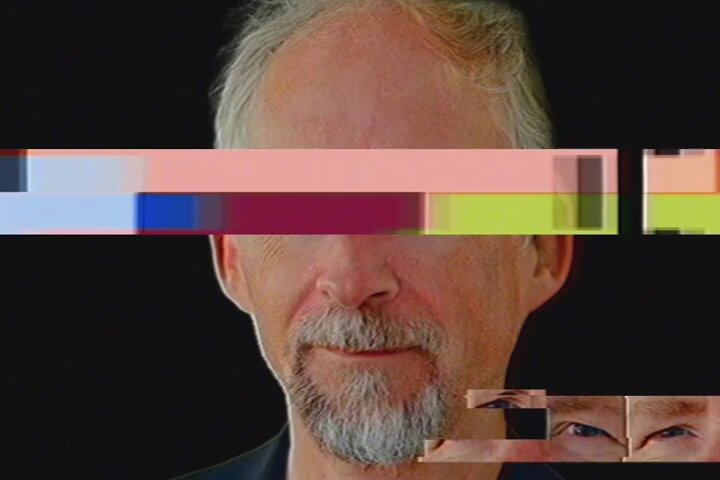 Adam Back denies Satoshi claims after Carreyrou's year-long NYT probe cites 67 shared hyphenation errors2026-04
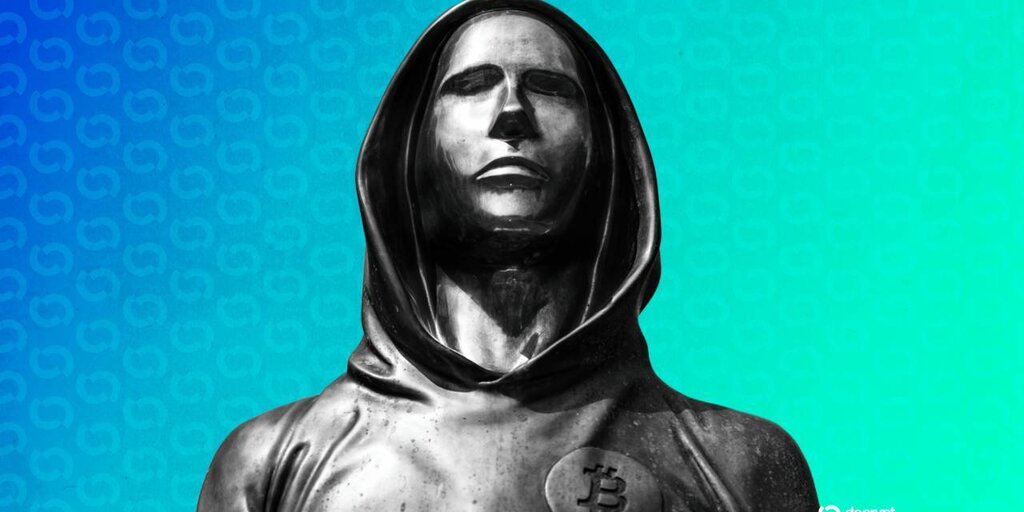 $70M Bitcoin film “Killing Satoshi” starring Casey Affleck explores the mystery of Satoshi Nakamoto, with heavy use of AI in production2026-04
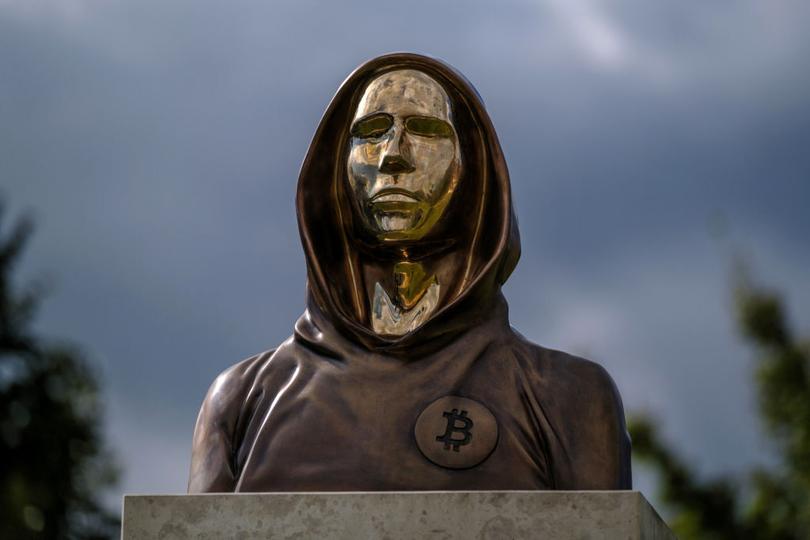 Project Eleven unveils a zero-knowledge recovery system for Bitcoin's quantum-vulnerable wallets under BIP 361, but Satoshi's estimated 1.1M BTC remains unrecoverable -2026-07
 “Finding Satoshi” documentary gets early release via Coinbase app for US users, as Brian Armstrong praises its deep exploration of Bitcoin’s mysterious creator2026-04
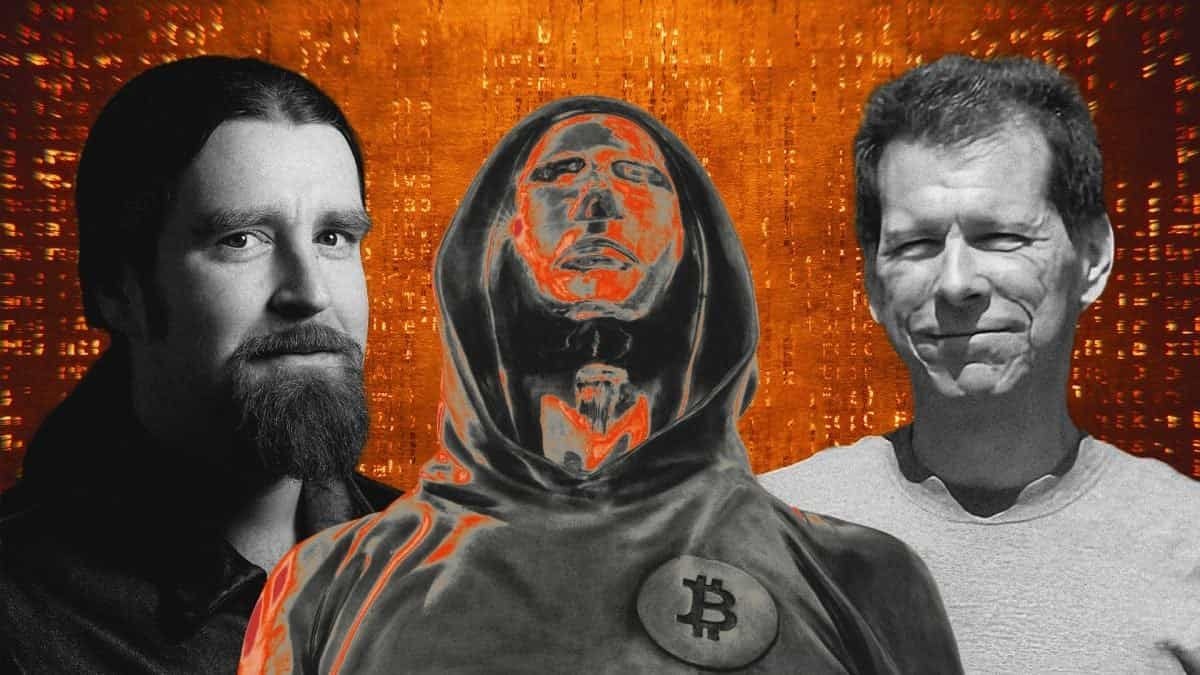 Hal Finney and Len Sassaman were Bitcoin's co-creators, new 'Finding Satoshi' documentary argues2026-04
 Paul Sztorc announces eCash Bitcoin hard fork to ship drivechains and reassign 550K Satoshi-era coins2026-04
The pseudonymous creator of Bitcoin, Satoshi Nakamoto, remains the most consequential and least-known figure in financial technology history — the architect of a $1 trillion-plus asset class who vanished before it matured.
Who Is Satoshi Nakamoto?
On October 31, 2008, a person or group operating under the name Satoshi Nakamoto published a nine-page whitepaper titled Bitcoin: A Peer-to-Peer Electronic Cash System to a cryptography mailing list. The paper proposed a solution to the "double-spend" problem in digital money without relying on any trusted third party. By January 2009, Nakamoto had mined the first Bitcoin block — the "genesis block" — and sent the first transaction to cryptographer Hal Finney.
Nakamoto communicated publicly via forum posts and email through approximately 2010, then handed off development responsibilities and went silent. No verified contact has occurred since. Whether Satoshi is one person, a group, alive, or deceased remains unknown, and that ambiguity has become a defining feature of Bitcoin's mythology and governance structure alike.

Adam Back denies Satoshi claims after Carreyrou's year-long NYT probe cites 67 shared hyphenation errors
67 out of 325 shared hyphenation errors, and Cafiero — the NYT's own computational linguist — still called it inconclusive, with Finney nearly tied for top spot. Back posted more on those cypherpunk lists than almost anyone from 1992-2008; pattern-matching algorithms will always overfit on the largest corpus in the training set. Carreyrou broke Theranos by following money and lab results, not stylometrics — and the last time mainstream media publicly Satoshi'd someone (Peter Todd, HBO), the guy went into hiding over a wallet worth a fraction of this $78B.
The Bitcoin Legacy: Why It Matters That No One Knows
Most financial systems have identifiable founders who can be pressured, subpoenaed, or co-opted. Satoshi's disappearance created what Binance co-founder Changpeng Zhao has called a structural feature rather than a bug: anonymity at the origin protects decentralization. When there is no CEO, no corporation, and no living founder with a controlling stake, regulators and governments have no single throat to grab.
This design principle — that Bitcoin belongs to no one — is precisely why the question of Satoshi's identity carries so much weight. Any confirmed identification would immediately invite legal, regulatory, and social pressure on that person. It would also potentially destabilize Bitcoin's narrative of neutral, leaderless money.
Readers click Satoshi stories not for philosophical reverence but for forensic accountability — on-chain evidence of chain reorganizations, court-adjudicated identity fraud, and dormant wallet movements that could legally or technically destabilize Bitcoin's founding narrative.
Satoshi's Bitcoin Hoard
By the time Nakamoto stopped mining in early 2010, the wallet cluster attributed to the creator held approximately 1.1 million BTC. At various points in Bitcoin's price history, this has represented a fortune ranging from negligible to well over $70 billion. As of mid-2026, that stash remains entirely unmoved — no coin has ever been spent or transferred from addresses researchers attribute to Satoshi.
The dormancy of these coins has spawned a durable set of theories: Nakamoto is dead (and may have been so for years); Nakamoto is deliberately abstaining to avoid market disruption; or the coins are inaccessible because private keys were intentionally destroyed. Whatever the cause, the untouched hoard functions as a kind of proof-of-commitment — a signal that the creator did not build Bitcoin to enrich themselves in the traditional sense.
Bold financial wagers have periodically been placed on whether these coins will ever move, with prediction markets and on-chain analysts treating any dormant-address activity as a potential black swan for Bitcoin's price.

$70M Bitcoin film “Killing Satoshi” starring Casey Affleck explores the mystery of Satoshi Nakamoto, with heavy use of AI in production
Satoshi-Era Wallets and the "Sleeping Giant" Problem
While Nakamoto's specific 1.1 million coins remain still, the broader universe of early Bitcoin addresses — often called "Satoshi-era" wallets — occasionally stirs. In recent months, a Bitcoin whale dating from that founding period moved approximately $203 million in BTC to institutional crypto brokers FalconX and Cumberland, according to on-chain data. The coins had sat dormant for roughly 15 years before the transfer.
These movements are significant for several reasons. First, early-era Bitcoin used address formats and key generation methods that are now considered cryptographically weaker than current standards. Second, large dormant transfers signal that long-term holders are choosing to liquidate or reposition, which can affect market sentiment. Third, they raise the recurring question: could one of these early movers be Satoshi, quietly cashing out without announcement?
Analysts consistently stress that the Satoshi cluster is forensically distinct from other early miners — the mining pattern, coin selection, and address structure point to a single systematic actor — so movements from adjacent early addresses do not confirm Satoshi activity.
- 01Satoshi on-chain forensics
The single highest-clicked story — technical block analysis suggesting Satoshi reorged his own chain — reveals readers want hard cryptographic evidence about Bitcoin's founder, not speculation.
- 02Craig Wright court saga
Multiple stories spanning a UK trial ruling, a failed appeal citing AI-hallucinated case citations, and a defiant personal website pulled readers through a years-long legal fraud arc.
- 03Satoshi primary-source documents
Release of 120 pages of early emails generated strong engagement because readers treat original correspondence as the closest thing to a ground-truth record of Bitcoin's creation.
- 04Satoshi identity candidates
Stories naming Peter Todd (HBO documentary), Adam Back (NYT hyphenation probe), and Hal Finney as candidates drew clicks each time a new investigative angle surfaced a denial or documentary argument.
- 05Satoshi pop culture and statues
Disappearing statues at Lugano and the NYSE, AI films, and a Hollywood thriller signal readers tracking how the Satoshi myth is being institutionalized and commercialized.
- 06Dormant coins and quantum threat
Proposals to freeze Satoshi's $75B stash over a 2029 quantum feasibility warning, and a 80,000 BTC Satoshi-era wallet liquidation, surface reader anxiety about what a coin-movement event would mean for Bitcoin.
The Quantum Threat: Satoshi's Coins at the Center of a Policy Debate
Quantum computing has emerged as a credible long-term threat to Bitcoin's elliptic-curve cryptography, and Satoshi's coins are at the epicenter of this debate — not because they are uniquely vulnerable, but because they represent the largest single concentration of potentially at-risk funds.
Early Bitcoin addresses, particularly "pay-to-public-key" (P2PK) format addresses used in 2009 and 2010, expose the full public key on-chain. A sufficiently powerful quantum computer running Shor's algorithm could, in theory, derive the corresponding private key from a visible public key, allowing an attacker to drain those funds. Satoshi's coins are largely in P2PK format.
Experts have proposed a quantum migration period in which users would move coins from vulnerable addresses to quantum-resistant formats. One proposal, BIP-361, has gone further: it suggests freezing all coins in quantum-vulnerable addresses that do not migrate within a set window — including Satoshi's approximately $74 billion stash if those coins remain unmoved.
This has triggered sharp debate. Cryptographer and Blockstream CEO Adam Back has warned that a quantum upgrade could paradoxically expose Satoshi's holdings to theft or institutional freezing if handled carelessly. Bankless has raised alarms about the 2.3 million total dormant Bitcoin (including but not limited to Satoshi's coins) that could be targeted. Security researchers argue that quantum-resistant migration can save these coins — but only if the protocol upgrade is designed correctly and adopted before quantum hardware reaches sufficient scale.
Cardano founder Charles Hoskinson has taken a more pessimistic view, arguing that the governance challenges of coordinating a hard fork to migrate or freeze Satoshi-era coins make a clean technical fix implausible in practice, regardless of the cryptographic merits. The debate is as much about Bitcoin's social contract — who decides what happens to dormant coins — as it is about quantum physics.
Paul Sztorc's proposed eCash Bitcoin hard fork adds another wrinkle: his proposal would implement drivechains and reassign roughly 550,000 Satoshi-era coins in a way that assumes those coins are effectively abandoned. The proposal illustrates how Satoshi's silence leaves a governance vacuum that others feel licensed to fill.
Project Eleven unveils a zero-knowledge recovery system for Bitcoin's quantum-vulnerable wallets under BIP 361, but Satoshi's estimated 1.1M BTC remains unrecoverable -
The Identity Question: Suspects, Documentaries, and a $70 Million Film
No question in crypto generates more persistent speculation than who Satoshi actually was. Several candidates have been named over the years — some by journalists, some self-nominated — and none has produced definitive cryptographic proof of control over the genesis wallet.
A 2026 New York Times investigation pointed to Adam Back, the inventor of Hashcash (a proof-of-work system that directly preceded Bitcoin's design), as the most likely candidate. Back has consistently denied being Satoshi. The circumstantial evidence the NYT assembled — stylistic analysis, timeline of communications, technical overlap — was compelling to some and contested by others. Back himself called the report inaccurate.
The documentary Finding Satoshi argues for a different conclusion: that Bitcoin was co-created by Hal Finney and Len Sassaman, both now deceased. Finney was the first person to receive a Bitcoin transaction and was a longtime cypherpunk cryptographer; Sassaman was a privacy researcher and cryptographer who died in 2011. The film received an early release through the Coinbase app for U.S. users, with Coinbase CEO Brian Armstrong publicly praising its exploration of the mystery. The Coinbase distribution channel reflects the growing mainstream cultural weight of the Satoshi question.
A separate, higher-budget production — Bitcoin: Killing Satoshi, starring Casey Affleck and produced at a reported cost of $70 million — approaches the mystery as dramatic fiction, and has made notable use of AI tools in its production pipeline. The film's existence signals that Satoshi's story has crossed from crypto-industry fascination into mainstream entertainment, even as the underlying facts remain unresolved.
Zcash founder Zooko Wilcox and others from the cypherpunk community have noted that the most likely Satoshi candidates are people who understood both the cryptographic and the economic dimensions of the problem deeply, had the coding skill to implement it, and had reason to value anonymity — a Venn diagram that was small in 2008 and has not grown larger with time.
- 2008-10launch
Bitcoin whitepaper published pseudonymously by Satoshi Nakamoto
- 2009-01milestone
Genesis block mined; early 2009 blocks later analyzed for suspected hash-power reorgs
- 2011-04milestone
Satoshi's final known email: 'I've moved on to other things'
- 2024-03regulatory
COPA v. Craig Wright: UK judge rules Wright is not Satoshi and did not author the whitepaper
- 2024-10milestone
HBO documentary 'Money Electric' alleges Peter Todd is Satoshi; Todd publicly denies
- 2025-01regulatory
Craig Wright's appeal dismissed; judge cites AI-hallucinated case citations in Wright's own filings
- 2025-06governance
Bitcoin developers formally propose freezing Satoshi-era P2PK coins citing Google's 2029 quantum cracking timeline
- 2025-09milestone
Galaxy executes 80,000 BTC sale (~$9B) on behalf of a Satoshi-era wallet in one of the largest notional BTC liquidations on record
Why Satoshi's Anonymity Is a Design Principle, Not Just a Mystery
It is tempting to treat the Satoshi question as an unsolved puzzle awaiting resolution. But a growing consensus among Bitcoin developers and researchers holds that the anonymity is constitutive of what Bitcoin is, not incidental to it.
A living, identified Satoshi would face immediate legal exposure in multiple jurisdictions. The 1.1 million unmoved BTC would become a target for asset seizure. Bitcoin's "no founder control" argument — central to its regulatory positioning as a commodity rather than a security in the United States — would weaken substantially.
Satoshi's vision for decentralized peer-to-peer cash continues to resonate beyond professional investors. The ideals embedded in the whitepaper — censorship resistance, permissionless access, fixed supply — have inspired a generation of builders and, as some observers note, even everyday people rethinking their relationship with money and financial institutions.
CZ's argument — that Satoshi's anonymity actively protects crypto's decentralization — has become something close to orthodoxy among Bitcoin maximalists. On this reading, asking "who is Satoshi?" is less a historical puzzle and more a category error: the point is that it does not matter, and the fact that it does not matter is the achievement.
Outlook
Satoshi Nakamoto's relevance shows no sign of diminishing. The 1.1 million dormant coins — worth tens of billions of dollars at any recent Bitcoin price — sit at the intersection of every major near-term challenge the network faces: quantum-computing migration policy, governance legitimacy, and the question of what Bitcoin's social contract actually permits.
If quantum-resistant cryptography becomes urgent on a decade timescale, the fate of Satoshi's coins will force a genuine governance crisis: freeze them, allow them to remain vulnerable, or engineer a migration that may never be accepted by those keys' unknown holder. None of those paths is clean.
In the meantime, documentaries, investigative journalism, and a $70 million Hollywood production all circle the same absence. The identity mystery endures not because the clues are insufficient but because no one has yet produced the one thing that would settle it: a verifiable cryptographic signature from the genesis wallet. Until that signature appears — or the coins finally move — Satoshi Nakamoto remains the most important ghost in the machine of modern finance.
Latest Satoshi news
Adam Back denies Satoshi claims after Carreyrou's year-long NYT probe cites 67 shared hyphenation errors$70M Bitcoin film “Killing Satoshi” starring Casey Affleck explores the mystery of Satoshi Nakamoto, with heavy use of AI in productionProject Eleven unveils a zero-knowledge recovery system for Bitcoin's quantum-vulnerable wallets under BIP 361, but Satoshi's estimated 1.1M BTC remains unrecoverable -“Finding Satoshi” documentary gets early release via Coinbase app for US users, as Brian Armstrong praises its deep exploration of Bitcoin’s mysterious creatorHal Finney and Len Sassaman were Bitcoin's co-creators, new 'Finding Satoshi' documentary arguesPaul Sztorc announces eCash Bitcoin hard fork to ship drivechains and reassign 550K Satoshi-era coinsCommunity notes
Spot something off or out of date? Drop a note. Editors review topic notes daily and roll accepted fixes into the explainer — contributors are recognized in the monthly $SQUID drop.
Loading notes…
Help improve this topic
Have a story or tip about this topic? Submit it. See something missing? Leave a note. Editors review daily; accepted submissions and fixes count toward the monthly $SQUID drop.