
Deep dive explainer on Deutsche Bank’s crypto strategy, covering its role in stablecoins (AllUnity), digital asset custody, payments, tokenization, compliance (Elliptic) and competition with HSBC—what it means for institutions, DeFi and onchain finance.
+9 sources across the wider coverage universe
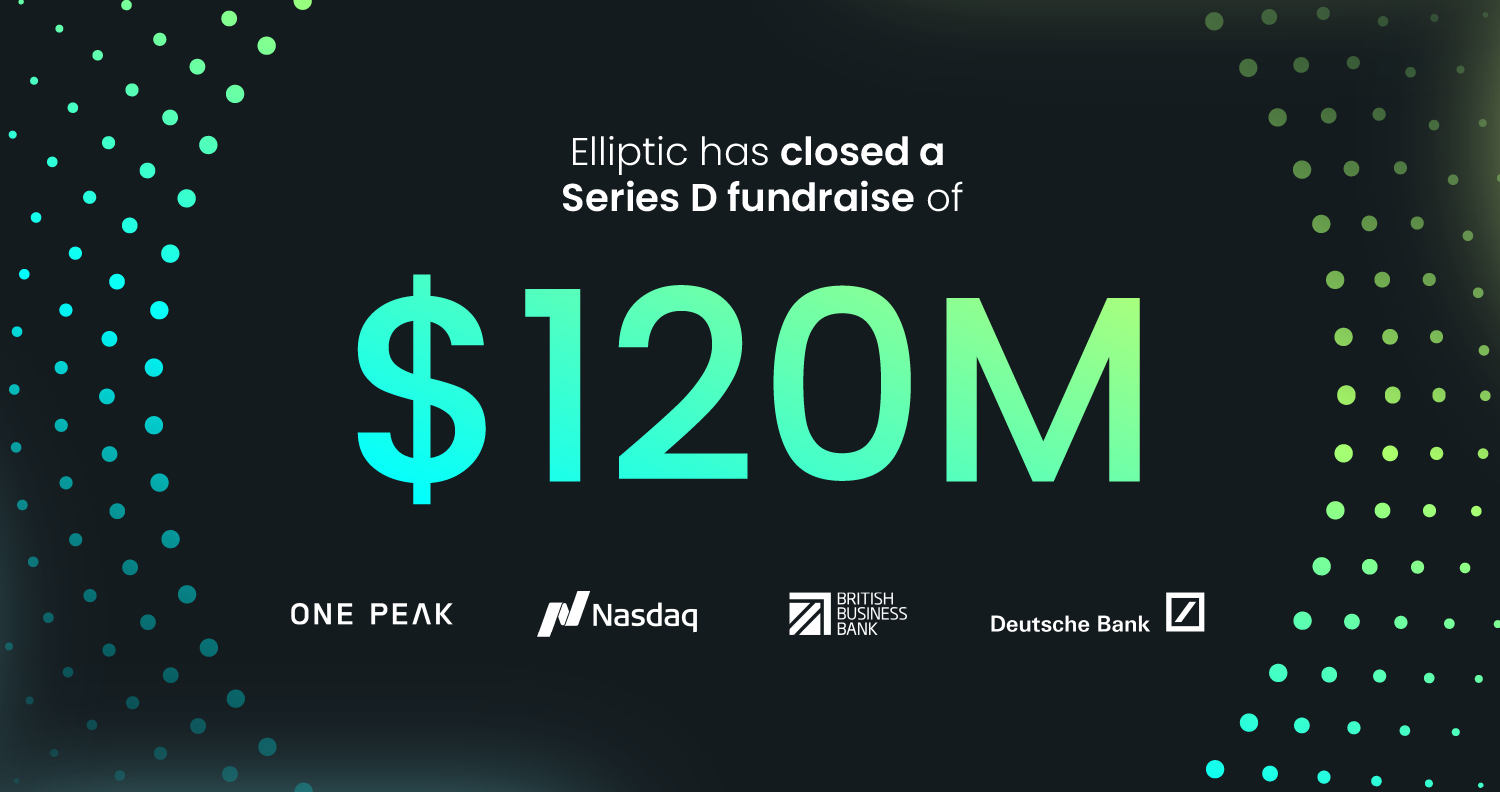 Elliptic secures $120 million investment from Nasdaq Ventures, Deutsche Bank, One Peak and the British Business Bank.2026-05
 HSBC and Deutsche Bank face up to 7% revenue risk as corporates move cross-border payments to stablecoins2026-04
 Deutsche Bank survey shows US crypto adoption rebounding with Bitcoin held by 74% of crypto owners2026-04
 AllUnity, backed by Deutsche Bank, has launched CHFAU, the first MiCA‑compliant Swiss franc stablecoin for institutional investors, expanding its regulated fiat‑backed stablecoin lineup beyond the euro‑pegged EURAU.2026-02
 RBC warns European banks could lose 7% of revenue to crypto rivals, with HSBC and Deutsche Bank most exposed2026-04
 Deutsche Bank reveals €26 billion private credit exposure as the sector faces redemptions, underwriting concerns and AI-driven risks for borrowers like software firms, while downplaying major systemic threats2026-03
Deutsche Bank and Digital Assets: Stablecoins, Custody and the Tokenized Future
Deutsche Bank is one of Europe’s largest universal banks, and over the past several years it has quietly become a pivotal player in the institutional adoption of crypto, stablecoins and tokenized assets. While it still operates firmly within the traditional regulatory perimeter, the bank is backing regulated euro and Swiss franc stablecoins, preparing a full-scale digital asset custody offering, and investing in blockchain analytics and staking infrastructure, positioning itself at the center of the next phase of on‑chain finance. For crypto market participants, Deutsche Bank’s choices offer a useful map of how large, regulated institutions are likely to engage with public blockchains: not by embracing permissionless speculation wholesale, but by building tightly controlled bridges between fiat money, tokenized real‑world assets and mainstream financial markets. The bank’s research, partnerships and pilot projects illuminate how stablecoins, tokenised deposits and central bank digital currencies (CBDCs) may coexist, and how corporate payments, treasury and custody revenues may shift as value moves onchain. At the same time, Deutsche Bank’s focus on AI‑driven compliance and risk management underscores that the institutionalization of crypto will arrive with more surveillance and regulation, not less, reshaping the balance between innovation and control. Understanding Deutsche Bank’s evolving strategy therefore helps crypto users, builders and investors anticipate the shape of a tokenized financial system in which global banks, Web3 protocols and regulators increasingly share the same rails.
Deutsche Bank in Context: Why a Legacy Bank Matters to Crypto
Any explanation of Deutsche Bank’s role in the digital asset ecosystem has to start with its traditional business model. As a universal bank headquartered in Germany with a global footprint, Deutsche Bank combines corporate and investment banking, retail banking and asset management under one roof, with a heavy emphasis on cross‑border payments, transaction banking and institutional capital markets. That mix makes it particularly sensitive to changes in how large companies move money around the world, manage liquidity and raise capital, which are exactly the areas where crypto, stablecoins and tokenized assets are starting to bite. Analysts at RBC Capital Markets have highlighted that banks with large corporate cash management and payments businesses, notably Deutsche Bank and HSBC, are especially exposed to clients shifting balances and payment flows into digital assets, potentially putting up to about seven percent of group revenue at risk if they do not respond. At the same time, those same analysts stress that digital money also presents new revenue opportunities for banks that adapt quickly, whether through stablecoin initiatives, tokenized deposits or digital asset services.
Deutsche Bank’s own research has publicly acknowledged that crypto and digital assets are not a passing fad but a structural shift. In a widely cited report on “the future of money,” Deutsche Bank Research analysts argued that, despite volatility and high‑profile collapses such as FTX, cryptocurrencies and digital assets “are here to stay,” and are edging toward becoming part of “business as usual” in finance. A Deutsche Bank dbDIG survey conducted in 2023 found that roughly one‑third of respondents still viewed crypto as an important asset class and transaction method, even after a bruising bear market. The same survey noted significant regional differences: Americans were roughly three times more active than Europeans in using crypto either as an investment or for buying goods and services, hinting at the potential for future convergence if European adoption catches up. For a bank whose core franchise spans both Europe and the United States, those findings are less an abstract curiosity than a guide to future client demand.
The bank’s corporate‑facing publications have gone further, mapping out how specific digital asset instruments fit into the financial system. In a comprehensive white paper on digital money, Deutsche Bank distinguishes between three main categories: private stablecoins issued by non‑banks, tokenised deposits issued by banks, and central bank digital currencies. Stablecoins are framed as a bridge between blockchain‑based ecosystems and traditional finance, enabling programmable money that can move across public networks while remaining linked to fiat currencies. Tokenised deposits, by contrast, are described as a way of extending the existing bank deposit model into token form, keeping money within the regulated banking system but making it compatible with distributed ledger infrastructure. CBDCs, finally, are treated as sovereign digital money, with systemic implications for monetary policy and the role of commercial banks. This analytical framework underpins most of the bank’s practical initiatives in crypto and tokenization.
Deutsche Bank has also developed a distinct vision of a “tokenised economy” in which not just money, but a wide range of financial and real‑world assets are represented as tokens on distributed ledgers. In its public “vision of a tokenised economy,” the bank notes research by McKinsey suggesting that tokenised financial and real‑world assets, excluding cryptocurrencies like Bitcoin, could reach about two trillion dollars in market capitalization by 2030. Deutsche Bank emphasizes that this figure likely understates the potential, since it excludes native crypto and focuses only on tokenized versions of traditional instruments. The bank points to its own experiments with tokenised bonds, including a blockchain‑based bond issuance for Siemens and support for a tokenised bond from Germany’s development bank KfW, as evidence that tokenization is already moving beyond proofs of concept toward real capital markets transactions. These projects are less about speculative upside than about learning how settlement, custody and investor workflows change when securities live onchain.
For a crypto audience accustomed to agile startups and permissionless protocols, a cautious, research‑heavy approach may seem slow. Yet institutions of Deutsche Bank’s size and systemic importance cannot pivot on a dime, and regulators would not allow them to. In that context, the bank’s willingness to put its brand behind regulated stablecoins, to build a dedicated digital asset custody service, and to invest in specialized crypto infrastructure providers is notable. It signals that, within the constraints of banking regulation, Deutsche Bank views digital assets as a strategic priority rather than a peripheral experiment. The bank’s moves also send a signal to corporate treasurers and institutional investors who view large banks as gatekeepers: if Deutsche Bank is preparing to handle Bitcoin, Ethereum, stablecoins and tokenized securities, then these assets are moving further into the institutional mainstream.

Deutsche Bank plans bitcoin, ether custody for institutional clients in Europe
From Skepticism to “New Normal”: How Deutsche Bank Sees Crypto
Deutsche Bank’s intellectual journey on crypto can be traced through its research publications and client communications. Immediately after the collapse of major centralized platforms like FTX, many observers speculated that institutional interest in crypto would evaporate. Instead, Deutsche Bank’s analysts assessed that the underlying technologies and use cases were likely to persist, even if speculative excess was being washed out. In the “What is crypto’s new normal?” piece on its flow platform, the bank summarized its dbDIG survey results by noting that, while user sentiment had turned more negative in 2023, a significant minority still considered crypto an important part of the financial landscape. The report emphasized that crypto was “quietly edging towards mainstream adoption,” with usage becoming less about exuberant trading and more about specific functional roles such as payments, remittances and store‑of‑value strategies.
The bank’s breakdown of regional patterns was particularly instructive. Americans in the survey were markedly more engaged with crypto, both as an investment and as a payment method, than their European counterparts, with usage roughly three times higher. This gap matters for a European bank like Deutsche Bank because it hints at latent demand: if European corporate clients and households were to converge towards U.S. behavior, the volume of crypto‑denominated portfolios and payment flows the bank’s clients handle could rise significantly. At the same time, the report acknowledged thorny uncertainties around regulation, taxation and consumer protection, which help explain Europe’s more cautious curve. The implication was that, as regulatory clarity improves through frameworks like the EU’s Markets in Crypto‑Assets (MiCA) regulation, European adoption may accelerate.
In parallel, Deutsche Bank’s “Digital Money” white paper attempted to clarify terminology for corporate and institutional audiences who might otherwise lump all digital assets together. It distinguishes stablecoins by their issuance model and collateral structure from tokenised deposits and CBDCs, stressing that each instrument embodies different risk, governance and balance‑sheet implications. Stablecoins, especially those not issued by banks, can provide fast and programmable settlement but raise questions around reserve quality, regulatory oversight and systemic importance if they scale. Tokenised deposits keep the familiar structure of a bank liability redeemable at par, but require new technological stacks, legal clarity on token ownership, and interoperable standards across institutions. CBDCs add a sovereign layer that could change the division of roles between central banks and commercial banks, especially if they enable retail wallets or direct access for non‑banks.
These distinctions are not merely academic. They underpin Deutsche Bank’s choices to back specific initiatives like AllUnity’s euro stablecoin, while simultaneously exploring tokenised deposit architectures and preparing for potential CBDC integration in payment systems. In its digital assets outlook to 2026, the bank highlights how stablecoins are already demonstrating real‑world utility beyond speculative trading. It estimates that only a small share of stablecoin volumes are currently used for retail payments or remittances, around two percent each, while roughly seven percent are involved in settling payments linked to real‑world asset trades. Although those percentages are modest, their very presence suggests that onchain payment and settlement is no longer a theoretical use case. The report also argues that adoption is rising fastest in specific niches such as B2B cross‑border corridors and emerging‑market transactions where existing rails are slow or expensive.
For crypto market observers, this research posture matters because it shapes Deutsche Bank’s internal narratives. Rather than treating crypto as a monolith, the bank slices the space into technology layers and instruments, then prioritizes areas where it believes regulated institutions can add value. That naturally pulls focus toward fiat‑linked stablecoins, securities tokenization, and service offerings like custody, rather than towards permissionless DeFi or non‑collateralized governance tokens. The bank’s analysts do not ignore DeFi, but discuss it primarily as a possible venue for tokenized assets or as an innovation lab that might feed into institutional use cases once legal and compliance questions are solved. That orientation aligns with how many other large financial institutions are approaching crypto: cautiously, selectively, and with a focus on maintaining control over liabilities and client relationships.
At the same time, Deutsche Bank’s macro research has increasingly engaged with the geopolitical dimensions of digital money. In a note on the war in Iran and its implications for the global oil trade, a Deutsche Bank strategist argued that the conflict could act as a catalyst for a gradual erosion of the U.S. dollar’s dominance in petrodollar invoicing, opening the door for what she called the “beginnings of the petroyuan.” The analysis referenced reports that Iran was allowing ships to pass through the Strait of Hormuz provided oil payments were made in Chinese yuan, illustrating how geopolitical frictions and sanctions can drive diversification away from the dollar. While this research did not focus on crypto per se, it underscores that Deutsche Bank sees the broader monetary order as fluid, with multiple potential poles of influence. In such a world, tokenised currencies, both private and sovereign, may play a growing role as states and corporations seek alternatives or complements to legacy systems.
Taken together, Deutsche Bank’s research paints a picture in which digital assets are not a parallel universe but an increasingly integrated extension of existing finance. Stablecoins, tokenised deposits and CBDCs interlock with cross‑border payments, commodity trade, securities issuance and asset management. For crypto practitioners, the key takeaway is that a bank of Deutsche Bank’s size now treats digital assets as a structural theme that must be understood and harnessed, rather than as a peripheral curiosity to be ignored. The bank’s subsequent strategic moves, especially around stablecoins and custody, can be read as attempts to operationalize this analytical stance.
Readers don't click Deutsche Bank crypto coverage for the bank's research or opinions — they click when Deutsche Bank is the active infrastructure: executing live stablecoin swaps, issuing regulated tokens, and becoming a settlement counterparty rather than a commentator.
Stablecoins, AllUnity and Digital Money: Deutsche Bank’s Fiat‑Token Strategy
The clearest expression of Deutsche Bank’s stablecoin strategy to date is its backing of AllUnity, a joint venture between its asset management arm DWS, market maker Flow Traders and digital asset firm Galaxy Digital. When the partnership was first announced in December 2023, the stated mission was to “revolutionize the on‑chain economy” by issuing a fully collateralized euro‑denominated stablecoin, with BaFin, Germany’s financial supervisor, as lead regulator. Over the next year and a half, that vision crystallized into a concrete product: the EURAU stablecoin, which obtained an electronic money institution license from BaFin on July 1, 2025, and launched to the market on July 29, 2025. According to AllUnity and exchange listings, EURAU is described as Germany’s first regulated euro‑denominated digital currency and the first MiCA‑compliant euro stablecoin, fully backed one‑to‑one by euro reserves under a multi‑bank reserve model.
AllUnity positions EURAU as secure, programmable and transparent euro liquidity designed for institutional and retail use across public blockchain networks. The token is issued under the European Markets in Crypto‑Assets regulatory framework, with an emphasis on full collateralization, proof‑of‑reserves attestations and comprehensive regulatory reporting. From Deutsche Bank’s perspective, this structure achieves several objectives simultaneously. It anchors the stablecoin firmly within European financial regulation, potentially easing regulatory concerns when banks, payment firms or corporates hold or transact in EURAU. It leverages DWS’s asset‑management expertise for reserve management, while Flow Traders contributes market‑making and Galaxy brings crypto‑native technology and distribution. And by designing EURAU for deployment on multiple public chains, AllUnity aims to embed a regulated euro token into the ecosystems where onchain finance is actually happening.
More recently, AllUnity has expanded its ambitions beyond the euro. Industry coverage has reported that the venture, still backed by Deutsche Bank, has launched CHFAU, a Swiss franc‑pegged stablecoin targeted at institutional investors and described as the first MiCA‑compliant Swiss franc digital currency of its kind. While regulatory and legal details differ between euro and franc instruments, the strategic logic is similar: offer fully reserved, institutionally acceptable fiat tokens in key European currencies, with regulatory oversight and transparency designed to satisfy both banks and regulators. Taken together, EURAU and CHFAU sketch out a roadmap in which AllUnity becomes a multi‑currency, fully regulated fiat stablecoin platform tailored for global payments, treasury operations and tokenized asset settlement, rather than merely another trading pair in crypto exchanges.
These moves align closely with Deutsche Bank’s broader thinking about digital money. In its white paper on stablecoins, tokenised deposits and CBDCs, the bank explicitly characterizes stablecoins as a bridge between blockchain ecosystems and traditional finance. They allow value to move natively on distributed ledgers while remaining denominated in familiar currencies, enabling programmable payments, instant settlement and composable financial products. However, the bank also highlights structural risks associated with some of the largest existing stablecoins, especially if reserves are opaque, unregulated or concentrated in riskier instruments. By backing AllUnity, Deutsche Bank is implicitly betting that demand will grow for stablecoins that look and behave more like regulated e‑money or tokenized bank liabilities, with conservative reserves and clear legal recourse.
At the same time, Deutsche Bank is not restricting itself only to third‑party stablecoins. Its own research and statements indicate active exploration of tokenised deposits, where a euro or dollar deposit at Deutsche Bank would be represented as a token on a permissioned or public blockchain. Unlike a standalone stablecoin issued by a non‑bank, a tokenised deposit remains a direct claim on the bank’s balance sheet, subject to existing deposit insurance and banking regulations. In principle, such tokens could be used by corporates for onchain cash management, intraday liquidity, collateral posting or automated supply‑chain payments, while allowing the bank to retain its central role in liquidity provision. Deutsche Bank’s involvement in bank‑led stablecoin groups, mentioned by RBC Capital Markets analysts, further illustrates the blurring line between “stablecoins” and “tokenised deposits” when banks collectively issue or support shared digital money instruments.
The competition and contrast with HSBC is instructive. RBC’s analysis identified HSBC and Deutsche Bank as the two European banks most exposed to revenue risk if corporate clients migrate payments and treasury balances into crypto and stablecoins, because corporate payments account for at least ten percent of their group revenues. Yet in an HSBC “new payments paradigm” paper, the bank stated explicitly that it had “no appetite for stablecoins” at that stage, grouping them with cryptocurrencies as digital instruments it preferred to avoid, while paying closer attention to CBDC projects. Deutsche Bank, by contrast, has chosen to put its brand and capital behind a regulated euro and franc stablecoin initiative, even as it participates in CBDC discussions and explores tokenised deposits. The divergence suggests that large banks are not uniform in their approach: some, like HSBC, may wait for sovereign digital money to define the playing field, while others, like Deutsche Bank, are willing to co‑design regulated private tokens that anticipate where CBDCs and tokenized banking might eventually land.
From the perspective of crypto markets, AllUnity’s stablecoins represent a test case for whether “MiCA‑grade” fiat tokens can gain traction beyond regulatory circles. Their design emphasizes transparency, licensing and reserve safety over maximizing yield or flexibility, appealing to corporates, financial institutions and conservative investors who may have avoided unregulated stablecoins. If such tokens achieve substantial adoption in cross‑border B2B payments, trading, or DeFi protocols, they could gradually shift stablecoin market share away from less regulated incumbents. Deutsche Bank’s presence in the cap table and governance structure also matters symbolically: for many corporates and traditional investors, a euro stablecoin with DWS and Deutsche Bank in the background looks different from a stablecoin issued by a lightly regulated offshore entity.
On the other hand, there are real questions about liquidity, network effects and developer adoption. Crypto markets are notoriously path‑dependent, and established stablecoins enjoy deep liquidity and broad integration across exchanges, wallets and DeFi. For AllUnity’s tokens to achieve escape velocity, they will need not only regulatory credibility but also tight spreads, ample on‑ and off‑ramps, and composability with smart‑contract ecosystems, particularly on Ethereum and its scaling solutions. Deutsche Bank’s strategy implicitly assumes that, over time, institutional demand for regulated onchain euros and francs will catalyze such liquidity, especially as DeFi and tokenized real‑world assets move into compliance‑friendly frameworks. Whether that assumption holds will be one of the more consequential tests of the bank’s digital money thesis.
- 01UDPN live stablecoin settlement↗
The top-clicked story by a wide margin showed Deutsche Bank actually transacting on a cross-border stablecoin network, not just studying one — readers want proof of execution, not roadmaps.
- 02AllUnity regulated stablecoin venture↗
DWS, Flow Traders, and Galaxy forming a MiCA-compliant euro and Swiss franc stablecoin issuer under a Deutsche Bank umbrella drew repeated clicks across multiple headlines, tracking the venture from announcement through CHFAU launch.
- 03Crypto custody licensing race↗
Readers tracked Deutsche Bank's BaFin custody license filing and the subsequent 2026 launch target closely, treating it as a bellwether for whether TradFi giants will control the institutional custody layer.
- 04Ethereum L2 and RWA tokenization↗
Deutsche Bank building a ZKSync-based ETH L2 under Singapore's Project Guardian and the accompanying RWA tokenization research framed the bank as Ethereum infrastructure rather than a skeptic.
- 05Strategic exchange and FX partnerships↗
Keyrock FX integration and Crypto.com APAC banking both showed Deutsche Bank embedding itself in active crypto market structure rather than waiting for regulatory clarity.
- 06Stablecoin revenue disruption threat↗
Headlines quantifying up to 7% revenue risk from corporate stablecoin adoption in cross-border payments framed Deutsche Bank simultaneously as both threat vector and threatened incumbent.
Crypto Custody, Staking and Infrastructure: Building the Pipes
Stablecoins are only one side of Deutsche Bank’s digital asset strategy. The other is infrastructure: providing safe, regulated storage and transaction services for cryptoassets on behalf of clients. According to reports from Bloomberg and other outlets, Deutsche Bank plans to launch a digital asset custody service in 2026, enabling clients to store cryptocurrencies such as Bitcoin with the bank. The offering will be built in collaboration with the technology unit of Bitpanda, an Austria‑based crypto exchange, and with Swiss digital asset infrastructure firm Taurus SA, in which Deutsche Bank is an investor and strategic partner. The bank’s corporate division, which first outlined its intention to offer crypto custody as early as 2022 and applied for a digital asset custody license in Germany, will lead the initiative.
Crypto custody at scale is a non‑trivial undertaking for a global bank. Unlike traditional securities custody, which primarily involves bookkeeping and interfacing with central securities depositories, digital asset custody requires managing cryptographic keys, protecting against sophisticated cyber threats, and interfacing with public blockchain networks. The Office of the Comptroller of the Currency in the United States issued interpretive guidance making clear that national banks are allowed to provide cryptocurrency custody services, treating them as a modern extension of safekeeping, but it also emphasized that robust risk management and technology controls are essential. When U.S. Bank launched its own crypto custody service, for instance, it did so via a partnership with specialist sub‑custodian NYDIG, initially limiting services to a small set of assets and institutional clients such as U.S. and Cayman‑domiciled investment managers. Deutsche Bank is following a similar model by teaming up with Bitpanda Tech and Taurus rather than attempting to build and certify all infrastructure in‑house.
Taurus’s role is particularly significant. The firm provides a digital asset platform designed specifically for banks and regulated institutions, including a flagship custody solution called Taurus‑PROTECT. In December 2025, Taurus announced a strategic partnership with Everstake, one of the largest non‑custodial staking providers, to integrate enterprise‑grade staking infrastructure into its platform. The integration allows Taurus’s banking and institutional clients to access secure, compliant staking services across multiple proof‑of‑stake networks while maintaining full control and legal ownership of their assets through the Taurus‑PROTECT custody environment. For a bank like Deutsche Bank, this means that once its custody stack is in place, it can offer not just cold storage for cryptoassets, but also on‑chain yield‑generating activities like staking, embedded within a controlled, auditable framework.
Deutsche Bank’s earlier “vision of a tokenised economy” explicitly mentions that the bank seeks regulatory approval to offer custody of cryptoassets, seeing this as a way to earn fees from safekeeping clients’ digital holdings. The same vision piece points to the bank’s experience in issuing and settling a 300‑million‑euro blockchain‑based bond for Siemens and supporting a tokenised bond for KfW as practical demonstrations of its ability to manage onchain asset lifecycles. Combining that experience with Taurus’s infrastructure and Everstake’s staking capabilities would allow Deutsche Bank to cover a wide swath of institutional digital asset needs: storage, governance participation for proof‑of‑stake networks, tokenized securities management, and potentially collateralization and lending services linked to tokenized assets.
Partnership with Bitpanda’s technology arm adds another dimension. Bitpanda has experience handling high volumes of retail and institutional crypto trading and payments, and Deutsche Bank already collaborated with the exchange on improving fiat on‑ and off‑ramps for crypto payments. By leveraging Bitpanda’s wallet and transaction technology, Deutsche Bank can focus its efforts on regulatory compliance, risk management and client onboarding, while benefiting from a tested execution engine. The custody service is expected to initially support major cryptocurrencies like Bitcoin, and likely Ethereum, before expanding to cover tokenized securities and regulated stablecoins, aligning with the bank’s broader tokenization strategy.
These moves position Deutsche Bank alongside a handful of global banks pursuing digital asset custody as a core business line. U.S. Bank’s offering with NYDIG, and similar initiatives by players like BNY Mellon and State Street, demonstrate that custody is becoming a competitive arena in which margins, asset coverage, integration with other services and regulatory clarity will determine winners. For institutional crypto holders, the entrance of Deutsche Bank and its peers provides an alternative to pure‑play crypto custodians, with the advantage of existing relationships, balance‑sheet strength and integration into broader capital markets services. For the crypto ecosystem, the trade‑off is that institutional custody often implies stricter compliance, less flexibility and a preference for assets that fit neatly within regulatory frameworks.
In terms of network effects, Deutsche Bank’s custody platform could become a nexus where regulated stablecoins, tokenised securities and native cryptoassets intersect. A corporate client might, for example, hold EURAU stablecoins, tokenised commercial paper and Bitcoin in a single custody account, using them for payments, collateral and investment. If staking services are added, clients could earn yield on proof‑of‑stake assets while the bank handles validator operations via partners like Everstake. As tokenized real‑world assets proliferate, custody will increasingly mean managing complex rights and cash‑flow structures rather than just cryptographic keys. Deutsche Bank’s early steps in custody therefore have cascading implications for how much of the future tokenized economy will be intermediated by large banks versus remaining in self‑custodied or DeFi‑native channels.

Elliptic secures $120 million investment from Nasdaq Ventures, Deutsche Bank, One Peak and the British Business Bank.
Payments, Corporate Treasury and Revenue: Threat or Opportunity?
The strategic urgency behind Deutsche Bank’s digital asset initiatives becomes clearer when viewed through the lens of payments and treasury revenue. Corporate payments and cash management are core pillars of the bank’s business model, providing stable fee income and cheap funding through operational deposits. RBC Capital Markets analysts, in a note to clients, warned that European banks with large corporate cash management franchises, notably HSBC and Deutsche Bank, stand to lose materially if companies begin using crypto and stablecoins to manage their money. In an extreme scenario, RBC estimated that highly exposed banks could see up to about seven percent of their group revenue eroded by a combination of rising funding costs, as deposits move elsewhere, and falling fee income, as clients bypass traditional payment services. The analysts noted that corporate payments account for at least ten percent of total revenue at both HSBC and Deutsche Bank, magnifying the impact.
Yet RBC’s assessment was not uniformly pessimistic. The note also emphasized that the growth of digital assets opens new revenue opportunities for banks willing to engage, ranging from transaction and custody fees to FX spreads on stablecoin flows and services related to compliance and analytics. In other words, digital money can be both a threat and an opportunity, depending on whether a bank chooses to ignore it or integrate it. Deutsche Bank’s actions suggest it has internalized this duality. By backing AllUnity’s regulated stablecoins, the bank positions itself to recapture payment flows that might otherwise shift entirely to non‑bank stablecoin issuers. By building digital asset custody and exploring tokenised deposits, it creates new services for clients who want onchain efficiency without abandoning their banking relationships.
Deutsche Bank’s own analysis of stablecoins’ current usage underscores why corporate treasurers are paying attention. In its outlook for digital assets to 2026, the bank highlights that stablecoins are increasingly recognized not just as trading instruments but for real‑world utility in B2B payments and remittances. It estimates that while only around two percent of stablecoin activity relates to retail payments and another two percent to remittances, about seven percent is already used to settle payments for trades in real‑world assets. The report argues that when one looks beyond established corridors between major currencies and considers flows into and within emerging markets, the case for using stablecoins as a faster, potentially cheaper medium for cross‑border settlement becomes compelling. For corporates operating complex supply chains or managing liquidity across subsidiaries, the ability to move tokenized euros or dollars 24/7 on public blockchains offers clear operational advantages.
The same report discusses treasury and cash management as a natural next frontier for stablecoin adoption. Corporates could, in principle, hold portions of their working capital in regulated stablecoins, using them for intraday liquidity, automated just‑in‑time payments, or as collateral in onchain financing arrangements. Such usage would not necessarily displace bank relationships; instead, it could change the form in which bank liabilities are held, tilting from traditional deposits towards tokenized instruments. Deutsche Bank’s exploration of tokenised deposits fits neatly into this narrative: if a corporate treasurer can hold a token that is both a programmable onchain asset and a regulated deposit claim on Deutsche Bank, the bank preserves its funding base while offering clients the functionality they seek.
The competitive landscape is complicated by divergent bank strategies. HSBC, flagged by RBC as sharing Deutsche Bank’s exposure to crypto‑driven payments disruption, has publicly maintained that it has “no appetite” for stablecoins or cryptocurrencies at this stage, even as it engages actively with CBDC projects and upgrades its traditional payments infrastructure. That stance may protect HSBC from certain risks but leaves it more dependent on central banks’ timelines for CBDCs and on correspondent banking networks. Deutsche Bank, by contrast, appears to be hedging: it is participating in CBDC dialogues, but also building private‑sector solutions through AllUnity and bank‑led stablecoin groups referenced by RBC. If regulated private stablecoins gain traction faster than CBDCs in cross‑border commerce, Deutsche Bank’s early involvement could give it an advantage in capturing those flows.
Corporate behavior will ultimately determine which strategy pays off. Deutsche Bank’s dbDIG surveys suggest that even among retail and mass‑affluent clients, interest in crypto as both an investment and payment tool remains meaningful, especially in the United States. More recent internal research has reportedly shown that a large majority of crypto owners, around three‑quarters, hold Bitcoin, highlighting the asset’s centrality in digital portfolios and its potential role as a treasury reserve asset for some firms. As corporate treasurers observe peers experimenting with Bitcoin on balance sheet, stablecoin‑based settlement or tokenized bond issuance, the pressure to explore similar options will mount. If their primary banks cannot support such activities, they may turn to specialized fintechs or multi‑bank platforms, eroding incumbents’ share of wallet.
On the revenue side, stablecoin and tokenization services could provide Deutsche Bank with diversified fee streams that are less tied to interest rate cycles. Custody and staking services can generate asset‑based fees, while arranging tokenized bond or RWA issuance offers underwriting and advisory income. Facilitating cross‑border payments in EURAU or CHFAU, or in future tokenised deposit instruments, could generate transaction and FX fees, especially if the bank can offer attractive on‑ and off‑ramp conversion rates. However, these opportunities come with substantial upfront investment in technology, compliance and talent, as well as the risk that regulatory changes or market preferences shift the playing field. For crypto‑native firms, Deutsche Bank’s gradual embrace of these revenue lines signals both competition and partnership potential: banks will likely seek to integrate with exchanges, wallet providers and DeFi protocols rather than building every component themselves.
Deutsche Bank files for BaFin crypto custody license
DWS, Flow Traders, and Galaxy announce AllUnity euro stablecoin venture
Deutsche Bank builds ZKSync ETH L2 under Singapore Project Guardian
Deutsche Bank and SC Ventures complete first stablecoin swaps on UDPN
AllUnity launches CHFAU, first MiCA-compliant Swiss franc stablecoin
Deutsche Bank confirms 2026 crypto custody launch with Bitpanda Tech
Deutsche Bank publishes Iran-petroyuan analysis flagging geopolitical dollar risk
Regulation, Compliance and Elliptic: Building Trust at Scale
If custody and stablecoins are the visible tip of Deutsche Bank’s digital asset strategy, compliance and risk management form the submerged base. The bank’s investment in Elliptic, a leading blockchain analytics and “digital asset decisioning” company, is a revealing indicator of priorities. In May 2026, Elliptic announced the closing of a 120‑million‑dollar Series D funding round, led by growth equity firm One Peak and joined by investors including Nasdaq Ventures, Deutsche Bank and the British Business Bank, valuing Elliptic at about 670 million dollars. The company, which helps banks, exchanges, fintechs and government agencies detect illicit activity on blockchains and manage compliance risks, emphasized that the round would accelerate its mission to deliver AI‑native onchain analytics for the world’s largest and most demanding financial institutions.
Elliptic claims to screen more of the global onchain economy than any other private‑sector provider, noting that roughly two‑thirds of global crypto volume is transacted on exchanges that already rely on its tools. Its platform integrates blockchain transaction data with machine learning models and risk‑scoring frameworks to help clients identify sanctions exposure, money laundering patterns, fraud and other suspicious activity. In commenting on Deutsche Bank’s participation in the Series D, Sabih Behzad, the bank’s Global Head of Digital Assets & Currencies Transformation, stressed that “the sustainable growth of digital assets depends on strong, institutional‑grade risk and compliance foundations,” and that the investment reflected Deutsche Bank’s focus on strengthening these foundations and reinforcing trust as the market evolves. For a bank subject to stringent anti‑money‑laundering (AML), counter‑terrorism financing (CTF) and sanctions rules, such tools are not optional add‑ons but prerequisites for offering digital asset services at scale.
The partnership with Elliptic dovetails with regulatory developments. In the United States, the OCC’s interpretive letters clarified not only that banks could provide crypto custody and use stablecoins and blockchains in payments, but also that such activities must be conducted in a safe and sound manner with appropriate risk management frameworks. In Europe, MiCA and related regulatory initiatives impose licensing requirements, capital and governance standards, and AML/CTF obligations on crypto‑asset service providers and stablecoin issuers. AllUnity’s BaFin‑regulated status as an electronic money institution and its MiCA‑aligned structure mean that robust compliance monitoring is embedded from the outset. Deutsche Bank’s backing of AllUnity and its stake in Elliptic can be seen as two sides of the same coin: one builds regulated onchain instruments, the other helps ensure that their usage complies with law and policy.
For crypto users and builders, this trajectory has nuanced implications. On the one hand, the involvement of firms like Elliptic provides comfort to regulators and traditional institutions, enabling the integration of crypto into mainstream finance by reducing perceived AML and sanctions risks. This can unlock access to larger pools of capital, more efficient payment rails and broader institutional usage. On the other hand, AI‑driven onchain analytics raise concerns about privacy, surveillance and potential over‑blocking of legitimate activity. If large banks like Deutsche Bank rely heavily on such tools to determine which wallets and counterparties are acceptable, entities flagged by analytics, rightly or wrongly, may find themselves effectively cut off from the regulated financial system.
Deutsche Bank’s broader risk posture reinforces the impression that it will prioritize control and compliance over maximal openness. In other areas of its balance sheet, such as private credit, the bank has been transparent about monitoring how factors like rising interest rates, macro uncertainty and AI‑driven business model shifts affect borrower risk, while arguing that systemic threats remain manageable. That mindset is likely to carry over into digital assets: the bank will seek granular data, scenario analysis and stress testing before scaling exposure. Investments in AI‑native platforms like Elliptic suggest that Deutsche Bank views machine learning as a key enabler of this approach, allowing it to process vast volumes of onchain data in near real time.
For decentralized finance and privacy‑focused projects, the growing integration between large banks and blockchain analytics firms presents a strategic challenge. As more value flows through regulated stablecoins, tokenised deposits and bank‑custodied assets, those portions of the crypto ecosystem will be conditioned by stringent AML/KYC rules and real‑time monitoring. Protocols and applications that want to plug into this flow will need to align with compliance expectations, for example by incorporating screening tools, selective disclosure mechanisms or permissioned pools. Deutsche Bank’s role as both an investor in Elliptic and a provider of tokenized money and custody services means it is helping to define where that regulatory perimeter lies.
Deutsche Bank is actively pursuing compliance-first positioning — BaFin custody licensing, MiCA-aligned AllUnity stablecoins, and Project Guardian participation reduce regulatory tail risk compared to native crypto firms.
Deutsche Bank's exposure is primarily custody, settlement rails, and stablecoin issuance rather than DeFi protocol participation, limiting direct smart-contract exploit surface.
AllUnity stablecoins (EURAU, CHFAU) and the planned custody service concentrate issuer and custodian risk in a single regulated entity with no on-chain censorship resistance.
RBC and HSBC analyses quantify up to 7% revenue exposure for banks like Deutsche Bank if corporates shift cross-border payments to stablecoins — a risk Deutsche Bank is hedging by building the stablecoin infrastructure itself.
Custody and tokenization depend on third-party infrastructure providers (Taurus, Bitpanda Tech, ZKsync) — operational failure or compromise at any layer propagates to Deutsche Bank's clients.
Fiat-backed regulated stablecoins (EURAU, CHFAU) under MiCA reserve requirements carry minimal liquidity risk relative to algorithmic or undercollateralized alternatives.
Deutsche Bank and the Tokenized Economy: From Bonds to Petroyuan Debates
Beyond money and custody, Deutsche Bank envisions a broader transformation of capital markets through tokenization. In its “vision of a tokenised economy,” the bank highlights research suggesting that tokenised assets—shares, bonds, fund units, real estate claims, and other real‑world assets represented on distributed ledgers—could amount to around two trillion dollars in market capitalization by 2030, not counting native cryptocurrencies like Bitcoin or purely decentralized finance tokens. While that estimate, drawn from McKinsey, is on the conservative side compared to some more optimistic forecasts, Deutsche Bank frames it as an early benchmark rather than a ceiling. The key point is that tokenization is likely to touch a meaningful portion of existing financial instruments, even if the bulk of value remains in traditional formats for some time.
The bank underscores that it is not merely theorizing about tokenization but experimenting in practice. It has participated in issuing and settling a 300‑million‑euro blockchain‑based bond for Siemens, leveraging distributed ledger technology for primary issuance and secondary settlement. It has also supported a tokenised bond for KfW, Germany’s state‑owned development bank, demonstrating that even highly regulated public‑sector issuers are exploring token formats. These transactions required aligning legal documentation, investor onboarding, settlement mechanisms and custody in a way that maintained regulatory compliance while exploiting DLT’s potential for faster settlement and greater transparency. For Deutsche Bank, they provided hands‑on experience with how tokenization changes operational workflows, counterparty risk and liquidity management.
Deutsche Bank is not alone in projecting substantial growth in tokenized real‑world assets (RWAs). Industry coverage has noted that finance giants such as JPMorgan, Standard Chartered and others have published estimates ranging from low single‑digit trillions to tens of trillions of dollars in tokenized assets by 2030, reflecting differing assumptions about adoption rates and asset coverage. JPMorgan, for example, has been vocal about the potential to tokenize money market fund shares, repo transactions and other short‑term instruments, while Standard Chartered has floated more expansive numbers. Deutsche Bank’s own forecast sits toward the middle of this spectrum, suggesting a tokenized market in the low single‑digit trillions, indicating significant growth without implying a wholesale replacement of existing systems.
Within this emerging landscape, Ethereum and its ecosystem loom large. The Ethereum Community Conference (EthCC), held in Europe and described as the largest and longest‑running annual Ethereum event, has increasingly become a forum where crypto‑native developers and financial incumbents interact. Recent editions in Cannes have featured not only protocol developers and DeFi founders, but also representatives from asset managers and banks such as BlackRock, Robinhood and Deutsche Bank, discussing tokenized equities, stablecoins and onchain capital markets. For Ethereum, this signals a shift from being viewed primarily as an experimental technology to being recognized as foundational infrastructure for parts of Wall Street’s future. For Deutsche Bank, engagement at EthCC and similar events offers a way to understand the technical direction of the chains where many tokenized assets will live, and to influence standards around compliance, interoperability and identity.
Deutsche Bank’s macro research, including its analysis of the potential “petroyuan,” adds another layer to its tokenization perspective. If oil and other commodities begin to be priced and settled in currencies other than the dollar, potentially including tokenized or CBDC versions of those currencies, the architecture of global trade finance could shift. In its note on Iran and the yuan, Deutsche Bank emphasized that the conflict’s impact on currency preferences for oil trade could accelerate diversification away from the dollar, especially as China, Iran’s largest oil customer, pushes for yuan‑denominated settlement. In such a scenario, tokenized yuan instruments—whether in the form of bank‑issued tokens, Chinese CBDC channels, or hybrid structures—could play a role in settling energy trade and related financing. While speculative at this stage, these dynamics underscore why Deutsche Bank views tokenization not just as a back‑office efficiency play, but as part of a larger reconfiguration of the monetary and financial order.
Alternative stores of value also feature in the bank’s macro outlook. While not directly about crypto, forecasts by major banks such as J.P. Morgan that gold prices could average around 6,000 dollars per ounce by the end of 2026, rising further into 2027, highlight the intensity of demand for perceived hard assets in a world of geopolitical tension and uncertain monetary policy. For crypto markets, such projections reinforce the narrative that Bitcoin and other scarce digital assets may be part of a broader flight to alternatives, alongside gold and tokenized real assets. Deutsche Bank’s own work on tokenized commodities, structured products and private credit suggests that it sees potential in representing not only money and securities but also exposures to gold, carbon credits and other real‑world claims as tokens that can be held, traded and collateralized within regulated frameworks.
The bank’s participation in experiments linking traditional finance and DeFi is another indicator. Industry reports have described pilots in which institutions like BlackRock, Morgan Stanley and Deutsche Bank have engaged with DeFi protocols such as Pendle in controlled environments, exploring how tokenized yield‑bearing assets might be structured, traded and hedged onchain. Although these experiments are small in absolute volume and heavily permissioned, they represent early attempts to bridge the gap between institutional risk appetites and DeFi’s composability. For Deutsche Bank, understanding how tokenized bonds, loans or stablecoins behave in DeFi contexts is critical if it wants to offer clients exposure or services that intersect with these protocols, whether directly or through wrapped, compliant intermediaries.
In sum, Deutsche Bank’s approach to the tokenized economy can be described as layered. At the base are tokenized representations of highly familiar instruments—bonds, deposits, cash—designed to improve settlement, reconciliation and capital efficiency. Above that lie more experimental layers involving tokenized RWAs, onchain yield strategies, and potential intersections with DeFi. Overarching all of this is a macro lens that considers how shifts in reserve currency dynamics, commodity pricing and alternative stores of value like gold and Bitcoin could influence demand for tokenized instruments. For crypto markets, this layered approach suggests that the earliest and largest institutional tokenization flows will likely be in conservative, highly regulated instruments, with more exotic structures only gradually emerging as legal, compliance and risk issues are resolved.

HSBC and Deutsche Bank face up to 7% revenue risk as corporates move cross-border payments to stablecoins
Competitive Positioning: Deutsche Bank, HSBC and Global Peers
Deutsche Bank’s digital asset strategy does not unfold in a vacuum; it sits within a competitive landscape where other global banks are making divergent choices. As noted, RBC Capital Markets analysts have singled out HSBC and Deutsche Bank as the European banks most exposed to potential revenue loss if corporate clients shift payments and liquidity management into crypto and stablecoins, because corporate payments comprise a relatively large share of their revenues. However, the two banks’ responses to this challenge differ markedly. HSBC has publicly stated that it has no appetite for stablecoins and cryptocurrencies at this stage, even as it invests heavily in modernizing traditional payments and participates in CBDC projects. Deutsche Bank, by backing AllUnity’s regulated euro and franc stablecoins and building a digital asset custody platform, has chosen a more proactive, albeit still cautious, path.
In the United States, several large banks have also begun to build out digital asset custody and tokenization capabilities. U.S. Bank launched a crypto custody service through a partnership with NYDIG, initially targeting institutional investment managers and focusing on a limited set of assets like Bitcoin, Bitcoin Cash and Litecoin, with plans to add Ethereum. BNY Mellon, State Street and others have similarly announced or piloted custody and tokenization services. Industry coverage has increasingly spoken of “banks targeting crypto custody” as a developing theme, with firms like U.S. Bank, Deutsche Bank and Morgan Stanley often cited as leading the expansion. While specifics differ by jurisdiction, a pattern is emerging in which large banks partner with specialist crypto firms for technology and execution, while leveraging their regulatory licenses and client relationships to offer digital asset services.
Compared with some peers, Deutsche Bank’s willingness to invest directly in crypto infrastructure companies such as Taurus and Elliptic stands out. This equity exposure signals a belief that blockchain infrastructure and analytics are not temporary utilities but enduring components of the financial system. It also gives the bank insight into product roadmaps and client demand across a broad swath of the industry, from exchanges and fintechs to other banks. HSBC, by contrast, has not been as visible in investing in crypto‑native infrastructure, preferring to focus on in‑house experimentation around CBDCs and digital trade platforms. Over time, these different investment strategies may influence how quickly each bank can respond to new opportunities in tokenized assets and DeFi‑adjacent services.
Regulatory environments also shape competitive dynamics. Deutsche Bank operates primarily under European regulation, where MiCA and related frameworks are creating a comprehensive regime for crypto‑asset issuance and services. This gives it a clearer pathway for launching MiCA‑compliant stablecoins and custody services, albeit with strict requirements. HSBC, headquartered in the UK with major operations in Asia, must navigate a more fragmented regulatory patchwork, including differing approaches in Hong Kong, the UK and the EU. U.S. banks face their own complexities, such as SEC and CFTC jurisdictional questions and evolving interpretations by the OCC, Federal Reserve and FDIC. Deutsche Bank’s alignment with European regulatory initiatives, including BaFin’s oversight of AllUnity and Germany’s digital asset custody licensing regime, may provide it with a relatively coherent regulatory runway.
For crypto‑native firms, the entrance of multiple global banks into stablecoins, custody and tokenization both validates the space and intensifies competition. Exchanges and custodians that built early businesses around storing Bitcoin and Ethereum for institutions must now differentiate on technology, asset coverage and service quality as banks leverage their balance sheets and brand trust. At the same time, banks still rely on crypto‑native expertise, as illustrated by Deutsche Bank’s partnerships with Bitpanda, Taurus, Everstake and Elliptic. This creates a complex web of coopetition where fintechs and protocols may both compete with and provide infrastructure for large banks.
From the perspective of crypto markets, Deutsche Bank’s position can be summarized as that of a serious but selective adopter. It is not competing directly with crypto exchanges on retail trading or with DeFi protocols on permissionless innovation. Instead, it is carving out a role in regulated on‑ and off‑ramps, safe storage, compliant tokenized money and securities, and institutional market infrastructure. In this niche, its main competitors are other global transaction banks, custodians and asset managers. How aggressively it pursues expansion beyond this zone—into, for example, offering DeFi access, crypto derivatives or broader tokenized RWA marketplaces—will depend on client demand, regulatory comfort and the competitive pressure exerted by peers.
Practical Implications for Crypto Users and Builders
For crypto participants trying to parse what Deutsche Bank’s digital asset strategy means for them, the implications vary by segment. Institutional investors and corporates stand to benefit most directly and soonest. As Deutsche Bank’s digital asset custody service comes online, institutional holders of Bitcoin, Ethereum, stablecoins and tokenized securities will gain another option for safekeeping assets within a familiar banking relationship. This may be particularly attractive for clients who already use Deutsche Bank for cash management, FX and capital markets services, as it allows them to integrate digital assets into existing workflows and reporting. The availability of staking via Taurus and Everstake could also make certain proof‑of‑stake assets more acceptable to conservative institutions, as they can earn protocol rewards without handling validator operations themselves.
For corporate treasurers, the emergence of regulated euro and franc stablecoins backed by Deutsche Bank and its partners could change how cross‑border payments and intragroup liquidity management are executed. Instead of relying solely on correspondent banks, cut‑off times and batch settlement, treasurers might use EURAU or CHFAU for just‑in‑time payments, real‑time cash pooling or as collateral in onchain financing arrangements. If Deutsche Bank and other banks integrate stablecoins into their transaction banking platforms, clients could initiate payments in fiat and have them settled as tokens onchain, or vice versa, without needing to manage private keys or interact directly with DeFi protocols. This would effectively bring some of the speed and programmability of crypto to corporate finance, but mediated through bank channels.
Crypto builders, especially those working on DeFi, stablecoins and tokenized RWAs, face a more complex calculus. On the one hand, having Deutsche Bank and similar institutions sponsoring regulated stablecoins and tokenized assets increases the credibility of onchain finance and could expand the universe of assets available for composability. A MiCA‑compliant euro or franc stablecoin with deep liquidity would be a valuable building block for DeFi protocols, enabling euro‑denominated lending, derivatives and automated market‑making beyond the current dominance of dollar‑pegged tokens. Tokenized bonds, fund units or other securities custodied by Deutsche Bank could, in principle, be integrated into permissioned DeFi environments, creating new forms of yield and collateral.
On the other hand, the compliance expectations that come with bank involvement can constrain design space. Protocols that want to integrate Deutsche Bank‑backed tokens may need to support identity and KYC frameworks, permissioned pools or whitelisting, and robust AML screening of participants. This could push a portion of DeFi into “walled gardens” where only verified institutions can participate, reducing the permissionless nature of the ecosystem. Builders will need to decide whether to design products primarily for the fully open, pseudonymous DeFi world, for the emerging regulated onchain finance segment that banks like Deutsche Bank inhabit, or for some hybrid model that bridges the two.
Retail crypto users will likely feel the impact of Deutsche Bank’s moves more indirectly. In the near term, the bank is not focused on retail crypto trading or self‑custody services. However, as regulated stablecoins like EURAU become more widely listed on exchanges and integrated into wallets, they may offer an alternative to existing euro‑pegged tokens of uncertain regulatory standing. Over time, if Deutsche Bank and its peers offer crypto custody or tokenized asset accounts to affluent retail clients, this could expand access to digital assets through traditional banking channels, albeit with stricter compliance and less flexibility than direct onchain use. For now, the bank’s activities primarily signal to retail users that crypto and tokenized assets are being taken seriously by mainstream finance, which may influence sentiment and adoption.
One underappreciated consequence of Deutsche Bank’s strategy is its potential impact on data and privacy norms in crypto. As banks, regulators and analytics firms increase their monitoring of onchain activity, the zones of the crypto ecosystem that are effectively “bankable” may shrink to those that align with regulatory expectations. Addresses or protocols flagged by tools like Elliptic may see reduced access to fiat on‑ and off‑ramps, even if they are not engaged in illegal activity, simply because banks prefer to err on the side of caution. For users and builders committed to privacy‑preserving technologies, this creates a tension between maintaining strong privacy and preserving access to regulated capital. Deutsche Bank’s role as both a provider of compliant onchain services and an investor in analytics underscores how central this tension will be.
Conclusion
Deutsche Bank’s evolving strategy in crypto, stablecoins and tokenized assets encapsulates the broader story of how large, regulated institutions are approaching digital finance. Rather than leaping into every new token or protocol, the bank has chosen to focus on areas that align closely with its existing strengths: cross‑border payments, corporate treasury, custody, capital markets and risk management. Its backing of AllUnity’s regulated euro and franc stablecoins reflects a belief that demand is rising for fiat‑linked tokens that meet the standards of European financial regulation, and that banks can play a central role in issuing and distributing such instruments. Its decision to build a digital asset custody platform, in partnership with Bitpanda and Taurus, signals that it expects client demand for holding Bitcoin, Ethereum, stablecoins and tokenized securities to become a mainstream institutional need, not a niche.
At the same time, Deutsche Bank’s investments in infrastructure and analytics firms like Taurus, Everstake and Elliptic highlight its conviction that digital assets cannot be safely integrated into the financial system without robust technological and compliance underpinnings. AI‑native onchain analytics, enterprise‑grade staking infrastructure and hardened custody solutions are not ancillary services but core components of the bank’s digital asset offering. They allow Deutsche Bank to meet regulatory expectations, manage operational and reputational risk, and reassure clients that their assets and data are being handled within a controlled environment. For crypto markets, this means that institutional adoption will likely be accompanied by tighter surveillance, stricter KYC/AML controls and more defined boundaries between the regulated and unregulated parts of the ecosystem.
Deutsche Bank’s research, whether on the “new normal” of crypto usage, the taxonomy of digital money, or the potential for a tokenized economy, provides the conceptual scaffolding for these practical moves. By analyzing how stablecoins, tokenised deposits and CBDCs intersect with existing payment and banking infrastructures, the bank has carved out a strategic path that leverages its role as a transaction bank and capital markets intermediary. Its participation in tokenized bond issuances and its engagement with Ethereum‑centric events like EthCC indicate that it sees public blockchains, particularly Ethereum, as likely venues for at least some future capital markets activity. Its macro research on issues like the petroyuan and gold further situates digital assets within a broader narrative of shifting monetary and commodity regimes.
For crypto users, developers and investors, the key takeaway is that Deutsche Bank is no longer sitting on the sidelines. It is shaping, and being shaped by, the evolution of digital assets, stablecoins and tokenization. Its choices will influence which tokens gain regulatory acceptance, how onchain compliance is implemented, and how quickly corporate payments and treasury flows move onto blockchains. While the bank’s approach is inevitably more controlled and less experimental than that of crypto‑native projects, its scale and regulatory status mean that its decisions carry weight. Watching Deutsche Bank’s next steps—whether in expanding stablecoin offerings, launching custody, or participating in new tokenized asset platforms—will provide important signals about the pace and direction of crypto’s integration into the global financial system.
Outlook
Looking ahead, several milestones will determine how consequential Deutsche Bank’s role in digital assets becomes. The planned launch of its digital asset custody service in 2026 will be a critical test of institutional demand: the breadth of assets supported, the depth of integration with other services, and the uptake by corporate and institutional clients will all shape the bank’s future investment decisions. The growth trajectory of AllUnity’s EURAU and CHFAU stablecoins will likewise reveal whether MiCA‑compliant, bank‑backed fiat tokens can achieve meaningful market share in a landscape dominated by dollar‑pegged incumbents. As MiCA and related regulations are implemented across Europe, Deutsche Bank’s experience may become a template for other banks seeking to navigate the same terrain.
Over a slightly longer horizon, the pace of tokenization in bonds, funds and other RWAs will influence how deeply Deutsche Bank integrates distributed ledger technology into its capital markets and securities services. If tokenized issuance and settlement deliver tangible liquidity and efficiency gains, client demand may push the bank to accelerate its efforts; if benefits prove marginal, tokenization may remain a niche or pilot‑level activity. Regulatory developments around CBDCs, cross‑border payments and DeFi will also play a role, potentially opening new channels for bank‑issued tokens or constraining certain activities. In every scenario, however, the direction of travel is clear: digital representations of money and assets are becoming an integral part of the financial system, and Deutsche Bank intends to be one of the institutions that help define how that integration unfolds.
Latest Deutsche Bank news
Deutsche Bank plans bitcoin, ether custody for institutional clients in EuropeElliptic secures $120 million investment from Nasdaq Ventures, Deutsche Bank, One Peak and the British Business Bank.HSBC and Deutsche Bank face up to 7% revenue risk as corporates move cross-border payments to stablecoinsDeutsche Bank survey shows US crypto adoption rebounding with Bitcoin held by 74% of crypto ownersAllUnity, backed by Deutsche Bank, has launched CHFAU, the first MiCA‑compliant Swiss franc stablecoin for institutional investors, expanding its regulated fiat‑backed stablecoin lineup beyond the euro‑pegged EURAU.RBC warns European banks could lose 7% of revenue to crypto rivals, with HSBC and Deutsche Bank most exposedSources
17 records from 14 domains
flow.db.com
bloomberg.com
bullish.com
allunity.com
taurushq.com
elliptic.co
globalbankingandfinance.com
db.com
flowtraders.com
ethcc.io
tradingview.com
business.hsbc.com
bankingdive.com
jpmorgan.com
Community notes
Spot something off or out of date? Drop a note. Editors review topic notes daily and roll accepted fixes into the explainer — contributors are recognized in the monthly $SQUID drop.
Loading notes…
Help improve this topic
Have a story or tip about this topic? Submit it. See something missing? Leave a note. Editors review daily; accepted submissions and fixes count toward the monthly $SQUID drop.