
In-depth explainer on Italy’s crypto landscape, covering MiCA implementation, bank adoption of BTC/ETH, fintech licensing, tokenised SEPA, digital euro plans, Ethereum risk debates and the country’s emerging Web3 tech hubs.
+6 sources across the wider coverage universe
 Italy's largest bank Intesa Sanpaolo more than doubles crypto exposure to $235M, takes first Ethereum and XRP positions2026-05
 Banca Sella becomes first Italian bank cleared for MiCA crypto custody and transfers2026-05
 Bank of Italy backs tokenised SEPA payments as key to modernizing EU finance2026-05
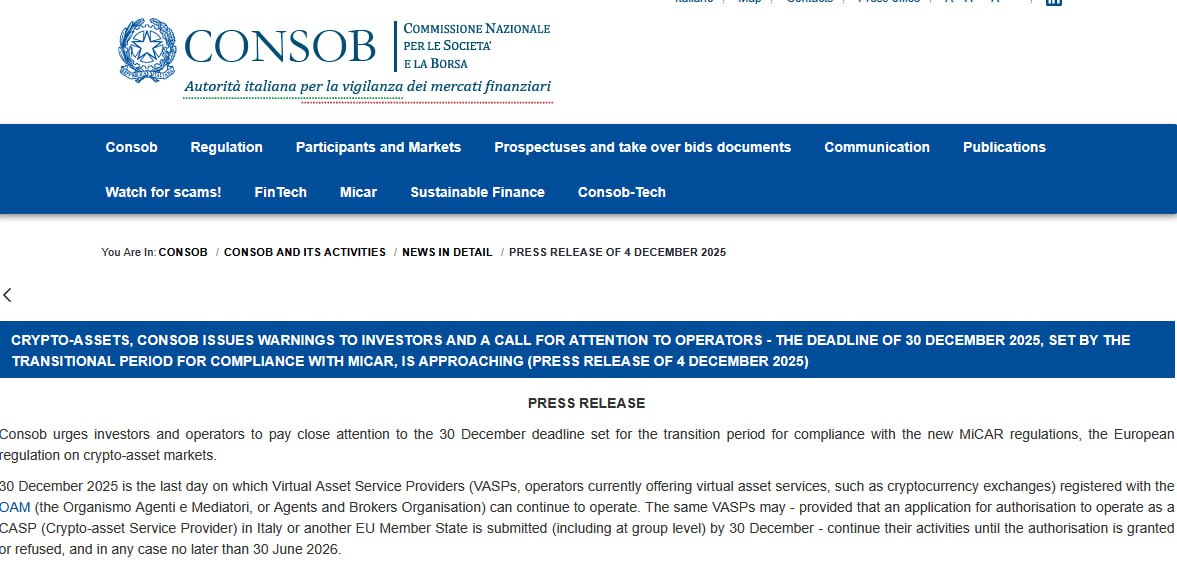 Italy’s regulator has ordered all crypto providers to apply for MiCAR authorization by Dec. 30, 2025, or exit the market. VASPs that file in time may keep operating during review, but full supervision will replace simple registration.2025-12
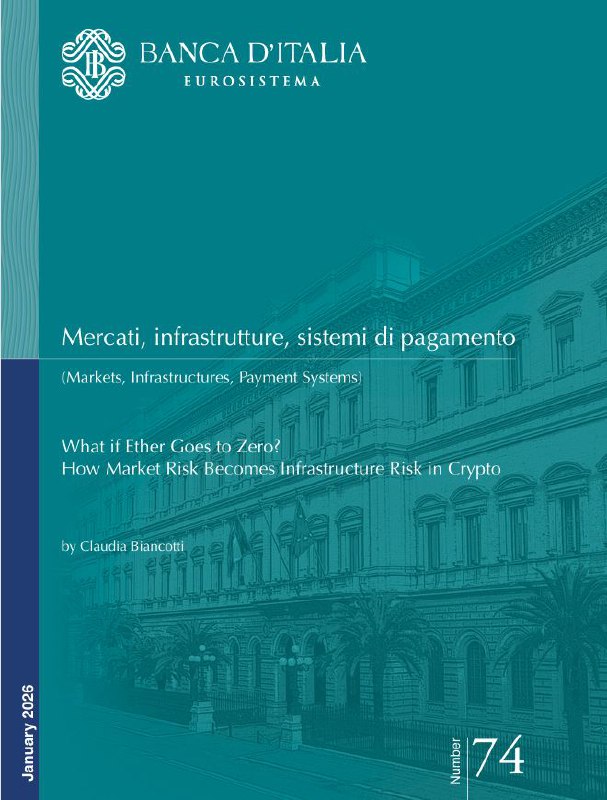 Bank of Italy economist sends out warning on Ethereum's role in financial system. The study suggests that Ethereum's role in financial systems makes its token economics a concern for regulators, who may need to consider safeguards for its use in regulated finance.2026-01
 Tether backs Italian humanoid-robotics firm Generative Bionics as AI push builds. The €70M funding round was led by CDP Venture Capital, AMD Ventures and other industrial backers. The funding will be used to speed up product development and the training of physical AI systems, and Generative Bionics plans to unveil its first complete humanoid at CES in Las Vegas in January 2026.2025-12
Italy in the Crypto Era: Regulation, Institutions and Innovation in the EU's Third‑Largest Economy
Sitting at the intersection of European banking, industrial manufacturing and fast‑evolving EU regulation, Italy has become a critical laboratory for how a major euro‑area economy brings crypto-assets, stablecoins and Ethereum-based finance into a tightly supervised financial system. Over the past few years, Italian lawmakers, regulators, banks and fintech firms have moved from a largely experimental posture to one centered on MiCA-compliant licensing, tokenised payments infrastructure and cautious—but growing—institutional exposure to bitcoin, ether and other digital assets.
Italy’s Place in European Crypto and Digital Finance
Italy’s importance to the crypto conversation begins with its role inside the European Union and the euro area. As one of the largest economies in the bloc, its banking system, sovereign debt market and real‑economy footprint make it systemically relevant for any EU‑wide attempt to regulate or integrate crypto-assets. When Brussels designs frameworks such as the Markets in Crypto‑Assets Regulation (MiCA), there is an implicit assumption that leading economies like Italy will not only transpose the rules into national law, but also shape how they work in practice through supervision, enforcement and experimentation with public‑sector initiatives such as the digital euro.
At the same time, Italy’s domestic financial structure gives it a distinctive profile in the digital‑asset debate. Traditional bank intermediation remains central to household savings and corporate finance, and large universal banks maintain dense branch networks and strong political connections. This differs from some smaller EU jurisdictions where capital markets or offshore financial services are more dominant, and it is one reason Italian policymakers have been wary of crypto intermediaries growing outside familiar regulatory perimeters. The MiCA transposition process has therefore been framed explicitly as a way of “MiFIDising” crypto-assets, importing the logic of securities and investment‑services regulation into a space that previously lay in a semi‑regulated gray zone.
The country’s industrial and technological base has also begun to tilt toward the kind of infrastructure that can support advanced cryptography, blockchain research and digital‑asset analytics. The arrival of a 140‑plus qubit neutral‑atom quantum computer at the CINECA supercomputing center in Bologna, tightly integrated with the Leonardo pre‑exascale EuroHPC system, illustrates how Italian institutions are positioning themselves in high‑performance computing and quantum research. While this system is not specifically a “crypto project,” it deepens domestic expertise in fields that are highly relevant for blockchain scalability, zero‑knowledge proofs and post‑quantum cryptography.
Milan and Rome, meanwhile, have emerged as notable—if still “emerging”—startup ecosystems in global rankings. In the 2025 Global Startup Ecosystem Report, Italian cities did not yet rank among the world’s top hubs, but Milan was listed in fourteenth place among emerging ecosystems and Rome climbed from the 41–50 bracket into the 31–41 range. Analysts attributed Rome’s move largely to strong performance in “market reach,” defined as the ability of local ecosystems to give early‑stage startups access to customers and markets, both local and global. That capacity to connect young firms with demand is particularly relevant for Web3, Ethereum‑based applications and crypto‑infrastructure startups that often need regulated partners, bank accounts and institutional clients rather than just retail speculation.
The result is that Italy today occupies a hybrid position in the crypto landscape. It is neither a laissez‑faire hub nor an outright prohibitionist regime. Instead, it is an EU heavyweight attempting to fold crypto-assets into a conservative banking culture through harmonized rules, while simultaneously encouraging enough innovation in areas like tokenised payments, AI‑driven robotics and quantum computing to remain competitive over the long term. For a crypto audience, the country offers a window into what a “serious” integration of Ethereum, stablecoins and tokenised deposits into mainstream finance might look like under full European regulatory supervision.

Superteam Italy launches to promote Solana adoption, with founder Gianluca Bruno saying his dream of representing Solana at home has come true.

Regulatory Foundations: MiCA, MiCAR Implementation and Italian Law
MiCA in the EU regulatory architecture
The legal foundation for Italy’s current crypto regime is the EU’s Markets in Crypto‑Assets Regulation. MiCA aims to establish uniform rules across the European Union for crypto-assets that are not already captured by the bloc’s existing financial‑services legislation, such as the Markets in Financial Instruments Directive (MiFID II). In practice, this means that MiCA primarily targets three families of tokens: asset‑referenced tokens (a broad category that includes many stablecoins), e‑money tokens (tokens referencing a single fiat currency) and other crypto-assets that do not qualify as traditional financial instruments.
MiCA imposes comprehensive requirements on those who issue or offer these assets to the public and on those who provide services around them. For token issuers, the regulation mandates white papers containing detailed, standardized disclosures about the project, the rights attached to the tokens, the underlying technology and the associated risks. For crypto‑asset service providers—CASPs in EU terminology—MiCA introduces authorization and ongoing supervision, as well as conduct‑of‑business rules aimed at ensuring orderly markets and robust consumer protection. Among its core aims are to bolster market integrity and financial stability by ensuring that crypto offerings are not made in a vacuum of information and that service providers meet minimum prudential, governance and organizational standards.
For a country like Italy, with a historically cautious approach to financial innovation and a banking system still shaped by past crises, MiCA provides both an opportunity and a constraint. It offers a harmonized regime under which Italian‑licensed CASPs can, once authorized, passport their services across the EU’s single market, lowering barriers to scale for domestic fintech firms. It also obliges national authorities to accept a baseline degree of crypto activity, since outright bans would be inconsistent with the EU‑level regulation, although supervisors retain significant discretion in how strictly they apply conduct rules and assess applicants. This tension is visible in the Italian implementation legislation, which goes beyond the minimum in several respects.
Legislative Decree 129/2024 and the “MiFIDisation” of crypto
On 13 September 2024, Italy published Legislative Decree No. 129/2024, which implements MiCA (often informally dubbed “MiCAR”) in domestic law. Legal analysts have described this as a “MiFIDisation” of crypto-assets, in the sense that the decree borrows heavily from the structure and concepts of Italy’s existing securities regulation, particularly the Consolidated Law on Finance (Testo Unico della Finanza), while carving out a distinct regime for MiCA‑covered tokens. The decree clarifies the perimeter between crypto-assets that fall under MiCA and instruments that remain regulated as traditional financial products, thereby reducing overlap and legal uncertainty for intermediaries.
One of the decree’s central features concerns client asset protection. Crypto-assets and funds that CASPs hold on behalf of customers are explicitly defined as segregated from the CASP’s own estate. They are insulated not only from claims by the CASP’s creditors, but also from creditors of any custodian or sub‑custodian to whom the assets have been entrusted, to the extent allowed by the applicable law. Actions by creditors of individual customers remain possible, but only within the limits of the assets that the debtor actually owns with the service provider. At the same time, CASPs are explicitly forbidden from using crypto-assets or funds held on behalf of customers for their own account, which precludes certain rehypothecation models familiar from traditional prime brokerage.
The decree also outlines a transitional regime for existing virtual asset service providers (VASPs). Firms that are duly registered in Italy’s “Virtual Currency Operators Register” at the Organismo Agenti e Mediatori (OAM) as of 27 December 2024 and that apply for CASP authorization in Italy or another EU member state by 30 June 2025 may continue operating in Italy on the basis of pre‑existing rules until 30 December 2025, or until their authorization is granted or rejected. This effectively gives incumbent exchanges, wallets and custodians a runway to migrate into the MiCA framework while avoiding a cliff‑edge shutdown, but it also sets a clear deadline after which only fully authorized CASPs will be allowed to serve Italian clients.
Another important aspect of Decree 129 is that it explicitly states that the regulation of financial products under the Consolidated Law on Finance does not apply to crypto-assets falling within the scope of MiCA. This formal distinction separates MiCA‑type tokens (including many stablecoins and utility tokens) from tokenized securities that remain subject to MiFID II and local securities law. In practice, that means an Italian bank launching a tokenized bond on a blockchain must comply with securities regulation, whereas a firm launching a euro‑denominated e‑money token under MiCA would operate under the crypto framework, even if both assets live on similar distributed‑ledger infrastructures.
Supervisory architecture and institutional roles
While MiCA itself is an EU regulation, its day‑to‑day application in Italy involves the country’s domestic authorities working alongside European bodies such as ESMA and the European Banking Authority. In broad terms, the Bank of Italy tends to oversee prudential soundness, payment systems and financial stability, while CONSOB, the securities regulator, focuses on investor protection and market integrity in relation to financial instruments and public offerings. MiCA complicates this division, because crypto-assets straddle payments, investments and pure technology.
The implementation decree and subsequent regulatory guidance therefore have to define which authority licenses and supervises each category of CASP, how responsibilities are shared in the case of cross‑border operations, and how Italian regulators coordinate with ESMA’s powers to develop regulatory technical standards and to intervene in markets if there are threats to investor protection or stability. For crypto firms and traditional banks entering the space, this supervisory map matters as much as the legal text itself, because it determines which regulator they will interact with on authorization, inspections and enforcement.
Italy’s positioning also reflects its participation in Europe‑wide discussions on stablecoins, tokenised securities, and digital identity frameworks, all of which intersect with crypto regulation. The Bank of Italy, in particular, has taken an active role in exploring tokenised payment infrastructures and analyzing public blockchains like Ethereum as potential layers for financial services, while simultaneously emphasizing the need for safeguards if such infrastructures are to be used in systemically important contexts. This duality—curiosity about the technology paired with a defensive stance on financial stability—runs through much of Italy’s regulatory narrative.
Stablecoins, tokenised money and the path to a digital euro
The European debate over stablecoins and central bank digital currency (CBDC) provides a crucial backdrop for Italy’s approach. MiCA creates a specific regime for asset‑referenced and e‑money tokens, including requirements for issuers to maintain reserves, redemption rights and robust governance, in an attempt to mitigate the operational and liquidity risks that could undermine confidence in stablecoins and, by extension, in the broader financial system. Analysts at the Bank Policy Institute, among others, have warned that operational weaknesses or illicit‑finance issues could destabilize stablecoin issuers and erode trust in these instruments, potentially creating knock‑on effects for financial stability.
Italian authorities have gone further by situating stablecoins within a broader strategy for modernizing euro payments. A senior Bank of Italy official has publicly urged the European Union to consider developing a tokenised version of the Single Euro Payments Area (SEPA), effectively making European bank transfers “native” on distributed‑ledger technology. According to this vision, tokenised SEPA payments could help the EU keep pace with technological change, improve efficiency and maintain central bank oversight in a landscape increasingly influenced by privately issued digital currencies. The goal is not just to replicate existing bank transfers on a blockchain, but to create an infrastructure where programmable money, smart contracts and 24/7 settlement are compatible with regulated bank deposits and central bank money.
Parallel to these ideas, the European Central Bank has been advancing its digital euro project. The ECB has indicated that, if EU lawmakers adopt the necessary regulation in the course of 2026, a digital euro could be issued around 2029. The central bank has emphasized that a digital euro would complement, not replace, cash and bank deposits, providing a public form of electronic money widely accessible in the euro area. Italian banks and public officials have generally backed the digital euro concept, but they have also stressed that implementation costs should be distributed over time and across stakeholders, so that smaller institutions are not unduly burdened by the technological transition.
For crypto markets, the interaction between MiCA‑regulated stablecoins, tokenised SEPA and a potential digital euro raises fundamental strategic questions. If bank‑issued or central‑bank‑backed euro tokens gain traction, the role of privately issued euro stablecoins might be constrained, particularly if EU authorities, including the Bank of Italy, continue to resist proposals for looser regulatory treatment of such instruments. At the same time, banks may choose to use public blockchains like Ethereum as rails for tokenised deposits and digital‑euro interfaces, which would increase the systemic relevance of these networks while placing them under much closer scrutiny by prudential and market regulators.
Italian readers click Italy-crypto stories for the money mechanics — tax arbitrage, direct bank balance-sheet exposure, and regulatory survival — not DeFi ideology, revealing that Italy's crypto story is being driven by TradFi institutions and fiscal policy, not retail degens.
Institutional Adoption: From Banca Sella to Intesa Sanpaolo
Banca Sella and the first MiCA‑cleared crypto custody offering
One of the most visible signs that Italy’s crypto policy is shifting from theory to practice is the entry of traditional banks into regulated digital‑asset services. Banca Sella, a long‑established Italian bank, has become the first institution in the country cleared to offer crypto custody and transfer services after completing the required notification process with the Bank of Italy under the MiCA framework. According to coverage of the launch, the bank plans to roll out digital‑asset custody and transfer services as part of its broader offering, allowing clients to hold and move cryptocurrencies within a fully regulated banking environment rather than through standalone exchanges.
This move is significant for several reasons. First, it signals that Italian supervisors are willing to grant MiCA‑aligned permissions to incumbents that can demonstrate robust controls, rather than reserving crypto activity for specialized fintech firms. That, in turn, may accelerate mainstream adoption among retail and corporate clients who are more comfortable dealing with a known bank brand than with a pure‑play crypto exchange. Second, Banca Sella’s authorization provides a concrete test case for how MiCA’s asset‑segregation requirements, custody standards and conduct rules are implemented in practice in the Italian context. The way this first bank handles issues such as on‑chain risk management, ETH and BTC key storage, and travel‑rule compliance could become a template for subsequent authorizations.
For crypto projects and DeFi protocols seeking Italian or EU market access, the bank’s entry into the sector has important implications. A MiCA‑compliant bank custody offering could, for example, hold tokenised treasury assets for Ethereum‑based protocols like Rysk or facilitate institutional staking and ETH‑denominated yield strategies under the scrutiny of both Italian and EU regulators. While DeFi remains largely permissionless, on‑chain, and global, the ability for Italian institutions to interface with those systems through regulated gateways may determine how much capital and liquidity can flow between centralized finance (CeFi) and decentralized finance in the euro area.
Intesa Sanpaolo’s crypto ETF strategy
If Banca Sella represents the entry of traditional banks into direct custody and transfer of crypto-assets, Intesa Sanpaolo—the country’s largest bank—illustrates a different avenue of institutional exposure: listed crypto investment products. Recent data show that Intesa Sanpaolo more than doubled its holdings of crypto exchange‑traded funds (ETFs) in the first quarter of 2026, bringing the bank’s total crypto ETF exposure to about 235 million U.S. dollars. The bank added exposure to XRP and ETH through ETFs and increased its positions in BlackRock’s IBIT product and the ARK 21Shares Bitcoin ETF, thereby broadening and deepening its engagement with digital assets via regulated securities markets.
This strategy allows Intesa to provide clients with economic exposure to bitcoin, ether and other crypto-assets without handling the underlying coins on its own balance sheet. In effect, the bank is leveraging the regulatory frameworks of ETF jurisdictions—such as the United States, where these products are authorized—to access digital assets in a way that fits within its existing risk and compliance apparatus. For Italian regulators, such exposures may be easier to supervise than direct holdings of crypto, because they reside within well‑established securities‑custody, valuation and disclosure regimes.
From a market‑structure perspective, Intesa’s ETF positions reveal how European banks might think about ETH and other major crypto-assets under a MiCA‑plus‑MiFID world. On the one hand, MiCA creates a pathway for EU‑based issuers and CASPs to offer spot crypto products under harmonized rules. On the other hand, prestigious banks may prefer to channel their initial exposure through ETFs listed in overseas markets or in EU venues where the regulatory burden is familiar. Over time, as MiCA is fully implemented and more on‑chain products migrate into regulated wrappers, Italian banks could gradually shift from ETF‑centric strategies toward tokenised funds, on‑chain bond funds or even Ethereum‑native derivatives that meet European standards.
Conio, domestic fintech and EU crypto licensing
While banks capture much of the public attention, Italy’s domestic fintech sector has also been reshaped by the MiCA era. Conio, an Italian crypto fintech, has secured an EU license for crypto services, allowing it to offer regulated products to customers in Italy and to open offices and expand its team. The approval gives Conio a passportable authorization to operate across the European Union, embedding its services within the EU’s single market for financial services rather than limiting them to a national niche.
Conio’s trajectory highlights the role of specialized crypto firms in bridging the gap between retail investors, banks and public blockchains. Historically, many Italian banks were reluctant to add in‑house crypto capabilities, preferring to partner with or white‑label services from fintech providers. A licensed entity like Conio can provide wallet technology, custody solutions and transaction rails that are MiCA‑compliant, which banks and other financial institutions can then integrate into their own offerings. In effect, the fintech acts as a CASP “engine” beneath the hood of traditional institutions, enabling those institutions to offer clients ETH, BTC and other crypto-assets within a regulated, bank‑branded experience.
From the perspective of EU regulation, Conio also embodies the promise of MiCA to create a level playing field across member states. Rather than navigating a patchwork of national regimes, licensed CASPs can theoretically operate in all participating countries once they meet the EU‑wide standards. For Italian entrepreneurs building exchanges, Ethereum infrastructure services, or DeFi‑on‑ramp platforms, this passporting potential could be particularly valuable, given that the domestic market, while significant, is smaller than that of Germany or France. Whether this promise is fully realized will depend on how smoothly authorization processes operate in practice and how consistently national regulators interpret and enforce MiCA’s provisions.
Beyond banks: Tether, robotics, quantum computing and the broader tech stack
The integration of crypto into Italy’s economy is not limited to banks and native fintechs. Corporate investments and research collaborations show how digital‑asset players are engaging with Italian technology sectors in ways that indirectly shape the crypto ecosystem. Stablecoin issuer Tether, for instance, has participated in a 70‑million‑euro funding round for Generative Bionics, an Italy‑based humanoid robotics startup that builds industrial robots using research from the Italian Institute of Technology. The funding, which also involves CDP Venture Capital and AMD Ventures, is aimed at accelerating product development and training physical AI systems, with the company targeting a first complete humanoid robot unveiling at a major technology trade show.
Although this investment is not a crypto product per se, it underlines two important dynamics. First, profits generated in the stablecoin business are being redeployed into broader high‑tech ventures, helping to finance Italy’s robotics and AI ecosystem. Second, it illustrates how crypto‑native firms can become significant investors in real‑economy innovation, potentially aligning their interests with national industrial policies and research agendas. Over time, the expertise developed in such sectors—ranging from advanced control systems to on‑device AI—may feed back into crypto applications, including autonomous trading agents, smart‑contract‑driven robotics and IoT‑linked payment systems.
Meanwhile, the installation of Pasqal’s neutral‑atom quantum computer at the CINECA facility in Bologna further enhances Italy’s position in fields relevant to cryptography and blockchain security. The Pasqal system, with more than 140 qubits, is designed for hybrid integration with the Leonardo supercomputer, one of the world’s most powerful high‑performance computing platforms. This combination enables researchers to work on quantum algorithms alongside classical simulations, a setup that could eventually accelerate work on post‑quantum cryptographic schemes, quantum‑resistant blockchain protocols, and advanced modeling of network consensus mechanisms.
Taken together, these developments suggest that Italy’s digital‑asset story cannot be reduced to exchange volumes or retail speculation. Instead, it is intertwined with broader technological transformations in AI, robotics, quantum computing and high‑performance infrastructure. For crypto builders and investors, this means that “Italy” is as much about Ethereum‑adjacent research and hardware capabilities as it is about MiCA licenses and bank custody launches.
Technological Infrastructure: Ethereum, Tokenised SEPA and Quantum Risk
Bank of Italy’s Ethereum research and regulatory concerns
Ethereum has emerged as the dominant programmable blockchain for DeFi, NFTs and tokenised assets, which naturally attracts the attention of central banks and financial regulators. The Bank of Italy has contributed to this debate through analytical work on Ethereum’s role in markets, infrastructures and payment systems, including a paper published in its “Mercati, Infrastrutture, Sistemi di Pagamento” series. This research examines Ethereum not merely as a speculative asset, but as a potential layer for settlement, tokenised financial instruments and programmable money, highlighting both opportunities and risks.
A key concern raised by a Bank of Italy economist, summarized in additional commentary, is that Ethereum’s token economics could pose challenges for regulators if the network becomes deeply embedded in regulated financial systems. The study suggests that the incentives and governance mechanisms underpinning ETH—such as staking rewards, validator concentration and fee structures—may have implications for financial stability, competition and systemic risk when large volumes of regulated value are transacted or settled on the network. For example, if banks rely on Ethereum for tokenised securities or deposits, they may become exposed to congestion, MEV (maximal extractable value) behavior, or governance disputes on the underlying chain.
These observations do not amount to a rejection of Ethereum, but they underscore the need for safeguards if it is to serve as a base layer for regulated finance. Potential measures could include requirements for redundancy and failover mechanisms, clear legal frameworks for handling forks and chain reorganizations, and standards for auditors and technology providers who interface banks with the blockchain. Italian regulators are also likely to consider whether critical financial services should be built on permissionless public networks at all, or whether they should instead use permissioned variants or entirely separate DLT systems controlled by consortia of regulated institutions.
For Ethereum‑based DeFi protocols, these debates matter because they shape the conditions under which traditional institutions will be allowed to interact with services such as Rysk’s options vaults, on‑chain credit markets, or ETH‑collateralized stablecoins. The more systemic a use case becomes—such as large‑scale tokenised government bonds or tokenised SEPA transfers—the more wary regulators may be of depending on the token economics and governance of a public network. This tension between openness and control is central to the future of Ethereum in Italy and the EU.
Tokenised SEPA and on‑chain euro transfers
The idea of a tokenised SEPA system, championed by a senior Bank of Italy official, is perhaps the clearest expression of how Italian authorities imagine DLT could be harnessed to modernize payments without ceding control to private stablecoins. SEPA currently provides a harmonized framework for euro payments and direct debits across participating countries, but its core infrastructure predates the rise of blockchains and smart contracts. Tokenising SEPA would mean representing bank account balances or transfers as tokens on a distributed ledger, potentially enabling instant settlement, programmability and more continuous reconciliation across banks.
From a technological standpoint, this raises fundamental design questions. Authorities must decide whether to run tokenised SEPA on permissioned DLT networks controlled by central banks and commercial banks, or whether to interface with public chains like Ethereum through tokenised deposits or wrapped instruments. Permissioned networks may offer more direct control and predictable performance, but they risk fragmenting liquidity if each jurisdiction or consortium builds its own siloed chain. Public networks offer a global, composable base, but they introduce external governance dynamics and token‑economic risks, as highlighted in the Bank of Italy’s Ethereum research.
For crypto users and developers, the allure of tokenised SEPA is the prospect of euro bank deposits that can move with the speed and programmability of Ethereum stablecoins, while retaining the legal protections and familiarity of traditional accounts. Smart contracts could execute salary payments, subscriptions or supply‑chain financing flows directly against tokenised bank money, without relying on intermediaries that hold USDT or USDC. If Italy and the EU pursue this path, it could significantly reshape the competitive landscape between bank‑money tokens, MiCA‑regulated stablecoins and third‑country dollar stablecoins.
Quantum computing, cryptography and Italian research capacities
The arrival of Pasqal’s neutral‑atom quantum computer at CINECA adds a long‑term dimension to Italy’s crypto conversation. Quantum computing, in its more mature forms, poses a potential threat to widely used public‑key cryptography schemes, including those underpinning most current blockchains and digital wallets. While today’s 140‑plus‑qubit systems are far from breaking production‑grade encryption, they enable researchers to experiment with algorithms, error‑correction techniques and hybrid quantum‑classical workflows that could eventually scale.
By hosting one of Europe’s first neutral‑atom quantum systems and integrating it with the powerful Leonardo supercomputer, Italy positions itself at the forefront of research into quantum algorithms and their practical applications. For the crypto sector, this opens opportunities on both offense and defense. On the defensive side, Italian researchers can contribute to the design and testing of post‑quantum cryptographic schemes, including signature systems and key‑exchange protocols suitable for blockchains and Layer‑2 networks. On the offensive or exploratory side, they can model attack scenarios, stress‑test proposed defenses, and analyze the performance of quantum‑resistant approaches in realistic environments.
In a broader sense, the presence of cutting‑edge HPC and quantum infrastructure may attract collaborations between Italian universities, fintech startups and global crypto projects looking to explore advanced scalability techniques, such as recursive zero‑knowledge proofs or multi‑party computation optimized for high‑latency networks. Ethereum rollups and DeFi platforms that rely heavily on cryptographic proofs could benefit from such research, which in turn might encourage them to establish engineering or research footholds in hubs like Bologna or Milan. This shows how Italy’s broader technology strategy can influence its attractiveness to Web3 builders, even if those initiatives are not explicitly branded as “crypto projects.”
- 01crypto tax rate arbitrage
The top-clicked story used Italy's rate-hike signal as a hook to compare global crypto tax regimes, showing readers use Italian fiscal news as a trigger to scout friendlier jurisdictions.
- 02Italian banks buying Bitcoin↗
Intesa Sanpaolo's direct Bitcoin purchase — and later doubling to $235M with ETH and XRP — drew strong clicks because a G7 bank holding crypto on its own balance sheet is a structural signal, not a product launch.
- 03Bank of Italy institutional tokenization↗
Readers tracked the Bank of Italy's arc from skeptic to tokenization architect — Polygon/Fireblocks pilot, tokenized SEPA advocacy, and Conio/Coinbase integration — as a live MiCA implementation case study.
- 04MiCAR compliance deadline pressure↗
Italy's Dec 30 2025 VASP authorization deadline forced a hard market-exit ultimatum that clicked because it named real stakes for operating providers.
- 05Bank of Italy P2P crackdown↗
Labeling non-KYC Bitcoin P2P services as 'Crime-as-a-Service' in an official November report clicked because it signaled a regulatory posture shift with direct enforcement implications.
- 06ETH Milan / Italian DeFi community
Repeated ETH Milan coverage and the 'Italian DeFi Mafia' framing built a recurring community identity thread, with readers engaging the conference as a proof point that serious DeFi infrastructure exists in Italy.
Geopolitics and Policy: Italy between Washington, Brussels and Markets
Italy’s role in EU digital‑finance debates
Within the European Union, Italy is an influential voice in shaping digital‑finance policy, including MiCA’s implementation and the digital euro’s design. Its support for tokenised SEPA payments underscores a desire to modernize euro flows while preserving the role of central banks and domestic banking systems. This perspective aligns with broader EU goals of reducing dependence on non‑European payment schemes and infrastructures, especially those linked to U.S. card networks and Big Tech platforms. It also feeds into the EU’s scrutiny of large technology firms’ roles in AI and messaging platforms, as shown by antitrust concerns over the integration of AI chatbots into dominant communication services, even though the specific EU investigation mentioned excludes Italy because national authorities have launched their own case.
The ECB’s work on the digital euro similarly reflects a delicate balance between innovation and sovereignty. The central bank has signaled that a digital euro could be issued around 2029 if EU lawmakers adopt the necessary legal framework in time, emphasizing objectives such as preserving the role of public money, ensuring financial inclusion and enabling offline payments. Italian banks and regulators, while broadly supportive, have stressed the need for a phased rollout that spreads implementation costs and minimizes disruption to existing business models. This pragmatic stance may slow the pace of change, but it also encourages robust testing and alignment with parallel efforts like tokenised SEPA and MiCA’s stablecoin regime.
From the perspective of crypto markets, Italy’s involvement in these debates means that the country is likely to be a key arena for the interaction between public and private digital currencies. Decisions about how to integrate or firewall MiCA‑regulated stablecoins from the digital euro, how to treat ETH‑based tokenised deposits, and how to ensure interoperability between bank‑controlled DLT networks and public chains will be made partly through negotiations in which Italian officials participate. For builders hoping to use Ethereum or other public networks as rails for euro‑denominated products, understanding Italy’s preferences and constraints is therefore crucial.
Transatlantic tensions, NATO and sanctions channels
Italy’s relationship with the United States adds another dimension to its policy posture. Political tensions have periodically surfaced around issues such as defense spending, NATO commitments and foreign‑policy positions on conflicts involving Iran or other countries. In one notable episode, former U.S. President Donald Trump publicly criticized Italian Prime Minister Giorgia Meloni over alleged shortcomings in support for U.S. positions during a conflict with Iran, leading Italy’s foreign minister to cancel a planned trip to Washington. Some of the rhetoric suggested that disagreements over NATO spending and alliance solidarity could have broader repercussions for bilateral relations.
While such episodes may seem far removed from crypto policy, they can indirectly influence coordination on issues like sanctions enforcement, anti‑money‑laundering standards and cross‑border oversight of stablecoins. The U.S. remains a key jurisdiction for dollar‑denominated stablecoins, many of which are widely used by European traders and investors, including in Italy. If political tensions were to complicate cooperation on financial regulation or sanctions, it could affect how Italian authorities approach the use of U.S. dollar stablecoins in their markets, potentially accelerating efforts to promote euro‑denominated alternatives under MiCA and, eventually, the digital euro.
International tensions also highlight the role of digital assets in sanctions evasion and geopolitical competition. As global powers experiment with CBDCs and tokenised payment systems that bypass traditional correspondent banking networks, Italian and EU policymakers are acutely aware that crypto infrastructures can both support and undermine existing sanctions regimes. This awareness feeds into Italy’s call for global standards on stablecoins and cross‑border digital‑asset flows, aligning with broader concerns about illicit‑finance risks identified by organizations like the Bank Policy Institute.
Sanctions, stablecoins and the euro’s geopolitical role
In this geopolitical context, euro‑denominated digital money becomes a tool of strategic autonomy. MiCA’s rules for euro‑referencing stablecoins, combined with projects such as the digital euro and tokenised SEPA, represent attempts to ensure that Europe—and by extension Italy—has its own credible, programmable alternatives to dollar stablecoins in global commerce. If successful, these initiatives could reduce dependence on third‑country infrastructures for cross‑border payments, trade finance and asset settlement, thereby strengthening the euro’s international role.
Italian institutions, through their contributions to EU policy and their domestic initiatives, play a part in this process. The Bank of Italy’s advocacy for tokenised SEPA is explicitly framed as a response to technological change and the need to maintain central‑bank control amid the rise of private digital currencies. Italian banks’ cautious but increasing engagement with crypto assets, as seen in Banca Sella’s custody services and Intesa Sanpaolo’s ETF positions, reflects a recognition that digital assets are becoming part of the financial landscape, even as regulators seek to channel their use into compliant forms.
For market participants, these developments signal that Italy is unlikely to embrace an unregulated, dollar‑stablecoin‑dominated future. Instead, it is more probable that euro‑denominated instruments—whether MiCA‑regulated stablecoins, tokenised bank deposits or a digital euro—will be encouraged for domestic and intra‑EU use, while cross‑border flows of non‑euro stablecoins face stricter scrutiny. This geopolitical orientation will influence which crypto business models are viable in the Italian market and how Ethereum‑based protocols position themselves if they wish to handle large volumes of euro value.
Domestic Economy, Startups and Regional Hubs
Milan’s finance–tech nexus
Milan has long been Italy’s financial capital, hosting major banks, the stock exchange and a dense network of professional services firms. In the context of crypto and digital finance, the city’s role is reinforced by its status as an emerging global startup ecosystem. The 2025 Global Startup Ecosystem Report places Milan fourteenth among emerging ecosystems worldwide, highlighting its resilience amid a broader global decline in ecosystem value driven by fewer large exits and macroeconomic slowdown. Although Italy does not yet have a top‑tier startup hub on par with Silicon Valley, New York or London, Milan’s stability in the rankings underscores its growing relevance for fintech and Web3 ventures.
The same report emphasizes that globally, ecosystem value has fallen by around 14 percent, largely due to a reduction in large exits over 50 million dollars and a natural correction after the overvaluations of 2020–2021. In this environment, Milan’s consistent performance suggests that its ecosystem is not overly dependent on speculative booms, but rather on more sustainable growth drivers, including access to customers and integration with established industries. For crypto firms building infrastructure, compliance tools or Ethereum‑based applications aimed at enterprises, Milan offers proximity to banks, asset managers and corporates that can serve as anchor clients.
Corporate initiatives such as the Intesa Sanpaolo Innovation Center further reinforce this dynamic by fostering connections between startups and large companies, supporting open innovation and promoting research collaborations. As banks like Intesa deepen their engagement with crypto‑related ETFs and consider broader digital‑asset strategies, their innovation arms can play a role in scouting and supporting startups working on tokenisation, on‑chain risk management, RWA platforms and DeFi interfaces. Over time, this could make Milan a regional hub for regulated crypto finance, particularly in areas where Ethereum and other public chains intersect with bank‑grade infrastructure.
Rome, Bologna and the research corridor
Rome’s evolution as an emerging startup ecosystem complements Milan’s financial hub role. The Global Startup Ecosystem Report notes that Rome has advanced from the 41–50 range to the 31–41 range among emerging ecosystems, driven in large part by strong performance on the “market reach” metric. This metric captures an ecosystem’s ability to give early‑stage startups access to customers and markets at both local and global levels, facilitating scalability and internationalization. For crypto and Web3 projects, such access is critical, as many business models—especially those related to infrastructure, analytics or compliance—depend on acquiring institutional clients rather than mass retail users alone.
Bologna, while smaller, has gained outsized importance due to its role as a high‑performance computing and research center. The installation of Pasqal’s neutral‑atom quantum computer at CINECA, tightly integrated with the Leonardo supercomputer, effectively turns Bologna into a testbed for advanced quantum‑classical computing hybrids. This makes the city a natural locus for collaborations between computer scientists, cryptographers, economists and blockchain researchers interested in post‑quantum security, zero‑knowledge proofs and large‑scale simulations of network dynamics.
The emerging corridor between Milan’s financial and corporate ecosystem, Rome’s policy and market‑reach strengths, and Bologna’s research infrastructure can therefore be seen as a triangle of capabilities relevant to crypto. Projects that need to navigate regulatory nuance, connect with banks and asset managers, and tap into cutting‑edge computing resources will find complementary assets spread across these cities. For Ethereum‑based DeFi protocols, this might translate into partnerships with Italian universities for formal verification of smart contracts, joint pilots with banks on tokenised assets, or participation in public‑sector experiments with digital identities and payments.
Talent, regulation and the future of Italian Web3 startups
For Italian Web3 entrepreneurs, the regulatory environment is both a challenge and an opportunity. MiCA and its national implementation through Decree 129 impose clear obligations regarding authorization, disclosure, asset segregation and conduct, which can be particularly demanding for small teams. Yet they also provide a degree of legal certainty and a route to EU‑wide passporting that was previously unavailable. Startups that invest early in compliance may be able to leverage this framework to scale faster across the single market than competitors in non‑EU jurisdictions that face more fragmented or less predictable regimes.
At the same time, some crypto‑native developers may view the MiCA environment as too restrictive, particularly in areas like DeFi where protocols are deployed permissionlessly and governance is often distributed among token holders. For such teams, Italy’s regulatory stance could incentivize a split between on‑chain development and off‑chain interface or governance layers. The core Ethereum smart contracts for a protocol like Rysk or an on‑chain lending platform might be deployed globally, while any Italian‑facing front‑ends, fiat on‑ramps or token distributions are structured to comply with MiCA, AML rules and local consumer‑protection requirements.
The availability of technical talent will be influenced not only by regulation but also by the broader attractiveness of Italy as a tech hub. Investments in robotics, AI, quantum computing and high‑performance infrastructure—exemplified by projects like Generative Bionics and the Pasqal‑CINECA system—can help anchor high‑skilled workers who might otherwise migrate to more established tech clusters abroad. If Italy succeeds in combining such investments with a coherent, innovation‑friendly regulatory framework for crypto and digital finance, it could become an appealing base for teams building at the intersection of Ethereum, AI and advanced cryptography.
Bank of Italy labels non-KYC P2P Bitcoin 'Crime-as-a-Service'
- 2024-12milestone
Intesa Sanpaolo first direct Bitcoin purchase (~$1.03M)
- 2025-06milestone
ETH Milan conference — Leviathan media partner, Italian DeFi Mafia panel
- 2025-07launch
UniCredit launches IBIT-linked five-year investment certificate
Italy sets Dec 30 MiCAR VASP re-authorization deadline
Banca Sella becomes first Italian bank cleared under MiCA for crypto custody
Intesa Sanpaolo more than doubles crypto exposure to $235M, adds ETH and XRP
Bank of Italy backs tokenized SEPA payments as EU finance modernization pillar
Risk Landscape: From Consumer Protection to Systemic Concerns
Consumer and operational risks under MiCA and Italian law
MiCA’s designers were explicit that consumer protection and market integrity are central objectives of the regulation. The requirement for crypto‑asset issuers to publish standardized white papers, detailing the features, risks and governance of their tokens, aims to reduce the information asymmetries that have plagued retail investors in many past crypto booms. Similarly, the authorization and supervision of CASPs seek to ensure minimum standards of organizational robustness, prudential safeguards and fair treatment of clients, thereby curbing the worst abuses seen in unregulated exchange collapses and misappropriations of customer funds.
Italy’s implementation through Decree 129 adds an extra layer of investor protection by mandating strict segregation of client assets and prohibiting CASPs from using customer crypto or funds for their own purposes. This addresses a core vulnerability exposed by high‑profile global failures, where customer deposits were commingled with proprietary trading activities or used as collateral without adequate disclosure. By clarifying that client assets are separate from the CASP’s own estate and not subject to the claims of the CASP’s creditors, the Italian rules aim to enhance recovery prospects in the event of a provider’s insolvency.
However, these safeguards do not eliminate all risks. Operational vulnerabilities, such as cybersecurity breaches, key‑management failures or software bugs in custody systems, can still lead to losses, even when legal segregation is properly implemented. Stablecoins and other crypto-assets also face liquidity and reserve‑management risks, especially under stress scenarios where many users attempt to redeem simultaneously. Analysts have warned that such operational weaknesses can undermine the solvency of stablecoin issuers and erode confidence in the broader concept of digital tokens as reliable stores of value. For Italian regulators, this reinforces the case for rigorous due diligence on CASP applicants, continuous monitoring and, where appropriate, stress‑testing of stablecoin models under MiCA’s asset‑referenced and e‑money token categories.
Illicit finance, AML and global coordination
Crypto’s potential use in money laundering, terrorism financing and sanctions evasion remains a central concern for regulators worldwide. Italy, as part of the EU and the Financial Action Task Force (FATF) framework, is committed to applying AML and counter‑terrorist‑financing standards to CASPs, including obligations to verify customer identities, monitor transactions and share information under the so‑called Travel Rule for virtual assets. MiCA dovetails with these efforts by ensuring that only authorized and supervised entities can operate as CASPs in the EU, thus providing enforcement hooks for AML obligations.
The Italian transition from the OAM‑maintained VASP registry to full MiCA authorizations is particularly relevant here. Under the transitional rules, VASPs registered as of late 2024 and applying for CASP status by mid‑2025 can continue operating until late 2025, but those that fail to secure authorization will have to exit the market. This process effectively filters the existing population of service providers, potentially removing less compliant or less robust actors. At the same time, it raises challenges for cross‑border coordination, as some providers may seek authorization in other EU jurisdictions and then passport services into Italy, requiring tight collaboration among national authorities and ESMA to ensure consistent AML enforcement.
Globally, other jurisdictions are also tightening their cross‑border frameworks, as illustrated by moves such as South Korea’s requirement for offshore crypto businesses to register if they serve local users, and by regulatory discussions over international stablecoin standards. Against this backdrop, the Bank of Italy has advocated for common global principles for stablecoins to mitigate cross‑border risks, while some countries like Australia have experimented with relatively lighter approaches for intermediaries distributing stablecoins under specified disclosure conditions. Italy’s preference for a more conservative stance aligns with its broader orientation toward stability and bank‑centric finance, and it is likely to support strong AML controls on cross‑border crypto flows, particularly those involving dollar‑denominated stablecoins.
Ethereum, systemic risk and regulatory responses
As Ethereum’s role in financial systems grows—from hosting DeFi protocols to serving as the substrate for tokenised assets—regulators are increasingly concerned about its potential to become a source of systemic risk. The Bank of Italy’s Ethereum research underscores these concerns, noting that token economics, validator incentives and governance mechanisms could have non‑trivial implications when scaled up to the level of regulated finance. For instance, if a significant portion of Italian banks’ tokenised securities or deposits were to be settled on Ethereum, congestion, high gas fees or a contentious protocol upgrade could disrupt key financial markets.
Possible regulatory responses fall along a spectrum. At one end, authorities might limit the use of public blockchains like Ethereum to non‑systemic activities, keeping core payment systems, wholesale settlements and large‑value transfers on central bank‑operated or bank‑consortium networks. At the other end, they could accept Ethereum’s central role but insist on robust risk‑mitigation measures, such as diversified validator participation, strict operational standards for node operators connected to regulated institutions, and contractual frameworks addressing forks and chain reorganizations. Intermediate paths might include using Ethereum for some functions but maintaining parallel, traditional infrastructures as backups in case of network stress.
For a crypto audience, the key takeaway is that Italy is unlikely to greenlight unbounded reliance on Ethereum or any other public chain for critical financial infrastructures without accompanying safeguards. Developers of DeFi protocols like Rysk, as well as issuers of tokenised securities or deposits, will need to account for regulatory expectations around resilience, governance and transparency if they want to serve Italian institutions at scale. That might involve designing protocols with clear upgrade paths, formal verification of smart contracts, or modular architectures that allow regulated front‑ends to enforce compliance logic while the core contracts remain permissionless.
Conclusion
Italy’s evolving relationship with crypto-assets, Ethereum and digital finance illustrates how a major EU economy can integrate frontier technologies into an established, bank‑centric system without abandoning its core regulatory principles. Through MiCA and its domestic implementing decree, the country has moved from a relatively patchwork approach toward a comprehensive framework that defines when and how crypto businesses can operate, what protections customers enjoy, and how systemic risks should be managed. The combination of EU‑level harmonization and national “MiFIDisation” creates a landscape that is demanding but relatively predictable for serious actors.
Institutional developments such as Banca Sella’s MiCA‑cleared crypto custody services and Intesa Sanpaolo’s growing portfolio of crypto ETFs demonstrate that Italian banks are no longer content to sit on the sidelines. Instead, they are experimenting with ways to offer exposure to BTC, ETH and other assets within structures that fit their risk appetites and regulatory constraints. Domestic fintechs like Conio, equipped with EU licenses, bridge the gap between crypto‑native infrastructure and traditional financial institutions, while global players such as Tether invest in Italian AI and robotics, linking stablecoin profits to real‑economy innovation.
On the technological front, Italy is positioning itself at the forefront of research relevant to crypto’s future, from the Bank of Italy’s analysis of Ethereum as a financial infrastructure to the deployment of a neutral‑atom quantum computer at CINECA. These initiatives, together with efforts to explore tokenised SEPA and contributions to the digital‑euro project, reflect a willingness to experiment with new forms of money and settlement, provided that central banks and regulators retain meaningful oversight. For Ethereum and DeFi builders, this translates into a mixed picture: strong opportunities for collaboration and institutional adoption, coupled with heightened scrutiny and expectations of robustness.
Geopolitically, Italy’s role in EU policy‑making and its occasionally fraught relationship with the United States shape its stance on stablecoins, sanctions and cross‑border digital‑asset flows. Rather than embracing an unregulated, dollar‑stablecoin‑dominated model, Italian policymakers appear committed to fostering euro‑denominated digital instruments under MiCA and, in time, a digital euro, while contributing to global discussions on stablecoin standards and AML. Domestic startup ecosystems in Milan, Rome and Bologna provide fertile ground for Web3 ventures, especially those that can leverage the country’s strengths in banking, research and industrial technology.
For a crypto news audience, the overarching message is that Italy is emerging as a serious, if cautious, arena for the integration of crypto into mainstream finance. Success in this market will likely depend on aligning Ethereum‑based products and services with MiCA’s requirements, engaging constructively with regulators and banks, and taking advantage of the country’s growing capabilities in AI, quantum computing and fintech. Italy will not be the first jurisdiction to experiment with crypto, nor the most permissive, but its choices—given its size, its role in the euro area and its technological ambitions—will have outsized influence on how crypto and traditional finance converge in Europe.
Outlook
Over the next several years, Italy is poised to deepen and broaden its engagement with digital assets, even as it maintains a conservative stance on risk and regulatory oversight. As MiCA’s transitional period closes and CASP authorizations replace the older VASP registration regime, the population of crypto service providers active in Italy is likely to consolidate around firms that can meet high standards of governance, security and compliance. This may reduce the diversity of players in the short term but should enhance trust in those that remain, providing a more solid foundation for institutional adoption and innovative use cases involving ETH and other major tokens.
The trajectory of projects like tokenised SEPA and the digital euro will be crucial in determining how private stablecoins and Ethereum‑based payment solutions evolve in Italy. If Italian authorities and banks succeed in building efficient, programmable, euro‑denominated digital money that can interoperate with public blockchains under clear rules, the country could become a leading example of how to embed DeFi primitives within a regulated financial system. Conversely, if these public initiatives stall or remain fragmented, private stablecoins and offshore infrastructures may continue to dominate cross‑border flows, prompting renewed debates over sovereignty and systemic risk.
For builders and investors, Italy offers a complex but promising landscape: a large market inside the EU’s single regulatory perimeter, a growing base of institutional actors willing to experiment with crypto, and a technological ecosystem increasingly geared toward advanced computing and AI. Teams that can navigate MiCA, engage with banks and regulators, and design Ethereum‑native products that meet the country’s expectations on security and governance will find significant opportunities. Those who seek purely unregulated growth are likely to encounter increasing constraints. In that sense, Italy’s path in the crypto era may foreshadow how mature economies worldwide negotiate the balance between innovation and control in the decade ahead.
Latest Italy news
Sources
17 records from 15 domains
esma.europa.eu
x.com
facebook.com
instagram.com
klgates.com
bancaditalia.it
bpi.com
binance.com
bloomberg.com
bingx.com
globalbankingandfinance.com
youtube.com
pasqal.com
intesasanpaoloinnovationcenter.com
ecb.europa.eu
Community notes
Spot something off or out of date? Drop a note. Editors review topic notes daily and roll accepted fixes into the explainer — contributors are recognized in the monthly $SQUID drop.
Loading notes…
Help improve this topic
Have a story or tip about this topic? Submit it. See something missing? Leave a note. Editors review daily; accepted submissions and fixes count toward the monthly $SQUID drop.