
Stake DAO turns long-duration governance locks into liquid sdTokens and uses pooled voting power across boosted strategies and Votemarket. This guide covers locker transitions, vlSDT, Morpho lending, and the protocol's 2026 recovery risks.
+1 sources across the wider coverage universe
 Valueverse's Accrual revenue tracking platform announces listing of f(x) Protocol's $FXN, Stake DAO's $SDT, and Ramses $RAM2026-06
 Stake DAO AI agent now fully integrated with protocol’s on-chain lending data2026-05
 Stake DAO releases April 2026 report highlighting vlSDT launch and roadmap completion2026-05
 Stake DAO finalizing post-mortem and proposal to compensate affected users2026-06
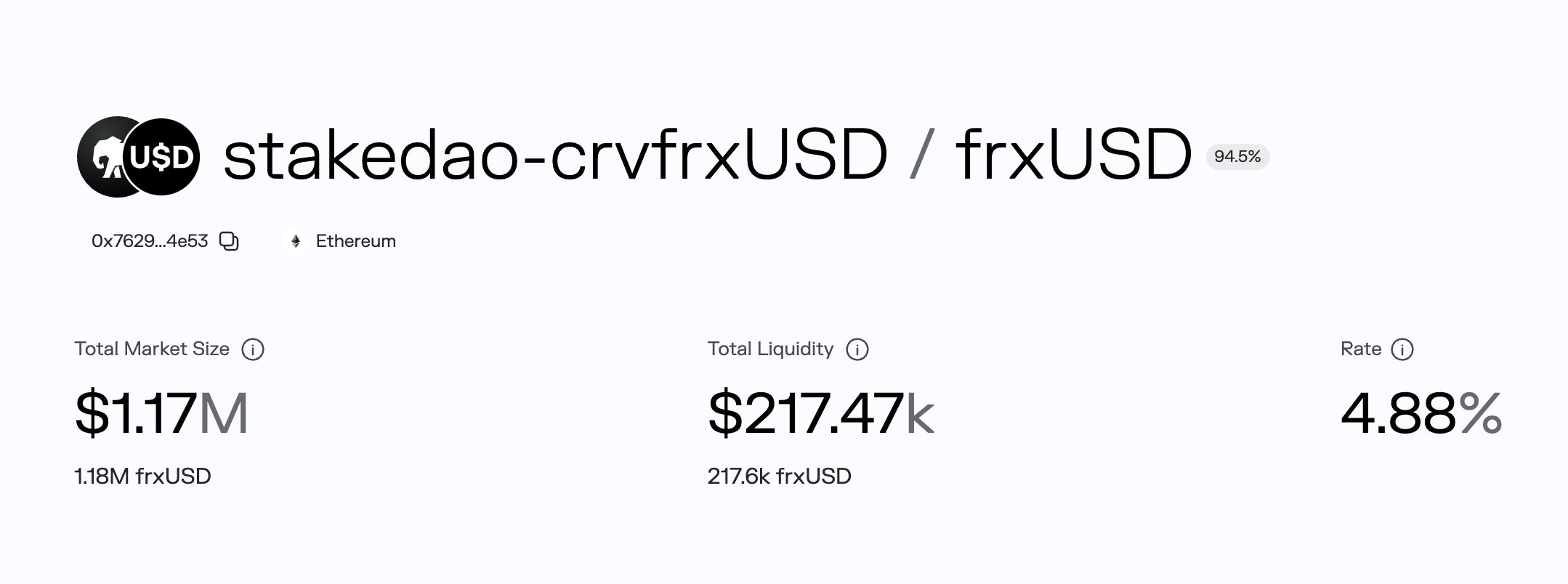 New collateral added to the Stake DAO frxUSD curated vault on Morpho: the OnlyBoost LP from the Curve crvUSD/frxUSD PegKeeper. ↳ Deposit crvUSD/frxUSD on CurveFinance ↳ Stake t...2026-03
 Stake DAO ships lending beta via Morpho, letting LPs borrow against OnlyBoost positions while yield keeps stacking2026-03
Stake DAO is a non-custodial DeFi protocol that converts long-duration governance locks into liquid receipt tokens and uses the pooled voting power across boosted strategies, vote incentives, and governance. Its current product stack centers on Liquid Lockers, Votemarket, Curve strategies through Only Boost, Morpho lending, and vlSDT governance, as summarized in Stake DAO's current Liquid Lockers and protocol documentation.
The word liquid needs a qualification. An sdToken can be transferable even while the underlying governance asset remains locked, but transferability does not guarantee a one-to-one market price, deep exit liquidity, or immediate redemption. Users exchange an individual locked position for exposure to a shared system of contracts, markets, incentives, and protocol operations.
How Liquid Lockers Work
Vote-escrow systems reward users for locking governance tokens, often by granting voting power and boosted protocol rewards. The tradeoff is that a maximum-duration position can remain illiquid for years. A Liquid Locker pools deposits into a protocol-managed locked position and issues an sdToken representing the depositor's economic interest.
The flagship example is sdCRV. The current CRV locker says deposited CRV contributes to Stake DAO's veCRV position. In return, sdCRV holders can access underlying rewards, market liquidity, vote replication, and vote-incentive distributions without each holder maintaining a separate veCRV lock. The Stake DAO application currently lists CRV alongside several other governance-token lockers.
This structure does not make the wrapper identical to the underlying asset. The sdToken's market price can diverge from the asset locked behind it, secondary-market liquidity can contract, and the locked position can be affected by changes in the underlying protocol. Smart-contract, oracle, incentive, and operational risks are added to the market risk of the deposited token.
Valueverse's Accrual revenue tracking platform announces listing of f(x) Protocol's $FXN, Stake DAO's $SDT, and Ramses $RAM
A Product Map That Changes Over Time
Stake DAO has extended the locker model beyond Curve. The current application lists a live YB locker, for example, but an evergreen guide should not freeze its voting-power totals, reward rates, or incentive terms into prose. Those values can change faster than the explanation around them.
sdPENDLE shows why product status matters more than a launch-era milestone. Stake DAO's current PENDLE locker page says Pendle has moved from vePENDLE toward sPENDLE, new sdPENDLE minting is disabled, staked sdPENDLE positions continue earning rewards, and one-to-one redemption for PENDLE is expected when the underlying vePENDLE lock expires in February 2028.
A separate terminal distribution covers residual voting-power rewards. SDGP-69 set October 30, 2026 as the final claim date for those residual sdPENDLE and sdBAL rewards, and the Snapshot vote closed entirely in favor. The terminal voting-power-reward claim should not be confused with a claim that every sdPENDLE reward has ended or that the receipt token has already become redeemable.
The broader lesson is that a liquid locker can move from growth to maintenance, migration, or wind-down when the underlying protocol changes its own governance model. That lifecycle risk belongs in the product explanation.
Readers follow Stake DAO most when pooled governance power has consequences—who receives delegated influence, which composable layer fails, and whether governance actually closes the loss.
Votemarket and Only Boost
Pooled voting power has economic value because governance votes can influence where protocols direct token incentives. Votemarket provides an on-chain venue where protocols create campaigns offering rewards for eligible gauge votes, while voters can earn additional returns for directing their governance power. Stake DAO's Votemarket v2 whitepaper describes support for multiple vote-escrow systems; the exact supported set belongs to the live application rather than a fixed list here.
Only Boost uses Stake DAO's accumulated veCRV position in a different way. The Only Boost documentation says the product is currently for Curve strategies and calculates an allocation between Stake DAO and Convex using the providers' veCRV balances, including delegated boost. It is not a generic optimizer across every protocol.
Reward timing also deserves precision. Stake DAO's strategy documentation says standard strategy rewards become claimable after harvest. Users may claim or re-compound them, but the normal flow should not be described as automatic compounding.
Stake DAO AI agent now fully integrated with protocol’s on-chain lending data
Morpho Lending and Curated Vaults
Stake DAO also lets users borrow against a limited set of strategy positions. Its Morpho Blue lending overview describes Morpho Blue as the supported lending protocol. Supported reward-vault shares or raw Curve liquidity-provider tokens are wrapped into non-transferable collateral while the underlying position continues accruing rewards.
That continued reward exposure does not eliminate lending risk. Borrowers remain subject to interest, collateral-price changes, oracle behavior, and liquidation. The current market documentation describes USDC as the borrowed asset for these wrapper markets, but supported collateral and parameters remain mutable.
Those borrowing markets are distinct from Stake DAO's curated Morpho vaults. Governance has separately considered and approved collateral additions for the frxUSD v2 vault, including a Stake DAO LP position for frxUSD/sDOLA through LMAP #2 and its Snapshot decision. An approved market addition is not the same thing as a guarantee of present liquidity, borrowing capacity, or safety.
- 01Authorization versus execution↗
The detailed second-delegation headline drew the strongest relevant clicks, but the primary record proves governance authorization rather than a completed transfer.
- 02Who absorbs incident losses↗
Readers opened the March oracle-loss and later compensation stories for the path from failure disclosure through a vote and into an eligible reimbursement set.
- 03Composable lending layers↗
Morpho and curated-vault headlines pulled readers toward the boundary where boosted strategy positions become collateral and add liquidation risk.
- 04Liquid governance power↗
Liquid-locker coverage drew attention to the trade: pooled vote-escrow benefits and transferable receipts in exchange for wrapper and shared-system dependence.
- 05Governance model transitions↗
vlSDT and sdPENDLE headlines performed when a familiar locking model changed its voting, exit, minting, or reward rules.
vlSDT Governance
Stake DAO's native governance token is SDT. The protocol has replaced new veSDT locks with vlSDT, while allowing existing veSDT positions to continue participating in Snapshot governance. The current governance documentation distinguishes the two balances and says only vlSDT now provides boost for sdToken-vault voting rewards.
Under the live model, one staked SDT supplies one unit of non-decaying vlSDT voting power. The vlSDT staking guide says an unstake request removes voting and fee-earning power immediately and starts an eight-week withdrawal queue. The migration guide says conversion from veSDT is one-way, has no migration deadline, and credits the originally locked SDT amount rather than the decayed voting balance.
Earlier governance materials contemplated an instant exit with a penalty, but the current user-facing guide does not document that route. The live eight-week path is therefore the appropriate mechanism for an evergreen description.
Stake DAO also publishes a read-only Agent Skill and Hub API guide that gives compatible agents protocol documentation and access to public Hub API data for lockers, strategies, claims, and lending positions. It does not sign transactions, control a wallet, or turn an informational interface into an autonomous financial agent.
Stake DAO releases April 2026 report highlighting vlSDT launch and roadmap completion
Two 2026 Incidents, Two Recovery Paths
Stake DAO experienced two materially different incidents in 2026. They should not be collapsed into one exploit narrative, and a governance vote should not be confused with execution or completed claims.
On March 12, an oracle-related Votemarket incident caused approximately $176,000 in lost user rewards. SDGP-65 proposed treasury reimbursement, and its Snapshot vote passed. Stake DAO later said all impacted rewards were reimbursed in USDC and made claimable for eligible veCRV voters. That is an attributed account of the eligible set, not evidence that every claimant completed a transaction.
The May 27 vsdCRV incident had a different cause. Stake DAO's Arbitrum vsdCRV incident disclosure says a deployer account retained the owner role on an Arbitrum cross-chain token contract because the intended governance handover had never been completed. After that account was compromised, the attacker forged unbacked vsdCRV and realized roughly 43.8 ETH of value. Stake DAO moved about 1.329 million staked sdCRV of backing to a governance multisig wallet within 47 minutes, closed the mint path, moved remaining live privileges to the governance multisig, and deprecated the Arbitrum contract.
The response then moved through governance. SDGP-70 proposed 1,535,421.76 sdCRV in voluntary, ex gratia support, and the Snapshot vote passed. Stake DAO's June report on the Merkle distribution, published July 13, says the Merkle distribution was deployed and integrated into the interface; a July 9 forum update directs eligible wallets to the claim route. The safe conclusion is that the approved distribution was deployed and claimable, not that every affected person was covered or had claimed.
A separate asdCRV LlamaLend assessment reported about 17,681 sdCRV of exploit-attributable losses across five addresses and said a new governance proposal would follow. At the July 13 source cutoff, the reviewed public record established a discussion and loss assessment, not a passed second distribution or a claim route.
SDGP-57 vote closes unanimously, authorizing—but not proving execution of—the proposed second veCRV boost delegation.
A Votemarket oracle incident causes approximately $176,000 in lost user rewards.
SDGP-65 vote closes, authorizing treasury reimbursement for the eligible March incident set.
A compromised deployer account uses an Arbitrum owner role left outside governance; the incident realizes roughly 43.8 ETH of loss.
SDGP-70 vote closes, authorizing 1,535,421.76 sdCRV in voluntary ex gratia support for the eligible May incident set.
SDGP-69 vote closes, setting October 30, 2026 as the terminal claim date for residual sdPENDLE and sdBAL voting-power rewards.
Stake DAO directs eligible SDGP-70 wallets to the live portfolio claim route.
An asdCRV LlamaLend assessment identifies roughly 17,681 sdCRV across five addresses and says a new governance proposal will follow.
Authorization Is Not Execution
The same distinction applies outside incident recovery. SDGP-57 sought authorization for a second delegation of roughly 48.5 million veCRV boost from Michael Egorov under specified commercial terms. Its Snapshot vote passed unanimously.
That vote proves governance authorization. The forum thread, later reports, current documentation, and reviewed application materials did not provide a primary record showing that the second delegation executed. Atlas therefore does not count it as a completed transaction. A transaction record or an official execution announcement would resolve the question.
The May 27 loss began with an owner role left on a deployer account after an incomplete governance handover, allowing a compromised key to alter the cross-chain mint path.
The March 12 Votemarket oracle incident caused approximately $176,000 in lost user rewards and required a governance-authorized reimbursement path.
sdPENDLE minting is disabled and one-to-one redemption is only expected in February 2028, leaving holders dependent on continuing rewards and secondary-market liquidity in the interim.
Borrowing against reward-bearing strategy positions keeps the collateral productive but adds debt, oracle, and liquidation exposure.
Only Boost allocates Curve strategy deposits between Stake DAO and Convex, making results dependent on external protocol state and veCRV balances.
Votemarket's own whitepaper says audits reduce but cannot eliminate vulnerability, loss, or experimental-protocol risk.
Risks and What to Watch
Stake DAO's architecture combines several layers whose risks can interact.
Wrapper liquidity and peg risk: An sdToken can trade below the asset locked behind it. A holder may depend on secondary-market depth or a future redemption process rather than immediate withdrawal of the underlying governance token.
Smart-contract and integration risk: Liquid Lockers, strategies, Votemarket, oracles, bridges, Morpho markets, Curve pools, and third-party protocols create separate failure paths. A position that remains productive inside Stake DAO can still be impaired by an external protocol.
Lending and liquidation risk: Reward-bearing collateral can lose value. Borrowing against it adds interest, oracle, liquidity, and liquidation exposure.
Governance and operational risk: Votes can authorize changes, but execution still depends on contracts, signers, deployments, and operational controls. The May incident showed the cost of a privileged role that remained with a deployer account.
Product-lifecycle risk: A locker depends on the economics and governance design of its underlying protocol. sdPENDLE's transition illustrates how emissions, minting, rewards, and redemption can change after a locker launches.
Stake DAO says in its June report that it expanded ownership verification, monitoring, automated pause coverage, escalation, and deployment controls after the May incident. Those are relevant first-party remediation claims, not an independent conclusion that the controls will prevent another failure.
Outlook
Stake DAO's durable proposition is that pooled governance positions can remain economically useful through liquid wrappers, boosted strategies, vote-incentive markets, and collateralized integrations. Its current product map also shows the cost of that breadth: the protocol must track changing governance systems, wrapper liquidity, third-party contracts, lending risk, and operational authority across multiple surfaces.
Two questions remain appropriately open for partner review. First, whether the SDGP-57-authorized second boost delegation ever executed. Second, whether the five-address asdCRV assessment has advanced into a proposal, vote, or claim route. Keeping those questions explicit is more useful than converting incomplete public records into confident claims.
Latest Stake DAO news
Valueverse's Accrual revenue tracking platform announces listing of f(x) Protocol's $FXN, Stake DAO's $SDT, and Ramses $RAMStake DAO AI agent now fully integrated with protocol’s on-chain lending dataStake DAO releases April 2026 report highlighting vlSDT launch and roadmap completionStake DAO finalizing post-mortem and proposal to compensate affected usersNew collateral added to the Stake DAO frxUSD curated vault on Morpho: the OnlyBoost LP from the Curve crvUSD/frxUSD PegKeeper. ↳ Deposit crvUSD/frxUSD on CurveFinance ↳ Stake t...Stake DAO ships lending beta via Morpho, letting LPs borrow against OnlyBoost positions while yield keeps stackingSources
27 records from 5 domains
docs.stakedao.org
stakedao.org
gov.stakedao.org
snapshot.org
x.com
Community notes
Spot something off or out of date? Drop a note. Editors review topic notes daily and roll accepted fixes into the explainer — contributors are recognized in the monthly $SQUID drop.
Loading notes…
Help improve this topic
Have a story or tip about this topic? Submit it. See something missing? Leave a note. Editors review daily; accepted submissions and fixes count toward the monthly $SQUID drop.