
In-depth explainer on Dubai as a global crypto hub, covering VARA regulation, exchanges, stablecoins, tokenization, enforcement, scams and events like TOKEN2049, with context on UAE, China and regional dynamics for builders and investors.
- x.com2
- fnlondon.com1
- cointelegraph.com1
- financefeeds.com1
- liquiditytech.com1
- mena.entrepreneur.com1
- blog.kraken.com1
+19 sources across the wider coverage universe
 Tether signs DMCC MoU to bring tokenization pilots to 26,000-company Dubai trade hub2026-06
 Revolut secures Dubai VARA in-principle approval for crypto trading via app and Revolut X2026-07
 Dubai's VARA lays out three-tier token issuance framework, reserves strictest rules for stablecoins and RWAs2026-04
 Kraken secures Dubai VARA authorization to offer UAE clients AED funding, spot, margin, OTC, and staking2026-05
 Dubai watchdog chief Mark Steward vows not to dilute rules as DIFC booms, backing AI, tough enforcement and a cautious yet pro‑innovation crypto regime to keep “cowboys” out.2026-03
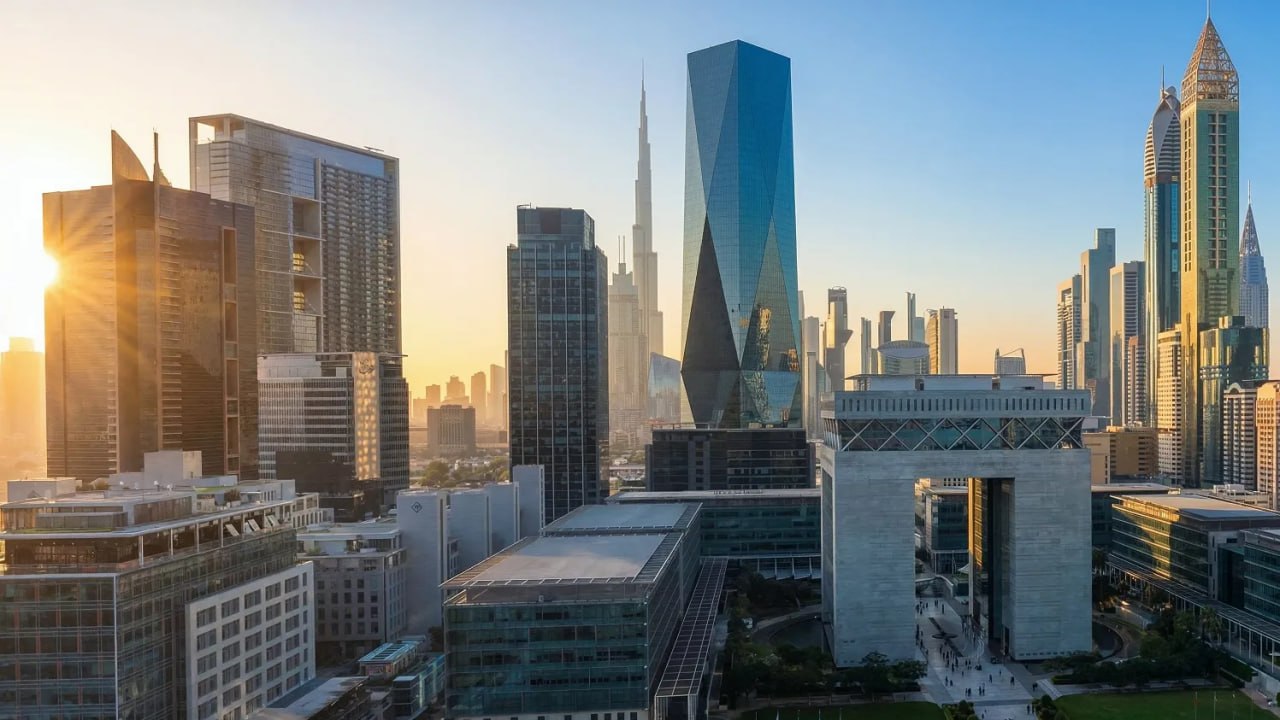 Dubai’s DIFC aims to become world’s first AI-native financial center, targeting $3.5 billion in benefits and create 25,000 jobs.2026-04
Dubai as a Crypto Hub: Regulation, Markets, and Ecosystem Explained
A global experiment in building a crypto-friendly yet tightly supervised financial centre, Dubai has become one of the most important jurisdictions for digital assets, sitting at the crossroads of the Middle East, Asia, Europe and Africa. For builders, traders and policymakers, the city now offers a live case study in how licensing, tokenization, stablecoins and enforcement can coexist within an aggressively pro-innovation economic model.
Dubai’s Rise as a Crypto and Web3 Hub
Over the past decade, Dubai has consciously positioned itself as a bridge between established Western financial centres and rapidly growing markets in Asia, Africa and the broader Middle East. Its location and time zone allow trading desks and operations teams to overlap with business hours in Europe and much of Asia, while long-haul connectivity and business-friendly immigration policies have turned the city into a preferred base for globally mobile founders and funds. Against that backdrop, digital assets were a natural extension of Dubai’s ambition to become a 21st‑century financial and technology hub, particularly as some competing jurisdictions in North America and Europe took a more enforcement-first or restrictive approach.
Within the United Arab Emirates, Dubai is not the only jurisdiction courting blockchain and digital asset business, but it has become the most visible to retail users and Web3 projects. The UAE has developed a multi-hub model: Abu Dhabi’s Abu Dhabi Global Market (ADGM) and Dubai’s Dubai International Financial Centre (DIFC) operate as common-law financial free zones with their own regulators, while Dubai’s Virtual Assets Regulatory Authority (VARA) governs most virtual asset activity in mainland Dubai outside these free zones. This layered architecture allows the country to host institutional-grade frameworks in ADGM and DIFC while giving Dubai a dedicated, crypto-specific regulator in VARA that can focus on high-volume platforms and consumer-facing innovation.
The strategy is not purely about attracting trading volume or speculative capital. Dubai’s government and economic agencies have consistently linked digital assets to broader goals of trade facilitation, diversification and “future economy” job creation. The Dubai Multi Commodities Centre (DMCC), for example, originally created to strengthen commodity trading, now hosts a dedicated Crypto Centre and has signed a non-binding memorandum of understanding (MoU) with Tether to explore tokenization of real-world assets, peer-to-peer payments, pilot projects and educational initiatives. DMCC’s network spans roughly 26,000 companies engaged in commodities, trade and technology, making it a natural testbed for tokenized trade finance, commodity-backed tokens and other real-world asset (RWA) experiments.
Dubai’s appeal has also been reinforced by developments elsewhere. In the United States, the lack of a bespoke federal digital asset framework and reliance on enforcement actions has created uncertainty for many projects. In Europe, MiCA is bringing a comprehensive regime, but its implementation and operational costs may encourage some firms to maintain a presence in more flexible hubs. In Asia, Hong Kong, Japan and South Korea are rolling out their own stablecoin, exchange and asset-management rules. Against this landscape, Dubai offers a third path: a jurisdiction that is explicitly open to crypto and tokenization, but which insists on licensing, clear rulebooks and cross-border financial security as first principles.
The result is that for many global exchanges, market makers, venture funds and protocol teams, Dubai is no longer just a stop on the conference circuit but a core node in their operational map. For others—especially those from neighbouring countries such as Iran facing sanctions and capital controls, or from China seeking diversified access points—it represents a relatively accessible, well-connected interface with the global financial system. That mix of openness, infrastructure and regulatory clarity is what makes Dubai particularly important to follow for anyone serious about crypto’s evolution.

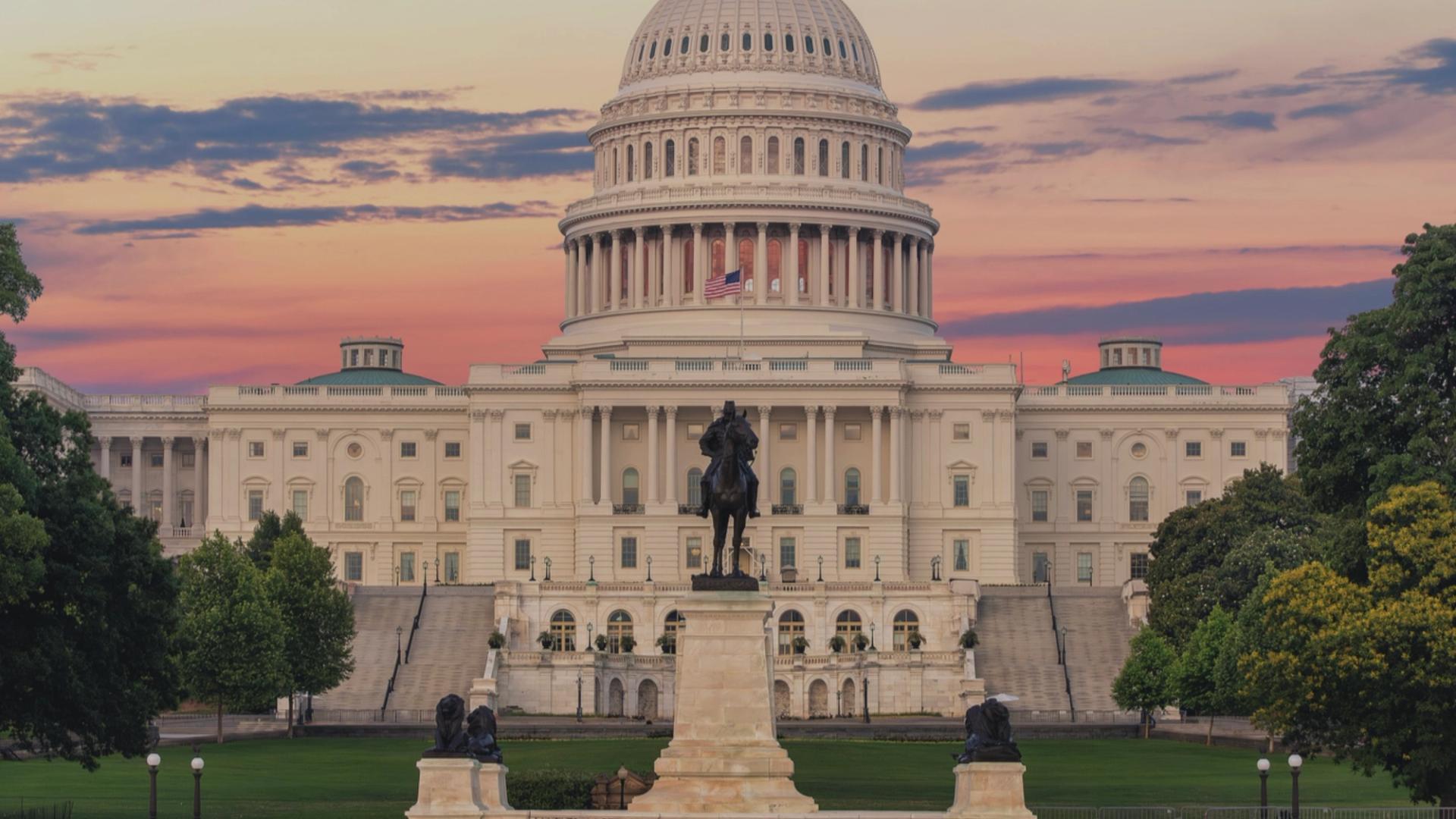
Senate’s Clarity Act rejection benefits traditional banks by shielding deposits from yield-bearing stablecoins, while overseas crypto hubs like Dubai gain an edge
Regulatory Architecture: VARA, DIFC, ADGM and Beyond
Understanding Dubai’s crypto landscape requires first understanding how regulation is structured across the UAE. At a high level, onshore financial and securities markets are supervised at the federal level, while the ADGM and DIFC free zones have their own regulators and legal systems based on English common law. Within Dubai specifically, the Virtual Assets Regulatory Authority was created to oversee virtual asset activities in the Emirate and has gradually built a comprehensive rulebook covering licensing, market conduct, prudential standards and more.
VARA explicitly governs digital asset activity in mainland Dubai, outside the DIFC, with a framework that targets high-volume, retail-oriented platforms and Web3 innovation. Its approach is articulated in a Virtual Assets (VA) Framework built on principles of economic sustainability and cross-border financial security, signalling that Dubai’s policymakers view digital assets as integral to the wider economy rather than a standalone speculative niche. The VARA Rulebook is modular, addressing areas such as virtual asset service provider (VASP) licensing, market behaviour, risk management and specialized activities like custody or broker-dealer functions. This modular structure allows the regulator to refine specific parts of the regime, such as token issuance or derivatives, without constantly rewriting the entire framework.
Alongside VARA, the DIFC has carved out its own identity as a global financial centre in conventional banking, asset management and capital markets, and it is now layering artificial intelligence into that proposition. DIFC has announced plans to become the world’s first “AI-native” financial centre, with the initiative expected to contribute around USD 3.5 billion (approximately AED 12.9 billion) to Dubai’s economy and create 25,000 new jobs. Although that initiative is not crypto-specific, the overlap between AI, fintech and digital assets is increasingly clear in areas such as compliance analytics, algorithmic trading, risk modelling and tokenization of data and intellectual property. The fact that Dubai is simultaneously pushing the frontier on AI and virtual assets illustrates its broader strategy: to host a full stack of “future finance” industries, from infrastructure to applications.
The ADGM in Abu Dhabi, for its part, has focused heavily on institutional digital asset services, including regulated exchanges, custodians and asset managers, attracting several large international players. The coexistence of ADGM and VARA means the UAE can cater to different segments of the market—more institutional and capital-markets-focused activity gravitating to Abu Dhabi, and more retail-facing, Web3 and consumer platforms choosing Dubai. For global firms, this creates optionality within a single country, but it also increases the importance of understanding which regulator and legal regime applies to each activity and entity.
One of the most distinctive features of Dubai’s virtual asset regime is the breadth of activities and entities that fall within VARA’s scope. Recent Marketing Regulations issued by VARA, together with guidance, apply to all marketing relating to virtual assets or virtual asset activities from within the UAE or targeting the UAE public, regardless of whether the entity is authorised by VARA or physically based in Dubai. The territorial scope was explicitly extended to the whole UAE, and VARA deems any marketing targeting the UAE to be targeting Dubai by default. This expansive view of “targeting” allows the regulator to intervene where offshore entities seek to solicit UAE users without being licensed.
The interplay among VARA, DIFC and ADGM can be summarized in terms of their geographic scope and strategic focus. VARA covers mainland Dubai, emphasising retail exchanges, NFT platforms, metaverse ecosystems and Web3 consumer applications. DIFC operates as a common-law enclave focused on traditional and fintech financial services, now adding AI as a core pillar. ADGM provides a separate common-law framework centred on institutional capital markets and asset management. Although each has its own regulator and rulebook, they are complementary rather than competing, collectively signalling the UAE’s commitment to accommodate a broad spectrum of digital asset activity within a regulated environment.
To clarify these relationships, it is useful to compare the main hubs in a simple way.
| Hub / Zone | Primary Regulator | Geographic Scope | Crypto Focus | Notable Features |
|---|---|---|---|---|
| Mainland Dubai | VARA | Emirate of Dubai (outside DIFC) and, for marketing, the wider UAE | Retail exchanges, Web3, NFTs, consumer DeFi | Dedicated virtual asset rulebook emphasising economic sustainability and cross-border financial security |
| DIFC | DIFC Authority & DFSA | DIFC free zone in Dubai | Institutional finance, fintech, growing digital asset services | AI-native financial centre initiative targeting USD 3.5b in economic contribution and 25,000 jobs |
| ADGM | FSRA | ADGM free zone in Abu Dhabi | Institutional-grade DLT market infrastructure, exchanges, custodians | Common-law regime popular with global institutions; complements VARA’s retail focus |
By design, this architecture means that “Dubai” in a crypto context is not a single regulator or free zone, but rather a mesh of regimes. For a founder or exchange considering a move, the key first step is to identify which combination of VARA, DIFC and ADGM best matches their business model and target clientele. The days when an offshore entity could simply serve UAE residents from a distant jurisdiction without engaging with local regulators are rapidly ending, as the enforcement actions discussed later demonstrate.
Readers clicked most heavily on enforcement posture and macro stress signals — not licensing wins — revealing that the market wants confirmation Dubai's regulatory rigor will hold under real-world pressure (geopolitical shocks, banking withdrawal limits) rather than assurance that more firms are getting approved.
Core Rulebooks: Licensing, Token Issuance, Marketing and Derivatives
The backbone of Dubai’s crypto regime is VARA’s licensing framework for virtual asset service providers. Under VARA’s Virtual Assets and Related Activities Regulations, any entity that carries out a defined “virtual asset activity” in or from Dubai—such as operating a virtual asset exchange, providing custody, broker-dealer services or advisory—must obtain a permit and comply with ongoing obligations. These activities are defined broadly to ensure that the regulatory perimeter keeps pace with evolving business models. The ethos is clear: meaningful activity involving Dubai residents or the Dubai market should be subject to Dubai oversight.
Licensing is more than a formality; it unlocks access to key infrastructure and reputational benefits. When Payward, the parent company of Kraken, secured VARA authorization in Dubai, it did so through a locally regulated subsidiary, enabling UAE clients to fund and withdraw in dirhams and access spot, margin, over-the-counter (OTC) and staking services. Kraken’s authorization signalled that a major US-origin exchange was willing to subject its regional operations to a dedicated onshore regime, rather than purely passporting from offshore. Similarly, other providers such as LTP have pursued VARA licenses that allow them to act as regulated intermediaries in the UAE market, underscoring the growing preference for fully licensed status among serious operators.
At the same time, Dubai’s regulators have begun to move beyond entity-level licensing to address the assets themselves, particularly in the context of token issuance and stablecoins. VARA has released guidelines for token issuance that clarify the regulatory framework for stablecoins and other virtual assets, forming the foundation of a three-tier token classification regime. While the fine detail of that classification continues to evolve, the broad direction is that truly decentralised, non-redeemable tokens may be treated differently from asset-referenced tokens and stablecoins that promise redemption at par in fiat or claim backing by real-world assets. In line with global trends, the strictest rules are reserved for stablecoins and RWA tokens that function as cash equivalents or investment products, requiring robust governance, reserve management, disclosure and redemption policies.
Dubai’s token issuance rules interact with a rapidly expanding RWA and stablecoin ecosystem centred around DMCC and other hubs. The non-binding MoU signed between DMCC and Tether in June 2026 is particularly illustrative of the direction of travel. The agreement envisages collaboration on tokenization of real-world assets—including commodities and trade finance instruments—peer-to-peer digital payments, blockchain advisory, pilot programs and joint hackathons and educational initiatives via the DMCC Crypto Centre. While the MoU is exploratory and does not itself grant regulatory approvals, it suggests that one of the largest stablecoin issuers sees Dubai’s commodity and trade hub as fertile ground for practical RWA deployments within a regulated environment.
Another crucial plank of VARA’s framework is the Marketing Regulations, which govern how virtual assets and related activities can be promoted in or targeting the UAE. These rules, which took effect on 1 October 2024, replace earlier administrative orders and establish a comprehensive regime for any marketing originating from within the UAE or directed at UAE consumers, regardless of whether the promoter is authorised by VARA. The territorial scope is deliberately broad: both domestic and foreign entities must comply, and any marketing that targets the UAE is considered to target Dubai by default. The only entities exempt from the regulations are those that are not located in the Emirate, do not conduct any virtual asset activity in the Emirate, and whose marketing activities do not target the UAE or the UAE public; all three conditions must be met to qualify.
Substantively, the Marketing Regulations require that crypto marketing be fair, clear and not misleading; be clearly identifiable as promotional in nature; and not contain inaccurate or misleading information or statements implying that investments are safe, low risk or guaranteed to generate returns. In addition, marketing materials must include prominent disclaimers that virtual assets may lose their value in full or in part and are subject to extreme volatility, as well as clear statements of the risks investors face. Perhaps most strikingly, firms are prohibited from including a direct call to buy, or other messaging that seeks, instructs or directs the purchase or sale of a virtual asset, in their marketing. This pushes the tone of crypto advertising away from “hard sell” tactics and toward a more informational style, and it has direct implications for influencers and affiliate marketing campaigns.
The same regulations also embed a strong anti-money-laundering and public policy stance. In line with the broader Virtual Assets and Related Activities Regulations, the Marketing Regulations reiterate that any virtual asset activity involving anonymity-enhanced cryptocurrencies is strictly prohibited in the Emirate, and that the marketing of such anonymity-enhanced cryptocurrencies to or within the UAE is also banned. This prohibition reflects global concerns about the use of privacy coins and mixers to launder funds, evade sanctions or obscure illicit flows, and it aligns with the UAE’s efforts to address Financial Action Task Force (FATF) concerns. For platforms and protocols whose value proposition heavily depends on privacy-preserving features, this is a material constraint on operating or marketing in Dubai.
To enforce compliance with its marketing and other regulations, VARA is empowered to supervise entities and impose sanctions. It can levy fines whose amounts depend on the nature of the violation as set out in Schedule 1 of the Marketing Regulations, with penalties of up to AED 10 million and the possibility of doubling the fine for repeated violations within one year from the original offence. These sanctions are not purely theoretical; as enforcement actions discussed later illustrate, Dubai’s regulators and law enforcement agencies have shown a willingness to act decisively where they believe consumer protection or financial integrity is at risk.
As the market has matured, a further priority for VARA has been to put a formal framework around crypto derivatives, an area that global regulators often treat with caution, especially for retail clients. VARA has released a formal rulebook for exchange-traded derivatives referencing virtual assets, effectively opening the door for retail participation in crypto futures and similar products under a regulated regime. According to public messaging around the new framework, the authority has coupled this opening with strict limits on leverage, margin requirements, governance and disclosure obligations. New guidance caps retail leverage at roughly 5:1 for crypto derivatives offered under VARA, and lays out detailed rules for margining, liquidation, risk disclosure and internal risk management systems to ensure that excessive leverage does not put consumers or the wider system at undue risk. For institutional or professional clients, higher leverage may be available, but always within a clearly articulated rulebook.
Taken together, VARA’s licensing, token issuance, marketing and derivatives rulebooks offer something that many jurisdictions still lack: a reasonably comprehensive, crypto-specific regulatory framework, rather than ad hoc enforcement or lightly modified securities laws. The challenge for market participants is not the absence of rules, but the need to understand and operate within them, while also navigating the parallel regimes of DIFC and ADGM where relevant. For those willing to make that investment, Dubai offers a path to access a fast-growing regional market with regulatory clarity.
Market Infrastructure: Exchanges, Stablecoins and Tokenization
From a user perspective, the most visible manifestation of Dubai’s crypto ambitions is the growing list of exchanges and platforms that are authorised to operate under VARA or other local regimes, and that integrate natively with the UAE’s banking system and currency. This infrastructure layer—fiat on- and off-ramps, stablecoin bridges, tokenization platforms and government payment channels—is where policy ambitions meet day-to-day reality.
Several major international exchanges have opted to establish locally regulated entities in Dubai to serve UAE clients with dirham rails. Kraken, through its VARA-authorised Payward subsidiary, enables clients to fund and withdraw in AED, and offers regulated access to spot trading, margin, OTC services and staking products under the local regime. This gives traders and investors in the UAE an alternative to offshore platforms, reducing friction associated with cross-border transfers and providing clearer recourse in the event of disputes.
Binance has likewise deepened its Dubai presence, including through the launch of direct AED deposits and withdrawals via bank transfer for users of its Binance Dubai platform. To accelerate adoption of these local rails, Binance rolled out a promotional campaign offering rewards in AED for users who deposit a minimum amount from UAE bank accounts and achieve specified trading volumes over a defined activity period in mid‑2026. Beyond marketing, the key structural change is the existence of a compliant bridge between UAE banks and a global crypto exchange, which makes it easier for residents to move funds between the fiat and digital asset ecosystems without resorting to informal channels or foreign bank accounts.
Crypto.com provides another example of how Dubai is linking virtual assets to the real economy. The platform has obtained a UAE Stored Value Facilities (SVF) license that allows it to activate a partnership with the Dubai Department of Finance, enabling residents to pay select government services using virtual assets through a regulated infrastructure. Having secured the SVF license, Crypto.com can now support virtual asset payments for government transactions, effectively turning crypto balances into a means of settling everyday obligations such as fees or permits under official oversight. This kind of public-sector adoption remains rare globally and underscores Dubai’s willingness to experiment with integrating digital assets into core government services, provided the providers are properly licensed and supervised.
Alongside centralized exchanges and payment platforms, Dubai is also emerging as a locus for stablecoin and tokenization initiatives, particularly those connected to real-world trade and commodities. The MoU between DMCC and Tether sets out a framework for collaboration on tokenization of real-world assets, including commodities and trade finance instruments, as well as peer-to-peer digital payments and advisory services. DMCC’s status as a major commodities and trade hub—with a network of around 26,000 companies spanning commodities, trade and technology—means that any successful tokenization pilots could potentially scale into production use across a large and diverse corporate base.
The initiatives contemplated under the MoU are wide-ranging. They include tailored blockchain advisory sessions for companies in DMCC’s ecosystem, pilot programs to test digital asset use cases such as tokenized trade finance or supply chain tracking, and joint events like hackathons and educational initiatives through the DMCC Crypto Centre. For Tether, the arrangement provides access to a vast network of potential users and use cases for its stablecoins and related tokenization tools. For Dubai, it offers a low-risk, exploratory path to embedding tokenized assets and stablecoins into the mechanics of trade and commerce, under the supervision of local regulators and in coordination with VARA’s token issuance framework.
Stablecoins themselves play a central role in Dubai’s digital asset economy, both as trading instruments on exchanges and as bridges to real-world payments. VARA’s emphasis on a three-tier token issuance framework, with the strictest requirements reserved for stablecoins and RWA tokens, reflects global concerns about systemic risk and consumer protection. In practice, this means that issuers of payment stablecoins or asset-referenced tokens that promise redemption at par in fiat are likely to face stringent expectations around reserve composition, segregation, attestations, redemption mechanics and systemic risk management. While such requirements may increase compliance costs, they also distinguish regulated, onshore stablecoin activity in Dubai from more opaque offshore arrangements.
The tokenization agenda extends beyond stablecoins to encompass a wider universe of RWAs. From gold-backed tokens to tokenized real estate, art, carbon credits or trade receivables, Dubai’s mix of commodity trading, real estate development and logistics makes it a logical location to test such products. The launch of perpetual futures products referencing RWAs, such as MANTRA’s RWA perps, in conjunction with Dubai’s derivatives framework, suggests that the market is already beginning to integrate RWAs not only as spot exposures but also as derivative underlyings. As VARA refines its guidance and more pilots emerge from partnerships like the Tether–DMCC MoU, the boundary between conventional trade finance and programmable tokenized assets is likely to blur.
All of this infrastructure is being built against a backdrop of rapid experimentation in AI and data-driven finance. DIFC’s AI-native financial centre initiative is expected to attract a wave of AI, machine learning and data analytics firms, many of which will have applications in crypto and tokenization, from risk scoring and anomaly detection to automated market making and on-chain credit assessments. The combination of AI-specialized firms in DIFC, digital asset exchanges and tokenization pilots in VARA and DMCC, and institutional capital in ADGM creates a layered ecosystem in which innovation in one domain can quickly spill over into others.
For users and builders, the practical implication is that Dubai offers more than just a friendly regulator; it offers a dense network of exchanges, fiat rails, stablecoin issuers, tokenization initiatives and government partnerships that collectively reduce the friction of operating at the intersection of fiat and crypto. The trade-off is increased regulatory complexity and the need to pay close attention to which activities fall under which rulebooks and licensing regimes.
- 01VARA enforcement vs. cowboys↗
Mark Steward's explicit vow to resist diluting rules while DIFC booms hit a market nerve: readers wanted to know whether Dubai's tough stance was rhetoric or durable policy.
- 02Regional banking withdrawal stress
HSBC Qatar closures and Dubai banks reportedly capping large withdrawals at $100K landed as macro contagion signals, raising questions about capital flight risk in the UAE financial system.
- 03Iran conflict event disruption↗
Token2049's sudden postponement to 2027 with under 24 hours' notice crystallised geopolitical risk as a real operational threat to Dubai's crypto-hub identity, not just a background concern.
- 04VARA licensing race↗
Sequential approvals for Kraken and LTP — alongside a cease-and-desist against KuCoin — showed VARA actively sorting winners from laggards, making each license announcement a competitive signal.
- 05VARA derivatives leverage cap↗
The 5:1 retail leverage ceiling and the broader exchange-traded derivatives framework gave traders concrete rule changes that directly affect product design and risk exposure.
- 06DIFC AI-native ambition↗
The $3.5 billion target and 25,000-job headline framed DIFC's AI push as an economic-scale bet, attracting readers tracking where institutional fintech capital is flowing next in the region.
Enforcement, Scams and Risk Management
A core tension in any crypto hub is the balance between openness to innovation and vigilance against abuse. Dubai’s recent history shows that its regulators and law enforcement agencies are willing to take visible, sometimes high-profile actions when they believe firms have ignored licensing requirements or when crypto has been weaponised for fraud.
The case of KuCoin is emblematic. After years of operating globally with varying degrees of engagement with local regulators, the exchange faced escalating scrutiny across multiple jurisdictions. Observers noted that the US Department of Justice brought charges against KuCoin in March 2024, extracting around $297 million in fines and forfeitures for operating as an unlicensed money transmitter. In February 2026, Austrian authorities reportedly froze KuCoin’s EU operations over anti-money-laundering compliance failures. Then, in March 2026, Dubai’s VARA issued a cease-and-desist order for unlicensed operations targeting UAE residents, instructing KuCoin to immediately halt all virtual asset services to UAE residents.
Commentary on these events has highlighted a common thread: major jurisdictions are converging on the principle that if a platform “touches” their residents—by serving them, marketing to them, or otherwise directing activities at them—it must obtain local permission, regardless of where it is incorporated. In that sense, Dubai’s action against KuCoin is not an outlier but part of a broader global trend, aligning the UAE with enforcement approaches in the US and EU. The symbolism is powerful: even as Dubai markets itself as a crypto-forward jurisdiction and spends years courting the industry, it will not tolerate unlicensed operations that target its residents, especially in the wake of clear regulatory frameworks being established.
Beyond exchange regulation, Dubai has also been a locus for cross-border law enforcement operations targeting fraud that uses crypto as a hook. According to China’s Xinhua News Agency, police authorities from China, the United States and the UAE conducted their first joint international law enforcement operation targeting telecom and online fraud syndicates in Dubai. The operation dismantled nine fraud dens and resulted in the arrest of 276 suspects. Investigations revealed that the fraud rings lured victims into fake romantic relationships through social media, gained their trust and then coaxed them into investing in purported high-return cryptocurrency projects, causing significant financial losses.
A parallel press release from the US Department of Justice described the same coordinated takedown of scam centres, noting that unprecedented cooperation between the FBI, Dubai Police and the Chinese Ministry of Public Security had led to the arrests and dismantling of at least nine scam centres used for cryptocurrency investment fraud schemes targeting Americans. Among the hundreds arrested by Dubai authorities were defendants charged in the Southern District of California with federal wire fraud and money laundering offences. The operation underscores that Dubai is not a permissive safe haven for fraudsters; rather, its law enforcement agencies are actively collaborating with counterparts in major powers to address crypto-related romance scams and online fraud.
These enforcement actions dovetail with VARA’s efforts to reduce the space for misleading marketing and high-pressure sales tactics. By requiring that marketing materials be clearly labelled as promotional, banning claims that investments are safe or low risk, and mandating explicit volatility and loss disclaimers, the Marketing Regulations seek to address some of the behavioural elements that scammers exploit. The prohibition on including direct calls to buy or instructions to purchase a virtual asset in marketing materials is particularly relevant to “pump and dump” style promotions and influencer-driven hype, as it forces promotional content to adopt a more measured tone.
The ban on virtual asset activities involving anonymity-enhanced cryptocurrencies, and on marketing such assets, also reflects Dubai’s stance on the use of crypto for illicit purposes. Given the UAE’s position at the intersection of multiple regional economies, including neighbouring countries like Iran that face significant sanctions, international scrutiny over potential sanctions evasion and money laundering is intense. By categorically disallowing anonymity-enhanced cryptocurrencies in licensed activities and marketing, VARA is signalling that the Emirate is not willing to become a haven for transactions that cannot be effectively monitored. This does not eliminate all privacy technologies—private channels, selective disclosure and zero-knowledge proofs may still have compliant uses—but it sets a clear boundary for coins whose primary function is to defeat tracing.
For firms seeking to operate in Dubai, these enforcement and policy stances translate into concrete compliance expectations. Licensing is not merely about meeting capital or operational criteria; it also implies robust anti-money-laundering and counter-terrorist financing programmes, systems to monitor and report suspicious activity, and controls to ensure that marketing, product design and customer onboarding all align with VARA’s rules. Non-compliance carries not only financial penalties—fines of up to AED 10 million for certain marketing violations and the prospect of doubled fines for repeat offences—but also reputational harm and potential exclusion from one of the most dynamic crypto markets in the world.
From a user perspective, the combination of clear rulebooks and visible enforcement provides a measure of protection that is absent in purely offshore environments. It does not eliminate risk—crypto remains volatile, and scam operators will always seek new vectors—but it does mean there is a framework within which regulators can act. The joint China–US–UAE operation against romance scams, for instance, shows that even cross-border schemes using crypto as bait can be tackled when local authorities are willing to cooperate and when regulated platforms provide data and support.
Ecosystem, Events and Regional Context
Regulation and enforcement create the rails, but a vibrant crypto hub also requires a critical mass of people and projects. Dubai has invested heavily in building that ecosystem through conferences, free zones, co-working spaces, accelerators and targeted initiatives aimed at both international and local talent.
Token2049, one of the crypto industry’s premier conferences, has made Dubai a recurring stop on its global calendar. A highlights video from TOKEN2049 Dubai 2024 shows the event held on 18–19 April 2024 at the Madinat Jumeirah complex, bringing together founders, investors, developers and thought leaders under the banner of Web3, DeFi, NFTs and infrastructure. The official site for the event’s next Dubai edition confirms that TOKEN2049 will return to Madinat Jumeirah on 21–22 April 2027, branding itself as “the premier crypto event.” These gatherings generate more than media buzz; they anchor a dense schedule of side events, hackathons, investor meetings and informal meetups that often lead to funding deals, partnerships and new projects based in or at least launched from Dubai.
Economic free zones like DMCC and DIFC complement these conferences by offering physical and legal infrastructure for startups and established firms. DMCC’s Crypto Centre hosts digital asset businesses ranging from exchanges and trading firms to Web3 and blockchain projects, and, as seen with the Tether MoU, serves as a platform for tokenization pilots and education. DIFC, beyond its AI-native initiative, hosts accelerator programmes and sandboxes tailored to fintech and digital innovation, which increasingly intersect with blockchain and tokenization. For early-stage teams in the Protocol Labs network and beyond, demo days and accelerators frequently use Dubai as a showcase venue, as with the Founders Forge Demo Day that caps a twelve-week accelerator sprint. While not every such programme is Dubai-specific, the choice of the city as a meeting point reflects its status as a neutral, well-connected hub.
The local ecosystem is also reinforced by crypto-native organisations and newsrooms that maintain a physical footprint in the city. Co-working initiatives and “HotDesk” days, where communities invite builders and readers to work alongside their teams in Dubai offices, help weave a social fabric that goes beyond formal conferences. Hackathons and building competitions, such as consumer DeFi challenges that culminate in Dubai demo days with funded accelerator slots and prize pools, further anchor talent and capital. These events tend to emphasise consumer-facing DeFi, Web3 applications and real-world integrations—areas where Dubai’s mix of regulatory clarity and market access is particularly valuable.
Regionally, Dubai operates at the intersection of multiple geopolitical and economic currents. The UAE maintains strong trade and investment ties with China, which is evident not only in traditional sectors like infrastructure and energy but also in digital assets. Chinese participation in Dubai’s crypto ecosystem ranges from exchanges and trading firms serving Chinese-speaking users to infrastructure providers and investors. The joint China–US–UAE crackdown on romance scams in Dubai demonstrates a willingness by all three countries to cooperate on crypto-related crime, even amid broader geopolitical tensions. It suggests that for law enforcement, combating cross-border fraud and money laundering is a shared priority that can transcend political competition.
The regional context also includes neighbours like Iran, which faces extensive international sanctions and capital controls. While public evidence is limited, it is reasonable to assume that some individuals and businesses from sanction-heavy jurisdictions might be attracted to the relative openness and connectivity of Dubai’s financial system, including its digital asset ecosystem. This reality increases pressure on UAE regulators to demonstrate robust AML and sanctions compliance in the crypto domain, lest the Emirate be perceived as a conduit for illicit flows. Measures like the ban on anonymity-enhanced cryptocurrencies, tight control over licensing and close collaboration with international partners can be seen as part of this broader strategy to maintain Dubai’s reputation while still attracting legitimate business.
Within Asia more broadly, Dubai is often grouped with Hong Kong, Singapore, Tokyo and Seoul in discussions of crypto-friendly financial centres. Recent regional trends have seen Hong Kong granting regulated stablecoin licences, Japan refining exchange and token listing rules, and South Korea implementing a Digital Asset Basic Act. Newsroom coverage has begun to speak of “Asia advancing crypto” through such measures, with Dubai’s expansion into RWAs and tokenization seen as part of the same movement. In contrast to a narrative of regulatory arbitrage, a more accurate interpretation is that a network of jurisdictions across Asia and the Gulf is converging on a model that combines licensing, stablecoin regulation, investor protection and openness to innovation.
For founders and investors, this regional mosaic creates both opportunities and choices. A DeFi protocol focused on East Asian users might base itself in Hong Kong or Singapore but still maintain a substantial presence in Dubai to access Middle Eastern capital and markets. A tokenization platform for trade finance or commodities might find Dubai’s DMCC and VARA ecosystem uniquely suited to its needs. Conversely, firms that rely heavily on privacy coins, unlicensed derivatives or aggressive marketing practices may find that Dubai’s rules and enforcement posture constrain their strategies.
In essence, Dubai’s ecosystem is no longer a blank canvas for crypto experimentation; it is a structured, increasingly mature environment in which regulation, market infrastructure and community-building efforts interact. The city’s ability to sustain that ecosystem will depend on its success in maintaining a delicate balance between clear rules and flexible space for innovation.
VARA publishes crypto marketing regulations and guidance
VARA three-tier token issuance framework released; stablecoins and RWAs face strictest tier
VARA caps retail crypto leverage at 5:1 in exchange-traded derivatives framework
Kraken secures VARA authorization for AED funding, spot, margin, OTC, and staking
Token2049 Dubai postponed to April 2027 amid Iran conflict; sponsors given under 24 hours' notice
Tether and DMCC sign MoU to advance tokenization across 26,000-company Dubai trade hub
DIFC announces AI-native financial center initiative targeting $3.5B in benefits and 25,000 jobs
Crypto.com receives UAE stored-value facilities license for Dubai government crypto payments
Outlook
Looking ahead, Dubai’s trajectory as a crypto hub is likely to be shaped by three interlocking dynamics: regulatory refinement, real-world adoption and geopolitical positioning. On the regulatory front, VARA’s existing rulebooks for licensing, token issuance, marketing and derivatives are substantial but not static. As stablecoin and tokenization pilots move from proof-of-concept to production—especially in sectors like commodities and trade finance through partnerships such as the Tether–DMCC MoU—regulators will encounter new edge cases around classification, disclosure, custody, cross-border flows and systemic risk. Each new product class, from tokenized government bonds to RWA derivatives, may require further guidance or adjustments.
At the same time, Dubai’s appetite for integrating digital assets into the real economy suggests that adoption metrics will shift from trading volume to metrics like on-chain settlement of trade invoices, crypto-denominated payment of government fees and integration of tokenized assets into conventional financing structures. The Crypto.com SVF license tied to government payments is an early example of this trend; as more residents become comfortable paying official fees with digital assets, the perception of crypto as purely speculative may gradually recede. Similarly, successful tokenization of commodities or trade finance instruments through DMCC’s network could produce tangible efficiency gains and new financing options for 26,000 companies, embedding crypto rails into everyday business operations.
Geopolitically, Dubai will continue to navigate a complex environment. Its ties to Western allies, particularly in security cooperation, are evident in joint law enforcement operations against crypto-related scams with US and Chinese authorities. Its economic and trade integration with China and other Asian economies, meanwhile, creates strong incentives to remain aligned with emerging Asian digital asset standards. Balancing these relationships while maintaining credibility with bodies like the FATF and meeting the expectations of global banks will require constant calibration of AML controls, sanctions enforcement and oversight of new technologies such as privacy-preserving finance.
On the competitive front, Dubai will face increasing competition from other jurisdictions that are learning from its experience. If Hong Kong’s stablecoin regime adapts quickly, or if Singapore and Tokyo find ways to reconcile strict AML standards with vibrant DeFi ecosystems, Dubai may no longer be the default choice for every project migrating from the US or Europe. Conversely, if Western jurisdictions remain mired in regulatory ambiguity, Dubai’s first-mover advantage in building a crypto-specific regulator like VARA and integrating digital assets into government services may solidify its position for years to come.
For participants in the crypto ecosystem, the key takeaway is that Dubai is likely to remain an important hub, but one that rewards serious, compliant, long-term actors rather than opportunistic or lightly regulated players. Exchanges and platforms hoping to serve UAE residents will need to embrace licensing and engage early with VARA, DIFC or ADGM as appropriate. Builders of tokenized RWAs and DeFi protocols will have to consider not only technical design and product-market fit but also how their tokens are classified under VARA’s issuance rules and whether their marketing strategies comply with the Marketing Regulations. Users, for their part, will need to develop a more sophisticated understanding of what it means for a platform to be licensed in Dubai and which protections that status does or does not afford.
Conclusion
Dubai’s evolution into a global crypto and Web3 hub is neither accidental nor purely a product of loose regulation. It reflects a deliberate strategy by the Emirate and the wider UAE to position themselves at the frontier of digital finance while maintaining a reputation for regulatory clarity, economic stability and international cooperation. Through institutions like VARA, free zones like DMCC and DIFC, and initiatives such as the AI-native financial centre, Dubai is constructing an ecosystem where digital assets, tokenization, AI and traditional finance coexist within a coherent, if complex, regulatory architecture.
For the crypto industry, Dubai offers a distinctive value proposition. It provides onshore licensing pathways for major exchanges, stablecoin issuers and tokenization platforms; clear rulebooks for marketing, derivatives and token issuance; and increasingly deep integration between crypto and the real economy, from government payments to trade finance. At the same time, the Emirate has shown that it is prepared to enforce its rules, as demonstrated by actions against unlicensed exchanges and its participation in cross-border crackdowns on crypto-related romance scams and fraud. This combination of openness and enforcement means that Dubai is neither a laissez-faire paradise nor an overbearing regulator; it is an evolving experiment in what a mature digital asset jurisdiction can look like.
Whether Dubai ultimately succeeds in maintaining this balance will depend on factors beyond its control, including global regulatory trends, geopolitical tensions and technology shifts. But for now, it stands as one of the clearest examples of how a city-state can try to harness crypto and tokenization to advance broader economic goals, while insisting that those who “touch” its residents do so under licence and within a defined legal framework. For professionals in the crypto industry—whether exchange operators, DeFi founders, tokenization architects or regulators elsewhere—Dubai is a jurisdiction that cannot be ignored, both as a potential base of operations and as a bellwether for the future of regulated crypto finance.
Latest Dubai news
Sources
18 records from 16 domains
techinsights.linklaters.com
rulebooks.vara.ae
instagram.com
techafricanews.com
binance.com
blog.kraken.com
crypto.com
youtube.com
rootdata.com
news.bitcoin.com
english.news.cn
justice.gov
x.com
luma.com
token2049.com
ocorian.com
Community notes
Spot something off or out of date? Drop a note. Editors review topic notes daily and roll accepted fixes into the explainer — contributors are recognized in the monthly $SQUID drop.
Loading notes…
Help improve this topic
Have a story or tip about this topic? Submit it. See something missing? Leave a note. Editors review daily; accepted submissions and fixes count toward the monthly $SQUID drop.