
Deep explainer on ETHDenver, the world’s largest Ethereum BUIDLathon and festival, covering its SporkDAO governance, builder culture, AI and DeFi themes, security and regulatory shifts, media like Leviathan’s Llama Party, and impact on the wider crypto ecosystem.
+4 sources across the wider coverage universe
 Distro Media, a new decentralized news outlet, recaps ETHBoulder and ETHDenver2026-02
 0G Labs activates full ecosystem pipeline at ETHDenver 2026 with 60+ hackathon teams, builder houses, and accelerator entries emerging in one week2026-03
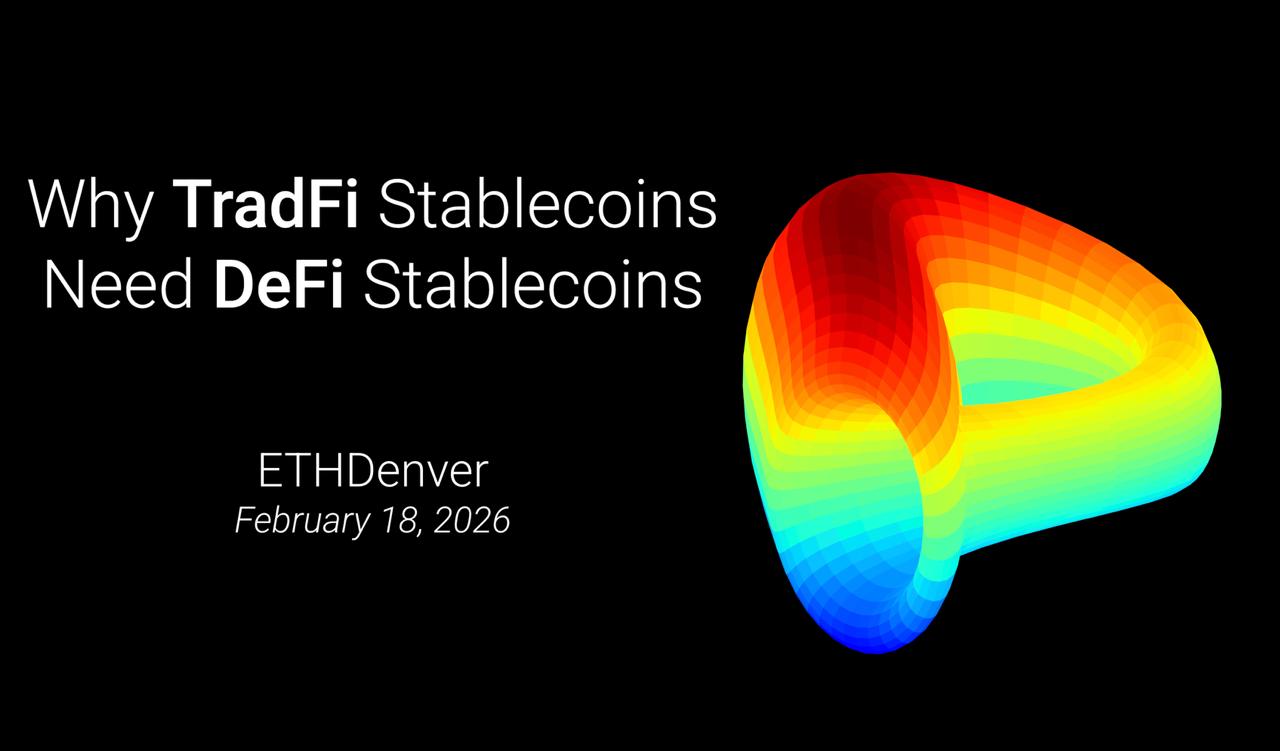 Why TradFi Stablecoins Need DeFI Stablecoins, live now from ETHDenver!2026-02
 ⚠️ SEAL_Org Intel team warns ETHDenver attendees of active phishing attacks via fake NFT and POAP claim sites that link to crypto wallet drainers designed to steal all funds.2026-02
 Early Review: ETHDenver Trades Hype for Builders as DATs Flop and Structural Shifts Take Center Stage.2026-02
 The Stable Summit at ETHDenver kicks off with a talk by @CurveCap on "The Rise of Yield Bearing Stablecoins"2025-02
ETHDenver: Inside the World’s Largest Ethereum BUIDLathon and Community Festival
ETHDenver is a community-run Ethereum and Web3 “BUIDLathon” and conference in Denver, Colorado, widely regarded as the largest builder-focused gathering in the crypto ecosystem, blending a multi-day hackathon, talks, art, governance experiments, and a dense side-event circuit into a single festival.
As Ethereum has matured from a scrappy developer community into a complex, institutionally relevant ecosystem, ETHDenver has become one of its central convenings, where developers, founders, DAOs, regulators, investors, artists, and media all pressure-test new ideas in public. Organizers describe it as the world’s largest Web3 BUIDLathon, drawing more than 25,000 participants from over 100 countries to Denver each winter. The festival’s 2026 edition opened at a new venue, the LVC at Denver’s National Western Center, under the “New #BUIDL City” thematic banner, highlighting the event’s evolution from a single hackathon into an entire pop-up city for builders. Alongside its technical tracks, ETHDenver has become a laboratory for DAO governance, stablecoin design, verifiable AI, institutional engagement, and new forms of media such as Leviathan News’ live coverage and Llama Party livestreams. Across market cycles, the event has increasingly traded hype for execution, making it a barometer of where Ethereum and the broader crypto industry are genuinely heading next.
What ETHDenver Is — And What It Is Not
ETHDenver is often described as a “conference,” and there is indeed a traditional conference component with stages, panels, keynotes, and fireside chats. Yet the organizers consistently foreground the term BUIDLathon, underscoring that the core of the event is not passive listening but active building. Unlike many industry expos that prioritize sponsored booths and polished product announcements, ETHDenver centers a multi-day hackathon where teams form on-site, ship minimum viable products, and compete for prizes, grants, and follow-on support from protocols, funds, and ecosystems. The event’s culture encourages participants to arrive with ideas and leave with code, prototypes, and new collaborators rather than business cards alone.
This builder-first ethos is reinforced by ETHDenver’s identity as a community-owned festival rather than a corporate trade show. The event is organized by SporkDAO, a Colorado nonprofit cooperative that frames ETHDenver itself as a living experiment in Web3-native community ownership and patronage. In this model, the festival is not simply a product to be sold but a commons to be maintained, with attendees, sponsors, and contributors all treated as stakeholders in a shared ecosystem. SporkDAO initiatives, such as its multi-year patronage rewards program that returned USDC and SPORK tokens to community members who staked and supported the festival, are explicit attempts to translate Ethereum’s governance ideals into the practical realities of running a large IRL gathering.
At the same time, ETHDenver is a cultural event in the broad sense: a city-wide convergence that spills beyond the official venue into co-working spaces, warehouses, galleries, and bars across Denver and neighboring Boulder. Side events range from technical summits and governance workshops to music nights, art shows, and playful community rituals like Leviathan’s Llama Party and SQUID drops, where media outlets and DAOs convene their own sub-communities inside the larger festival. For many crypto teams, ETHDenver is less a discrete event and more a temporal hub around which fundraising, product launches, governance milestones, and partnerships are clustered, often kicking off a broader conference circuit that continues through other gatherings like EthCC in Europe.
Understanding ETHDenver therefore requires holding several layers simultaneously. It is a hackathon, a conference, a DAO governance experiment, a cultural festival, a media moment, and a dense networking marketplace, all operating atop the Ethereum stack and its adjacent multichain ecosystems. It is also a stress test: for infrastructure under real-world load, for security assumptions as phishing campaigns and exploit attempts target attendees, and for narratives as each year’s event reveals what the crypto industry actually cares about when people show up in person.

Distro Media, a new decentralized news outlet, recaps ETHBoulder and ETHDenver

Good one but Leviathan 🙂
Origins, Mission, and Community Ownership
From local hackathon to global BUIDL city
ETHDenver emerged in the late 2010s as part of the first wave of Ethereum hackathons, initially centered around Colorado’s developer and startup communities. Over time, it grew from a few hundred engineers into a global pilgrimage destination for builders, attracting participants from more than 115 countries according to event materials. The choice of Denver as a permanent home, rather than rotating between global cities, lent the event a sense of continuity and allowed local partners, universities, and civic institutions to integrate more deeply with the Ethereum ecosystem. The festival’s February timing also positioned it early in the annual crypto calendar, giving teams a target for winter building and a launchpad before the rest of the year’s conferences.
From the outset, ETHDenver’s mission has been articulated in explicitly community-centric terms. Official descriptions emphasize that it is “for Ethereum and other blockchain protocol enthusiasts, designers, and developers,” highlighting a broad but still technically oriented audience rather than a generic investor crowd. Organizers have repeatedly framed ETHDenver as a place where “innovation, collaboration, and BUIDLing” come first, with sponsorships and institutional presence expected to support rather than dominate the agenda. This has helped preserve a certain grassroots feel even as attendance has scaled into the tens of thousands and blue-chip firms have become more visible.
The 2026 branding of ETHDenver as “New #BUIDL City” reflected both the physical expansion into the National Western Center and a conceptual emphasis on the event as a temporary digital-physical metropolis. Instead of a single venue and a linear stage program, ETHDenver now resembles a distributed campus: hackathon halls, dedicated security and verifiability zones, UX tracks, governance spaces, art galleries, and media studios operating concurrently. This city metaphor also mirrors the Ethereum ecosystem itself, where L2s, rollups, DeFi protocols, DAOs, and NFT communities function like neighborhoods in a broader networked society.
SporkDAO and the festival as a DAO experiment
A key differentiator for ETHDenver is that it is explicitly owned and governed by a DAO, rather than a traditional events company. SporkDAO, which grew out of the community of ETHDenver organizers and early supporters, encapsulates this ethos. As a nonprofit cooperative, SporkDAO coordinates sponsorships, logistics, and programming while also experimenting with tokenized patronage and community rewards. It has launched initiatives where attendees who stake the SPORK token and participate in the ecosystem over specified time windows become eligible for USDC and SPORK distributions from the DAO treasury, effectively sharing in the financial upside of a successful festival.
This “festival as DAO” model has both symbolic and practical implications. Symbolically, it aligns the event’s governance structure with the Ethereum values it aims to showcase: open participation, on-chain accountability, and experimentation with new forms of ownership. Practically, it forces organizers to grapple with the hard problems of DAO operations—treasury management, legal compliance, member engagement, and dispute resolution—under the scrutiny of thousands of crypto-native attendees. Decisions about venue moves, programming emphasis, sponsorship tiers, and even side-event curation all become governance questions as much as logistical ones.
ETHDenver’s DAO layer also interfaces with other DAOs and governance experiments that anchor themselves around the festival. Reserve Protocol’s ReGov summit, for example, has used ETHDenver as a recurring venue to convene DAO researchers, delegates, and protocol teams to discuss controversial questions such as tokenholder power, regulatory risk, and the limits of on-chain democracy. Similarly, educational sessions on TheDAO’s 2016 exploit and aftermath—featuring community figures like Griff Green and organizations like SEAL_Org—have leveraged ETHDenver as a stage for historical reflection, emphasizing how past governance failures continue to inform present-day DAO design.
ETHDenver’s community ownership thus operates at multiple levels. At the core, SporkDAO governs the festival itself. Surrounding that are independent DAOs, protocol governance forums, and temporary “governance pop-ups” like ReGov. And beyond that, media DAOs and decentralized news experiments, such as Distro Media and Leviathan’s own coverage, use the event as a setting to test how Web3-native journalism and data-driven analysis can complement on-chain governance and protocol decision-making.
ETHDenver readers skip the hackathon recaps and sponsor write-ups almost entirely — clicks cluster on the stablecoin policy debate and SEC regulatory signals, revealing that the event functions for Leviathan's audience primarily as a live policy forum rather than a builder showcase.
Venues, Programming, and the On-the-Ground Experience
The move to the National Western Center and “New #BUIDL City”
As ETHDenver’s participant numbers grew into the five-figure range, the event outgrew earlier downtown venues and distributed campuses. By 2026, organizers relocated the main festival to the LVC at the National Western Center, a sprawling complex in north Denver designed to host large-scale events. Official materials highlight this new venue’s “state-of-the-art space to support BUIDLing,” emphasizing improved infrastructure for hackathon teams, stages, and sponsor activations. The address—4850 National Western Drive—has quickly become part of the event’s lore, standing in for the temporary city where Ethereum convenes each winter.
The New #BUIDL City theme captures how ETHDenver has evolved beyond a single hall filled with laptops. The National Western Center campus enables parallel tracks at greater scale: dedicated hacker floors, breakout rooms for governance and DAO workshops, art and NFT galleries, and quiet zones for heads-down coding. One of the marquee additions is the Museum of Ethereum, an exhibition that traces ten years of the network’s history, culture, and innovation, from its early whitepaper days through landmark upgrades and DeFi booms. By situating this museum inside ETHDenver, organizers invite attendees to see themselves as active participants in an unfolding historical narrative rather than just visitors to a tech conference.
The physical environment also mirrors the “builder-first” orientation. Long tables, beanbags, whiteboards, and makeshift war rooms dominate the BUIDLathon area, while sponsor booths are generally oriented toward supporting developers with tooling, grants, and mentorship rather than purely promotional pitches. Infrastructure projects like Monad, which run BUIDL sprints such as Monad Blitz during ETHDenver, use dedicated spaces to onboard new developers, run workshops, and evaluate hackathon submissions that might become core ecosystem projects. In 2026, the event also saw heavy activation from AI-and-crypto infrastructure teams like 0G Labs, who used ETHDenver as a live stress test of their verifiable compute stacks across dozens of hackathon teams and builder houses, underscoring how the physical venue now doubles as a de facto lab for high-intensity engineering experiments.
Program tracks, side events, and the shifting role of the “conference”
On paper, ETHDenver’s program is divided into a BUIDLathon and a conference. The BUIDLathon typically spans multiple days, during which teams work toward submission deadlines for prizes offered by core sponsors, foundation grants, and ecosystem partners. The conference component, often called the Community Innovation Festival, features keynotes, panels, workshops, and summits across multiple stages. By 2026, organizers had further refined this program into focused tracks such as “Scale,” which targets consensus, execution, and blob scaling, and “Improve UX,” which focuses on seamless, secure user interactions. These themed tracks reflect the Ethereum ecosystem’s current priorities: addressing scalability bottlenecks, hardening security, and making complex protocols usable for mainstream audiences.
In practice, however, much of ETHDenver’s energy flows through the unofficial program of side events. These range from protocol-focused “days” (for example, Multichain Day activations supported by teams like Aptos Labs) to specialized summits on stablecoins, DAO governance, privacy, or MEV. Leviathan’s coverage has consistently highlighted the role of events such as the Stable Summit—where speakers like Curve’s Gerrit Hall have explored topics like why TradFi stablecoins need DeFi stablecoins—and the ReGov summit, which brings together governance practitioners for data-driven debates. These smaller-format gatherings often produce some of the most substantive conversations of the week, as they allow for more targeted audiences and deeper engagement than the main stages.
The side-event ecosystem itself has become a barometer of market conditions and builder sentiment. During the 2026 edition, independent analysis of event listings reported that side events dropped from roughly 668 during the ETHDenver 2025 window to around 215 in 2026, a decline of approximately \(68\%\). Observers interpreted this contraction as a reflection of a broader industry cooldown and a transitional phase in the market cycle, where teams became more selective about spending on marketing-heavy activations and favored smaller, more focused gatherings. Attendees and media alike noted that the reduction in side-event noise seemed to increase the “signal density” at ETHDenver proper, with more builders spending their time in hack rooms and focused tracks rather than hopping between parties.
Livestreams, media coverage, and remote participation
While ETHDenver is fundamentally an in-person event, it has also developed a significant online footprint through livestreams, recorded talks, and social media coverage. The official ETHDenver YouTube channel streams keynotes, panels, and hackathon finals, making it a valuable archive of the ecosystem’s evolving priorities and debates. For remote participants, these livestreams function as a virtual conference track, enabling them to follow technical sessions, governance discussions, and major product announcements in near real time. Recorded content also extends ETHDenver’s impact beyond the event week, as talks are referenced in later debates and linked from documentation, governance forums, and research posts.
Independent media outlets have increasingly used ETHDenver as a stage for their own experiments in decentralized news and community engagement. Leviathan News, for example, has run Llama Party livestreams from the festival, combining real-time interviews, panel reactions, and cultural segments such as SQUID drops and auction recaps into a kind of crypto-native variety show. Accepting ETHDenver’s invitation as an official press partner has allowed such outlets to operate from the heart of the venue, bringing the builder and governance conversations to broader audiences while experimenting with on-chain membership, tipping, and collectible media.
Other decentralized media projects, such as Distro Media’s coverage of ETHBoulder and ETHDenver, underscore how the festival now functions as a convening point for Web3-native journalism as much as for protocols and DAOs. These outlets often emphasize not just headline announcements but underlying data and governance analysis, for instance using survey results from summits like ReGov to map how DAO contributors actually think about controversial questions. Over time, this media layer has turned ETHDenver into a public record of the industry’s internal debates, from Ethereum’s “marketing crisis” to the ethics of MEV and the role of AI agents, helping the broader crypto community understand how its values and priorities are evolving.
0G Labs activates full ecosystem pipeline at ETHDenver 2026 with 60+ hackathon teams, builder houses, and accelerator entries emerging in one week
Themes, Narratives, and How ETHDenver Tracks the Market Cycle
From grassroots experiment to ecosystem barometer
Across its history, ETHDenver has evolved from a regional hackathon into a global barometer of Ethereum’s health. In bull-market years, the event has been flush with venture capital interest, speculative projects, and exuberant narratives about the future of DeFi, NFTs, and Web3 social. In more subdued market conditions, the festival has functioned as a kind of mass retrospective and reorientation, with sessions focused on lessons from past cycles, regulatory risks, and the hard work of scaling and securing infrastructure. Each edition leaves behind a distinctive signature of what the ecosystem was worried about, excited by, or ignoring at the time.
By 2024, recap articles from security firms like CoinFabrik were already emphasizing how ETHDenver had become a venue for deep technical exchanges on topics like smart contract auditing, formal verification, and protocol security, rather than just a stage for marketing claims. The presence of events like ReGov, hosted by Reserve Protocol with extensive debates on governance trade-offs, signaled a growing maturity in how DAOs approached their own vulnerabilities and long-term sustainability. Meanwhile, stablecoin-focused sessions and summits reflected a recognition that reliable on-chain money had become core infrastructure rather than a speculative novelty.
The 2025 edition, often framed through compilations of attendees’ takeaways, continued this trend: as markets fluctuated, builders and analysts used ETHDenver to compare notes on L2 competition, rollup economics, restaking, and the emerging “agentic economy” of on-chain AI agents. Media compilations, such as the “36 takeaways” thread curated by investment firms, captured a wide diversity of perspectives, from concerns about regulatory headwinds to optimism about new infra layers. By 2026, recurring participants and coverage from outlets like Ambire and Leviathan noted that the event felt distinctly more focused and execution-driven than in more euphoric years, with “wen token?” energy largely supplanted by discussions of shipped products, verifiable systems, and sustainable governance.
To illustrate how ETHDenver’s thematic emphasis has shifted over time, it is useful to summarize a few recent years side by side:
| Year | Notable emphases (illustrative) | Evidence anchors |
|---|---|---|
| 2024 | Security, DAO governance, stablecoins, protocol resilience | CoinFabrik recap; ReGov summit; early stablecoin panels |
| 2025 | Rollups, restaking, multichain, early AI-agent talk; thick side-event circuit | Attendee takeaway compilations; side-event volume still high |
| 2026 | Reduced side-event noise, institutional shift, AI and verifiability, regulatory clarity, UX and scaling tracks | Side-event analysis; OKX Day 1; TheStreet institutional shift coverage; AI observations |
This table is necessarily simplified, but it highlights ETHDenver’s role as a time-series record of what the industry considers important at different stages of the cycle.
“Less noise, more shipping”: ETHDenver 2026 as a turning point
The 2026 edition of ETHDenver, held under tougher market conditions and amid regulatory uncertainty, crystallized a narrative that many builders had been sensing for some time: the era of easy narratives and superficial projects was giving way to a more sober, execution-oriented phase. Attendees and commentators frequently described the event as having “higher signal and lower noise,” with fewer speculative announcements and more focus on shipping real products. The sharp reduction in side events—down from roughly 668 in 2025 to around 215 in 2026—was interpreted by analysts as a tangible indicator of this shift.
Yet this contraction did not imply a collapse in interest. On the contrary, official estimates indicated that ETHDenver 2026 would still draw more than 25,000 participants, confirming its status as the largest Web3 BUIDLathon in the world. What changed was the composition of those participants and their priorities. Ecosystem reports emphasized that the event was “maturing by prioritizing security, verifiability, privacy, and clarity around regulation,” with new focused tracks on scaling and UX reflecting the community’s desire to make Ethereum robust and usable at global scale. Streams of talks on verifiable compute, zero-knowledge proofs, modular infrastructure, and agent-based systems pointed to a technical agenda deeply rooted in solving hard problems rather than chasing fleeting hype.
Commentary from attendees, including builders and media outlets, reinforced this sense of seriousness. Short-form reflections described the week as one where people were “heads down shipping,” with less emphasis on token launches and more on raising the bar for audits, formal verification, and battle testing in production environments. Leviathan’s coverage of agentic economy demos, 0G’s verifiable AI stress tests, and Kite AI’s hackathon winners—such as VEAB for verifiable agent execution and Kite Trace for on-chain agent coordination—offered concrete examples of how ETHDenver had become a proving ground for ambitious technical ideas that demand rigorous engineering.
Institutional presence, regulatory clarity, and the “marketing crisis”
Parallel to the internal shift toward execution, ETHDenver 2026 also underscored a growing institutional dimension to the Ethereum ecosystem. Coverage from outlets like TheStreet highlighted how the event reflected an “institutional shift” in crypto, with more representation from traditional finance, established tech companies, and regulators. The presence of White House and SEC officials, as reported in day-one recaps, signaled that policy makers increasingly view Ethereum and decentralized finance as systems they must understand and regulate, not just speculative curiosities. Sessions featuring SEC Commissioner Hester Peirce, for example, provided candid reflections on regulatory uncertainty and the challenges of applying existing frameworks to novel on-chain structures.
At the same time, some talks and media coverage grappled with what has been described as Ethereum’s “marketing crisis.” As technical work on scaling and security has accelerated, critics argue that the ecosystem has not always communicated its value proposition clearly to broader audiences, ceding narrative ground to faster-moving competitors or more charismatic ecosystems. ETHDenver has become one of the few venues where this internal critique is aired publicly: panelists debate whether the community’s emphasis on decentralization and credible neutrality has made it slower to promote itself, and whether Web3-native media such as Leviathan or Distro Media can help bridge the gap between complex technical progress and accessible storytelling.
These conversations illustrate a tension at the heart of ETHDenver’s role in the ecosystem. On one hand, its builder-first orientation and community ownership guard against the event becoming a pure marketing circus. On the other hand, Ethereum’s long-term relevance may depend on translating the work showcased at ETHDenver into narratives that regulators, enterprises, and mainstream users can grasp. The festival therefore functions as both an engineering sprint and an ongoing seminar on crypto’s public image, where developers, marketers, journalists, and policy experts debate how to explain what they are building without compromising on nuance or values.
AI, verifiable compute, and the emerging agentic economy
One of the most striking thematic arcs between recent ETHDenver editions has been the rise of AI and verifiable compute as central concerns. Early discussions around “agentic economy” themes—where autonomous agents transact, verify, and coordinate on-chain—have rapidly shifted from speculative panels to live demos and hackathon projects. At ETHDenver 2026, the Kite ETHDenver Hackathon winners included teams building primitives for verifiable agent execution and trust-minimized agent coordination, using the festival as a launchpad for concrete infrastructure in this emerging domain.
Infrastructure providers like 0G Labs and other verifiable compute projects used ETHDenver 2026 to run intensive “ecosystem stress tests,” onboarding dozens of teams in a single week and encouraging them to push their networks, SDKs, and tooling to the limit in real-world conditions. Although much of this activity was reported through ecosystem updates rather than formal press releases, the pattern is clear: ETHDenver has become a de facto testnet for AI-and-crypto integrations, where questions of data provenance, inference verifiability, and agent accountability are interrogated in public.
This AI turn is tightly coupled with ETHDenver’s long-standing focus on security and verifiability. As autonomous agents gain the ability to move value on-chain, the importance of robust cryptographic guarantees, clear economic incentives, and well-designed governance becomes even more pressing. Workshops on verifiable inference, zero-knowledge proofs, and attestations for agent behavior sit alongside DAO governance summits like ReGov, emphasizing that the agentic economy will be as much a governance challenge as a technical one. ETHDenver thereby positions itself not just as a showcase for AI hype, but as a venue where crypto’s hardest questions about trust and control are re-examined in the context of increasingly powerful autonomous systems.
Stablecoins, DeFi, and financial infrastructure
Stablecoins and DeFi infrastructure have also become recurring pillars of ETHDenver’s thematic landscape. Talks such as “Why TradFi Stablecoins Need DeFi Stablecoins,” delivered by Curve Finance contributors, highlight the increasingly complex interplay between bank-backed, off-chain collateralized stablecoins and decentralized, on-chain alternatives. The argument, explored in sessions and panels at ETHDenver, is that while traditional finance can provide scale and regulatory clarity, DeFi-native stablecoins are essential for preserving censorship resistance, composability, and resilience against single points of failure.
Events like the Stable Summit at ETHDenver bring together protocol designers, risk analysts, and stablecoin issuers to debate topics ranging from yield-bearing stablecoins to capital efficiency and regulatory compliance. Leviathan’s coverage of these summits has emphasized how they offer a more granular and less promotional look at stablecoin design than typical investor presentations, with discussions digging into liquidation cascades, oracle risks, and governance trade-offs rather than just headline APYs. Reserve’s ReGov summit similarly uses ETHDenver as a venue to interrogate the governance of reserve-backed assets and the mechanisms by which tokenholders can influence risk parameters and collateral frameworks.
Taken together, these sessions underscore ETHDenver’s role as a forum where the “plumbing” of on-chain finance is scrutinized under a microscope. Rather than treating stablecoins as solved problems, panels and hackathon bounties alike invite participants to re-examine everything from cryptographic primitives to incentive structures, often prompting new research collaborations and audit mandates that extend well beyond the festival itself.
ETHDenver as a Governance and DAO Laboratory
SporkDAO’s patronage model and community rewards
SporkDAO’s governance of ETHDenver offers one of the clearest examples of how DAO concepts can be applied to real-world institutions. In treating the festival as a collectively owned public good rather than a private product, SporkDAO has experimented with mechanisms that align incentives across attendees, organizers, sponsors, and local partners. One prominent initiative was a patronage rewards program where community members who staked at least one SPORK token by a specified date became eligible for distributions of USDC and additional SPORK, reflecting their long-term support of the festival’s finances. Claims were processed via an app integrated with attendees’ “Unicorn Accounts,” with unclaimed funds scheduled to return to the treasury after a set window.
This design embodies several DAO governance themes in microcosm. It raises questions about how to recognize and reward contributions that are hard to quantify, such as community evangelism or informal support. It requires designing on-chain processes that are accessible to non-technical participants without compromising on security. It also forces trade-offs between inclusivity and spam prevention, as thresholds like staking minimums inevitably exclude some marginal participants while deterring opportunistic farming. By transparently documenting and iterating on these mechanisms, SporkDAO effectively turns ETHDenver itself into a case study in applied DAO governance, providing lessons for other communities considering similar models.
The patronage program also intersects with regulatory challenges. Distributing USDC and governance tokens to a global set of stakeholders raises questions about securities law, tax treatment, and consumer protection, issues that have become more salient as regulators pay closer attention to crypto festivals and tokenized incentives. ETHDenver’s proximity to policy discussions—through panels with regulators, legal workshops, and the presence of compliance-focused sponsors—means that SporkDAO’s governance experiments are conducted under the gaze of a community increasingly sensitive to these constraints. This dynamic, in turn, influences the design of future programs, pushing organizers toward structures that emphasize transparency, informed consent, and alignment with evolving legal norms.
ReGov, Reserve, and DAO governance summits
Beyond the governance of the festival itself, ETHDenver has played host to specialized governance summits that bring together DAO practitioners, researchers, and tokenholders. Reserve Protocol’s ReGov summit, held alongside ETHDenver 2024, is illustrative. Marketed as a “Reimagining Governance” gathering, ReGov convened participants to discuss controversial issues in DAO governance, including the balance between token-based voting and delegated representation, the role of expert councils, and the potential for algorithmic or AI-assisted governance. Data from surveys and live polling provided empirical snapshots of how DAO stakeholders actually think about these questions, as opposed to purely theoretical positions.
Curve’s subsequent Regov recap highlighted themes such as voter apathy, information asymmetry, and the challenges of scaling governance processes as protocols grow more complex. ETHDenver’s environment—dense with both protocol teams and engaged users—made it possible to move beyond abstract debate into concrete case studies, with participants referencing real governance incidents, contentious votes, and parameter changes from their own DAOs. Leviathan and other media outlets that covered ReGov used the opportunity to contextualize these discussions within broader trends, such as consolidation of governance power among a small set of delegates and the rise of governance service providers.
By serving as a recurring venue for governance summits, ETHDenver helps keep DAO design questions on the community’s front burner. Rather than treating governance as a static feature, the festival foregrounds it as an active field of research and practice, with new experiments and failures discussed openly each year. This iterative, reflective process aligns with Ethereum’s broader ethos of “rough consensus and running code,” but applied to institutional design rather than only software.
Historical reflection: TheDAO, SEAL_Org, and security culture
ETHDenver’s role as a governance laboratory is not limited to contemporary DAOs. Educational sessions and walkthroughs dedicated to historical events such as TheDAO hack of 2016 have become a staple of the festival’s programming. Community organizers like Griff Green have used ETHDenver stages to guide audiences through the sequence of events that led to TheDAO’s exploit, the contentious decision to hard-fork Ethereum to reverse it, and the longer-term implications for both governance and social consensus. Security-focused organizations like SEAL_Org, often collaborating with audit firms such as Quantstamp, leverage these sessions to reinforce best practices and highlight how far smart contract security has come—and how far it still has to go.
This historical reflection serves multiple purposes. It grounds newer participants in the ecosystem’s shared trauma and its lessons about unchecked optimism, rushed deployments, and the importance of defense-in-depth. It also reframes governance debates by reminding attendees that “code is law” has always been mediated by human judgment and community coordination, especially in crisis situations. For builders working on DAOs, this context underscores that governance design is not just about clever tokenomics but about anticipating social failure modes, from plutocracy and collusion to regulatory capture and community fracture.
SEAL_Org’s broader security presence at ETHDenver, including intel warnings about active phishing campaigns that target attendees via fake NFT or POAP claim sites, further reinforces the idea that governance and security are intertwined. A DAO with perfect token voting mechanisms but poor operational security—where signers are compromised or treasuries drained via phishing—is no more robust than a smart contract with known vulnerabilities. By making security incidents a recurring part of the festival’s narrative, ETHDenver helps normalize the idea that governance must encompass the full stack: from smart contracts and front-end UX to social processes and crisis response.
Governance, media, and the role of decentralized news
A final governance dimension at ETHDenver involves the relationship between DAOs and media. As protocols and festivals alike become governed by tokenholders, questions emerge about how information is produced, validated, and distributed. Decentralized news outlets and data-driven media experiments use ETHDenver to explore models where tokenholders fund reporting, governance decisions are informed by independent analysis, and coverage itself becomes a public good. Distro Media’s recap of ETHBoulder and ETHDenver, for example, emphasizes their intent to provide “decentralized news” that reflects on community governance rather than merely amplifying marketing claims.
Leviathan’s live coverage, including shows like the Llama Party Livestream and detailed recaps of summits such as ReGov, highlights another angle: media as a space where governance debates can play out informally before they reach on-chain proposals. By interviewing delegates, protocol founders, and security researchers in real time at ETHDenver, such outlets surface disagreements and alignments that might otherwise remain siloed. Over time, this interplay between governance and media at ETHDenver could help foster a more informed, participatory DAO culture, where tokenholders do not simply vote based on surface narratives but engage with deeper analysis produced in the crucible of festival debates.

⚠️ SEAL_Org Intel team warns ETHDenver attendees of active phishing attacks via fake NFT and POAP claim sites that link to crypto wallet drainers designed to steal all funds.

I had no idea what this was, "POAP (Proof of Attendance Protocol) NFT, scan the QR code, click the claim link, or use the secret code provided by event organizers via the POAP app or website. You will need an Ethereum-compatible wallet (e.g., MetaMask) or an email address to reserve the badge"
Security, Regulation, and ETHDenver’s Institutional Turn
Phishing, OPSEC, and an evolving security culture
Large crypto gatherings are natural targets for attackers, and ETHDenver has been no exception. Each year, reports surface of phishing campaigns targeting attendees through fake event apps, counterfeit airdrop sites, and malicious QR codes that attempt to drain wallets or extract sensitive information. Security collectives such as SEAL_Org have used ETHDenver as a platform to issue preemptive warnings and run on-the-ground security awareness campaigns, encouraging best practices like using hardware wallets, limiting funds in hot wallets during the event, and double-checking URLs before connecting wallets.
This evolving security culture reflects a maturation of the ecosystem. Whereas early ETHDenver editions sometimes treated security as a specialized concern for protocol devs, more recent festivals have made it clear that every participant—from DAO delegates to NFT artists—has a role to play in reducing attack surface. Workshops on phishing detection, secure contract deployment, and incident response now sit alongside hackathon tracks, reinforcing that shipping code is only half the battle; keeping it safe under adversarial conditions is equally critical. Media outlets amplifying SEAL_Org intel and real-time incident reports help spread these messages beyond the immediate conference, turning ETHDenver into a focal point for best-practice dissemination.
The security focus also ties back to ETHDenver’s role as a verifiable compute and AI testing ground. As more autonomous agents and complex cross-chain systems are deployed, the cost of exploited vulnerabilities rises. ETHDenver’s stress-test environment, where scores of teams deploy experimental contracts and integrate novel infrastructure, is both an opportunity and a risk: a chance to catch bugs early under controlled conditions, but also a potential honeypot for sophisticated attackers. The festival’s emphasis on audits, bug bounties, and responsible disclosure reflects an intention to channel this energy constructively.
Regulatory engagement and “crypto clarity”
In parallel with the internal security conversation, ETHDenver has increasingly become a venue for regulatory engagement. The 2026 edition saw explicit participation from U.S. government representatives, including signals from the White House and the SEC suggesting a desire to move toward clearer regulatory frameworks for digital assets. Coverage of ETHDenver 2026’s opening day emphasized a “new era of crypto clarity,” noting that the event’s mature focus on security, verifiability, and privacy aligned with regulators’ calls for more robust, transparent systems. Fireside chats featuring figures such as SEC Commissioner Hester Peirce offered attendees rare opportunities to hear directly from policymakers about their views on DeFi, DAOs, and token classifications.
These engagements are not without tension. Builders and DAO delegates often express frustration with unclear or inconsistent regulatory enforcement, while regulators grapple with how to apply existing laws to decentralized systems. ETHDenver’s role as a neutral, community-run venue makes it a useful bridge: regulators can observe real projects and talk with practitioners, while builders can ask pointed questions and highlight where legal uncertainty is hampering innovation. Panels on topics like stablecoin regulation, token safe-harbors, and DAO legal wrappers illustrate the bidirectional nature of these conversations, with lawyers, policy advocates, and protocol teams using ETHDenver sessions to compare international approaches and discuss practical compliance strategies.
The presence of institutional players at ETHDenver—ranging from compliance-focused exchanges and custodians to large asset managers exploring on-chain products—further intertwines regulatory and technical considerations. As TheStreet’s analysis noted, ETHDenver 2026 reflected a broader institutional shift in crypto, with more serious engagement from traditional finance visiting what was once a purely grassroots hacker event. This institutionalization brings new resources and credibility but also new constraints, as large organizations must adhere to risk frameworks and regulatory expectations that can clash with “move fast and break things” mentalities. ETHDenver’s discussions increasingly revolve around finding middle paths: building credibly neutral infrastructure that can serve both decentralized communities and regulated counterparties without compromising on core values.
Institutional capital, bear markets, and structural shifts
ETHDenver’s institutional turn is not solely a function of regulatory engagement. It also reflects underlying structural shifts in how capital flows into crypto. In previous cycles, early-stage funding often came from crypto-native funds and angel investors piling into speculative narratives, with conferences serving as venues for high-velocity deal-making. In the current phase, large funds and corporate venture arms are more cautious, focusing on infrastructure, real-world use cases, and teams with credible shipping histories. ETHDenver 2026’s builder-heavy focus and reduced side-event marketing spend were interpreted by some analysts as signs of this recalibration: less emphasis on flashy parties and more on meaningful, long-term partnerships.
Ecosystem activations like 0G Labs’ “full pipeline” at ETHDenver—supporting 60-plus hackathon teams, builder houses, and accelerator entries over a single week—illustrate this new model of institutional engagement. Rather than simply sponsoring a booth or hosting a party, infrastructure providers embed deeply into the hackathon, offering hands-on mentorship, credits, and integration support in exchange for early feedback and a pipeline of promising teams. Similar patterns can be seen in L2 ecosystems, data availability layers, and tooling providers running their own sub-hackathons and tracks within the broader festival. ETHDenver thus becomes a kind of “deal farm” grounded in actual building, where capital allocators can evaluate teams based on shipped code and collaborative dynamics rather than just pitch decks.
For builders navigating a bear market, ETHDenver’s institutional presence cuts both ways. On one hand, it offers rare opportunities to connect directly with capital providers, strategic partners, and regulators in a single week. On the other hand, it raises the bar: teams must demonstrate not only technical competence but also an understanding of regulatory constraints, security expectations, and sustainable economics. Media coverage of ETHDenver 2026 repeatedly noted that the event felt like a transitional moment, where the industry’s more speculative edges were receding and a more disciplined, institutionally aware core was emerging. How ETHDenver balances these forces in future editions will significantly influence the trajectory of the Ethereum ecosystem as a whole.
- 01yield-bearing stablecoin debate↗
A single CurveCap talk on yield-bearing stablecoins drew 372 clicks — the top item by a 2.7× margin — and a second stablecoin framing (TradFi vs. DeFi) added 109 more, signalling readers see ETHDenver as the venue where stablecoin doctrine gets contested publicly.
- 02SEC regulatory signals on-site
Commissioner Peirce appearing in a fireside chat on regulatory uncertainty drew 139 clicks, making live regulatory commentary the second-strongest pull independent of any protocol angle.
- 03event venue and scale evolution↗
The 2026 venue move announcement (98 clicks) and the side-events-halved story (3 clicks but editorially distinct) show readers track whether the conference is growing or contracting as a proxy for broader industry health.
- 04phishing and wallet-drainer threats
SEAL_Org's active warning about fake NFT and POAP claim sites targeting conference attendees drew 76 clicks, reflecting reader appetite for operational security alerts tied to a specific, named event context.
- 05builder culture vs. hype shift↗
The early-review headline framing ETHDenver as trading hype for builders — with DATs flopping — pulled 47 clicks, suggesting readers want structural reads on the conference's identity, not cheerleading.
- 06DAO governance debate coverage↗
The ReGov summit data piece at ETHDenver drew 30 clicks on a niche topic, indicating a loyal governance-focused sub-audience that engages with survey-backed analysis over opinion.
Builder Outcomes, Ecosystem Impact, and the Conference Circuit
Hackathon pipelines, accelerators, and long-term projects
The most visible outputs of ETHDenver are the hackathon winners announced at the end of the festival, but the event’s true impact often unfolds over months or years. Many prominent Ethereum and DeFi projects trace their origins to early ETHDenver hackathons or side-event collaborations, even if the original prototypes have been significantly refactored since. Each year, hundreds of teams submit projects to BUIDLathon tracks sponsored by L2s, DeFi protocols, infrastructure providers, and tooling companies, competing not only for prize funds but also for grants, accelerator slots, and venture interest.
Ecosystem partners like 0G, Monad, and other infra teams increasingly treat ETHDenver as the start of a multi-stage builder funnel. Hackathon participants who show promise may be invited into online accelerators, given extended support, or connected with other protocol teams that can integrate their work. The compressed timeframe of ETHDenver—often just a few days of intense building—forces teams to prioritize ruthlessly, revealing who can execute under pressure and who can navigate the practical hurdles of onboarding, debugging, and collaborating in an unfamiliar environment. Judges from funds, foundations, and protocol core teams use these constraints as an additional signal, supplementing their usual due-diligence processes.
These builder pipelines also intersect with ETHDenver’s governance and security emphases. Projects that propose novel DAO structures, stablecoin designs, or agentic economy primitives are expected to engage seriously with the lessons surfaced at summits like ReGov or security workshops run by SEAL_Org and auditing firms. Teams that ignore these conversations may find themselves at a disadvantage when seeking grants or partnerships, as ecosystem stakeholders increasingly demand that new protocols consider governance and security from the outset rather than as afterthoughts.
Multichain dynamics and cross-ecosystem collaboration
Despite its Ethereum-centric name and history, ETHDenver has grown into a de facto multichain gathering. Official materials describe the event as being “for Ethereum and other blockchain protocol enthusiasts,” and sponsors increasingly include L2s, sidechains, alternative L1s, and interoperability solutions. Multichain-focused days and side events—such as those powered by Aptos Labs or other non-EVM ecosystems—reflect a pragmatic recognition that developers and users often operate across multiple chains, even when their core identity remains rooted in Ethereum.
This multichain reality manifests in several ways. First, hackathon tracks often challenge teams to build cross-chain dApps, bridging solutions, or composable interfaces that abstract away underlying chain differences. Second, panels and workshops examine topics like shared security, liquidity fragmentation, and cross-chain governance, inviting speakers from diverse ecosystems to compare notes. Third, media coverage from outlets like Leviathan and Distro Media frames ETHDenver not as an exclusive Ethereum enclave but as a node in a broader web of crypto conferences, where ideas and personnel flow freely between chains.
At the same time, the Ethereum core—its culture of credible neutrality, emphasis on decentralization, and track record of security—remains central to the festival’s identity. Even when non-EVM chains activate heavily at ETHDenver, they often do so in a way that positions Ethereum as an anchor or reference point. Aptos, for example, may use a Multichain Day to present its own vision of capital and culture economies while situating that vision within the broader context of Ethereum’s DeFi and NFT ecosystems. These cross-ecosystem interactions can produce both collaboration and competition, but ETHDenver’s builder-centric environment tends to favor practical bridges over ideological tribalism.
ETHDenver in the broader conference circuit
For many teams, ETHDenver is not a standalone event but one node in a year-long conference circuit that includes gatherings like EthCC, Devcon, Token2049, and regional ETH events in cities such as Lisbon, Prague, or Bogotá. The timing of ETHDenver early in the year makes it an ideal milestone for shipping initial prototypes, forging partnerships, and testing narratives before they are refined and presented to broader audiences later in the year. Coverage from wallets and DeFi projects like Ambire, which used ETHDenver as a springboard before preparing for EthCC in Cannes, illustrates how teams structure their product and marketing roadmaps around these anchor events.
This conference-circuit dynamic has several implications. It amplifies ETHDenver’s role as a discovery mechanism: teams that impress here may find themselves courted by partners at subsequent events. It also increases pressure on organizers to maintain the festival’s distinct identity, so that it does not become just another generic conference in a crowded calendar. ETHDenver’s unique combination of BUIDLathon intensity, DAO governance experiments, and cultural rituals like the Llama Party helps differentiate it, as does its stable location in Denver, which facilitates deeper ties with local communities and institutions.
For participants, the cumulative effect is that ETHDenver becomes both a checkpoint and a launchpad. Founders measure progress year over year by what they bring to and take away from the festival: new features shipped, governance milestones achieved, design partners secured, or community narratives coalesced. Delegates and DAO contributors use ETHDenver to sync with peers, recalibrate priorities, and set agendas for the coming months of on-chain governance. Media outlets plan special coverage series and live shows around the event, shaping how the wider crypto public perceives the state of the ecosystem. In all these ways, ETHDenver’s impact extends far beyond the week it occupies on the calendar.
Culture, ritual, and the role of Llama Parties and SQUID drops
Beyond code and capital, ETHDenver is a cultural event, and that culture matters. Parties, art installations, and playful rituals do more than offer relief from hackathon intensity; they help forge the social bonds that underlie long-term collaboration. Events like Leviathan’s Llama Party, often accompanied by live music, interviews, and SQUID-themed drops or auctions, exemplify how media and community projects use ETHDenver as a canvas for creative expression. These gatherings blur lines between work and play, mixing protocol founders, DAO delegates, artists, and journalists in settings where informal conversations can be as consequential as formal panels.
The symbolism embedded in such rituals—unicorns, llamas, squids, sporks—reflects Ethereum’s long-standing penchant for whimsical, memetic branding that nonetheless conveys deeper values. A Llama Party livestream that includes serious discussion of DAO governance or stablecoin risks reminds participants that the ecosystem can be self-aware and critical without losing its sense of humor. SQUID drops or auctions conducted during these events may experiment with new token distribution mechanisms, creator royalties, or community ownership models, using the festival as a testbed for on-chain media and culture.
These cultural layers matter because they help sustain engagement through volatile market cycles. When prices fall and speculative interest wanes, the social fabric built at festivals like ETHDenver—reinforced by shared memories of Llama Parties, Museum of Ethereum visits, late-night hack sessions, and spontaneous livestream appearances—keeps builders and contributors connected to something larger than their immediate bottom line. In this sense, ETHDenver’s cultural side is not ancillary but integral to its function as the “New #BUIDL City,” where code, governance, and community intertwine.
Practical Considerations for Participants
Approaching ETHDenver as a builder or founder
For builders and founders, ETHDenver can be overwhelming: thousands of attendees, multiple parallel tracks, and countless side events compete for attention. The most effective participants typically arrive with clear priorities. For BUIDLathon teams, this might mean committing to a small, well-defined scope that can realistically be shipped in the available time, ideally aligned with specific bounties or tracks that match their longer-term product vision. Leveraging infrastructure partners’ on-site support—whether from L2s, verifiable compute providers, or wallet teams—can dramatically accelerate integration and debugging, turning ETHDenver into a concentrated learning sprint.
Founders also benefit from approaching ETHDenver as a listening exercise as much as a pitching opportunity. Observing which sessions are packed, which side events draw serious builders, and which themes dominate hallway conversations can offer better insight into market sentiment than any single report. Attending governance summits, security workshops, or stablecoin panels outside one’s immediate domain can reveal adjacent risks and opportunities—like DAO governance pitfalls or regulatory expectations—that might otherwise be missed. In conversations with investors or ecosystem partners, ETHDenver’s intense schedule rewards brevity, clarity, and concrete roadmaps over vague vision statements.
Navigating governance, DAOs, and institutional conversations
DAO delegates, governance contributors, and protocol stewards should approach ETHDenver as both a networking and an educational opportunity. ReGov-style summits, TheDAO retrospectives, and governance-focused panels provide rare chances to compare governance models across protocols, learn from both successful upgrades and failed proposals, and stress-test emerging ideas like AI-assisted governance or quadratic delegation. Delegates can use the festival to sync with constituents, gather feedback on upcoming proposals, and coordinate with other delegates on cross-protocol issues such as shared security or multi-DAO collaborations.
Institutional participants—whether from traditional finance, regulatory bodies, or large tech firms—must balance curiosity with humility. ETHDenver is not a trade show; it is a living community, and attempts to drive purely top-down agendas are likely to be resisted. Engaging with builders on their own terms, attending hackathon demos, and participating in open Q&A sessions can build trust and reveal nuanced concerns that might not surface in more formal settings. Likewise, regulators speaking at ETHDenver can gain credibility by acknowledging the limits of existing frameworks, soliciting input, and being transparent about where clarity is genuinely lacking.
Remote participation and media ecosystems
For those unable to attend in person, ETHDenver’s media and livestream infrastructure offers meaningful ways to engage. The official ETHDenver YouTube channel provides live and recorded access to keynotes, panels, and BUIDLathon finals, allowing remote builders and DAO contributors to stay abreast of the latest discussions and projects. Independent media like Leviathan’s live shows, interviews, and Llama Party livestreams add texture and commentary, surfacing conversations that might not make it onto main stages but are nonetheless influential.
Remote participants can treat the week of ETHDenver as a focused research period: watching selected talks, reading recaps from outlets like Distro Media or Ambire, and scanning Twitter and Farcaster streams for recurring themes. Following governance-focused coverage from events like ReGov or security updates from SEAL_Org can help DAO contributors and protocol teams incorporate lessons into their own practices, even if they are continents away. For many, ETHDenver becomes a kind of “content-rich checkpoint,” anchoring their understanding of where the Ethereum ecosystem stands at that point in time.
Staying safe: security hygiene and personal sustainability
Finally, participants—whether in-person or remote—must approach ETHDenver with a security and sustainability mindset. On the digital front, this means minimizing funds in hot wallets used during the event, avoiding signing transactions from unfamiliar dApps or links, and being especially wary of “free NFT” or POAP claims promoted through unofficial channels. Hardware wallets, multisig protections, and dedicated event-only wallets are practical tools to reduce risk. Following real-time updates from security organizations and trusted media can help attendees avoid known scams or compromised infrastructure.
On the personal side, ETHDenver’s intensity can be taxing. The temptation to attend every side event, hack through every night, and squeeze in endless meetings is strong, but burnout can undermine both individual and team performance. Scheduling downtime, setting clear “no work” blocks, and prioritizing a few high-impact sessions over a maximalist approach often leads to better outcomes. The festival is a marathon, not a sprint, and many of the most meaningful conversations happen serendipitously when participants are rested enough to engage fully.
ETHDenver 2024 conference
ReGov DAO governance summit held at ETHDenver
- 2024-02exploit
SEAL_Org warns attendees of active wallet-drainer phishing campaign
- 2025-02milestone
ETHDenver 2025 conference; Leviathan first press partner
ETHDenver announces venue move for 2026 edition
ETHDenver 2026 at new venue; Stable Summit features yield-bearing stablecoin debate
ETHDenver 2026 side events roughly halved amid industry cooldown
Outlook
ETHDenver’s trajectory from a regional hackathon to a full-fledged “New #BUIDL City” mirrors Ethereum’s own maturation into a global, multi-stakeholder ecosystem. As the world’s largest Web3 BUIDLathon, the festival has become a vital annual checkpoint where technical, governance, regulatory, and cultural currents converge, revealing not just what the ecosystem is building but how it understands itself. In an era defined by bear-market discipline, institutional scrutiny, and the rise of AI-driven agents, ETHDenver’s pivot toward “less noise, more shipping” and its deep engagement with security, verifiability, and DAO governance suggest that the event will remain a bellwether for serious builders and stewards of decentralized systems.
Looking ahead, ETHDenver is likely to continue evolving along several axes. On the technical front, expect further emphasis on scalable, verifiable infrastructure; on the governance side, more sophisticated DAO experiments and legal hybrids; on the regulatory front, deeper and more candid dialogue with policymakers; and on the cultural layer, richer collaborations between media, artists, and protocol communities. Whether experienced on the ground in Denver or through Leviathan livestreams and other decentralized media, ETHDenver will remain a critical lens on where Ethereum and the broader crypto industry are actually headed—beyond narratives, beyond hype, and into the messy, exhilarating work of building.
Latest ETHDenver news
Distro Media, a new decentralized news outlet, recaps ETHBoulder and ETHDenver0G Labs activates full ecosystem pipeline at ETHDenver 2026 with 60+ hackathon teams, builder houses, and accelerator entries emerging in one week⚠️ SEAL_Org Intel team warns ETHDenver attendees of active phishing attacks via fake NFT and POAP claim sites that link to crypto wallet drainers designed to steal all funds.Why TradFi Stablecoins Need DeFI Stablecoins, live now from ETHDenver!Early Review: ETHDenver Trades Hype for Builders as DATs Flop and Structural Shifts Take Center Stage.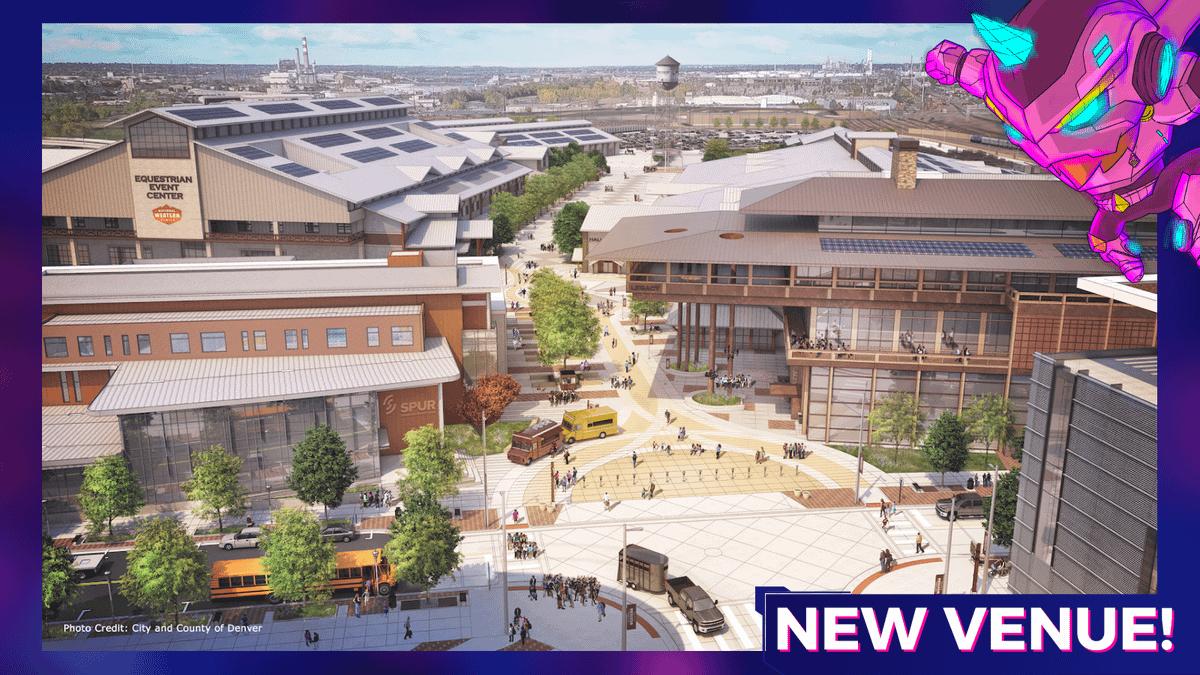 ETHDenver announces a move to a new venue for 2026
Sources
19 records from 13 domains
ethdenver.com
x.com
coinfabrik.com
instagram.com
okx.com
thestreet.com
wublock.substack.com
youtube.com
curve.substack.com
luma.com
rootdata.com
cryptoevents.global
sporkdao.org
Community notes
Spot something off or out of date? Drop a note. Editors review topic notes daily and roll accepted fixes into the explainer — contributors are recognized in the monthly $SQUID drop.
Loading notes…
Help improve this topic
Have a story or tip about this topic? Submit it. See something missing? Leave a note. Editors review daily; accepted submissions and fixes count toward the monthly $SQUID drop.