
In-depth explainer on how Latin America is turning crypto into real financial infrastructure, with stablecoins, payments, banks and regulators reshaping savings, remittances and cross-border flows across the region.
+13 sources across the wider coverage universe
 Tether to invest $20M in strategic financing round for Mercado Bitcoin to accelerate onchain financial infrastructure in Latin America.2026-07
 MoneyGram and Stellar extend partnership to scale global stablecoin adoption, expanding USDC-powered cash on/off-ramps and app balances across Latin America2026-04
 Tether leads $14M round in Belo to scale stablecoin payments across Latin America, targeting millions of users with dollar-based digital wallet services2026-04
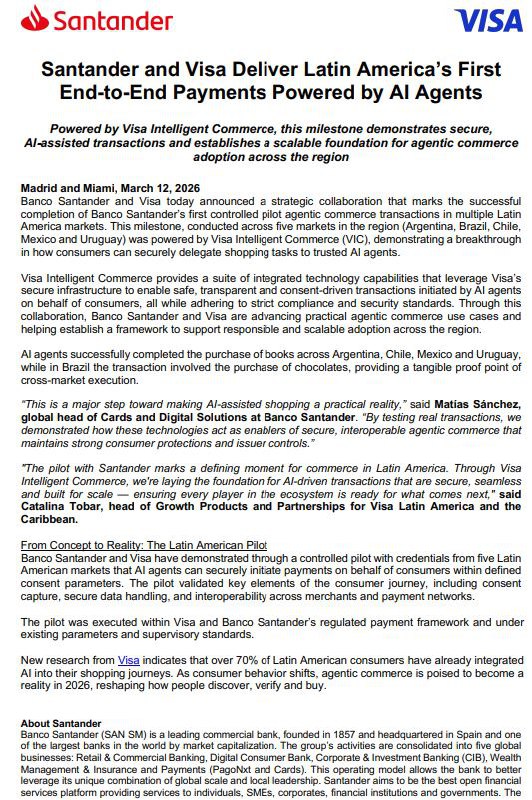 Santander and Visa deliver Latin America’s first end-to-end payments powered by AI agents.2026-03
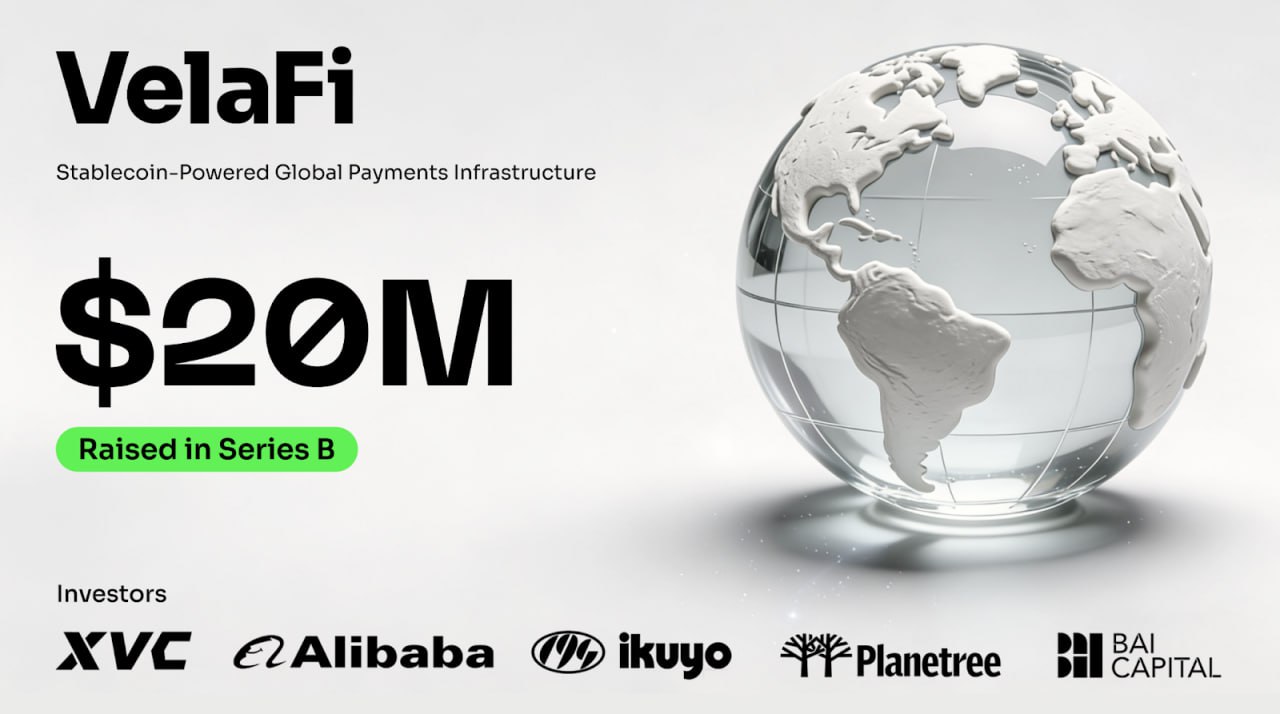 VelaFi raises $20 million in Series B funding to expand global stablecoin infrastructure. The expansion focuses on Latin America, the United States, and Asia.2026-01
 Stablecoins gain traction across Africa and Latin America as users use blockchain for faster remittances, savings protection and cross-border payments2026-03
Latin America’s Crypto Economy Explained
Across the global digital asset landscape, few regions illustrate crypto’s real-world utility as clearly as Latin America, where Bitcoin, stablecoins and digital wallets are increasingly used for payments, savings and cross‑border transfers rather than pure speculation. In a region marked by recurring inflation, currency controls and uneven access to banking, crypto has evolved into a parallel financial rail that increasingly interconnects with banks, fintechs, card networks and real‑time payment systems.
Why Latin America matters for crypto
Latin America in this context refers to a diverse group of economies stretching from Mexico through Central America, the Caribbean and South America, encompassing large markets like Brazil and Mexico as well as smaller, dollarized economies and early Bitcoin adopters such as El Salvador. While income levels and monetary regimes differ widely, many of these countries share a history of currency instability, sovereign defaults and low trust in financial institutions, which has created fertile ground for alternative stores of value and payment rails. As a result, the region has become a kind of macroeconomic laboratory for crypto: consumer and business adoption is often driven by necessity rather than curiosity, and digital assets are judged on whether they solve concrete problems such as preserving purchasing power or sending remittances cheaply across borders.
On-chain data underscores the scale and distinctiveness of this trend. Chainalysis estimates that between July 2022 and June 2025, Latin America recorded nearly \(1.5\) trillion USD in cryptocurrency transaction volume, making it one of the most dynamic regions in the world by absolute activity. A separate analysis focusing on the period from July 2023 to June 2024 suggests that the region received roughly 415 billion USD in cryptocurrency, accounting for about \(9.1\%\) of global crypto activity during that window. Importantly, a large share of this volume is concentrated in stablecoins—tokenized representations of fiat currencies like the US dollar—rather than in more volatile assets such as Bitcoin or Ether. This composition sets Latin America apart from regions where speculative trading dominates and highlights the region’s pragmatic use of crypto as “digital dollars” integrated into everyday finance.
The explosion in digital payments more broadly is another key backdrop. Recent industry research suggests that digital and electronic payment methods now account for around \(60\%\) of all consumer spending in Latin America, reflecting rapid adoption of online banking, mobile wallets, instant-payment schemes and QR-based merchant payments. Brazil’s PIX, Mexico’s CoDi and proprietary wallets like Mercado Pago have accustomed consumers to real-time, low-cost transfers, lowering behavioral barriers to experimenting with crypto-based value transfer. In many markets, neobanks and super-apps sit alongside WhatsApp and other messaging platforms as the main consumer interface for finance, and crypto is increasingly offered as one more asset class or payment option within these environments. This convergence of high smartphone penetration, maturing digital payments and monetary fragility helps explain why Latin America has become central to global stablecoin and Bitcoin narratives.
The region’s trajectory also mirrors, and increasingly interlinks with, trends seen across Africa, where users similarly adopt stablecoins for remittances, savings protection and cross-border commerce in the face of volatile local currencies and capital controls. In both regions, crypto’s appeal lies less in abstract decentralization and more in whether it offers cheaper, faster or more reliable financial services than legacy alternatives. As infrastructure providers, card networks and messaging platforms expand stablecoin-based payments across Latin America and begin to scale similar models in Africa and other emerging markets, the region’s experiences are likely to shape global norms for how “digital dollars” are held, moved and regulated.

Tether to invest $20M in strategic financing round for Mercado Bitcoin to accelerate onchain financial infrastructure in Latin America.
Structural drivers: inflation, dollarization and financial exclusion
To understand why stablecoins and Bitcoin have found such a foothold in Latin America, it is essential to examine the region’s structural macroeconomic vulnerabilities. A study by the Center for Latin American Monetary Studies (CEMLA) highlights a combination of high and persistent inflation, frequent currency depreciation and erosion of trust in domestic institutions as key factors behind the rise of stablecoins in Latin America and the Caribbean. In countries such as Argentina or Venezuela, episodes of triple‑digit inflation and recurrent devaluations have destroyed savings held in local currencies, pushing households and businesses toward informal dollarization and alternative stores of value. Even in relatively more stable economies, memories of past crises and banking restrictions often linger, making the prospect of holding US dollar–linked assets—whether in bank accounts or tokenized form—especially attractive.
Capital controls and foreign exchange regulations further intensify demand for offshore or synthetic US dollars. In several Latin American countries, residents face strict limits on purchasing foreign currency or moving funds abroad, leading to the emergence of parallel exchange rates and informal dollar markets. CEMLA notes that these constraints contribute to the appeal of stablecoins, which can be acquired via local exchanges or peer‑to‑peer channels and held in non-custodial wallets, enabling users to bypass some frictions of formal FX markets. For small businesses importing inputs or freelancers working for foreign clients, the ability to invoice, receive and hold value in dollar-linked tokens can materially reduce exchange-rate risk and friction, especially when integrated with local payment rails. This dynamic helps explain why, in Brazil, the central bank’s leadership has indicated that roughly \(90\%\) of crypto transaction volume in the country is tied to stablecoin movements rather than other digital assets.
Financial exclusion and patchy banking infrastructure provide another powerful catalyst. Despite fintech advances, tens of millions of Latin Americans remain underbanked, lacking access to credit, international payments, or low‑cost savings products. Structural inequality, informality in labor markets and geographic dispersion—especially in rural areas—mean that legacy banking has not fully penetrated daily economic life. Crypto wallets accessible via smartphones can partially bridge this gap by allowing users to store value, transact peer‑to‑peer and interact with global platforms without needing full-featured bank accounts. When combined with money transfer operators or cash-in/cash-out networks, these wallets can serve as quasi-bank substitutes for remittance recipients and gig workers, particularly if balances are held in stablecoins pegged to the dollar.
Remittances and cross-border family support are especially important use cases in this context. Latin America is one of the world’s top remittance corridors, with large diasporas in the United States and Europe sending funds home each month. Traditional remittance channels can be expensive and slow, especially for low‑value transactions. By contrast, services like MoneyGram’s stablecoin-enabled app built on the Stellar network allow users in countries such as Colombia and El Salvador to receive funds instantly into a USD-denominated digital balance, hold those digital dollars and cash out at local MoneyGram locations. Because these balances are powered by USDC, a widely used dollar-pegged stablecoin, senders and recipients can transact across borders with greater speed and transparency while still maintaining access to cash when needed. This hybrid model—on-chain settlement with off-chain access points—illustrates how crypto is being woven into existing financial and retail networks rather than fully displacing them.
In a broader sense, the region’s structural weaknesses have turned crypto into a financial survival tool for many users. Reports from across Latin America describe savers shifting into stablecoins to protect purchasing power, merchants accepting dollar-pegged tokens to hedge against exchange‑rate swings, and borrowers experimenting with stablecoin-based loans and yield products when local credit is scarce or expensive. This utilitarian orientation stands in contrast to speculative boom‑and‑bust cycles more common in wealthier markets and is central to understanding why Latin America is at the forefront of real-world crypto adoption.
Readers overwhelmingly click sovereign-adoption and regulatory-positioning stories over pure infrastructure plays, revealing that in Latin America the political question — 'will the state embrace or fight crypto?' — outranks the technical question of which stablecoin rail wins.
Stablecoins as Latin America’s digital dollars
Stablecoins are cryptoassets designed to maintain a stable value by being backed by, or algorithmically linked to, a reference asset, most commonly the US dollar. In their simplest form, fiat‑backed stablecoins such as USDC or USDT are issued by entities that hold reserves in cash, short-term government securities or other liquid assets, and promise to redeem tokens 1:1 for underlying currency. For Latin American users, the appeal is straightforward: these tokens function as programmable, borderless dollar balances that can be stored in self‑custodial wallets, moved across chains in minutes and integrated into both crypto-native and traditional financial applications. Compared to holding physical dollars in cash or maintaining foreign-currency bank accounts subject to local controls, stablecoins offer greater portability, composability and, in many cases, accessibility.
Circle, the issuer of USDC, describes several core use cases that line up closely with observed behavior in Latin America. USDC is used globally for access to dollars in regions where local currency is unstable or offshore banking is hard to obtain, for participation in digital asset markets and DeFi, and increasingly for payments, payroll and business-to-business settlement. These roles map directly onto the needs of Latin American households and firms seeking low-friction dollar exposure and modern financial services. In practice, leading dollar stablecoins such as USDT and USDC dominate trading pairs on regional exchanges, serve as base assets in local DeFi protocols, and are embedded into wallets that target use cases like merchant payments and remittances.
Local initiatives complement these global tokens. Bitso, a major Latin American digital financial services company, issues MXNB, a regulated Mexican peso-backed stablecoin, and has recently arranged for MXNB to be issued on the XRP Ledger and integrated into Ripple’s evolving payments infrastructure, alongside Ripple’s RLUSD USD stablecoin. This combination allows enterprise clients to move between local-currency and dollar stablecoins on a decentralized exchange stack, facilitating more efficient liquidity management for cross-border payments across the US–Mexico corridor. Such fiat‑linked tokens demonstrate that Latin America’s stablecoin story is not only about dollarization but also about creating reliable digital representations of local currencies that can plug into global settlement networks.
A number of Latin America–focused wallets and fintechs have raised capital specifically to scale stablecoin-based payment experiences. Belo, for instance, operates a digital wallet oriented toward Latin American consumers and uses crypto infrastructure to enable everyday payments; it recently secured a 14 million USD Series A round led by Tether, the issuer of USDT, to expand stablecoin payments across the region. This investment underscores how major stablecoin issuers are not only providing tokens but also seeding distribution channels—wallets, merchant tools and on/off-ramps—that make those tokens usable in daily life. Similarly, Tether’s strategic investment in Orionx, a Chilean crypto exchange and cross‑border payments firm operating in Chile, Peru and other markets, aims to accelerate digital asset adoption and cross-border settlement in Southern Cone economies.
The functional diversity of stablecoin use in Latin America can be summarized along several dimensions.
| Use case | Typical Latin American user scenario | Main assets and rails (illustrative) |
|---|---|---|
| Savings and dollarization | Household in high-inflation country converting local currency wages into digital dollars for safety. | USDT, USDC held in mobile wallets or exchange accounts; access via local exchanges and P2P markets. |
| Remittances and P2P transfers | Migrant worker sending funds to family, who cash out or spend locally. | USDC on Stellar through MoneyGram’s app; stablecoins bridged to cash at MoneyGram locations. |
| Merchant and card-based payments | Consumer paying at local shops with stablecoin-linked prepaid or debit card. | Visa cards funded by stablecoins via Bridge; Mastercard-linked Bitget Wallet Card; Rain’s card APIs. |
| B2B settlements and treasury | SME paying suppliers abroad or holding a portion of treasury in digital dollars. | RLUSD and MXNB on XRPL via Ripple-Bitso; USDC/USDT via Rain’s APIs and exchange liquidity. |
This landscape is still evolving, with competition among issuers, chains and wallets. Yet the overarching pattern is clear: in Latin America, stablecoins function as the main bridge asset between crypto and the real economy, a role they increasingly play in parts of Africa and other emerging regions as well. Users may still speculate on Bitcoin or other tokens, but the backbone of everyday crypto use is made up of dollar‑linked balances that integrate with neobanks, fintech apps, card networks and real‑time payment systems.

MoneyGram and Stellar extend partnership to scale global stablecoin adoption, expanding USDC-powered cash on/off-ramps and app balances across Latin America
Payments rails and on/off-ramps: from wallets to cards and PIX
The utility of stablecoins in Latin America depends heavily on how easily users can move between digital tokens and local currencies or real-world spending opportunities. This is where on/off-ramps and integrated payment rails—wallets, cards, bank transfers and instant-payment systems—become critical. A growing class of infrastructure providers aims to abstract the complexity of blockchain settlement while presenting familiar user experiences such as debit cards, QR payments or local bank transfers. Rain, for instance, positions itself as a stablecoin payments platform for enterprises, offering accounts, cards and cross-border money movement over stablecoin rails through a single unified API. In a detailed analysis of Latin America’s digital finance landscape, Rain notes that the region received nearly 415 billion USD in cryptocurrency between July 2023 and June 2024, and argues that stablecoins are central to powering this 415 billion USD digital finance market. By helping partners manage digital dollar accounts, issue stablecoin-powered cards and convert stablecoins into local currencies, Rain and similar platforms bridge crypto liquidity with existing financial infrastructure.
Consumer-facing wallets are similarly embedding stablecoins into everyday payments. MiniPay, a self‑custodial stablecoin wallet built on the Celo blockchain by Opera, has rolled out functionality that connects Tether’s USD₮ balances directly to leading local payment systems such as Mercado Pago in Argentina and PIX in Brazil. Through a feature branded “Pay like a local,” users can initiate a transfer from their MiniPay USD stablecoin balance, see the amount in dollars, and have the system handle conversion and disbursement in local currency to the recipient’s Mercado Pago or PIX-linked account at fair, transparent rates. By transacting over domestic instant-payment rails and ubiquitous QR code systems, MiniPay allows both travelers and locals to spend their digital dollars in markets where foreign cards often fail or incur high fees. The wallet further enhances accessibility by linking accounts to phone numbers, minimizing gas-management overhead and charging sub‑cent transaction fees, while partnering with regional on/off-ramp providers such as El Dorado and others to facilitate quick conversion between local currency and stablecoins in multiple countries. This illustrates how self‑custodial wallets are being wrapped in user experiences that feel similar to traditional fintech apps, while using stablecoins under the hood.
Card networks provide another powerful distribution channel for stablecoin balances. Visa has partnered with Bridge, a stablecoin orchestration platform owned by Stripe, to enable fintech developers to issue stablecoin-linked Visa cards through a single API integration. Cardholders in an initial set of Latin American countries—Argentina, Colombia, Ecuador, Mexico, Peru and Chile—can make everyday purchases from a stablecoin balance at any merchant that accepts Visa, with Bridge deducting the necessary funds from the customer’s stablecoin wallet and converting them into local fiat so the merchant receives domestic currency as in any standard card transaction. This model addresses a growing demand among consumers and businesses to use stablecoins both as a store of value and as a funding source for routine expenditures, effectively transforming digital dollars into a back-end settlement asset that is invisible to merchants but useful for cardholders seeking to minimize FX friction and inflation exposure.
Mastercard-linked solutions are emerging in parallel. Bitget Wallet has partnered with Mastercard to launch a crypto payment card in eleven Latin American countries, building on its earlier launch in Brazil. The Bitget Wallet Card allows users to spend directly from stablecoins held in their wallet for USD‑denominated purchases, while implementing a zero-fee model within certain monthly limits that waives deposit fees, foreign exchange fees, conversion fees and annual fees. Settlement exchange rates are aligned with real-time Google rates, and the card integrates with Apple Pay and Google Pay, offering a payment experience comparable to mainstream digital wallets but backed by stablecoin balances instead of bank deposits. Bitget claims that, compared with traditional bank cards, this structure can save users roughly \(1.7\%\) in hidden payment costs, and positions the product as a way to drive wider adoption of crypto-based payments in everyday consumption. Together, the Visa–Bridge and Bitget–Mastercard models illustrate how global card networks are becoming key gateways for spending from stablecoin balances in Latin America.
Remittance-focused ecosystems are also tapping stablecoins and blockchain rails. The extended partnership between MoneyGram and the Stellar Development Foundation leverages the Stellar blockchain and Circle’s USDC to power a MoneyGram app that offers a stablecoin balance initially rolled out in Colombia and now extended to El Salvador, with additional Central and South American markets expected. Customers can receive funds into a USD‑denominated stablecoin balance almost instantly, hold digital dollars as long as they wish and cash out into local currency at MoneyGram agent locations. For remittance-dependent households, this fusion of on-chain settlement with a familiar cash-out network offers both speed and optionality: they can choose to retain value in digital dollars, use it for onward transfers or conversions, or convert to cash at their convenience. This model is being closely watched as a template for expanding stablecoin utility to populations that rely heavily on physical cash but benefit from digital rails for cross‑border inflows.
Enterprise payments and FX are likewise being reshaped. The expansion of Ripple’s long-standing partnership with Bitso is a notable example, involving the issuance of Bitso’s regulated MXN-backed stablecoin, MXNB, on the XRP Ledger and its integration alongside Ripple’s USD stablecoin RLUSD in a decentralized exchange-based payments infrastructure. This setup enables more efficient liquidity pooling and automated market-making between MXNB, RLUSD and other assets on XRPL, thereby supporting cross-border settlements for enterprises operating across the US–Mexico corridor. For corporates and payment providers, this architecture offers a way to reduce pre‑funding requirements and FX spreads compared to traditional correspondent banking channels, while remaining compatible with regulatory frameworks around virtual assets and cross-border payments.
What ties these examples together is the convergence of crypto-native assets with familiar financial interfaces—bank transfers, instant-payment systems, cards and remittance agents. Latin America’s payment landscape is evolving into a hybrid environment in which users may never need to interact directly with blockchains, even as their balances and cross-border transactions are increasingly settled via stablecoins. Similar hybrid models are being piloted across Africa and other emerging regions, suggesting that Latin America’s experiments are part of a broader global shift toward stablecoin- and API-based settlement layers beneath consumer-facing fintech experiences.
- 01El Salvador sovereign BTC pivot↗
The arc from BTC legal tender experiment to IMF-backed bond issuance reads as a high-stakes national vindication story that no other region can match.
- 02City-level crypto regulation↗
Buenos Aires explicitly positioning itself as a crypto hub through tax and payment rule changes showed readers that sub-national governments — not just central banks — are the real regulatory battleground.
- 03TradFi-crypto rail convergence↗
Santander and Visa deploying AI-agent end-to-end payments, and Visa layering Bridge stablecoins into its existing Latin America network, signaled that incumbents are integrating rather than resisting the infrastructure shift.
- 04Neobank stablecoin on-ramps↗
Nubank's 100M-customer base launching USDC swaps transforms stablecoin access from a crypto-native edge case into a mass-market default, making the distribution story as important as the technology.
- 05Local payment rail integration↗
MiniPay plugging stablecoin balances directly into PIX and Mercado Pago answered the last-mile problem: dollar-pegged value spendable inside the same QR-code ecosystems ordinary consumers already use.
- 06Inflation-driven dollar survival↗
Framing stablecoins as a survival tool — savings protection and loan access bypassing broken banking systems — resonated because it recontextualises adoption as necessity, not speculation.
Regulation, public policy and central banks
Regulation is emerging as perhaps the decisive factor in shaping how crypto and stablecoins integrate with Latin America’s financial system. Brazil offers the most comprehensive recent example. Building on a 2022 Virtual Assets Law and a 2023 presidential decree that designated the Banco Central do Brasil (BCB) as the primary regulator of virtual assets while assigning securities-like tokens and consumer protection issues to the Brazilian Securities Commission (CVM), the BCB in November 2025 issued three key resolutions—519, 520 and 521—that operationalize the new framework. These resolutions create a formal authorization pathway under which exchanges, custodians and intermediaries must become “Sociedades Prestadoras de Serviços de Ativos Virtuais” (SPSAVs), supervised by the BCB. Both domestic firms and overseas entities seeking to serve Brazilian customers are required to obtain authorization, which may involve establishing a local subsidiary or partnering with a licensed local entity, and must comply with detailed obligations around anti‑money laundering and counter‑terrorist financing (AML/CFT), including risk assessments, fraud monitoring, and implementation of the Financial Action Task Force (FATF) Travel Rule.
Brazil’s framework also emphasizes prudential and governance standards. Authorized SPSAVs must segregate client assets from their own, refrain from using them without consent, and foster transparency by clearly disclosing applicable regulations, business models, risks and fees to customers. They are expected to appoint responsible individuals for each operational area, maintain robust internal controls, ensure staff training and data protection, and undergo independent audits. Moreover, they face minimum capital requirements ranging approximately from 10.8 million to 37.2 million Brazilian reais, depending on the nature and scale of their activities, reinforcing the expectation that key market infrastructures will be professionally managed and financially resilient. For a market where informal brokers and lightly regulated exchanges have long operated alongside traditional banks, this shift marks a significant step toward institutionalizing crypto activity within the formal financial system.
Crucially, Brazil has moved to classify certain stablecoins explicitly within the realm of foreign exchange. Resolution 521 introduces the category of “virtual assets referenced in fiat currency,” which captures stablecoins that are pegged to government currencies and treats a set of activities involving them as foreign-exchange transactions. This includes using virtual assets for international payments or transfers, settling obligations arising from the international use of payment cards with virtual assets, transferring fiat-referenced virtual assets to and from self‑custodied wallets, and buying, selling or exchanging such assets. As a result, these activities are subject to client identification, transaction monitoring and reporting obligations, as well as per‑transaction limits for certain cases where the counterparty is not an authorized foreign exchange institution. The BCB’s governor has highlighted that roughly \(90\%\) of observed crypto volume in Brazil relates to stablecoin movements, which explains why the regulatory focus is squarely on these instruments rather than on speculative altcoins. This approach could serve as a blueprint for other Latin American regulators grappling with how to integrate stablecoins into their FX and payments regimes.
Other jurisdictions are experimenting at different layers of policy. The City of Buenos Aires, for example, has launched the “BA Crypto” program, which brings crypto assets into the municipal tax regime in order to create a more attractive legal environment for the cryptocurrency sector. The initiative clarifies how crypto holdings and activities are treated for local tax purposes and signals the city’s ambition to position itself as a regional crypto hub within Argentina and Latin America. Given Argentina’s chronic inflation and widespread informal use of dollars and stablecoins, the move can be seen as both an attempt to retain and tax crypto-related activity and a recognition that digital assets are now a material part of the local economy. At the same time, national authorities across the region are weighing the implications of allowing taxes, fines or utility bills to be paid in crypto or stablecoins, balancing potential efficiencies against risk and volatility considerations.
El Salvador’s high-profile adoption of Bitcoin as legal tender remains a special case but offers lessons on the intersection of macro policy and digital assets. After a controversial rollout in 2021, the country has focused on fiscal discipline and debt management, undertaking around 2.3 billion USD in sovereign bond refinancing that helped bring its debt-to-GDP ratio down to roughly \(59\%\) in 2024, the lowest level since 2008. Analysts note that while Bitcoin’s legal tender status has attracted crypto tourism and some foreign investment, the more tangible drivers of El Salvador’s recent “comeback story” have been conventional reforms, improved security and prudent fiscal measures. Nevertheless, the experiment has accelerated debates across Latin America about the role of Bitcoin and other cryptocurrencies in national monetary systems, and it has influenced how policymakers frame the potential and risks of integrating volatile cryptoassets into official frameworks.
Across the region, regulators are also watching the rapid expansion of stablecoin-linked cards, remittance products and on/off-ramp services offered by global firms like Visa, Mastercard, MoneyGram and emerging platforms such as Rain, Belo or Bitso. The challenge is to craft rules that prevent money laundering, protect consumers and safeguard financial stability without stifling the very innovations that make stablecoins attractive for payments and inclusion. Many central banks are simultaneously exploring central bank digital currencies (CBDCs) that might coexist with or compete against privately issued stablecoins, seeking to retain monetary sovereignty while harnessing the efficiency of digital settlement. How Latin American regulators balance these imperatives will significantly shape the next phase of the region’s crypto economy and may influence regulatory templates in Africa and other emerging markets facing similar trade‑offs.
AI wealth advisory startup Decade launches with $85M seed round, the largest in Latin America, targeting new millionaires.

Local champions, neobanks and corporate adoption
Latin America’s crypto story is also a story of local champions—exchanges, neobanks and fintechs that have embedded digital assets into mainstream financial services. Nubank, headquartered in Brazil and now serving tens of millions of customers across Latin America, is a prominent example of a digital bank integrating crypto into its user experience. In late 2024, Nubank launched a cryptocurrency swap feature within its “Nubank Cripto” product that allows customers to exchange Bitcoin, Ether, Solana or Uniswap tokens directly for digital dollars in the form of USDC, and vice versa. This swap capability is embedded directly into the Nubank app and is designed to simplify currency transactions by enabling direct exchange between cryptoassets and USDC, with lower fees compared with round‑tripping through fiat currency. For Nubank’s large customer base, this effectively turns their existing fintech interface into a gateway to USDC and, by extension, to the broader crypto economy without requiring separate exchange accounts or complex on-chain interactions.
Wallets like Belo and exchanges such as Orionx illustrate how regional startups are specializing in stablecoin-based payments. Belo’s Series A round, led by Tether, aims to expand the wallet’s footprint across Latin America and deepen its use of stablecoins for everyday payments, enabling users to pay at merchants or transfer value using a crypto-powered backend. This model leverages stablecoins as settlement assets while abstracting away volatility for end users, who think in fiat terms when transacting. Orionx, operating in Chile, Peru and other markets, has attracted strategic investment from Tether to scale its exchange and cross-border payments services, suggesting a strategy in which stablecoin issuers support key gateways in regions where demand for digital dollars is high but banking access remains uneven. In both cases, the emphasis is on integrating stablecoins into concrete use cases—merchant payments, cross-border transfers, bill payment—rather than purely speculative trading.
Bitso’s evolution reflects the same pattern at a larger scale. Originally known primarily as a crypto exchange, Bitso now positions itself as a digital financial services company with operations across key Latin American corridors, including Mexico and Colombia. Its extended partnership with Ripple, involving the issuance of the MXNB stablecoin on the XRP Ledger and integration with Ripple’s RLUSD stablecoin-based payments infrastructure, is targeted squarely at improving cross-border settlements and liquidity for enterprises transacting between the United States and Mexico. By combining local regulatory compliance for MXNB with the global reach and liquidity of RLUSD on XRPL, Bitso and Ripple aim to create localized settlement infrastructure for one of the world’s most important remittance and trade corridors. This underscores how regional players can leverage global blockchain networks to offer specialized services adapted to local currencies and regulatory environments.
On the enterprise infrastructure side, platforms like Rain play a key role in “industrializing” stablecoin usage for corporates and fintechs. Rain’s analysis of Latin America points out that the region received approximately 415 billion USD in cryptocurrency between mid‑2023 and mid‑2024, and argues that stablecoins are pivotal in this 415 billion USD digital finance market, especially for cross-border B2B transfers and treasury flows. Through a single API, Rain enables companies to manage digital dollar accounts, issue stablecoin-funded cards and move money across borders on modern settlement rails, while handling behind-the-scenes tasks like compliance and liquidity management. This type of infrastructure allows regional fintechs, remittance companies and even traditional banks to experiment with stablecoin-based products without rebuilding core settlement systems from scratch.
Large consumer-facing platforms have also experimented directly with crypto-native products, with mixed results. Mercado Libre, Latin America’s e‑commerce giant, launched its own crypto coin as a loyalty and payment token, only to subsequently wind the project down as it reassessed regulatory and strategic considerations. While not covered in the cited search results, this trajectory highlights a broader lesson: in a landscape where regulatory clarity is still evolving and user demand often centers on stable, dollar-denominated instruments, bespoke platform tokens may struggle to achieve lasting relevance compared with widely accepted stablecoins like USDT and USDC. At the same time, some regional companies, including exchanges such as Ripio, have begun to build sizable crypto treasuries in Bitcoin, Ether and stablecoins as part of their corporate strategy, signalling a gradual normalization of digital assets on corporate balance sheets and hedging strategies.
Taken together, these developments show that Latin America’s crypto economy is not confined to speculative trading venues. It is increasingly populated by regulated neobanks, licensed exchanges, specialized wallets and infrastructure providers that treat Bitcoin and, especially, stablecoins as core components of their product stack. In this environment, the most consequential innovations may come not from new tokens but from the integration of existing ones into bank apps, card programs, remittance flows and B2B payment platforms.
El Salvador adopts BTC as legal tender
MiniPay launches PIX and Mercado Pago stablecoin integration at DevConnect
Buenos Aires announces crypto tax and payment rule reforms to attract crypto business
Tether leads $14M round in Belo for Latin America stablecoin wallet expansion
MoneyGram and Stellar extend partnership, scaling USDC cash on/off-ramps across Latin America
Nubank launches USDC swap tool for 100M+ Latin America customers
Santander and Visa deploy Latin America's first AI-agent end-to-end payments
Builders, research and emerging technologies
Beneath the visible layer of wallets, cards and exchanges lies a growing ecosystem of developers and researchers building and studying blockchain-based systems in Latin America. One indicator of this institutionalization of knowledge is the Cardano Foundation’s partnership with the University of Brasília to launch the first Cardano Project Development Lab in Latin America. This initiative aims to advance blockchain research, education and real-world applications across the region, providing a structured environment where students and researchers can experiment with Cardano-based solutions to local problems ranging from identity and land registries to financial inclusion. By embedding blockchain curricula into public universities, such programs help cultivate a new generation of engineers and policymakers who understand both the technical and socio‑economic dimensions of distributed ledgers.
Developer communities across the region are also increasingly engaged with Bitcoin-secured infrastructure, layer‑two solutions and other scaling technologies, often in collaboration with universities and grassroots organizations. While not captured in the specific search results, industry observers report that hundreds of developers are joining online and in‑person meetups every month across Latin America and Africa to experiment with Bitcoin, Ethereum and newer protocols. In many cases, young engineers compare different platforms and deliberately choose Bitcoin‑secured or EVM-compatible infrastructure based on its security, tooling and developer ecosystem, reflecting a maturing approach that goes beyond speculative enthusiasm. These builder communities form the human capital backbone for future applications that may leverage stablecoins not only for payments but also for programmable finance, tokenized assets and decentralized identity.
The intersection of artificial intelligence and payments is another frontier where Latin America is beginning to play a role. Banco Santander and Visa recently announced a strategic collaboration showcasing agentic commerce transactions in multiple Latin American markets, powered by Visa Intelligent Commerce. In controlled pilots, AI agents assisted in executing secure end‑to‑end transactions, demonstrating how automated decision-making can be layered on top of existing payment rails to deliver more personalized and efficient commerce experiences. While these initial experiments do not necessarily rely on crypto assets, they illustrate a trajectory in which AI-driven agents may eventually manage stablecoin balances, optimize FX conversions and route payments across on-chain and off-chain networks. Combined with self‑custodial wallets like MiniPay—which is developed by Opera, described as an “agentic AI and browser company”—this suggests a future where AI agents help users manage digital dollars behind the scenes, making complex on-chain operations nearly invisible.
Infrastructure for connectivity is also part of the picture. News from telecom and digital service providers like XPIN Network, which has promoted cross-regional mobile data plans for Africa, Latin America, the Commonwealth of Independent States (CIS) and Oceania, underscores that affordable mobile data is a prerequisite for mass crypto adoption. Without reliable and inexpensive internet access, even the most user-friendly stablecoin wallet cannot reach remote or lower-income populations. As coverage expands and data costs fall, more users in both Latin America and Africa can access web-based wallets, messaging apps with embedded payments, and browser-integrated tools like MiniPay, further reinforcing the region’s role as a testbed for mobile-first digital finance.
Finally, partnerships focused on research and data-driven innovation—such as those between analytics firms like PatSnap and regional players aiming to enhance R&D decision-making across Latin America—complement the crypto ecosystem by improving access to information and intellectual property insights. Although not directly tied to blockchain, these initiatives contribute to a broader innovation climate in which startups, universities and corporates are better equipped to evaluate technologies, navigate regulatory landscapes and design solutions tailored to local needs. In this sense, Latin America’s crypto trajectory is intertwined with wider trends in AI, data analytics and digital infrastructure that collectively define the region’s next chapter of economic modernization.
Regulatory posture is fragmented: El Salvador is IMF-aligned post-BTC, Buenos Aires is actively courting crypto, but Brazil's asset framework still imposes KYC/reporting burdens that raise compliance costs for cross-border stablecoin flows.
The dominant regional infrastructure — Visa/Bridge, MiniPay/Noah, MoneyGram/Stellar, Belo, Nubank — all converge on USDC or USDT, creating a single-point-of-failure risk if Circle or Tether faces a regulatory or redemption shock.
On/off-ramp coverage remains uneven: PIX and Mercado Pago integrations are live in Brazil and Argentina, but smaller markets lack the cash liquidity rails needed for stablecoins to serve as reliable savings vehicles under stress.
Chronic currency devaluation in Argentina and Venezuela is the primary adoption driver, but it also means that any stablecoin depegging event would devastate users who have already exited local-currency exposure.
Regional activity is dominated by payment and remittance use cases rather than complex DeFi protocols, limiting smart-contract exploit surface compared to yield-bearing or bridge-heavy ecosystems.
El Salvador's BTC adoption hinged on a single administration's mandate; political transitions elsewhere in the region could rapidly reverse city- or national-level crypto-friendly frameworks that currently anchor investor confidence.
Outlook
Latin America’s crypto economy has moved well beyond the experimental phase. With hundreds of billions of dollars in annual transaction volume, a high share of stablecoins in on-chain flows and deep integration into digital payment rails, the region now serves as a reference point for how crypto can operate as everyday financial infrastructure rather than a purely speculative asset class. Stablecoins—especially dollar-pegged tokens like USDT and USDC—have emerged as the core connective tissue linking global liquidity with local financial realities, enabling users to save in digital dollars, send remittances, pay merchants and settle cross-border invoices via a mix of wallets, cards and instant-payment systems.
Looking ahead, several themes are likely to shape the region’s trajectory. Regulatory frameworks, led by pioneering efforts in Brazil and municipal initiatives such as Buenos Aires’ BA Crypto program, will determine how safely and seamlessly stablecoins can be integrated into foreign exchange markets, banking systems and tax regimes. Competition among stablecoin issuers and networks—including global giants like Tether and Circle, regional players like Bitso with MXNB and cross-chain wallets like MiniPay—will influence which tokens and rails achieve critical mass for specific use cases, whether savings, remittances or B2B settlements. Meanwhile, card programs from Visa, Mastercard and infrastructure providers like Rain and Bridge are likely to normalize the idea of funding everyday purchases with stablecoin balances, blurring the line between traditional bank accounts and crypto wallets.
At the same time, Latin America’s experiences will continue to resonate globally, particularly in Africa and other emerging regions facing similar challenges of inflation, capital controls and financial exclusion. As regulators refine rules around FX classification, AML/CFT compliance and consumer protection for stablecoins, and as central banks explore CBDCs, the balance they strike between innovation and risk will shape whether crypto remains a parallel system or becomes more tightly woven into official financial infrastructure. For now, Latin America offers a vivid demonstration that when digital assets solve real problems—protecting savings, lowering remittance costs, improving cross-border payments—they can become a durable part of the financial landscape, with stablecoins at the center of that transformation.
Latest Latin America news
Tether to invest $20M in strategic financing round for Mercado Bitcoin to accelerate onchain financial infrastructure in Latin America.MoneyGram and Stellar extend partnership to scale global stablecoin adoption, expanding USDC-powered cash on/off-ramps and app balances across Latin AmericaAI wealth advisory startup Decade launches with $85M seed round, the largest in Latin America, targeting new millionaires.Tether leads $14M round in Belo to scale stablecoin payments across Latin America, targeting millions of users with dollar-based digital wallet servicesSantander and Visa deliver Latin America’s first end-to-end payments powered by AI agents.VelaFi raises $20 million in Series B funding to expand global stablecoin infrastructure. The expansion focuses on Latin America, the United States, and Asia.Sources
20 records from 17 domains
chainalysis.com
cemla.org
circle.com
ripple.com
vaneck.com
allende.com
international.nubank.com.br
opera.gcs-web.com
usa.visa.com
rain.xyz
paymentscmi.com
app.dealroom.co
stellar.org
x.com
bitget.com
santander.com
coinlore.com
Community notes
Spot something off or out of date? Drop a note. Editors review topic notes daily and roll accepted fixes into the explainer — contributors are recognized in the monthly $SQUID drop.
Loading notes…
Help improve this topic
Have a story or tip about this topic? Submit it. See something missing? Leave a note. Editors review daily; accepted submissions and fixes count toward the monthly $SQUID drop.