
A crypto-focused explainer on New York City: the BitLicense and NYDFS oversight, institutional summits, onchain Bitcoin, stablecoins, RWA tokenization, and the Polymarket–Kalshi rivalry shaping the industry.
+10 sources across the wider coverage universe
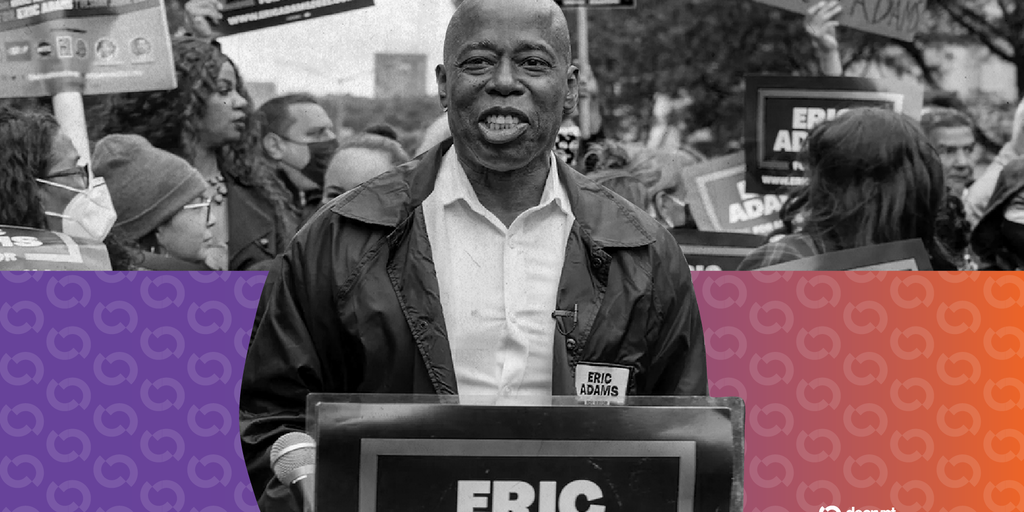 Eric Adams–linked NYC token crashed after peaking near a $600M market cap, following allegations of liquidity extraction. On-chain data shows a deployer-linked wallet removed $2.43M USDC, added back $1.5M, leaving ~$932K unexplained as price fell over 80%.2026-01
 Register to join the Leviathan News Happy Hour, Wednesday September 27 in NYC 2023-09
 NYC based Blackbird just served up Flynet—an Ethereum L3 that cuts out middlemen, puts restaurants back in control of their data, and turns every transaction into a step toward co-ownership.
$F2 airdrop season is coming, so if you’ve stacked $FLY, it’s time to order up some grub.2025-02
NYC based Blackbird just served up Flynet—an Ethereum L3 that cuts out middlemen, puts restaurants back in control of their data, and turns every transaction into a step toward co-ownership.
$F2 airdrop season is coming, so if you’ve stacked $FLY, it’s time to order up some grub.2025-02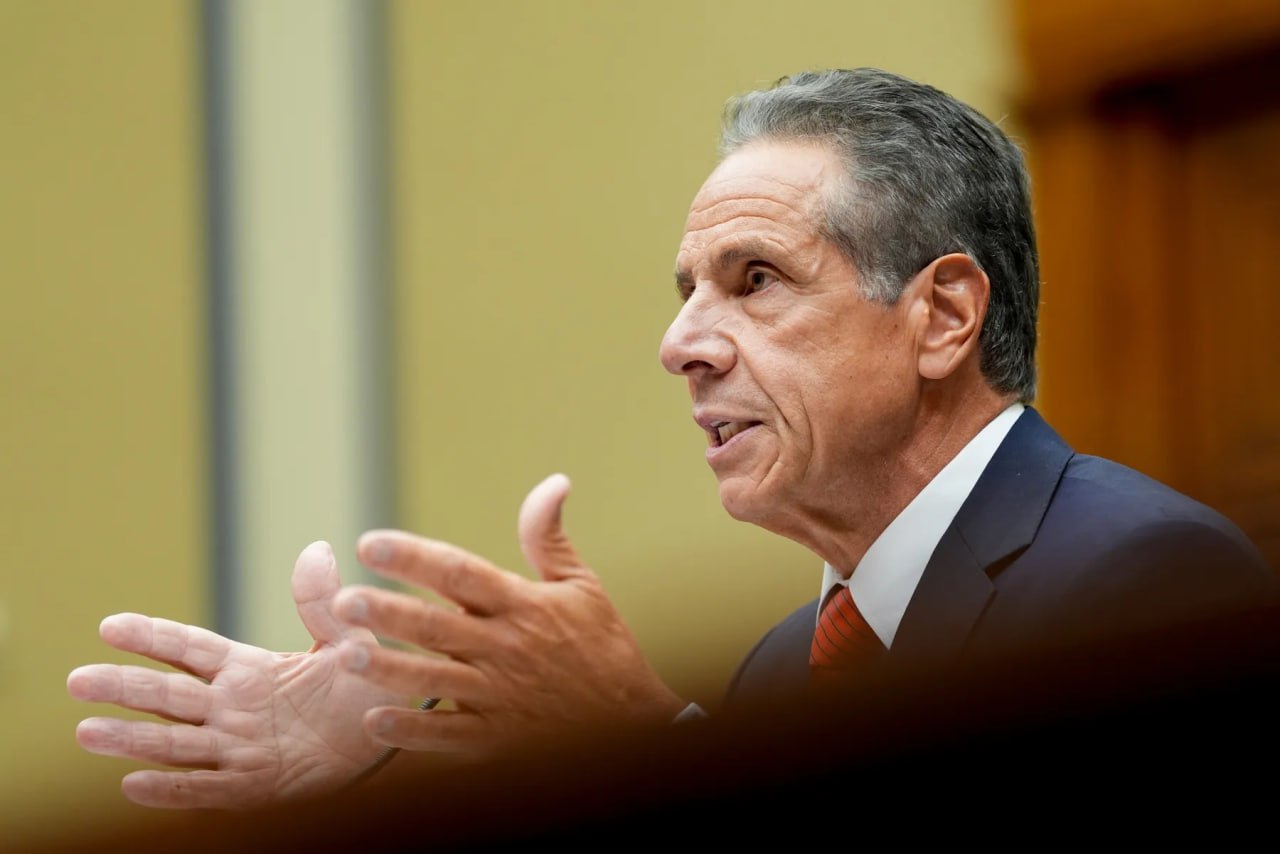 Former New York Governor, front runner for NYC Mayor Andrew Cuomo worked as an advisor to OKX.2025-04
- Reminder to join the NYC Leviathan Meetup! Location to be emailed to registrants tonight. 2023-09
 Etherfi hiring in New York, offices in NYC to be opened soon™2025-06
New York City sits at the intersection of traditional finance and digital assets, serving as both a magnet for crypto capital and the source of the United States' strictest state-level oversight of the industry. For a global crypto audience, "NYC" functions less as a place than as a regulatory regime, a conference calendar, and a proving ground where onchain finance meets Wall Street.
Why New York Matters to Crypto
The city's relevance stems from a simple fact: it is the headquarters of American capital markets. The banks, asset managers, and trading desks that increasingly touch Bitcoin, tokenized treasuries, and stablecoins are concentrated within a few square miles of Lower Manhattan and Midtown. When institutions evaluate whether to move part of their balance sheet onchain, they do it from offices in New York, and when crypto-native firms want to court those institutions, they come to New York to do it.
That gravitational pull explains why so much industry activity is staged in the city. Conference organizers, accelerators, and protocol teams repeatedly choose NYC as the venue to reach decision-makers who control large pools of money and who are, by professional habit, cautious about new technology.

Frontier Markets to host first NYC event on October 16 for founders, market makers, and VCs

The Regulatory Backdrop: BitLicense and NYDFS
No discussion of crypto in New York is complete without the BitLicense, the licensing regime administered by the New York State Department of Financial Services (NYDFS). In force since June 24, 2015, it requires virtual-currency businesses to obtain either a BitLicense or a Limited Purpose Trust Charter before serving New York residents (CryptoSlate).
The framework is demanding. Licensees must maintain capital reserves, run formal cybersecurity and anti-money-laundering programs, and submit to regular examinations. The application fee is modest at $5,000, but the practical cost of compliance—legal counsel, security audits, and monitoring infrastructure—commonly runs from $250,000 to more than $1 million (Bitget Academy). As a result, fewer than 50 entities have obtained a BitLicense in the decade since its creation, and the agency has signaled that enhanced standards for stablecoin issuers are a continuing priority.
The upshot is a paradox at the heart of NYC's crypto identity: the city is one of the hardest places in the country to operate a crypto business legally, yet one of the most important places to be present. Many firms hold licenses elsewhere while keeping a New York office for talent, fundraising, and proximity to institutions.
Key terms. A BitLicense is a state operating permit for virtual-currency activity. NYDFS is the regulator that issues and enforces it. A Limited Purpose Trust Charter is an alternative path that also confers custody and fiduciary powers.
NYC readers click hardest when a recognizable public figure — a mayor, a governor, a borough-level political brand — either legitimizes or exploits crypto, signaling that the city's political class has become the primary trust signal (and primary scandal vector) for the local crypto audience.
NYC as the Institutional On-Ramp
The clearest recent signal of New York's role is the city's calendar of institution-focused events. The Digital Asset Summit (DAS), held in NYC, has become a venue where firms pitch the tokenization of traditional financial products. Coverage from the most recent summit captured the through-line: teams describing how they began with tokenized money-market funds and tokenized treasuries before expanding toward broader Real World Assets (RWA) platforms, framing the goal as bringing "real yield" onchain rather than speculative trading.
That theme recurred across speakers. A founder described an end-to-end RWA tokenization platform built around the idea of tokenizing global finance; an Aptos executive walked through the operational lifecycle of moving real-world assets onchain while flagging that regulatory clarity remains incomplete; and a privacy-focused team (Prividium) addressed how banks can use blockchains without exposing sensitive data, while acknowledging persistent compliance gaps. Grayscale's head of research was among those slated to speak at a major NYC conference at the Javits Center, underscoring how research and capital-allocation voices anchor these gatherings.
Real World Assets (RWA) refers to off-chain assets—treasuries, money-market funds, credit, real estate—represented as tokens on a blockchain. The category has become the dominant institutional narrative precisely because it maps familiar instruments onto onchain rails, and New York is where that mapping is debated in front of the people who would buy the products.
Bitcoin, Stablecoins, and Onchain Yield
Two of crypto's most institution-friendly assets feature heavily in the New York conversation. The first is Bitcoin. At DAS NYC, Lombard laid out an optimistic case for "onchain Bitcoin," presenting takeaways on how holders might put BTC to work in decentralized finance rather than leaving it idle. The broader pitch—making Bitcoin productive while preserving its core properties—resonates with an audience that already holds BTC through ETFs and treasury allocations.
The second is the stablecoin, with USDC as the reference point for regulated, dollar-backed settlement. Stablecoins are the connective tissue between traditional money and onchain markets, and NYDFS oversight of stablecoin issuers gives New York direct influence over how these instruments evolve. At the protocol level, infrastructure teams pitched onchain venues for lending, decentralized exchange, and stablecoin liquidity; one ETHConf NYC presentation emphasized institutions and protocols choosing such infrastructure to launch their own onchain products, from lending markets to DEXes and RWA liquidity.
The word that ties these threads together is onchain: the idea of running financial activity directly on a blockchain ledger rather than through legacy intermediaries. New York is where the onchain thesis is sold to the institutions best positioned to fund it.
- 01Leviathan NYC community meetups
Readers showed up in force for logistics-driven event posts, revealing a tight local crypto social scene hungry for in-person gathering.
- 02Blackbird Flynet restaurant L3
A concrete, non-financial use case — restaurants owning their own data and customers earning co-ownership through spending — cut through abstract DeFi noise.
- 03Cuomo OKX advisory role
A former governor quietly advising a major exchange while running for mayor made the crypto-political revolving door impossible to ignore.
- 04Eric Adams NYC token crash
An 80%-drawdown token tied to a sitting mayor's brand, with on-chain evidence of deployer wallet manipulation, hit every nerve — political scandal plus rug-pull mechanics.
- 05Mamdani defeats Cuomo mayoral primary
Voters chose the candidate who pledged crypto innovation over the one who had taken crypto money quietly, reframing the race as a referendum on crypto authenticity.
- 06DOJ USDT laundering indictment
A $530M sanctions-evasion case run through a NYC crypto firm showed readers the city's firms sit at the center of global crypto crime enforcement.
The Conference and Accelerator Ecosystem
Beyond the marquee summits, NYC hosts a dense layer of working sessions. June saw ETHConf in the city, with teams such as Maple Finance scheduling partner meetings across the Ethereum ecosystem, and adjacent events like an operational-security workshop for web3 teams led by a former Apple and Amazon security engineer. Accelerators use the city as a base too: Solana Labs ran a three-month NYC incubator offering hands-on support across development, go-to-market, fundraising, and brand.
The Avalanche (AVAX) ecosystem has leaned into the format with the Avalanche Summit NYC, positioned as a gathering for business and technology leaders in digital assets. The 2026 edition is scheduled for September 16–17, signaling that major ecosystems treat a New York flagship event as a fixture rather than a one-off. BNB Chain likewise maintained a presence at Digital Asset Summit NYC. Collectively, these events make the city a recurring meeting point where ecosystems compete for the same institutional attention.
Markets, Prediction Platforms, and Rivalry
New York is also home to a sharpening rivalry in prediction markets, a corner of crypto-adjacent finance where event contracts let users trade on outcomes. Polymarket, based in SoHo, has publicly accused rival Kalshi of corporate espionage, citing what executives called "too many coincidences" in the timing of product launches and marketing stunts. Polymarket has reportedly compiled an internal "copycat" dossier and taken physical precautions—including tinting office windows—after noting that a venture firm backing Kalshi leases space with sightlines into its floor (news.bitcoin.com). Kalshi and its investors have flatly rejected the characterization, with a spokesperson calling it "sad and borderline delusional" (Cointribune).
The episode illustrates how the concentration of crypto firms in a small geographic footprint produces both collaboration and conflict. When competitors share neighborhoods, the line between competitive intelligence and surveillance becomes a live business question.
- 2026-02milestone
Open House NYC Buildathon: 500+ builders, EqualFi wins $60K prize
- 2026-03milestone
Digital Asset Summit NYC 2026 with Lombard Bitcoin Track
- 2026-04milestone
TezDev Art After Dark and SuperRare × objkt NYC festival (Apr 16–29)
- 2026-04milestone
NYC Founder House closes; $340K awarded to winning teams
- 2026-06exploit
Eric Adams-linked NYC token crashes 80% after Times Square launch; on-chain deployer extraction alleged
- 2026-06governance
Zohran Mamdani defeats Andrew Cuomo in NYC Democratic mayoral primary
- 2026-06regulatory
DOJ indicts Russian national for $530M USDT laundering through NYC firm Evita
Local Politics and the Operating Environment
City and state politics shape the environment in which all of this unfolds. Coverage of New York's mayoral landscape has highlighted debate over progressive tax proposals and budget pressures, factors that influence the cost and attractiveness of operating a business—including a crypto business—in the five boroughs. For founders weighing where to plant a flag, local fiscal policy sits alongside the state's licensing regime as part of the calculus. These dynamics are worth tracking because they affect talent costs, office economics, and the political tone toward the industry.
The Lighter Side of the NYC Crypto Story
Not every New York crypto headline concerns markets or regulation. The city's status as a media capital means crypto figures surface in its tabloids and culture pages, from courthouse coverage tied to high-profile defendants held at Manhattan facilities to art-world crossovers and launches staged in NYC galleries. These stories rarely move prices, but they reflect how thoroughly crypto has embedded itself in the city's broader culture—a sign of mainstreaming as much as any institutional summit.
Outlook
New York's role in crypto is likely to remain defined by tension: a strict regulatory regime that filters who can operate, paired with unmatched access to the institutions driving tokenization, stablecoin adoption, and onchain Bitcoin strategies. The recurring summits—Digital Asset Summit, ETHConf, and the September 2026 Avalanche Summit—suggest the city will stay the premier venue for selling onchain finance to traditional capital. Watch three things: how NYDFS develops its stablecoin standards, whether RWA platforms move from conference-stage pitches to live institutional volume, and how local politics shapes the cost of staying. For now, NYC remains less a friendly home for crypto than an unavoidable one.
Latest NYC news
Community notes
Spot something off or out of date? Drop a note. Editors review topic notes daily and roll accepted fixes into the explainer — contributors are recognized in the monthly $SQUID drop.
Loading notes…
Help improve this topic
Have a story or tip about this topic? Submit it. See something missing? Leave a note. Editors review daily; accepted submissions and fixes count toward the monthly $SQUID drop.