
Deep explainer on open source in crypto and DeAI, covering definitions, licenses, Ethereum’s CROPS values, DeFi norms, tokenization tools, decentralized GPU/AI networks, and regulatory risks to help readers evaluate which “open” projects are truly permissionless.
+6 sources across the wider coverage universe
 Benthic agent ships first major update just one day after open-source debut, merging 3 Opus calls into 1 and routing trades via API2026-04
 Paradigm and Tempo open source Centaur, a self-hosted agent runtime for secure multi-user workflows2026-05
 Leviathan releases open source repository for Telegram moderators to fight spam amidst active bot purge2026-03
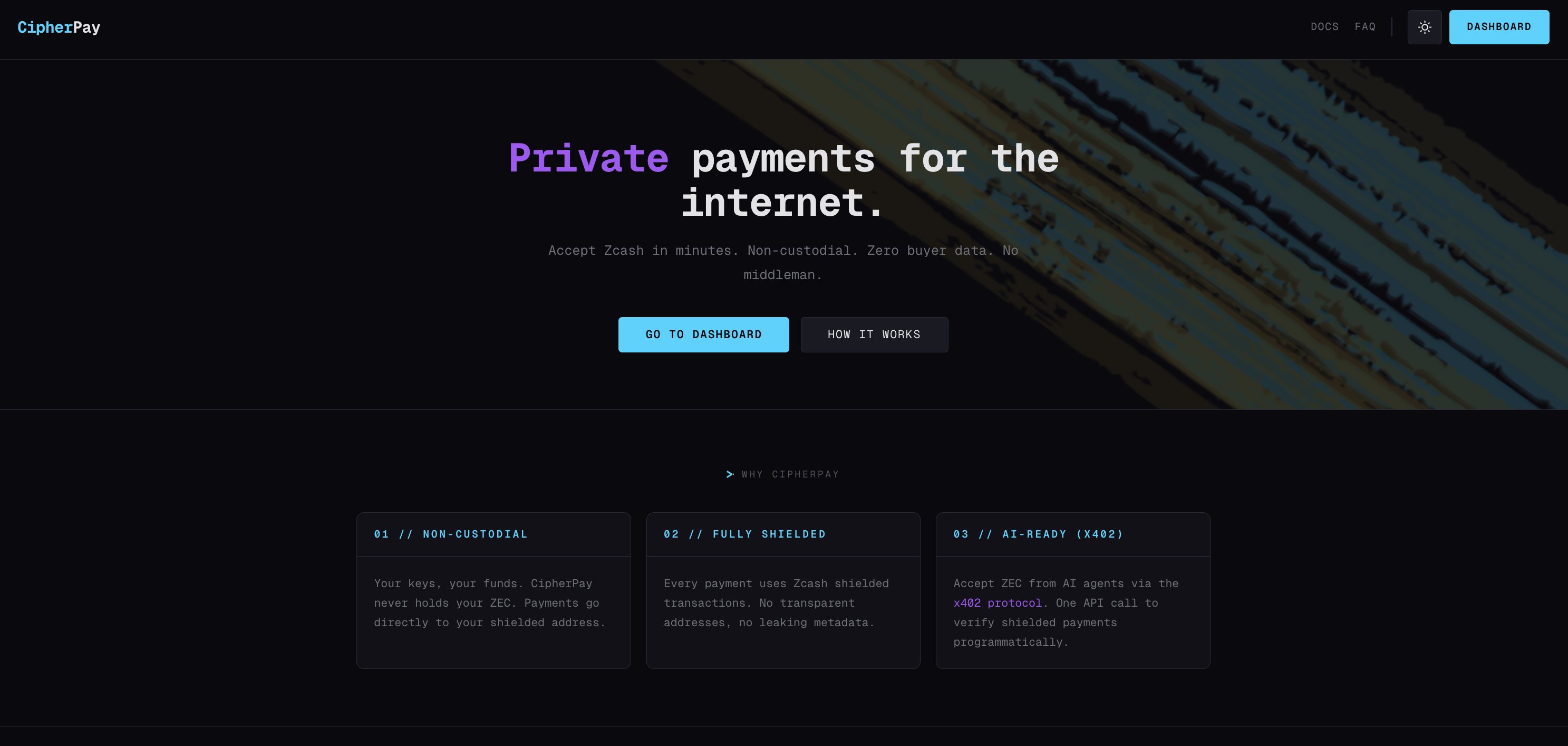 CipherPay is live.
Private payment infrastructure for Zcash. Accept ZEC on your store, your site, or your app.
Non-custodial. No buyer data. Open source.
Here's what we built →2026-03
CipherPay is live.
Private payment infrastructure for Zcash. Accept ZEC on your store, your site, or your app.
Non-custodial. No buyer data. Open source.
Here's what we built →2026-03 OpenAI to acquire Astral, bringing its popular open source Python tools into Codex to power AI agents that span the full software development lifecycle while keeping Astral’s projects open source.2026-03
 Quip Network goes live with quantum-classical testnet powered by D-Wave annealing hardware2026-04
Open Source in Crypto and Web3: A Complete Guide
In crypto and Web3, the term open source refers to software whose underlying code is publicly available under licenses that allow anyone to inspect, use, modify, and redistribute it, usually without needing permission from a single owner. In practice, open source in this ecosystem has evolved into a broader social contract: a commitment to transparency, permissionless innovation, and community governance that underpins everything from Bitcoin and Ethereum nodes to DeFi apps, wallet SDKs, and emerging decentralized AI networks.
What “Open Source” Actually Means
To understand why open source matters so much in crypto, it is important to begin with a precise definition rather than the colloquial idea that it simply means “the code is on GitHub.” The modern concept of open source is rooted in the Open Source Definition maintained by the Open Source Initiative, which lays out ten criteria that a software license must satisfy to be considered truly open source. These criteria go beyond visibility of the code and encompass rights to redistribute the software, create derivative works, and use it in any field without discrimination, all while remaining neutral to specific technologies or interfaces. When crypto projects invoke “open source,” they are implicitly referencing this tradition, even if they do not always abide by its full spirit or letter. The gap between the formal definition and the marketing use of the term is at the heart of many contemporary debates in both DeFi and decentralized AI.
Open source is also a governance model as much as it is a licensing category. The Coin Center, a policy group focused on cryptocurrencies, emphasizes that open source software in this space is collaboratively produced and developed as a community good rather than as the proprietary property of a single company or individual. In such projects there is no singular chokepoint in the development process: anyone can audit, propose changes, and often run their own version of the code, which is particularly important when the software coordinates financial value or consensus across a global network. For open blockchains like Bitcoin and Ethereum, the software that allows a computer to join the peer-to-peer network is usually a client released under an open source license, such that no single vendor controls access to the network itself. This structural openness is foundational to the promise of censorship resistance and permissionless participation that distinguishes public blockchains from traditional financial infrastructure.
The Open Source Definition and Its Criteria
The Open Source Definition is not a vague manifesto; it is a specific checklist that a license must meet in order to qualify. Among the core principles is free redistribution: anyone must be able to sell or give away the software as part of a broader distribution without needing to pay royalties or seek special permission. Another cornerstone is access to source code in the form that programmers actually use to modify the program; obfuscated code or only intermediate forms, such as preprocessor output, are inconsistent with genuine openness. The license must also allow modifications and derivative works and must allow those derivatives to be distributed under the same terms as the original, preserving freedom as code evolves. Each of these requirements matters acutely in a crypto context, where the ability to fork a protocol or wallet, audit changes, and experiment at the edges is central to both innovation and user safety.
The definition also requires that licenses avoid discrimination against any person, group, or field of endeavor. This means a license cannot, for instance, prohibit use by certain jurisdictions or forbid use in particular industries like finance or genetic research. For crypto, which aspires to be permissionless infrastructure accessible to anyone with an internet connection, this non-discrimination principle aligns closely with the ethos that protocol rules should be enforced by code and consensus rather than by centralized gatekeeping. The Open Source Definition further stipulates that rights attached to the program must flow with redistribution, must not be tied to inclusion in a specific product, and must not impose conditions on other software distributed alongside it. Finally, it mandates technological neutrality: the license cannot assume or restrict a particular interface or technology, an important point as crypto software migrates across platforms from desktop to mobile apps to embedded hardware wallets and even GPU-accelerated AI runtimes.
Licenses, Freedom, and Forking
In practice, these principles are implemented through licenses such as MIT, Apache 2.0, or GPL-style copyleft licenses, each with different implications for how the code can be reused. Although the specific text of many of these licenses is not unique to crypto, their impact is magnified when they govern systems that hold billions of dollars of value. Apache 2.0 licenses, for example, grant broad rights to use, modify, and commercialize the code while also addressing patent concerns, making them an attractive choice for open AI models and infrastructure in the crypto ecosystem. The 0GM‑1.0‑35B‑A3B model from 0G, a Mixture-of-Experts large language model trained on a decentralized GPU network, is released under Apache 2.0 specifically to enable both open experimentation and commercial deployment on top of its weights. Likewise, Trust Wallet’s TrustConnect SDK, a wallet connection library for EVM chains, Bitcoin, and Solana, is licensed under Apache 2.0 so that developers can integrate it into their own apps without restrictive fees or licensing negotiations.
Forking is the ultimate expression of freedom in open source governance, and it is particularly salient in crypto. When a community disagrees with the direction taken by a development team or corporate sponsor, the right to copy the codebase, make changes, and release a new version under the same open license becomes a real-world check on power rather than a theoretical right. This has been seen historically in blockchain splits, client diversity in Ethereum, and competing implementations of Bitcoin and other networks, even if not all of these events are formally documented in the sources here. The Open Source Definition’s insistence that licenses not be specific to a product or tied to a single distribution ensures that these alternative implementations can exist on equal legal footing. In a tokenized environment, the ability to fork both code and community is intertwined with questions about protocol governance, token-holder voting, and the social consensus that ultimately decides which chain or client is canonical. Open source does not solve these coordination problems by itself, but it is the precondition that makes credible exit and genuine decentralization possible.

Benthic agent ships first major update just one day after open-source debut, merging 3 Opus calls into 1 and routing trades via API

Collapsing three Opus calls into one isn't just a latency win — at ~$75/M output tokens, an always-on agent running 24 hourly cycles was burning through inference budget fast, so this is closer to a 66% cost cut on the LLM side per cycle. More interesting tradeoff is open-sourcing the prompt injection stack the same week you add trade routing via API — adversaries get the full defense playbook right as the attack surface expands from read-only news posting to actual execution capability. That said, public auditability on the security layers probably nets out positive given how many "AI agent" projects ship with zero input sanitization and wonder why they get drained.
Why Open Source Became a Norm in Crypto
Open source was not an afterthought in crypto; it was present at the origin. Bitcoin’s reference implementation was released publicly and collaboratively developed, establishing a template in which the protocol rules and their implementation were open to inspection and critique by anyone with the technical skills. When Ethereum launched, it continued this tradition, with client software developed as open source and the broader community embracing transparency as a core value, not only in the base layer but across applications. Coin Center notes that, in major cryptocurrency and open blockchain projects, the computer code underpinning the network is almost universally developed as open source software. This is not accidental: in a system that aspires to replace or complement centralized financial intermediaries, hiding the rules inside proprietary binaries would undermine the claim of trustlessness. Instead, the norm has been that anyone can review the code, run a node, or build an alternative client, thereby reinforcing both decentralization and censorship resistance.
Over the past decade, this expectation has hardened into something like a cultural standard. Commentators and builders often argue that, ten years ago, a crypto project launching without open source code would have been considered suspect by default, whereas in recent years some newer ventures have tested the limits of this norm by delaying code releases or using restrictive licenses. The phrase “The Great Crypto Rot,” which has circulated in social media discussions, captures the sense that parts of the industry may be drifting away from the original ethos of radical openness and verifiability. These critiques are not simply aesthetic; when key financial infrastructure operates as closed source, it becomes difficult for users, regulators, and competitors to assess security, backdoor risks, or the extent of centralization, and it may create single points of failure contrary to the design goals of permissionless networks. The tension between open source ideals and commercial pressures is increasingly visible at the intersection of DeFi, AI, and enterprise blockchain tooling, where monetization and regulatory risk collide with expectations of transparency.
Aligning with Censorship Resistance, Privacy, and Security
Vitalik Buterin, a co-founder of Ethereum, has described what he sees as the core properties that the Ethereum ecosystem should not compromise on, using the acronym CROPS: censorship resistance, open source, privacy, and security. In public comments and Ethereum Foundation communications around events like Devcon, he and other community leaders have emphasized that these values are not negotiable even as the application layer experiments with new business models and user experiences. Censorship resistance refers to the ability of the network to process valid transactions regardless of political or economic pressure, something that is much harder to guarantee if the dominant client software or key infrastructure components are controlled by a handful of opaque vendors. Open source is the mechanism through which that control is diffused, enabling multiple client implementations and a broad base of node operators to inspect the code and, in principle, to modify or replace it if it fails to uphold the community’s expectations.
Privacy and security are often seen as orthogonal to openness, but in practice they are reinforced by transparent development. Projects like Zcash, which focus on private transactions using zero-knowledge proofs, still rely on open source infrastructure and clients, and community tools such as CipherPay, a private payment stack for merchants accepting ZEC, are released as open source so that auditors and users can verify that the system is non-custodial and does not leak buyer data. The developers behind CipherPay emphasize that their infrastructure is non-custodial and that no buyer data is collected, and by publishing the code they invite scrutiny of those claims. Similarly, hardware wallet discussions often underscore that open source firmware and software allow independent experts to analyze security properties and detect vulnerabilities, although open code alone does not guarantee safety. The Cryptoken.nl analysis of hardware wallets, for instance, argues that while open source is essential for transparency in crypto, overall security also depends on hardware quality, manufacturer reputation, and external audits. Together, these examples illustrate how privacy and security can be enhanced, rather than undermined, by open source when combined with rigorous engineering and review.
Clients, Nodes, and Wallets
At the base layer of a blockchain, the primary open source artifacts are the clients that implement the protocol. Coin Center describes how, in major cryptocurrencies, the software that allows a participant to connect to the network is called a client, and this client software is released and maintained as open source. Because no single company or individual “makes” the software that creates the network, there is no single chokepoint that can be coerced into censoring transactions or altering rules. This is especially salient for Ethereum, which encourages a multi-client architecture so that bugs or compromises in any one implementation do not threaten the entire network, and where the alignment of independent client teams depends on shared, open specifications and code review. For users who run their own nodes, open source clients also make it possible to verify that the software they are running corresponds to publicly audited code, though in practice this requires reproducible builds and tooling that many users rely on indirectly.
Wallets form another critical layer where open source can either empower users or leave them relying on black boxes. In the hardware wallet space, the debate about open source versus closed firmware is longstanding, with advocates arguing that open code allows the community to verify that no backdoors exist and that key-handling logic is sound. The Cryptoken.nl article emphasizes that open source is essential for transparency, letting anyone see how the wallet software works, find bugs, and suggest improvements, but it also notes that open source is not the only factor; overall security also depends on the hardware, the brand’s track record, and the presence of external audits. On the software side, new tools like Trust Wallet’s TrustConnect SDK illustrate how open source wallet connectivity libraries can lower integration barriers across multiple chains, enabling apps to support EVM networks, Bitcoin, and Solana with full UI customization and without per-user pricing or proprietary licensing. Because TrustConnect is free and open source under Apache 2.0, developers can embed it into their applications to manage wallet connections without relinquishing control to a gatekeeping intermediary, aligning wallet UX improvements with the underlying permissionless ethos.
DeFi, DEXes, and Open Source Expectations
DeFi applications bring these open source expectations into sharp relief because they often hold or route large amounts of user funds and because their contracts, frontends, and backends collectively define market behavior. There is a growing sense among DeFi participants that core exchange logic, including automated market maker algorithms and order-book engines, should be open source so that users and competitors can verify the rules of the game and audit for unfair advantages or hidden fees. This expectation has recently surfaced in calls from Uniswap’s founder urging centralized derivatives platforms like Hyperliquid to open source their matching engine and smart contract code, with the argument that in DeFi, transparency is the norm and secrecy should be viewed with suspicion. Critics contend that when a protocol claims to be decentralized but keeps its key code proprietary, it effectively asks users to trust its operators in ways that resemble traditional finance more than open crypto networks. The tension here is not merely philosophical; open source DEXes can be forked if they behave badly, while closed platforms retain leverage over liquidity and traders because no one else can replicate or verify their exact logic.
This debate extends beyond DEXes to a broader conversation about what it means for financial infrastructure to be permissionless. Many early DeFi blue chips release not just their smart contracts but also their frontend code and supporting subgraphs under open licenses, enabling community-hosted interfaces and integrations that reduce reliance on a single domain or service provider. As the space matures, some projects have experimented with delayed open sourcing or business-source licenses that restrict commercial use for a period before transitioning to full open source, attempting to balance first-mover advantage against community expectations. In parallel, DeFi transparency advocates are building meta-aggregators and analytics tools as open source as well, aiming to improve on-chain market visibility and guard against opaque routing or kickback schemes. Ethereum Builders Live, for example, has highlighted teams working on open source meta-aggregators to increase DEX transparency, emphasizing that even infrastructure for measuring and auditing DeFi should itself be open to scrutiny. All of this underscores that in DeFi, open source is increasingly viewed as part of the trust model, not an optional marketing feature.
Readers click open source stories when it creates conflict or stakes — a developer tool that shifts power, a demand that a closed protocol expose itself, or a coder facing prison — not when open source is debated as a philosophical principle (Vitalik's two essays on the topic drew 3 clicks each).
Open Source Infrastructure: From Wallet SDKs to Tokenization Tooling
While protocol clients and DeFi contracts form the backbone of crypto infrastructure, an expanding layer of developer tooling, SDKs, and asset-management software is also being released as open source. These tools often sit closer to end users, making their licensing choices especially relevant for adoption. An open source approach allows independent developers to audit and extend wallet connectors, tokenization frameworks, and orchestration dashboards, reducing vendor lock-in and facilitating integration into both permissionless apps and regulated environments. As institutions and enterprises explore real-world asset tokenization and compliance-centric use cases, the notion of “enterprise-ready open source” has gained currency: software that can satisfy stricter operational requirements while still offering transparency and modifiability. The emergence of open source tokenization studios, wallet SDKs, and self-hosted consoles illustrates how crypto’s original ethos is being adapted rather than abandoned as it enters more regulated domains.
Open Source Wallet Connectivity and User Experience
Wallet connectivity is a perennial friction point in Web3 apps, and it is increasingly addressed through open source libraries that abstract away protocol-specific details while preserving user choice. Trust Wallet’s TrustConnect SDK exemplifies this trend: it is a free, open source wallet connection library designed from the ground up to be multi-chain, supporting EVM networks alongside Bitcoin and Solana. The SDK offers full user interface customization and is distributed under Apache 2.0, which means developers can integrate it without per-user fees or proprietary terms, and they remain free to modify or fork it as their needs evolve. By publishing the SDK as open source, Trust Wallet invites the community to verify that the connection flows are secure and that no hidden data collection or lock-in mechanisms exist, which is especially important when wallets act as the main gateway to on-chain assets.
From a user’s perspective, the benefits of open source wallet connectivity may be indirect but substantial. Open libraries make it easier for smaller developers to support a wide range of wallets and chains in their apps, increasing the likelihood that users can connect with their preferred self-custodial tools rather than being nudged toward a single embedded wallet. Because the code is auditable, security researchers and integrators can review how session keys are handled, how signing requests are formatted, and whether any unnecessary permissions or data are requested. In a landscape where wallets are increasingly integrated into browsers, mobile apps, and even embedded hardware, open source SDKs form part of the security perimeter, reinforcing privacy by design. This approach resonates with the CROPS values articulated in the Ethereum ecosystem, where open source and privacy are not viewed as mutually exclusive but as mutually reinforcing principles for app-layer UX.
Tokenization Toolkits and Enterprise Adoption
As tokenization of real-world assets (RWAs), securities, and stablecoins accelerates, institutions are looking for tooling that is both compliant and adaptable. Hedera’s Asset Tokenization Studio is a notable example of an open source toolkit aimed at this audience, designed to simplify the process of configuring, issuing, and managing tokenized securities and equities on the Hedera network. The studio is marketed as enterprise-ready and built for developers working on RWAs, stablecoins, and regulated tokens, with the explicit goal of reducing the time to launch from months to minutes. Crucially, it is open source, which means that enterprises and service providers can inspect and adapt the code to match their internal controls, integrate it into existing systems, or run it in environments that satisfy their regulatory and security requirements.
The open source nature of such tokenization studios addresses a major concern for institutional users: vendor lock-in. If a tokenization platform were entirely proprietary, clients would depend on its provider for updates, audits, and feature development, and they might find themselves constrained if strategic priorities or regulatory requirements changed. By contrast, an open source studio allows banks, exchanges, and issuers to fork and customize the toolkit, for instance by adding jurisdiction-specific compliance workflows, integrating with on-chain identity frameworks, or connecting to internal risk systems. Because the codebase can be audited by third parties, regulators and external security firms can also gain confidence that the system handles asset issuance, burning, and transfer restrictions as intended, mitigating concerns that a black-box platform might conceal hidden backdoors or misconfigurations. As tokenization reaches into more heavily regulated asset classes, the alignment between open source transparency and compliance assurance is likely to become increasingly salient.
Security and Moderation Tools
Open source in crypto is not only about financial primitives; it also plays a growing role in security, moderation, and infrastructure for community operations. During waves of spam and bot attacks on social platforms, for example, ecosystem contributors have released open source tools for Telegram moderators to help communities fight spam and coordinate responses. Leviathan News, for instance, has publicized an open source repository for Telegram moderators as part of a broader push to manage spam amid an active bot purge, pointing out that open tools enable many projects to adopt and adapt standardized anti-spam workflows rather than reinventing the wheel for each group. Because moderation strategies can be sensitive and rapidly evolving, open source repositories allow maintainers to iterate quickly, solicit contributions from security researchers, and ensure that improvements propagate across communities that share similar threat models.
On the payment side, projects like CipherPay illustrate how open source infrastructure can bring privacy guarantees into everyday merchant operations. CipherPay is described as a private payment infrastructure for Zcash that allows merchants to accept ZEC in stores, websites, or apps, while remaining non-custodial and collecting no buyer data, and it is explicitly advertised as open source. By making the code public, the developers give technically savvy merchants and auditors the ability to confirm that keys are not being exfiltrated, that no centralized intermediary has hidden control over funds, and that privacy claims are not merely marketing slogans. In a regulated environment where merchants may need to demonstrate both compliance and data minimization, such transparency can be a competitive advantage. These examples highlight a broader pattern: as crypto communities confront real-world issues like spam, fraud, and privacy, they often respond not with proprietary SaaS tools but with open source infrastructure that anyone can deploy and extend.

Paradigm and Tempo open source Centaur, a self-hosted agent runtime for secure multi-user workflows
Open Source and the Future of AI in Crypto
The convergence of crypto and AI is one of the defining trends of the current cycle, and open source sits at its center. As large language models, autonomous agents, and GPU-intensive inference workloads proliferate, questions about who controls AI infrastructure, models, and data have become as pressing as questions about who controls on-chain consensus. Centralized AI companies such as Anthropic, OpenAI, and others may be vulnerable to government intervention, content restrictions, or data access demands, raising concerns among crypto-native communities that rely on uncensored intelligence and tooling. In response, a wave of decentralized AI (DeAI) projects and compute networks has embraced open source as a way to align with crypto’s values of permissionless access, censorship resistance, and user sovereignty over data and workloads. This emerging stack includes decentralized GPU marketplaces, open source AI models, and self-hosted agent runtimes that aim to keep critical AI functions outside the direct control of any single vendor.
Why AI Openness Matters: Sovereign AI and Decentralized Compute
The concept of “sovereign AI” has gained traction as governments and enterprises realize that controlling only GPU hardware is not enough to ensure independence from major vendors. An analysis by Acceldata argues that real sovereign AI GPU infrastructure requires more than sovereign compute; it also demands control over training data, observability for AI workloads, and every component that touches the inference pipeline. In their view, truly sovereign infrastructure keeps the full AI workflow inside the operator’s control plane, from data ingestion and preprocessing to training, inference, checkpointing, and monitoring, such that vendors cannot access training data, prompts, inference queries, workload telemetry, or model behavior signals at any stage. This model stands in contrast to centralized AI services where sensitive data flows through proprietary clouds, giving providers visibility into usage and the power to censor or restrict access. For crypto users who are already wary of centralized control over financial data, the appeal of sovereign AI is obvious: it extends the ethos of self-custody and permissionless access into the domain of machine intelligence.
Decentralized AI and open source are closely intertwined in this context. The Linux Foundation has described decentralized computing and AI as a seismic shift, a chance to rewrite the “DNA” of the web by distributing intelligence to the edge and empowering individuals to regain control of their data and identities. In such systems, autonomous AI agents can operate independently within decentralized networks, offering personalized services without compromising privacy, because both the agents and the infrastructure they run on are designed to limit external data visibility. Open source ensures that the agent frameworks, node software, and coordination protocols can be audited and forked, thereby reducing reliance on any single vendor for the tools that mediate between users and AI. This approach mirrors the logic of open blockchain clients: just as no single company should control the software that validates transactions, no single vendor should control the software stack that processes and interprets user data through AI, especially when that stack can shape economic and political outcomes.
Open GPU Networks and Permissionless Access
Open source alone cannot decentralize AI if the underlying compute remains captive to a few large providers, which is why decentralized GPU networks have emerged as a crucial piece of the puzzle. Akash Network, for example, describes itself as an open network that allows users to buy and sell computing resources securely and efficiently, positioning itself as a decentralized compute marketplace purpose-built for public utility. On Akash, GPU providers can offer resources and users can deploy workloads without the centralized gatekeeping of traditional cloud providers, aligning the network with the permissionless ethos of public blockchains. This model has attracted DeAI projects seeking to run training and inference workloads on infrastructure that is resistant to unilateral shutdowns or censorship, and the Akash team has explicitly highlighted its mission to support decentralized and open source AI as a way to preserve broad access to intelligence.
Bittensor offers a complementary approach focused more directly on machine intelligence markets rather than raw compute. According to project materials, Bittensor is essentially a language for writing numerous decentralized commodity markets, called “subnets,” which operate under a unified token system. These subnets can represent different types of AI services or models, and participants can contribute resources or expertise in exchange for token rewards, effectively creating a global, permissionless marketplace for intelligence. Importantly, the Bittensor ecosystem emphasizes open source and permissionless access to AI, framing itself as an alternative to centralized AI providers that might restrict or surveil usage. In both Akash and Bittensor, open source codebases underpin the protocol logic and node software, ensuring that the rules of these emerging AI markets are transparent and forkable, and preventing any single company from quietly changing how rewards, access, or censorship are enforced.
Open Models: 0G and the New AI Stack
Beyond infrastructure, the models themselves are increasingly being released as open source, with crypto-native projects experimenting at the frontier of open weights, decentralized training, and token-linked access rights. 0G’s 0GM‑1.0‑35B‑A3B model is a case in point: it is described as the first AI model trained, deployed, and served entirely through 0G’s own stack, using the 0G Compute decentralized GPU network. Technically, 0GM‑1.0‑35B‑A3B is a 35‑billion parameter Mixture-of-Experts model fine-tuned in-house for tasks such as agentic coding, tool use, and long-context reasoning, with a default “reasoning mode” in which answers are internally structured with explicit thinking segments. The model’s weights are open source under Apache 2.0 and available for download via Hugging Face, while a hosted version is live on the 0G Private Computer, allowing both self-hosted and managed use. This dual release pattern—open weights plus a decentralized but convenient hosting environment—illustrates how crypto infrastructure and open source AI can reinforce each other.
For developers and users, an open source model like 0GM‑1.0‑35B‑A3B offers several advantages over closed alternatives. Because the weights and training details are available, researchers can investigate biases, failure modes, or security vulnerabilities and propose mitigations, rather than treating the model as an opaque oracle. Builders can fine-tune the model for specialized use cases, including on-chain agents or protocol-integrated bots, without waiting for a centralized provider to prioritize their niche. At the same time, the existence of a decentralized GPU network backing the hosted service addresses concerns about centralized choke points; if access terms become unfavorable or the hosted service is throttled, users can spin up their own instances using the same open source stack. In effect, open models on decentralized infrastructure bring the principles of self-custody and permissionless access into the realm of AI, albeit with new trade-offs in performance, governance, and monetization that are still being worked out.
Open Source Agents and Developer Tools
As AI agents and coding assistants become embedded in development workflows, open source runtimes and orchestration frameworks are emerging to give teams more control over how these agents operate. Warp, for example, has highlighted a “big bet” on building open source tooling that leverages advanced models like GPT‑5.5 and other OpenAI systems to coordinate coding agents across local, cloud, and open source development workflows. In this model, AI agents are not monolithic SaaS products but components in a larger, customizable toolchain that developers can self-host, extend, or audit. While specific implementation details remain fluid, the principle is that open source orchestrators allow teams to manage secrets, repositories, and CI/CD pipelines on their own infrastructure, using AI as a plug-in rather than a gatekeeping platform. This approach mitigates some of the sovereignty and privacy concerns that arise when entire development lifecycles depend on proprietary cloud IDEs or closed agent frameworks.
A similar logic underlies efforts to build self-hosted agent runtimes and orchestration systems for secure multi-user workflows, as seen in open source projects backed by major crypto VCs and research outfits. These runtimes can manage agents that interact with on-chain data, wallets, and DeFi protocols, making their openness especially important from both a security and a decentralization standpoint. In parallel, the acquisition of open source tooling companies by large AI providers, such as OpenAI’s acquisition of Astral and its popular Python tools, has raised questions about how to preserve open governance even as projects gain commercial backing. OpenAI has indicated that Astral’s projects will remain open source, but the broader pattern underscores a recurring theme: open codebases are valuable enough to be strategic acquisition targets, and continued community oversight is needed to ensure that their openness is maintained in practice. Collectively, these developments show how open source agents and developer tools are becoming part of the crypto and AI stack, shaping how protocol code is written, tested, and deployed.
AI Tokens: Decentralization Reality Check
Even as infrastructure and models move toward greater openness, many crypto tokens branded as “AI tokens” present a more complicated reality. A recent academic review of AI-based crypto tokens notes that leading projects often claim to deliver decentralized AI, but in practice their technical architectures, token utilities, and consensus mechanisms vary widely, and many retain centralization in key components such as model hosting or data pipelines. The paper concludes that, in numerous cases, decentralization is more of a narrative than an operational fact, with AI services still dependent on centralized servers or proprietary models despite open source marketing. In this context, open source becomes an important diagnostic tool: if a project claims to be decentralized but does not release its core code or models under an OSI-compliant license, or if its governance relies on a small team that can unilaterally alter access controls, the decentralization claim is suspect.
This does not mean that every centralized element is illegitimate or that open source alone guarantees decentralization. Rather, the lesson is that investors and users should scrutinize both the code and the operational topology of AI-token projects. Are the node implementations, agent frameworks, and coordination contracts open source and auditable? Are models available as open weights, or are they controlled by a single company that can revoke access? Is the compute infrastructure distributed across permissionless providers like Akash or Bittensor, or is it concentrated in a single cloud region subject to local regulations? By asking these questions and examining licenses, repositories, and deployment architectures, the community can distinguish between projects that genuinely extend crypto’s open source ethos into AI and those that only appropriate its language.
Governance, Licensing, and Risk in Open Source Crypto
The prevalence of open source in crypto does not remove legal and governance challenges; instead, it reshapes them. When protocol code, wallet software, and AI agents are open source, responsibility for bugs, exploits, and misuse becomes more diffuse, raising complex questions about liability and regulation. Legislators and regulators are still grappling with how to treat open source developers whose code may be used in unforeseen ways in financial contexts, and proposals such as certain drafts of the CLARITY Act in the United States have sparked alarm by suggesting that open source contributors might bear ongoing liability for downstream uses of their software. One particularly controversial clause, widely criticized by policy advocates, would have effectively treated open source developers as perpetually liable if anyone anywhere used their code in ways that fell afoul of regulations, a scenario that critics described as a dystopian nightmare for innovation. Although that clause was ultimately removed under pressure, the episode illustrates how open source and financial regulation are on a collision course that will shape the future of crypto infrastructure.
Governance Through Code and Community
Open source fundamentally shifts governance from contract law and proprietary control toward code and community norms. In major crypto networks, protocol upgrades often proceed through public processes in which proposed code changes are published, discussed, tested, and only then activated if a sufficient supermajority of node operators and stakeholders adopt the new version. This model is only viable because the code is open, enabling independent implementations and audits by third parties. When disagreements arise—over block sizes, fee markets, or privacy features—communities have the option to fork, creating alternative chains or clients that embody different policy choices. Forking is painful and risky, but its very possibility disciplines governance and discourages unilateral changes that would be unacceptable to a large portion of users.
In application-layer governance, open source also enables experiments in community ownership and collective decision-making. DeFi protocols with open code and transparent on-chain governance often allow token holders to propose and vote on upgrades, parameter changes, or new integrations. While token-based governance has its own challenges, including vote-buying and plutocracy, the open source nature of the code ensures that the results of governance decisions are visible and auditable, and that dissenting minorities can, in principle, copy the code and launch alternative deployments if they strongly disagree. Open source thus acts as a substrate for formal governance processes and for informal exit options, balancing the influence of founders, investors, and users.
Licensing Models in Web3 and AI
Licensing choices in crypto and AI are not merely technical details; they shape how projects evolve and who can build on top of them. Permissive licenses like MIT and Apache 2.0, which allow commercial use, modification, and redistribution with minimal conditions, have become popular in Web3 because they encourage broad adoption and ecosystem growth. 0G’s decision to release 0GM‑1.0‑35B‑A3B under Apache 2.0, for instance, signals that anyone can deploy the model, fine-tune it, or incorporate it into products without fear of license violations, although they must respect trademark and branding rules outside the scope of the license. Likewise, the Apache 2.0 license on TrustConnect SDK invites wallet and app developers to integrate and extend the library across chains, including in commercial contexts, without negotiating individual contracts or paying usage-based fees. In both cases, permissive licensing supports a permissionless innovation environment consistent with crypto norms.
Copyleft licenses, such as GPL variants, impose stricter conditions by requiring that derivative works also be distributed under the same license, which can be attractive for projects that want to ensure improvements remain in the commons but may deter adoption by companies uncomfortable with sharing modifications. Some crypto projects use hybrid models, releasing core protocol code under more permissive licenses while reserving copyleft or source-available terms for specific components. Meanwhile, AI projects are experimenting with “open with usage restrictions” licenses that allow model access but prohibit certain applications, raising questions about whether such models should be considered truly open source under OSI criteria. As AI integrates more deeply with on-chain systems, these licensing choices will determine whether composite stacks remain fully open or become patchworks of open, source-available, and proprietary components.
Regulatory Pressure and Developer Liability
Regulatory frameworks have traditionally assumed that financial intermediaries are discrete entities with clear control over systems and data, an assumption that breaks down in open source, decentralized networks. Policymakers have therefore struggled to assign responsibility when open source code is used in DeFi exploits, money laundering, or sanctions evasion. Some legislative proposals in the United States and elsewhere have flirted with treating developers as de facto service providers, regardless of whether they run infrastructure or profit directly from protocol usage. The controversial Section 604 of the CLARITY Act draft, which suggested that developers could be permanently liable for what others did with their open source code, alarmed both crypto and open source advocates because it conflated publishing code (often recognized as a form of speech) with operating a financial service. Although that provision was removed after criticism from civil society groups and industry stakeholders, the underlying tension remains unresolved.
Organizations like Coin Center have argued that open source developers who publish code should be distinguished from intermediaries who actively operate or control financial services, warning that overly broad liability would chill innovation and undermine both crypto and the broader open source ecosystem. If contributors risk lifelong liability for any misuse of their code, many will simply avoid working on financial or privacy technologies altogether, leaving such domains to well-resourced corporations willing to accept regulatory risk in exchange for monopoly power. Conversely, regulators worry that without some accountability, open source could be used as a shield for irresponsible or malicious projects. Finding a balance that preserves the benefits of open source while addressing legitimate policy concerns will be one of the hardest governance challenges for crypto and DeAI in the coming years.
Security, Supply Chains, and Responsible Disclosure
Open source is often associated with improved security through transparency, but it also introduces distinctive supply-chain and governance risks. Because anyone can contribute to or fork a repository, projects must maintain rigorous review processes, continuous integration testing, and clear release procedures to prevent malicious code from being merged or distributed. In hardware wallets, for example, open source firmware allows independent security researchers to inspect key-handling routines, but the Cryptoken.nl analysis stresses that users must still rely on the manufacturer’s hardware design, secure element selection, and internal quality control, as well as external audits, to achieve robust security. Open source alone cannot prevent side-channel attacks or manufacturing defects; it must be coupled with disciplined engineering and monitoring.
Supply-chain attacks on open source packages have become a growing concern across the software industry, and crypto is particularly exposed because node clients, wallets, and DeFi frontends often depend on complex dependency trees. Responsible disclosure practices, signed releases, and reproducible builds are essential countermeasures, especially when software controls private keys or large pools of funds. Community-driven efforts like Leviathan’s open source Telegram moderation tools show how shared infrastructure can also be part of the defense, allowing many projects to quickly adopt updated anti-spam or anti-phishing filters when threats evolve. Open source thus serves both as an attack surface and a defensive tool, with its net security effect depending heavily on the maturity of project governance and the vigilance of the contributor community.

Leviathan releases open source repository for Telegram moderators to fight spam amidst active bot purge
very cool
Cultural Stakes: From “The Great Crypto Rot” to CROPS
Beyond technical and legal dimensions, open source in crypto has become a cultural touchstone—a marker of alignment with the movement’s founding values. As capital has flooded into the space and as projects have sought to differentiate themselves competitively, some have experimented with closed or delayed open source strategies, sparking backlash among early adopters and builders. The social media discourse around “The Great Crypto Rot,” for instance, laments a perceived erosion of standards, noting that a decade ago it would have been unthinkable for a major protocol to launch without open source code, whereas today closed code and opaque licensing are more common. This sense of drift is compounded by the rise of “web2.5” platforms that use tokens and on-chain elements while retaining tight corporate control over core logic and user data. For many in the community, recommitting to open source is not just a technical choice but a way of signaling that crypto remains distinct from conventional fintech.
When Projects Ship Closed: Community Backlash
Recent debates around centralized derivatives exchanges and perps platforms illustrate how quickly community sentiment can turn when open source expectations are violated. Hyperliquid, a popular platform for on-chain derivatives, has faced public calls from Uniswap’s founder and other DeFi leaders to open source its core codebase, with critics arguing that claiming to be part of DeFi while keeping critical components proprietary undermines the movement’s legitimacy. The argument is not that every business must give away its intellectual property, but that when a platform aspires to be infrastructure—routing significant liquidity and affecting price discovery across the ecosystem—it owes users the transparency needed to assess risks and fairness. In many cases, this includes not only smart contracts but also the matching engine and risk management logic that determine how liquidations, funding rates, and priority rules are applied.
Community pressure has sometimes led projects to accelerate open sourcing or to rethink restrictive licenses, particularly when they face competition from fully open alternatives. Developers and auditors are more willing to integrate and support open source systems because they can inspect and patch them, whereas closed platforms often rely on marketing and incentives to offset the trust deficit. Conversely, some projects have chosen to remain closed and accept that they will not be viewed as “pure DeFi,” positioning themselves instead as hybrid CeFi-DeFi venues. These decisions are being made in an environment where open source is not merely a feature but a cultural expectation, especially among Ethereum builders who view transparency as a prerequisite for credible neutrality.
Ethereum’s CROPS Values
Within the Ethereum ecosystem, the CROPS values articulated by Vitalik Buterin and amplified by Ethereum Foundation communications have become a shorthand for what the community aspires to protect as it scales and diversifies. Censorship resistance ensures that the base layer and key infrastructure cannot be easily coerced into blocking lawful transactions or enforcing extrajudicial sanctions. Open source underpins that resistance by enabling node operators, rollups, and app developers to verify the entire stack and to fork if necessary to preserve neutrality. Privacy, whether through techniques like zero-knowledge proofs or client-side encryption, is seen as essential to restoring some level of confidentiality in financial and social interactions that would otherwise be fully transparent on-chain. Security, meanwhile, encompasses both the robustness of cryptographic primitives and the resilience of implementations, incentivizing rigorous audits and defense-in-depth strategies for open source clients and contracts.
These values are not static slogans but are invoked in concrete debates, from MEV and transaction ordering to the design of account abstraction and L2 governance. Devcon 8, announced for Mumbai, is explicitly framed as a gathering around the values shaping Ethereum’s next phase, with official communications emphasizing censorship resistance, open source, privacy, and security as the core themes. This framing signals to both builders and regulators that, despite the proliferation of consumer-facing apps and enterprise integrations, Ethereum intends to remain anchored in a particular values stack. For open source advocates, it is a reminder that code licensing, repository governance, and client diversity are not peripheral concerns but central to whether those values can be realized in practice.
Open Source Beyond Code: Data, Models, and Knowledge
While licensing and repositories remain the most visible manifestations of open source, the concept is gradually expanding to include data portability, model transparency, and knowledge commons. Projects that help users pull their data from siloed platforms into self-hosted environments—whether through open source desktop apps that aggregate e-commerce records, chat histories, or streaming data, or through on-chain identity frameworks—reflect a desire to extend openness beyond code to the data layer. The Linux Foundation’s analysis of decentralized AI underscores that by distributing intelligence to the edge, systems can empower individuals to regain control of both their data and their identities, rather than ceding them to centralized platforms. Autonomous AI agents operating in such environments can access user data under local control, process it, and act on the user’s behalf without transmitting it to corporate servers, thereby aligning AI behavior with user intent and privacy preferences.
In this broader sense, open source becomes part of a larger “open infrastructure” philosophy that spans software, data formats, governance processes, and even educational materials. Crypto communities have historically invested heavily in public knowledge—documentation, explainers, and open research—because adoption depends on users understanding not just how to use tools but also why trust assumptions differ from traditional finance. As AI agents become more capable and embedded in these ecosystems, ensuring that the tools used to educate, advise, and transact on behalf of users are themselves open and auditable will be key to maintaining user autonomy. Otherwise, there is a risk that nominally decentralized systems could be mediated by opaque AI layers whose incentives and inner workings remain hidden, reintroducing the very forms of dependency that crypto set out to escape.
- 01Developer tooling drops
Concrete, usable releases (Rivet, LlamaFolio, OpenZeppelin Relayers, shadow-reth) drove the highest sustained clicks because they represent immediate capability shifts for builders, not promises.
- 02Tornado Cash legal persecution↗
Two separate headlines about Alexey Pertsev — his 251-day imprisonment and his $1.2B trial verdict — together drew 170 clicks, showing readers treat his case as a referendum on whether writing privacy code can be criminalized.
- 03Transparency demands on closed protocols
The Uniswap founder publicly calling out Hyperliquid for running closed-source code crystallized a recurring reader anxiety: that DeFi's trust model breaks down when core infrastructure is proprietary.
- 04Hardware wallet trust after Recover↗
Ledger's pledge to accelerate open source work in the wake of the Recover backlash attracted readers because it showed open source functioning as a reputation-repair mechanism, not just an ideology.
- 05Open source AI rivalry in crypto
PIN AI's $10M raise to rival Apple Intelligence with an open source approach signaled that the AI sovereignty debate had migrated into the crypto funding ecosystem.
- 06Privacy infrastructure launches
CipherPay (Zcash), RISC Zero's Zeth zkEVM, and the Cashu e-token addition each attracted readers drawn to the intersection of open source licensing and credible financial privacy guarantees.
How to Read and Use “Open Source” as a Crypto User
Given the centrality of open source to crypto narratives, users and investors face the challenge of distinguishing genuine openness from superficial branding. Not every repository on GitHub implies robust decentralization, and not every open source license guarantees that a project’s operational control is dispersed. Learning to read licenses, governance structures, and deployment architectures is therefore an important skill for anyone whose assets, privacy, or governance rights depend on particular protocols or apps. Fortunately, the crypto ecosystem itself offers resources for assessing open source health, including curated lists of high-quality projects, security audits, and community-maintained documentation.
Verifying Claims: Repos, Licenses, and Community
The first step in evaluating open source claims is to locate and inspect the project’s actual repositories. GitHub and similar platforms are the de facto hubs, and many projects link their repos prominently from official websites. However, the mere presence of code is not enough; users should look for explicit license files that conform to OSI-approved templates, such as Apache 2.0, MIT, or GPL variants, rather than vague “all rights reserved” declarations. The Open Source Definition’s criteria can be used as a checklist: does the license permit free redistribution, modifications, and use in any field, or does it impose restrictions that would disqualify it from being considered truly open source? Projects that claim openness but use custom or restrictive licenses may be more accurately described as “source available,” meaning that the code is visible but not fully free to reuse.
Community signals also matter. A vibrant open source project typically has active issue tracking, regular commits, and a mix of contributors rather than a single gatekeeper. Tools like the “best-of-crypto” curated list on GitHub, which ranks over three thousand open source digital currency and blockchain projects, can help users discover widely used and maintained projects, though inclusion is not an endorsement of security or decentralization. Security audits, discussions in technical forums, and the presence of independent forks or implementations can further corroborate that a project’s openness is substantive rather than cosmetic. Conversely, if a protocol claims to be decentralized but has no public repository, a closed license, or a stagnant codebase managed by a single entity, its decentralization narrative should be viewed skeptically regardless of marketing language.
Threat Models: Custodial vs Self‑Custodial, Open vs Closed
Open source is one dimension of a broader threat model that also includes custodial versus self-custodial architectures. A custodial service that holds user funds can be risky even if its code is open source, because users must still trust the operator not to freeze withdrawals, mismanage keys, or succumb to regulatory pressures. Conversely, non-custodial systems that never take control of user assets can still be problematic if they rely on closed source code that may contain undisclosed vulnerabilities or exploitative logic. CipherPay’s design as a non-custodial, open source Zcash payment infrastructure illustrates how these dimensions can align: merchants retain control over their keys, no buyer data is collected, and the code is available for public scrutiny, minimizing both custodian and code opacity risks. Hardware wallets and self-hosted node clients offer similar alignments when their firmware and software are open source, though users must also assess hardware integrity and supply-chain risks.
Permissionless access is another consideration. Some projects use open source code but restrict who can run nodes or validate transactions through legal agreements or centralized allowlists, creating de facto gatekeeping despite formal openness. Others may offer permissionless node operation but restrict access to key APIs or frontends through proprietary terms of service. For users who value censorship resistance and autonomy, the ideal is a stack in which code is open source, infrastructure can be run by anyone with sufficient resources, and client apps can be forked or replaced without breaking access to the underlying protocol. Evaluating whether a given project approaches this ideal requires looking beyond marketing claims to licensing, deployment, and governance details, many of which are only visible in open source repositories and documentation.
Using Open Source Apps and Nodes Safely
Even when software is genuinely open source, using it safely requires attention to operational security. Running a full node from source, for example, involves trusting that the compiled binary corresponds exactly to the audited code, which is why reproducible builds and signed releases are important. Wallet users must ensure they are downloading from official sources, verifying signatures where possible, and keeping software up to date to receive security patches. Open source projects often publish detailed release notes and upgrade guides, but users still need to exercise caution and avoid blindly running unverified forks or third-party builds. Hardware wallets with open firmware typically provide instructions for verifying firmware signatures and checksums, helping users confirm that their devices are running authentic software.
For less technical users, the practical value of open source may manifest indirectly through the ecosystem of auditors, developers, and power users who examine code and publish findings. When a critical vulnerability is discovered in an open source protocol or wallet, responsible disclosure and rapid patching can mitigate damage, and the transparency of the process can build trust. Conversely, if a closed source system is compromised, users may have little visibility into what went wrong or whether it has truly been fixed. This asymmetry reinforces the rationale for preferring open source tools where possible, particularly for long-term storage of assets or high-risk operations. Ultimately, open source is not a guarantee of safety but a prerequisite for a security culture in which independent verification, rapid iteration, and community oversight are possible.
Conclusion
Open source lies at the heart of crypto’s claim to be more than just another set of financial products. From Bitcoin’s original codebase to Ethereum’s multi-client architecture, from DeFi protocols and DEX aggregators to wallet SDKs, tokenization studios, and decentralized AI infrastructures, openness of code and governance has been the mechanism by which networks achieve transparency, censorship resistance, and permissionless innovation. The Open Source Definition provides the formal criteria for what counts as genuinely open, emphasizing rights to inspect, modify, and redistribute software without discrimination, while the broader crypto ecosystem has built a culture in which open source is seen as a non-negotiable value for core infrastructure. At the same time, commercial pressures, regulatory uncertainty, and the complexity of modern stacks have led some projects to experiment with closed or source-available models, sparking ongoing debates about what degree of openness is necessary or sufficient for decentralization.
The intersection of crypto and AI intensifies these questions. As decentralized GPU networks like Akash and intelligence marketplaces like Bittensor emerge, and as open models such as 0GM‑1.0‑35B‑A3B are trained and deployed on decentralized infrastructure, the prospect of a truly open, sovereign AI stack aligned with crypto values has come into view. Yet, as academic analyses of AI tokens warn, not all projects that invoke decentralization and open source live up to those ideals in practice, underscoring the need for careful scrutiny of licenses, architectures, and governance structures. Regulatory debates around developer liability, such as the controversy over Section 604 in the CLARITY Act draft, further complicate the landscape, raising the stakes for how societies treat open source contributors whose work underpins critical financial and AI systems.
For users, builders, and policymakers, the key lesson is that open source is both a technical and a social construct. It is encoded in licenses and repositories, but also in norms about how projects communicate, how they respond to vulnerabilities, and how they balance commercial interests with community accountability. In crypto and DeAI, where infrastructure can mediate access to money, information, and decision-making, maintaining a robust open source culture is not just about ideological purity; it is about preserving the conditions for competition, innovation, and user autonomy in the face of centralizing pressures. The future of Web3 will be shaped as much by choices about openness and governance as by breakthroughs in cryptography or machine learning.
OFAC sanctions Tornado Cash; Alexey Pertsev arrested in Netherlands
Ledger Recover backlash forces open source pledge from hardware wallet maker
- 2023-10launch
dYdX releases V4 open source code ahead of Cosmos chain launch
Pertsev convicted; sentenced to 5 years 4 months for Tornado Cash
- 2024-09launch
Paradigm releases Rivet, open source EVM developer wallet and toolchain
- 2025-03governance
Uniswap founder publicly demands Hyperliquid open source its matching engine
- 2025-05launch
Paradigm and Tempo open source Centaur self-hosted agent runtime
Outlook
Looking ahead, open source is likely to remain a fault line in the evolution of crypto and decentralized AI. As major protocols scale and integrate with traditional finance, pressures to optimize for compliance, performance, and profitability may tempt some actors toward more closed architectures, especially at the application layer. At the same time, new generations of builders—many inspired by Ethereum’s CROPS values and by the promise of sovereign AI—are doubling down on fully open stacks, from base-layer clients and rollup sequencers to wallet SDKs, agent runtimes, and tokenization toolkits. The tension between these approaches will play out in market share, regulatory interactions, and cultural influence, and it will determine whether Web3 infrastructure ultimately resembles an open commons or a federation of walled gardens.
The rise of decentralized GPU networks, open models, and self-hosted AI tools suggests that crypto’s influence on AI will grow, particularly in areas where censorship resistance, privacy, and permissionless access are at a premium. However, the same forces that pushed parts of crypto toward “The Great Crypto Rot”—venture pressures, regulatory arbitrage, and user inertia—could also drive AI-token projects to prioritize short-term gains over genuine openness, unless communities remain vigilant and insist on verifiable decentralization. In this environment, the ability of users and developers to read licenses, understand architectures, and participate in open governance will be as important as technical innovations themselves.
Ultimately, whether open source remains the default in crypto and DeAI will depend on collective choices. Every decision to release code under an OSI-compliant license, to build on decentralized GPU infrastructure, to publish models as open weights, or to push back against overbroad liability proposals reinforces a trajectory toward systems that are more transparent, resilient, and user-controlled. Conversely, every shift toward proprietary clients, opaque agents, or centralized choke points risks eroding the hard-won gains of the past decade. For a crypto news audience tracking these developments, understanding open source is not just a matter of taxonomy; it is a way of discerning which projects are aligned with the long-term promise of Web3 and which are merely renting its language.
Latest Open Source news
Benthic agent ships first major update just one day after open-source debut, merging 3 Opus calls into 1 and routing trades via APIParadigm and Tempo open source Centaur, a self-hosted agent runtime for secure multi-user workflowsLeviathan releases open source repository for Telegram moderators to fight spam amidst active bot purgeCipherPay is live.
Private payment infrastructure for Zcash. Accept ZEC on your store, your site, or your app.
Non-custodial. No buyer data. Open source.
Here's what we built →OpenAI to acquire Astral, bringing its popular open source Python tools into Codex to power AI agents that span the full software development lifecycle while keeping Astral’s projects open source.Quip Network goes live with quantum-classical testnet powered by D-Wave annealing hardwareSources
18 records from 14 domains
opensource.org
coincenter.org
cryptoken.nl
x.com
github.com
bittensor.com
akash.network
0g.ai
acceldata.io
linuxfoundation.org
trustwallet.com
youtube.com
hedera.com
arxiv.org
Community notes
Spot something off or out of date? Drop a note. Editors review topic notes daily and roll accepted fixes into the explainer — contributors are recognized in the monthly $SQUID drop.
Loading notes…
Help improve this topic
Have a story or tip about this topic? Submit it. See something missing? Leave a note. Editors review daily; accepted submissions and fixes count toward the monthly $SQUID drop.