
Crypto shutdowns — from exploit-forced closures to bear-market casualties to L2 sunsetting — follow patterns users can learn to anticipate. Here's what causes them and how to protect funds before deadlines hit.
+13 sources across the wider coverage universe
 Mint Blockchain shuts down operations, urges users to withdraw assets to Ethereum before October 20 deadline or risk permanent loss2026-04
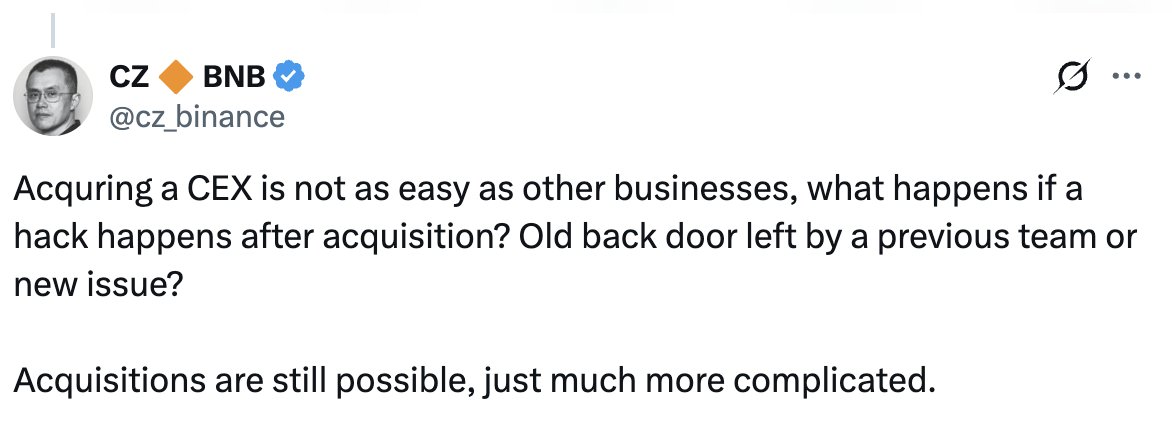 Binance founder CZ warns acquiring small crypto exchanges poses hidden security risks after BitMEX and BitMart shut down.2026-07
 Forma shuts down its chain over unsustainable operations, moving NFTs to Ethereum2026-07
 Code4rena is shutting down2026-05
 India orders the takedown of Jack Dorsey's Bitcoin-linked Bitchat app as protesters use its offline Bluetooth mesh network to bypass internet shutdowns2026-07
 KelpDAO is shutting down rsETH bridging support across 19 networks, urging users to return assets to Ethereum mainnet before the June 15 deadline2026-05
When a crypto project shuts down, users often have days or weeks to recover funds before access is permanently severed — but the consequences of missing that window can be total and irreversible.
Why Crypto Projects Shut Down
The decentralized finance ecosystem runs on a paradox: protocols are built on permissionless, censorship-resistant infrastructure, yet the teams behind them retain the ability — and sometimes the obligation — to wind down operations unilaterally. Shutdowns happen for a cluster of overlapping reasons, and understanding them helps users protect themselves before a closure notice arrives.
Bear markets and funding exhaustion are the most common culprits. When token prices fall and venture appetite contracts, projects that relied on rising valuations to cover operating costs hit a wall. Satori Finance, a Coinbase-backed perpetuals exchange, announced its closure in mid-2026, giving users until July 16 to close positions and withdraw assets. Separately, Ventuals shut down its private-company perpetuals product on Hyperliquid. In both cases, the language was the same: shrinking demand, difficult market conditions, not enough runway. Hyli, a ZK-focused blockchain that had raised $3.4 million, also shuttered after two years of development — a reminder that even technically credentialed teams cannot survive indefinitely without product-market fit.
Exploits and hacks form the second major category. When a protocol is drained, the team faces an impossible calculus: rebuild, pivot, or close. Ionic Protocol chose closure after a 2025 exploit, instructing users to withdraw whatever assets remained in the system. Pyra, which issued crypto debit cards, shut down after the Drift exploit hit its infrastructure — cancelling cards and setting a September 15, 2026 deadline for fund withdrawals. These cases illustrate a hard truth: smart contract risk is not theoretical. When it materialises, the shutdown notice is often the first thing users see.
Strategic pivots and resource reallocation account for a quieter class of closures. Tether shut down its Alloy product and the gold-backed aUSDT stablecoin after weak adoption, redirecting engineering and capital toward its XAUT gold token and higher-growth areas. This was not a failure in the conventional sense — Tether remains one of the largest companies in crypto by revenue — but for aUSDT holders, the practical outcome was identical to a failure: the product ceased to exist.
Regulatory and infrastructure pressure rounds out the picture. Platforms operating at the intersection of crypto and traditional finance are particularly exposed. Most crypto neobanks, for instance, still depend on legacy banking rails — Visa, Mastercard, licensed issuers — making them vulnerable to policy changes, banking partner withdrawals, or regulatory intervention at any point in the stack. A "bankless" app is only as bankless as its weakest regulated dependency.

Mint Blockchain shuts down operations, urges users to withdraw assets to Ethereum before October 20 deadline or risk permanent loss
The Infrastructure Problem: Bridges and Layer 2s
Some of the highest-stakes shutdowns involve the connective tissue of the blockchain ecosystem: bridges and layer-2 networks. These systems custody user funds in transit, and when they close, the window for recovery can be narrow and technically demanding.
Polygon announced the sunset of its zkEVM network, with the Mainnet Beta sequencer scheduled to go offline on July 1, 2026. Assets left inside DeFi protocols on the zkEVM chain after that date are not recoverable — not delayed, not frozen, but permanently inaccessible. Users of protocols like Dolomite on zkEVM needed to unwind positions and bridge funds back to Ethereum before the deadline. This is a structural risk of any L2 that relies on a centralized sequencer: the team controls the off-switch.
BitTorrent Chain (BTTC) announced a phased shutdown of its cross-chain bridge in June 2026, closing deposits on June 13 with withdrawals to follow. For holders of $BTT and assets bridged across BTTC, the clock was immediately running.
Botanix, a Bitcoin layer-2 network backed by Polychain Capital, announced it would gradually wind down operations, citing a market environment where Bitcoin's role as a reserve asset was crowding out demand for Bitcoin-native DeFi. That reasoning — the macro environment has shifted — is significant because it suggests even well-funded, institutionally backed L2 projects are not immune when the thesis underlying them changes.
The pattern here is consistent: bridge and L2 shutdowns tend to give users less time than protocol closures, and the technical steps required to recover funds are more complex. Users must bridge assets back to a base layer, often navigating protocols they have never interacted with, under time pressure.
Readers click 'shut down' stories not for the shutdown itself but for what the closure exposes — governance capture, fake decentralization, or regulatory targeting of privacy infrastructure — making each shutdown a proxy for a larger structural critique of the protocol or sector.
NFTs, Games, and Consumer Products
The NFT and consumer product layer of crypto has seen some of the most visible shutdowns, partly because the user bases are larger and less technically sophisticated.
Pudgy Penguins, one of the most recognised NFT brands in the space, shut down its mobile game Pudgy Party less than a year after launch. The game had been positioned as a mainstream on-ramp — a way to introduce non-crypto users to the Pudgy Penguins IP through casual gameplay. Its rapid closure underscores the difficulty of building sustainable consumer products on top of NFT ecosystems, where token price volatility and user acquisition costs create a brutal unit economics problem.
Binance announced it would shut down NFT support on the Binance Exchange and migrate the service to Binance Wallet, giving users until July 3 to withdraw transferable NFTs. For NFTs that were not transferable, the implication was clear: they would become inaccessible. This kind of platform-level decision — made unilaterally by a centralised exchange — illustrates the fundamental tension between NFT ownership claims and the custodial infrastructure they often depend on.

Code4rena is shutting down
Law Enforcement and Criminal Shutdowns
Not all shutdowns originate from inside the industry. International law enforcement operations have increasingly targeted crypto infrastructure used for illicit finance. A coordinated sting operation dismantled a $390 million crypto money-laundering ring, cutting off a network that had processed transactions across multiple jurisdictions. These enforcement actions are distinct from voluntary project closures but produce similar outcomes for participants: sudden loss of access to funds and, in these cases, criminal exposure.
The sophistication of these operations has grown alongside the sophistication of blockchain analytics. Authorities now routinely trace funds across chains, identify mixer usage, and coordinate arrests across borders. For legitimate users who may have unknowingly interacted with blacklisted addresses or platforms, enforcement shutdowns can also result in frozen funds pending legal review.
- 01Governance votes to self-destruct
Prisma Finance and Vega Protocol both shut down via near-unanimous on-chain votes, drawing readers who wanted to see whether decentralized governance could actually wind down a live protocol — and what tokenholders get in return.
- 02Exploit forces market shutdown
The JellyJelly attack on Hyperliquid — where a coordinated wallet cluster forced the team to unilaterally kill an entire market — pulled readers because it reframed 'shutdown' as proof of centralization hidden behind decentralization marketing.
- 03Regulatory enforcement kills privacy tools
Samourai Wallet's arrest and the Cryptomixer seizure revealed that regulators would pursue criminal charges against privacy infrastructure operators, not just issue fines, alarming the self-custody and mixing-service ecosystem.
- 04VC-backed projects fail despite working tech
Harpie, Nocturne, Code4rena, and Tally — all venture-funded, all with functional products — shut down from revenue or market-fit failure, not exploits, challenging the assumption that institutional backing validates long-term viability.
- 05NFT marketplace wave collapses
GameStop, Kraken, X2Y2, and Magic Eden all exited NFT marketplace operations within a compressed window, signaling a full-sector contraction rather than isolated project failures.
- 06Operation Chokepoint banking debanking
JPMorgan shutting down Strike CEO Jack Mallers' accounts without explanation reactivated fears that coordinated banking exclusion of crypto founders remained an active policy threat, not a resolved legacy issue.
AI, Decentralization, and the Systemic Argument
The question of what crypto shutdowns reveal about centralization has sharpened as AI infrastructure has entered the conversation. Grayscale published analysis arguing that even hypothetical shutdowns of major AI providers — the firm cited Anthropic as an example — make a strong case for decentralized AI alternatives, on the grounds that centralized AI infrastructure carries existential platform risk for anyone who builds on it. The logic maps directly to crypto: any system that can be shut down by a single team, regulator, or infrastructure provider carries a form of counterparty risk that decentralized alternatives theoretically eliminate.
In practice, the record is mixed. Truly decentralized protocols — those with no admin keys, no upgradeable contracts, and no off-chain dependencies — are extremely difficult to shut down. But they are also extremely difficult to fix when they break, and their complexity creates the attack surface that leads to exploits. Most projects occupy a middle ground: nominally decentralized, with meaningful centralized dependencies that remain invisible until a shutdown notice appears.
Coinbase-backed Router Protocol to shut down by Sept. 30 after failed acquisition efforts, citing thin bridge fees and falling cross-chain demand

What Happens to User Funds
The mechanics of a shutdown vary significantly by project type and how much advance notice is given.
For protocol shutdowns, the team typically disables the front-end and instructs users to interact directly with the underlying smart contracts to withdraw. This requires a baseline of technical competence — knowing how to use a block explorer, construct transactions, and interact with contracts without a UI. Less experienced users often lose funds simply because they do not know how to proceed.
For bridge shutdowns, the process is sequential: users must first withdraw from any protocol using bridged assets, then withdraw from the bridge itself, then confirm receipt on the destination chain. Each step has a time dependency on the previous one, and if the bridge sequencer goes offline before a user completes all steps, recovery may require using an alternative escape hatch — if one exists.
For exchange or custodial platform shutdowns, users typically receive a withdrawal window measured in days or weeks. Missing that window can result in assets being locked in a bankruptcy estate, subject to legal proceedings that can take years to resolve.
For NFTs on shuttered platforms, the situation depends on whether the token itself lives on-chain or whether its metadata and display depend on off-chain infrastructure. A token with fully on-chain metadata survives any platform shutdown intact. A token whose image is stored on a centralised server becomes an empty shell when that server goes dark.
The Dutch exchange Knaken's shutdown generated controversy when the company told customers not to file damage claims — a reminder that user protections in crypto shutdowns are thin and jurisdiction-dependent.
- 2023-07regulatory
Multichain announces shutdown; CEO arrested
- 2023-10regulatory
GameStop shuts NFT marketplace citing regulatory uncertainty
- 2023-12milestone
97 crypto hedge funds shut down globally in 2023
- 2024-04regulatory
US authorities arrest Samourai Wallet founders, seize service
- 2024-11regulatory
Europol seizes Cryptomixer, €25M crypto confiscated
- 2025-02governance
Kraken shuts NFT marketplace; Vega Protocol governance vote to close L1
- 2025-03exploit
JellyJelly exploit forces Hyperliquid to unilaterally shut down market
- 2025-06governance
Lido ends Polygon PoS staking; Prisma Finance shutdown vote launches
Protecting Yourself Before the Notice Arrives
Several practical principles reduce shutdown risk:
Prefer non-custodial positions. Assets held directly in a wallet, rather than on an exchange or in a custodial product, are not subject to platform-level closures.
Understand bridge dependencies. Funds in DeFi protocols on any chain with a centralized sequencer or bridge carry sequencer risk. Know the exit path before you enter.
Monitor team activity. Developer activity, social media presence, and protocol governance participation often signal health. Sustained silence on all channels frequently precedes a shutdown announcement.
Read the tokenomics for runway. Projects with transparent treasury disclosures make it easier to assess how much time remains before funding pressures force a decision.
Set withdrawal deadlines as calendar reminders. When a shutdown is announced, the posted deadline is real. The July 1 Polygon zkEVM sequencer cutoff, the July 16 Satori withdrawal window, the September 15 Pyra deadline — these dates are hard stops.
Outlook
The frequency of crypto shutdowns in 2025–2026 reflects a market cycling through its periodic consolidation phase, but the structural dynamics driving them are not going away. Bear markets will continue to test projects without product-market fit. Exploits will continue to force closures when treasuries cannot absorb the losses. Regulatory pressure will continue to complicate the operating environment for hybrid crypto-traditional products.
What changes over time is the sophistication of the exit infrastructure. Better standard withdrawal mechanisms, more robust escape hatches on L2s, and clearer legal frameworks for user fund recovery in bankruptcy would reduce the harm from inevitable closures. Until those standards mature, the burden remains on users: know where your assets are, know how to move them, and act before the window closes.
Latest Shut Down news
Mint Blockchain shuts down operations, urges users to withdraw assets to Ethereum before October 20 deadline or risk permanent lossCode4rena is shutting downCoinbase-backed Router Protocol to shut down by Sept. 30 after failed acquisition efforts, citing thin bridge fees and falling cross-chain demand Crypto's onchain experiments are shutting down or pivoting as viable markets narrow to memecoins, perps, prediction markets, stablecoins, and RWAs
 Tether-backed Chilean exchange Orionx begins permanent shutdown after forensic audit finds $7M+ in customer assets moved outside its custody
 Bitwise shuts down its Dogecoin ETF just 10 months after launch as BWOW struggles to attract investors beyond its $3M debut trading volume
Community notes
Spot something off or out of date? Drop a note. Editors review topic notes daily and roll accepted fixes into the explainer — contributors are recognized in the monthly $SQUID drop.
Loading notes…
Help improve this topic
Have a story or tip about this topic? Submit it. See something missing? Leave a note. Editors review daily; accepted submissions and fixes count toward the monthly $SQUID drop.