
Vietnam legalized digital assets via its 2026 Digital Technology Industry Law and launched a restrictive five-license crypto pilot targeting Q3 2026, drawing OKX, HashKey and Bithumb amid top-tier retail adoption.
+20 sources across the wider coverage universe
 OKX Ventures, HashKey take equity in VPBank's CAEX to compete for Vietnam's five-slot crypto pilot2026-04
 South Korean exchange Bithumb partners Vietnam’s SSID to launch a local crypto trading platform, expanding into one of the world’s fastest-growing digital asset markets2026-05
 Vietnam to block Binance and OKX, fast-tracking five domestic exchanges as world's 4th-largest crypto market goes local2026-03
 Vietnam weighs letting SMEs pledge digital assets for loans after credit gap leaves them with 20% of bank lending2026-05
 Vietnam readies first licensed crypto exchange for Q2 2026 launch as high capital thresholds thin the field2026-04
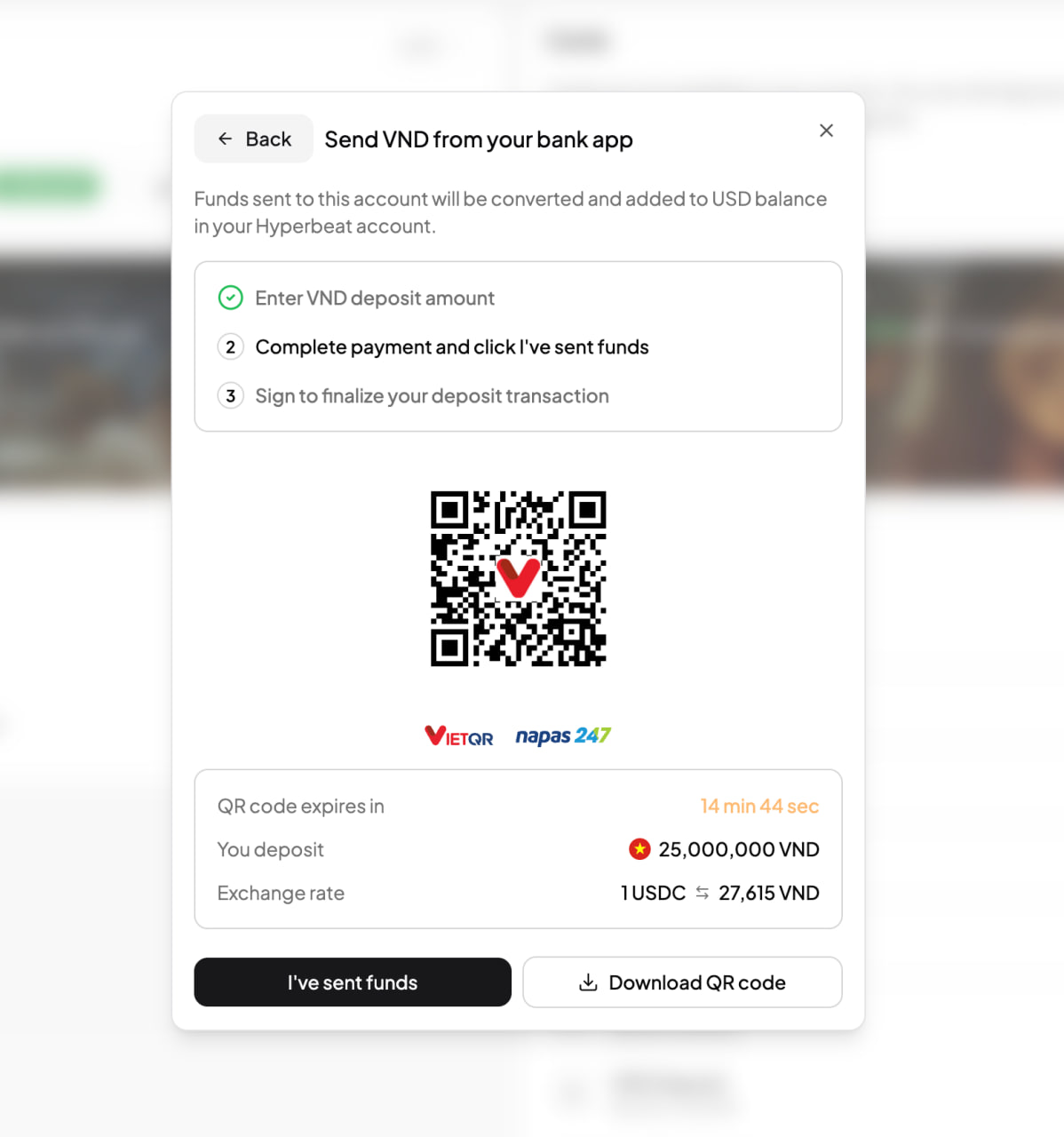 HyperliquidX launches direct VND on-ramp from Vietnamese banking apps2026-04
Vietnam stands among the world's most active retail crypto markets, and in 2025–2026 it shifted from a legal gray zone to a regulated, pilot-based regime that legally recognizes digital assets and licenses a small number of domestic exchanges.
The country's transition matters far beyond its borders: it is a test of whether a top-tier grassroots adoption market can be channeled into a controlled, onshore framework without driving users back to offshore platforms.
From Gray Zone to Legal Recognition
For most of the past decade, Vietnamese law neither banned nor recognized cryptocurrency. Citizens traded heavily, but exchanges operated without licenses and digital assets had no defined legal status. That changed with the Law on Digital Technology Industry, passed by Vietnam's National Assembly on June 14, 2025, and in force from January 1, 2026 — the first dedicated digital technology industry law of its kind (Vietnam Briefing).
The law formally legalizes the ownership and use of crypto assets and recognizes a "digital asset" as property under Vietnam's Civil Code — digital data created, issued, stored, transferred, and authenticated by digital technologies (Watson Farley & Williams). This is the legal foundation that makes everything else — licensing, collateral, settlement — possible. It does not make crypto legal tender; it makes it a recognized asset class subject to regulation.

OKX Ventures, HashKey take equity in VPBank's CAEX to compete for Vietnam's five-slot crypto pilot
Five firms shortlisted but only CAEX is actually on track to hit the 10 trillion VND ($380M) capital floor — OKX and HashKey buying in at up to 49% foreign ownership cap is how you front-run a market where regulators are drafting rules to restrict international exchange access. Vietnam's been on the FATF gray list since 2023 partly because of unregulated crypto flows, so the pilot isn't just about licensing — it's the compliance scaffolding needed to get off that list while routing $20B+ in annual Vietnamese crypto volume through domestic, taxable rails. That 0.1% PIT on licensed platform trades looks tiny until you multiply it across a population that ranks top-5 globally in crypto adoption.
A Massive Retail Base
The regulatory push is a response to demand, not a top-down experiment. Vietnam ranked 4th in Chainalysis's 2025 Global Crypto Adoption Index, behind India, the United States, and Pakistan (Chainalysis). Industry estimates put the number of Vietnamese who own crypto at roughly 17–20 million people — on the order of one in five adults.
Crucially, Chainalysis characterizes Vietnam as a maturing market: year-over-year growth has slowed relative to earlier years, with crypto already embedded in everyday use cases like remittances, gaming, and savings rather than purely speculative trading. That distinction shapes policy. Regulators are not trying to spark adoption — they are trying to bring an already-entrenched user base onshore, capture tax and oversight, and reduce reliance on unregulated offshore venues.
Vietnam readers are tracking a deliberate state capture of crypto markets — not a ban but a controlled substitution: foreign platforms out, domestically licensed oligarchs in, with fraud crackdowns and biometric banking providing the political cover.
The Pilot Market and Licensing Framework
In January 2026, the Ministry of Finance issued Decision No. 96/QĐ-BTC, establishing a pilot regulated crypto-asset market with licensing procedures, capital requirements, and compliance standards. Application acceptance opened on January 20, 2026 (Allen & Gledhill). Deputy Finance Minister Nguyen Duc Chi signaled that the first official market activity could begin as early as Q3 2026 (Cryptopolitan).
The framework is deliberately restrictive — a "controlled pilot" rather than open licensing. Its defining parameters:
- Five licenses maximum. The pilot caps participation at five licensed digital-asset service providers.
- VND 10 trillion charter capital (roughly US$400 million) — about three times the requirement for a bank, a threshold that screens out all but the best-capitalized entrants (MEXC News).
- Institutional ownership floor. At least 65% of starting capital must come from institutional shareholders.
- Foreign ownership cap of 49%, preserving domestic control.
- Level 4 cybersecurity classification, among the most demanding IT-security standards applied to any crypto regime globally.
These thresholds explain why coverage describes the field "thinning" — the capital bar alone restricts the contest to large banks, securities firms, and well-funded foreign-backed ventures. The pilot's design choice is to favor a few heavily regulated incumbents over a competitive open market, trading dynamism for control.

South Korean exchange Bithumb partners Vietnam’s SSID to launch a local crypto trading platform, expanding into one of the world’s fastest-growing digital asset markets
Who Is Competing for a License
The race for the five slots has drawn major regional and global players, typically pairing a Vietnamese financial institution (for domestic ownership and licensing standing) with a foreign exchange or fund (for capital and technical expertise).
- CAEX (Vietnam Prosperity Crypto Asset Exchange), tied to the ecosystem of private lender VPBank, secured equity investment from OKX Ventures and HashKey Capital, lifting its capital base to roughly $380 million to meet the pilot threshold under Resolution 05/2025 (CoinDesk). The deal is a template: foreign capital takes a minority equity stake (within the 49% cap) to fund a domestically controlled platform.
- Bithumb, the South Korean exchange, signed a memorandum of understanding with SSI Digital (SSID), a subsidiary of SSI — Vietnam's largest securities firm — to build a local virtual-asset exchange (Blockhead). Bithumb's move mirrors a broader South Korean expansion across Asia and fits the pattern of established exchanges seeking growth in fast-adopting markets as their home regimes mature.
The pairing strategy reflects the rules: no foreign firm can control a licensee outright, so global exchanges buy influence and supply technology while a Vietnamese partner anchors the entity. Expect the final five to be dominated by bank- and broker-backed consortia rather than crypto-native startups.
- 01domestic licensing five-slot race
Vietnam's five-exchange pilot with strict capital thresholds created a visible competitive horse race — readers tracked which firms (OKX Ventures, HashKey, VPBank's CAEX, Bithumb/SSID) were winning slots.
- 02Binance/OKX ban protectionism
Blocking the world's largest offshore exchanges while simultaneously promoting local alternatives is an unusual trade-policy move that signals how Vietnam intends to monetize its top-4 market rank internally.
- 03crypto Ponzi collapses
High-profile billion-dollar scams like PAYN and Paynet Coin, plus the ONUS-linked executive arrests, showed readers that Vietnam's fraud problem is systemic and ongoing even as regulation advances.
- 04VND on-ramp infrastructure
HyperliquidX enabling direct deposits from Vietnamese banking apps marked a concrete DeFi usability milestone in a market where fiat access had been a persistent barrier.
- 05biometric banking Bitcoin argument
The mass closure of 86 million accounts failing biometric checks gave Bitcoin advocates a real-world, citizen-scale example of custodial risk that resonated far beyond Vietnam.
- 06APAC developer ecosystem pull
Arbitrum's Road to Devcon targeting Vietnam alongside broader APAC volume surging 69% YoY framed Vietnam as a developer-recruitment frontier, not just a retail adoption story.
Beyond Exchanges: Collateral, Settlement, and Infrastructure
Vietnam's ambitions extend past spot trading. The Ministry of Finance has proposed allowing small and medium-sized enterprises (SMEs) to pledge digital assets, virtual assets, and intellectual property as collateral for bank loans ([Viet Nam News, via newsroom coverage]). The motivation is concrete: SMEs reportedly access only about 20% of total bank lending despite their economic weight, and digital-asset collateral is framed as a way to narrow that credit gap. If enacted, it would be one of the more aggressive integrations of crypto into traditional credit anywhere — though it raises hard questions about valuation, custody, and liquidation of volatile collateral.
On the infrastructure side, Vietnam's NDAChain reportedly powered the country's first cross-border on-chain settlement, positioned as a trust-infrastructure milestone. And in a sign that the market is attracting capital-intensive bets, Spacecoin announced a $100 million exclusive partnership to deploy decentralized satellite connectivity in Vietnam, citing the country's telecom market and early-adopter user base. These deals are early and unproven, but they illustrate the breadth of activity a clarified legal regime is unlocking — from settlement rails to physical connectivity layers.
Vietnam's new crypto penalty rules take effect September 1; first exchange license still pending, with five firms in assessment.

Risks: Compliance, Illicit Flows, and Execution
A regulated market is not a risk-free one. Vietnam has surfaced as a node in illicit-finance concerns: reporting tied a roughly $2.5 million crypto-laundering operation involving a Vietnam-based firm to North Korea, fueling sanctions-evasion fears. Such cases sharpen the rationale for the pilot's Level 4 security and institutional-capital requirements, but they also show the enforcement challenge regulators face as flows move onshore.
Execution risk is the larger near-term unknown. The capital thresholds could concentrate the market in a handful of large players and leave retail users — long accustomed to frictionless offshore access — facing a smaller, more tightly controlled menu. If licensed venues cannot match the liquidity, asset selection, or fees of global platforms, the pilot's core goal of repatriating activity may fall short. Timelines have also been fluid, with launch windows cited variously for Q2 and Q3 2026 across coverage, a reminder that pilot dates can slip.
- 2024-09milestone
Arbitrum Road to Devcon launches with Vietnam developer events
- 2025-01regulatory
Vietnam legalizes crypto under new digital technology law
- 2025-03regulatory
Vietnam announces plan to block Binance and OKX, fast-track five domestic exchanges
- 2025-06regulatory
Vietnam begins formal licensing pilot under State Securities Commission oversight
- 2025-07milestone
OKX Ventures and HashKey take equity in VPBank's CAEX for five-slot pilot
- 2025-09regulatory
86M bank accounts closed for failing biometric verification deadline
- 2025-11launch
HyperliquidX launches direct VND on-ramp from Vietnamese banking apps
- 2026-02regulatory
Vietnam readies first licensed crypto exchange for Q2 2026 launch
How Vietnam Compares Regionally
Vietnam's move is part of a wider Asian regulatory wave. Across the region in early 2026, exchanges such as Russia's MOEX explored 24/7 crypto trading, South Korea's Dunamu (operator of Upbit) drew banking interest, and Japan tightened intermediary rules. Vietnam's distinctive feature is the combination of a very high grassroots adoption rate with an unusually restrictive licensing cap — a contrast to more open frameworks elsewhere. Among emerging markets, it sits alongside countries like Brazil, where high retail adoption is similarly meeting maturing regulation, as a bellwether for how the next tranche of large, crypto-heavy economies choose to formalize their markets.
The broader context also includes the AI-and-crypto convergence shaping product roadmaps globally; platforms active in Vietnam, such as PancakeSwap (which has hosted community events in Vietnam and Brazil), have begun pairing AI-driven features with on-chain trading. Whether such features reach Vietnam's licensed venues will depend on how prescriptively the pilot defines permitted services.
Outlook
Vietnam enters its first regulated crypto phase from a position of unusual strength — a deep, mature retail base and a clear legal foundation — but with a deliberately narrow on-ramp. The key signals to watch are which consortia win the five licenses, whether the Q3 2026 launch target holds, whether the SME digital-asset collateral proposal becomes law, and crucially, whether onshore venues capture enough liquidity to pull users away from offshore platforms. If the pilot succeeds, Vietnam becomes a reference case for converting grassroots adoption into a regulated market; if it stalls on capital barriers or thin liquidity, it risks formalizing a market that most of its users continue to access elsewhere.
Latest Vietnam news
OKX Ventures, HashKey take equity in VPBank's CAEX to compete for Vietnam's five-slot crypto pilotSouth Korean exchange Bithumb partners Vietnam’s SSID to launch a local crypto trading platform, expanding into one of the world’s fastest-growing digital asset marketsVietnam's new crypto penalty rules take effect September 1; first exchange license still pending, with five firms in assessment.Vietnam to block Binance and OKX, fast-tracking five domestic exchanges as world's 4th-largest crypto market goes localVietnam weighs letting SMEs pledge digital assets for loans after credit gap leaves them with 20% of bank lendingVietnam readies first licensed crypto exchange for Q2 2026 launch as high capital thresholds thin the fieldCommunity notes
Spot something off or out of date? Drop a note. Editors review topic notes daily and roll accepted fixes into the explainer — contributors are recognized in the monthly $SQUID drop.
Loading notes…
Help improve this topic
Have a story or tip about this topic? Submit it. See something missing? Leave a note. Editors review daily; accepted submissions and fixes count toward the monthly $SQUID drop.