
Comprehensive explainer on Wrapped Ether (WETH), covering how it works, its role across Ethereum DeFi, Aave and NFT auctions, security and bridge risks, recent exploit case studies, and how WETH compares to BTC, staking tokens, and stablecoins.
- x.com12
- leviathannews.xyz8
- snapshot.org2
- theblock.co2
- gov.curve.finance1
- governance.aave.com1
- youtube.com1
+6 sources across the wider coverage universe
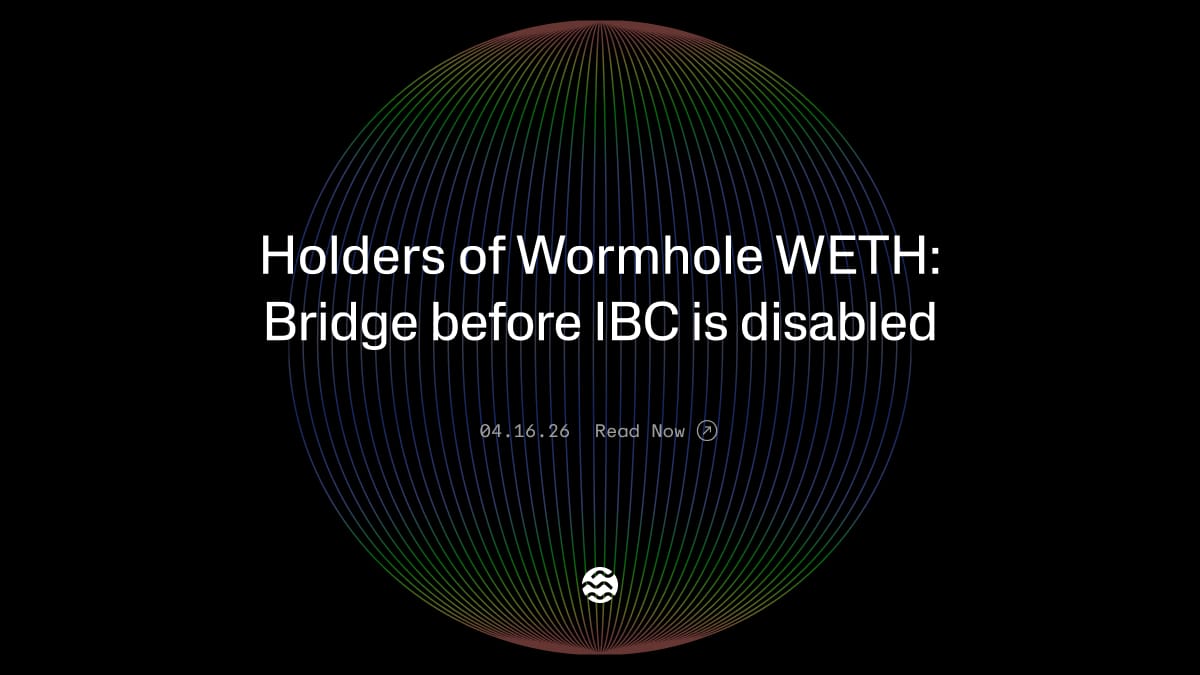 Sei to disable inbound IBC in SIP-3 EVM-only transition, warns Wormhole WETH holders to bridge out2026-04
 OneKey's Yishi on KelpDAO hack: 10-15% hacker bounty, LayerZero fund, Aave backstop — don't cut WETH depositors2026-04
 Anchorage Digital adds Lido support, giving institutional clients direct access to wstETH and Ethereum liquid staking through its regulated crypto banking platform2026-07
 Vitalik Buterin says Ethereum's "Lean Ethereum" overhaul will rival the Merge in scale, replacing nearly every core protocol component over the next 3–4 years2026-07
 Aave freezes rsETH on V3 and V4 after KelpDAO exploit drains ~$290M and saddles WETH reserve with bad debt2026-04
 LlamaRisk models $123M-$230M Aave bad debt from Kelp rsETH exploit as WETH reserves hit 100% utilization2026-04
Wrapped Ether (WETH): The ERC‑20 Backbone of Ethereum DeFi
On Ethereum, most decentralized finance activity is denominated not in native ether but in its tokenized alter ego, Wrapped Ether (WETH), an ERC‑20 token that represents ETH at a strict 1:1 ratio and allows it to be used seamlessly across smart contracts, lending protocols, NFT auctions, and cross‑chain bridges. In practice, WETH has become the standard “working format” of ether in DeFi, concentrating liquidity on venues like Aave and major automated market makers while also inheriting a distinct set of smart contract, governance, and bridge‑related risks illustrated by recent exploits and emergency freezes in the wider ecosystem.
What WETH Is (And Why It Exists)
Wrapped Ether is best understood as a technical workaround to a design quirk in the Ethereum protocol. Ether (ETH) is the native currency that pays for gas and secures the network, but it does not implement the ERC‑20 token standard that most DeFi smart contracts expect. When the first wave of decentralized exchanges, lending markets, and derivatives protocols emerged, developers realized that their code assumed interactions with ERC‑20 tokens that expose standardized functions like transfer, approve, and allowance, which native ETH does not natively provide. The result was an awkward split where ETH lived in one part of the system and ERC‑20 tokens in another, complicating composability and contract logic. WETH was introduced as a bridging construct that reshapes ETH into an ERC‑20‑compatible form without changing its economic value, effectively providing a common denominator asset that all these protocols can treat uniformly.
The core idea of WETH is straightforward: users send ETH into a smart contract that escrows the underlying asset and mints an equivalent quantity of WETH, so that the total ETH backing always matches the total WETH in circulation on a one‑for‑one basis. When a user wants to “unwrap,” they return WETH to the same contract, which burns the tokens and releases the corresponding ETH back to their address, keeping the peg intact as long as the contract behaves as intended. In Ethereum’s canonical implementation, WETH is therefore a fully collateralized representation of ETH, not a separate asset, and under normal conditions one WETH can be redeemed for one ETH at any time. In market terms, this means that WETH and ETH trade at essentially the same price, with any tiny discrepancies arbitraged away on exchanges.
It is important to distinguish between the base‑layer WETH contract on Ethereum and the various “WETH” tokens that exist on other chains. On Ethereum mainnet, the canonical WETH contract operates as a permissionless wrapper: anyone can deposit ETH and receive WETH, and anyone can reverse the process at will, with no centralized custodian controlling redemptions. On other chains such as Layer 2 networks or non‑Ethereum blockchains, tokens labeled “WETH” are usually bridged representations of ether that depend on some bridge contract or set of validators to lock ETH on one side and mint WETH on the other. Those bridged WETH tokens share the economic intention of tracking ETH’s price but sit atop an additional layer of infrastructure and risk beyond the simple wrapper semantics of the mainnet contract. Understanding that distinction is essential, especially in light of recent exploits where bridge failures and misconfigurations have impacted how ETH‑linked assets interact with WETH markets on lending protocols.
At a technical level, WETH adheres to the ERC‑20 specification, which defines a standardized interface for fungible tokens on Ethereum. This alignment gives WETH predictable behavior within smart contracts, so a DEX, a lending protocol like Aave, or an NFT marketplace like OpenSea can treat it exactly like any other ERC‑20 token without writing special logic for native ETH. WETH can be approved for spending by contracts, transferred between addresses using standard token methods, and incorporated into pools and vaults that expect ERC‑20 tokens. Native ETH remains indispensable for paying gas fees, and users must always retain some ETH in its unwrapped form for transactions; however, for most DeFi interactions, WETH is the asset that moves through contract pipelines.

Whitehat rescue recovers 23,155 NFTs after Payment Processor exploit; 660 WETH lost
How Wrapping and Unwrapping ETH Works
The mechanics of WETH revolve around a simple but carefully audited smart contract. To wrap ETH, a user sends ether to the contract’s deposit function, which increases their WETH balance by the same amount and holds the ETH on‑chain. Because the contract is public and its code is visible, anyone can verify that the total ETH escrowed matches the total WETH supply, reinforcing confidence that the wrapper is fully collateralized. When unwrapping, the user calls a withdraw function, specifying the amount of WETH to redeem; the contract burns that WETH and sends the corresponding ETH back to the user’s address, reducing both the WETH supply and the ETH held in escrow. The economics are therefore transparent: every WETH is backed by exactly one ETH, and the contract enforces the peg through mint‑and‑burn operations that maintain this equality.
Wrapping and unwrapping are not free, however, because they require transactions that consume gas. Users must pay transaction fees in ETH to interact with the WETH contract, which introduces a small cost to converting between forms. Under typical 2026 gas conditions, these operations cost a few thousand units of gas, which at prevailing fee levels corresponds to less than a cent per conversion, although costs can spike during periods of network congestion. This friction is small enough that many traders and protocols treat the conversion as effectively costless, but on high‑frequency strategies or for very small balances, repeated wrapping and unwrapping can erode returns, incentivizing users to keep a working balance of WETH for DeFi interactions while holding the rest of their portfolio in ETH or other assets.
From a custody perspective, the canonical WETH contract on Ethereum operates without a trusted third party: its behavior is determined entirely by immutable code, and there is no centralized entity that can arbitrarily mint WETH or seize ETH locked in the contract as long as the contract does not contain hidden upgrade hooks. This is a key distinction from some other wrapped assets such as WBTC, where a consortium of custodians controls the Bitcoin held in reserve and must approve redemptions. In the WETH case, the primary trust assumption is that the contract’s code is secure and free of vulnerabilities—an assumption bolstered by years of production usage, but not one that can be proven absolutely given the history of smart contract bugs across the ecosystem. Nevertheless, WETH’s relative simplicity, permissionless minting and burning, and long track record have made it widely regarded as one of the lower‑risk smart contract wrappers within the Ethereum universe.
Users should also be aware of how WETH interacts with wallet interfaces and token allowances. Because WETH is an ERC‑20 token, wallets such as MetaMask or hardware devices display it under the “tokens” section, separate from the native ETH balance, and users often need to add the token contract address to see their WETH holdings. When interacting with DEXs, auction contracts, or lending protocols, users typically grant those contracts an allowance to move their WETH using the ERC‑20 approve function, sometimes for large or even unlimited amounts. These approvals are a convenience but also a vector for loss if a contract or integration is exploited, as illustrated by incidents where compromised or mis‑configured bots were able to drain WETH from user wallets that had granted overly broad approvals. Understanding how allowances work, and periodically reviewing and revoking them, is therefore a critical operational practice for WETH holders.
Readers click WETH stories not for the wrapper mechanics but for the contagion moment — the instant when WETH's deep liquidity makes it either the hacker's exit ramp or the reserve that absorbs a protocol-wide bad-debt shock.
WETH’s Role in Ethereum DeFi
The reason WETH matters is not just technical neatness; it is the connective tissue that lets ether function seamlessly across the entire DeFi stack. Most decentralized finance applications on Ethereum are built around ERC‑20 tokens. When you trade on an automated market maker like Curve, supply liquidity, post collateral on Aave, or mint synthetic dollars, the contracts assume they are talking to ERC‑20 assets that adhere to standardized transfer and approval semantics. WETH allows ETH to participate in this ecosystem on equal terms with stablecoins, governance tokens, and derivatives, which in turn concentrates liquidity and makes ether a more versatile capital asset.
On decentralized exchanges, WETH is often the primary quote asset in trading pairs. Instead of listing markets directly against native ETH, many AMMs and order book DEXs use WETH pools—pairs such as WETH/USDC, WETH/DAI, or WETH/crvUSD—that allow traders to swap between ether exposure and stablecoins or other tokens using standard ERC‑20 logic. The canonical Curve interface, for example, surfaces pools where wrapped ETH liquidity anchors multi‑asset configurations, even if the underlying AMM smart contracts abstract away the exact token standard from end users. Because WETH is ERC‑20, these pools can tap into common infrastructure for routing trades, concentrating liquidity, and integrating with aggregators, which would be more complex if they had to handle ETH via its native transfer semantics separately.
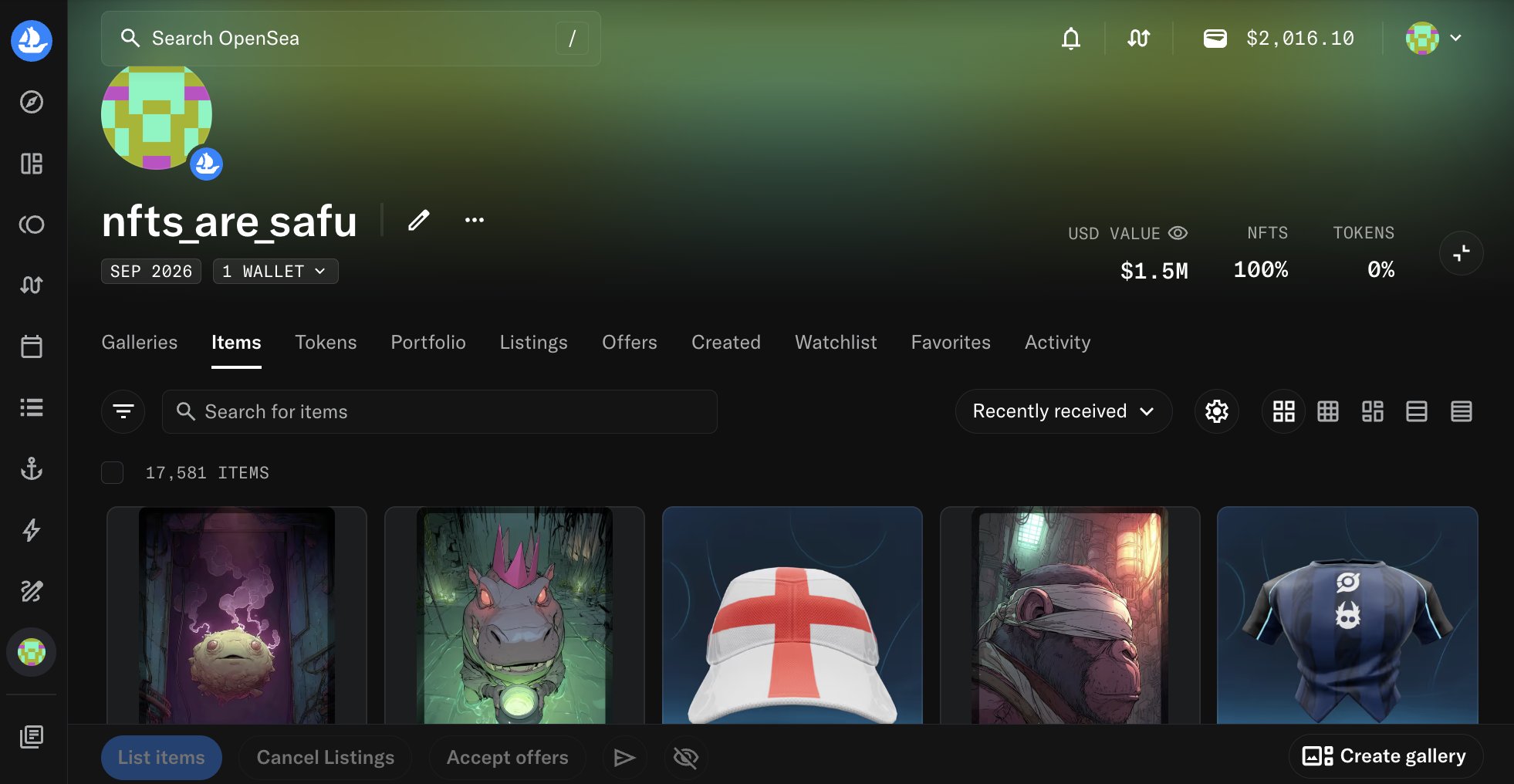
In NFT markets, WETH has become the default bidding currency for many marketplaces. OpenSea, for instance, uses WETH for offers and auction‑style listings because ERC‑20 tokens support pre‑authorized transfers and approvals: a buyer can sign an order that allows the marketplace contract to settle the purchase later without having to be online at the moment the seller accepts. Native ETH, by contrast, requires the buyer to actively send a transaction at the time of purchase, making it ill‑suited for off‑chain order books and time‑limited auctions. WETH solves this by letting users deposit ETH once, receive WETH, and then place a series of bids that can be executed automatically when conditions are met, with the marketplace contract moving WETH from buyer to seller under the terms of the signed orders. This functionality underpins a wide range of NFT auctions, including media‑related sales such as SQUID Pass auctions that denominate bids in WETH to tap into the existing DeFi and NFT liquidity base.
In lending and borrowing, WETH is a cornerstone asset on protocols like Aave. On Aave V3’s Ethereum market, WETH is listed as both a collateral and borrowable asset, and its liquidity drives a large share of the protocol’s activity. Users deposit WETH to earn interest and receive aTokens representing their claim, while others borrow WETH against collateral such as stablecoins, liquid staking tokens, or synthetic assets to implement leverage strategies or directional bets. Because WETH is fungible and ERC‑20‑based, it integrates smoothly with margin trading platforms, structured products, and yield aggregators that build on top of Aave positions, enabling complex strategies like looping (borrowing WETH against ETH‑linked collateral and re‑supplying it to amplify exposure). This deep integration also means that shocks to ETH‑linked collateral can transmit rapidly into WETH markets, as demonstrated by the rsETH exploit in 2026.
The Ethereum Foundation’s DeFi materials explicitly highlight WETH as the standard wrapper used by applications that need an ERC‑20 representation of ETH. In practice, almost every major DeFi primitive—from permissionless lending markets to perpetual futures and options—offers some form of WETH market or relies on WETH as part of their collateral and risk engine. The asset’s ubiquity has made it the unit of account for many on‑chain strategies: vaults might advertise yields in WETH terms, DAOs might hold WETH balances in treasury to hedge exposure, and protocols might denominate insurance funds or safety modules in WETH to align with the broader Ethereum economy. Taken together, this centrality makes WETH both a powerful source of liquidity and a critical point of systemic risk in the Ethereum DeFi graph.
Market Structure and Aave’s WETH Ecosystem
WETH is not merely a technical convenience; it is a large, actively traded asset in its own right. On Ethereum mainnet, millions of addresses hold WETH, reflecting its adoption across DeFi users, NFT traders, and protocol treasuries. Market cap figures fluctuate with ETH’s price, but blockchain explorers report billions of dollars worth of WETH in circulation, underscoring that a significant fraction of all ether supply spends part of its life wrapped inside the canonical contract. On centralized exchanges, some platforms list WETH spot and derivatives markets directly, although in many cases wrapped and unwrapped ether are treated interchangeably for settlement and trading purposes.
The most important locus of WETH activity in DeFi is arguably Aave V3’s lending markets. Aave integrates WETH as a core asset, allowing users to deposit it as collateral, borrow against it, and use it in leverage loops with other ETH‑linked tokens such as wstETH or weETH. Galaxy’s research on Aave V3’s leverage dynamics highlights how positions often involve posting liquid staking tokens as collateral and borrowing WETH or staked ETH derivatives to amplify exposure, creating tightly coupled risk profiles between WETH markets and the broader ETH‑centric yield ecosystem. When sentiment is bullish and collateral retains value, these loops generate high on‑chain leverage; when confidence is shaken, WETH borrowing demand can spike, utilization can approach 100%, and the protocol’s interest rate curves can ratchet up sharply to incentivize repayments and new deposits.
The 2026 rsETH exploit involving KelpDAO and LayerZero provided a live stress test of this structure. In April of that year, a vulnerability in Kelp’s LayerZero‑based rsETH bridge allowed an attacker to forge a cross‑chain message that released 116,500 rsETH on Ethereum mainnet without any corresponding deposit on the source chain. The attacker quickly supplied tens of thousands of this unbacked rsETH as collateral on Aave V3’s Ethereum Core market and borrowed roughly fifty thousand units of WETH and wstETH against it, draining real, fully backed assets from the protocol using what was essentially counterfeit collateral. Follow‑on actions sent rsETH to other chains and opened positions there, turning what began as a bridge exploit into a multi‑chain DeFi incident that reverberated across lending markets.
Aave’s governance and risk framework responded by freezing rsETH and its wrapped variant across all V3 deployments, setting loan‑to‑value (LTV) to zero for those assets so that no new borrowing could occur while allowing repayments and liquidations to proceed. Critically, WETH markets were also affected: on Ethereum Core, WETH reserves hit full utilization as deposits were drained by the attacker’s borrowing, prompting Aave’s multisig guardian to temporarily freeze new WETH supplies and borrowing to stabilize the system. Over the following days, as KelpDAO, LayerZero, and other stakeholders worked on recovery plans and unwound exploit‑linked positions, Aave gradually unfroze WETH reserves and later restored WETH LTVs to pre‑incident levels across multiple networks once more than 95% of the unauthorized rsETH issuance had been recovered or neutralized. The episode underscored that while WETH itself remained sound—the canonical wrapper was never compromised—its markets can still be heavily impacted by exogenous shocks to collateral assets, especially when these shocks originate from bridges and liquid staking tokens that interact tightly with WETH borrow demand.
This dynamic has broader implications for how WETH risk should be assessed. From a narrow perspective, WETH on mainnet inherits only the risk of the wrapper contract and Ethereum itself. From a systemic lens, however, the asset sits at the center of leverage chains that incorporate cross‑chain bridges, complex derivatives, and various synthetic dollar instruments. A volatility spike or exploit in a seemingly unrelated asset—such as rsETH or other staking derivatives—can propagate into WETH lending markets via collateral‑borrow loops, affecting interest rates, availability of liquidity, and potentially triggering liquidations for WETH‑denominated positions. Institutional allocators entering DeFi via curated WETH strategies, such as those being developed by specialized managers that package WETH lending into vault products, increasingly recognize that understanding this interdependency is as important as analyzing the wrapper contract itself.
- 01WETH as exploit exit liquidity↗
The Entangle hack — where 13 billion minted tokens were immediately dumped for WETH — crystallised readers' awareness that WETH's deep liquidity is the universal off-ramp for every DeFi attack.
- 02KelpDAO rsETH crisis, Aave WETH reserves↗
Multiple high-click headlines traced the April 2026 rsETH bridge exploit directly to 100% utilisation of Aave's WETH reserve and the subsequent bad-debt debate, showing readers follow systemic contagion chains end-to-end.
- 03Aave governance optimising WETH yield↗
Proposals to convert idle WETH to stETH, the Merit airdrop rewarding WETH borrowers, and the unfreezing sequence all drew clicks because they show how the DAO actively manages WETH as a productive reserve asset rather than passive collateral.
- 04WETH collateral expansion in stablecoins↗
The crvUSD WETH cap proposal and Yield Basis IL-free pools attracted readers interested in whether WETH can anchor new stablecoin collateral regimes without introducing LST counterparty risk.
- 05LST vs WETH treasury reallocation
Origin DAO's decision to swap rETH back to WETH due to disappointing returns — and Frax's push to replace WETH on Curve — framed WETH as the benchmark that liquid-staking tokens must beat, not simply replace.
- 06Smart-contract integration bugs around WETH
Conic Finance's reentrancy failure — caused by assuming a registry would return ETH rather than WETH — resonated as a cautionary tale about address-type assumptions silently disabling security invariants.
Wrapped Tokens, Bridges, and Cross‑Chain WETH
Wrapped Ether belongs to a broader family of wrapped tokens, which are synthetic representations of assets that exist in another format or on another blockchain. Wrapped tokens are typically created through a “lock‑and‑mint” mechanism: the original asset is locked in a custody contract on the source chain, and a corresponding token is minted on the destination chain at a 1:1 ratio. To redeem, the wrapped token is burned on the destination chain, and the original asset is released from custody on the source chain. WBTC is a canonical example, turning Bitcoin into an ERC‑20 token so BTC holders can participate in Ethereum DeFi, while wstETH wraps a rebasing staked‑ETH token into a non‑rebasing ERC‑20 format more suitable for certain DeFi integrations. In each case, the wrapped token tracks the price of the underlying but is subject to additional smart contract and custodial trust assumptions.
Cross‑chain WETH works similarly when ether is moved across bridges to other chains. When bridging WETH or ETH to a different network, a bridge contract on Ethereum typically locks the original asset and issues a synthetic WETH representation on the destination, with the supply of wrapped tokens on the new chain equal to the amount locked in the bridge’s reserves. The bridge is the mechanism; the wrapped token is the result. Some bridges maintain mapping between canonical WETH on Ethereum and local WETH tokens on Layer 2s, while others issue their own wrapped representations (often tagged with suffixes like “.e” to signal bridged status, as with USDC.e). Regardless of naming conventions, the key is that off‑Ethereum WETH almost always depends on some bridge infrastructure, which in turn becomes a critical security and depeg risk.
Bridge‑related risk comes in two main flavors. First is exploit risk, where a vulnerability in the bridge contracts, validator set, or message‑passing layer allows an attacker to drain the reserves backing the wrapped tokens or to mint unbacked synthetic tokens. The KelpDAO rsETH exploit was an example of the latter: a forged message led to the release of rsETH on Ethereum without any underlying ETH being deposited. In a more extreme scenario, an attacker could compromise a bridge that holds ETH or WETH reserves and steal those assets, leaving the bridged version on another chain suddenly unbacked. Second is depeg and redemption risk, where even without an outright exploit, the bridge pauses redemptions, changes governance, or loses market confidence, causing the wrapped token’s price to diverge from the underlying asset as users demand a higher risk premium or anticipate losses. This depeg risk is particularly acute when bridges halt withdrawals during stress events or when it becomes unclear whether reserves are sufficient and fully backed.
These risks are different in nature from the market risk of the underlying asset itself. ETH can be volatile, but WETH on Ethereum is designed to track it perfectly as long as the wrapper contract functions. Wrapped tokens like bridged WETH or WBTC, by contrast, layer on custodial, operational, and governance risk: they may depend on multisig wallets, DAOs, or validator quorums, any of which may fail or be compromised. For investors and protocols that accept wrapped assets as collateral—in Aave’s case, rsETH and related staking derivatives used as collateral to borrow WETH—the distinction is crucial. As the rsETH incident showed, an exploit or misconfiguration in the bridge layer can undermine the integrity of collateral without affecting the price of ETH itself, yet the damage can still be realized in WETH markets when exploited collateral is used to borrow real WETH.
From a user perspective, this framework suggests a practical hierarchy of risk. Holding ETH in a self‑custodial wallet primarily exposes you to Ethereum‑level risks. Holding canonical WETH on Ethereum adds the wrapper contract’s smart contract risk but avoids custodial or bridge risk, since the contract itself escrows ETH and redemption is deterministic. Holding bridged WETH on another chain adds bridge risk on top: your claim depends on the bridge’s ability and willingness to honor redemptions and on the security of its reserves. For sophisticated strategies that span multiple chains—such as using bridged WETH in lending protocols on alternative L1s or L2s—managing these layered risks requires careful due diligence on bridge design, governance, and historical performance, as well as monitoring for announcements such as chain migrations or the deprecation of certain routes that could strand wrapped tokens if users fail to bridge out in time.
Security, Exploits, and WETH‑Linked Risk Events
Although the canonical WETH wrapper has not been the direct subject of major exploits, WETH figures prominently in many DeFi incidents—either as the asset being stolen from pools and wallets or as the primary token borrowed against compromised collateral. One reason is simply that WETH is ubiquitous: it is the most natural asset to steal or borrow when an attacker wants liquid, widely accepted “money” on Ethereum. Another is that many DeFi protocols treat WETH as a core reserve asset, so draining WETH from a pool often maximizes the attacker’s immediate payoff.
The Token of Power (TOP) Balancer pool exploit illustrates how WETH can be an attractive target in governance‑driven attacks. In that incident, a Balancer V1 pool pairing TOP with WETH was drained of roughly 944 WETH, worth around $1.6 million at the time, through what on‑chain security firms described as a governance‑takeover‑style exploit. The attacker maneuvered through the project’s governance process to push through malicious configuration changes, then used those changes to extract the pool’s WETH liquidity before moving the funds through privacy tools such as Tornado Cash. Importantly, neither WETH nor Balancer’s core protocol code was compromised at the wrapper level; rather, the exploit exploited project‑specific governance settings and pool parameters. Nonetheless, WETH depositors in that pool suffered real losses, highlighting that even when the underlying token is sound, protocol‑level risks can imperil WETH capital.
User‑side integrations can also pose significant threats. In May 2026, for example, a sniper bot incident related to clanker auctions led to the draining of approximately 26 WETH from 41 sniper wallets in a matter of seconds. According to project communications, the attack exploited how a third‑party sniper bot interacted with the clanker v4 contract mechanics, rather than a flaw in the clanker token or core contracts themselves. Users who had granted WETH approvals to the bot were particularly exposed, as those approvals allowed the attacker to move WETH out of their wallets once the integration was compromised. The takeaway is that WETH’s ERC‑20 allowance model, while flexible, can amplify the blast radius of compromised tools: a misbehaving bot or contract can abuse generous approvals to drain WETH balances, even if the canonical WETH contract remains uncompromised.
At the protocol level, WETH often surfaces in the context of bad debt and emergency governance responses. In the aftermath of the rsETH exploit, modeling by risk analysis groups estimated that Aave could face between roughly \$123 million and \$230 million in potential bad debt related to positions where unbacked rsETH had been used as collateral to borrow WETH and related assets. To protect remaining WETH depositors, Aave’s guardians temporarily froze WETH markets on certain deployments, halting new supplies and borrowing while leaving repayment and liquidation flows intact. This was a drastic but necessary step to prevent further draining of WETH reserves and to buy time for recovery negotiations and exploit unwinds. As those efforts progressed and a large majority of the unbacked rsETH was either recovered or neutralized, Aave governance gradually restored WETH borrowing limits and loan‑to‑value ratios across affected markets, emphasizing that the incident was external to Aave’s smart contracts and originated entirely in the rsETH bridging infrastructure.
These episodes underscore a broader point about WETH’s security model. At the wrapper level, WETH is governed by straightforward code and has performed robustly over years. But in the real DeFi environment, WETH is embedded in a mesh of governance decisions, off‑chain tooling, composable smart contracts, and cross‑chain protocols. Vulnerabilities and misconfigurations anywhere in that mesh can translate into WETH losses, either by draining WETH from pools and wallets or by using compromised collateral to borrow WETH from lending markets. Users and protocols must therefore think beyond the token contract and evaluate the security posture of the entire stack through which their WETH passes: DEX pools, vaults, bots, bridges, and governance processes all become part of WETH’s effective risk surface.
WETH9 contract deployed on Ethereum mainnet
- 2023-07exploit
Conic Finance reentrancy exploit — WETH address assumption disabled ETH omnipool protection
crvUSD launches WBTC/WETH leveraged markets at 7.5% interest
Entangle hack: 13B tokens minted and swapped for WETH, price collapses to near zero
Aave Merit program launches, distributing 280 WETH to WETH borrowers in first round
KelpDAO rsETH bridge exploit drains ~$290M, Aave WETH reserve hits 100% utilisation
Aave governance proposes rsETH incident funding update; WETH reserves partially unfrozen
Aave restores WETH borrowing power across six V3 markets after rsETH recovery steps
WETH in Trading, Yield, and Treasuries
Because WETH is fungible, composable, and deeply liquid, it occupies a central role in both retail and institutional DeFi strategies. On AMMs, traders use WETH pairs to shift between ETH exposure and stablecoins, governance tokens, or more exotic instruments, often routing trades through WETH as an intermediate asset even when neither leg of the desired trade is ETH itself. For example, a user wishing to move from a Bitcoin‑linked token into a dollar‑pegged stablecoin might execute a BTC/WETH swap followed by a WETH/stablecoin swap, with aggregators stitching together the optimal route based on pool depths and fees. This pattern consolidates liquidity and makes WETH a de facto routing asset, analogous to how USD functions as a quote currency in many traditional FX markets.
Stablecoins and WETH often appear together in liquidity pools and structured products. Pools pairing WETH with stablecoins like USDC, DAI, or algorithmic dollars such as crvUSD allow liquidity providers to earn trading fees while maintaining a mix of volatile and stable exposure, with AMM curves designed to absorb volatility and maintain relatively tight pricing. More sophisticated products, including vaults that farm trading fees, lending interest, and liquidity incentives, frequently use WETH as one leg of their strategy. Governance communications from various yield platforms reference WETH lending vaults with mid‑single‑digit yields and combined ETH & BTC strategies where users can subscribe WETH or WBTC to earn protocol‑specific rewards, indicating that WETH remains a core building block around which curated institutional products are being assembled. These strategies depend on the continuity of WETH markets on protocols like Aave and on the stability of the broader DeFi ecosystem in which WETH circulates.
Treasury management is another important domain. DAOs, DeFi projects, and on‑chain investment funds often hold significant WETH reserves in their treasuries, both as a liquid reserve asset and as a way to align with Ethereum’s economic growth. Project treasuries may convert protocol revenue or token sale proceeds into WETH to reduce exposure to their own volatile governance tokens, then deploy that WETH into low‑risk strategies such as lending on Aave or providing liquidity to blue‑chip pools. Institutional platforms like RockawayX, which focus on assembling diversified DeFi portfolios for larger allocators, highlight WETH‑denominated vaults and strategies as part of a broader thesis that DeFi vaults and liquidity products are evolving into a next‑generation financial layer. In this context, WETH serves as a “cash equivalent” in the on‑chain world: liquid, widely accepted, and deeply integrated into core financial primitives.
Media and community projects also make use of WETH’s auction‑friendly properties. Because WETH supports pre‑authorized transfers, it is well suited to on‑chain auctions where bidders may not be online at settlement time. NFT sales, passes for media outlets, and community access tokens are frequently denominated in WETH, with auctions accepting bids from participants who approve a marketplace or auction contract to move their WETH if and when their bid wins. SQUID Pass auctions, for example, have used WETH as the bidding currency, with bids expressed in fractions of WETH and executed via NFT marketplaces that understand WETH’s ERC‑20 semantics. This pattern sits alongside more speculative uses like “sniper” bots that monitor auctions and memecoin launches, where WETH approvals and high‑frequency transaction flows can become both a competitive edge and a risk vector if the infrastructure is insecure.
How WETH Compares to Other Major Assets
In the broader crypto markets, WETH stands alongside Bitcoin, stablecoins, and staking derivatives as one of the key building blocks of digital portfolios. Comparing WETH to these other assets clarifies its unique risk‑reward profile.
The contrast with Bitcoin is instructive. Bitcoin is the dominant proof‑of‑work asset and remains the largest cryptoasset by market capitalization, but it lacks smart contract capabilities comparable to Ethereum’s base layer. To use Bitcoin within Ethereum DeFi, users must rely on wrapped versions such as WBTC, which depend on centralized or federated custodians to hold the BTC and issue ERC‑20 tokens. WETH, by contrast, is native to Ethereum at the base level; its wrapper contract is permissionless, and no external entity controls the ETH locked in escrow. Economically, both BTC and ETH are volatile, but WETH’s additional smart contract risk is balanced by the absence of external custodial risk at the wrapper level. In effect, WETH is to ETH what WBTC is to BTC, but with a simpler, less trust‑heavy design because ETH already lives on the same chain as the DeFi ecosystem in which WETH circulates.
Liquid staking tokens present a more nuanced comparison. Tokens like wstETH, weETH, and rsETH represent claims on staked ETH positions, often with built‑in yield from protocol staking rewards. These tokens are usually themselves ERC‑20 compatible and can be wrapped or re‑wrapped into formats better suited to DeFi integrations, as with wstETH’s non‑rebasing wrapper, and they are heavily used as collateral to borrow WETH on lending protocols. Unlike WETH, however, their value depends on the performance of underlying validators, the staking provider’s governance, and in some cases bridging infrastructure that moves these tokens across chains. The rsETH exploit revealed that even if the mainnet staking deposits remain intact, bridge misconfigurations can generate unbacked tokens that function as counterfeit collateral in WETH markets, creating bad debt and systemic stress. WETH, by contrast, does not incorporate yield and therefore does not share validator or staking provider risk; its primary non‑market risks relate to the wrapper contract and its integration points.
Stablecoins, including native instruments like USDC and DeFi‑native designs such as crvUSD, occupy yet another niche. These assets aim to track a reference value such as the U.S. dollar and are frequently paired with WETH in liquidity pools and leveraged in strategies where users borrow WETH against stablecoin collateral or vice versa. While stablecoins introduce their own spectrum of risks—ranging from fiat backing and bank exposure to algorithmic stability mechanisms—they serve as key counterparts to WETH in DeFi portfolios. A trader might hold WETH for upside to ETH and stablecoins for capital preservation, while a yield strategy might involve supplying WETH as collateral to borrow stablecoins at a lower rate and then re‑deploying them in higher‑yielding pools. The interplay between WETH and stablecoins thus shapes how risk and liquidity are allocated across DeFi, with assets like crvUSD adding new design points to the set of tokens that interact with WETH in AMMs and lending markets.
The table below summarizes key differences between ETH, canonical WETH on Ethereum, and bridged WETH on other chains:
| Aspect | ETH (native) | WETH (Ethereum mainnet) | Bridged WETH (other chains) |
|---|---|---|---|
| Token standard | Native currency, not ERC‑20 | ERC‑20 token | ERC‑20 or chain‑specific token |
| Backing mechanism | Secured by Ethereum consensus | 1:1 backed by ETH in WETH contract | Backed by ETH or WETH locked in bridge contracts |
| Custodial trust | No external custodian | No external custodian; trust in contract code | Depends on bridge validators, multisigs, or operators |
| Primary use | Gas, base‑layer transfers | DeFi, lending, DEXs, NFT auctions | Cross‑chain DeFi and trading, chain‑local lending and DEXs |
| Main additional risks | Protocol‑level bugs, consensus attacks | Smart contract bugs in wrapper | Bridge exploits, depegs, governance failures on bridge infrastructure |
| Redemption path | Not applicable | Direct unwrap to ETH via contract | Burn bridged token to unlock ETH/WETH on source chain via bridge |
This comparison underscores that while WETH is often casually described as “just ETH in a different format,” the details matter—especially once bridging and composability with higher‑risk tokens come into play.
The canonical WETH9 contract is immutable and battle-tested, but downstream integrations repeatedly introduce critical bugs — Conic Finance's reentrancy failure stemmed from conflating ETH and WETH addresses in a registry call.
The April 2026 KelpDAO rsETH exploit drove Aave's WETH reserve to 100% utilisation and generated modelled bad-debt estimates of $123M–$230M, demonstrating that deep WETH liquidity can be exhausted rapidly under correlated LRT failures.
WETH9 on Ethereum mainnet has no owner, no admin key, and no upgrade mechanism; the contract is fully immutable, removing governance-attack and rug-pull vectors at the token layer.
Non-canonical bridged WETH on alternative chains (e.g. Sei IBC WETH, Fraxtal WETH) carries bridge-exploit and liquidity-fragmentation risk — Sei's SIP-3 forced an emergency migration notice for Wormhole WETH holders.
WETH's position as the deepest on-chain ETH-denominated liquidity pool makes it the default conversion target in large-scale exploits; the Entangle attacker minted 13 billion tokens and liquidated them into WETH, driving the source token to near zero.
Aave governance controls WETH supply caps, LTV ratios, and freeze/unfreeze cycles across multiple V3 markets; a delayed governance response to the rsETH exploit left WETH borrowing frozen across six markets for an extended period.
Conclusion
Wrapped Ether has evolved from a minor technical convenience into one of the most important assets in the Ethereum ecosystem. By translating ETH into an ERC‑20 standard token, WETH allows ether to flow through the same smart contract pipelines as stablecoins, governance tokens, and derivatives, enabling DEX trading, lending, leverage, NFT auctions, and complex vault strategies without bespoke logic for native ETH. The wrapper contract itself follows a simple escrow and mint‑and‑burn model that maintains a strict one‑to‑one backing between ETH and WETH, making it a relatively clean abstraction with well‑understood behavior and a multi‑year track record of reliable operation. As a result, WETH has become the default working form of ether in DeFi, heavily used on platforms like Aave, Curve, and OpenSea and widely held in user wallets and protocol treasuries.
At the same time, WETH’s central role exposes it to the risks of the broader system in which it operates. Protocol‑level exploits such as the Token of Power Balancer pool incident have shown how governance misconfigurations can be weaponized to drain WETH liquidity from pools, even when both the wrapper and the base protocol function as designed. User‑side integrations, including sniper bots and third‑party auction tools, have underscored how generous WETH approvals can be abused when those integrations are compromised, leading to rapid thefts of WETH from individual wallets. Most consequentially, cross‑chain and staking‑related exploits like the rsETH bridge incident have demonstrated how weaknesses in bridge and collateral token design can produce unbacked tokens that are then used to borrow real WETH, saddling lending protocols with bad debt and forcing emergency measures such as WETH market freezes and LTV resets.
For market participants—from retail users to DAOs and institutional allocators—the implication is that WETH risk cannot be evaluated in isolation. At a narrow technical level, canonical WETH on Ethereum appears robust, with clear mechanics and minimal trust assumptions beyond the contract code and Ethereum itself. But in practice, WETH is deeply entangled with bridges, liquid staking derivatives, governance tokens, and integration layers that form the real pathways through which WETH moves and accrues yield. The safety of a WETH‑denominated strategy therefore depends on the entire chain of contracts and infrastructure in which WETH is embedded: DEXs, lending protocols, vault strategies, cross‑chain bridges, and tools like bots and routers all contribute to its effective risk profile. As DeFi matures and regulators, institutions, and sophisticated users scrutinize these systems more closely, WETH’s status as a critical piece of financial plumbing will require commensurate attention to its security, governance, and systemic role.
Outlook
Looking ahead, WETH is likely to remain the dominant representation of ether within DeFi for the foreseeable future. The ERC‑20 standard is deeply entrenched, and many DeFi protocols are architected around WETH rather than native ETH, making a wholesale shift unlikely absent a major redesign of Ethereum’s base asset interface. Pathways for incremental improvement do exist, however. Smart contract templates for wrappers can continue to be audited and formally verified, and governance processes for protocols that custody significant WETH reserves can be hardened against takeover exploits and misconfigurations, reducing the incidence of pool‑level thefts like those seen on Balancer. At the risk‑management layer, the rsETH exploit has already prompted lending protocols to refine their asset listing and bridge‑risk frameworks, with more granular risk limits and faster guardian interventions aimed at insulating WETH depositors from collateral‑side failures.
The evolution of cross‑chain infrastructure will be particularly important. As bridges experiment with new security models—ranging from light‑client‑based verification to more robust validator quorums and insurance mechanisms—the quality of WETH representations on non‑Ethereum chains may improve, potentially narrowing the gap between canonical WETH and its bridged cousins. At the same time, episodes of bridge stress and chain migrations will likely continue to generate periods where holders of bridged WETH must make timely decisions about whether to redeem or relocate their assets to avoid being stranded or exposed to depeg risk. Education around these dynamics, and clearer labeling of native versus bridged WETH in wallets and interfaces, can help users understand what kind of WETH they are holding and what risks they are assuming.
Finally, as institutions deepen their involvement in DeFi, WETH‑denominated products are poised to become a standard component of on‑chain portfolios, sitting alongside Bitcoin exposure, staking derivatives, and stablecoin‑based yield strategies. That institutionalization will likely increase scrutiny of WETH’s integration points, pushing protocols toward stronger security practices and more conservative risk management while also reinforcing WETH’s status as DeFi’s primary base asset. In that sense, WETH is both a beneficiary and a bellwether of Ethereum’s financialization: its continued health and ubiquity will signal the resilience of the broader DeFi stack, while any future stress in WETH markets will remain a leading indicator of structural weaknesses elsewhere in the system.
Latest WETH news
Sources
20 records from 16 domains
ethereum.org
changelly.com
weforum.org
app.aave.com
galaxy.com
coinmarketcap.com
ibm.com
whale-alert.io
x.com
ourcryptotalk.com
thedefiant.io
governance.aave.com
opensea.io
etherscan.io
eco.com
curve.finance
Community notes
Spot something off or out of date? Drop a note. Editors review topic notes daily and roll accepted fixes into the explainer — contributors are recognized in the monthly $SQUID drop.
Loading notes…
Help improve this topic
Have a story or tip about this topic? Submit it. See something missing? Leave a note. Editors review daily; accepted submissions and fixes count toward the monthly $SQUID drop.