
In crypto, a “rug” is a rug pull: insiders exploiting control over liquidity, token supply or governance to abandon a project and trap investors. This explainer unpacks mechanics, case studies, red flags, law and emerging anti‑rug designs.
+30 sources across the wider coverage universe
 Authorities freeze $41M in crypto tied to $150M BG Wealth Sharing Ponzi, as Binance, Tether, and OKX help track and halt laundering linked to alleged rug pull2026-05
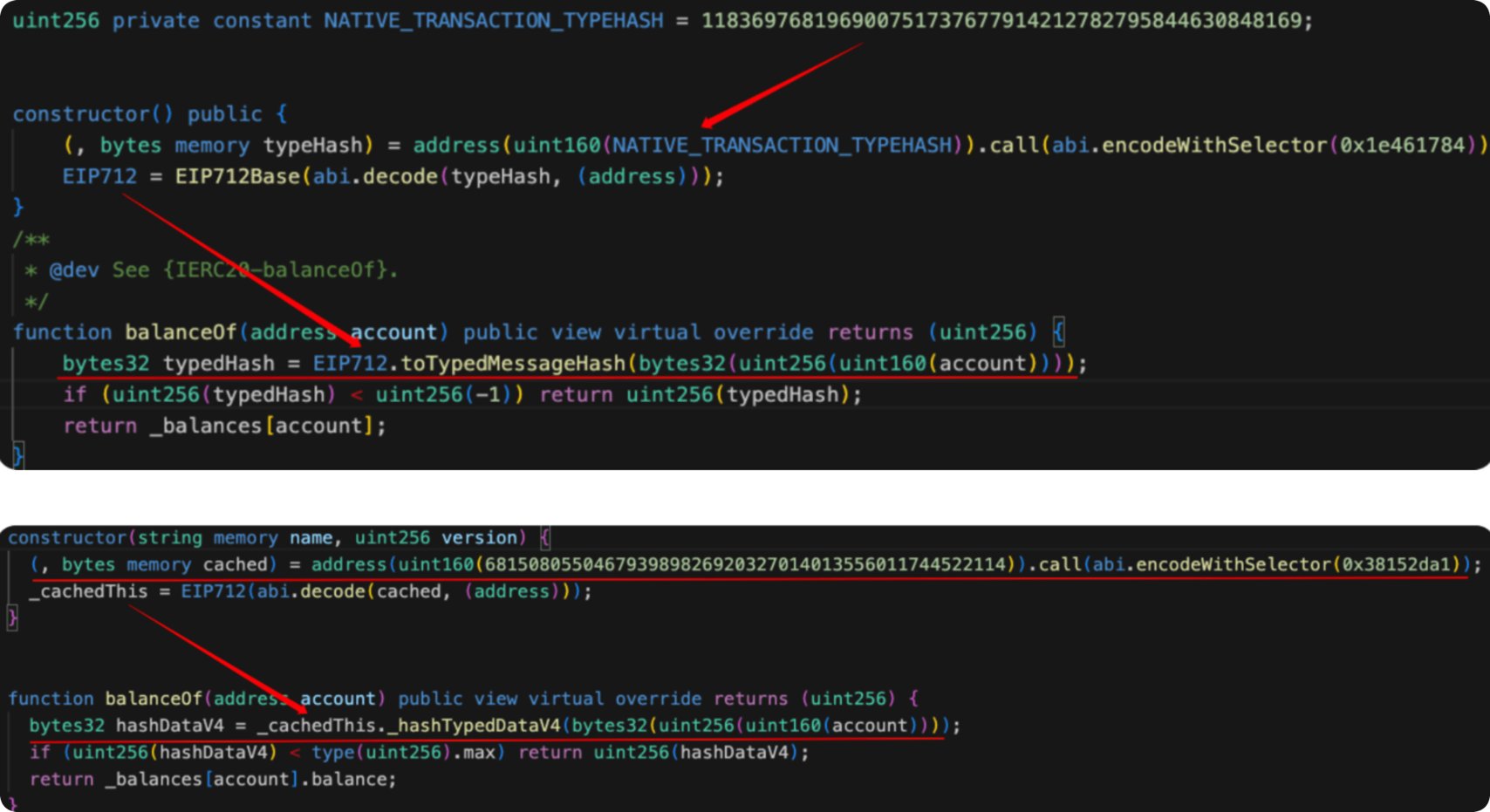 Corezcat and GameStopfun rug pulls drain $93K through external balanceOf logic2026-07
 South Korea indicts CATFI crew in first DEX rug pull arrest case after $260K profit, $600K losses2026-05
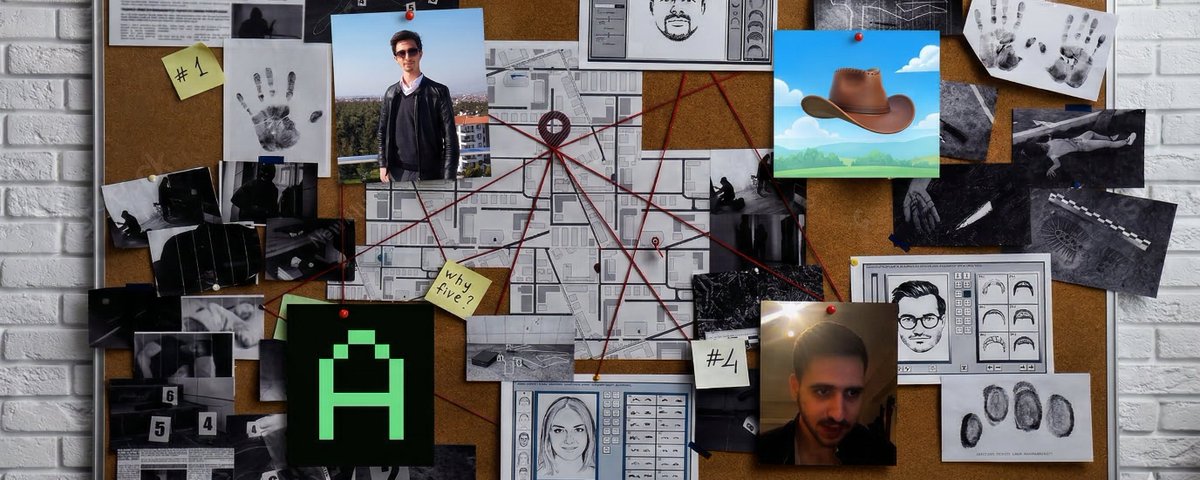 Analyst expose alleged Turkey-based crypto scam group behind multiple rug pulls across Solana, Base and Avax, linking identities and upcoming projects2026-03
 White House blasts Coinbase’s last‑minute exit from Trump’s CLARITY Act talks as a “rug pull” on both the administration and the wider crypto industry, after the exchange abruptly withdrew support over DeFi, tokenized‑equity, privacy and stablecoin‑yield provisions that also forced a Senate Banking markup delay.2026-01
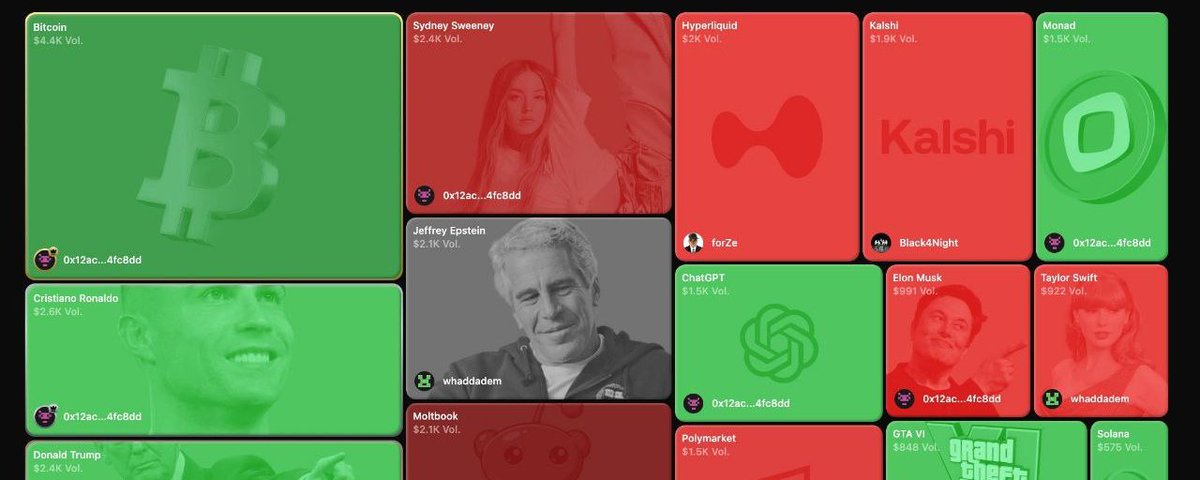 Memecoins proved attention has value, but structured AttentionFi platforms now offer cleaner price discovery without insider dumps or rug risk.2026-02
Rugs in Crypto: What “Getting Rugged” Really Means
In crypto slang, a rug is shorthand for a rug pull: a scenario where the people controlling a project suddenly withdraw liquidity, mint or dump tokens, or otherwise abandon the protocol so that investors are left holding assets that have effectively collapsed to zero. At its core, “getting rugged” describes a specific kind of betrayal of trust, where technical control over smart contracts, liquidity pools, or token supply is weaponized against users, but the term has since expanded to cover a wide spectrum of scams, governance failures, and even non‑crypto reversals that feel like a sudden floor dropping out.
From “Rug Pull” to Just “Rug”: How the Term Evolved
The phrase “rug pull” entered crypto vocabulary during the early boom of decentralized finance, when anonymous teams could fork a protocol, spin up a token, seed a liquidity pool, and attract deposits in a matter of hours. The metaphor is straightforward: just as pulling a rug from under someone’s feet causes them to fall, a rug pull removes the economic support under a token or protocol, typically by draining liquidity or misappropriating funds. CoinMarketCap and other industry glossaries now define a rug pull as a malicious maneuver where developers abandon a project and abscond with investor funds, usually after a period of aggressive promotion. That definition captures the basic mechanics, but the way traders use “rug” in conversation has widened considerably.
On social platforms, the noun “rug” and the verb “to rug” now describe not only outright theft, but also any abrupt reversal where insiders profit and ordinary users are left with losses. Influencers speak of “soft rugs” when teams do not technically steal funds but slow‑walk development, quietly dump vested tokens, or let a project decay after raising capital. Traders might say they were “rugged by the market” after a violent liquidation cascade, even when no criminal intent is involved. In this broader usage, “rug” expresses a feeling: that expectations of fair play or good faith were yanked away without warning. It is a cultural shorthand for asymmetry of information and power.
The term has also migrated outside of token launches. When a centralized lending platform halts withdrawals, users will often describe it as being rugged, because the promised access to their own assets suddenly vanishes. When a major exchange delists a popular token with little notice, traders may reach for the same vocabulary. Even in politics, officials now talk about negotiators “rug pulling” when they abruptly reverse their position; for example, U.S. political coverage has described a large exchange’s late withdrawal from regulatory talks as a “rug pull” on policymakers and the broader industry, highlighting how deeply crypto’s metaphors have seeped into mainstream discourse. The word captures a pattern that extends beyond the blockchain: promises made, liquidity or access withdrawn, and one side left scrambling.
While the colloquial use of “rug” is broad, the narrower technical and legal concept remains more specific. Sumsub, a compliance firm that tracks fraud, defines a crypto rug pull as an insider‑driven exit scam where project operators create conditions to attract users and liquidity, then remove the value that made the tokens tradable, such as draining liquidity from a pool or exploiting administrative privileges in the smart contract. Academic work similarly frames rug pulls as a form of investment fraud: projects where developers exit without delivering the promised functionality and leave investors “in the wind.” This narrower definition is increasingly important in legal contexts, where prosecutors must distinguish between bad luck, sloppy engineering, and deliberate misappropriation.

Magic Eden accused of “slow rug” as $ME rewards, governance and products changed after users locked tokens for years, while the platform pivoted toward Dicey

How Crypto Rug Pulls Work in Practice
Although every scam has its own twist, most crypto rugs fall into a few recognizable patterns. One of the most common is the liquidity rug on an automated market maker. Here, insiders deploy a new token, pair it against a base asset such as ETH, SOL, or USDC in a liquidity pool, and promote the token heavily so that retail traders buy in and deepen the pool. As trading volume increases, the pool holds more of the base asset and fewer cheap meme tokens, raising the token price and making the pool itself an attractive honeypot. At a chosen moment—often timed with a marketing peak—the deployer removes all or most of the liquidity, receiving the valuable base asset while leaving buyers with tokens that can no longer be sold at any meaningful price. Because anyone can create pools without permission on decentralized exchanges, there is no gatekeeper to vet the token’s integrity.
This basic pattern has appeared in countless permutations. In some cases, developers publicly lock the liquidity or renounce ownership of the contract, but keep control over a critical backdoor such as a proxy upgrade or fee parameter that allows them to relocate value later. In others, insiders distribute large allocations of tokens across multiple wallets and synchronize their sales at the moment of maximum liquidity, creating what feels like a liquidity rug even if they technically do not withdraw the pool itself. On Solana, some recent schemes have relied on adding only the project token to the liquidity pool with no stablecoin or base asset, allowing insiders to profit by strategically adding and then removing the counterasset in ways that mimic the mechanics of past rug pulls such as the widely discussed LIBRA case.
Another major category is the minting rug, where developers abuse their control over token supply rather than the liquidity pool. In a typical scenario, the token contract includes a hidden or downplayed function that allows the owner to mint an unlimited number of coins or to change critical parameters such as transfer fees. At first, the project team may advertise a strict maximum supply, complete with burn events and deflationary branding. Once enough users have bought in, the team unexpectedly mints vast quantities of new tokens to their own wallets and sells them into the market, or raises transfer taxes to confiscatory levels and routes the fees to themselves. The sudden flood of supply crashes the price, leaving earlier buyers with massive losses. Because the minting function is technically “just code” and may be authorized by the token’s governance structure, teams sometimes attempt to frame such actions as within their rights, even when they contradict public marketing about fixed caps and long‑term incentives.
The Rowan Energy case illustrates how sophisticated minting rugs can be cloaked in an appealing narrative. Rowan pitched itself as a green crypto project, promising carbon‑neutral mining, clean‑energy rewards, and sustainable profits for environmentally conscious investors. Behind that story, however, investigators later alleged that founder David Duckworth controlled hidden mint functions and fake supply caps, allowing him to generate new tokens at will while presenting an illusion of scarcity. Over roughly five years, the project used that control, along with aggressive marketing and gaslighting of skeptics, to drain an estimated one hundred thirty two million dollars from investors before the scheme unraveled. This case underscores that the mechanics of a rug pull can be deeply technical, even when the front‑end message focuses on ideals like sustainability and social good.
A third pattern involves social and governance rugs, where the betrayal is less about smart‑contract backdoors and more about asymmetric control over treasuries, branding, or community assets. In decentralized autonomous organizations, multi‑sig signers may wield the practical ability to move treasury funds or change protocol parameters. Commentators have noted that governance which amounts to “thoughts and prayers that multi‑sig signers will not rug” is not truly decentralized governance at all, but rather a trust arrangement with a thin on‑chain wrapper. When those signers vote themselves large compensation, redirect funds to personal projects, or quietly abandon the roadmap after raising capital, community members often describe the outcome as a rug, even if it does not meet the narrow legal definition of fraud.
Influencer‑driven rugs sit at the intersection of social and technical mechanisms. In the Solana ecosystem, for example, a number of celebrity or creator‑branded tokens launched on platforms like Pump.fun have been accused of rugging shortly after viral promotion drove in retail buyers. In one recent case, a content creator behind the $YSKA token faced intense backlash and accusations of rug pulling on social media; she publicly denied ever selling tokens, pledged to donate most of her creator rewards to charity, and promised buybacks with the remainder, illustrating how contested and reputational the label “rug” can be. Conversely, on Ethereum and other chains, researchers have documented networks of anonymous or AI‑generated influencer accounts coordinating to promote low‑float tokens and then disappearing after insiders exit, blurring the lines between marketing campaign and premeditated rug.
To appreciate how pervasive these patterns have become, it is helpful to look at empirical work. A 2023 academic study investigated thousands of cryptocurrency projects and found that rug pulls—defined as developer exits before delivering promised functionality—were not isolated incidents but a structurally significant form of fraud in the ecosystem. The paper emphasized that the permissionless nature of token creation, combined with low costs of forking existing code, made it economical for bad actors to spin up many disposable projects, rug quickly, and repeat. This factory‑style approach is starkly evident in more recent data from Solana’s Pump.fun platform, where a separate risk analysis by Solidus Labs reported that since early 2024 more than seven million tokens had been launched and roughly ninety eight point six percent were flagged as rug pulls or manipulative schemes, with only about ninety seven thousand maintaining more than one thousand dollars in liquidity. The sheer volume of these micro‑rugs suggests that for many operators, the “rug” is not an accident but the business model.
Readers click rug pull stories not for the mechanics but for the accountability gap: they want to know whether detectors failed, whether insiders profited, and whether anyone was ever caught — the $32M meme coin story that baffled top detectors and the Arkham bounty chasing perpetrators both outperformed straightforward exploit reports.
Rug Mechanics on Solana, Pump Platforms, and Meme‑Coin Launchpads
Nowhere is the industrialization of rugs more visible than in the Solana meme‑coin scene. Pump.fun, a permissionless launchpad that allows anyone to mint a token with minimal friction, became the epicenter of a new wave of ultra‑short‑lived meme coins. Solidus Labs’ analysis of tokens launched via Pump.fun revealed that the overwhelming majority showed patterns consistent with rug pulls or manipulative schemes, including swift liquidity removal and insider‑dominated supply distributions. Only a tiny fraction of the millions of tokens created had even modest, sustained liquidity. That does not mean every individual token is malicious, but it does illustrate that from a statistical risk perspective, entering random new launches on such platforms is akin to walking into a casino where the house edge is extreme and often adversarial.
Part of what makes Solana attractive for both legitimate builders and scammers is its low transaction cost and high throughput. Those same traits facilitate complex rug tactics that would be uneconomical on chains with higher gas fees. A widely circulated tutorial video, for instance, shows an operator explaining how to launch a meme coin on Solana using a platform that automatically indexes new tokens on discovery services such as DexScreener and Axion, ensuring immediate visibility to speculators hunting for fresh charts. The operator describes copying branding from a well‑known token, issuing around one billion units, and crucially, using a feature that allows them to change the “creator information” of the token to a large, established Solana wallet so that on‑chain explorers and dashboards make the token appear to have been created by a reputable address. By seeding a liquidity pool with only a few SOL and roughly ninety percent of the token supply, then letting the market drive demand, they can later click a “remove liquidity” button, withdraw the entire pool back to their wallet, and leave buyers with effectively worthless tokens. The method is presented as repeatable; the creator notes they have launched multiple tokens this way, with the biggest profits when initial liquidity is small but liquidity growth is strong.
This is a particularly stark example of how front‑end abstractions and UX improvements can be co‑opted by bad actors. The same launch platforms that make it easier for genuine creators to reach an audience also compress the time between token deployment and retail speculation, leaving little room for due diligence. When a project’s contract allows the deployer to swap out the apparent creator address, or when launchpads do not enforce liquidity locks, it becomes trivial to fake credibility at the metadata level while retaining complete economic control behind the scenes. The resulting tokens may show up alongside more reputable assets on dashboards, lending a veneer of legitimacy to what is essentially a pre‑packaged rug.
Beyond Solana, similar dynamics play out wherever token launch and pool creation are heavily automated. On Ethereum, for instance, some tools now allow protocols or users to permissionlessly initialize vast numbers of Uniswap pools, ostensibly to improve liquidity coverage but also opening the door for scammers to spin up thousands of look‑alike pools that can be used for phishing, fake volume, or quick rugs. The same applies to agent‑driven deployment tools in NFT and token ecosystems, such as systems that allow collections to programmatically create Raydium pools without human oversight. Whenever the overhead of launching a tradable asset falls toward zero, the marginal scam becomes cheaper relative to the potential payoff, encouraging operators to treat rugs as a volume business rather than a one‑off crime.
Influencer and celebrity involvement can amplify these risks dramatically. The rumor of an association with a famous athlete, musician, or political figure is enough to send liquidity rushing into a meme coin, even when the underlying contract and liquidity configuration are opaque or obviously dangerous. In the wake of several high‑profile scandals, analysts have documented patterns where wallets linked to insider teams or promoters accumulate large positions before public announcements, then dump into the subsequent retail frenzy. The LIBRA and YZY token sagas, which saw insiders allegedly net millions of dollars amid concerns about suspicious liquidity setups and insider allocations, illustrate how cultural cachet can be weaponized to orchestrate rugs at scale. Exchanges and infrastructure providers respond by freezing associated stablecoins or flagging addresses, but only after substantial damage is done.
Solana’s CATFI case shows how meme‑coin rugs can collide directly with law enforcement. According to South Korean prosecutors, a group led by an individual surnamed Park launched the Solana‑based CATFI token, manipulated its price on a decentralized exchange, and promoted it under a false influencer persona “Eth Father,” all while planning a rug. Authorities allege the group generated approximately four hundred million Korean won in illegal profits while causing around nine hundred million won in losses to roughly two hundred fifty six investors, marking the country’s first arrest and prosecution explicitly centered on a DEX‑based rug pull. The case demonstrates that even in the fast‑moving world of meme coins, regulators are increasingly willing to parse on‑chain evidence and treat rugs as prosecutable financial crimes rather than just unfortunate trading outcomes.
Authorities freeze $41M in crypto tied to $150M BG Wealth Sharing Ponzi, as Binance, Tether, and OKX help track and halt laundering linked to alleged rug pull
Spotting a Rug Before It Happens
For traders and prospective investors, the central question is not whether rugs exist—they do, in abundance—but how to identify them early enough to stay out. Traditional advice centers on a set of red flags that, while not foolproof, dramatically increase the probability that a token or protocol could rug. Educational resources like Coinrule emphasize that anonymous or unaccountable developers are a major warning sign, especially when combined with a lack of independent smart‑contract audits and vague or nonexistent documentation about tokenomics. A project promising guaranteed high returns with little to no risk is another classic marker of fraud; in legitimate markets, yields fluctuate and come with clear downside, whereas schemes such as the BG Wealth Sharing Ponzi promised daily yields of between roughly one point three and two point six percent alongside referral commissions and rank‑based bonuses, precisely the kind of “too good to be true” structure that regulators repeatedly flag as scam‑like.
Liquidity configuration is one of the most concrete and underappreciated indicators. In a healthy decentralized token market, insiders typically lock a large portion of liquidity for a defined period using services such as Unicrypt or Team Finance, or they burn the liquidity provider tokens, making it impossible to withdraw the pool without migrating to an entirely new contract. When developers retain full control over the liquidity pool and the LP tokens are visibly held in a single deployer wallet, the barrier to a rug is merely the cost of clicking “remove liquidity.” Sudden, unexplained additions and removals of liquidity, particularly when timed around large marketing pushes or exchange listings, can signal that insiders are treating the pool as a trading instrument for their own profit rather than as infrastructure for the community.
Smart‑contract structure also matters. Unverified contracts, or those that are verified but contain opaque owner‑only functions, introduce attack surfaces that outsiders cannot easily evaluate. For example, minting functions that allow the owner to increase supply, “blacklist” functions that can selectively block addresses from selling while allowing insiders to exit, and adjustable tax mechanisms that can be cranked up to confiscate trading volume are all features that have been abused in past rugs. In the Rowan Energy case, the combination of hidden mint capabilities and misleading claims about fixed supply played a central role in enabling the alleged multi‑year fraud. Retail participants who lack the skills to audit code directly must rely on third‑party auditors, but even then, the quality and depth of audits vary widely.
On‑chain analytics tools are increasingly central to rug detection, with Bubblemaps offering one of the more visually intuitive approaches. Bubblemaps builds interactive maps of token holder distributions and wallet interactions, where each large holder is represented as a bubble whose size reflects its balance, and lines between bubbles represent token transfers over time. By animating these maps, users can “rewind” a token’s life to see how supply was initially distributed and how it has coalesced or dispersed, revealing patterns of insider behaviour that might not be obvious from static holder lists. The tool highlights red flags such as extreme concentration of supply in a few wallets, funnel‑like patterns where many small wallets feed into one or two large exits, and tightly linked clusters of wallets that always trade with each other, suggesting single‑entity control behind multiple addresses. Timing correlations between large transfers and price events are especially telling; when clusters of insiders move tokens to exchanges or bridges immediately before a crash, the probability of a planned rug rises.
To clarify how rugs relate to other forms of misconduct and market events, it is helpful to compare them on a few dimensions. The following table provides a conceptual contrast:
| Pattern | Core mechanism | Role of insiders | Typical legal framing |
|---|---|---|---|
| Rug pull | Insiders withdraw liquidity or exploit privileges to make tokens effectively unsellable. | Central initiators of collapse | Investment fraud, misappropriation, sometimes securities or commodities fraud. |
| Pump‑and‑dump | Coordinated promotion artificially inflates price; insiders sell into the pump without necessarily removing liquidity. | Insiders orchestrate hype and timing | Market manipulation, fraud, unregistered offering depending on context. |
| Ponzi / HYIP scheme | Returns to earlier investors are paid from new deposits, not real profits, until inflows dry up. | Operator controls flows, no real business | Classic Ponzi or pyramid scheme, unlicensed investment activity. |
| Hack / exploit | External attacker exploits code vulnerability or key compromise to drain funds. | Insiders may be negligent, not necessarily malicious | Computer fraud, theft, unauthorized access; sometimes negligence in civil suits. |
While these categories can overlap—a Ponzi may end in a rug, or a pump‑and‑dump may use rug‑like liquidity tactics—they frame different underlying behaviours. In community discourse, almost any painful loss might be labeled a rug, but the distinction matters both for legal recourse and for risk assessment. For instance, an abnormal withdrawal from a DeFi protocol like HyperVault Finance, where roughly three point six million dollars in crypto was drained and later funneled through Tornado Cash, may reflect either an external exploit or insider malfeasance; the disappearance of the project’s website and social channels in that case fueled widespread suspicion of an insider‑driven rug. Determining which category applies requires careful on‑chain forensics and context.
Professional traders integrate these tools and distinctions into a workflow. Bubblemaps, for example, is often used as an early‑stage screen; if the top holders view shows one to three wallets dominating supply, or if the time‑lapse reveals synchronous accumulation by a cluster of linked wallets just before a token’s listing, traders may avoid entering altogether. They cross‑reference these visualizations with contract audits, liquidity lock records, and announcements about vesting schedules, looking for discrepancies between on‑chain reality and marketing claims. Even when a token passes these checks, concentration or unexplained movements may lead them to size positions smaller or to monitor maps for changes when major events like airdrops or liquidity additions occur. None of this guarantees safety, but as with any form of due diligence, the goal is to shift the odds in one’s favor in an environment where scams are statistically common.
Law, Enforcement, and the Changing Line Between Rug and Crime
As rugs and other crypto scams have grown in sophistication and scale, regulators have had to decide how aggressively to intervene. In the United States, the Department of Justice recently updated its policy to move away from what critics called “regulation by prosecution,” in which law enforcement targeted infrastructure providers—such as exchanges, mixing services, and non‑custodial wallet developers—for the actions of their users. A new memorandum emphasizes that prosecutors should not focus on mere regulatory violations or on the existence of tools that criminals might exploit; instead, they are instructed to prioritize investigations and prosecutions of individuals who cause financial harm to digital asset investors and consumers, or who use digital assets in furtherance of crimes such as terrorism, human trafficking, and organized crime. Specifically, the memo lists embezzlement, misappropriation of customer funds on exchanges, digital asset investment scams, fake digital asset development projects “such as rug pulls,” and hacks of exchanges and DAOs as priority areas.
This shift is significant because it clarifies that the Justice Department sees rug pulls not as a quirky Internet phenomenon, but as a mainstream category of investment fraud on par with other forms of embezzlement and Ponzi schemes. It also reassures legitimate builders that creating tools—be they privacy mixers, automated market makers, or self‑custody software—will not in itself be treated as criminal, so long as they are not actively participating in investor‑harming schemes. That, in turn, may encourage more transparent design and more robust risk controls, as developers have greater clarity about where the legal lines are drawn.
Internationally, enforcement is also intensifying. The CATFI case in South Korea, mentioned earlier, stands out as the country’s first arrest and prosecution explicitly tied to a decentralized exchange‑based rug pull. Prosecutors allege that the group behind CATFI used wash trading and deceptive promotion under a false influencer identity to manipulate the price of the Solana‑based meme coin before orchestrating an exit that netted them illegal profits while imposing much larger losses on retail investors. That authorities are willing to parse on‑chain trading behaviour, social media promotion, and liquidity movements together as evidence of a coordinated rug suggests a maturing approach that recognizes the interplay between technical and social elements of these scams.
The BG Wealth Sharing scandal offers another glimpse into evolving enforcement tactics. Authorities suspect that BG Wealth Sharing operated as a one hundred fifty million dollar crypto Ponzi scheme, promising daily profits, referral commissions, and rank‑based bonuses while actually recycling new investor funds to pay earlier participants. After the scheme allegedly rug pulled users, on‑chain investigators such as ZachXBT traced attempts by the operators to launder more than ninety two million dollars in crypto between late April and early May, leading to a coordinated response in which Tether, Binance, OKX, and U.S. law enforcement froze more than forty one million dollars of associated funds. Regulators had previously warned that BG Wealth Sharing was unlicensed and likely a scam, but the post‑rug response demonstrates how stablecoin issuers and exchanges can work with investigators to recover at least part of stolen assets when fraud is documented at scale.
At the same time, many alleged rugs occupy a gray zone between clear‑cut criminality and mere sharp practice. Projects like Rowan Energy, which wrapped a long‑running fraud in the language of environmental sustainability and community empowerment, are now being characterized in investigative journalism as “eco‑friendly rug pulls,” but the formal legal process can lag behind. DeFi protocols that suffer exploits, like HyperVault’s suspicious three point six million dollar drain and subsequent disappearance, may or may not involve insider complicity, making it difficult for regulators to assign responsibility quickly. In smaller meme‑coin cases, such as individual Pump.fun launches that rug within hours, the cost of thorough investigation may outweigh the amounts involved, leaving victims with little recourse beyond social shaming and private forensic reporting.
Civil liability and reputational consequences fill part of this gap. Influencers or founders accused of rugging face loss of audience, platform bans, and the potential for class‑action lawsuits, even when criminal prosecutors do not intervene. The furor around tokens like $YSKA shows how quickly public opinion can turn when users believe they have been misled, even if the on‑chain record is ambiguous. In high‑profile celebrity cases, reputational damage can spill over into traditional careers, as brands and partners shy away from perceived involvement in “get‑rich‑quick” schemes that leave fans holding the bag. At the same time, false or exaggerated accusations of rugging can themselves be weaponized in competitive or political contexts, underscoring the need for careful, evidence‑based analysis rather than purely narrative‑driven judgments.

Corezcat and GameStopfun rug pulls drain $93K through external balanceOf logic
Designing Protocols and Launches That Cannot Rug
In response to the prevalence of rugs, a growing subset of builders are explicitly designing protocols and launch processes that reduce or eliminate the ability of any single party to pull the plug on users. The most straightforward techniques involve constraining liquidity and upgrade rights. Many teams now lock the majority of their liquidity for fixed terms or permanently, using third‑party services that publicly attest to the lock and make it non‑trivial to withdraw funds. Others burn liquidity tokens outright, ensuring that liquidity will remain until the protocol itself becomes obsolete. Smart‑contract upgradeability, while useful for patching bugs, is increasingly constrained by timelocks and multi‑sig governance, so that no single maintainer can unilaterally push an upgrade that redirects funds or introduces backdoors without giving the community time to react.
Nevertheless, as critics point out, simply wrapping control in a multi‑sig does not magically solve the rug problem; it merely spreads trust across a small group of signers. When governance amounts to “hoping multi‑sig signers won’t rug,” the system is still fundamentally custodial in a social sense. In recognition of this, more ambitious designs seek to align economic incentives so that insiders are better off behaving honestly. MetaDAO, for example, has promoted the idea of futarchy‑governed platforms, where decisions about protocol changes and resource allocations are made via prediction markets that reward participants for accurately forecasting the long‑term impact of proposals. By tying governance power and compensation to the performance of the protocol under different decisions, rather than to static token holdings or off‑chain influence, such systems aim to make rug‑like actions obviously unprofitable for insiders who hold significant stake in the future of the project.
Token launch mechanisms are also evolving. Traditional ICOs and meme‑coin launches often concentrate enormous discretion in the hands of deployers, who decide when to open trading, how to allocate supply, and when to add or remove liquidity. In contrast, some newer “AttentionFi” platforms aim to price attention itself rather than promising indefinite upside in ill‑designed tokens, creating more structured environments where economic flows are constrained and transparent. These platforms attempt to offer the speculative thrill of meme‑coin trading while minimizing avenues for insider dumps and rug pulls, for instance by limiting the ways in which operators can touch pooled funds or by automating liquidity management according to preset rules.
Leviathan’s auction design offers a case study in how protocol mechanics can be structured to eliminate a specific class of rug risk. In traditional NFT or token auctions, bidders who lose may find that their funds are locked or partially confiscated through opaque “buyer’s premium” schemes, creating room for organizers to misappropriate capital. Leviathan’s Squid Pass and related $SQUID auctions, by contrast, have been framed as “a protocol that doesn’t rug users” because losing bidders can withdraw their $SQUID rather than seeing it siphoned away by the auction contract. In effect, the protocol encodes a guarantee: what you do not spend to win remains yours, and the system does not rely on trust in auction organizers to honour refunds. While this does not address all forms of potential rugging—price manipulation or misrepresentation of the assets being auctioned could still occur—it illustrates how thoughtfully constrained contract logic can remove entire categories of abuse.
For would‑be honest meme‑coin creators, adopting anti‑rug design patterns is increasingly a competitive necessity. Transparent tokenomics, publicly verifiable contract code, independent audits, and clear commitments around liquidity and treasury management are now baseline expectations among more sophisticated traders. Projects that intend to be short‑lived or experimental can still be upfront about that fact, framing themselves as finite games or performance art rather than covert investment opportunities. The more that community norms treat rugged behaviour as reputationally toxic and honest failure as acceptable, the more room there is for playful experimentation without predation.
- 01Detection failure at scale↗
The top-clicked story was explicitly about top rug-pull detectors being fooled, and the Pump.fun 98%-scam stat reinforced that automated screening is largely ineffective against novel methods.
- 02Political meme coin insider dumps
The LIBRA/Milei cluster (four separate headlines totaling high engagement) showed readers are drawn to rugs with named political figures and documented insider pre-positioning, turning a DeFi exploit into a political accountability story.
- 03Accountability and bounty pursuit↗
The Arkham bounty story and the ZKasino legal-pressure reversal both demonstrated readers want to see perpetrators identified and funds recovered, rewarding coverage of post-rug enforcement rather than just the theft.
- 04VC and promoter complicity↗
Pudgy Penguins' rug-funded origins, Nima Capital's SNY dump, and the Aqua/Solana rug promoted by auditors and influencers attracted readers angry that credentialed insiders provided cover for exit schemes.
- 05Meme coin aggregate loss magnitude
The $500M+ lost to memecoin rugs in 2024 and the CR7 $143M-in-15-minutes stat gave readers a macro frame for what had previously felt like isolated incidents.
- 06Governance as rug defense
The Railgun multi-sig thread and MetaDAO Futarchy ICO story attracted readers actively looking for structural fixes — governance architecture that removes unilateral admin withdrawal power.
Cultural Uses of “Rug” Beyond Tokens
Beyond the technical and legal dimensions, “rug” has become a cultural marker—a way for crypto natives to describe a wide variety of betrayals and disappointments. In online discourse, one frequently sees users joke that they were “rugged by gas fees” when transaction costs spike, or that “the dev rugged us by going outside” when a project’s social media presence goes quiet. These exaggerated uses play on the trauma of real rugs to create gallows humour, building a shared vocabulary that both trivializes and acknowledges the emotional impact of financial loss.
The metaphor also serves as a frame for discussing power and dependency more broadly. When centralized exchanges freeze withdrawals, adjust terms of service, or list and delist assets in ways that disadvantage certain users, critics accuse them of “corporate rugs,” highlighting that even within ostensibly decentralized ecosystems, central chokepoints can unilaterally reshape the playing field. Political actors borrow the term to describe negotiating partners who back out of deals at the last minute, as when policymakers complained that an exchange’s abrupt withdrawal from legislative talks over digital‑asset regulation constituted a “rug pull” on both the administration and the broader industry. In these contexts, the word signals more than disappointment; it implies that one party exploited another’s reliance on their commitments.
At the same time, the overuse of “rug” risks diluting its meaning. When every unfavorable outcome is labeled as a rug, the term loses its diagnostic power and can obscure the differences between criminal acts, poor risk management, and simple market volatility. Sophisticated participants therefore often reserve the strongest condemnation for cases where there is clear evidence of intent: hidden mint functions, concealed control over liquidity, coordinated promotion by anonymous teams followed by rapid exits, and other hallmark behaviours. In debates over controversial governance decisions or treasury allocations, the line between a “governance rug” and a legitimate majority decision can be contentious, reflecting deeper disagreements about what fairness and decentralization actually require.
Still, the persistence of the rug metaphor speaks to a fundamental truth about crypto markets: trust, or the lack of it, shapes outcomes as much as code does. Even in a world of transparent ledgers and open‑source contracts, most users cannot personally audit everything they touch. They must rely on social signals, reputational intermediaries, and heuristic tools to navigate a landscape where the next token might be a transformative innovation or a carefully staged exit. In that sense, “rug” is less about any specific scam than about a pervasive fear: that the floor might vanish beneath your feet just when you thought you understood the game.
Conclusion
Understanding what a “rug” is in crypto requires looking beyond the meme. At a technical level, rugs are about control: who can move liquidity, mint tokens, change contract parameters, or redirect treasuries, and under what conditions. Classic rug pulls involve insiders wielding that control to extract value from unsuspecting users, often through liquidity withdrawal or hidden minting privileges, leaving tokens functionally worthless. Variants such as Ponzi‑style schemes, influencer‑driven dumps, and governance rugs extend the same logic into social and institutional domains, showing that code is only one layer of the problem. Recent empirical findings that the vast majority of tokens on some launch platforms exhibit rug‑like patterns underscore that this is not a marginal phenomenon but a structural feature of the current speculative environment.
At a legal and regulatory level, authorities are increasingly treating rug pulls as recognizable forms of investment fraud. Policy shifts like the U.S. Justice Department’s move to prioritize cases involving direct investor harm, including fake digital‑asset development projects and rug pulls, clarify that the main target is malicious conduct rather than neutral tools. International cases such as South Korea’s CATFI prosecution and the BG Wealth Sharing asset freezes demonstrate that on‑chain evidence, social media promotion, and traditional investigative methods can be combined to build rug cases that cross borders and involve multiple service providers. Yet enforcement remains uneven, and a large tail of smaller rugs may never see a courtroom, making proactive defence through due diligence essential.
For practitioners and traders, the practical challenge is to integrate technical, social, and legal insights into a coherent risk framework. Tools like Bubblemaps help visualize concentration and suspicious wallet linkages; contract audits and liquidity locks constrain some forms of insider abuse; and experimental governance mechanisms like futarchy aim to align incentives more robustly. Design patterns from platforms like Leviathan show that it is possible to encode “no rug” guarantees into specific processes, such as auctions that return funds to losing bidders by default. However, no tool or pattern can substitute entirely for skepticism, education, and a willingness to walk away from opportunities that rely on opacity, urgency, or celebrity allure rather than transparent economics.
Ultimately, the story of rugs is inseparable from the story of crypto itself. The same openness that allows anyone to launch a token or protocol also lets bad actors do so at scale. The same composability that enables rapid innovation can be used to construct complex frauds that are hard to unwind. As the ecosystem matures, the goal is not merely to eliminate rugs—a likely impossibility—but to make them rarer, less profitable, and easier to detect. That requires continued collaboration between developers, analysts, regulators, and users, along with a culture that values honest failure over deceptive success.
- 2021-10exploit
Evolved Apes NFT rug pull (~$2.7M)
- 2024-04exploit
ZKasino halts withdrawals, traps ~10,500 ETH (~$30M)
Solidus Labs: 98% of Pump.fun tokens identified as rugs or scams
- 2024-12milestone
Crypto investors lost $500M+ to memecoin rugs in 2024 — annual tally
LIBRA/Milei meme coin collapses in ~$100M rug; Circle freezes USDC linked to scheme
- 2025-05regulatory
ZKasino reopens bridge 1:1 ETH withdrawals under legal pressure
US charges three UK nationals over Evolved Apes NFT rug pull
Rowan Energy $132M five-year rug exposed; founder used hidden mint and fake supply caps
Outlook
Looking ahead, several trends are likely to reshape how rugs occur and how the industry responds. On the enforcement side, the growing willingness of regulators to label and prosecute rug pulls explicitly, combined with operational cooperation from stablecoin issuers and major exchanges, should increase the cost of large‑scale scams. High‑profile cases send a deterrent signal and may gradually push sophisticated fraudsters toward more subtle, legally ambiguous tactics rather than blatant liquidity drains and minting abuses. At the same time, the long tail of micro‑rugs on permissionless launchpads will probably persist, making retail education and tooling more important than ever.
On the technical front, the spread of on‑chain analytics, formal verification, and standardized contract templates is likely to reduce some categories of risk while introducing new ones. As more users adopt visual tools like Bubblemaps as a routine part of their decision‑making, projects with suspicious concentration or wallet linkages may find it harder to attract capital, nudging builders toward more equitable distributions. Governance experiments—from futarchy to quadratic voting and beyond—will continue to test ways of aligning incentives so that insiders have more to lose from rugging than from building long‑term value. Design‑forward platforms that explicitly encode anti‑rug guarantees, like auctions that refund losing bids or protocols that make treasury movements transparent and slow, can serve as models for safer primitives.
Culturally, the term “rug” will likely remain a potent, if sometimes overused, symbol of broken trust. As institutional players, mainstream celebrities, and national governments become more deeply entangled with digital assets, the stakes of rug‑like events will rise, and so will the pressure for clear standards of conduct. Whether crypto can outgrow its rug‑prone adolescence without sacrificing the openness that made it possible in the first place is an open question. What is clear is that understanding rugs—not just as punchlines, but as complex interactions between code, incentives, and human behaviour—is essential for anyone who hopes to navigate, regulate, or build in this evolving landscape.
Latest Rug news
Magic Eden accused of “slow rug” as $ME rewards, governance and products changed after users locked tokens for years, while the platform pivoted toward DiceyAuthorities freeze $41M in crypto tied to $150M BG Wealth Sharing Ponzi, as Binance, Tether, and OKX help track and halt laundering linked to alleged rug pullCorezcat and GameStopfun rug pulls drain $93K through external balanceOf logicSouth Korea indicts CATFI crew in first DEX rug pull arrest case after $260K profit, $600K lossesAnalyst expose alleged Turkey-based crypto scam group behind multiple rug pulls across Solana, Base and Avax, linking identities and upcoming projectsWhite House blasts Coinbase’s last‑minute exit from Trump’s CLARITY Act talks as a “rug pull” on both the administration and the wider crypto industry, after the exchange abruptly withdrew support over DeFi, tokenized‑equity, privacy and stablecoin‑yield provisions that also forced a Senate Banking markup delay.Sources
18 records from 14 domains
coinmarketcap.com
sumsub.com
fc23.ifca.ai
youtube.com
binance.com
coinrule.com
reedsmith.com
x.com
tradingview.com
rekt.news
crypto.news
facebook.com
justice.gov
politico.com
Community notes
Spot something off or out of date? Drop a note. Editors review topic notes daily and roll accepted fixes into the explainer — contributors are recognized in the monthly $SQUID drop.
Loading notes…
Help improve this topic
Have a story or tip about this topic? Submit it. See something missing? Leave a note. Editors review daily; accepted submissions and fixes count toward the monthly $SQUID drop.