
Explores how “Spotlight” functions across crypto as campaigns, dApp carousels, token launches, builder series and AI agent showcases, and offers frameworks to critically assess spotlighted apps, tokens, DeFi protocols and narratives.
+20 sources across the wider coverage universe
 Chaos Labs featured on Snowflake startup spotlight2025-05
 Incentives are never ending on Aave as part of Endless DeFi Summer. Spotlight on additional USDC on Base, AVAX on Avalanche and SD on mainnet.2024-08
 Crypto crime cycle: When someone knowingly pull the spotlight onto a project without caring about its fundamentals, they are manufacturing hope with no intention of sustaining it. It's like selling oxygen tanks to drowning men and then cutting off the supply halfway. Attention is turned into a weapon and it is why attention itself becomes a crime.2025-09
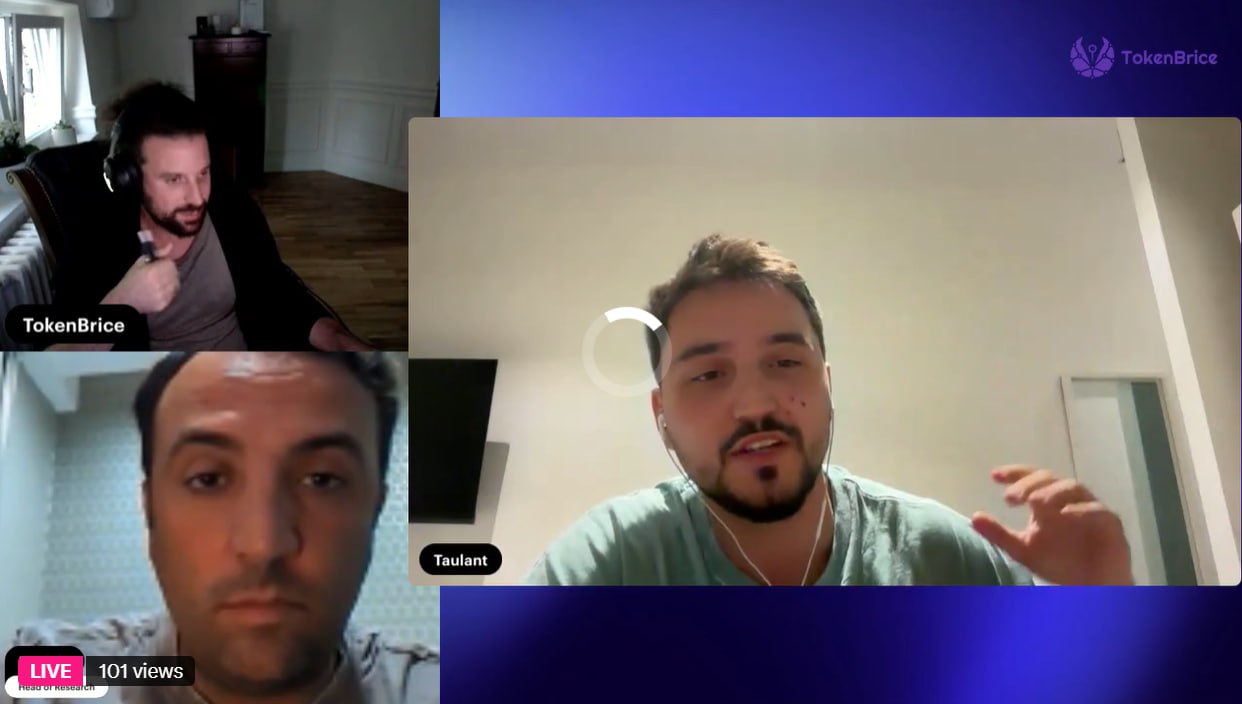 TokenBrice officially starts a streaming career, with his new show, Spotlight! Episode 01 - Twyne, credit delegation layer
Good luck with the new show Brice!2025-09
TokenBrice officially starts a streaming career, with his new show, Spotlight! Episode 01 - Twyne, credit delegation layer
Good luck with the new show Brice!2025-09 DeFi Llama Research Spotlight - Katana: Building DeFi’s Productive Heartland2025-10
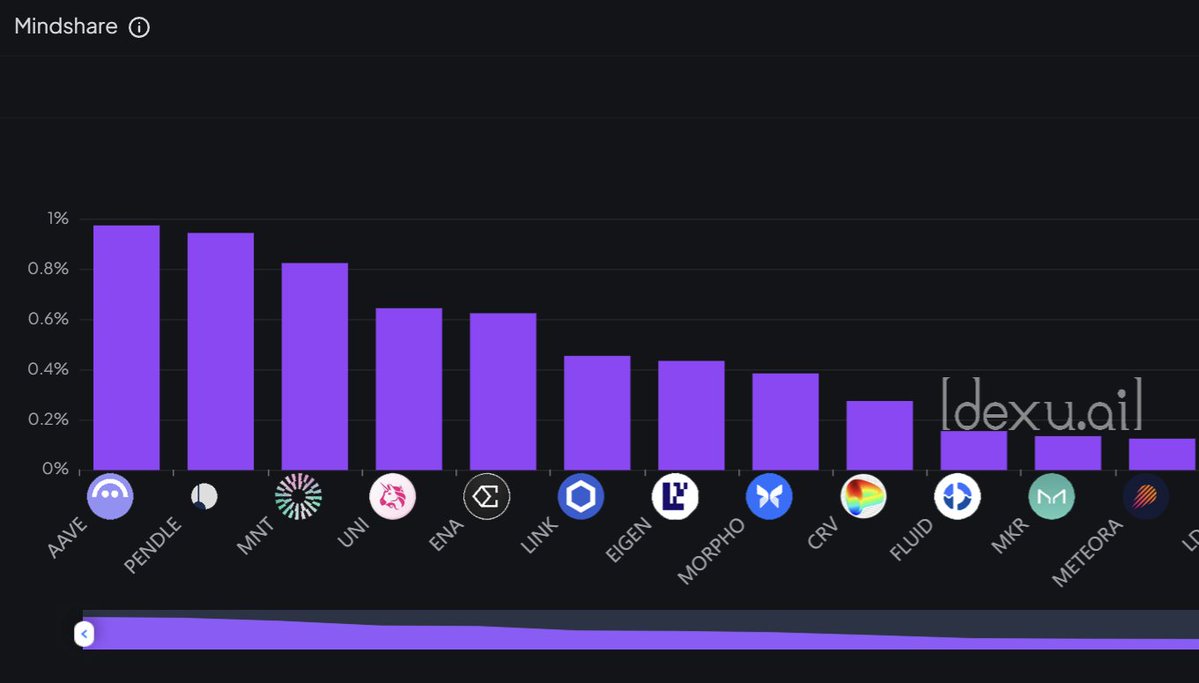 Aave, Pendle, and Mantle lead the DeFi spotlight, dominating mindshare in the race for user attention.2025-04
In crypto and Web3, “Spotlight” is a catch‑all label for curated attention: a way to foreground specific apps, tokens, builders, narratives, or education programs and steer users toward them. It is not a single protocol or standard, but a recurring pattern that shapes discovery, liquidity, and perception across the ecosystem.
What “Spotlight” Means In Crypto
Within digital asset markets, “spotlight” plays a dual role as both metaphor and product feature. At the metaphorical level, journalists, founders, and investors talk about certain coins, regions, or technologies “being in the spotlight” when they dominate narratives and capital flows. Coverage of Bitcoin’s price surging back above \(70{,}000\) USD amid war‑driven uncertainty in energy markets, for example, framed crypto as periodically moving into and out of the macroeconomic spotlight as traders respond to shifting risk factors. In the same way, regional markets like Iran’s growing crypto usage during periods of tension are said to be “gaining the spotlight,” signaling a change in global attention rather than a new primitive on chain.
At the product level, “Spotlight” has become a formalized brand for curated carousels, ecosystem quests, editorial series, and training programs. Solana Mobile’s dApp Store now includes a “dApp Spotlight,” a regularly updated themed carousel designed to help users discover highlighted decentralized applications more easily. Soneium, an ecosystem built around Startale’s infrastructure, launched “Spotlight by Soneium” as a coordinated multi‑project campaign on the Galxe quest platform to showcase builders, games, NFTs, and creator communities under one umbrella. Tezos Foundation and its ecosystem partners operate “Tezos Spotlight,” a content hub aggregating in‑depth blogs and articles from multiple teams such as Tezos Commons, Nomadic Labs, Trilitech, and TZ APAC.
This proliferation of branded spotlights illustrates a deeper structural reality: in an environment where tokens, dApps, and narratives multiply at high velocity, curated attention becomes a scarce resource. From Raydium’s “Season 1 Spotlight” token launches to Fetch.ai’s “Agent Token Spotlight” series for AI agents like ClipMind, the term now denotes a premium window of discoverability. In DeFi and NFT markets, these windows can materially influence liquidity, price discovery, and user acquisition; in compliance and education, they can shape how institutions learn about and adopt crypto infrastructure. Understanding what is actually being spotlighted, who controls the spotlight, and what incentives sit behind it is therefore critical for anyone navigating Web3.
DeFi Llama Research Spotlight - Katana: Building DeFi’s Productive Heartland

TL;DR: Katana is building a DeFi-focused chain that makes all assets productive, shares liquidity across core apps like Morpho and Sushi, and reinvests real yield back into the ecosystem — creating sustainable, long-term growth instead of temporary, token-driven hype.
Spotlight Campaigns And Ecosystem Quests
One of the most explicit uses of the “Spotlight” label is in ecosystem‑wide campaigns that combine quests, rewards, and cross‑project promotion. These campaigns blend game mechanics with marketing, offering users tokens or points for engaging with featured apps and communities.
Spotlight by Soneium exemplifies this model. The campaign, hosted on Galxe, is described as a coordinated, multi‑project effort that brings together Soneium’s builders, games, NFTs, and creator communities into a unified adventure. Galxe itself is a credential and quest platform widely used by crypto projects to run “missions” that encourage users to perform on‑chain actions, participate in governance, or join community channels in exchange for rewards. Spotlight by Soneium leverages this infrastructure to structure a massive multi‑project ecosystem journey, with a prize pool of up to five figures for participants who complete all quests across partner projects. Rather than promoting a single token launch, it is designed to deepen engagement with an entire ecosystem, encouraging users to explore multiple dApps, NFTs, and creator programs that might otherwise be hard to discover.
Startale’s own role in this ecosystem underscores how spotlight campaigns are increasingly tied to “super apps.” The Startale App is described as an all‑in‑one superapp for the Startale and Soneium ecosystem, designed to make participation in the open digital economy simple, secure, and connected. In practice, that means using the app as a distribution hub for campaigns like Spotlight: users might access quests, manage wallets, and interact with DeFi or NFT protocols from a single interface. Startale’s “App Spotlight Boost,” highlighted in recent coverage, reflects a broader pattern in which app operators offer boosted rewards or visibility to certain partners in exchange for user engagement—a kind of app‑level spotlight layered over protocol‑level campaigns. From a user perspective, this convergence means that “Spotlight” is not just a web page or blog post but an experience integrated directly into the wallet and app infrastructure they use daily.
Liquidity‑oriented protocols have adapted the same branding for their launch programs. Raydium, a Solana‑based automated market maker and order‑book‑integrated DEX, runs liquidity pools that underpin many token markets on the network. Ahead of a new phase of token listings, Raydium teased that it was “about to turn the liquidity firehose back on,” describing its upcoming “Season 1 Spotlight launches” as officially imminent. The metaphor here is instructive: by labeling a batch of curated launches as a “Spotlight” season, Raydium signals to traders and project teams alike that these tokens will benefit from concentrated liquidity, marketing attention, and perhaps streamlined listing processes. The “firehose” imagery further underlines the expectation that depth and trading volume will surge during this period, creating short‑term opportunities but also heightening volatility risk.
Token launch platforms like Metaplex formalize yet another variation of the spotlight campaign. Metaplex provides tooling on Solana that allows teams to plan, run, and manage token launches with transparent mechanics and built‑in protections, all powered by its protocol. Where ecosystem‑quest spotlights focus on cross‑project engagement and Raydium’s spotlight seasons prioritize liquidity, Metaplex’s role is to standardize how new tokens are minted, distributed, and secured. In coverage of “First Spotlight Token Sails on Metaplex App,” on‑chain poker staking was used as an example: capital raised through a token was deployed into high‑stakes tournaments, while secondary trading occurred on Raydium’s pools. Even without reproducing that specific case, the pattern is clear. A “spotlight token” implies a token launch that is foregrounded within a minting or discovery interface, often with explicit messaging about unique mechanics or yield opportunities. Platforms like Metaplex can hard‑code protections such as supply caps or freeze authorities, but they cannot remove speculative risk; the spotlight draws attention, while the protocol defines the rules of the game.
Event‑centric spotlights demonstrate how this pattern extends beyond on‑chain mechanics into physical conferences and B2B marketing. Cregis, a digital asset service provider, announced that it would be at Paris Blockchain Week 2026, describing its presence at a specific booth and framing the event as part of its strategic expansion into the European market. The company’s messaging emphasized how the conference would allow it to spotlight its products and capabilities to a European audience, aligning live networking with the broader narrative of cross‑border growth. In such contexts, “Spotlight” becomes a theme for panels, booths, and side events, pulling projects into view not via code but via curated agendas and stage time.
Across these different implementations, a common logic emerges. Spotlight campaigns provide structured frameworks for attention: they define what is featured, how users can engage, and what rewards or informational value they can expect. For protocols and apps, they offer a way to compress otherwise diffuse marketing efforts into time‑bound, branded experiences. For users, especially in DeFi and NFT markets, they create powerful but potentially risky focal points for engagement. Understanding the incentives behind each spotlight—ecosystem growth, liquidity bootstrapping, or corporate expansion—is therefore essential for assessing what these campaigns really offer.
Readers click 'spotlight' stories when the spotlight is either a genuine credibility signal from an institution (Snowflake, DeFi Llama) or a weapon of manufactured hype — the binary between validation and exploitation is what drives engagement, not the spotlighted project itself.
App And dApp Spotlights As Discovery Infrastructure
Beyond time‑limited campaigns, “Spotlight” is increasingly embedded into the discovery surfaces of apps and dApp stores. As the universe of decentralized applications has expanded, the problem of helping users find reliable, high‑quality dApps has grown more acute. Spotlights offer human‑curated or algorithmically‑assisted solutions to this discovery problem, but they also introduce new questions about ranking, neutrality, and commercialization.
Solana Mobile’s dApp Store provides a concrete example. To address the challenge of surfacing relevant applications within its ecosystem, Solana Mobile introduced a feature called “dApp Spotlight” in the Solana dApp Store. This feature is described as a regularly updated themed carousel that appears within the store’s interface, highlighting selected applications for “Seeker” users—the target audience for Solana’s mobile experience. The themes might group dApps by category, such as DeFi, NFTs, gaming, or tooling; alternatively, they might focus on special events like hackathon winners or seasonal campaigns. Regardless of the exact theme, the existence of a Spotlight carousel means that being featured can significantly influence a dApp’s download and usage trajectory.
At the same time, spotlighting introduces governance questions. Users need to understand whether inclusion in dApp Spotlight is editorially curated, pay‑to‑play, algorithmically determined based on usage metrics, or some hybrid of these factors. While the feature is framed as a discovery enhancement, critical users should treat it as a signal to investigate rather than as an endorsement. From a developer standpoint, the presence of a formal spotlight zone can become a key growth target, aligning product roadmaps and marketing campaigns around whatever criteria the store operator sets for being included.
Content hubs push the spotlight metaphor from UI elements into editorial curation. Tezos Spotlight is a dedicated site that hosts content published by the Tezos Foundation and multiple ecosystem organizations, including Tezos Commons, Nomadic Labs, Trilitech, and TZ APAC. Its stated purpose is to centralize the ecosystem’s in‑depth blogs and articles—covering new launches, fresh ideas, and ongoing builds—into one place where community members can keep up with the pace of development. In effect, Tezos Spotlight acts as a curated newsfeed and knowledge base, elevating certain projects, research pieces, and governance updates above the noise of social media.
The existence of such hubs responds to a real coordination problem: different entities within an ecosystem often produce high‑quality content, but it can be scattered across separate websites and channels. By aggregating these into a spotlight site, foundations and core teams provide a structured entry point for developers, investors, and users who want to understand what is happening without tracking every individual team. However, this model also raises questions about inclusion criteria and editorial independence. Because the hub is operated or endorsed by core ecosystem organizations, its spotlight is naturally biased toward projects aligned with their strategy, potentially under‑representing grassroots initiatives that sit farther from the official roadmap.
Spotlights also surface in more general creator and app ecosystems that intersect with crypto. The Creator Spotlight Podcast, for instance, is a weekly audio series that spends an hour with notable creators discussing their approaches to audience growth, monetization, and content production. While not limited to crypto, such a format is increasingly relevant to Web3 as more creators experiment with tokenized communities, NFT‑based media, and onchain patronage. A “Creator Spotlight” series can both educate listeners about the mechanics of building sustainable digital businesses and implicitly promote the platforms and tools those creators use, including crypto‑native ones.
Community spotlight features around specific apps further illustrate how this pattern translates to user‑facing products with or without direct blockchain integration. Unburden: Brain Dump Journal, for example, is an iOS app that presents itself as a rapid “brain dump” tool for ADHD and anxious minds, encouraging users to quickly externalize overwhelming thoughts in a minimal interface rather than attempting to organize or archive them. In coverage framed as a “Community Spotlight: Overthinking Dump,” the app is positioned as a quiet, judgment‑free space where entries vanish rather than becoming permanent digital diaries. Similar spotlight pieces have highlighted AI service desks like Rezolve.ai, which markets itself as an agentic IT helpdesk that automates ticket creation, routing, approvals, SLA tracking, and even actions like refunds or plan changes. While these are not inherently crypto projects, their intersection with AI and digital productivity places them in the broader orbit of the Web3 audience, especially as more AI‑driven services explore onchain payments or verifiable logs.
In each case, spotlighting functions as a discovery amplifier. The host platform—whether a dApp store, ecosystem foundation, podcast, or media outlet—uses its distribution power to highlight specific apps or creators as worth paying attention to. For users, this can dramatically reduce search costs in saturated app markets. For builders, being spotlighted can materially affect growth trajectories, especially early in a product’s life cycle. Yet, as with campaign‑style spotlights, the onus remains on users to interrogate why a particular app, creator, or service has been brought into the spotlight and what that implies about risks, rewards, and underlying business models.
Builder, Team, Agent And Compliance Spotlights
Another major category of spotlight content focuses less on products or tokens and more on the people and organizations behind them. In a space where pseudonymity and opaque governance are common, “Team Spotlight,” “Builder Spotlight,” and similar series aim to humanize protocols and reframe them as collaborative efforts rather than faceless smart contracts.
The Intuition protocol’s communications offer a representative example. Intuition produces “Team Spotlight” posts introducing key contributors like Vital, a front‑end developer whose path took him from work behind the camera to building user interfaces for the protocol. Another edition highlights Boiko, described as the person whose often invisible work keeps everything running smoothly, reflecting the operational backbone required to maintain a live protocol. The project also runs “Builder Spotlight” features, such as a profile of Kylan Hurt, the developer behind HiveMind, one of the ecosystem’s applications. These builder‑focused spotlights emphasize that Intuition’s value is not just in its codebase but also in the human capital that designs, deploys, and maintains it.
This style of spotlight has several functions. First, it can increase user trust by making teams more legible and accountable. When users see that a protocol’s front‑end developers, operations leads, and builders are willing to attach their names and stories to their work, they may perceive lower rug‑pull risk and greater long‑term commitment. Second, it helps attract talent by portraying the organization as a place where individual contributions are recognized and celebrated. Third, it provides a narrative complement to more technical documentation, translating abstract concepts like “on‑chain claims” or “trust graphs” into the lived experiences of the people implementing them.
Builder spotlights are particularly salient in the emerging AI‑agent economy, where products sit at the intersection of machine learning, cryptography, and token design. The 0G project, for instance, highlighted AIverse in a “Builder Spotlight” as the first no‑code AI agent marketplace that allows users to create AI agents and trade them as intelligent NFTs (iNFTs) on the 0G mainnet. AIverse is described as enabling the creation and trading of AI agents tied to Alignment Node infrastructure, with the platform already live and accessible via a dedicated URL. This framing serves both as an introduction to a novel product—no‑code agent creation and verifiable AI trading—and as a narrative about the builders who are pushing the boundaries of agentic Web3 applications. The spotlight format allows complex technical offerings to be unpacked in more accessible terms, highlighting product design decisions and future roadmaps.
Agent‑centric spotlights also appear in token form. Fetch.ai runs an “Agent Token Spotlight” series, showcasing individual agent tokens like ClipMind. ClipMind is described as an AI agent that automatically converts long videos into ready‑to‑post short clips, complete with animated captions, and is deployed as a token on BNB Chain. The spotlight emphasizes its practical utility for content creators—turning cumbersome long‑form video editing into streamlined, AI‑assisted clip creation—while also drawing attention to its tokenized structure and exchange listings, including graduations to venues like PancakeSwap. Here, the spotlight not only educates users about what the agent does but also markets the associated token as an investable or utilitarian asset linked to the agent’s adoption trajectory.
Compliance‑oriented spotlights represent yet another axis. Elliptic, a prominent blockchain analytics firm, operates a “Spotlight Series” aimed at building crypto compliance fundamentals for individuals and teams. This on‑demand training program is positioned as covering key areas of crypto compliance, including risk identification, AML controls, and regulatory expectations. For financial institutions, exchanges, and other regulated entities exploring crypto services, such spotlight series can serve as gateways into understanding the operational and legal requirements of participating in the ecosystem. They also illustrate how the spotlight brand is not limited to speculative or promotional content; it can be used for educational resources that underpin responsible adoption.
Across these builder, agent, and compliance spotlights, a common pattern emerges: the spotlight label signals that the host believes a particular person, product, or topic deserves elevated attention as a case study or exemplar. For readers, these pieces can be valuable sources of qualitative due diligence, offering insight into team composition, technical direction, and cultural values. At the same time, they are inherently selective and often promotional, curated by the projects or companies themselves rather than by independent third parties. As with other types of spotlight content, the value lies in combining the information they provide with external verification and critical analysis.

TokenBrice officially starts a streaming career, with his new show, Spotlight! Episode 01 - Twyne, credit delegation layer Good luck with the new show Brice!

no offence but no idea who anyone of these ppl are
DeFi, Liquidity And Protocols Under The Spotlight
Decentralized finance is particularly intertwined with spotlight dynamics because of the direct connection between attention, liquidity, and yields. Being spotlighted by a major DeFi protocol can accelerate a token’s path from obscurity to significant market capitalization, but it can also magnify downside risks if speculative fervor outruns fundamentals.
Raydium sits at the center of this dynamic on Solana. As a protocol composed of smart contracts and tools for on‑chain trading and liquidity pooling, Raydium supports a broad array of tokens through its AMM and integrates with order books to deepen liquidity. When Raydium announced that its “Season 1 Spotlight launches” were imminent, accompanied by rhetoric about turning the “liquidity firehose” back on, it framed a set of upcoming launches as a discrete season of heightened activity. In practice, this likely signals a coordinated schedule of listings, incentive programs, and marketing pushes designed to attract liquidity providers and traders to specific new tokens.
From a DeFi perspective, the term “Spotlight” in this context does substantial work. It differentiates these launches from routine listings, suggesting that they have passed some internal curation or partnership process. It tells liquidity providers that there may be boosted rewards, either through higher trading fees due to increased volume or through explicit incentive programs. And it primes traders to expect narrative momentum around these tokens, which can feed into short‑term price surges. Yet curation is not the same as guarantee; the spotlight can help filter out some egregious scams but cannot eliminate smart contract risk, economic design flaws, or macro shocks.
The Aave protocol and its AAVE token exemplify how sustained spotlight attention can shift from speculative hype to structural analysis. Aave is a leading DeFi lending platform whose governance token, AAVE, underpins multiple aspects of the protocol’s operation. The token’s utility includes governance voting, staking in a Safety Module that backstops the protocol against shortfalls, participation in fee flows, and incentive alignment for liquidity providers and other stakeholders. AAVE’s tokenomics also define its supply dynamics, including issuance, burns, and allocation patterns, which together influence both price and long‑term security.
Educational pieces that describe themselves as “tokenomics review” or “Aave Tokenomics Explained” function as de facto tokenomics spotlights. Rather than merely hyping price action, they break down how AAVE’s design choices—such as requiring staked AAVE to absorb losses in the event of protocol insolvency—affect risk and return for holders. In doing so, they shift the spotlight from short‑term speculation to structural robustness, inviting readers to evaluate DeFi tokens using frameworks more akin to capital structure analysis in traditional finance. The persistence of AAVE in the DeFi spotlight, relative to many short‑lived “yield farm” tokens, underscores how tokenomics quality and governance maturity can sustain attention over multiple cycles.
Cross‑chain protocols like THORSwap, which enable native swaps across multiple blockchains, add another layer to spotlight dynamics by bridging liquidity and narratives between ecosystems. Although not captured in the provided search results, coverage of “THORSwap Spotlight” pieces has often focused on how cross‑chain swaps unlock new yield strategies and risk profiles. A cross‑chain spotlight might highlight, for example, a set of LP positions that straddle Ethereum, Bitcoin, and Cosmos‑based chains, showing users how to access them while flagging associated smart contract and bridge risks. In such cases, the spotlight becomes a lens through which the complexity of multi‑chain DeFi is rendered intelligible.
Spotlights also illuminate the blurred boundary between DeFi and traditional finance via synthetic tokenized stocks and real‑world asset (RWA) protocols. Panels and interviews featuring executives from exchanges, regulated trading venues, and tokenization platforms have used the spotlight narrative to discuss both the opportunities and risks of synthetic tokenized stocks traded on crypto rails. On one hand, tokenization promises fractional access, 24/7 trading, and composability with DeFi. On the other, it raises concerns about regulatory arbitrage, misaligned corporate actions, and counterparty risk when tokens do not represent direct legal claims on underlying shares. Spotlight content in this category tends to oscillate between optimism about new market structures and caution about systemic risk.
Across all of these DeFi‑related spotlights, the common denominator is the tight coupling between where attention flows and where liquidity, yields, and risk accumulate. A spotlight can help bootstrap genuinely valuable projects by concentrating early usage and feedback. It can also create conditions for bubbles and rapid collapses, especially when leveraged trading and reflexive narratives interact. For users, this makes it especially important to treat appearances in DeFi spotlights—whether by Raydium, Aave educational contributors, or cross‑chain aggregators—as prompts for deeper due diligence rather than as implicit endorsements.
- 01institutional startup validation
Chaos Labs earning a Snowflake spotlight signaled risk-infrastructure credibility to readers who track which DeFi tooling gets enterprise co-signs.
- 02Aave incentive mechanics↗
Readers engaged with the granular breakdown of which assets (USDC on Base, AVAX, SD) were receiving Endless DeFi Summer incentives and on which chains, treating it as an actionable yield map.
- 03attention weaponized as exit
The crypto crime cycle essay reframed spotlight itself as an instrument of harm — manufacturing hope with no sustaining intent — which resonated as a pattern readers had personally experienced.
- 04DeFi educator streaming debut
TokenBrice launching a dedicated Spotlight show covering credit delegation (Twyne) attracted readers interested in both the creator and the underexplored primitive being covered.
- 05protocol productive-yield research
DeFi Llama's Katana spotlight drew readers seeking substantive analysis of liquidity infrastructure rather than price or hype coverage.
- 06DeFi mindshare race
Readers tracking which protocols dominate narrative attention — Aave, Pendle, Mantle — treated mindshare as a leading indicator of capital rotation.
AI, Apps And Service Spotlights At The Web3 Edge
The frontier between AI and crypto is another zone where spotlight dynamics are rapidly evolving. As AI agents become tokenized and embedded into economic systems, the distinction between a “product spotlight” and a “token spotlight” blurs, raising new questions about how value accrues and what kinds of due diligence are appropriate.
AIverse on 0G, highlighted in a builder spotlight, represents one approach to this frontier. The platform positions itself as the first no‑code AI agent marketplace where anyone can create AI agents and trade them as intelligent NFTs on 0G’s mainnet. It emerged from earlier testing phases and has since gone live, allowing users to interact with more than 120,000 Alignment Node iNFTs according to project materials. In this context, a builder spotlight does not just introduce a team; it introduces an entire design space in which AI agents are verifiable, tradable, and composable. The spotlight invites readers to imagine economies where agents can earn, be delegated tasks, and autonomously participate in protocols, all while being represented as on‑chain assets.
Fetch.ai’s Agent Token Spotlight series brings this concept into sharper focus by tying individual agents to specific token contracts. ClipMind, a featured agent, is marketed as an AI service that transforms long videos into short, shareable clips with animated captions. The spotlight notes that ClipMind’s agent token is deployed on BNB Chain and that it has reached exchanges like PancakeSwap, encouraging early buyers not to “miss the advantage.” Here, the agent’s utility—automated content repurposing—is tightly coupled to a tokenized representation that may capture some of the agent’s economic activity or governance. The spotlight is thus both a product announcement and a token promotion, appealing simultaneously to users who need a tool and to traders seeking upside.
Service‑oriented AI spotlights, such as those around Rezolve.ai, illustrate how AI can be framed as infrastructure rather than as individual agents. Rezolve.ai presents itself as an agentic IT service desk solution that automates ticket creation, routing, approvals, and compliance tasks, querying internal databases and executing actions to close tickets efficiently. In coverage styled as a “Community Spotlight,” the emphasis is on the contrast between outcome‑oriented agentic systems and traditional chatbots that deflect rather than resolve issues. Crypto‑native organizations, especially DAOs and DeFi teams, may be drawn to such tools as they seek scalable ways to support global user bases. If and when such services integrate onchain payments or logging, they may become part of the crypto‑AI convergence narrative.
These AI‑adjacent spotlights also intersect with app ecosystems like Startale’s superapp and Solana’s dApp store, which could in the future feature agent marketplaces or AI‑enhanced dApps in their spotlight carousels. In such a scenario, users might encounter AI agents not as standalone websites but as tiles within a curated mobile interface, with Spotlight labels demarcating featured tools or campaigns. This layering of spotlights—AI agent spotlights inside app spotlights inside ecosystem campaigns—compounds both discovery efficiencies and complexity. It becomes easier for users to stumble into powerful tools; it also becomes easier for them to treat spotlighted tokens or agents as implicitly vetted, even when due diligence remains their responsibility.
Spotlight As Market Narrative: Bitcoin, Regions And Privacy Tech
The language of spotlight is not confined to apps and protocols; it is deeply embedded in how media and thought leaders describe macro‑level shifts in crypto. These narrative spotlights can be as influential as any product feature, reframing what investors and builders perceive as important at a given moment.
Coverage of Bitcoin’s price action around geopolitical events illustrates this dynamic. When tensions related to an Iran war drove volatility in oil and traditional equity markets, Bitcoin’s climb past \(71{,}000\) USD was framed as part of a broader story about crypto’s role in uncertain macro conditions. The article noted that Bitcoin rose as much as 4% to roughly \(71{,}785\) before paring gains, situating this move within traders’ responses to worries about future oil supply. In this narrative, Bitcoin re‑enters the spotlight as a quasi‑macro asset, a potential hedge or speculative vehicle linked to global risk sentiment. Subsequent coverage that observes Bitcoin “losing the spotlight” when large IPOs capture investor enthusiasm reflects the oscillating nature of narrative attention: being spotlighted is temporary, contingent on context and competition.
Regional spotlights, such as those on Iran’s multi‑billion‑dollar crypto market during periods of war and sanctions, highlight how local constraints can drive adoption even when global narratives ebb. While specific figures vary, the general arc of such coverage emphasizes how capital controls, currency debasement, and sanctions push individuals and businesses toward crypto for remittances, savings, and trade. By placing Iran’s crypto usage “in the spotlight,” journalists invite readers to connect onchain activity with geopolitical and human realities, rather than viewing it purely through the lens of trading pairs and charts. At the same time, these spotlights surface concerns about regulatory crackdowns, illicit finance, and the role of privacy tools in contested jurisdictions.
Thought leaders like Vitalik Buterin also wield spotlight power through technical and philosophical essays. Recent coverage noted that Vitalik “put privacy and garbled circuits in the spotlight,” pointing to his emphasis on advanced cryptographic techniques as essential for Web3’s next chapter. Garbled circuits, a classic concept in secure multiparty computation, allow parties to jointly compute functions over their inputs while preserving privacy. Projects like COTI have interpreted Vitalik’s attention as validation for their own work bringing garbled circuits into production within crypto systems, arguing that they had already operationalized the technology before it entered the broader spotlight. Whether or not one agrees with such positioning, the sequence shows how a founder’s blog post can redirect community attention toward specific primitives, spurring renewed research, investments, and integrations.
These narrative spotlights differ from product or campaign spotlights in degree rather than kind. Instead of a dApp or token, the object under the spotlight might be a country, a cryptographic technique, or an entire asset class. The host of the spotlight is not a protocol or app store but a media outlet, influential founder, or panel of executives at a financial conference. Yet the effect is similar: attention is channeled, explanatory frames are set, and subsequent discourse gravitates around the illuminated area. For market participants, tracking these narrative spotlights—and critically examining their assumptions—becomes part of navigating sentiment cycles and identifying when a theme is over‑ or under‑priced.

Crypto crime cycle: When someone knowingly pull the spotlight onto a project without caring about its fundamentals, they are manufacturing hope with no intention of sustaining it. It's like selling oxygen tanks to drowning men and then cutting off the supply halfway. Attention is turned into a weapon and it is why attention itself becomes a crime.
I still don't know why this guy is being praised by all. He just keeps cheating the system.
How To Read A “Spotlight” Critically
Given the wide range of things that can be spotlighted in crypto—apps, tokens, builders, regions, technologies, compliance practices—it is crucial to develop a framework for interpreting spotlight content and features without treating them as endorsements. While the details vary by category, certain analytical questions recur.
A first question is incentive structure: who is operating the spotlight, and what do they stand to gain from drawing attention to this subject? In ecosystem campaigns like Spotlight by Soneium, the incentives are relatively clear. Soneium and Startale aim to grow their ecosystem’s user base and demonstrate the breadth of their builder, game, NFT, and creator communities, while partners hope to capture some of that traffic. Quest platforms like Galxe benefit from increased usage and credentials minted, strengthening their own network effects. In DeFi spotlight seasons like Raydium’s, the protocol seeks to grow TVL, trading fees, and its reputation as a launch venue, while partner tokens hope to bootstrap liquidity and investor interest. In media or content hubs like Tezos Spotlight, foundations aim to shape the narrative around their ecosystem’s evolution and highlight projects aligned with their strategic priorities.
Understanding these incentives does not automatically discredit a spotlight, but it frames how its curation should be interpreted. A campaign run by a foundation or protocol is unlikely to spotlight competitors or critical analyses. A dApp store’s spotlight carousel may favor apps that meet certain design or performance criteria—or those that have commercial partnerships with the store operator. A builder spotlight produced by a protocol’s communications team will naturally emphasize positive contributions and future potential more than internal disagreements or missteps. Recognizing these biases allows readers to extract useful information while seeking independent verification and alternative perspectives.
For app and dApp spotlights, a second key question is technical and security due diligence. Being featured in Solana Mobile’s dApp Spotlight or Startale’s app interface does not eliminate the need for users to verify contract addresses, audit reports, and code transparency. Users should still check whether a dApp is open source, whether its smart contracts have been audited by reputable firms, and whether there is a track record of responsible handling of incidents. Spotlighting may correlate with quality to some extent, especially when curators are technically sophisticated, but it cannot guarantee against bugs, exploits, or governance attacks.
For launch and token spotlights, tokenomics become central. A spotlight token minted through a platform like Metaplex and listed on Raydium may benefit from transparent minting mechanics and some built‑in protections, but users still need to scrutinize supply distribution, vesting schedules, and governance structures. Comparing such structures to established DeFi tokens like AAVE can be instructive. AAVE’s supply dynamics, use in the Safety Module, and governance integration are well‑documented, with clear risk‑reward trade‑offs for stakers and holders. In contrast, many new spotlight tokens may have concentrated insider allocations, aggressive emission schedules, or unclear governance, making them far riskier despite the marketing gloss. Early access “advantages” touted in Agent Token Spotlights, such as those around ClipMind, should be weighed against the reality that thin liquidity and asymmetric information can make early trading highly volatile.
For builder and team spotlights, the focus shifts to track record and alignment. A well‑produced profile of a developer like Intuition’s HiveMind builder or front‑end engineers like Vital can provide valuable context about their skills and motivations. However, readers should supplement these narratives with independent checks: prior open source contributions, participation in other projects, community feedback, and any history of conflicts or unresolved issues. The same holds for AI agent builders; a compelling story about an AIverse founder’s vision does not obviate the need to examine how the platform handles security, data usage, and model governance.
Compliance and education spotlights, such as Elliptic’s Spotlight Series, invite a different kind of scrutiny. Here, the stakes involve regulatory adherence and institutional risk appetite. Users should ask whether the training content reflects current regulations in relevant jurisdictions, whether the provider has a track record of working with regulators and major financial institutions, and how it addresses contentious areas like privacy coins or decentralized exchanges. A spotlight series can be a valuable starting point for teams building compliance programs, but it should not be treated as a complete or jurisdiction‑agnostic solution.
Finally, narrative spotlights—articles that place Bitcoin, regional markets, or privacy technologies in the spotlight—should be read with awareness of their temporal nature. Macro‑driven stories, like Bitcoin’s rally amid war‑induced market volatility, capture a snapshot in time rather than a permanent structural change. Thought‑leader essays, such as Vitalik Buterin’s focus on garbled circuits and privacy, can correct under‑appreciation of long‑term issues but may also trigger short‑lived hype cycles around particular buzzwords. Readers should distinguish between themes likely to persist across cycles, such as the need for privacy and robust tokenomics, and those that may be more transient.
- 2022-09launch
Chaos Labs founded as DeFi risk simulation platform
Aave v3 multi-chain expansion accelerates incentive programs
- 2024-11launch
Katana launches as Ronin ecosystem DeFi liquidity hub
Aave Endless DeFi Summer: USDC on Base, AVAX, SD incentives spotlighted
- 2025-09milestone
Chaos Labs featured in Snowflake startup spotlight
- 2026-01launch
TokenBrice launches Spotlight streaming show, Episode 01: Twyne credit delegation
- 2026-03milestone
Aave, Pendle, Mantle identified as top DeFi mindshare leaders by attention analytics
A Taxonomy Of Crypto Spotlights
To bring together these threads, it is useful to sketch a rough taxonomy of spotlight types and their typical characteristics. While real‑world examples often blend categories, the following broad classes recur across the ecosystem.
| Spotlight Category | Typical Host / Operator | Primary Object Highlighted | User Value Proposition | Key Risks |
|---|---|---|---|---|
| Ecosystem Quest Spotlight | L1/L2 teams, quest platforms | Sets of dApps, NFTs, creators within an ecosystem | Rewards for exploring multiple projects; unified journey | Overemphasis on rewards over fundamentals; rug‑pull exposure |
| dApp/App Store Spotlight | Mobile app stores, wallets, superapps | Individual dApps or app integrations | Reduced discovery friction; curated lists | Potential pay‑to‑play bias; false sense of security |
| Launch / Token Spotlight | DEXs, launchpads, token‑minting platforms | New tokens, especially with novel mechanics | Early access to liquidity and narratives | Thin liquidity, high volatility, opaque tokenomics |
| Builder/Team Spotlight | Protocol comms teams, media outlets | Developers, founders, contributors | Insight into team quality and culture | One‑sided narratives; under‑representation of conflicts |
| Creator/Community Spotlight | Content platforms, apps, foundation programs | Creators, end‑user apps, community projects | Discovery of tools and communities aligned with user interests | Promotional framing; sustainability of featured projects |
| Agent / AI Spotlight | AI‑crypto projects, agent marketplaces | Tokenized AI agents and services | Exposure to cutting‑edge AI tools with economic interfaces | Model opacity; speculative tokens tied to uncertain utility |
| Compliance/Education Spotlight | Analytics firms, law firms, educators | Regulatory topics, best practices | Structured learning for teams entering crypto | Jurisdictional gaps; overreliance without local legal advice |
| Narrative / Macro Spotlight | Media, thought leaders, conference panels | Assets, regions, technologies, macro themes | Context for understanding market sentiment and shifts | Over‑fitting narratives; short‑term hype cycles |
This taxonomy is not exhaustive, but it highlights the diversity of what “Spotlight” means in practice. It also underscores that the same label can describe very different things: an on‑chain quest for Soneium users, a curated carousel for Solana dApps, a liquidity season on Raydium, a podcast interviewing creators, or a compliance training program from Elliptic. For a crypto‑savvy audience, the challenge is not to memorize every instance but to recognize the underlying patterns and apply consistent analytical tools when evaluating them.
Outlook
As the crypto and Web3 ecosystem matures, the role of “Spotlight” as both branding and infrastructure is likely to grow rather than recede. On the supply side, protocols, app stores, AI‑agent platforms, and media outlets will continue to compete for user attention in an environment saturated with new tokens, dApps, L2s, and narratives. Spotlight features—campaigns, carousels, content hubs, series—offer a way to package that competition into digestible, branded experiences. For infrastructure providers like Startale, Solana Mobile, Raydium, Metaplex, and emerging AI‑agent marketplaces, these spotlights become core components of their go‑to‑market strategy.
On the demand side, users and institutions face growing complexity in navigating the crypto landscape. They will increasingly rely on curated signals to prioritize where to allocate time, capital, and attention. Ecosystem quest spotlights can help new users explore a network’s breadth quickly. dApp spotlights can reduce friction for deploying capital into DeFi or accessing NFT platforms. Builder and compliance spotlights can inform hiring decisions, risk assessments, and regulatory strategies. At the same time, the more consequential these spotlights become, the higher the stakes of their curation and governance.
We can expect the mechanics of spotlighting to become more sophisticated. AI‑driven recommendation systems may personalize spotlights based on a user’s onchain activity, risk tolerance, and past interactions, blending human editorial judgment with model‑based predictions. Agent economies, as seen in projects like AIverse and ClipMind, may introduce agents that themselves curate spotlights, scanning onchain data and off‑chain signals to suggest opportunities or warn of risks. Such developments could make discovery more efficient but also raise concerns about opacity, bias, and manipulation in spotlight algorithms.
Regulatory and ethical scrutiny of spotlights is also likely to intensify. As synthetic tokenized stocks, RWAs, and cross‑chain DeFi products come under closer supervision, regulators may pay more attention to how exchanges, wallets, and app stores highlight certain products. Questions about whether a spotlight constitutes financial promotion, investment advice, or neutral UI design will be tested in different jurisdictions. Compliance spotlights, such as Elliptic’s series, may help institutions navigate these evolving rules, but they will not eliminate legal uncertainty. Future enforcement actions could hinge not only on what products a platform lists but also on how prominently they are spotlighted to users.
For builders, the takeaway is that securing a place in a reputable spotlight can be a powerful accelerant but not a substitute for robust design, security, and governance. The history of DeFi and NFT cycles shows that attention can be fleeting; projects that rely solely on being in the spotlight, rather than on delivering compounding user value, tend to fade when the next season or campaign arrives. Protocols like Aave, which have remained in the DeFi spotlight for multiple cycles due to strong tokenomics and governance, exemplify a more durable path. For AI‑agent builders, integrating verifiable onchain metrics and transparent model governance may be key to sustaining attention beyond the initial Agent Token Spotlight.
For users and investors, the enduring guidance is to treat every spotlight as a starting point rather than a destination. A featured position in a dApp store, a builder profile in a protocol’s blog, or an appearance in a macro narrative about Bitcoin should prompt questions, not close them off. What are the incentives behind this spotlight? What is the underlying economic and technical reality? How does this opportunity compare to established benchmarks like AAVE in terms of tokenomics, or to long‑term themes like privacy that figures such as Vitalik Buterin have emphasized? By combining the efficiency of curated discovery with disciplined skepticism, crypto participants can use the spotlight ecosystem to their advantage without being blinded by it.
As Web3 expands into new domains—from AI agents and enterprise service desks to tokenized stocks and sovereign‑scale adoption—the term “Spotlight” will continue to evolve. It will label new campaigns, surfaces, and narratives, but its core function will remain constant: to direct scarce attention toward specific slices of an ever‑growing digital frontier. Understanding how that attention is structured, who shapes it, and how it intersects with liquidity, governance, and regulation will be an increasingly important part of being an informed participant in crypto.
Latest Spotlight news
DeFi Llama Research Spotlight - Katana: Building DeFi’s Productive HeartlandTokenBrice officially starts a streaming career, with his new show, Spotlight! Episode 01 - Twyne, credit delegation layer
Good luck with the new show Brice!Crypto crime cycle: When someone knowingly pull the spotlight onto a project without caring about its fundamentals, they are manufacturing hope with no intention of sustaining it. It's like selling oxygen tanks to drowning men and then cutting off the supply halfway. Attention is turned into a weapon and it is why attention itself becomes a crime.Chaos Labs featured on Snowflake startup spotlightAave, Pendle, and Mantle lead the DeFi spotlight, dominating mindshare in the race for user attention.Incentives are never ending on Aave as part of Endless DeFi Summer. Spotlight on additional USDC on Base, AVAX on Avalanche and SD on mainnet.Sources
20 records from 15 domains
app.galxe.com
x.com
metaplex.com
podcasts.apple.com
spotlight.tezos.com
tradingview.com
rezolve.ai
apps.apple.com
0g.ai
startale.com
cregis.com
bloomberg.com
elliptic.co
raydium.io
findas.org
Community notes
Spot something off or out of date? Drop a note. Editors review topic notes daily and roll accepted fixes into the explainer — contributors are recognized in the monthly $SQUID drop.
Loading notes…
Help improve this topic
Have a story or tip about this topic? Submit it. See something missing? Leave a note. Editors review daily; accepted submissions and fixes count toward the monthly $SQUID drop.