
TVL (total value locked) measures assets deposited in DeFi protocols. This explainer covers what it signals, how exploits and leverage distort it, and why retention now rivals TVL as a health metric.
+10 sources across the wider coverage universe
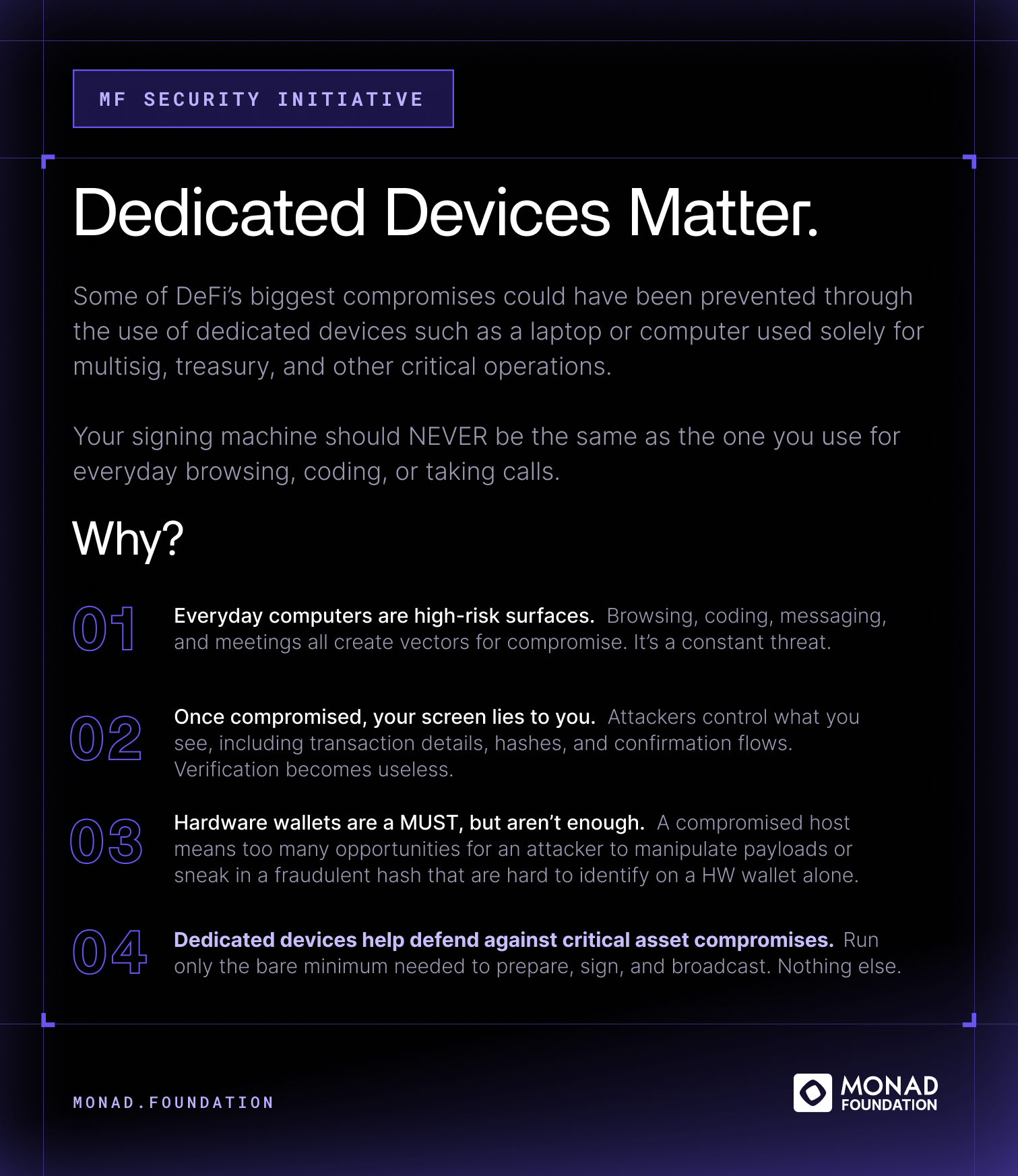 Monad Foundation rolls out device subsidy program for teams with $2.5M+ TVL, funding dedicated signing laptops to boost multisig and treasury security across its ecosystem2026-04
 Scroll cuts costs after losing top protocol to Optimism, triggering $160M TVL outflows and $13M revenue hit as DAO moves to dissolve security council2026-04
 OP Mainnet logs largest TVL surge in history as Etherfi migrates $200M, bringing 70K cards and 300K users to Optimism to scale real-world crypto payments2026-04
 Web3’s 2026 growth is increasingly driven by DeFi nomads, emerging-market users and institutions, as global crypto ownership nears 900M and TVL stabilizes above $80B2026-05
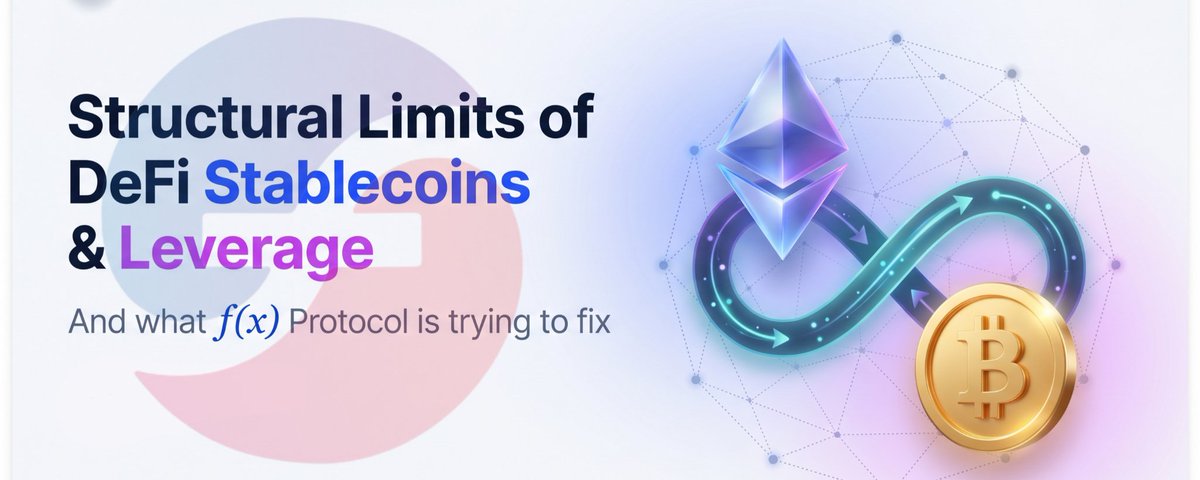 f(x) Protocol aims to fix DeFi's stablecoin and leverage flaws by linking fxUSD, leveraged positions, staking yield, and liquidity into a single system managing $152M TVL and $56M supply2026-05
 Castle Labs says onchain vaults have evolved into core institutional finance infrastructure, with $120B TVL spanning lending, staking, RWAs and yield optimisation2026-05
Total value locked (TVL) is the aggregate dollar value of crypto assets deposited into decentralized finance protocols at any given moment — the closest thing DeFi has to a sector-wide balance sheet.
Few metrics in crypto get cited as often or misunderstood as deeply. TVL appears in every protocol launch announcement, every post-exploit post-mortem, and every institutional research note. Understanding what it actually measures — and what it obscures — is essential for anyone navigating onchain markets.
What TVL Measures
When a user deposits ETH into an Aave lending market, wraps USDC into a Curve liquidity pool, or stakes tokens in a yield vault, those assets are held by a smart contract. TVL is the sum of all such locked assets across every participating protocol, denominated in USD.
The metric is tracked in real time by aggregators like DefiLlama and DeFiPulse, which pull balances directly from onchain contract state. Because prices fluctuate, TVL moves even when no new capital enters or exits — a broad market rally inflates TVL mechanically, while a crash compresses it.
Key components of TVL:
- Lending markets — assets supplied to protocols like Aave, where borrowers pay interest to lenders. Ethereum-based lending protocols alone held $23 billion in TVL as of mid-2026, down from $32 billion earlier in the year after a wave of exploits and broader market pressure.
- Liquidity pools — assets deposited into automated market makers (AMMs) like Curve to enable token swaps. The pool earns trading fees, which become yield for liquidity providers.
- Yield vaults — smart contracts that auto-compound returns across strategies, a category that Castle Labs estimates has grown into $120 billion in TVL spanning lending, staking, real-world assets (RWAs), and yield optimization.
- Staking contracts — assets locked to secure proof-of-stake networks or earn protocol rewards.
- Cross-chain bridges — assets locked on a source chain while wrapped equivalents circulate on a destination chain.

Monad Foundation rolls out device subsidy program for teams with $2.5M+ TVL, funding dedicated signing laptops to boost multisig and treasury security across its ecosystem
Why TVL Became the Default Benchmark
When DeFi exploded in 2020's "DeFi Summer," analysts needed a fast way to measure sector momentum. TVL filled that gap. It is objective (derived from contract balances), near-real-time, and comparable across protocols with wildly different architectures.
For founders launching new protocols, TVL became both a fundraising narrative and a growth target. Binance's Alpha Booster Program, for instance, advertised TVL acceleration of up to +788% for participating projects — a figure that signals traction to retail participants and institutional allocators alike. When Binance launched its zero-fee US stock trading product, reaching $400 million TVL in nine days was treated as proof of product-market fit.
Venture capital also anchors on TVL. TVL Capital, a fund focused on onchain structured products, raised a $5 million seed round in 2026 — the fund name itself reflects how central the metric has become to the investment thesis.
Leviathan readers click TVL stories not for aggregate DeFi health metrics but for velocity events — a protocol or chain hitting a milestone, reversing hard, or getting exploited — which means TVL functions as a live leaderboard readers use to bet on emerging winners and spot fragile leaders before the rest of the market does.
The Leverage Signal Hidden Inside TVL
One underappreciated use of TVL is as a denominator for the onchain leverage ratio — the amount of borrowed capital circulating relative to the underlying collateral locked in contracts.
Binance Research formalized this in 2026 after April's wave of DeFi exploits drained approximately $13 billion from TVL across protocols including Resolv, KelpDAO, and Drift. The outflows pushed the onchain leverage ratio to roughly 38%, matching levels last seen in 2021 — a period that preceded a violent deleveraging cycle. Crucially, Binance noted the leverage spike was not driven by new retail speculation but by structural factors in how protocols had been stacking borrowed positions.
This framing reframes TVL from a vanity metric into a systemic risk indicator. When TVL drops sharply, it can mean one of three things: asset prices fell, capital withdrew due to risk-off sentiment, or exploits destroyed value. Each carries different implications for the health of the underlying ecosystem.
Scroll cuts costs after losing top protocol to Optimism, triggering $160M TVL outflows and $13M revenue hit as DAO moves to dissolve security council

85% TVL concentration in one protocol was always a single point of failure — but what happened after ether.fi left is worse than the exit itself. Scroll cranked its gas oracle L1 fee multipliers 1,280x, extracting $50K in excess costs from remaining users before quietly rolling it back on April 9. That's not cost normalization after losing a subsidy anchor — it's squeezing the last drops from a chain now doing $370/day in fees with under 4K daily actives. Dissolving the security council to hand upgradeability back to an internal team while framing it as "governance streamlining" is the kind of move you make when there's nobody left to object.
TVL as a Protocol Health Signal — And Its Limits
What TVL captures well
A sustained, organic rise in TVL — particularly when denominated in a stablecoin like USDC rather than native tokens — suggests genuine demand for a protocol's service. Ethena's TVL on one integrated platform crossing $500 million, up from $50 million a month earlier, is an example of rapid but measurable adoption. Similarly, Ondo Finance crossing $1 billion in TVL for tokenized stocks tracks real institutional demand for onchain real-world assets, which have reached $37.5 billion sector-wide.
What TVL obscures
Double-counting. When ETH is deposited into Aave, borrowed against, then deposited into a Curve pool, the same underlying ETH appears in TVL twice (or more). The metric measures gross locked value, not net economic exposure. This is precisely why the onchain leverage ratio is a more informative companion metric.
Token price inflation. A protocol can see TVL surge without any new participants simply because its native governance token appreciated. Conversely, a healthy and growing protocol can show declining TVL during a bear market purely due to price compression.
Mercenary capital. Protocols that offer high incentive yields attract capital that disappears the moment rewards diminish. New research published in 2026 argued that retention — which protocols users stay with after incentives fade or during crisis periods — is a stronger investment signal than raw TVL. The question isn't how much capital a protocol can attract at peak yield; it's how much stays when conditions normalize.
Wash TVL. In some DeFi ecosystems, coordinated actors deposit and withdraw the same capital across multiple protocols to inflate aggregate TVL figures ahead of token launches or fundraising rounds.
- 01EigenLayer restaking TVL swings
Both the cap-lift surge to $3.84B and the subsequent sector-wide exodus drew massive clicks, revealing readers track EigenLayer as a bellwether for the entire restaking meta.
- 02Chain TVL milestone racing
TON's 118% surge, Sonic's Fantom rebrand, Berachain's $1.6B pre-launch, and L2s hitting $47B ATH all generated clicks because readers treat chain TVL rankings as a real-time competition they want to follow.
- 03Lending protocol TVL recovery
AAVE hitting #1 on DefiLlama, decentralized lending crossing $30B for the first time since mid-2022, and Euler's 38x bounce after its hack all signal readers are watching for sector-level recovery confirmation.
- 04TVL exploit and oracle attacks
SIR.trading losing its entire TVL to a hack and the Hyperliquid TVL-based oracle vulnerability pulled readers who understand that protocol TVL concentration creates a high-value attack surface.
- 05Bitcoin DeFi TVL explosion
BTC DeFi growing from $307M to $6.5B in a single year represented an entirely new capital pool entering DeFi, which readers flagged as a structural shift rather than a cyclical bounce.
- 06Protocol TVL fundraising mechanics
The founder guide on raising TVL deals and the Ethena $20M M2 investment story both attracted clicks from readers who want to understand how TVL is increasingly treated as a financeable asset rather than just a metric.
Exploits: The Single Biggest TVL Destroyer
No force compresses TVL faster or more violently than protocol exploits. Since 2020, DeFi hacks have destroyed approximately $7.7 billion in user funds, according to sector analyses — and the pace has not slowed. The first five months of 2026 alone saw $840 million in exploit losses.
The April 2026 cluster — hitting Resolv, KelpDAO, and Drift in close succession — triggered $13 billion in TVL outflows as contagion spread across interconnected protocols. Cross-chain infrastructure was implicated: Kraken's kBTC product and other major protocols migrated over $2.5 billion in TVL away from LayerZero following the KelpDAO incident, with LayerZero publishing a detailed post-mortem co-authored with Mandiant and CrowdStrike.
The insurance gap makes this more acute. Crypto's decentralized insurance sector has collapsed from $1.9 billion in TVL to under $100 million — meaning less than 2% of DeFi's $83 billion TVL carries any onchain coverage. Users continue to accept uninsured smart contract risk in exchange for yield, a trade-off that becomes visible only when an exploit hits.
OP Mainnet logs largest TVL surge in history as Etherfi migrates $200M, bringing 70K cards and 300K users to Optimism to scale real-world crypto payments
TVL by Sector: Where the Capital Actually Sits
As of mid-2026, DeFi's global TVL had stabilized above $80 billion, with meaningful shifts in where that capital is concentrated:
- Ethereum lending markets remain the largest single category, though down sharply from peak levels. Aave dominates here, with USDC and ETH as the primary collateral assets.
- Liquid staking (staked ETH derivatives) has grown significantly as validators seek yield without locking assets out of DeFi.
- Real-world assets (RWAs) represent DeFi's fastest-growing TVL category. Tokenized US Treasuries, trade finance receivables, and — more recently — tokenized equities like Ondo's stock products have pulled institutional capital onchain. RWAs hit $37.5 billion in 2026.
- Stablecoin yield protocols have become a competitive battleground. USDAI entered the top 10 yielding stablecoins by TVL in mid-2026; Pendle's USDG pool crossed $200 million TVL by attracting fixed-rate demand for regulated stablecoin yield. Stablecoins like USDC underpin most of these strategies as the base collateral layer.
- Yield vaults and structured products — sometimes called "onchain chain-traded structured products" — are emerging as institutional-grade infrastructure, as firms like TVL Capital and Castle Labs argue onchain vaults are no longer experimental but core finance plumbing.
- 2022-06milestone
DeFi TVL sector peak collapses post-Terra/LUNA
- 2024-04milestone
EigenLayer lifts deposit cap; TVL hits $3.84B in 24 hours
- 2024-09milestone
Decentralized lending TVL crosses $30B for first time since mid-2022
- 2024-10governance
EigenLayer exodus triggers sector-wide restaking TVL decline
- 2024-12milestone
Bitcoin DeFi TVL reaches $6.5B, up from $307M at year start
- 2025-01launch
Sonic rebrands from Fantom, reaches $253M TVL with 720ms finality
- 2025-03exploit
SIR.trading hacked for entire protocol TVL
- 2025-10milestone
Ethereum L2 TVL sets all-time high at $47B; Arbitrum leads at $19.3B
Reading TVL in Context
For investors, analysts, and users, TVL is most useful as a relative and trending figure rather than an absolute one:
- Protocol-level TVL trends reveal whether a platform is gaining or losing share within its category, independent of overall market conditions.
- TVL-to-market-cap ratios (sometimes called P/TVL) are used to assess whether a protocol's native token is over- or under-valued relative to the capital it manages.
- TVL denominated in ETH or BTC strips out dollar-price noise and shows whether actual asset quantities are growing.
- Retention rate (what fraction of TVL remains after a market shock or incentive expiry) is the emerging complementary metric — a protocol with $1 billion TVL that retains 80% through a crash is healthier than one with $5 billion that loses 70%.
DeFi Technologies President Andrew Forson framed the $20 billion TVL decline of early 2026 as a "healthy stress test," arguing that stablecoin infrastructure and tokenized Treasury demand remained structurally intact even as speculative leverage washed out. That framing is consistent with how mature market participants are learning to read the metric: not as a scoreboard, but as a signal requiring interpretation.
Outlook
TVL will remain the dominant headline metric for DeFi through the near term — it is too embedded in how protocols communicate, how funds benchmark, and how aggregators report for any quick replacement. But the sophistication of how the number is used is evolving. The onchain leverage ratio, user retention curves, RWA-adjusted TVL, and insurance coverage ratios are emerging as companion metrics that make TVL legible rather than merely large.
With global crypto ownership approaching 900 million users and institutional onchain infrastructure accelerating, the absolute scale of TVL will likely continue to grow through cycles. The more useful question — as the 2026 exploit wave made clear — is not how high TVL climbs, but how much of it is structurally sound when tested.
Latest TVL news
Monad Foundation rolls out device subsidy program for teams with $2.5M+ TVL, funding dedicated signing laptops to boost multisig and treasury security across its ecosystemScroll cuts costs after losing top protocol to Optimism, triggering $160M TVL outflows and $13M revenue hit as DAO moves to dissolve security councilOP Mainnet logs largest TVL surge in history as Etherfi migrates $200M, bringing 70K cards and 300K users to Optimism to scale real-world crypto payments Stream Finance collapse: $520M TVL was backed by only $160M as circular leverage unwound
 Hylo reports $100M TVL in four months with a leverage system that rebalances instead of liquidating.
 Zama opens 16 confidential Morpho vaults on Ethereum after its first vault hit $40M TVL in seven weeks, with five major curators involved
Community notes
Spot something off or out of date? Drop a note. Editors review topic notes daily and roll accepted fixes into the explainer — contributors are recognized in the monthly $SQUID drop.
Loading notes…
Help improve this topic
Have a story or tip about this topic? Submit it. See something missing? Leave a note. Editors review daily; accepted submissions and fixes count toward the monthly $SQUID drop.