
How crypto valuations work — from token scarcity and on-chain revenue multiples to private funding rounds, AI trillion-dollar comps, and pre-IPO derivatives — with current examples from Polymarket, Anthropic, Circle, and Elliptic.
+31 sources across the wider coverage universe
 SpaceX Targets an $800 Billion Valuation in New Secondary Share Sale as WSJ Says a 2026 IPO Is Now on the Table.2025-12
 SpaceX transferred $94M in Bitcoin ahead of a potential 2026 IPO, moving 1,021 BTC in total. The company now holds 8,285 BTC (~$770M), possibly preparing for a record-breaking public listing at a $1.5T valuation.2025-12
 Stripe, Adyen rival Airwallex nabs $330M at $8B valuation in a Series G funding round led by Addition, with participation from T. Rowe Price Associates, Activant, Lingotto, Robinhood Ventures, and TIAA Ventures.2025-12
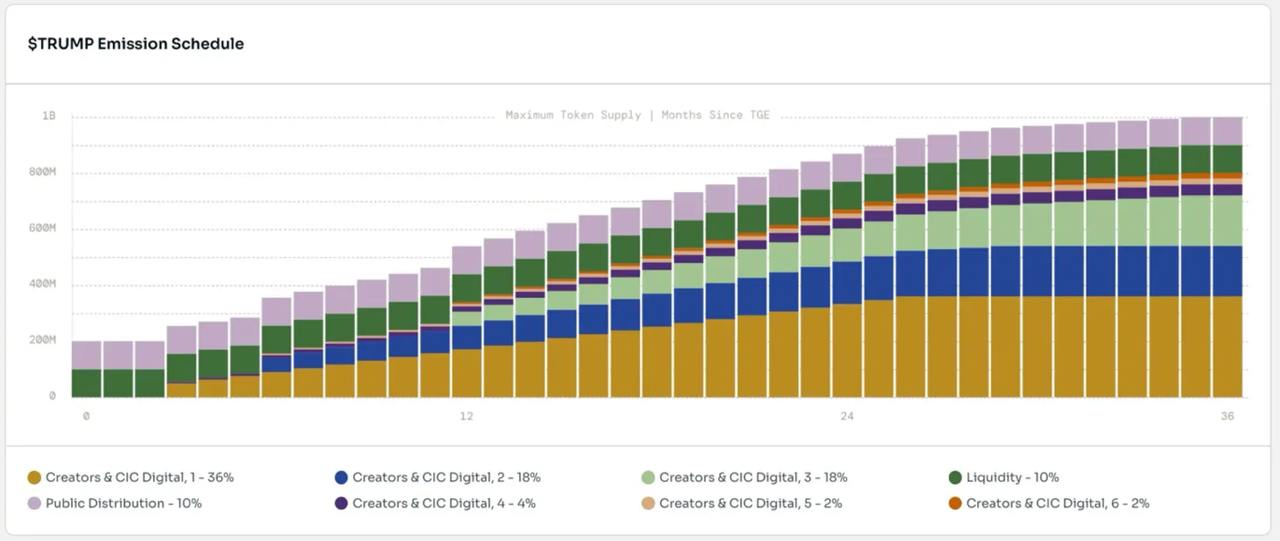 Zack Guzman argues that reporting the market cap of the $TRUMP memecoin at $75 billion is misleading, a valuation tied to the current float would put the number closer to $13 billion2025-01
 Blockchain.com raises $110M funding round at lower valuation "less than half" of the $14bn they raised at in 20212023-11
 Elixir has closed a Series B at an $800M valuation 2024-03
Determining what a crypto asset, blockchain startup, or decentralized protocol is actually worth is one of the most contested problems in finance — combining traditional investment analysis with frameworks unique to digital assets.
What Valuation Means in Crypto Context
In traditional markets, valuation answers a simple question: what should an investor pay today for a stream of future cash flows? In crypto, that question is harder to answer because many assets generate no cash flows, governance tokens carry uncertain utility, and network effects can inflate or collapse value overnight.
The term spans several distinct categories in the digital asset space:
- Private-company valuation: The price per share implied by a funding round. When blockchain analytics firm Elliptic raised $120 million at a $670 million valuation in mid-2025, that figure was the implied market cap if all shares were priced at the round's entry price.
- Token valuation: The market capitalisation of a circulating supply at spot price — or the fully diluted valuation (FDV) that accounts for all tokens ever to be issued.
- Protocol valuation: Metrics such as price-to-fees or price-to-revenue applied to on-chain data, analogous to P/E ratios in equities.
- Pre-IPO valuation: The estimated worth of a private company ahead of a public listing, increasingly tradeable via instruments like Binance's perpetual futures contracts on SpaceX's anticipated $2 trillion IPO valuation.
Each category uses different inputs, carries different risks, and is susceptible to different forms of manipulation.

SpaceX Targets an $800 Billion Valuation in New Secondary Share Sale as WSJ Says a 2026 IPO Is Now on the Table.

"SpaceX is kicking off a secondary share sale that would value the rocket maker at $800 billion, people familiar with the matter said, surpassing OpenAI to make it the most valuable U.S. private company. "
How Scarcity Shapes Crypto Prices
One of the most durable frameworks for token valuation is supply constraint. Bitcoin's 21 million coin hard cap, Ethereum's EIP-1559 burn mechanism, and similar designs borrow from commodity economics: holding demand constant, a shrinking or fixed supply must clear at a higher price.
This logic underlies projects that explicitly market themselves around limited issuance. When total circulating supply approaches its maximum — as with Bitcoin approaching the end of its halving schedule — the marginal supply of new coins trends toward zero, amplifying price sensitivity to demand shocks. The relationship is not deterministic: demand can collapse independently of supply, as multiple bear markets have demonstrated. But the scarcity framing persists because it provides a legible narrative that institutional investors can map onto gold or other hard assets.
Critics point out that supply caps only matter if demand is sustained. A token with a 21 million cap and no use case has a fundamental value near zero regardless of scarcity.
Readers click hardest when a specific valuation number is exposed as constructed fiction — the float-vs-FDV gap on TRUMP, Celestia's alleged OTC timing manipulation, and L2 tokens trading far below last-round valuations all show that the audience's real appetite is for the delta between the number as marketed and the number as real.
Valuation Frameworks for On-Chain Protocols
For protocols that generate measurable on-chain revenue — decentralised exchanges, lending markets, liquid staking providers — practitioners have adapted equity metrics:
Price-to-Fees (P/F): Total market cap divided by annualised protocol fees. A lower ratio suggests the market is paying less per dollar of economic activity generated.
Price-to-Revenue (P/R): Similar to P/F but using revenue retained by the protocol treasury or token holders after paying liquidity providers. This is closer to the equity P/E ratio.
Total Value Locked (TVL) ratios: Market cap divided by TVL captures how much the market is paying per dollar of capital the protocol controls. A ratio below 1 can indicate undervaluation or capital flight risk depending on context.
Network Value to Transactions (NVT): Popularised by analyst Willy Woo, NVT compares market cap to on-chain transaction volume — analogous to P/E for payment networks. High NVT implies the market is pricing in future growth; persistently high NVT without transaction growth has historically preceded corrections.
None of these metrics is reliable in isolation. On-chain volume can be inflated by wash trading — a criticism levelled at prediction markets including Polymarket, which is reportedly seeking $400 million in fresh funding at a $15 billion valuation even as observers question whether its transaction volume reflects genuine user activity. Kalshi, its regulated US rival, recently secured $1 billion in new investment at a $22 billion valuation, suggesting the market is pricing regulatory legitimacy as a meaningful premium.

SpaceX transferred $94M in Bitcoin ahead of a potential 2026 IPO, moving 1,021 BTC in total. The company now holds 8,285 BTC (~$770M), possibly preparing for a record-breaking public listing at a $1.5T valuation.
Private Funding Rounds and Implied Valuations
When a crypto or AI company raises capital from venture investors, the headline valuation is almost always a post-money figure: the total implied market capitalisation after the new money is included. This number is useful for benchmarking but should not be read as a liquid market price.
Several dynamics can make private valuations misleading:
Preference stacks: Investors in late rounds often receive liquidation preferences that guarantee them a return before common shareholders. A company valued at $1 billion on paper might yield very little to early employees if it exits at $800 million, because preferred shareholders recover first.
Round-to-round comparisons: Zerohash is reportedly seeking new funding at over $1.5 billion — down from an $1.8 billion valuation implied by an earlier Mastercard investment that ultimately did not close. That gap illustrates how quickly private valuations can reset when a key strategic backer withdraws.
Revenue multiples at scale: Circle's Q1 2026 revenue and reserve income reached $694 million, up 20% year-over-year, with USDC circulation at $77 billion. The company separately raised $222 million for its Arc blockchain at a $3 billion valuation — a figure the market can now stress-test against known financials, unlike earlier fundraising cycles where revenue was opaque.
Ripple's investment in African fintech Flutterwave, which recently reached a $3.2 billion valuation, shows how crypto-native firms are also deploying capital into adjacent infrastructure plays — and using those stakes to signal strategic positioning rather than purely financial return.
AI and the Trillion-Dollar Valuation Race
The most dramatic valuations in the current cycle are not in crypto at all — they're in AI. Anthropic, the safety-focused lab behind the Claude model family, recently neared a $1 trillion valuation after closing a $65 billion funding round, surpassing OpenAI's implied valuation in some benchmarks. That figure would place Anthropic among the most valuable private companies ever.
These AI valuations matter for crypto audiences for several reasons:
1. Capital competition: Venture capital flowing into AI at hundred-billion-dollar valuations is capital not flowing into crypto infrastructure. The opportunity cost is real.
2. Convergence: AI models are increasingly integrated with blockchain infrastructure — onchain agents, AI-generated trading strategies, and model-inference tokens are live products. How the market prices AI capability is becoming directly relevant to how it prices AI-adjacent crypto protocols.
3. IPO signalling: Anthropic's filing to go public sets a precedent for what trillion-dollar tech companies look like on a public balance sheet. When Circle or Coinbase-adjacent firms contemplate IPOs, public market investors will calibrate expectations against AI comps.

Stripe, Adyen rival Airwallex nabs $330M at $8B valuation in a Series G funding round led by Addition, with participation from T. Rowe Price Associates, Activant, Lingotto, Robinhood Ventures, and TIAA Ventures.
TL;DR: Airwallex raised $330M at an $8B valuation to expand its global payments and financial infrastructure platform, with over $1B set aside for aggressive U.S. growth as it opens a second headquarters in San Francisco. Founded in 2015 to fix slow, expensive cross-border payments, the company now provides end-to-end financial infrastructure in 200+ markets, bypassing traditional banking rails and holding licenses in 80+ jurisdictions. The new funding will accelerate AI-driven automation, product development, and hiring as Airwallex pushes deeper into the U.S., Europe, and emerging markets.
Pre-IPO Markets and Tokenised Valuation Discovery
A structural innovation of the current cycle is the emergence of pre-IPO derivative markets. Binance now offers perpetual futures contracts tied to SpaceX's anticipated IPO valuation — letting retail traders take directional positions on a private company's worth before any shares are publicly listed.
This matters beyond novelty. Pre-IPO futures markets aggregate dispersed information about private companies in a way that secondary share platforms do not. When a large open interest builds around a specific valuation anchor — say, $2 trillion for SpaceX — it creates a soft focal point that can influence the actual IPO pricing process as underwriters survey market sentiment.
The risk is equally real: these instruments are thinly traded relative to the underlying companies, easily manipulated, and disconnected from direct ownership rights. Binance frames them as a knowledge test and investment vehicle, but the payoff structure is closer to a binary bet than to a genuine equity stake.
- 01Float vs FDV distortion
The TRUMP memecoin headline — arguing $75B market cap should be $13B on float — drew the most clicks of any valuation story, signaling readers are acutely aware that headline numbers are engineered for press releases, not reality.
- 02VC round valuations in crypto
A cluster of funding-round headlines spanning Blockchain.com's down-round to Elixir, Flashbots, Flowdesk, and Pump.fun shows readers tracking the VC pricing cycle as a barometer of where institutional money thinks the market is headed.
- 03L2 token post-launch collapse
The breakdown of $SCR, $TAIKO, $BLAST, $STRK and others trading 22–82% below launch price — with last-round investors deeply underwater on FDV — crystallized for readers how raise valuations disconnect from tradeable reality.
- 04OTC timing manipulation allegations
The Celestia claim — tokens sold OTC at $3.5B months before announcement, timed just before unlocks to manufacture bullish optics — pulled readers because it frames valuation as a tool for insider advantage, not price discovery.
- 05TradFi institutional validation prints
ICE/NYSE putting $2B into Polymarket at $9B, Citadel backing Kraken at $20B, and Citi Ventures investing in BVNK attracted readers using TradFi price anchors as credibility signals for nascent crypto infrastructure.
- 06DCF and fundamental valuation for DeFi
The Hyperliquid $HYPE DCF analysis — modeling cost of capital and implied earnings against trading fee cash flows — resonated with readers hungry for traditional valuation frameworks applied to on-chain revenue-generating protocols.
Token Launches and Valuation at Genesis
When a new token launches, its initial valuation is set by the price at which early investors or exchange listings clear the first trades. The FDV at launch — total supply multiplied by opening price — has become a flashpoint in crypto discourse.
Projects have launched with FDVs of $5–20 billion despite having minimal users, revenue, or locked TVL. When vesting schedules release large blocks of tokens to early investors and teams, sell pressure typically depresses the price toward fundamentals, penalising retail buyers who entered at the inflated FDV.
The corrective trend is toward lower initial floats with longer vesting, and toward onchain revenue-sharing mechanisms that tie token value to measurable economic output — mirroring the logic of equity dividends. TradFi-native fund Tok-Edge, launched with a $15 million initial valuation targeting a $100 million crypto fund, explicitly pitches institutional-grade valuation rigour as a differentiator in a market they argue has been driven by narrative rather than fundamentals.
Valuation Risk Factors Specific to Crypto
Several forces can rapidly invalidate a valuation that appears reasonable:
Regulatory repricing: A single enforcement action or legislative change can eliminate the addressable market for a protocol overnight. Ripple's multi-year legal battle with the SEC was, at its core, a dispute about whether XRP should be valued as a security (with all the compliance costs that entails) or as a currency.
Smart contract risk: A protocol valued on its TVL can lose that TVL to an exploit in hours. Valuation models that treat TVL as a stable denominator underweight tail risk.
Liquidity illusion: A token trading at a $500 million market cap may have only $2 million in daily volume. Attempting to exit even a fraction of that market cap would crater the price — the headline number is not a liquidation value.
Narrative cycles: Crypto markets are unusually susceptible to thematic rotations. A project valued at 50x revenue in a bull narrative may trade at 3x the same revenue twelve months later as attention shifts.
- 2024-03milestone
SLERF accidental $10M burn spikes valuation to $479M
- 2024-06launch
Multiple L2 tokens launch at peak FDV; $STRK, $BLAST, $MODE debut
- 2025-01launch
$TRUMP memecoin launches; $75B market cap headline disputed as $13B on float
- 2025-01milestone
L2 token cohort down 22–82% from launch; last-round VC investors 48–50% underwater on FDV
- 2025-03milestone
Ripple raises $500M at $40B valuation; 2025 crypto VC total reaches $22B
- 2025-05milestone
ICE/NYSE invests $2B in Polymarket at $9B valuation, marking institutional entry into prediction markets
- 2025-06milestone
Gemini IPO prices at $28/share, $3B valuation; Winklevoss twins retain 94.5% voting control
- 2025-06milestone
Tether projects $15B 2025 profit; $500B USDT valuation discussions emerge
Outlook
Valuation methodology in crypto is maturing but remains contested. The convergence of AI and blockchain, the emergence of pre-IPO derivatives, and the arrival of institutional-grade on-chain revenue data are pulling the field toward more rigorous, fundamentals-based frameworks. At the same time, prediction market valuations approaching $15–22 billion, AI lab valuations brushing $1 trillion, and token FDVs that bear no relationship to present utility are reminders that narrative and liquidity still dominate in the short term.
The investors best positioned to navigate this environment are those who can hold both lenses simultaneously: applying traditional discounted cash flow or revenue-multiple thinking where the data supports it, while remaining alert to the structural quirks — supply mechanics, smart contract risk, regulatory repricing — that make crypto valuation a distinct discipline rather than a straightforward extension of equity analysis.
Latest Valuation news
SpaceX Targets an $800 Billion Valuation in New Secondary Share Sale as WSJ Says a 2026 IPO Is Now on the Table.SpaceX transferred $94M in Bitcoin ahead of a potential 2026 IPO, moving 1,021 BTC in total. The company now holds 8,285 BTC (~$770M), possibly preparing for a record-breaking public listing at a $1.5T valuation.Stripe, Adyen rival Airwallex nabs $330M at $8B valuation in a Series G funding round led by Addition, with participation from T. Rowe Price Associates, Activant, Lingotto, Robinhood Ventures, and TIAA Ventures. Revolut’s valuation has rocketed to $75B after a major share sale, intensifying speculation about its long-rumored stablecoin. With booming revenue and fresh MiCA approval, the neobank’s crypto ambitions look ready to escalate.
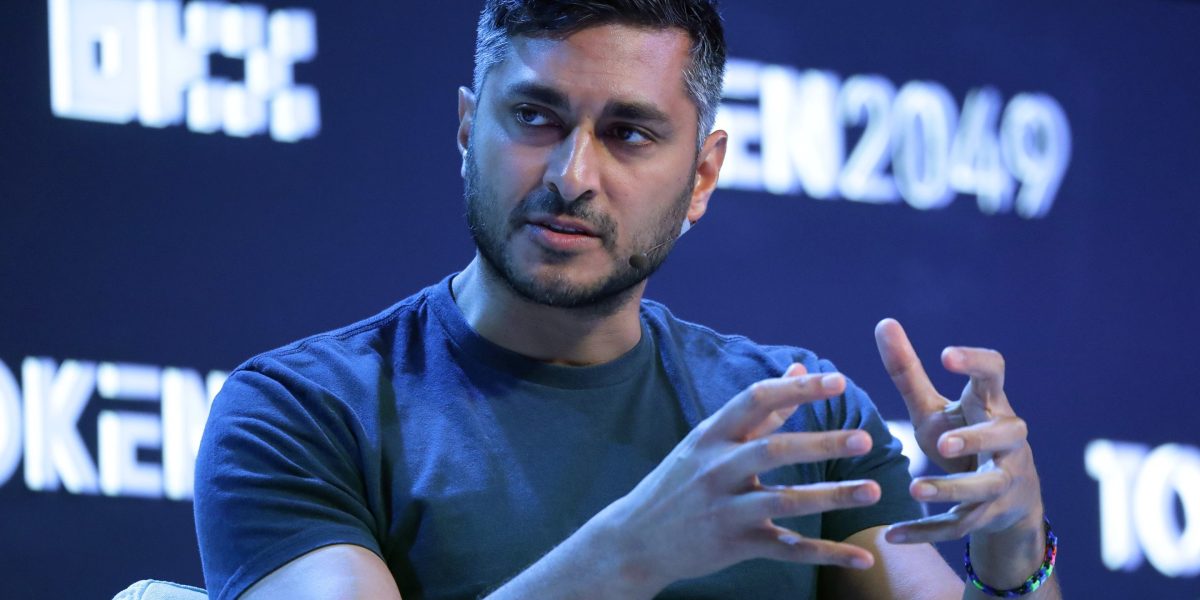 Kraken lands a $200M investment from Citadel Securities at a $20B valuation—bringing its total raise to $800M since September as it gears up for global expansion, new payment products, and an IPO next year.
 Polymarket has relaunched in the U.S. under closed beta after resolving regulatory issues with the CFTC. The platform now eyes a full launch with major partnerships and a $12–15B valuation target.
Community notes
Spot something off or out of date? Drop a note. Editors review topic notes daily and roll accepted fixes into the explainer — contributors are recognized in the monthly $SQUID drop.
Loading notes…
Help improve this topic
Have a story or tip about this topic? Submit it. See something missing? Leave a note. Editors review daily; accepted submissions and fixes count toward the monthly $SQUID drop.