
Deep dive into ZRO, the unified token for LayerZero, Zero and Stargate, covering tokenomics, fee-switch governance, buybacks, stablecoin and RWA integrations, and how ZRO aims to capture value from cross-chain messaging and liquidity at internet scale.
+1 sources across the wider coverage universe
 LayerZero fee switch stays off as fourth referendum draws 3.52M ZRO, just 2.82% of quorum2026-06
 LayerZero asks ZRO holders to vote on fee-funded buybacks with 30.85% quorum on June 202026-06
 LayerZero reframes ZRO from a bridge token into the core economic asset for Zero, an institutional-grade L1 capturing gas, MEV, staking and fees.2026-02
 LayerZero introduces Zero: The Decentralized Multi-Core World Computer2026-02
 LayerZero confirms token distribution in 2024, fueling growth for ecosystem projects.2023-12
 Paypal's $pyUSD goes cross chain with a Layer Zero integration2024-11
ZRO, LayerZero And Zero: An Omnichain Value Token Explained
The native token of the LayerZero ecosystem, ZRO, is a fixed-supply governance and value-accrual asset designed to unify the economics of the LayerZero messaging protocol, the Zero L1 blockchain, and the Stargate cross-chain liquidity router. By tying protocol fees, blockspace demand, and bridge revenues back to a single token, ZRO aims to become a pure play on the growth of omnichain infrastructure, cross-chain stablecoins, and tokenized real-world assets, while giving holders direct onchain control over whether the protocol even charges fees at all.
Interoperability, Stablecoins And Why ZRO Exists
Any attempt to understand ZRO starts with the broader problem it is meant to monetize: the fragmentation of liquidity and applications across dozens of layer 1s, rollups, and appchains. In the 2020–2021 cycle, Ethereum showed that a single smart contract platform could support meaningful DeFi activity, but it also revealed harsh limits on capacity, with routine gas fees of around \(30\) USD for a simple ERC‑20 transfer and \(80\)–\(100\) USD for a token swap at the peak of 2021. Those fee levels simply could not compete with legacy rails like wire transfers for mainstream users, even as they proved there was real demand for programmable finance. The response was an explosion of alternative L1s and L2s, each with its own execution environment, fee market, and user base.
This fragmentation has been particularly visible in stablecoins and tokenized dollar rails. Liquidity in assets like USDC, USDT, and newer entrants such as PYUSD and frxUSD is now spread across many chains, with each venue offering different yields, integrations and user bases, but little in the way of native composability between them. Builders who want to reach users wherever they are must either deploy their applications to each chain separately, or rely on third‑party bridges that move wrapped assets across ecosystems while introducing new trust and security assumptions. For institutional players contemplating tokenized treasuries, stocks or RWA-backed stablecoins, the idea of managing dozens of fragmented deployments, each with separate auditing and operational risk, is even more daunting.
Bridge infrastructure has evolved to address this problem, but it has done so unevenly. Many systems began as simple lock‑and‑mint designs, where assets are locked on chain A and a wrapped representation is minted on chain B. Over time, some have evolved toward liquidity‑pool routers, fast messaging overlays, or more complex hybrid models. Each approach carries its own trade‑offs in terms of latency, capital efficiency, and security. High‑profile incidents in which bridge contracts were exploited or misconfigured have underscored that cross‑chain systems are among the most complex and risky components in the crypto stack, especially when admin keys or upgrade controls are not tightly constrained. In that context, infrastructure that can offer standardized, audited messaging primitives—rather than ad hoc bridge logic repeated in every application—has become increasingly attractive.
LayerZero emerged as one such interoperability layer, explicitly positioning itself not as a bridge but as a generalized messaging protocol that enables applications to send arbitrary data between chains. Rather than dictating how tokens must be bridged, it offers mechanisms for applications to verify messages across environments and then implement their own asset flows on top. That distinction matters for ZRO, because it means the token is ultimately tied not just to bridge volume in a narrow sense, but to any kind of cross‑chain activity that relies on LayerZero’s messaging fabric: stablecoin transfers, tokenized securities, cross‑chain lending, cross‑chain perp exchanges, omnichain vaults, and eventually the Zero L1’s blockspace itself.
In this environment, a token like ZRO is not just a governance handle or a speculative chip: it is designed as the central economic asset of an entire interoperability and settlement stack. LayerZero’s thesis is that as value increasingly moves in an omnichain pattern—across L1s, rollups, appchains and specialized L2s—there will be demand for neutral infrastructure that glues everything together, and that all of the fees and value flows generated by that glue can, in principle, be routed back through a single asset. ZRO is the mechanism chosen to express that thesis.

LayerZero fee switch stays off as fourth referendum draws 3.52M ZRO, just 2.82% of quorum
The LayerZero–Zero–Stargate Stack Behind ZRO
ZRO does not live in isolation; it sits at the nexus of three intertwined components: the LayerZero messaging protocol itself, the Zero L1 “world computer,” and the Stargate liquidity layer. Understanding how value accrues to ZRO requires at least a high‑level sense of how each component works and how they are being woven together.
LayerZero As A Generalized Omnichain Messaging Layer
LayerZero describes itself as an “interoperability‑focused omnichain protocol designed for lightweight message passing across multiple blockchains.” Critically, it is not a blockchain: there is no global LayerZero ledger, no single consensus set for the protocol, and no single “LayerZero chain” where state resides. Instead, LayerZero deploys endpoints on each supported chain. These endpoints expose a standardized interface that applications can use to send and receive messages and to verify, via external infrastructure, that an event observed on chain A is valid when acted upon on chain B.
At the heart of this model is the Ultra Light Node (ULN), which serves as the default message library in LayerZero v2. Rather than fully replicating another chain’s state or running light clients on every destination, ULN reconstructs the necessary verification data on demand, using off‑chain entities to fetch block headers and proofs that are then validated by onchain contracts. In v2, applications can configure decentralized validator networks (DVNs) and Executors; the DVNs are responsible for attesting to message validity, while Executors handle payload delivery and execution on the destination chain. The protocol allows applications to choose their own security properties by selecting which DVNs they rely on and how many must agree, as well as which Executors they use, and this configuration directly determines the fees the application pays for each message.
That fee model is central to ZRO’s economics. LayerZero’s documentation explains that the protocol may charge a fee equal to the aggregate cost of verification and execution for a cross‑chain message, effectively matching the costs charged by the chosen DVNs and Executors. For example, if an application’s configuration leads to an all‑in DVN and Executor cost of \(0.01\) USD for a transaction between Arbitrum and Optimism, LayerZero could also impose an additional \(0.01\) USD protocol fee on top. Whether that extra fee is actually levied, and what happens to it if it is, is ultimately decided by ZRO holders through a recurring governance process known as the fee switch referendum. In other words, the more applications route messages through LayerZero, the more scope ZRO holders have to turn on — or keep off — a protocol‑level “toll” on top of the base infrastructure costs.
Zero: A Decentralized Multi‑Core World Computer
If LayerZero provides the messaging fabric connecting existing chains, Zero is the new base layer being built to serve as internet‑scale market infrastructure for the ecosystem. Zero is described as a decentralized, multi‑core blockchain that uses zero‑knowledge proofs to decouple execution from verification, replacing redundant replication of computations with proof‑based validation. Rather than having every node re‑execute every transaction, Zero allows execution to scale horizontally across multiple parallel environments, while keeping validation lightweight and permissionless.
Zero’s key abstraction is the Atomicity Zone, a protocol‑owned parallel execution environment that functions analogously to a process on a modern CPU. Each Atomicity Zone can host a set of applications and transactions that require strong atomic guarantees among themselves, while being able to execute in parallel with other zones. By holding the overall chain’s security, governance, and state unfragmented, Zero aims to deliver high throughput and low‑cost settlement without splintering liquidity or governance into separate appchains. The project’s materials highlight outcomes such as effectively “unlimited block space” and transaction fees measured in fractions of a cent—on the order of \(1/10{,}000\) of a penny per transaction—while keeping validation trivial to perform.
From ZRO’s perspective, Zero is important because it is intended to become the locus of onchain market infrastructure: orderbooks, derivatives venues, stablecoin settlement layers, and RWA platforms that demand high throughput and composable atomicity. The design goal is that all of the economic value generated by Zero’s blockspace—gas fees, MEV, tips, and potentially staking economics—should ultimately flow back to ZRO, rather than to a separate base‑layer token. This stands in contrast to earlier conceptions of ZRO as primarily a bridge or protocol utility token; the current framing positions it as the core economic asset of the entire Zero–LayerZero–Stargate stack.
Stargate: Liquidity Routing And The STG–ZRO Consolidation
The third pillar beneath ZRO is Stargate, a cross‑chain liquidity router built on top of LayerZero. Stargate’s contracts maintain pools of liquidity on each supported chain and allow users to move assets between chains in a single transaction, with unified liquidity and guaranteed finality. Over time, Stargate has become a canonical bridge for many assets and has introduced features like sub‑second “Fast Swaps,” which seek to provide rapid quotes, guaranteed pricing and one‑second execution for cross‑chain trades, reflecting a push toward professional‑grade execution in cross‑chain markets.
Historically, Stargate governance and economics were controlled by a separate token, STG, and the protocol was operated via a community‑controlled DAO. That structure is now being unwound through a proposed and subsequently approved acquisition by the LayerZero Foundation. Reports indicate that the Foundation proposed a deal valued at about \(110\) million USD to acquire Stargate Bridge and all STG tokens, with the explicit intention of discontinuing STG and dissolving the Stargate DAO. Under the proposal, STG holders can swap their tokens for ZRO at a fixed rate of \(1\) STG to \(0.08634\) ZRO, corresponding to implied valuations of roughly \(0.1675\) USD per STG and \(1.94\) USD per ZRO at the time of the proposal.
If fully executed, this transaction would consolidate Stargate’s governance under the LayerZero Foundation and route its economics through ZRO. The acquisition terms describe a plan for “all future excess revenue” generated by Stargate Bridge to be funneled into a buyback program for ZRO, reducing circulating supply and aiming to support ZRO’s price over time. The Defiant reports that nearly \(95\%\) of voting power supported the takeover, which will dissolve the Stargate DAO and migrate governance to the Foundation. At the smart‑contract level, Stargate has clarified that redemptions of STG to ZRO through the official website are final, non‑refundable, and irreversible, emphasizing that users who initiate the redemption process accept that they cannot revert the swap once executed. This kind of hard finality is an important protection for protocol accounting, even as it raises the stakes for users making governance‑driven migrations.
Readers clicked ZRO almost exclusively on distribution mechanics and who gets excluded — sybil crackdowns, employee bans, VC lockup terms, and snapshot timing — revealing that the token's credibility problem is perceived as a fairness problem, not a technology problem.
What ZRO Is And How The Protocol Now Frames It
Against this backdrop, ZRO is best understood as the native asset of the LayerZero protocol, now explicitly positioned as the only asset across the LayerZero, Zero, and Stargate ecosystem. The LayerZero Foundation’s introductory materials state that ZRO is the protocol’s native asset and that its supply is fixed at \(1\) billion tokens. Public communications from the core team underscore that ZRO is designed to capture “all economic value from Zero, LayerZero, and Stargate,” consolidating what in other ecosystems might have been spread across three or more separate tokens.
This represents a reframing of ZRO’s role compared with earlier eras of cross‑chain infrastructure, where tokens associated with bridges often served primarily to pay bridge fees, incentivize liquidity providers, or act as governance handles for relatively narrow protocols. In the current design, ZRO is intended to be a unified economic layer: a single asset that expresses a directional view on the growth of omnichain messaging, cross‑chain liquidity routing, and the Zero L1’s blockspace demand all at once. The idea is that a growing portfolio of stablecoins, RWAs, and DeFi applications will use LayerZero for messaging, Stargate for liquidity, and Zero for high‑throughput settlement, and that the aggregate fees generated across this stack will accrue to ZRO holders through a combination of fee burns, buybacks, and potentially other distribution mechanisms.
From a functional perspective, ZRO plays at least three roles. First, it is a governance token, giving holders the ability to participate in onchain referenda that determine key protocol parameters, most notably the activation of the protocol fee switch. Second, it acts as the focal point for fee accrual, since protocol‑level fees, once activated, are collected and used to buy back and burn ZRO, reducing its supply over time. Third, it is a unit of account for value routing within the ecosystem: buybacks funded by Stargate revenue, Zero blockspace fees, or protocol‑level messaging charges all target ZRO, rather than some other token. This consolidation is meant to simplify the value narrative and concentrate liquidity.
Governance, Fee Switch Referenda And Holder Control
One of the more distinctive aspects of ZRO’s design is the way it structures protocol fee accrual through an immutable, recurring onchain referendum. The Foundation’s “Introducing ZRO” post explains that ZRO holders will always control protocol fee accrual. This is implemented via an immutable voting contract that enforces a public onchain referendum every six months, where ZRO holders vote on whether to activate or deactivate the protocol’s fee switch. If the fee switch is activated, the LayerZero protocol may charge a fee equal to the aggregate cost of verification and execution for a cross‑chain message—effectively matching the DVN and Executor costs—and the resulting fees are collected into a “referendum Treasury Contract” on each chain and then burned.
Voting itself is intentionally designed to be simple and omnichain. ZRO holders can vote “Yes” or “No” on the fee switch from any chain where ZRO exists; the vote is aggregated and enforced by the immutable contract. Recent governance schedules describe referenda such as “Fee Switch Referendum #4,” in which on a given date ZRO holders decide whether to activate the LayerZero protocol fee or keep it inactive, with explicit language stating that, if approved, protocol fees will be used to buy back and burn ZRO. This mechanism effectively lets holders choose between prioritizing user cost competitiveness (by keeping fees off) and prioritizing direct value accrual to the token via fee‑funded burns (by turning fees on).
The use of an immutable, recurring vote is notable in an ecosystem where governance parameters are often subject to ad hoc proposals and off‑chain negotiations. By hard‑coding a six‑month cadence for the fee switch referendum, LayerZero forces the question of value extraction to be revisited regularly and in a predictable fashion. This can be seen as aligning with a kind of “constitutional” governance, where the most sensitive parameters—like whether the protocol imposes an economic rent on its users—are isolated in a framework that is difficult to capture or quietly change. For ZRO holders, it turns the act of holding the token into an ongoing meta‑governance responsibility: they must decide, on a recurring basis, how aggressive they want the protocol to be in extracting revenue from its application base.
ZRO As The Only Asset In The Ecosystem
The decision to make ZRO “the only asset in the LayerZero ecosystem” is both a design simplification and an economic bet. In one widely cited statement, the team emphasizes that “ZRO is the only asset and all economic value generated by Zero, LayerZero, and Stargate goes directly to ZRO.” This includes not only explicit protocol fees from LayerZero messaging, but also value generated via tips and MEV capture on Zero, as well as excess revenue from Stargate’s bridging operations. It contrasts with other interoperability stacks that have ended up with separate tokens for base layers, bridges, and sometimes even companion DeFi protocols.
Consolidation carries trade‑offs. On the one hand, it avoids the dilution of value that can occur when every new module in an ecosystem issues its own token with its own incentives, often leading to complex, sometimes circular dependencies between assets. On the other hand, it means that ZRO’s price and governance dynamics can have outsized effects across the entire stack. If ZRO becomes extremely volatile, or if governance falls under the influence of a narrow cohort of holders, the consequences will be felt simultaneously in Zero’s blockspace economics, LayerZero’s fee policies, and Stargate’s treasury management. That amplifies the importance of ZRO’s tokenomics and distribution.
LayerZero asks ZRO holders to vote on fee-funded buybacks with 30.85% quorum on June 20
Tokenomics, Distribution And Supply Dynamics
ZRO’s supply and distribution are designed to balance retroactive rewards to early users, long‑term incentives for contributors and partners, and the flexibility to support buybacks and institutional placements over time. The fixed total supply is set at \(1\) billion tokens, and the Foundation has laid out a detailed allocation framework across the community, core contributors, strategic partners, and repurchased tokens.
Initial Allocation And Community Distribution
LayerZero materials and community presentations describe an initial allocation in which the community receives a substantial share of the supply, alongside core contributors and strategic partners. One widely cited breakdown speaks of roughly \(38.3\%\) of tokens earmarked for the community, \(32.2\%\) for strategic partners, \(25.5\%\) for core contributors, and around \(4\%\) for tokens repurchased, though exact figures can vary slightly across sources as the program has evolved. What is clear is that the community portion is designed to be immediately accessible, with no vesting period, while the remaining \(61.7\%\) is subject to a vesting schedule that begins in July 2025 and runs through July 2027.
The community distribution is structured as a retroactive reward to users based on their historical activity on the LayerZero protocol. The Foundation has explained that the “LayerZero Core” portion of the distribution is designed to reward users for fees paid into the protocol, with eligibility determined by transacting before a snapshot date. All users who transacted before the snapshot and meet minimum criteria are eligible for an allocation, with a minimum of \(25\) ZRO and a maximum of \(5{,}000\) ZRO per address. This design attempts to align distribution with economic contribution, rather than simply rewarding a number of transactions or other sybil‑prone metrics.
The airdrop was accompanied by an official eligibility checker, hosted by the LayerZero Foundation, allowing users to verify whether a given address qualifies for a claim. Claims were scheduled to open at a specific time—June 20 at 11:00 UTC—creating a concentrated event where a large share of the community allocation came into circulation at once. As with other major retroactive distributions, this generated significant debate around sybil resistance, gaming of eligibility criteria, and the treatment of certain categories of users, but the underlying structure—rewarding fees paid and capping per‑address allocations—is clearly designed to tilt the distribution toward genuine economic participants.
Buybacks, Institutional Holdings And The Role Of Treasury
Beyond the initial allocation, ZRO’s supply dynamics have been heavily shaped by buybacks and institutional positioning. The LayerZero team has disclosed that the Foundation executed a buyback of \(50\) million ZRO from early investors, representing \(5\%\) of the total token supply. Subsequent updates report a cumulative \(112.7\) million USD in buybacks, with about \(19.77\%\) of total supply taken by a combination of institutional participants and buybacks. Interestingly, despite these movements, approximately \(63.8\%\) of investor‑unlocked ZRO remained unmoved at the time of the disclosure, suggesting that a significant portion of early backers were not rushing to exit positions even as liquidity became available.
The Stargate acquisition proposal amplifies the buyback theme. As noted, the terms contemplate that “all future excess revenue” generated by Stargate Bridge will be used in a buyback program for ZRO, effectively turning Stargate’s net income into a persistent source of demand for the token. Because the STG token is being retired and its holders migrated into ZRO, the economic value that would have accrued to STG via future bridge fees is now being directed into reducing ZRO’s float instead. This is a relatively aggressive form of value consolidation, and in tandem with protocol‑level burns from the fee switch, it can create powerful deflationary pressures if cross‑chain volume scales as intended.
The terms of the STG→ZRO swap are deliberately strict. Stargate’s official “Terms of Conversion and Use” emphasize that all redemptions of STG to ZRO executed via the website are final, non‑refundable, and irreversible, and that users who initiate the redemption process agree to these terms. This protects the integrity of the conversion and makes it easier for the protocol to plan around the resulting supply profile; there is no possibility of users “changing their mind” after a swap, nor of the protocol facing contingent liabilities from would‑be reversals.
Unlock Schedules And Market Overhang
Like many modern crypto assets, ZRO is subject to a vesting and unlock schedule that gradually releases tokens allocated to insiders and other non‑community categories over time. Analytics platforms such as Token Unlocks track the schedule and aggregate the notional value of upcoming releases across the market. ZRO has featured in commentary about “major token unlocks” over short time windows, alongside other names like ARB and various newer tokens, underscoring that periodic supply expansions can be material events for traders.
From a structural perspective, the vesting design for ZRO mirrors a standard pattern: a relatively short‑term, unvested community allocation that jump‑starts liquidity and governance participation, paired with a multi‑year vest for core contributors and partners designed to align their incentives with long‑term success. However, because ZRO is the single economic token for a large and growing stack of infrastructure, the stakes of these unlocks are arguably higher. Periods of heavy unlocks can coincide with fee switch votes, Zero milestones, or major integrations such as stablecoin launches or institutional RWA deployments, creating complex interactions between supply, demand, and narrative.
The presence of active buybacks partially mitigates the perception of unlock risk. If the Foundation and related entities are continuously retiring tokens using protocol revenues or treasury resources, the net increase in circulating supply from unlocks may be materially lower than the gross figures suggest. Still, for holders and prospective investors, awareness of the timetable and scale of unlocks remains essential, especially in a token whose valuation is tightly linked to expectations of future fee flows.
How ZRO Captures Value Across The Stack
The crux of ZRO’s design is its value capture model: how fees and revenues generated by LayerZero, Zero, and Stargate are funneled back into the token. This is accomplished through a combination of protocol‑level fee burns, buybacks funded by specific revenue streams, and the broader role of ZRO in staking, MEV capture, and governance across the stack.
Protocol Fees, DVNs, Executors And The Fee Switch
At the messaging layer, LayerZero’s revenue opportunity arises from its ability to charge protocol fees on top of the costs of DVNs and Executors. As the Foundation explains, the protocol may charge a fee equal to the aggregate cost of verification and execution of a cross‑chain message. If an application’s chosen DVN and Executor configuration results in costs of \(0.01\) USD for a transaction between two chains, LayerZero can impose an additional \(0.01\) USD protocol fee, effectively doubling the economic rent on that message. The protocol’s flexible design means that this fee is not mandatory; it can be turned on or off in its entirety via the fee switch referendum controlled by ZRO holders.
When the fee switch is deactivated, LayerZero generates no protocol‑level fees and thus no direct value accrues to ZRO from messaging volume, at least via that particular channel. DVNs and Executors still earn revenues based on their own fee schedules, and applications may build their own economics on top, but the core protocol remains neutral. When the fee switch is activated, the protocol begins charging the additional fee and routing it into referendum Treasury Contracts on each chain, where it accumulates and is then burned, permanently removing ZRO from circulation. Because the fee is tied to DVN and Executor costs, it effectively scales with the security level and complexity of the application’s configuration; more conservative or higher‑reliability setups generate higher protocol fees.
The hex‑annual referenda around the fee switch give ZRO holders unusual control over this process. At each six‑month interval, they must weigh the trade‑off between maximizing long‑term ecosystem adoption—by keeping fees off and allowing applications to enjoy minimal cost overhead—and maximizing near‑term value accrual to ZRO through fee‑funded burns. The outcome of any given vote may depend on broader market conditions, usage levels, and perceptions of LayerZero’s competitive position relative to other interoperability stacks. Recent referenda, such as the fourth scheduled vote in mid‑2026, have drawn particular attention because they occur at a time when Zero is ramping up, Stargate is being absorbed, and a growing number of stablecoins and RWA projects are integrating LayerZero and Stargate for cross‑chain operations.
Zero L1 Economics: Gas, MEV And Staking
Zero’s economic model is still evolving, but public statements make clear that its blockspace economics are intended to enrich ZRO rather than a separate base‑layer token. By decoupling execution from verification via zero‑knowledge proofs and by multiplexing execution across Atomicity Zones, Zero aims to dramatically increase throughput and reduce per‑transaction costs, enabling use cases like onchain order books, high‑frequency trading, and large‑scale stablecoin settlement that would be impractical on more constrained L1s. The expectation is that these activities will generate a mix of gas fees, MEV opportunities, and tips.
In many proof‑of‑stake systems, base‑layer tokens accrue value through a combination of gas‑burn mechanisms, staking yields, and indirect MEV capture. In Zero’s case, the design goal is that these channels flow back to ZRO. Public communications emphasize that “all economic value generated by Zero” is intended to go directly to ZRO, encompassing not only explicit fees but also tips and MEV. Although the precise mechanics—whether via direct distribution, staking derivatives, or buyback commitments—are still being refined, the high‑level intent is clear: Zero’s success as a settlement layer for global markets should translate into direct economic benefit for ZRO holders.
The multi‑core architecture also matters for value capture because it shapes the range of applications that can viably deploy on Zero. If Zero can genuinely offer effectively unlimited blockspace with trivial verification costs, as the project’s materials suggest, then high‑throughput markets like stablecoin FX, tokenized treasuries, and real‑time payment networks could find it attractive. Those are precisely the kinds of businesses that generate persistent fee flows. Combined with LayerZero’s ability to route messages and assets into and out of Zero from other chains, this creates a potential flywheel: more cross‑chain flows into Zero’s markets generate more blockspace fees and MEV; those, in turn, support more aggressive buybacks or staking yields for ZRO; and the resulting stronger token economics can help fund further ecosystem growth.
Stargate Revenues, Hydra Upgrades And Stablecoin Flows
Stargate occupies a different but complementary niche: it is a liquidity router rather than a base layer or messaging protocol. Its revenues come from fees on cross‑chain swaps and transfers, often in stablecoins, which now constitute the bulk of onchain transactional volume in many ecosystems. As Stargate evolves to support more sophisticated features—such as the Hydra upgrade and “Fast Swaps,” which aim for sub‑second quotes, guaranteed pricing and one‑second execution—it positions itself as an execution layer for cross‑chain stablecoin and token transfers, including institutional products.
The acquisition terms discussed earlier specify that “all future excess revenue” from Stargate Bridge will be used in a buyback program for ZRO. This is a direct, formalized linkage between bridge activity and ZRO demand. Importantly, the definition of “excess” leaves room for covering operational costs, insurance funds, or other prudential reserves; only the surplus beyond those needs is earmarked for buybacks. Still, in a scenario where cross‑chain stablecoin volumes grow substantially—driven by consumer payments, remittances, DeFi strategies, or RWA settlements—Stargate’s fee revenue could become a significant recurring buyer of ZRO in the open market.
The protocol’s role in stablecoin distribution is already visible. For example, Curve’s FastBridge system for crvUSD uses LayerZero messaging alongside native bridges to circumvent the seven‑day withdrawal delay typical of certain L2s. In FastBridge, when a user wants to bridge crvUSD from an L2 like Optimism back to Ethereum mainnet, the system simultaneously initiates a slow path via the native bridge and a fast path via LayerZero messaging. Upon receiving a LayerZero message from the L2, a vault on Ethereum immediately releases pre‑minted crvUSD to the user, while the incoming tokens from the native bridge later replenish the vault. Users pay both native bridge fees and LayerZero messaging fees, and the vault can optionally charge a fee on fast releases; any fees associated with LayerZero messaging are part of the broader revenue environment that ZRO seeks to tap.
In parallel, the ecosystem is seeing stablecoin issuers and RWA platforms adopt LayerZero and Stargate as distribution rails. PayPal’s PYUSD has been extended into “PYUSD0,” a permissionless representation accessible across multiple chains via Stargate’s Hydra upgrade, while maintaining backing by the original PYUSD on its native chain. Tokenized stock platforms like Dinari have integrated LayerZero to allow their dShares—tokenized U.S. stocks backed 1:1 by underlying securities—to move across blockchains while preserving compliance and collateralization. These integrations create more cross‑chain volume and messaging demand, further expanding the base on which ZRO’s value‑capture mechanisms can operate.
Obex, RWA‑Backed Stablecoins And The Omnichain Thesis
A particularly illustrative example of how ZRO is positioned as a bet on RWA‑backed stablecoins and institutional adoption is the Obex incubator. Obex has raised around \(37\) million USD in a round led by Framework, LayerZero, and Sky, and is described as a kind of “Y Combinator” for RWA‑backed stablecoins. The Sky ecosystem has also signaled that up to \(2.5\) billion USD could be deployed into projects incubated by Obex, underscoring the scale of capital that may flow into tokenized asset and stablecoin ventures built on omnichain infrastructure.
The logic is straightforward: if Obex successfully incubates a cohort of stablecoins and tokenized asset platforms that use LayerZero for cross‑chain messaging and Stargate or similar routers for liquidity, then each of those projects could become a recurring source of messaging fees and bridge revenues. Those fees, aggregated across many projects and many chains, become fodder for ZRO’s fee‑burn and buyback machinery. In that sense, ZRO functions as an index on the success of an entire category of RWA‑backed and regulated stablecoins, not just on crypto‑native DeFi applications.
Other developments, such as Frax’s work on FraxNet and its flagship frxUSD stablecoin, Sui’s LayerZero integration to unlock multi‑chain access to BTC‑backed assets, and Pendle’s introduction of cross‑chain principal tokens built on top of LayerZero, all reinforce this pattern. They point toward a world where stablecoins and tokenized yields are minted on specialized chains or platforms but are expected to circulate freely across many execution environments. In that world, a neutral, configurable messaging layer like LayerZero, paired with liquidity routers like Stargate and a high‑throughput settlement layer like Zero, forms the backbone of cross‑chain settlement. ZRO’s role is to monetize that backbone.

LayerZero reframes ZRO from a bridge token into the core economic asset for Zero, an institutional-grade L1 capturing gas, MEV, staking and fees.
Technical Design, Security And Integration Risk
The complexity of the LayerZero–Zero–Stargate stack, and its growing entanglement with stablecoins and RWAs, makes security and integration risk a central concern for anyone evaluating ZRO.
ULNs, DVNs, Executors And The Trust Model
LayerZero’s architecture hinges on the separation of message verification from message execution, mediated by ULNs, DVNs and Executors. The ULN acts as a pluggable message library that defines how proofs of events on the source chain are constructed and verified on the destination chain. Instead of replicating a light client for each connected chain, ULN reconstructs the relevant state using data supplied by off‑chain services, making it “ultra light” in terms of onchain footprint.
DVNs—decentralized validator networks—are then tasked with attesting to the correctness of a message and its associated proof. Executors, meanwhile, watch for messages that have gathered sufficient DVN attestations and then deliver and execute them on the destination chain. Applications can choose which DVNs to rely on and what quorum is required, as well as which Executors they trust, allowing for tailored security configurations. However, this flexibility introduces a spectrum of trust assumptions: a high‑security configuration might use multiple independent DVNs with strict thresholds, while a cheaper configuration might rely on fewer validators.
For ZRO holders, the trust model matters because security incidents or perceived weaknesses in DVN or Executor configurations can directly impact confidence in LayerZero as a whole. If a widely used application misconfigures its security settings and suffers a cross‑chain exploit, the reputational damage can spill over onto the protocol and, by extension, onto ZRO’s value proposition. On the other hand, the ability to choose security parameters is a feature for institutional users who may wish to operate their own DVNs or rely on a consortium of known validators.
Curve FastBridge As A Case Study In LayerZero Messaging
Curve’s FastBridge for crvUSD provides a concrete example of how builders integrate LayerZero messaging into their architectures and how the resulting systems handle risk. The core problem FastBridge addresses is the seven‑day delay that users face when withdrawing assets from certain L2s to Ethereum mainnet via native bridges. To improve UX, FastBridge pre‑mints crvUSD on Ethereum and then uses LayerZero messaging to authorize the release of those pre‑minted tokens as soon as a valid withdrawal intention is recorded on the L2.
The process unfolds in several phases. When a user on an L2 like Optimism wants to bridge crvUSD to Ethereum, they call a bridge() function on the FastBridgeL2 contract, which transfers crvUSD from the user to the contract and simultaneously initiates two bridge paths: the native bridge and the fast path. The native path involves sending crvUSD through the L2’s canonical bridge to a FastBridgeVault on Ethereum, where it will arrive after around seven days. The fast path involves the FastBridgeL2 contract sending a message via a LayerZero‑based messenger contract (L2MessengerLZ), which is routed through the LayerZero network.
Upon receiving the LayerZero message, a VaultMessengerLZ contract on Ethereum instructs the FastBridgeVault to immediately mint pre‑minted crvUSD to the user’s address, giving them instant access to funds. When the native bridge transaction completes after seven days, it replenishes the vault’s balance, backing the pre‑minted release. The system also includes a debt‑ceiling mechanism and fees to ensure that the vault is never over‑extended. Users pay native token fees on the L2 to cover both the native bridge and LayerZero messaging costs, and the vault can optionally charge a fee on the fast release, sent to a designated fee receiver.
This architecture illustrates several points relevant to ZRO. It shows how LayerZero messaging can be used not to move tokens directly, but to coordinate the release of pre‑minted or otherwise escrowed assets in a way that maintains economic security. It also demonstrates that LayerZero fees become part of the cost structure borne by users seeking better UX. Over time, if many stablecoins and DeFi protocols adopt similar patterns, the cumulative messaging fees could be substantial, and if the fee switch is active, a portion of those costs would be diverted into ZRO burns.
Security Incidents, Admin Keys And Governance Risk
The complexity of cross‑chain systems, and the power of admin keys in many DeFi protocols, make security a persistent concern. Incidents in which projects that integrate LayerZero or similar messaging systems misconfigure their contracts, retain overly powerful admin privileges, or fail to harden their upgrade mechanisms can result in substantial losses. In at least one case highlighted in recent coverage, a project built on LayerZero infrastructure suffered an exploit linked to admin‑level controls over a bridge, allowing an attacker to mint billions of tokens and dump a small fraction for significant profit, while the remainder sat in the attacker’s wallet. The founder publicly took responsibility, illustrating how much damage can be done when a “bridge becomes a money printer” and admin keys are misused.
While such incidents do not necessarily implicate LayerZero’s core contracts, they underscore a systemic risk for the ZRO thesis. If too many high‑profile integrations go wrong, users and institutions may perceive omnichain architectures as inherently fragile, regardless of the underlying protocol’s security guarantees. That, in turn, could limit adoption, reduce messaging and bridging volumes, and dampen the fee flows that ZRO depends on. Conversely, if the ecosystem is seen as handling security responsibly—through audited code, minimized admin privileges, robust monitoring, and quick incident response—ZRO benefits from the increasing normalization of omnichain primitives.
ZRO governance itself is not immune from risk. Concentration of voting power, misalignment between large institutional holders and smaller community participants, or coordination failures around fee switch votes could result in fee policies that either under‑monetize the protocol or over‑extract rents, driving users to competing solutions. The immutable referendum framework mitigates some governance risk by limiting what can be changed and how, but it also limits flexibility: if dramatically new business models or regulatory constraints emerge, the system may be less nimble in responding than a fully mutable DAO.
- 01airdrop eligibility and exclusions↗
The sequence of sybil self-report ultimatums, employee bans enforced under termination threat, and the live airdrop checker made readers track every gate between farming and receiving tokens.
- 02cross-chain blue-chip integrations
PayPal pyUSD, Ondo USDY, GMX, and Libre Capital adopting LayerZero signaled whether the protocol could convert omnichain messaging dominance into durable institutional adoption.
- 03legal and counterparty exposure
The FTX estate settlement and Kyle Davies's alleged attempt to hand LayerZero his entire treasury before 3AC collapsed showed readers that early-stage dealing history carried material financial and reputational tail risk.
- 04admin key exploit surface
After the CEO publicly flagged an admin loophole in a rival bridge, identical vulnerabilities appeared in LayerZero and Stargate contracts, and the GriffinAI incident proved the attack was live and profitable.
- 05Lido DAO competitive defection
Lido publicly abandoning LayerZero for Wormhole and Axelar was a credibility referendum: readers wanted to know whether the protocol's security model was losing the vote of the largest Ethereum staking protocol.
- 06protocol pivot from bridge token to L1 asset↗
LayerZero reframing ZRO as the native gas, MEV, and staking asset for an institutional L1 called Zero repositioned the entire token thesis post-TGE, and readers tracked whether the pivot was architectural vision or narrative inflation.
Ecosystem Integrations, Trading Venues And Developer Primitives
ZRO’s adoption and liquidity are shaped not only by internal mechanics but also by the breadth of its ecosystem: centralized exchange listings, DeFi integrations, and the developer primitives built around LayerZero and Zero.
On the centralized side, ZRO has begun to appear on mainstream platforms, expanding access for retail traders who may not interact directly with DeFi protocols. Our newsroom has reported that ZRO is now available for trading on Robinhood Legend alongside tokens like AERO and QNT, signaling a willingness by consumer‑facing fintechs to list infrastructure‑layer assets and not just top‑market‑cap coins. Listings of this kind can broaden the token’s holder base and increase liquidity, though they do little to change its underlying value capture mechanics.
In the DeFi realm, a growing number of projects are building cross‑chain user experiences on top of LayerZero and Stargate. Enso, for example, has launched cross‑chain DeFi widgets and “Shortcuts” that allow users to migrate Uniswap LP positions from any EVM chain to pairs on new environments like Unichain in a single transaction, relying on LayerZero messaging and Stargate liquidity for the heavy lifting. Hyperliquid, a high‑performance onchain derivatives exchange, has engaged with the LayerZero team to explore “from any chain to Hyperliquid” direct deposits, with discussions framed around proposals like HIP‑3, direct deposit mechanisms, and core spot listings. These integrations showcase how omnichain primitives can abstract away chain boundaries for end‑users.
On the developer side, LayerZero has published standards and reference architectures like Omnichain Fungible Tokens (OFTs) and OVaults to make it easier to build omnichain assets and yield strategies. An OVault, for instance, takes a new or existing ERC‑4626 vault and connects its underlying asset or share token across many blockchains using the OFT standard. Implementing an OVault involves a suite of contracts, including an OFT asset, an ERC‑4626 vault, an OFT adapter to transform the vault’s shares into omnichain tokens, and composer contracts that orchestrate deposits and redemptions between assets and shares across chains. The result is an experience where users can deposit into or redeem from a vault from any supported chain in a single transaction, while the protocol handles cross‑chain messaging and accounting behind the scenes.
These primitives are important for ZRO because they expand the design space for applications that can generate messaging and settlement volume. If a significant portion of future onchain yield strategies, lending markets, and portfolio managers adopt omnichain vaults or tokens by default, then LayerZero and Zero may become foundational infrastructure for an ever‑wider swath of DeFi. As more protocols rely on these standards, the path dependence toward the LayerZero stack—and therefore toward ZRO—grows stronger.
Thinking About ZRO As An Exposure
For market participants, ZRO represents a concentrated bet on a specific architecture for the future of cross‑chain finance. It is not a simple bridge token nor a generic governance coin, but a leveraged exposure to the thesis that messaging‑first interoperability, paired with a high‑throughput world computer and deeply integrated liquidity routing, will underpin the next generation of stablecoin, RWA, and DeFi activity.
The demand side of ZRO’s value equation depends on several factors. Adoption of LayerZero by stablecoin issuers, RWA platforms, DeFi protocols, and exchanges drives messaging volume, which in turn creates optional fee revenue. The success of Zero in hosting high‑frequency market infrastructure and settlement flows determines how much blockspace‑driven value—gas, MEV, tips—can be routed back to ZRO. Stargate’s ability to maintain and grow its position as a leading liquidity router, particularly in the face of competitors like Wormhole (which notably counter‑bid for the Stargate acquisition and sought to pause the voting period), shapes the scale of bridge‑driven buybacks.
On the supply side, ZRO’s fixed cap, vesting schedule, and active buybacks define the effective float. The combination of large community distributions, multi‑year insider vesting, and institutional accumulations creates a complex ownership landscape, with different cohorts likely to have different time horizons and governance preferences. The fee switch referenda add another dimension, introducing periodic binary events where holders must decide whether to prioritize long‑term ecosystem competitiveness or near‑term value capture.
For all these reasons, ZRO is highly path‑dependent. Its long‑term value will hinge less on static tokenomics parameters and more on dynamic questions: Do stablecoins and RWAs continue to migrate to omnichain architectures? Does Zero succeed in attracting the kind of order‑flow and settlement activity it is designed for? Does LayerZero maintain its security and reputation as the protocol’s integration surface grows? Do governance decisions around the fee switch and buybacks strike a sustainable balance for users and holders? None of these can be answered definitively today, but they are the variables that anyone considering ZRO must monitor.
ZRO token launches; airdrop claims open June 20 with mandatory sybil self-report or full exclusion
- 2024-06governance
LayerZero airdrop checker goes live; employees barred from claims under termination policy
- 2024regulatory
LayerZero settles $45M legal dispute with FTX estate over Alameda deal
- 2024governance
Lido DAO formally withdraws support for LayerZero, backs Wormhole and Axelar
LayerZero Foundation proposes $110M acquisition of Stargate via token swap, retiring STG
- 2025exploit
Admin loopholes publicly identified in LayerZero and Stargate contracts after CEO flags rival bridge flaw
- 2025exploit
GriffinAI exploit: LayerZero peer admin privileges abused to mint 5B tokens, attacker nets $3M
Zero L1 announced; ZRO reframed as gas, MEV, and staking asset for institutional multi-core L1
Outlook
Viewed in aggregate, ZRO stands at the center of an ambitious attempt to standardize cross‑chain messaging, consolidate bridge liquidity, and build a world‑computer‑style L1 optimized for global markets. Its fixed supply, fee‑switch governance, and aggressive buyback integrations with Stargate and Zero give it one of the more explicit value‑capture narratives in the interoperability space. At the same time, its fortunes are tied to the success of a complex technical stack and to the broader market’s willingness to adopt omnichain patterns for stablecoins, RWAs, and DeFi.
Over the coming years, key signposts will include the outcome and participation levels in recurring fee switch referenda, the pace at which Zero onboards high‑throughput market applications, and the depth of integrations with major stablecoin issuers, tokenized asset platforms, and exchanges. The evolution of competitive protocols, as illustrated by Wormhole’s willingness to contest the Stargate acquisition, will also shape how much of the omnichain opportunity LayerZero can capture. If the stack delivers on its vision and maintains security and developer mindshare, ZRO could emerge as a de facto index on cross‑chain infrastructure. If adoption stalls or security perceptions are damaged, its fee‑capture machinery may never reach the scale its design contemplates.
For a crypto news audience, then, ZRO is less a static asset to be “priced” and more an evolving story about how the industry chooses to stitch its fragmented chains back together. As stablecoins like PYUSD0 extend into new environments, as RWA incubators like Obex bring traditional assets onchain, and as platforms like FraxNet, Sui, Pendle and Dinari experiment with omnichain distribution, ZRO will sit at the policy and economic layer of the stack. Its governance votes, buyback programs, and integration milestones will be key indicators of whether the omnichain thesis is being realized in practice—or whether the future of cross‑chain finance will be built elsewhere.
Latest ZRO news
LayerZero fee switch stays off as fourth referendum draws 3.52M ZRO, just 2.82% of quorumLayerZero asks ZRO holders to vote on fee-funded buybacks with 30.85% quorum on June 20LayerZero reframes ZRO from a bridge token into the core economic asset for Zero, an institutional-grade L1 capturing gas, MEV, staking and fees.LayerZero introduces Zero: The Decentralized Multi-Core World Computer Dinari integrates LayerZero to enable its tokenized U.S. stocks, dShares, to trade across multiple blockchains, expanding cross-chain access while maintaining compliance and 1:1 backing with underlying securities. Initial rollout spans four chains and 200 tokenized stocks.
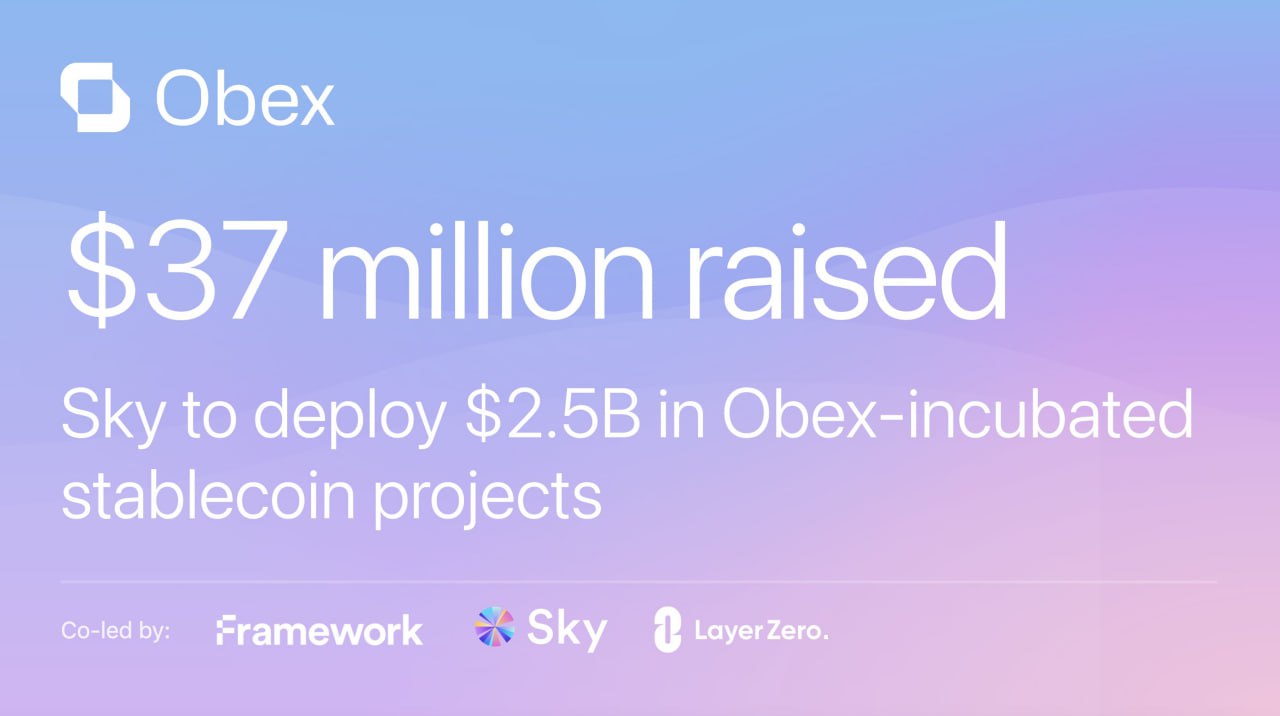 Obex raises $37M to build 'Y Combinator' for RWA-backed stablecoins, led by Framework, Sky and LayerZero. $2.5B will also be deployed by Sky into projects incubated by Obex.
Sources
20 records from 12 domains
youtube.com
info.layerzero.foundation
defieducation.substack.com
x.com
stargate.finance
thedefiant.io
layerzero.network
docs.layerzero.network
tokenomist.ai
cryptonews.com.au
docs.curve.finance
robinhood.com
Community notes
Spot something off or out of date? Drop a note. Editors review topic notes daily and roll accepted fixes into the explainer — contributors are recognized in the monthly $SQUID drop.
Loading notes…
Help improve this topic
Have a story or tip about this topic? Submit it. See something missing? Leave a note. Editors review daily; accepted submissions and fixes count toward the monthly $SQUID drop.