
A neutral explainer on Litecoin: its 2011 proof-of-work origins, the 2026 MWEB reorg incident, LitVM EVM smart contracts, spot ETF and SEC status, payments, and ecosystem outlook.
+9 sources across the wider coverage universe
 LitVM LiteForge testnet launches, bringing EVM smart contracts, DeFi, and Web3 to Litecoin for the first time.2026-04
 Lite Strategy backs LitVM with $1 million bet on Litecoin smart contract expansion2026-06
 Litecoin's first EVM rollup LitVM picks DIA as oracle provider, opening 14-year-old chain to DeFi2026-04
 Litecoin reverses first major MWEB exploit via 13-block reorg, ~$600K in invalid pegouts undone2026-04
 Litecoin Founder Charlie Lee on the Rise of Stablecoins2025-12
 Coinbase to launch futures trading for Dogecoin, Litecoin, and Bitcoin Cash on... :checks notes: ... April Fools Day?2024-03
Litecoin (LTC) is a proof-of-work cryptocurrency launched in 2011 as a faster, lower-fee complement to Bitcoin, and one of the longest continuously running blockchains in the industry. Long marketed as the "silver to Bitcoin's gold," it has spent 2025–2026 reinventing itself around smart contracts, exchange-traded funds, and a high-profile security incident that tested its conservative engineering reputation.
Origins and design
Litecoin was created by Charlie Lee, a former Google and Coinbase engineer, who released the network in October 2011 as a fork of the Bitcoin codebase. Its founding parameters were deliberately tuned for payments: a roughly 2.5-minute block target (four times faster than Bitcoin's 10 minutes) and the Scrypt hashing algorithm, chosen at the time to resist the specialized ASIC mining hardware that dominated Bitcoin. The supply schedule is also four times Bitcoin's, with a fixed cap of 84 million LTC and a block reward that halves roughly every four years.
Those choices reflect a design philosophy the community still emphasizes: a fair launch with no premine, proof-of-work issuance, a hard supply cap, and an uptime record stretching back to 2011 with no protocol-level downtime. Where many newer chains compete on throughput or programmability, Litecoin's pitch has historically been reliability and predictability for moving value.
The network has shipped notable upgrades over the years. It activated Segregated Witness (SegWit) in 2017 ahead of Bitcoin, and in 2022 it launched MWEB (MimbleWimble Extension Blocks), an optional privacy and fungibility layer that lets users move LTC through confidential "extension blocks" alongside the transparent main chain. That privacy feature would later sit at the center of the network's most serious incident.

LitVM LiteForge testnet launches, bringing EVM smart contracts, DeFi, and Web3 to Litecoin for the first time.
The MWEB reorg of 2026
In April 2026, Litecoin suffered the first major exploit of its MWEB layer and one of the most significant disruptions in its history. According to the Litecoin MWEB security incident postmortem and contemporaneous reporting, a flaw in how MWEB inputs were validated during block connection let an attacker construct a block in which a small input appeared to justify a far larger withdrawal, or "pegout," from the privacy layer.
A chain scan later showed the bug had already been exploited in March 2026, producing an inflated pegout of more than 85,000 LTC before developers were aware (news.bitcoin.com). When a second actor attempted to reuse the exploit path on April 25, upgraded nodes correctly rejected the malformed block, but the handling of the mutated data caused some upgraded mining nodes to stall. Unupgraded miners kept extending the invalid chain, which grew to 13 blocks before participants coordinated to restore the valid chain — triggering a deep reorganization, or "reorg," that rewound roughly 32 minutes of history and undid an estimated $600K in invalid pegouts (Crypto Times).
A reorg is when the network discards a set of already-confirmed blocks in favor of a competing, longer-or-valid chain; on a payments network it is dangerous because transactions that looked final can vanish. In this case third-party systems that processed transactions from the invalid chain — including cross-chain swap routes via NEAR-related infrastructure and THORChain — were left exposed when those transactions ceased to exist after the reorg. CoinDesk noted a dispute over whether the bug qualified as a "zero-day," given GitHub commit history suggested awareness of related code paths.
The Litecoin Core team responded with an emergency release, Litecoin Core v0.21.5.5, and advised all users to upgrade, citing important security fixes. For a chain that markets itself on stability, the episode was a reminder that optional privacy layers expand the attack surface and that finality — the point at which a transaction is irreversible — matters acutely for bridges and exchanges built on top of proof-of-work.
Lite Strategy backs LitVM with $1 million bet on Litecoin smart contract expansion
Smart contracts arrive via LitVM
The defining technical story of 2026 is Litecoin's move from a payments-only chain toward programmable finance. For most of its history Litecoin had no native smart-contract capability, the on-chain logic that powers decentralized applications. That is changing through LitVM, an EVM-compatible Layer 2 rollup designed to bring Ethereum-style smart contracts to LTC.
An EVM (Ethereum Virtual Machine) is the execution environment that runs Ethereum smart contracts; "EVM-compatible" means developers can deploy existing Solidity code and use familiar tooling. A rollup is a scaling design that executes transactions off the main chain in batches and posts compressed proofs back to it, inheriting security from the base layer. Per Litecoin.watch and Yellow, LitVM is built on Arbitrum Nitro technology and uses zero-knowledge proofs to anchor activity back to Litecoin, with partners including the Litecoin Foundation, BitcoinOS, Arbitrum, QuickSwap, Espresso, and Caldera.
The LiteForge testnet went live on April 15, 2026, logging roughly 96,900 transactions and more than 10,500 unique addresses in its first 24 hours, and crossing 230,000 testnet transactions within days (Crypto Times). The project has also picked DIA as its oracle provider — the service that feeds external price and data into on-chain contracts — a prerequisite for DeFi (decentralized finance) applications such as lending and trading. Mainnet has been signaled as imminent, though, as with any unproven L2, the testnet phase has surfaced bugs and concerns about the reliability of Ethereum-to-Litecoin bridging.
Capital is following the narrative. Lite Strategy, a treasury-style vehicle, announced a $1 million investment in LitVM to back the smart-contract expansion (Cryptonews). Espresso, a shared-sequencing and finality provider, has publicly framed the April reorg as a case study in why fast, reliable finality protects rollups and bridges from exactly the kind of reorg risk the base chain experienced. The throughline: bolting a programmable layer onto a 14-year-old chain raises the stakes for settlement guarantees that payments-only Litecoin never had to worry about.

Litecoin's first EVM rollup LitVM picks DIA as oracle provider, opening 14-year-old chain to DeFi
DIA is now the official oracle infrastructure for LitVM, Litecoin's first EVM rollup, built on Arbitrum Nitro with Succinct's SP1 zkVM for validity proofs. The LiteForge testnet is live (Chain ID 4441) with push and pull price feeds for BTC, LTC, ETH, USDC and other majors. Litecoin has run for 14 years as a payments-only chain — this unlocks lending markets, DEXs, and other oracle-dependent DeFi protocols on the network for the first time.
The ETF and regulatory picture
Litecoin's regulatory standing has clarified considerably. In a joint interpretation reported in March 2026, US regulators treated LTC as a digital commodity rather than a security, placing it under CFTC jurisdiction and easing the unregistered-securities question that has shadowed many altcoins. That classification, combined with its long track record and lack of a premine or central issuer, has made Litecoin a recurring name in the spot-ETF conversation.
An ETF (exchange-traded fund) is a regulated, exchange-listed product that holds an underlying asset — here, LTC — and lets investors gain price exposure through ordinary brokerage accounts. Canary Capital launched a US spot Litecoin ETF on Nasdaq in late October 2025, described in coverage as the first US-listed spot ETF for a digital asset beyond Bitcoin and Ethereum, with Grayscale and CoinShares also pursuing products (The Defiant). The path was not smooth: the SEC repeatedly delayed decisions and missed deadlines before a broader shift in policy. After the agency approved streamlined listing standards for crypto ETFs, Bloomberg analysts put approval odds for pending altcoin funds, Litecoin among them, at effectively certain (The Block).
Early demand has been modest relative to the headline-grabbing Bitcoin funds — one report pegged a Litecoin spot ETF's assets around $9 million — underscoring that regulatory access and investor appetite are separate questions. For readers, the practical takeaway is that ETF availability lowers the friction of holding LTC exposure but does not by itself signal sustained inflows.
Litecoin readers are almost entirely driven by institutional legitimacy signals — ETF filings, treasury adoption, and corporate accumulation — rather than technology fundamentals, revealing that LTC's audience treats it as a regulatory arbitrage play on Bitcoin's coattails rather than a network with independent merit.
Ecosystem, payments, and the DOGE connection
Beyond protocol changes, Litecoin's 2026 has been shaped by community and commercial activity. Wallet developers such as Nexus have expanded real-world spending features, including gift-card purchases for major retailers, positioning LTC as a usable payments rail rather than a pure store of value. Mining operators continue to scale; Luxxfolio, for example, publicized mining its 500th LTC as it grew to dozens of machines.
Litecoin's industry footprint is also visible through events and sponsorships. The Litecoin Summit 2026, held June 22–23 at the Tobacco Theater in Amsterdam to open Dutch Blockchain Week, drew a roster of sponsors across livestream, evening-mixer, and silver tiers, and speakers spanning payments, DeFi, and infrastructure. Such sponsorships function as ecosystem marketing, signaling commercial interest, though they are not measures of network usage or token value.
A recurring technical footnote is Litecoin's relationship with Dogecoin (DOGE). Because both use Scrypt, Litecoin and Dogecoin support merged mining (AuxPoW), letting miners secure both chains simultaneously without splitting hashpower. That shared security arrangement, in place since 2014, ties the economic fate of the two networks more closely than their very different cultures might suggest.
- 01Litecoin ETF approval race
Multiple filings from Canary Funds, Grayscale, and Bloomberg's 90% approval odds made LTC the frontrunner in the altcoin ETF queue, drawing readers tracking regulatory momentum.
- 02Corporate treasury LTC accumulation
Public companies and pharma firms adding LTC to balance sheets as a Saylor-style playbook attracted readers speculating on price catalysts from institutional buying.
- 03LitVM EVM smart contract expansion
Litecoin's first EVM rollup launching DeFi capabilities on a 14-year-old chain represented a fundamental pivot that intrigued readers wondering if LTC could reinvent itself.
- 04Altcoin futures and exchange listings
Coinbase launching LTC futures alongside Doge and BCH on April Fools' Day generated clicks from readers caught between the joke framing and genuine market implications.
- 05MWEB exploit and reorg
A 13-block reorg reversing ~$600K in invalid pegouts raised security questions about Litecoin's privacy upgrade and chain integrity.
- 06Regulatory commodity classification
SEC and CFTC jointly listing LTC as a digital commodity gave readers a concrete legal anchor for understanding its ETF approval prospects.
Outlook
Litecoin enters its second decade pulled between two identities: the minimalist, battle-tested payments chain its supporters celebrate, and an emerging smart-contract ecosystem that aims to keep it relevant in a DeFi-driven market. The near-term questions are concrete — whether LitVM ships a stable mainnet and attracts durable application activity, whether spot ETFs convert regulatory access into real inflows, and whether the MWEB incident prompts lasting changes to how the network handles privacy-layer validation and finality. None of these guarantees price direction, and readers should treat ETF approvals, testnet metrics, and sponsorship announcements as inputs to watch rather than outcomes. What is clear is that Litecoin is no longer content to be only digital silver; the coming year will test how much programmability it can add without compromising the reliability that has defined it.
- 2022-05milestone
MWEB privacy upgrade activates on mainnet via miner signaling
- 2024-10regulatory
Canary Funds files S-1 for Litecoin ETF with SEC
- 2025-01regulatory
Grayscale files for Litecoin ETF with NYSE
- 2025-02milestone
LTC market cap rises 46%, daily transactions hit $9.6B on ETF hype
- 2025-02regulatory
Bloomberg's Balchunas assigns Litecoin 90% ETF approval odds — highest among altcoins
- 2025-03regulatory
Canary Funds files amended S-1, kicking off formal SEC approval countdown
- 2025-04exploit
Litecoin MWEB exploit reversed via 13-block reorg, ~$600K in invalid pegouts undone
- 2025-05launch
LitVM EVM rollup testnet launches, bringing smart contracts and DeFi to Litecoin
Latest Litecoin news
LitVM LiteForge testnet launches, bringing EVM smart contracts, DeFi, and Web3 to Litecoin for the first time.Lite Strategy backs LitVM with $1 million bet on Litecoin smart contract expansionLitecoin's first EVM rollup LitVM picks DIA as oracle provider, opening 14-year-old chain to DeFiLitecoin reverses first major MWEB exploit via 13-block reorg, ~$600K in invalid pegouts undoneLitecoin Founder Charlie Lee on the Rise of Stablecoins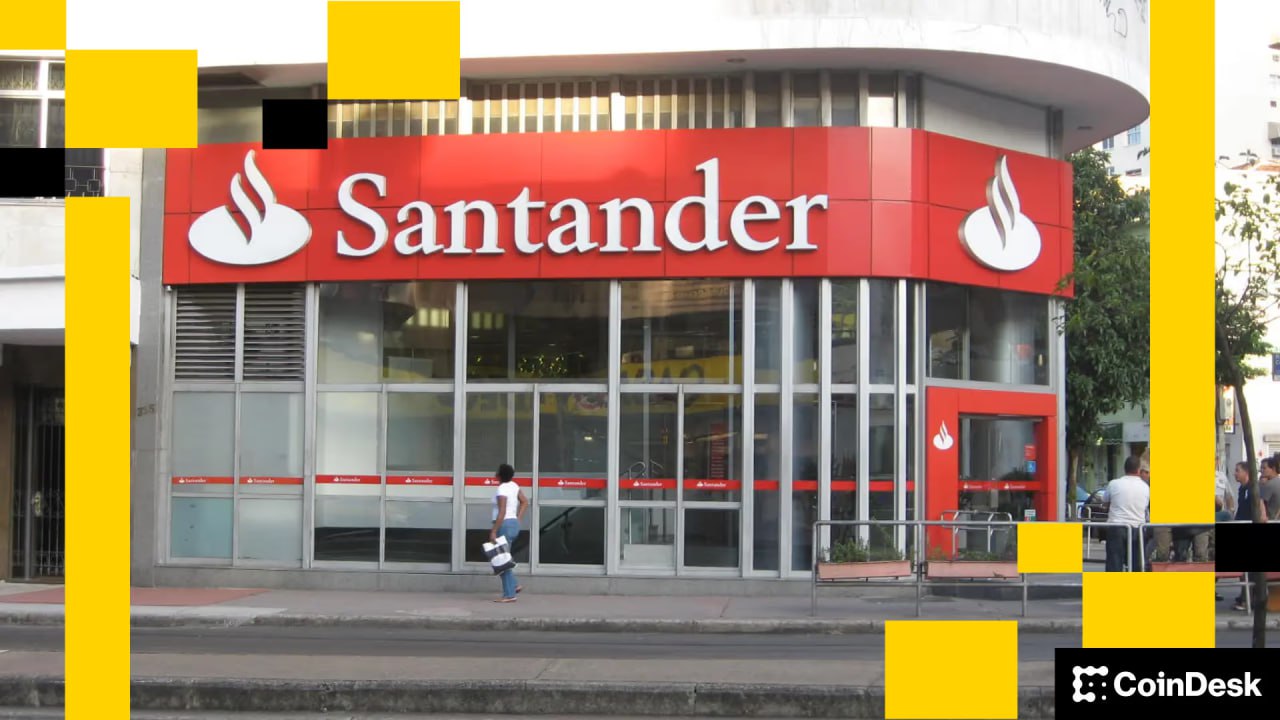 Santander’s Openbank starts offering crypto trading in Germany, with plans to add Spain in the next few weeks. The new service allows users to buy, sell and hold five cryptocurrencies: Bitcoin, Ether, Litecoin, Polygon and Cardano. The bank charges a 1.49% fee per transaction, with a 1 euro ($1.2) minimum, and does not include custody fees.
Community notes
Spot something off or out of date? Drop a note. Editors review topic notes daily and roll accepted fixes into the explainer — contributors are recognized in the monthly $SQUID drop.
Loading notes…
Help improve this topic
Have a story or tip about this topic? Submit it. See something missing? Leave a note. Editors review daily; accepted submissions and fixes count toward the monthly $SQUID drop.