◧ Every topic explained
Evergreen deep-dives on the people, protocols, tokens, and ideas behind every headline — from Bitcoin to the newest DeFi mechanism, each written to orient an operator and a newcomer alike.
Leviathan News / The Atlas
Every topic in crypto, mapped and explained — and wired to the news as it breaks.
📖 New here? Read the launch story →🏆 Atlas Leaderboard →◷ Recent Atlas updates →
Deep explainer on crypto apps: how exchange, wallet, DeFi, gaming, AI and “superapps” front-end onchain finance, balance custody and UX, rely on banks and stablecoins, and face growing security and regulatory pressures.
Bitcoin is a decentralized digital asset capped at 21 million coins, now held by ETFs, corporations like Strategy, and sovereign states — navigating record ETF outflows, rising on-chain activity, and growing institutional infrastructure in 2026.

Deep dive explainer on crypto wallets: how keys, custody and wallet types work; DeFi and tokenized asset use; security risks from malware and approvals; and how MPC, account abstraction and AI‑ready wallet infrastructure are reshaping Web3.
Explains how zero-knowledge cryptography powers privacy, compliance and scaling in crypto, covering proofs, zk-SNARK/STARK trade-offs, stablecoins, proof-of-reserves and major ecosystems like Ethereum, XRP, Solana and Polygon.
DefiLlama is DeFi's leading open-source analytics aggregator, tracking TVL, fees, stablecoins, and yields across hundreds of chains — expanding in 2026 with LlamaAI and private-market data via the Bulletin acquisition.

Arc brings USDC gas, deterministic finality, integrated FX, selective privacy, and structured payment data into one Circle-led chain. Its promise is coherent financial infrastructure; its defining risk is concentrated control.

In‑depth explainer of DTCC’s role in Wall Street markets and its push into tokenization, Canton, Chainlink, and Stellar, outlining how DTC‑custodied securities and collateral are moving onchain and what it means for crypto and DeFi.
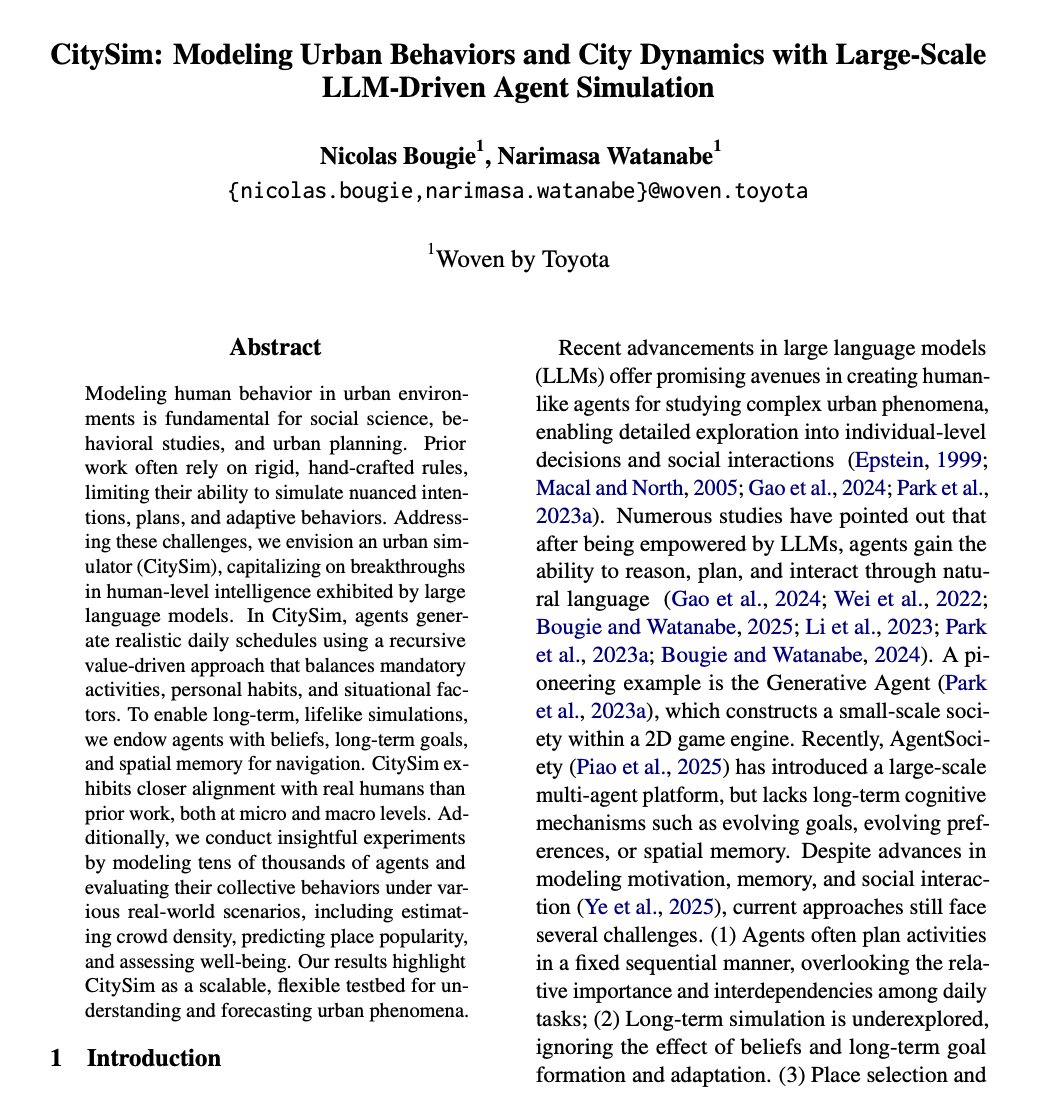
In-depth explainer on AI agents in crypto: how autonomous software gets wallets, onchain identity and payment rails; key use cases in trading, travel and commerce; plus security, compliance and infrastructure shaping the agentic economy.
Territories that route into Liquidity. Search within this inbound mesh or clear the filter to return to the full map.
144 territories · page 1 of 5 · clear inbound routeDon't see your protocol? Request a map →
DefiLlama is DeFi's leading open-source analytics aggregator, tracking TVL, fees, stablecoins, and yields across hundreds of chains — expanding in 2026 with LlamaAI and private-market data via the Bulletin acquisition.
Deep explainer on what “launch” means in crypto, covering mainnets, tokens, stablecoins, AI agents, ETFs, RWAs and payment rails, plus lifecycle, strategies, risks and regulation shaping onchain markets.
Curve began as a specialized exchange for near-parity assets. Its larger significance is the stack built around that exchange: vote-directed liquidity, soft-liquidation lending, crvUSD, and markets that turn LP positions into productive collateral.
Deep explainer on DAI, MakerDAO’s original overcollateralized dollar stablecoin, covering how it works, its Sky/USDS migration, collateral and risk, DeFi and CeFi use, and how it compares to USDC, USDT, USDe and other rivals.
Crypto fees span network gas costs, protocol revenue, DEX trading charges, and bridge tolls. This guide explains how each type works, how they're evolving, and why fee generation is becoming the key metric for evaluating blockchain sustainability.
Hyperliquid is a fully on-chain perpetual futures DEX running its own high-speed L1, with $10B+ open interest, HYPE token buybacks, pre-IPO equity markets, and growing regulatory engagement in the US.
Binance is simultaneously a dominant exchange, derivatives venue, token-distribution platform, Web3 gateway, and regulatory test case. Its scale creates deep liquidity and broad access, but also concentrates custody, compliance, and market-structure risk.
XRP is the native token of the XRP Ledger, built for fast cross-border payments. This explainer covers its technology, Ripple's business model, the SEC lawsuit outcome, ETF adoption, AI agent payments push, and how it compares to BTC, ETH, and SOL.
Convex Finance pools vote-escrowed tokens so liquidity providers earn boosted rewards without multi-year locks. How cvxCRV and vlCVX separate yield from voting, the protocol's reach across Curve, Frax, f(x) and Resupply, its five-year operating record, and its real trade-offs.
In‑depth explainer on Sonic, the high‑throughput EVM layer‑1 that succeeds Fantom, covering S tokenomics, USSD stablecoin design, DeFi and Aave integrations, vertical integration, governance shifts, risks, and regulatory context.
Yearn is a DeFi yield aggregator that automates capital allocation across lending and liquidity protocols through smart contract Vaults. Since creating the first DeFi Vault in 2020, it has grown into one of DeFi's most battle-tested yield infrastructures, with over $8B in deposits and more than $300M in net profits.
Aave is DeFi's largest lending protocol, enabling permissionless overcollateralized borrowing via smart contracts. V4's hub-and-spoke design, GHO stablecoin, AAVE buybacks, and the Horizon institutional market define its 2026 strategy.
Deep dive explainer on seed rounds in crypto and Web3: how they work, how they differ from pre-seed and Series A, key deal structures, strategic investors, risks, and AI-driven case studies shaping the next funding cycle.
Prediction markets let traders buy contracts tied to future outcomes, functioning as real-money probability aggregators. From Polymarket's election boom to Schwab's S&P 500 wagers, the sector is exploding—amid regulatory battles over sports betting, CFTC jurisdiction, and oracle infrastructure gaps.
In-depth explainer on funding in crypto, covering venture raises, Ethereum dev financing, stablecoin yields, funding rates, onchain repo, quadratic funding, MEV, AI capital flows, and how these mechanisms shape risk, incentives, and market structure.
In-depth explainer on Aave and the AAVE token, covering protocol mechanics, GHO stablecoin, Horizon RWAs, governance, risk events like the rsETH exploit, and evolving tokenomics that tie DeFi lending cash flows to AAVE’s long-term value.
Morpho is a modular DeFi lending protocol with $11B+ in deposits, a $175M raise from Paradigm and a16z, and integrations with Coinbase, enabling isolated credit markets and curated yield vaults for institutional and retail users.
In-depth explainer on LayerZero, the omnichain messaging protocol behind OFT tokens and cross-chain DeFi, covering ZRO governance, DVN-based security, the $292M KelpDAO rsETH exploit, migrations to Chainlink CCIP, and the protocol’s evolving outlook.
In‑depth explainer on tokenization for crypto markets: how real‑world assets move onchain, tokenomics design, stablecoins, SEC and Fed views, leading RWA case studies (Ondo, Maple, Centrifuge), and the risks and outlook for a multi‑trillion‑dollar tokenized future.
Bitfinex is best understood as offshore market infrastructure built around professional trading, USDT liquidity, and tokenized financial claims—a resilient model whose integration also concentrates legal, custody, and corporate risk.
Deep explainer on how law shapes crypto: from SEC vs CFTC battles and MiCA to stablecoin freezes, DeFi hacks, prediction markets, AI agents and tokenization. A guide to the legal risks and frameworks behind Bitcoin and Web3.
In-depth explainer on crypto bridges: how they connect blockchains, power cross-chain DeFi and stablecoin flows, why they’re so often hacked, key case studies, UX trends, and what safer, proof-based interoperability could look like.
UNI is evolving from a governance token into a coordination asset spanning protocol economics, network security, and legal organization. Its durability depends on whether those functions strengthen Uniswap without weakening liquidity or concentrating control.
Protocol revenue has become crypto's defining credibility metric — from Solana's $68M monthly fees to Aave's $60M annual projection, this guide explains how onchain cash flows are valued, distributed via buybacks and burns, and why they now drive capital allocation.
Explainer on “BUILD” in crypto: how it evolved from meme to operating system for BTC, DeFi, stablecoins and AI agents, why ownership and tokenization matter, and how infra like Base, Arch and UAE rails signal the ecosystem’s long-term direction.
Deep dive into ZRO, the unified token for LayerZero, Zero and Stargate, covering tokenomics, fee-switch governance, buybacks, stablecoin and RWA integrations, and how ZRO aims to capture value from cross-chain messaging and liquidity at internet scale.
Uniswap turned automated market making into core DeFi infrastructure. Its next test is whether a widening product surface—from concentrated liquidity and Unichain to lending and launch aggregation—can create durable value without obscuring the risks.
Token burns permanently remove units from circulation, but scarcity alone does not create value. The useful questions are what funds the burn, how it compares with issuance, who controls it, and whether demand can endure.
Canton is a public blockchain built around confidential, interoperable financial workflows. Its wager is that institutions will move real assets onchain only when privacy, compliance, settlement, and existing market structures work together.
In-depth explainer on how partnerships drive crypto and Web3, from stablecoin yield and tokenized credit to AI, privacy, sports, and regional access. Breaks down structures, risks, and case studies so readers can decode partnership announcements.
Evergreen deep-dives on the people, protocols, tokens, and ideas behind every headline — from Bitcoin to the newest DeFi mechanism, each written to orient an operator and a newcomer alike.
Each territory connects to the freshest coverage as it breaks. Reader-click data surfaces the stories that actually landed — no black-box algorithm, no engagement bait.
Powered by $SQUID. Contributors submit stories, tip what matters, and refine the territory maps. Top contributors are recognized in the monthly $SQUID drop.