◧ Every topic explained
Evergreen deep-dives on the people, protocols, tokens, and ideas behind every headline — from Bitcoin to the newest DeFi mechanism, each written to orient an operator and a newcomer alike.
Leviathan News / The Atlas
Every topic in crypto, mapped and explained — and wired to the news as it breaks.
📖 New here? Read the launch story →🏆 Atlas Leaderboard →◷ Recent Atlas updates →
Deep explainer on crypto apps: how exchange, wallet, DeFi, gaming, AI and “superapps” front-end onchain finance, balance custody and UX, rely on banks and stablecoins, and face growing security and regulatory pressures.

Explains how zero-knowledge cryptography powers privacy, compliance and scaling in crypto, covering proofs, zk-SNARK/STARK trade-offs, stablecoins, proof-of-reserves and major ecosystems like Ethereum, XRP, Solana and Polygon.
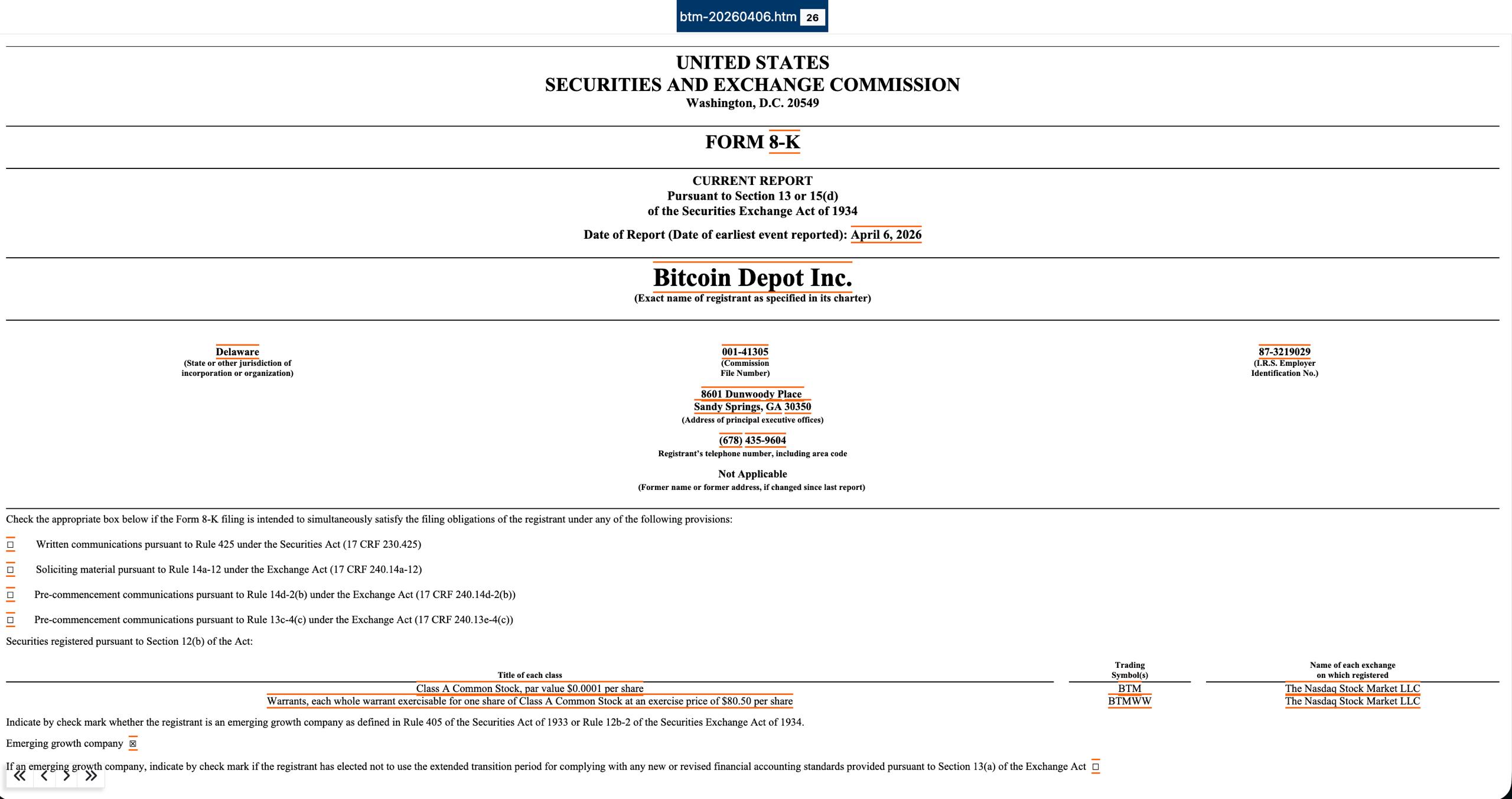
Bitcoin is a decentralized digital asset capped at 21 million coins, now held by ETFs, corporations like Strategy, and sovereign states — navigating record ETF outflows, rising on-chain activity, and growing institutional infrastructure in 2026.
DefiLlama is DeFi's leading open-source analytics aggregator, tracking TVL, fees, stablecoins, and yields across hundreds of chains — expanding in 2026 with LlamaAI and private-market data via the Bulletin acquisition.
Deep dive explainer on crypto wallets: how keys, custody and wallet types work; DeFi and tokenized asset use; security risks from malware and approvals; and how MPC, account abstraction and AI‑ready wallet infrastructure are reshaping Web3.

In‑depth explainer of DTCC’s role in Wall Street markets and its push into tokenization, Canton, Chainlink, and Stellar, outlining how DTC‑custodied securities and collateral are moving onchain and what it means for crypto and DeFi.
In-depth explainer on AI agents in crypto: how autonomous software gets wallets, onchain identity and payment rails; key use cases in trading, travel and commerce; plus security, compliance and infrastructure shaping the agentic economy.

Arc is Circle’s stablecoin‑native L1 built around USDC gas, fast finality, built‑in FX, and post‑quantum security, backed by a $222M ARC token raise and early partners like Aave, Aerodrome, and Visa as it targets institutional onchain payments and capital markets.
Territories that route into Yield. Search within this inbound mesh or clear the filter to return to the full map.
57 territories · page 1 of 2 · clear inbound routeDon't see your protocol? Request a map →
Cap combines reserve-backed cUSD with yield-bearing stcUSD. Approved borrowers access reserve assets against slashable underwriter collateral; this guide covers minting, redemption, liquidation, CAP governance, controls, and risk.
In-depth explainer on crypto vaults, covering how smart-contract vaults work, ERC‑4626/7540 standards, yield and stablecoin vaults, RWA and institutional products, security incidents, and what users should weigh when chasing onchain yields.
Yearn is a DeFi yield aggregator that automates capital allocation across lending and liquidity protocols through smart contract Vaults. Since creating the first DeFi Vault in 2020, it has grown into one of DeFi's most battle-tested yield infrastructures, with over $8B in deposits and more than $300M in net profits.
ETH is Ethereum's native token, serving as gas, staking collateral, and DeFi base asset. This explainer covers supply mechanics, staking yield, ETF developments, whale activity, and long-term outlook.
Aave is DeFi's largest lending protocol, enabling permissionless overcollateralized borrowing via smart contracts. V4's hub-and-spoke design, GHO stablecoin, AAVE buybacks, and the Horizon institutional market define its 2026 strategy.
In-depth explainer on Strategy, the Bitcoin-focused public company behind MSTR and STRC. Covers its Bitcoin treasury model, funding flywheel, STRC depeg, market impact, investor exposures and evolving risks in Bitcoin-linked yield products.
Bonds intersect with crypto in three ways: as a macro yield signal that moves Bitcoin prices, as tokenized RWAs reshaping institutional markets, and as native DeFi mechanisms for yield and collateral.
In‑depth explainer on Yield Basis, Curve’s BTC‑ and ETH‑focused IL‑free liquidity protocol. Covers FXSwap design, crvUSD credit lines, YB tokenomics, Hybrid Vaults, risks, and how it compares to Uniswap v3 and other DeFi yield strategies.
Deep dive on Kelp DAO’s rsETH token, explaining its restaking design, DeFi use cases, the $292M LayerZero bridge exploit, coordinated recovery with Aave and DeFi United, and how the saga is reshaping cross‑chain and restaking risk models.
Deep dive into Bybit’s evolution from derivatives upstart to tokenized finance hub, covering its products, RWA push, SpaceX tokens, AI trading, security hacks, MAS scrutiny, and how it stacks up against Binance and Coinbase.
Deep dive explainer on real-world assets (RWAs) in crypto: how tokenization works, key market segments, RWA stablecoins and yield, institutional adoption, DeFi use cases, and the legal, market, and technical risks shaping onchain capital markets.
Convex Finance pools vote-escrowed tokens so liquidity providers earn boosted rewards without multi-year locks. How cvxCRV and vlCVX separate yield from voting, the protocol's reach across Curve, Frax, f(x) and Resupply, its five-year operating record, and its real trade-offs.
Deep explainer on stETH, Lido’s liquid staked Ether: how it works, DeFi and ETF integrations, risks, depegs, governance, institutional staking, and why its yield is becoming crypto’s benchmark rate.
In-depth explainer on Metaplanet, Japan’s Bitcoin-first public company. Covers its BTC treasury strategy, zero-coupon bonds, Siiibo acquisition, venture and asset arms, accounting risks, and how it’s reshaping Bitcoin finance in Japan.
DeFi replaces banks with smart contracts for lending, trading, and yield. This explainer covers core protocols like Aave and Curve, Bitcoin integration, RWA tokenization, governance risks, and regulatory trends shaping decentralized finance in 2026.
In-depth explainer on Pendle, DeFi’s leading yield tokenization platform. Covers SY–PT–YT mechanics, fixed vs variable yield strategies, Aave/Morpho composability, RWA and stablecoin integrations, AI agents, risks, and long-term outlook.
In-depth explainer on yield-bearing crypto assets, covering how stablecoins, bitcoin, gold tokens and tokenized funds generate onchain yield, key mechanisms like RWAs and DeFi lending, and the regulatory and risk trade-offs shaping this new money layer.
BitMine Immersion Technologies (BMNR) is a NYSE‑listed Bitcoin and Ethereum firm that evolved into a major Ethereum treasury, using aggressive ETH accumulation, staking via MAVAN and a 9.5% preferred share to offer public‑market exposure to Ethereum‑backed yield.
Explainer on crypto restaking: how staked ETH is reused to secure new protocols, the roles of EigenLayer, Symbiotic and LRTs, yield and shared-security upside, plus leverage, bridge and slashing risks and the cautious but growing institutional adoption.
Deep explainer on Aave’s GHO stablecoin: how it works, its Aave-native design, governance and risk, cross-chain growth, CeFi ramps, Curve and Horizon integrations, and how it compares to USDC and other CDP stablecoins.
Comprehensive explainer on crypto rewards covering staking, DeFi yields, USDC savings, exchange loyalty hubs, cards, competitions and quests, with focus on incentives, risks, transparency and how Binance, Coinbase, Kraken and DeFi protocols design yields.
Kelp is a liquid restaking protocol issuing rsETH on Ethereum. A $292M LayerZero DVN misconfiguration exploit in 2025, linked to North Korea's TraderTraitor, triggered Arbitrum governance relief, mass bridge migrations to Chainlink CCIP, and a 5-week rsETH restoration.
A comprehensive guide to crypto portfolio construction, margin mechanics, AI-driven management tools, and institutional adoption trends shaping how digital assets are held and optimised in 2026.
Deep explainer on spreads in crypto, covering bid-ask, yield, funding and swap spreads, DeFi money markets, tokenized stocks, and malware propagation, with a focus on liquidity, risk, and how pricing gaps shape modern digital asset markets.
In‑depth explainer on Movement, the Move‑based settlement and yield layer for stablecoin payments and remittances in emerging markets, covering its tech stack, USDCx, RWA yield, licensed rails, partners, risks and long‑term outlook.
In crypto, SDKs bundle tools, libraries and APIs that let apps, DeFi protocols and AI agents integrate wallets, payments, yield and cross‑chain liquidity quickly, making them the invisible infrastructure steering how Web3 is built and used.
In‑depth explainer on Sky Protocol, covering its MakerDAO origins, USDS and sUSDS design, Sky Savings Rate, Agent Network, governance and S&P rating, integrations across CeFi/DeFi, risk profile, and how it compares with USDC, DAI and other stablecoins.
Spark Protocol is MakerDAO's DeFi lending arm, offering USDS borrowing and savings rates. With $3B+ TVL, institutional products like Spark Prime, and a conservative risk record, it's reshaping on-chain credit.
In‑depth explainer on Linea, Ethereum’s zkEVM Layer‑2, covering its Lineth stack, zk architecture, staking‑powered Yield Boost, native USDC, institutional adoption, LINEA token incentives, security risks, and how users engage with DeFi.
Katana is an Ethereum layer-2 optimized for DeFi, where trading, lending, and perps are aligned rather than competing for liquidity, coordinated by a system that incentivizes the users who take part.
Evergreen deep-dives on the people, protocols, tokens, and ideas behind every headline — from Bitcoin to the newest DeFi mechanism, each written to orient an operator and a newcomer alike.
Each territory connects to the freshest coverage as it breaks. Reader-click data surfaces the stories that actually landed — no black-box algorithm, no engagement bait.
Powered by $SQUID. Contributors submit stories, tip what matters, and refine the territory maps. Top contributors are recognized in the monthly $SQUID drop.